Stanbic Bank
Stanbic Bank
30.3 C
Kampala
Stanbic Bank
Stanbic Bank
Home Blog Page 1038

Labour Export: Middle East Consultants, four other companies’ licenses revoked

Middle East Consultant manager

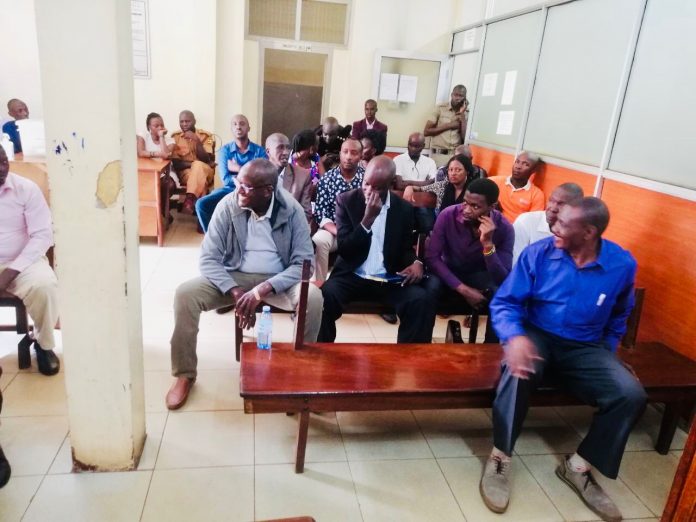
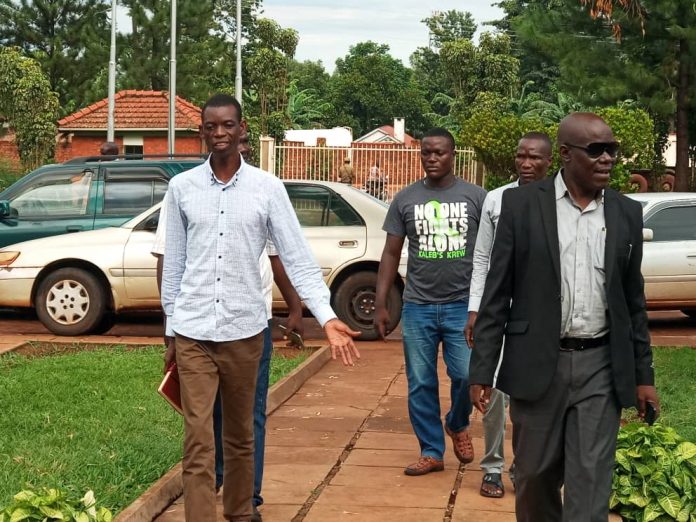
The Ministry of Gender Labour and Social Development has suspended Middle East Consultants and four other labour exporting companies over extortion of money from people seeking to work abroad.

The suspended companies include; Middle east consultants, Elite placement consulting, Eagle supervision, Elite winner agency, Spotlight international and High ground international Ltd.

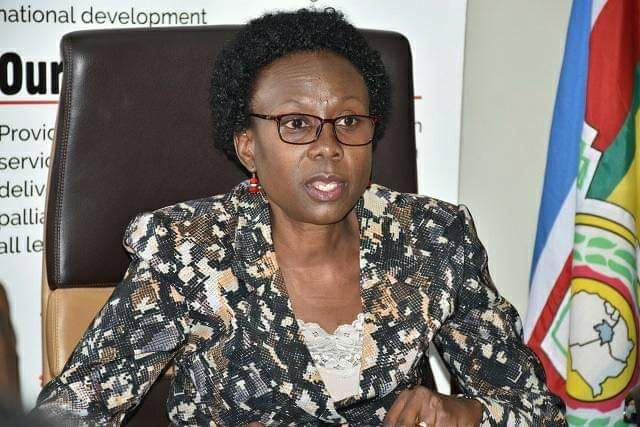
“These companies have been suspended and have been directed to desist from labour externalization as from  February  18, 2020. Any one dealing with them is doing it at his or her own risk.” reads the  statement from acting Permanent Secretary in the Ministry of Gender, Labour and Social Development James Ebitu.

According to section 29(1) of employment regulation 2005, limits the chargeable administration fees to Shs50,000 only. Regulation 29 (2) provides that any other placement fees must be approved by the ministry of Gender labour and social development.

Regulation 29 (3) provides that placement fees shall be collected from Ugandan migrant worker after he or she has signed employment contract.

The directives followed major complains filed by individuals, claiming that labour exporting companies extort a lot of money from them as they seek for greener pastures abroad.

He said they wrote to all labour exporting companies to in two weeks refund all the money obtained from people who have not signed employment contracts. Mr Ebitu, said by midnight of 17 February, five companies did not compiled with the said directives.

Stories Continues after ad
Norway to offer technical assistance to oil and petroleum institutions in Uganda

The Ambassador of Norway to Uganda Ms Elin Ostebo Johansen has revealed that they are in unique position of providing technical assistance to the relevant oil and petroleum institutions through the oil and development programme.

Ms Elin said during the launch of a new report on oil and gas sector dubbed ‘Uganda’s perspective on oil and gas’ peddled at extending opportunities for multi-stakeholder engagement.  The report was compiled by Maendeleo ya Jamii (MYJ) and the Albertine oil and gas districts association (AGODA) following thorough  research conducted in 2019 in the Albertine region.  The report which is part of the MYJ and AGODA multi-year project entitled ‘elevating local priorities in Uganda’s petroleum development’ was funded by Democratic Governance Facility (DGF).

“Petroleum industry is often expected to address the gaps in social services and much as it has done in a number of areas. The expectation that it can and should do more usually remains” Ms Elin said

She noted that Norway is working with other development partners to of Denmark, Ireland, Sweden, Netherlands and Austria to harmonies their support to the state and non- state institutions through DGF and are making contribution in oil and gas sector at all levels by working with local communities, CSOs and other actors in the sector.

Commercial quantities of oil were first discovered in Uganda in 2006 around Lake Albert in the western part of the country. The current estimate  of the country’s petroleum  reserves is 6.5 billion barrels  of which 1.4 to 1.7 billion barrels is estimated as recoverable in addition to 670 billion cubic feet of associated and non-associated natural gas.

Since then government of Uganda has embarked on planning for commercialization of the resources, which includes the phased development of a refinery. Use of crude oil to generate electricity and export of crude oil to international markets by pipeline via Tanzania.

According to the report, engagement between various stakeholders, facilitated by MYJ and guided by previous community and company assessment (CCA) resulted into a number of significant benefits to the oil and gas sector including progress in addressing protracted and complex issues such as land management and conflict, access to information and engagement opportunities.

The report indicates that there has been improvement of relationship in company recruitment practices, market access for local goods and services, improvement of relationships and self-efficiency among stake holders groups, formation of influential and tenacious community and local government association.

The report highlights that there is inadequate information flow from central government, contracted companies to explore oil and acquisition of jobs depends soliciting bribes. It also indicates that there is corruption tendencies during compensation of land owners.

The Executive Director of AGODA, Godie Kwizera noted that communities and local governments are resident stakeholder of the oil and gas industry and as such bear the heaviest weight and impact of the industry.

“Local governments and communities have embraced the concept of multi stakeholder engagement over the last eight years. As a result, local governments have coalesced around AGODA and communities in Buliisa, Hoima, Kikuube and Madi-Okello have formed associations among others.

Stories Continues after ad
MP Peter Ssematimba scores highly, gets 13 points in UACE

MPs who court battles such as Busiro South legislator, Peter Ssematimba will not get vehicles until cases have been disposed off.

Busiro south MP, Sematimba Simon Peter has reportedly excelled in the just released Uganda Advanced certificate of education (UACE) results.


The MP sat for his papers at Kakoola High School in Ziroobwe sub-county, Luweero district. Sematimba who was recently described by his head teacher as an obedient student, sat took Divinity, Literature, Fine Art and a subsidiary of Computer.
According to results, the MP got 13 point out of 20 and that corresponds to 65 percent. He scored GP: C 6, CRE: D, Lit: D, Art: B, CST: 4


According to the results released by the minister of education and sport, Janet Kataha Museveni, a total of 103,301 candidates who sat for the exams, 38,737 obtained three principle passes, 26,986 have obtained two principle passes and 23,327 have obtained one principle pass while a total of 12,828 have obtained a subsidiary.


The results indicate that female candidates performed better than their male counterparts at all levels. The failure rates among female candidates are also lower at 0.9 per cent as compared to their male counterparts at 1.7.


“When Sematimba came here with the intention to sit UACE, I doubted his seriousness and ability to follow up with classwork. He has proved me wrong,” Mr Micheal Wagaba said in November last year.

Stories Continues after ad

William Ruto: I may not vie for Presidency in 2022

DP-William Ruto


Kenyan Deputy President William Ruto says he may decide not to vie for the presidency in 2022.

Speaking yesterday at a burial in Nakuru, Dr Ruto said some politicians, who are afraid he will win, want to polarise the country.

“There has been a lot of propaganda in the Press. Those behind it are worried that I will vie for the presidency,” Ruto said, adding: “Let it be known that I may decide not to vie. There is no need for all this drama.” He said such a decision would be for the sake of peace and unity.

The DP had attended the burial of Lake Nakuru Lodge Director Samwel Mwangi’s mother Josephine Kimotho. His sentiments came at a time his office, Harambee Annex, has been cast in bad light after it emerged that some shady deals involving procurement of military equipment could have been signed there.


“In 2022 there will be elections and there will be Kenya thereafter. People should calm down. It doesn’t matter whether I will be on the ballot or not. Whoever will win or lose, our goal should be lasting peace,” he said.

Ruto added that he had been burdened with heavy responsibilities that he was determined to carry on behalf of those who supported him.

“Sometimes I think if I was to remain in Sugoi looking after my chicken, I would not be dragged into the politics of cheap propaganda. An elephant is never tired of its tusk. I will carry mine and it won’t tire me,” Ruto said.

He vowed to ensure no community goes to war with another in Rift Valley.

The DP termed statements made during the Building Bridges Initiative (BBI) rally on Saturday uncalled for. “The government’s stand is that every Kenyan has a right to own land, seek leadership and do business in any part of the country, regardless of their ethnic background,” the DP said.

He castigated leaders who made “divisive” remarks, saying their days in leadership would soon end.

“Those saying people do not have equal rights in certain areas won’t go far. They are a passing cloud,” Ruto said, adding: “Such leaders are yet to mature politically. They are seeking political popularity through bloodshed.”

He reiterated that his pact with President Uhuru Kenyatta remained the greatest foundation on which to build a cohesive and prosperous country.

The DP expressed his support for the BBI, but warned politicians against using it to divide Kenyans.

Speaking during the same funeral service, Nakuru Governor Lee Kinyanjui faulted Narok Senator Ledama ole Kina’s remarks made during a BBI rally in Narok on Saturday. At the BBI meet, Mr Ledama warned non-Maasai people to keep off political seats in Narok.


“Some of those inciting people were studying in the US when we had violence in 2007. They have dual citizenship. They want to fan flames of war and take off. Let us not focus on this man,” said Mr Kinyanjui.

He said Rift Valley governors had kept off politics to manage their counties, but would not allow their efforts to be disparaged by a few individuals. “Nakuru residents want peace. As leaders from the Rift Valley, we won’t allow unhealthy political discourses,” he said.

Grab power


Kinyanjui read the riot act to politicians using BBI forums for mileage, saying such characters would not be entertained in Nakuru.

Gatundu South MP Moses Kuria faulted ODM leader Raila Odinga for not castigating Ledama for his remarks.

“What would it have cost Raila to condemn Ledama instantly if he meant well for the country? The President should be worried that Raila is using BBI to grab power,” said Mr Kuria.

Some of the leaders present at the burial were MPs Kimani Ngunjiri (Bahati), Caleb Kositany (Soy), Liza Chelule (Nakuru Woman rep), Rindikiri Muruithania (Buuri), former Othaya MP Mary Wambui.


Stories Continues after ad

Ochola replaces Steven Kasiima, Joseph Mugisa as directors in the latest changes in police

Former Director of Traffic police, Dr. Steven Kasiima


The Inspector General of Police, Martin Okoth Ochola has replaced the longest serving directors in the force who recently left office upon expiry of their contracts.

The directors are Steven Kasiima for Traffic who has been replaced by Bazil Mugisha, Joseph Mugisa for Fire and Emergency Rescue Services replaced by Hassan Kihanda Erasmus Twaruhukwa for Human Rights and Legal Rights replaced by Christine Nanding, Lemmy Twinomugisha for Welfare and Production has been replaced by Henry Tukahirwa. All the named new directors are in acting capacity.

Others replaced are

Francis Rwego former Interpol Special representative to African Union and Haruna Isabirye, police Attache’ to New York, while Richard Edyegu has been confirmed as Acting Director Logistics and Engineering replacing Godfrey Bangirana.

Ochola also made changes and appointed 70 senior police officers from the rank of Assistant Superintendent of Police –ASP and Superintendent of Police –SP to serve as District Police Commanders –DPCs, Regional Criminal Investigations Officers –RCIDs and Officers in Charge of –OC stations.

Timothy Halango has been appointed member of standby police court replacing Olivia Wawire who will be retiring soon.

Police court is a disciplinary tribunal which deals with service offences committed by its men and women.  Meanwhile Alfred Owili has been appointed Deputy Commandant Anti-Stock Theft Unit –ASTU in the Karamoja sub-region while Joseph Isabirye moves from ASTU to police headquarters.

Bernard Mugerwa has been moved from Nebbi to Lira as DPC while Benson Obongo has been confirmed Kidepo regional crime intelligence officer.

Issa Ssemwogerere moves from police headquarters to Savannah region as police spokesperson while Paul Kangave moves from Greater Masaka where he has been serving as spokesperson to police headquarters


Stories Continues after ad

98.6% qualify for UACE certificates-UNEB

UNEB Board Chairperson, Prof. Mary Okwakol and UNEB Executive Secretary Dan Odong hand over the results to Minister Museveni.


Uganda National Examination Board has revealed that 98.6 per cent of the total 101, 301 students that sat for Uganda Advanced Certificate of Education have qualified for an award of the certificate.

The revelation was made during the official release of 2019, Uganda Advanced Certificate of Education results by UNEB Executive Secretary Mr. Daniel Odongo at the office of the president.

The results saw a considerable increase in the success rate at 98.6 per cent overall pass of which 63 per cent will be able to apply to tertiary institutions.

Out of the 103,301 candidates who sat for the exams, 101,868 have been able to obtain a principal pass during the exams. The 101,868 students sat their exams at 2,298 centres across the country.

According to the results, a total of 38,737 obtained three principle passes, 26,986 have obtained two principle passes and 23,327 have obtained one principle pass while a total of 12,828 have obtained a subsidiary.

A total of 1,433 candidates have not been able to obtain any principle pass and therefore obtained F and are supposed to repeat.

The Minister of Education and Sports, Janet Kataha Museveni released the exams

UNEB Chairperson, Prof.  Mary Okwakol highlighted the achievement scored by UNEB and also noted the improvement registered by female candidate in the exams.

“Despite the fact that female candidates were few, they performed better than their male counterparts at all levels. The failure rates among female candidates are also lower at 0.9 per cent as compared to their male counterparts at 1.7” She noted.

UNEB also revealed that a total of 1047 candidates were absent and unable to sit while results of 126 candidates were withheld due to breech of rules and regulations.

UNEDB further pointed out the low number of students taking sciences compared to the arts and further blamed the schools and their stringent teaching methods as the cause of the poor turn up in science students and appealed to the schools to encourage more students to take up sciences.

The number of candidates with special needs also increased from 177 in 2018 to 205 in 2019 with the best results coming from a blind student called Denis Kaalalagho from Iganga S.S. where he scored B, B, A in History, CRE and Literature and an additional subsidiary passes in General Paper and Computer studies.


Stories Continues after ad

King King Mswati to grace Kampala World Monarchs’ Summit 2020- King Oyo

King Mswati and King Oyo at Eswatini palace in Swaziland.

King Mswati III is set to grace the first-ever World Monarchs Summit 2020 that is organised by His Majesty Oyo Nyimba Kabamba Iguru Rukidi IV, King of Tooro Kingdom.

The summit that is slated to take place in Tooro Kingdom in September this year will be co-hosted by President Yoweri Kaguta Museveni and Omukama.

King Mswati confirmed his participation during his meeting with King Oyo at Eswatini palace in Swaziland. King Oyo is currently in Swaziland where he went to extend his invitation to the king of Eswatini.

“I was most honoured to visit His Majesty King Mswati III in Eswatini who confirmed his participation in the first-ever World Monarchs Summit 2020 from 7 – 11 September 2020 in Uganda. I thank His Majesty and the people of Eswatini for the great hospitality and friendship.” king Oyo wrote on social media platforms.

The summit is expected to bring together the world’s reigning sovereign, constitutional and hereditary monarchs including Kings, Queens, Emirs, Emperors, Grand Dukes, Princes and Sultans, among others, to interface with the wider strategic stakeholders in order to share experiences and support initiatives that are geared towards inclusive development.

Mswati III, Ingwenyama and King of Swaziland was crowned on April 25, 1986 at the age of 18, thus becoming the youngest ruling monarch in the world at that time. Together with his mother, Ntfombi Tfwala, now Queen Mother (Ndlovukati), he rules the country as an absolute monarch.

Mswati III is known for his practice of polygamy and currently has 15 wives. A Swazi king’s first two wives are chosen for him by the national Councillors. His policies and lavish lifestyle have led to local protests and international criticism.

Stories Continues after ad

Telecom companies call for fairness in licensing

MTN-Uganda CEO-Wim Vanhelleputte

Telecom operators want the National Payment Systems Bill 2019, to provide leniency in insolvency proceedings where the Central Bank may revoke or suspend a license of a company in financial stress.

According to the Acting Chief Legal Counsel at Uganda Telecom (UTL) Prossy Kembabazi, revocation of a licence should be limited to a company that goes into liquidation.

“Before revoking a licence, the Central Bank should notify the operator stating reasons for intended revocation and invite the operator to show why the license or approval should not be revoked within 14 days,” Kembabazi said.

The proposal was re-echoed by Airtel Uganda’s Legal and Regulatory Director, Dennis Abigaba Kakonge who said that with fair hearing, the licensee would have an opportunity to appeal the Central Bank’s determination before revocation or corrective action.

These proposals were raised by management of telecom companies who were appearing before the Finance Committee to present their views on the Bill that is before Parliament.

Kakonge cited Clause 24 of the proposed bill that stipulates the operation of payment systems by Bank of Uganda which he said presented a conflict of interest.

“If the Central Bank shall double as a payment systems provider, then it cannot regulate itself. Modifications should be made to minimize the potential conflict of interest,” said Kakonge.

MTN Uganda Chief Executive Officer, Wim Vanhelleputte said the mobile money option had improved access to financial services in rural areas where traditional bank penetrations was limited.

He added that additional protection for mobile money in the bill was necessary, as it would afford similar protection to users who deposit and keep money there.

“We propose to include the mobile money escrow protection under the Deposit Protection Fund where each mobile money account shall be treated as a single account in case of insolvency or closing of financial institutions which hold the trust,” said Vanhelleputte.

He also called for the bill to consider tax parity with other equivalent cash-out/withdrawal channels like agency banking.

MPs however, raised concerns over the request by the telecom operators to use interest earned from trust accounts to fund financial literacy, innovation and product development.

“These companies have their own strategic business plans and budgets which they use for innovation and financial literacy. Why do they want to share what is not theirs?” Jane Pacuto, the Deputy Chairperson of the Committee asked.

Ngora County MP, David Abala said the burden of executing the said tasks of the telecom companies would end up being borne by Ugandans, which he added would be a disservice to many mobile users.

Committee Chairperson, Henry Musasizi commended the telecom operators for facilitating financial literacy in rural areas which he said has improved the welfare of citizens in such areas.

Stories Continues after ad

UPDF makes 3 years in Equatorial Guinea as it increases its numbers to 700 soldiers

Lt.-Col.-Wycliff-Keita who has been promoted to the rank of Brigadier.


The Uganda Peoples’ Defence Forces have made three years since their deployment to the West African nation of Equatorial Guinea.

Eagle Online exclusively broke this story three years ago how the Ugandan troops in February 2017 had been secretly deployed in Guinea without parliamentary approval.

Exactly making three years having deployed in the mineral rich Equatorial Guinea, Eagle Online has reliably learnt that UPDF has increased its troops from 200 soldiers deployed in 2017 to 700 soldiers in 2020.

Security sources in 2017 told this website that the troops were deployed in batches to protect African’s longest serving President Teodoro Obiang Nguema.

The first batch left early February in 2017  with their weapons and they were commanded by Lt. Col. Wycleff Keita who returned had from Somalia the previous year. He was working as the commander of the Ugandan troops guarding UN installations in Somalia.

After the revelation, Parliament asked Ministry of Defence and Veteran Affairs to give a detailed position on how the soldiers were deployed in Equatorial Guinea without approval from the legislators.

Acknowledging its presence in the West African country, the UPDF Spokesperson Brigadier Richard Karemire said the Ugandan force had gained the necessary credentials to train other forces and therefore, they soldiers had been deployed to train Equatorial Guinea soldiers.

“UPDF professionalism has been upheld and now we are being considered as trainers and this is because last year, the British army chose only UPDF in Africa for training and indeed they came and trained and so after that help, we are also training others,” Brig. Karemire, told EagleOnline.

He stressed: “It is not a peace keeping mission and it didn’t need a Parliamentary approval; it is legal and in line with the two armies that signed the agreement.”

However, three years down the road, the UPDF soldiers are still ‘training’ and even increasing its presence in Guinea. Brig. Kalemire couldn’t be reached by phone as it was switched off.

It’s not clear under what arrangement UPDF deployed because according to the Uganda Constitution of 1995, deployment of soldiers outside the country must be approved by Parliament.

However, President Museveni and Nguema have been so close. According to military sources, President Nguema requested his Ugandan counterpart to offer him security because Guinean national army is ill-equipped and poorly trained.


Stories Continues after ad

Otafiire takes oath as Ex-Officio Member of EAC Assembly

Gen. Otafiire

Uganda’s Minister for East African Community, Major General (Rtd) Kahinda Otafiire, took Oath of Allegiance as an Ex-Officio Member of the Assembly.

Otafiire was sworn in by the Clerk to the Assembly at a brief ceremony witnessed by the Speaker and Members of EALA in line with the Rule 5 of the Rules and Procedures of the Assembly. The Rule says in part that: “No Member can sit or participate in the proceedings of the House until the Oath or Affirmation of Allegiance to the Treaty is taken”.

Rule 5(5) specifically states that “when a member first attends to take his or her seat other than at the first stting of a new house, he or she shall be brought to the table by two members and presented by them to the Speaker who shall then administer the Oath or affirmation of allegiance”.

Maj. Gen.(Rtd) Otafiire was ushered in to the House by EALA members, Hon George Odongo and Hon Simon Mbugua, Kasamba Mathias, Susan Nakawuki, Dr Abdulla Makame, Thomas Dut, HFancy Nkuhi and Rose Akol were also in tow.

Leontine Nzeyimana, who was elected to preside over the house in absence of the substantive EALA Speaker, Martin Ngoga Karoli, congratulated  Gen. Otafiire upon his swearing in  as he assumes his ex-officio role in the regional August House.

Gen. Otafiire was appointed to the Ministry by President Yoweri Kaguta Museveni, in December 2019, replacing second Deputy Prime Minister, Dr Ali Kirunda Kivenjija who moved to Office of the President. The newly appointed minister has held several government portfolios including the ministerial docket at the Constitutional and Legal Affairs Ministry. Otafiire who is a former Member of Parliament for Ruhinda County, is deputized in the EAC ministry by  Julius Wandera Maganda.

In 2001, he was appointed Minister of State for Regional Co-operation, a position he held until 2003. In that year, he was appointed Minister of Land, Water and the Environment where he served in the capacity for three years.  Otafiire has also served as Minister for Local Government, prior to becoming Minister of Trade, Tourism and Industry in February 2009. He served in that capacity until he was appointed Uganda’s Justice Minister in May 2011.

Prior to that, the Otafiire served as a Minister of State for Internal Affairs (1986-88). He also served as the Director General of the External Security Organization (1992-1994), before becoming a delegate to the Constituent Assembly, that drafted the 1995 Constitution  of the Republic of Uganda.

Gen Otafire, who is a retired military officer (Major General) and politician, holds a Bachelor of Social Science from the University of Makerere University and a certificate in French language.

In his maiden statement on the floor, Otafiire assured the house of his commitment to ensure integration is realized. “I promise to work hard to strengthen EAC integration to ensure the dreams of our forefathers becomes a reality”, he stated.

The chairperson of the EALA Uganda chapter, George Odongo, hailed Otafiire as an experienced and visionary leader. “This house is lucky at this point in time to have a person of Otafiire’s caliber, a passionate leader and Pan Africanist who does not believe in borders”, he said.

Stories Continues after ad