Stanbic Bank
Stanbic Bank
23.3 C
Kampala
Stanbic Bank
Stanbic Bank
Home Blog Page 1046

An attempt to focus the #Covid-19 workers bail-out on NSSF is diversionary

Mr. Ahimbisibwe
By Fortunate Ahimbisibwe
Covid19: It’s the duty of the Government should bail out all workers, not NSSF
My friend, senior citizen Joachim Buwembo recently wrote, “NSSF money is like a guard dog – it is for a specific purpose; it does not provide milk when you need some. NSSF money is for post-employment not a health insurance policy.”
His satire is unmatched.
There is a view spreading rapidly like a wildfire that NSSF contributors should be paid 20% of their savings to mitigate the effects of Covid19.
My view is that this is a sinister plan to drive attention away from attention away from Government whose responsibility it is to help people in a situation like this. A well-meaning Ugandan should be pushing for a bailout for all workers. And this bailout should not be the workers own money.
Millions of Ugandans have lost their income because of the pandemic. NSSF has only 1.3m contributors. Out of these, not even half have a substantial amount of money that 20% will make a big difference. Who is speaking for the rest of the people? Is it not possible to force Government to pay a certain amount of money to every citizen who has lost a job?
MPs recently awarded themselves 20m and were even added 40m. Why cant middle class citizens who are demanding their 20% use this energy and resources to force the Government to intervene and make cash payments to those who have no income. This could start with two or three months’ pay.
Geraldine Ssali, a former Deputy MD at NSSF said its raining now. But scientists are saying there is a possibility that Covid19 can re-emerge, is NSSF going to be paying 20% to savers each time it rains?
My argument is that Government is the safety net of its citizens during catastrophe and this should be the test of our Government’s commitment to help people. There have been efforts to distribute posho and beans, which should be appreciated by those who need them to survive, but there is another category of people with other needs, loans to pay and mortgages to service. Is it reasonable or fair for workers to use their savings to pay for loans or mortgages?
My thinking is that NSSF should stay away Covid19 debate, the proposed amendment of the law for savers to access part of their benefits at the age of 45 is fair enough but the demand for 20% pay-out because of Covid19 undermines the purpose of the Fund.
According to the current law, NSSF benefits are intended to provide a safety net for members when they retire, permanent incapacitation or for dependents in the event of death. Of course this can be amended but I think amending it because of Covid19 would create a bad precedent. Would that mean that each time there is a pandemic, savers will be paid a certain portion of their savings?
You can’t eat your pension every time it rains because it keeps raining. For me Covid19 has revealed many things especially in Uganda and other ‘developing countries,’ one of them is that economic deprivation can cause health problems in the long run because some people have died from other health complications caused by the lockdown yet no one had died from Covid19.
I am not oblivious to the needs of people who have lost jobs, but its one thing to be passionate, its another to be rational. Let’s push the pressure where it belongs and if people are persistent, the Government will listen and find a way of sorting out this crisis.
NSSF should remain a pension fund. Government should help its taxpayers.
When all this done, we should evaluate the kind of leaders we elect. The decisions they make for the people during such situations. The long-term solution to all this a government that will provide critical social services for the population with or without Covid19.
I think time to have more ordinary people who understand the needs of the population beyond posho and beans. ‘Strong men’ eventually lose touch with reality and fail to find solutions to people’s problems.
If your only tool is a hammer then every problem looks like a nail. To a man looking for votes, you can complete this….
To the MPs, one man’s pain, is another man’s profit, the only way to ensure profit is to be the one bringing pain. MPs, you have made sure there is enough supply of pain on ordinary Ugandans.
Ends…


Stories Continues after ad
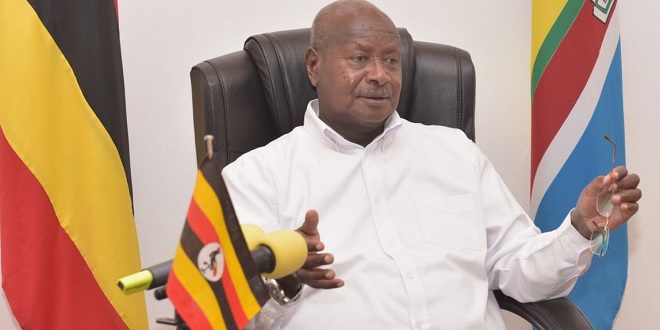
#COVID-19: Museveni set to address nation today to clarify on yesterday’s directives

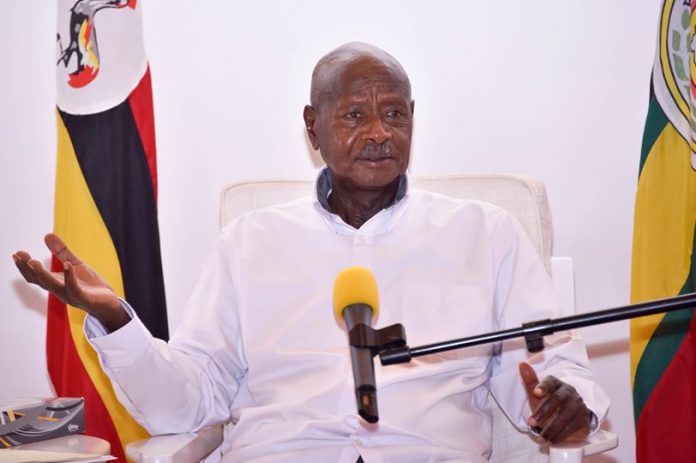
President Yoweri K. Museveni


President Yoweri Museveni is set to address the nation again today at 8 pm to clarify on the number of issues he highlighted yesterday.

In his 14th Covid-19 nation address yesterday that left many Ugandans confused as whether he has eased the lockdown or stayed it as they couldn’t figure to resume work or stay home until June 2, 2020 when free public masks would be distributed.

In his address, Mr. Museveni indicated that public transport was free for operation provided they carried half of the passengers in the taxis. He also said this was possible after distribution of free masks to the people by government.

After sharp criticism from the public reaction to his address, Mr. Museveni has decided to address the nation today and clarify on the some of the directives.

This morning Senior Presidential Press Secretary, Don Wanyama in a tweet said some of the directives had been misunderstood and therefore, the need to clarify them.

“After receiving lots of feedback from the public on his address last evening, @KagutaMuseveni will today, at 8pm, hold a televised address to respond to some of the issues”.

Stories Continues after ad

NSSF supports mid-term benefits to members

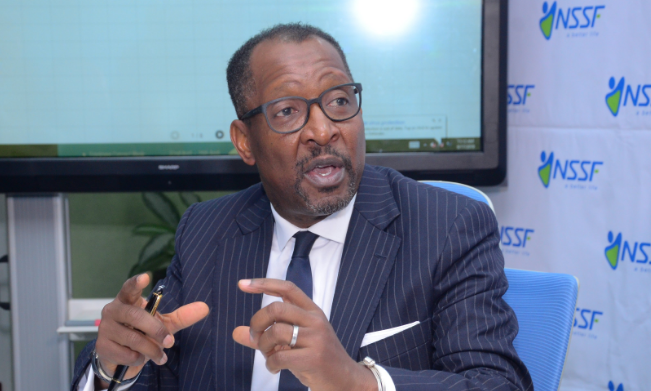
NSSF Managing Director Richard Byarugaba


Dear Esteemed Member,


The global outbreak of #COVID-19 has disrupted all economies around the world. The rapid spread of the virus has posed massive health, economic and social challenges to everyone. In order to limit the transmission of the disease, our leaders implemented measures including the complete lock down of certain parts of the economy. These measures have helped Uganda to avoid the deadly human toll seen in other countries. However, the unavoidable disruption to economic activities has raised unemployment levels in recent months. Consequently, we have witnessed a heightened level of stress among our members that have lost means of their livelihood. This has brought to the forefront the role of NSSF to its many members. Understandably, some politicians and sections of the general public have been calling for the Fund to pay out a portion of accumulated contributions to its members. We feel your pain and understand your outcry.

Following this outcry, we shared with our line Minister our understanding of the worst case scenario of the economic implications of the proposal to pay out an unplanned 20% of the Fund to its members. We owed it to the Minister, our members and all Ugandans to be honest in the analysis to facilitate the process of making the right decisions that need to be made. Understandably, this analysis may have given a wrong impression that NSSF does not in any way support mid-term benefits. That is far from the truth. In the final paragraph of the letter to the Minister, we reiterated our support for planned mid-term benefits, that are embedded within the NSSF Amendment Bill before Parliament. We must clarify that the current legislation, NSSF Act Cap 222, that governs the Fund’s operations does not provide for mid-term benefits and regrettably has limited our ability to offer you new benefits.

Before the outbreak of the #COVID-19 pandemic, together with various stakeholders especially the Trade Unions, the Fund strongly supported amendments to the NSSF Act which among other changes provides for additional benefits to the existing age benefits, invalidity benefit and survivors benefit. The proposed amendments are currently before Parliament. The purpose of the additional benefits is not only to provide a degree of income security when faced with life’s contingencies such as todays’ pandemic but also safeguard the retirement goals of our members.

Once this bill is passed into law, the Fund will be able to do the following, among others:

1. Extend social security coverage to more Ugandans.

2. Improve the adequacy or value of benefits to our members.

3. Provide mid-term benefits to members during their working life that cover short-term to long-term needs such as unemployment/income replacement, education, medical and housing.

We, therefore, appeal to the Parliament of Uganda to fast track the NSSF Amendment Bill. We also encourage you, our member, through your MP to join us in calling upon the August House to urgently pass this law.

The Fund remains committed to you, our member and will never tire from promoting and protecting your interests.

Yours Sincerely,

Richard Byarugaba

MANAGING DIRECTOR

Stories Continues after ad

#Covid-19: Kazo DHO interdicted over

Coronavirus testing kits

Dr Samuel Tweheyo Kiroha, the District Health Officer-DHO of Kazo district has been interdicted for failing to respond to the corona virus alerts from the community and frustrating the presidential directives on combating the pandemic.

According to the letter authored by the District’s Chief Administrative Officer Leonard Tumusiime, the interdiction of the health officer follows communication from the Ministry of Local Government about the Health officer’s negligence of duty.

It is alleged that Dr Tweheyo was called to respond to corona virus alerts from patients and he failed to respond on account of lack of fuel. But according to the CAO, the DHO had all the necessary facilities including among others vehicles, fuel and facilitation to ensure that the alleged cases are attended to.

“Sadly, this happened when the nation has been hit by a disaster of #COVID and is grappling with measures to control the disease,” the CAO stated. He observed that as the Head of Health Services in the district, the DHO frustrated the presidential directive on the management of the pandemic. Uganda so far has 248 cases of #COVID-19, the majority of them recorded among truck drivers

Dr Tweheyo is barred from leaving the country without permission from the responsible officer and frequenting the office unless he is called to specify on issues that need his clarification. During this time, he will be paid half of his salary and his office will be managed by Bully Esther Kiden, the Assistant District Health Officer in charge of Maternal and Child health.

The DHO is one of the two doctors in Kazo District who can operate patients in the theater in case of any complication. His interdiction worsens an already stained health services in the district.


Stories Continues after ad

#covid-19: Museveni’s 14th speech leaves many confused

President Yoweri Museveni


President Yoweri Museveni 14th Covid-19 nation address has left many Ugandans confused as whether he has eased the lockdown or stayed it as they couldn’t figure to resume work or stay home until June 2, 2020 when free public masks will be distributed.

In his address, Mr. Museveni indicated that public transport was free for operation provided they carried half of the passengers in the taxis.

The President said the public transport, shops; bod-bodas for delivery were open but could wait until June, 2, 2020 when Nytil would distribute free masks from government.

“Once the issue of masks is addressed, the, shops selling general merchandise will open provided they are not in the shopping malls, shopping arcades and food markets. Boda-bodas won’t carry passengers yet. They should continue to carry cargo as they have been doing during the time of the lockdown” the President said.

However, his address has left many wondering whether the population waits for free distribution of mask on June 2, 2020 or resume immediately since most employees had bought personal masks.

“The president’s address is confusing because he wasn’t clear, how do you say you have opened up and yet at the same time you are appealing to the public to wait for June 2, 2020 when you will give free masks? We can’t be sure whether this is attainable because we were promised food which we have never received after 60 days home.”  Wondered one of the employers at one of the companies in Kampala?

“We are going to open up but opening up will require you to wear masks. These masks will be ready in two weeks”

President Museveni furthermore outlined areas not essential for opening as bars, night clubs gyms, saunas, swimming pools, hair saloons that will remain closed for 21 days as they can’t observe the rues of social distancing. He also stressed that private vehicles will be opened for operations as far as they carry less than three passengers.

On education, Museveni said it is only candidate classes that will be allowed to resume classes after free distribution of masks.

On hotel and restaurants, he said they will reopen provided they offer takeaway services until when the more 21 days are complete.


Stories Continues after ad

“We are not blocking mid-term access,” says NSSF boss Byarugaba

NSSF Managing Director Richard Byarugaba

NSSF Managing Director Richard Byarugaba has said the Fund is not blocking mid-term access to benefits by savers.

In an interview with UBC TV, Byarugaba clarified that the NSSF Act does not provide for mid-term access of benefits.

“I am a trustee and I have to ensure that I run the scheme based on rules that are written in the law,”Byarugaba told UBC, regarding calls by savers to be allowed mid-term access.

He added:”Of course,I do acknowledge that the period is a little different. It is almost traumatic and tragic and therefore we need to think about ways of making sure that our customers have a better life-which is our motto,”

Byarugaba further revealed that there are ongoing discussions to amend the NSSF Act and provide for mid-term access.

The NSSF(Amendment) Bill is currently before Cabinet for discussion and key among the proposed changes is a clause to allow midterm access to benefits.

Stories Continues after ad

Museveni to address the country for the 14th time on COVID-19 tomorrow at 8pm

President Yoweri Museveni

Tomorrow, Tuesday May 19, is the last day of the current 14-day lockdown in the fight against Corona Virus as extended by president Yoweri Museveni on May 6. On the same day (tomorrow), the President is expected to make his 14th address to the nation in regard to the fight against the pandemic.

By this Monday afternoon, the media was awash with reports of the president making the address today as announced by the presidential press secretary secretary, Linda Nabusaayi but moments before filing this report, Eagle Online established that the address has been postponed to tomorrow. In a tweet, Senior Press Secretary to the president, Don Wanyama announced this afternoon that “the 14th Presidential Address by H.E @KagutaMuseveni on the Covid-19 pandemic which was slated for today has been moved to tomorrow, Tuesday, May 19, 2020 at 8pm.”

This comes at a time when the country has more than 200 positive cases of COVID-19.

Museveni is expected to reassure the nation on steps to be taken in controlling the statistics from further escalating while several Ugandans seem to be ‘tired’ of the lockdown.

The presidential address shall be live on all TVs and Radios at 8:00pm.

At the time of the last presidential address – 13 days ago, the confirmed cases were less than 100, but are now 227 with the cumulative number of foreign truck drivers who have tested positive for COVID-19 in Uganda at a record 125.

There are reports indicating that cabinet shall this Monday advise the president to announce lifting more lockdown measures.

On Saturday, May 16, 2020 the president issued a directive allowing only truck drivers with negative test results to be allowed entry into Uganda.

This was revealed by Dr Jane Ruth Aceng, the minister of Health.

Accordingly, the Ministry met representatives of the Truck Owners and National Logistics Platform and resolved to mobilize, counsel and test all truck drivers from Uganda.

“We will adopt a “Truck Driver Journey Management System” using a mobile application to monitor truck drivers on transit.

The above actions will start with immediate effect. These among other strategies are aimed at minimizing evident risks for spread is COVID19 amongst Ugandans,” she said.

It came at a time when Ugandans were blaming the government for not devising means to control the truck drivers.

Stories Continues after ad

It is unlawful deduction of wages for the Uganda national response to #Covid-19

#Covid-19 national task-force.


In a letter to employers by the Chairman of the National Response to Covid-19  task force, the Office of the Prime Minister appeals for UGX 10,000  to be deducted from all employed workers’ wages as a contribution to the fight against #Covid-19.

Sections 44 to 46 of the Employment Act 2006 ( EA 2006)  set out the provisions that protect employees from unauthorized deductions (commonly known as “unlawful deductions”) being made from their wages.

It is unlawful for an employer to make a deduction from a worker’s wages unless:

  • The deduction is required or authorised by law or a provision in the worker’s contract; or
  • The employee has given their prior written consent to the deduction.

The law on unlawful deductions is important as it is through it that employees can use to claim unpaid (or underpaid) wages in the employment tribunal while the employment relationship subsists.

When the unlawful deductions law applies

Who is protected?

The protection against payments or unlawful deductions from wages applies to all employees:

“This includes any person who has entered into a contract of service or an apprenticeship contract, including, without limitation, any person who is employed by or for the Government of Uganda, including the Uganda Public Service, a local authority or a parastatal organisation but excludes a member of the UPDF.”

What are “wages”?

Wages are defined by section 2 of the EA 2006 as:

“Remuneration or earnings, however designated or calculated,

capable of being expressed in terms of money and fixed by mutual agreement or by national laws or regulations, which are payable under an oral or written contract of service for work done or to be done, or for services rendered or to be rendered but excluding any contributions made or to be made by the employer in respect of his or her employee’s insurance, medical care, welfare, education, training, invalidity, retirement

pension, post-service gratuity or severance allowance;”

What is a “deduction”?

Where the total wages paid by an employer to an employee is less than the net amount of the wages paid the deficit counts as a deduction. In this case where the employer without prior written consent from his or her employee deducts Shs10, 000 from wages for the response to the #Covid-19 as per the letter from the Office of the Prime Minister is unlawful deduction.

No overall reduction in pay

Where an employer makes a unilateral reduction in an employee’s wages by removing or reducing a payment to which the worker is contractually entitled, it appears that this will still amount to an unlawful deduction even if the employer increases another aspect of the employee’s wages so that there is no overall loss in pay.

In Pendragon plc v Nota EAT 0031/00, the English Employment Appeals Tribunal upheld a tribunal’s decision that an employer who had stopped paying an employee overtime pay to which he was contractually entitled had made an unlawful deduction from wages, even though the employer had unilaterally increased the premium rate of pay in order to offset the shortfall in overtime pay. The employee had never accepted the quid pro quo arrangement and had in fact protested. As a result of his protests, the contractual overtime rate was reinstated without any change being made to the new premium rate. However, he was not paid backdated overtime pay. The Appeal Tribunal ruled that it was this failure that amounted to the unlawful deduction.

Threatened deductions

The letter to employers was written on May 12, 2020 by the Office of the Prime Minister and many employees will possibly have to wait at the end of this month to find out if Shs10, 000 is actually deducted by their employers as only an actual deduction can be the subject of a complaint. In Mennell v Newell & Wright (1997) IRLR 519, the UK Court of Appeal held that for a tribunal to have jurisdiction in an unlawful deductions claim “there must be an actual deduction” and the tribunal had no jurisdiction to hear a complaint about a threatened deduction

Unilateral reductions in pay

If an employer, without contractual authority or individual, reduces an employee’s wages, this will amount to unlawful deductions of wages. In Bateman and others v Asda Stores Ltd [2010] IRLR 370,  the English Employment Appeals Tribunal held that the employer was entitled to unilaterally introduce a new pay scheme which meant that some employees suffered a reduction in pay. This was only possible because the employer’s staff handbook which had been incorporated into the employees’ contracts, and which allowed the employer to change the terms of the handbook to reflect the changing needs of the business. The Employment Appeals Tribunal considered that the changes to the pay scheme were consistent with that provision, and that there had been no unlawful deductions from the employees’ wages. If, however, there is no such applicable term and an employer unilaterally imposes a reduction in pay, an employee can:

  • Accept that the employer’s repudiatory breach and resign and claim constructive dismissal;

When deductions are permitted

Section 46 (a)- (d) of the EA 2006 deals with permitted deductions and it states:

“(a) an amount in respect of any tax, rate, subscription on contribution imposed by law;

(b) where the employee has previously given his or her written consent to a deduction being made, the deduction being in respect of any amount representing a contribution to any provident or pension fund or scheme established or maintained by the employer or some other person;

(c) deduction by way of reasonable rent or other reasonable charge for accommodation provided by the employer for the employ, or the employee’s family, where the employee has agreed to the deduction; and

(d) union dues, deducted in accordance with section 50.

Written consent of employee as per section 46(b) of the EA 2006

A deduction will not be unlawful if the employer has prior written consent from the employee. Prior written consent could be given via a written contract which has been given to the employee before the deduction was made, or an express or implied term, the existence and effect of which have been notified to the employee in writing before the deduction is made.

Like many employees have shared the letter on social media, most employers would possibly think it is wise to do the same by displaying the letter on the staff notice boards. This was the case in Kerr v The Sweater Shop (Scotland) Ltd [1996] IRLR 424, where employer displayed a notice in the factory indicating changes to the company’s rules and regulations. The Court in Kerr held that the display of a general notice on a notice-board is not sufficient. Section 46 of the EA 2006 requires that the prior consent is given individually by each affected employee. The courts will always want clear written evidence and or consent given before the event giving rise to the deduction, not just before the deduction itself.

Remedies

An employee whose wages are unlawfully deducted in response to #Covid-19 letter from the Office of the Prime Minister is entitled to claim for an unlawful deduction from his or her wages or an unlawful payment to the employer via a claim to an employment tribunal. He or she can seek a declaration claim payment (or repayment) of the sum unlawfully deducted by the employer, and in some cases compensation for further financial loss.


Thomas Ddumba,

UK Lawyer

tomddumba@gmail.com

Stories Continues after ad

Extension of the 2021 general election without amendment of the constitution

Mr. Enoch Okoler Opio.


A few days ago, I opined that the debate of whether or not to hold 2021 general elections is tantamount to shadow boxing provided that the status quo is maintained.

Picking it’s supremacy from article 2, the constitution of the republic of Uganda unequivocally highlights that, Uganda will go to general elections after every five years pursuant to articles 1(4), 59(1), 77(3), 78(2), 105(1) and 181 unless there exists in Uganda such circumstances that hinder the country to organize a normal general election, these are provided under article 77(4) and recaptured in article 103(3)(d) of the constitution.

Article 77(4) provides that, ‘where there exists a state of war or a state of emergency which would prevent a normal general election from being held, Parliament may, by resolution supported by not less than two-thirds of all members of Parliament, extend the life of Parliament for a period not exceeding six months at a time.’

Well, reading the article first above mentioned one would easily infer that, the circumstances highlighted under article 77(4) are absolute; and therefore, existence of the same in the country automatically stays the idea of holding elections in abeyance.

To construe article 77(4) of the constitution, one ought to focus on the phrase thus, ‘where there exists a state of war or a state of emergency which would prevent a normal general election from being held…..’ This literally means that, it is not automatic that whenever there exists a state of war or a state of emergency in the country, elections must be suspended, contrariwise it qualifies the point that the state of war or state of emergency must be such as to prevent the country from holding a normal general election.

The challenge I find with this provision is that, it does not qualify what amounts to preventing a country from holding a normal general election subsequently positioning the country at the mercy of legislators, the danger with this is that, if such an issue is tabled before a bunch of frightened legislators characteristically engulfed in phobia for their electorates like those in the 10th Parliament, then, I think that, the country will be destined for incessant extensions of general election.

That said, it is important to note that juxtaposing article 77(4) with 110(4) creates a lacuna in our constitution, consider a situation where a state of emergency is declared in conformity with article 110(1) and (3) a few months away from the country’s general election, and then the said state of emergency continues to exist beyond the time the country is to hold her general election, of course parliament will make an extension of the elections after being convinced that an election cannot be held given the circumstances (these being influenced by their phobia to meet electorates).

There exists a legal gap in our laws that makes it impossible for the country to handle a scenario where Parliament continuously and unfairly extends the state of emergency pursuant to article 110(4), and then subsequently extends elections pursuant to articles 77(4) and 103(3)(d) while giving unreasonable circumstances, without causing a constitutional crisis, after all, it’s at their discretion to determine the gravity of what the constitution highlights as being circumstances that warrant extension in both cases.

The other issue that my learned friend Deus Mukalazi raises in his article published by Eagle online on 15th April, 2020 as being a lacuna though, I squarely disagree with him is that article 105(1) of the constitution must be adhered to regardless of whether or not the country is in a state of emergency which according to him, means that the president must vacate his office on expiry of the five year tenure after which the speaker of Parliament proceeding under article 104(7) takes over as the caretaker of the office of the presidency.

And that, that is when articles 77(4) and 103(3)(d) are motioned then the speaker of Parliament continues as a caretaker until such a time when a substantive president is voted.

Deus further argues that, though expiry of the president’s tenure while there exists a state of emergency in the country is not among the circumstances highlighted under article 104(7) as being those that warrant the speaker to assume the caretaker role, the article nevertheless applies because the framers of the constitution did not envisage a situation of a state of emergency existing at the time when the country is bound to hold her general election.

With due respect, I find his argument outrageous and therefore not legally tenable because article 99 of the constitution vests all the executive powers in the president, and there is no other law suggesting otherwise when the country is in a state of emergency.

Therefore, I wish to argue that a state of emergency in the country though has the effect of rendering some articles of the constitution inactive, it doesn’t affect articles that establish, give functions and sustain the operation of the three arms of government ipso facto, the legal effect of such articles stipulating the tenure of office of political leaders is driven into abeyance by declaration of a state of emergency, the counting stops thus the president, once a state of emergency is declared retains the executive powers until such a date when elections are held and the president elect takes the oath of allegiance to serve the country as president.

That said, it should be noted that only the president is vested with the duty under article 99(3) to ensure safety of Ugandans, therefore removal of the person whose duty is inter alia to ensure safety of Ugandans in a situation where the safety of the citizens is paramount doesn’t add up logically, as such the state cannot be without a substantive president save under such circumstances highlighted in articles 104(7) and 109 clauses 1, 4 and 5 of the constitution.

While closing my submission on this issue, I have deemed it necessary to furnish here provisions of the law that further buttress the argument that the president’s office even under a state of emergency remains operational vide article 110(6) of the constitution and section 100(1)(d) of the Local Government Act. Article 110(6) provides thus, ‘during any period when a state of emergency declared under this article exists, the President shall submit to Parliament at such intervals as Parliament may prescribe, regular reports on actions taken by or on behalf of the President for the purposes of the emergency’.

Also, under section 100(1)(b) of the Local Government Act the president is given powers to takeover the administration of local governments during a state of emergency, the law provides thus, ‘the President may, with the approval of two-thirds of all the
members of Parliament, assume the executive powers of any district in any
of the following circumstances—
(a)……..
(b) where a state of emergency has been declared in that district or
in Uganda generally’

Lastly all the constitutional provisions aforementioned notwithstanding, Uganda is not under a state of war or a state of emergency thus making it implausible for articles 110(3) and 77(4) of the constitution to be motioned subsequently rendering it impossible for the country to extend the 2021 general election; that said, unfortunately under circumstances where the state of emergency has been declared pursuant to article 110(1), the general election would be extended to even beyond 2030 and the decision remains legally binding.

Au revoir

Enoch Okoler Opio.

Stories Continues after ad

Former LOP seeks help for flood hit Kasese residents

Former LOP, Winfred Kizza and Woman MP Kaseses district receiving relief items from Tundulu Jonathan, Guild President Kyambogo University.

The former Leader of Opposition in Parliament and Kasese district woman MP Winfred Kiiza has appealed to Ugandans and well-wishers to help Kasese residents who are going through hard times since the area was hit by floods.

Ms Kizza says Kasese people are in between a hard place and a rock.

A week ago, River Nyamwamba burst its banks after it rained heavily in many parts of western Uganda. Kasese district suffered the effects of this rain, flooding when the river burst its banks. Roads and bridges were destroyed, and homes washed away, leaving many people homeless.

More than 100,000 people are reportedly affected by floods. Gardens, bridges, schools, houses and other properties were destroyed.

“The fact that they were forced into internally displaced people’s camps, social distancing aspects are not being respected and during such a time I call upon the government to speed up the process of helping out people with what they can use in camps because they are hungry, helpless, naked and homeless, so we need a lot of interventions and going forward, I pray that government looks at a total reconstruction at Kasese district.” Kiiza said.

Kiiza said that the situation in Kasese is tough, and that she is worried that her people are not now going by the dictates of standing operating procedures that was given for the prevention and management of #Covid-19.

She further explained that district was  still struggling with killings of 2016 that left many people helpless and most of the people are still incarcerated in Jinja, as people have been struggling in Coronavirus lockdown and now floods have completely put them down.

Kiiza notes that they have received support from individuals, political parties and organizations and she appreciates their contribution.

In an interview with Eagle Online, she appeals to Ugandans to follow the example of Kyambogo Guild Leadership that has contributed towards Kasese people.

“I have this morning received 100 kilograms of maize flour, donated by the Kyambogo Guild leadership, headed by Jonathan Tundulu. The donation is directed towards restoring hope of the victims of Kasese floods. I thank them for the kindness and good leadership.” Kiiza said.

She added “Thank you Kyambogo team, food is highly needed in Kasese, one side of that was affected by the river floods displaced a total of 3919 during our visit as neighboring hospital. So I believe this relief will surely help our people.” said Enos Maate , Executive Director at Fresh Waters Charity Ministry, Hospital and Projects administrator-Kagando Hospital in Kasese district.

There are other areas affected by floods like parts of Isingiro district that left local police and officials reported homes destroyed and around 5,000 people displaced, four people died in the floods, with others still missing.


Stories Continues after ad