Stanbic Bank
Stanbic Bank
23.3 C
Kampala
Stanbic Bank
Stanbic Bank
Home Blog Page 1047

Extension of the 2021 general election without amendment of the constitution

Mr. Enoch Okoler Opio.


A few days ago, I opined that the debate of whether or not to hold 2021 general elections is tantamount to shadow boxing provided that the status quo is maintained.

Picking it’s supremacy from article 2, the constitution of the republic of Uganda unequivocally highlights that, Uganda will go to general elections after every five years pursuant to articles 1(4), 59(1), 77(3), 78(2), 105(1) and 181 unless there exists in Uganda such circumstances that hinder the country to organize a normal general election, these are provided under article 77(4) and recaptured in article 103(3)(d) of the constitution.

Article 77(4) provides that, ‘where there exists a state of war or a state of emergency which would prevent a normal general election from being held, Parliament may, by resolution supported by not less than two-thirds of all members of Parliament, extend the life of Parliament for a period not exceeding six months at a time.’

Well, reading the article first above mentioned one would easily infer that, the circumstances highlighted under article 77(4) are absolute; and therefore, existence of the same in the country automatically stays the idea of holding elections in abeyance.

To construe article 77(4) of the constitution, one ought to focus on the phrase thus, ‘where there exists a state of war or a state of emergency which would prevent a normal general election from being held…..’ This literally means that, it is not automatic that whenever there exists a state of war or a state of emergency in the country, elections must be suspended, contrariwise it qualifies the point that the state of war or state of emergency must be such as to prevent the country from holding a normal general election.

The challenge I find with this provision is that, it does not qualify what amounts to preventing a country from holding a normal general election subsequently positioning the country at the mercy of legislators, the danger with this is that, if such an issue is tabled before a bunch of frightened legislators characteristically engulfed in phobia for their electorates like those in the 10th Parliament, then, I think that, the country will be destined for incessant extensions of general election.

That said, it is important to note that juxtaposing article 77(4) with 110(4) creates a lacuna in our constitution, consider a situation where a state of emergency is declared in conformity with article 110(1) and (3) a few months away from the country’s general election, and then the said state of emergency continues to exist beyond the time the country is to hold her general election, of course parliament will make an extension of the elections after being convinced that an election cannot be held given the circumstances (these being influenced by their phobia to meet electorates).

There exists a legal gap in our laws that makes it impossible for the country to handle a scenario where Parliament continuously and unfairly extends the state of emergency pursuant to article 110(4), and then subsequently extends elections pursuant to articles 77(4) and 103(3)(d) while giving unreasonable circumstances, without causing a constitutional crisis, after all, it’s at their discretion to determine the gravity of what the constitution highlights as being circumstances that warrant extension in both cases.

The other issue that my learned friend Deus Mukalazi raises in his article published by Eagle online on 15th April, 2020 as being a lacuna though, I squarely disagree with him is that article 105(1) of the constitution must be adhered to regardless of whether or not the country is in a state of emergency which according to him, means that the president must vacate his office on expiry of the five year tenure after which the speaker of Parliament proceeding under article 104(7) takes over as the caretaker of the office of the presidency.

And that, that is when articles 77(4) and 103(3)(d) are motioned then the speaker of Parliament continues as a caretaker until such a time when a substantive president is voted.

Deus further argues that, though expiry of the president’s tenure while there exists a state of emergency in the country is not among the circumstances highlighted under article 104(7) as being those that warrant the speaker to assume the caretaker role, the article nevertheless applies because the framers of the constitution did not envisage a situation of a state of emergency existing at the time when the country is bound to hold her general election.

With due respect, I find his argument outrageous and therefore not legally tenable because article 99 of the constitution vests all the executive powers in the president, and there is no other law suggesting otherwise when the country is in a state of emergency.

Therefore, I wish to argue that a state of emergency in the country though has the effect of rendering some articles of the constitution inactive, it doesn’t affect articles that establish, give functions and sustain the operation of the three arms of government ipso facto, the legal effect of such articles stipulating the tenure of office of political leaders is driven into abeyance by declaration of a state of emergency, the counting stops thus the president, once a state of emergency is declared retains the executive powers until such a date when elections are held and the president elect takes the oath of allegiance to serve the country as president.

That said, it should be noted that only the president is vested with the duty under article 99(3) to ensure safety of Ugandans, therefore removal of the person whose duty is inter alia to ensure safety of Ugandans in a situation where the safety of the citizens is paramount doesn’t add up logically, as such the state cannot be without a substantive president save under such circumstances highlighted in articles 104(7) and 109 clauses 1, 4 and 5 of the constitution.

While closing my submission on this issue, I have deemed it necessary to furnish here provisions of the law that further buttress the argument that the president’s office even under a state of emergency remains operational vide article 110(6) of the constitution and section 100(1)(d) of the Local Government Act. Article 110(6) provides thus, ‘during any period when a state of emergency declared under this article exists, the President shall submit to Parliament at such intervals as Parliament may prescribe, regular reports on actions taken by or on behalf of the President for the purposes of the emergency’.

Also, under section 100(1)(b) of the Local Government Act the president is given powers to takeover the administration of local governments during a state of emergency, the law provides thus, ‘the President may, with the approval of two-thirds of all the
members of Parliament, assume the executive powers of any district in any
of the following circumstances—
(a)……..
(b) where a state of emergency has been declared in that district or
in Uganda generally’

Lastly all the constitutional provisions aforementioned notwithstanding, Uganda is not under a state of war or a state of emergency thus making it implausible for articles 110(3) and 77(4) of the constitution to be motioned subsequently rendering it impossible for the country to extend the 2021 general election; that said, unfortunately under circumstances where the state of emergency has been declared pursuant to article 110(1), the general election would be extended to even beyond 2030 and the decision remains legally binding.

Au revoir

Enoch Okoler Opio.

Stories Continues after ad

Former LOP seeks help for flood hit Kasese residents

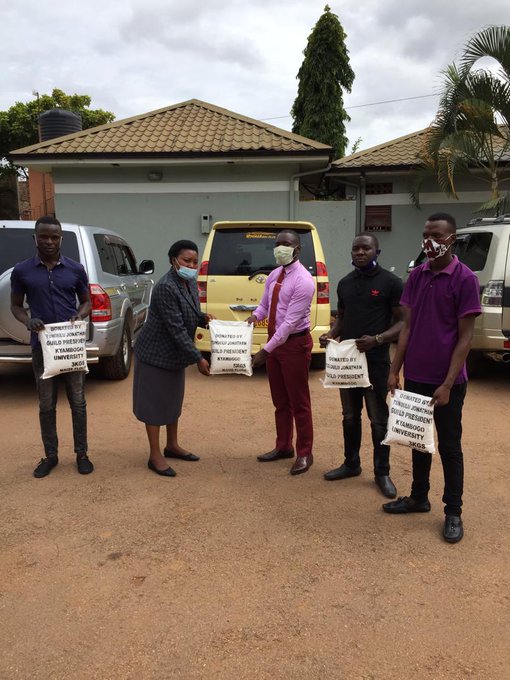
Former LOP, Winfred Kizza and Woman MP Kaseses district receiving relief items from Tundulu Jonathan, Guild President Kyambogo University.

The former Leader of Opposition in Parliament and Kasese district woman MP Winfred Kiiza has appealed to Ugandans and well-wishers to help Kasese residents who are going through hard times since the area was hit by floods.

Ms Kizza says Kasese people are in between a hard place and a rock.

A week ago, River Nyamwamba burst its banks after it rained heavily in many parts of western Uganda. Kasese district suffered the effects of this rain, flooding when the river burst its banks. Roads and bridges were destroyed, and homes washed away, leaving many people homeless.

More than 100,000 people are reportedly affected by floods. Gardens, bridges, schools, houses and other properties were destroyed.

“The fact that they were forced into internally displaced people’s camps, social distancing aspects are not being respected and during such a time I call upon the government to speed up the process of helping out people with what they can use in camps because they are hungry, helpless, naked and homeless, so we need a lot of interventions and going forward, I pray that government looks at a total reconstruction at Kasese district.” Kiiza said.

Kiiza said that the situation in Kasese is tough, and that she is worried that her people are not now going by the dictates of standing operating procedures that was given for the prevention and management of #Covid-19.

She further explained that district was  still struggling with killings of 2016 that left many people helpless and most of the people are still incarcerated in Jinja, as people have been struggling in Coronavirus lockdown and now floods have completely put them down.

Kiiza notes that they have received support from individuals, political parties and organizations and she appreciates their contribution.

In an interview with Eagle Online, she appeals to Ugandans to follow the example of Kyambogo Guild Leadership that has contributed towards Kasese people.

“I have this morning received 100 kilograms of maize flour, donated by the Kyambogo Guild leadership, headed by Jonathan Tundulu. The donation is directed towards restoring hope of the victims of Kasese floods. I thank them for the kindness and good leadership.” Kiiza said.

She added “Thank you Kyambogo team, food is highly needed in Kasese, one side of that was affected by the river floods displaced a total of 3919 during our visit as neighboring hospital. So I believe this relief will surely help our people.” said Enos Maate , Executive Director at Fresh Waters Charity Ministry, Hospital and Projects administrator-Kagando Hospital in Kasese district.

There are other areas affected by floods like parts of Isingiro district that left local police and officials reported homes destroyed and around 5,000 people displaced, four people died in the floods, with others still missing.


Stories Continues after ad

Education during #Covid-19 lockdown: The challenges and consequences of Online teaching approach in Somaliland

Mr. Adam Duale Ali


By: Adam Duale Ali

The Coronovirus disease (Covid-19) is caused by widespread socio-economic impacts in almost all spheres of life throughout the globe. This fatal virus has so far infected more than 2.5 million people and caused about 177,000 deaths in almost all countries around the world. Due to unavailability of a vaccine and effective medicines, most of the countries around the world are implementing the strategy of “lockdown” to slow the spread of Coronovirus. More than a third of the earth’s population is under some form of restriction in an effort of limiting the number of cases and slowing the spread of virus. The lockdown is perhaps the only way left to fight virus, which has forced more than half of the human to stay at home and stay healthy.

This pandemic disease has affected education system worldwide, leading to the total shutdown of schools, colleges and universities. Most of governments around the world have temporarily closed all educational institutions in an effort to stem the spread of the COVID-19 pandemic. According to UNESCO research, as of April 21, 2020, approximately 1.723 billion students have been impacted due to school closures in response to the pandemic, 191 countries have implemented nationwide closures and impacting about 98.4 per cent of the world’s student population.

In response to significant demand, UNESCO  has suggested the use of distance learning programs and open educational applications and platforms that schools and teachers can easily use to reach learners remotely and limit the disruption of education.

In Somaliland, the whole country closure of the education intuitions was announced during the second week of March although the closure was a bit earlier. Initially, the closure was for four weeks but now the National Preparedness Committee for Covid-19 has been extended another four weeks starting from 18 April, 2020, till May 15, 2020 – and perhaps schools and colleges will remain off till May 31 for the Ramadan and Eid-ul-Fitr vacation. The educational term in most of the schools and colleges was near at the final year.

Urgently to respond the staidness issue of covid-19 lockdown and in an attempt to save students from educational losses, the Ministry of Education and Science (MoES) implemented online based education and urged the primary and secondary schools to initiate online classes. Most schools have been applied distance learning system and thousands of students in cities and towns are glued to Television broadcasts and Smartphone screens as teachers take to online apps for lectures, tutorials and assessments. The Somaliland Ministry of Education and Science with the help of National Television launched Platform to support the students learn at home with the teachers delivering lectures via SLNTV and Radio without interruption. Most Teachers of the private schools have started to upload lectures through Google Classroom, YouTube, Facebook pages, WhatsApp and private televisions, so that students can go through these lessons at their convenience.

The challenges of online based learning in Somaliland.

In the light of National Preparedness Committee for Covid-19 guidelines, the education institutions of the country are trying to engage students through different online classes via the communication tools (TVs and Radios) and various social media platforms. It is confirmed that the online mode of teaching is not applicable for every student.

The traditional system of face to face teaching requires class activities and out of class activities. The teachers remain committed to guide students for building their ideas on their discipline. The significant advantage for students in such environment remains the presence of instructors, his motivation, support and guidance. In the online mode, it is a challenge for the teachers to perform the above mentioned roles. He can only respond by both synchronous and asynchronous design of mode in which he may be adopt a strategy to define, explain and exemplify the ideas.

Apart from that, many students, especially those living in rural areas, lack the steady internet connection and the devices to be able to learn remotely. Huge number of children has not taken part in online lessons during Coronovirus lockdown. However, all students might not have communication tools and internet connections in their homes and those who do may not afford expensive internet packages.

Furthermore, while mobile phones and Televisions can enable learners’ access to information, connect with their teachers; about half of the learners live in locations not served by mobile networks, almost in remote areas. Even teachers in some regions where Technology and other distance methodologies are less available, the online teaching has been even more difficult or impossible at this time of unprecedented educational disruption. Some households, Parents are not sure whether their children are studying or just spending time on the screen due to lack of knowledge capacity. As a ministry of education, it is important to conduct daily assessment of distance learning practices and follow up regularly with each student and pay special attention to disadvantaged background students, so they are not left behind.

The biggest challenge is being created around lab classes. Most of the lab classes of technical disciplines can’t be conducted in online. This is a challenge confronted for both teachers and students. Some schools are not going to carry on the education in online platforms considering psychological condition, accessibility availability of internet, and financial condition of the students as they may be the barriers of online education.

Government should be considered the element of “Social justice” and remove “social inequalities’ while making and formulating any policy. The internet is still a luxury for many households, while students from low income families are not able to quickly adjust towards online teaching. The problem is particularly impacted for students living in marginal rural areas. The authorities of education sector in Somaliland should plan to address most of these issues and try to convince internet companies to offer cheaper internet bundles for students during Coronovirus lockdown. This current situation requires active and supportive participation to create an enabling online environment for teaching and learning, which is best for the all students who are country’s asset and potential to adopt new ways of teaching and learning in these times.

Online medium based teaching is only effective for those who do have access to the right technology; there is evidence that learning online can be more effective in a number of ways. The main problems are a lack of capacity of some instructors and the affordability of the internet by the students. The online teaching system is being effectively used in technologically developed countries during COVID-19 lockdown but it cannot be fully followed in Somaliland. It has experienced its own problems, and should have to find local solution keeping in view the socio-economic conditions of all students.


Master of Development Studies

United International University

Bangladesh- Dhaka

Ademduale@gmail.com

Stories Continues after ad

55th Nation of Africa: The Rebirth of British Somaliland Protectorate

The flag of Somaliland


By  Ismail Yusuf Adan
Graduate student at the University of Nairobi

Nairobi, Kenya
Email: ismaelshirwac@students.uonbi.ac.ke


The former British Protectorate in the Horn of Africa, officially known as the Republic of Somaliland is a nation, arguably the most democratic state in East Africa, with many success stories that hardly imaginable to happen in the continent, yet the world is insisting NOT to recognize and turned a blind eye. Somaliland has managed to build peace in the flaming and volatile region, the Horn of Africa; right next to Somalia which tops the list of the failed states, in the world. It has established a fully functional and democratic government with NO international assistance, conducted series of elections which was confirmed as free and fair by the international community, in a continent where people barely vote for their presidents and maintained the Montevideo criteria of statehood including; defined territory which is built upon the Anglo-Italian, Anglo-French and Anglo-Ethiopian treaties, having a functioning and forceful government which is democratically elected by the people, a permanent population of 5 million and the capacity to enter into relations with other states.

This former British Protectorate was the 12th African nation to become independent resulted from a Royal Proclamation of her Majesty Queen Elizabeth II. This means Somaliland became independent way before 42 African countries which, now, are sitting in the African Union (AU) and have the right to decide the fate of whether Somaliland becomes recognized by the AU or not. Soon after the independence, 34 members of the UN, including the five permanent members of the Security Council, recognized Somaliland as an independent and as a sovereign country. Unfortunately, that sovereignty didn’t last long and within 5 days the country, prematurely, got into an unrewarding union with their neighboring Somalia to make the Somali Republic. This unification was a preamble to the Greater Somalia ambition inspired by the Somali people in the region. That Union was never legal and formal. On the contrary, it was a turbulent and unsatisfactory, marriage.

After 31 years of difficulties, injustice, inequalities, and prejudice, that union ended horribly with 11 years of War which claimed the lives of a quarter of a million of the Somaliland people after civilians were shelled and cities were bombed and leveled it to the ground by the military aircraft of their government.

In 1991, Somalilanders defeated and destroyed the military deployed to their land by the military government, declaring their withdrawal from the failed union they have been part of, for more than 3 decades. This is where the miraculous and phenomenal African success story starts, and the most democratic country in east Africa begins its extraordinary journey, but before that let us have a glance at the history and some interesting incidents back in time.

The pre-colonial era of the Somali inhabited territory in the Horn of Africa


The Horn of Africa, because of its strategic location which is conducive to trading, has given the Somalis to involve in trade businesses and interact with different cultures. They used to export animal products, rare gums, ostrich feathers, and other products. Having access to both the Red Sea and the Indian Ocean, the Horn Africa became a trade hub and coiling station to the ships going to India. Thus, European interests began to crop up in the region, and in the 1880s The British, French, and Italians competed for the Somali territory, which later agreed to share. In 1887 Britain declared Somaliland a protectorate, leading to an Anglo-French agreement to define borders between the countries of new colonies of British Somaliland and French Somaliland (current Djibouti). While Italy found its fair share to colonize Somalia as La Somalia Italiana. The British also colonized Kenya and right before the disbanding of the British colony in the region, they granted the Somali inhabited North Eastern Province administration to Kenya, as well as the Hawd and Reserve Area or Ogaden region to be part of Ethiopia. From there on, Somalis were divided into 5 administrative borders.

The colonial dissolution and the outcome of the greater Somalia Dream

The concept of Greater Somalia protrudes back to the beginning of the 20th century, and the idea was to unite all Somali speaking nations, comprising regions in which ethnic Somalis live or historically inhabited, encompassing not only Somaliland, Somalia, and Djibouti, but also the North Eastern Province of Kenya and current Somali state of Ethiopia included. That’s why the blue light flag which was originally comprehended and served as an ethnic flag, has a five-pointed star at the center, each point representing an area where the Somali ethnic groups have resided.


Shortly, after Somaliland got independence from Britain, they tried to practice what they had been preaching for decades and voluntarily united with their counterpart, La Somalia Italiana which got independence from Italy only four days after Somaliland. Although the two entities united as a single nation, British Somaliland and the Italian Somalia were, from an institutional perspective, two separate countries. Italy and the United Kingdom had left the two with separate administrative, legal, and education systems in which affairs were conducted according to different procedures and in different languages. Police, taxes, and the exchange rates of their respective currencies also differed.

At first, the newly formed parliament of the two united countries promptly created a new Act of Union but it was widely rejected in the State of Somaliland. This was exactly where the confusion started but it was not limited to that. Somalia turned the tables and took advantage of their kind-hearted brothers. A huge injustice and disparities in the power-sharing followed where Mogadishu benefited all state resources. As a result of this, in December 1961, a group of Somaliland junior Officers attempted a coup d’état intended to restore the independence of the Republic of Somaliland, however, it was unsuccessful.

That dream of a greater Somalia died after Djibouti received independence from France and refused to join the union, preferring to stand separate and establish their own different country. Having said that, the NFD and the Hawd & Reserve area remained to be parts of Kenya and Ethiopia, respectively. Furthermore, the union between the other two wasn’t hale and hearty.

That dissatisfaction of the Somalilanders with the Act of Union and power-sharing was a subject that the successive civilian governments ignored and the situation was completely exacerbated when the despotic Siad Barre came to power in a coup following the assassination of President Sharmake of the Somali Republic. Barre not only politically marginalized Somaliland, but economically deprived their cities, and later on, started killing anyone from these part of the country who speaks against injustice. That worsened situation derived a group of students, business people, former civil servants, and former politicians to found the Somali National Movement (SNM) which then turned to be an armed liberation front. According to Human Rights Watch, with the formation of the SNM, Somaliland people have seen the worst atrocities. Serious and series of grave human rights violations, including extra-judicial executions of unarmed civilians, detentions without trial, unfair trials, torture, rape, looting, and extortion, have been a prominent feature of life in the towns and countryside in Somaliland.

During the ongoing conflict between the forces of the SNM and the Somali Army, the Somali government’s genocidal campaign against the people of Somaliland took place between May 1988 and March 1989, where the government’s military aircrafts maneuvered by South African and Rhodesian mercenaries were bombing schools, hospitals and residential areas of Somaliland cities and killed more than 200,000 civilians indiscriminately.


The rebirth of British Somaliland

In 1991, the Siad Barre regime was defeated by SNM forces. On the 18th of May, at a conference held in Burao; the second-largest city in Somaliland, in which traditional leaders of all clans that dwell the country attended, Somaliland declared its independence and withdrawal from its union with the Somali Republic.

A new journey began, and a series of reconciliation and peacebuilding conferences has been conducted. The peace that Somaliland has been enjoying for almost 30 years was home-grown and completely free from any external influence and intervention. It was a traditional and indigenous conflict resolution method, which also lead to the implementation of the disarmament, demobilization, and reintegration processes. However, the country remained peaceful for thirty years and was free from acts of terrorism, piracy, and any other form of social and political instabilities.

Although Somaliland is not internationally recognized, the country enjoys symbolic trappings of statehood: it has a national flag, a currency, a national anthem, organized and powerful army with a mandate to defend the independence and territorial integrity of Somaliland, a passport that’s accepted by several countries including the UK, Ethiopia, Djibouti, Kenya, UAE, etc, and demarcated borders which are based on the colonial lines as per the Cairo Declaration on African borders in 1964.

Over the years, Somaliland, lacking any international assistance, has conducted a series of democratic free and fair elections where five different presidents succeeded the office. Sometimes an opposition leader won over an incumbent president and the transition of power was completely peaceful. Not only they have managed to hold presidential elections, but also a national referendum before that as well as parliamentary and local council elections were conducted. These elections were termed as free and fair by international observers. Moreover, Somaliland was the world’s first country to use iris recognition to register its voters.

Somaliland is also an example of freedom of press and expression. According to the last report of Freedom House, a US-funded organization based in the US, Somaliland is the most freedom country in the Horn of Africa, superior and way better than Ethiopia, Djibouti, Eritrea, Somalia, Sudan, South Sudan, Tanzania, and many other African countries.

Somaliland’s quest for recognition

The pursuit of Somaliland for recognition remained strong for many years, despite being overlooked by the International community. “Somaliland will remain independent even if we don’t get our rightful recognition for the coming 100 years ‘’ the former president H.E Ahmed Silanyo echoed at an occasion of 18th May commemoration, and that’s what every Somalilander of every age is going to tell to other parts of the world. The people are not hopeless, and despite their aspiration to be part of the International community, they also believe they can continue living and rising without recognition comparing their living standard with many countries which enjoy recognition from the outside world.

Also, an AU fact-finding mission visited Somaliland on the 30th of April 2005 and stayed the country for four days. They made a thorough assessment of the Somaliland situation and remarked in their report that Somaliland’s search for recognition is historically unique and self-justified, as such they recommended the AU to find a special method of dealing with this outstanding case.

As per the AU fact-finding report, there was an evident conviction and emotion among the Somalilanders that their “country” has all the attributes of an independent sovereign State, which they say the international community should objectively consider. Not only Somaliland satisfied the Montevideo criteria of statehood, but also achieved what most of the African and Arab countries failed to achieve.

In conclusion, as stated by the AU fact-finding mission to Somaliland, The lack of recognition ties the hands of the authorities and people of Somaliland as they cannot effectively and sustainably transact with the outside to pursue the reconstruction and development goals. The will of the people has to be respected and their accomplishment deserves to be rewarded, but it is never too late. Somaliland’s recognition could be a potential antidote to the problems of the Horn of Africa, and to that of their neighboring Somalia, in particular.


Ismail Adan is a sociologist and social scientist based in Nairobi. He is specializing in Disaster Management at University of Nairobi.

Stories Continues after ad

Gov’t speaks out on repatriating Ugandans

Mr. Ofwono Opondo.


The government has said plans are underway to begin repatriating stranded Ugandans with the process set to begin with a batch of nine citizens.

In a press statement,the Uganda Media Center Executive Director Ofwono Opondo said that 13 Ugandans will be repatriated and quarantined at their own cost .

Opondo released to the statement in an attempt to defuse growing anger after the government allowed tycoon Ben Kavuya to fly in his family from the United States.

In his letter,Mr Opondo revealed that Cabinet will on Monday finalize a draft paper to facilitate the return of many more Ugandans who wish to do so.

Stories Continues after ad

#COVID-19: Uganda cases reach 227 as 24 truck drivers test positive

Uganda's Health Minister, Dr. Jane Ruth Aceng.


The Ministry of Health has announced that 24 #Covid-19 cases have tested positive from 2558 samples and are all from truck drivers from the East African countries

The 24 new cases bring the total #Covid-19 cases to 227.

“Today, 16 May, 2020, 24 new #COVID-19 cases confirmed from 2,044 samples of truck drivers. This brings the total number of #COVID-19 cases to 227 in Uganda.
Elegu: 3 Ugandans, 2 Kenyans, Mutukula: 6 Tanzanians, 1 Ugandan, Malaba: 12 Kenyans”
On Friday, the Health Ministry posted “Today, 15 May, 2020, 43 new COVID-19 cases confirmed from 1,838 samples of truck drivers. This brings the total number of COVID-19 cases to 203 in Uganda. All 720 community samples have tested negative for COVID-19”

63 Ugandans and some foreign truck drivers have been discharged after successfully undergoing treatment.

Cases of Coronavirus were first reported in December last year in the Chinese city of Wuhan where it originated before hitting other parts of the world.

Stories Continues after ad

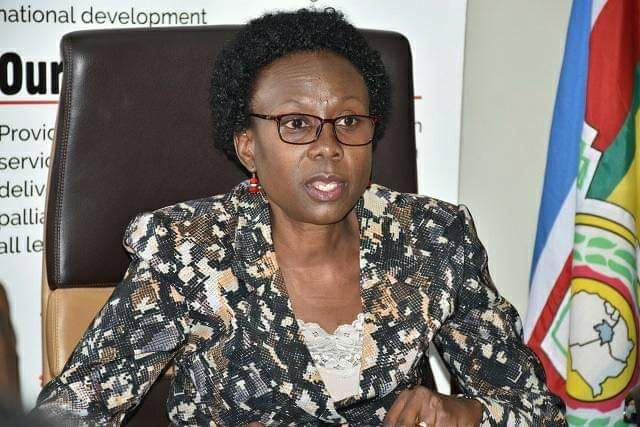
Reply to Geraldine Ssali Busuulwa, ex-NSSF Deputy MD

Trade Ministry PS, Geraldine Ssali who is facing allegations of causing financial loss.


To : Geraldine Ssali Busuulwa

EX NSSF Deputy MD

NSSFS LETTER TO THE MINISTER OF FINANCE PLANNING AND ECONOMIC DEVELOPMENT

Good evening Madam !Yesterday I came across a dossier allegedly written by you addressed to the Minister Of Finance, Planning and Economic Development .The letter alleges that the said Minister did seek your advice /opinion regarding NSSF on covid19 relief for its members ;paying 20% each of members’ balance .

I am an ordinary citizen and active member of the NSSF who is deeply interested in any discussion that relates to social protection.

I must extol you for dexterously putting your ideas across on this sensitive subject .That said, I wish to respond to contents of your dossier .I will for the purposes of this rebuttal assume that opinions there in are those of the Ex-NSSF Deputy MD .

To begin with, looking at the current debate, one can easily get tempted to believe that NSSF has a messaging problem .While NSSF has a legitimate reason to tell us whether they can afford to pay 20% or not ,I think the most fundamental issue is whether the Fund can be used to provide short term covid-19 shock response /relief to members .I will absolve NSSF on that charge for now because the letter in issue was addressed to the Minister of Finance who I suppose needs complete information on all aspects of the fund in relation to issues at hand and any other relevant facts.

I am glad that you pointed out that the Minister gave u definite terms of reference to wit; covid19 relief for its members; paying 20% each of members balance.

The question of the day is, did you effectively address the issue? Where do we go from here?

At the start of the your dossier, you seem to question why NSSF should indulge in macro-economic impacts of the transaction .According to u it should be Bank of Uganda and Ministry of Finance to competently handle macroeconomic policy .I agree with u in part regarding the competence in handling macroeconomic policy but I strongly doubt if knowledge on the subject (macroeconomic policy) is a preserve of the two institutions.

I strongly agree with you that the core responsibility of NSSF is to provide social security but in so doing the Fund invests in real estate ,bonds/securities markets ,etcetera in Uganda and beyond to earn a profit for member’s benefit .These markets are highly predisposed by not only macroeconomic policy but also national and regional economic policy .I am very surprised that as the former Deputy Managing Director U can question why management applies macro-economic analysis in arriving at decisions such as the proposed pay out. The social security function is not sustainable if the economic fundamentals are not supportive because at the end of day a member of the fund expects a higher rate of return on his or her contributions. So, if application of the funds/assets at NSSF prejudices economic stability, it becomes a primary concern for the institution and members generally.

I will not go into the theories of the glass -whether half full or half empty but I seem to perceive your point being that NSSF management is not only being pessimistic ,but they are maddening the idea of the 20% from seeing the light of the day .You opine that their stance is not an inducement to voluntary contributions since the entity is not demonstrating relevancy and usefulness to existing members at such a time when governments are extending financial assistance to vulnerable citizens in form of social welfare programs.

I find this line of thought very distressing especially after acknowledging that in this situation Governments all over the world are stepping in to deliver targeted social welfare programs. I call them social protection interventions in my other world.

Madam, are u therefore reminding the Minister that his government has failed in extending the much-needed support to vulnerable people in Uganda unlike what other governments else where are doing? Are u therefore saying that NSSF is Government? Have u come across any country where covid19 or any other emergency response has targeted social security entities in the manner being suggested by you? Has NSSF replaced Government?

If you had stopped at Government role in providing social protection interventions in situations such as this covid19 pandemic ,you would have earned your place at the table of the people who appreciate the fact that social security funds are not a first line of focus for emergency response .By running way from this fact ,you seem to suggest that our dear government is incapable of addressing short to medium term economic shocks .The Minister should take this with a pinch of salt.

Madam ex MD ,allow me to demonstrate the role of Government in providing social protection interventions in situations such as the one at hand and why as a standard practice, Governments all over the world have made strategic interpositions in providing assistance including direct income support as opposed to raiding pensions/social security entities.

You should be interested to know that over 100 countries in the word have provided emergency response to curtail susceptibility from covid19 related impacts. In Africa alone, 21 countries have so far introduced new cash and in kind programs or made adaptations to existing programs to enhance safety ,speed ,convenience or benefit value to citizens .For avoidance of doubt these include ,Algeria ,BurkinaFaso,Cape Verde,Egypt,Ethiopia,Ghana,Guinea,Kenya,Madagasar,Malawi,Mauritius,Morroco,Namibia,Rwanda,SaoTome and Principe,Senegal,Sierraleon,south Africa, Tunisia and Zimbabwe. Some of these are small and poor countries and therefore by being bold or standing up to minister on the point you raised about government intervention ,you would not have been technically ,factually or even morally wrong .You would have provided the most appropriate solution to the Minister .By the way when u next talk to him, remind him that country is waiting for an economic emergency or stimulus plan just like what other Governments have done world over !!!

That said, it is misleading to say that voluntary contributions can grow if the Fund became flexible to give out money in case of emergencies! On the contrary no reasonable person would make a voluntary contribution to an institution that is not predictable. This is so because a members benefits are sustained by maturity periods NSSF investments take .I may not be qualified to discuss investment options at this stage but common sense tells me that the more one invests in long term products the higher the return and the higher the benefit value. I think that what can attract more people to NSSF are innovative products tailored around Uganda’s key social problems namely ,housing ,health education and sustainable access to income in old age or periods of extreme incapacity (Pension products).For those in business , access tagged to voluntary contributions or contributions over and above the statutory minimum can be quite endearing .

Interestingly, I haven’t addressed the role of NSSF yet! Many arguments portray the institution as simply a commercial bank, where you save money and expect to get it back any time. I have been struggling to understand how words ‘’save, savings sneaked into the social security messaging in Uganda .The NSSF Act is devoid of these words but I am temped to think that what you and other people call savings are contributions . Do you know why this is so? By calling payments to the Fund contributions as opposed to savings, the framers of the law were deliberate. They didn’t want a situation where people would confuse social security with any other venture. I think messaging highlighting contributions as savings in the strict sense of the word is responsible for current apathy on social protection in Uganda .You will appreciate that social security products may include benefits in cash or in kind and therefore consistently calling these savings has potential to create confusion when NSSF transits from giving benefits in cash to a mixture of benefits in cash and kind e.g. Old age pension and health insurance !

I know for sure that you are aware of the overall objective as to why NSSF was created and I wont waste time going into that direction .I however think that in determining the question of whether NSSF is capable of providing emergency pay outs such as the much talked about 20% ,attention should be drawn to section 19 of the NSSF Act which provides for benefits and their descriptions .These benefits include;age benefit, withdrawal benefit ,invalidity benefit, emigration grant and survivors benefit .

Using your experience where would the covid response payout of 20% fall? What would be the basis why 20% not 10% ,30% or even a specific figure such as ugx 1,000,000-? (Never mind 20% seems to be Uganda’s magic number even brokers ask for 20%), What will this do for the workers? Is it for food and if so, what would be the cost of a basket of goods that can sustain a household for a given period? In the unlikely event that this comes to pass, what would happen if the situation worsens? These are valid questions in my view that need to be addressed. If we don’t, we will trying to advocate for midterm access as opposed to having the Fund provide short term relief to members.

In seeking your opinion, the minister might have anticipated that you would you use your experience to interrogate these questions. Like I had already indicated, you choose to dwell on NSSF ability or lack of it to pay 20%.

I will not comment much about the donation of 380m apart from emphasizing that NSSF has a moral obligation to society and a contractual obligation to members .Members expect the Fund to pay swiftly and aptly all benefits that have accrued to members in this period .As part of Covid 19 response,NSSF should as a matter of urgency speed up payments for all eligible applicants. The same should happen in Public service regarding pension payments .In your dossier you never indicated at all any instance where the fund stands accused for neglecting to pay deserving claimants in this period (Those that have met statutory requirements) .I thus see nothing wrong in 380million donation to the public as part of corporate social responsibility.

While I appreciate that some families could be struggling ,I find it dishonest to accuse NSSF of failing to pay members part of their money without details or guidance on how this should be done in face of statutory limitations .People who read your letter get a perception that the fund has denied members their money which is grossly misleading .

I have carefully looked at the numbers you are alluding to justifying the affordability of the payout. I note the following.

1. The reserves of UGX125bn.You did not provide guiding principles for the application of these funds and I strongly believe that these funds are not available for any payout regardless of the reason.

2.UGX 280bn in current assets can be used by triggering an accident and emergency system. This is misleading considering that you have not highlighted any instrument or best practices that fit into the situation at hand. This statement risks portraying the entity as having idle money that can spend at will

3. Securities in Kenya and Local market! (1 trillion). This is where it gets complicated. I had hesitated to write to you because I found it difficult to fathom that a former top officer of any Social security entity can make these sweeping statements. You opine that it is not okay for NSSF to lend to Kenya. . Is a member of NSSF more interested in where the money is invested or the anticipated benefit? Are these investments arrived at with input from government of Uganda? Could it be that you are sending a veiled message to your friendly minister? Doesn’t abrupt liquidation of assets pose investment risks? who bares such risk? While the statement looks rosy, liquidating massive assets is not as predicable as you seem to suggest and impacts of such move can be far reaching. I expected you to know that held to maturity instruments cannot be liquidated without incurring losses and the risk reclassification of all bonds and which adversely affects a significant portion of fund’s investments .These risks could spill over to other Funds, business ventures in the long run thereby making the fund unsustainable .Specifically, for bonds held in other jurisdictions ,liquidating them abruptly would occasion forex loss in addition other risks that I have already hinted .This what you call pessimism but what I call the sad reality .

I had thought that our NSSF funding projects in Uganda and beyond can stir patriotic feelings! We have been told that the fund is not doing well but here it is still making uganda a relevant stakeholder in the region .That should make us proud in any case we are not donating this money but we are reaping so much from these countries .The 12% ,15% that have been handed out to members is as a result of this highly rewarding investment options .My opinion therefore is that the foregoing options are good on paper but complex.

You are suggesting that the assured fixed income from fixed deposits can be used to meet the proposed pay outs and the gap can be filled by monthly contributions from members! I think this would be the most realistic proposition. However, having rightly pointed out that members and businesses are facing hardships, it is difficult to hedge hopes of member or employer contributions to compliment fixed income as you propose. Not long ago, NSSF management handed out a grace period to employers on remittances of NSSF contributions. This source is not expected to perform strongly this year and thus this is equally unreliable.

4.The Fund is owned 75% by 100,000 members accounting for 4% of the total membership. This could be right but the assumptions that in an event of payout that these cannot come forward is very subjective

5. NSSF Collects 100bn from savers every month. While this may be correct (if numbers at NSSF say so), we have not assessed the impact of lock down measures yet. I have already pointed out that NSSF has given a grace period to Employers which will affect monthly collections significantly. This makes assertion misleading to that extent.

You also mentioned halting of other ventures to free up funds .This is easier where there are flexible contractual arrangements .For complex ventures such as those in real estate securing a no cost extension can be as hard as securing a ventilator in a Health Centre 2.

I also note that NSSF planned to spend about 800 billion in the economy in FY 2020/21 and therefore your assertion that 20% pay out can total to 2.6Trillion is misleading if all plans of the Fund go ahead as planned.

It goes without saying that the proposals regarding source of funds to spend are sweeping and not tested against technical assumptions as well economic viability. I also interest you to consider macro-economic situation when offering proposals affecting a fund as big as NSSF.

I can confidently state that proposals you have made looking appeal but very challenging to implement especially if our target is to raise 2.6 trillion on short notice .I find member contributions and income from fixed deposits more feasible but not adequate at the same time because of prevailing circumstances.

I would like to further bring to your attention a fact that money held in social security funds is money in pool to potentially benefit all members. This position remains true until a member qualifies for a payout in accordance with the law. Even when I may not need the 20% right now, it is obvious that the a pay out of this nature affects the Fund and untimely affects the benefit of every member.

It is just not enough to look at time as handing out 20% of the total amount contributions on a members account.

I would like to point out that this proposal is extremely complex because it is not only members who are interested. Employers are interested too. I have read your other comments on relevancy of NSSF to members, but I guess you know that the institution can only be relevant to members in line with implied contractual obligations and in accordance with the law.NSSF is a long term social security scheme incapable of dispensing short reliefs unless the fund’s structure and law is fundamentally altered . I know that a law can be changed but I guess you know that the law cannot be applied retrospectively. You should have advised the minister to come up with the law to accommodate emergency responses in future as specific products for people to contribute too.

I read with disbelief your statements discounting the legal gymnastics around management of NSSF funds .You aware that of the most recent NSSF MDs ,it only Richard Byarugaba who has not been admitted at Luzira Prison .Even then no regime at NSSF has survived legal battles including the one in which your were the complainant .It is only fair that the leadership of NSSF remains sensitive to members needs as well as the legal and policy environment .

All in all, there is no legal or policy backing for NSSF management to consider paying out any money for covid19 response as proposed .There equally evidence to suggest that NSSF funds to achieve that purpose .I am particularly happy that as a former deputy MD you acknowledge that there is no money seated at NSSF as members of public have been made to believe . I know for sure that this is a very unpopular finding but some time the truth must be presented the way it is.

It is therefore government’s responsibility to design short term social protection interventions for all types of shocks that affect all categories of people using a life cycle approach.

I hope you will get time to read my letter and where applicable respond to issues raised

Yours

Kiconco Katabaazi Patrick

c/o Rwamucucu.

15/06/2020

Stories Continues after ad

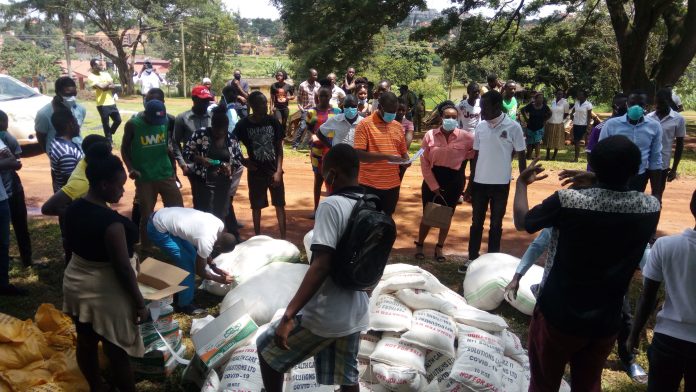
OPM and UNSA give out relief food to Kyambogo starving students

Balaam Barugahare, a volunteer from the office of prime minister reading the names to come and receive items.

The Office of Prime Minister (OPM) in conjunction with Uganda National Student’s Association(UNSA) has given relief food to Kyambogo University students who are stranded and starving in private hostels.

The given items included rice, maize flour, beans and soap and each student received 5kgs of maize flour, 3kgs beans, five bars of soap and a 1kg of rice. Over 1,775Kgs of maize flour,350 Kgs of rice were given out.

Balaam Barugahare, the a volunteer who delivered relief food from Office of Prime Minister told  Eagle online that when they read the news about the starving university students, they also planned to run to these students. He also said that Uganda National Students Association approached OPM and requested them to help the starving students.

“We found it challenging because even workers came and joined on the lists and some students ended up not getting the food.” Barugahare said.

The Nakawa RCC, Anderson Burora noted that they had distributed the food to some students but other students did not get. He said the lists that was submitted to them had few students as compared to the numbers of students that turned up.

“We cannot leave students to starve and as government it’s our mandate to cater for Ugandans and food distribution is for all.” Burora explained.

Ezra Byakutangaza the President Uganda National Students Association said that they had registered 400 students but only 355 students have been able to get food.

He further explained that when they reached, they got overwhelmed by the numbers they found on ground. He said that they have registered those who missed food and they will cater for them.

Suzan Itaget a student said  that they are happy to have been thought about by giving them relief food. However, she said that they received little and other students did not receive simply because other people joined the queues yet they were not students.

According to UNSA, they have agreed with the national task force that all students of the same challenge in different universities should be reached and be given food.

Stories Continues after ad
Increasing water levels on L. Victoria chase swanky pastors and businessmen from their homes 

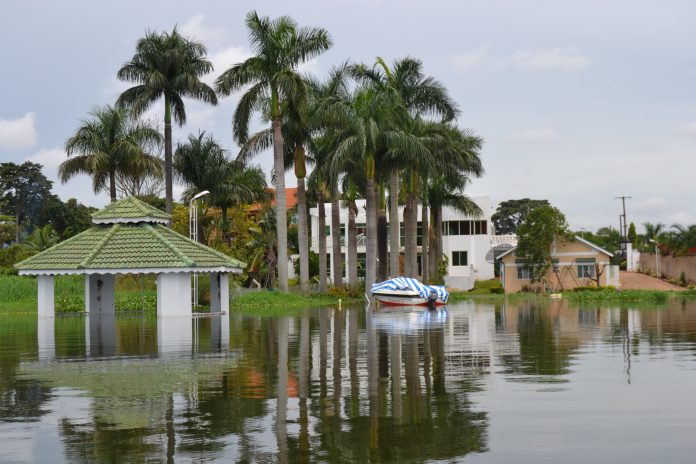
Christopher Sembuya's home.


David Kureeba, an environmentalist in a recent interview with Eagle online said ‘water has a very strong memory’. By this, Kureeba literally meant that water can at any time retrace all its former routes even after decades.

Kureeba’s argument is perhaps better understood by famous city businessmen and pastors whose lavish homes built on Lake Victoria shores are currently flooded. When Eagle online visited places such as Munyonyo, Ggaba, Luzira and Kawuku where some of these prominent persons own large mansions, their compounds were immersed.

At Kawuku, this website realized the entire compound of businessman, Hamis Kiggundu, is flooded with water. Kiggundu is the proprietor of Ham towers in Makerere and Ham shopping Centre located at Nakivubo lane.

His previously neat looking compound stretching about 300 metres into the Lake is now underwater. The perimeter walls, gardens and trees that provided a serene atmosphere including his hut are flooded. The docking pyre also is sunken and one needs to be lifted on the shoulders or walk through water in order to reach the boat.

Kiggundu’s men in civilian wears and police officers are positioned on speed boat and other corners ready to give a chase to whoever passes near their boss’s home in order to find out the intention.

One of the nearby residents told Eagle online that Kiggundu shifted from Kawuku to another residence along Entebbe Road. The businessman reportedly goes to Kawuku only to check on his workers and guards. However, we could not independently verify this claim as Kiggundu did not pick our calls.

Kiggundu’s home is close to Christopher Sembuya’s residence which is also inundated by fast rising Lake Victoria water levels. Sembuya is the proprietor of struggling Sembuule Steel Mills Limited a factory that used to among others things manufacture Radio receivers.

Sembuya’s rest hut, gardens, fence and docking pyre are also under water. His speed boat encrypted with his name was found seemingly abandoned at the dock.

Homes of two prominent city pastors Gary Skinner and Robert Kayanja are also drowned. Pastor Gary is the team leader of Watoto Church formerly known as Kampala Pentecostal Church –KPC. Pastor Kayanja is the found and lead pastor of Lubaga Miracle Centre Cathedral.

Kayanja’s compound is also water logged. The grass thatched hut, one would also describe as an umbrella and a mini conference hall built more than 200 metres into the lake are engulfed by water.

Kiggundu, Kayanja, Gary and Sembuya are not the only victims of shores reclaimed by Lake Victoria. Nearly all homes built on shores stretching from Kawuku, Ggaba, Mulungu, Luzira, Muyenga-Bukasa and Munyonyo are submerged.

Beaches such as Ggaba, KK and Rodgers Ddungu at Mulungu are not spared. Landing sites like Port Bell and Mulungu have also been affected. Residents who were living in temporary and permanent structures have been displaced.

Sam Cheptoris, Water and Environment Minister, recently told journalists at Uganda Media Centre that the rise in Lake Victoria water levels have gone up from 12.00 meters to the current level of 13.32 meters as of April 30, 2020.

The minister expressed worry that the water could rise to 13.41, the highest ever recorded. The Lake is currently only 0.08 meters away from the highest level ever recorded in May, 1964 according to the minister.

Kureeba, a member of National Association of Professional Environmentalists, explained to this website that increased water levels are a result of degraded wetlands, valleys and forests around Lake Victoria.  The environmentalist said that the dams constructed on Lake Victoria have also affected water flow. This means water in flow is not proportionate to water out flow.

Stories Continues after ad
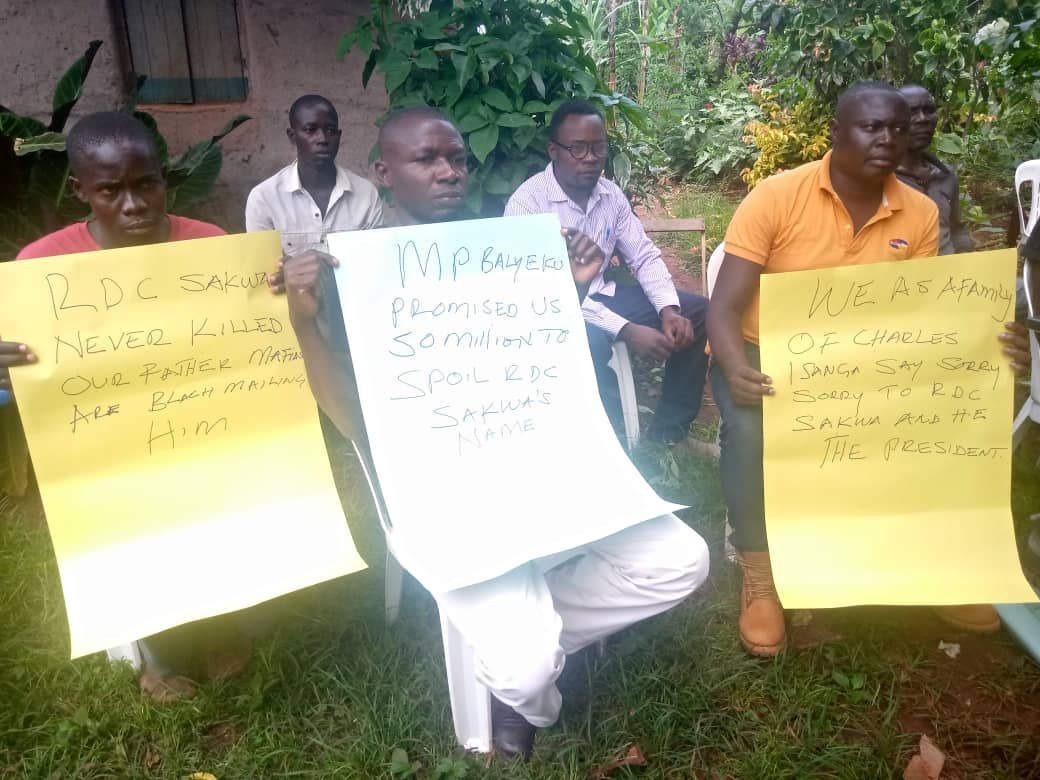
“We were used to frame you,” Late Charles Isanga’s family apologises to embattled Jinja RDC Sakwa

As Jinja gets more divided over conflicts among bigwigs in regard to the recent interdiction of Resident District Commissioner, Eric Sakwa, the family of the deceased has come out to clear the air in regard to the alleged matter of man slaughter charged against Sakwa.

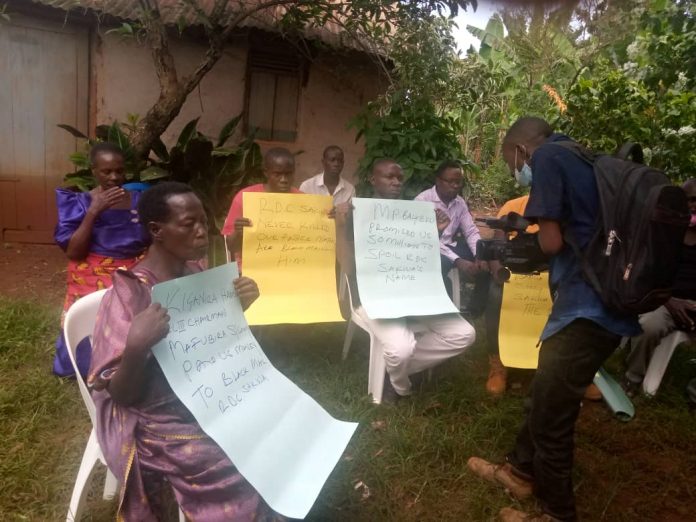
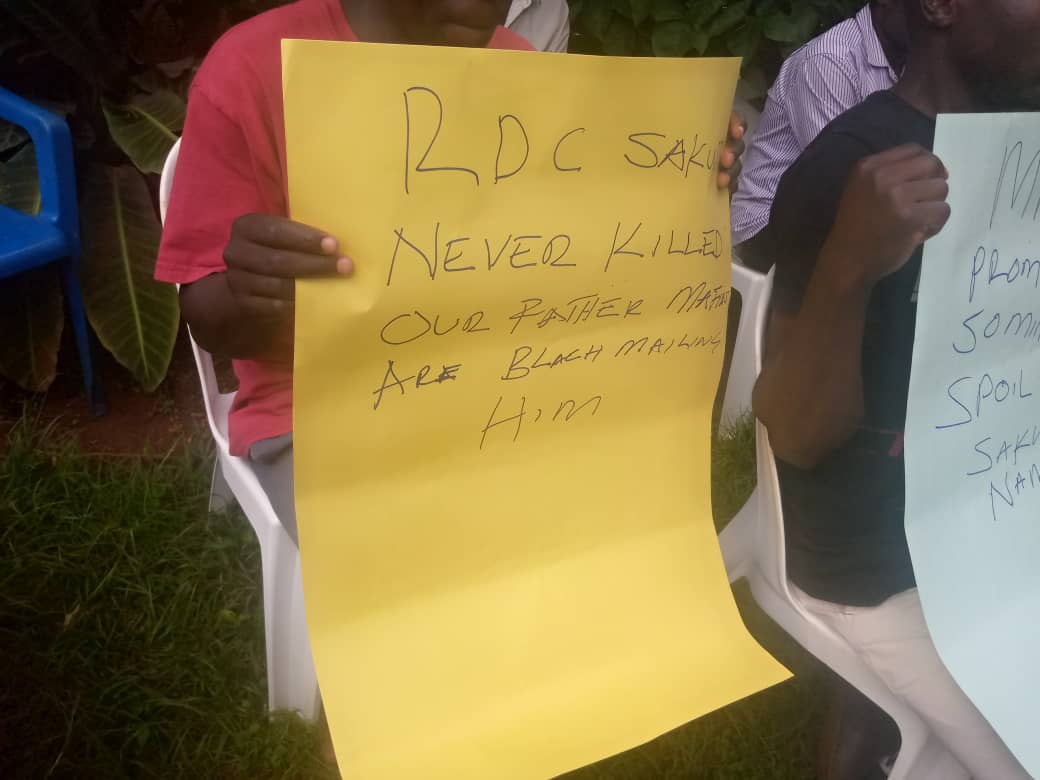
In a press conference held this Friday May 15, 2020 at Ivunamba village, Budondo sub county, jinja district, the orphans, widows and deceased’s brother revealed to the public that Isanga was diagnosed with high blood pressure a condition that had compromised Isanga’s health for a long period of time.

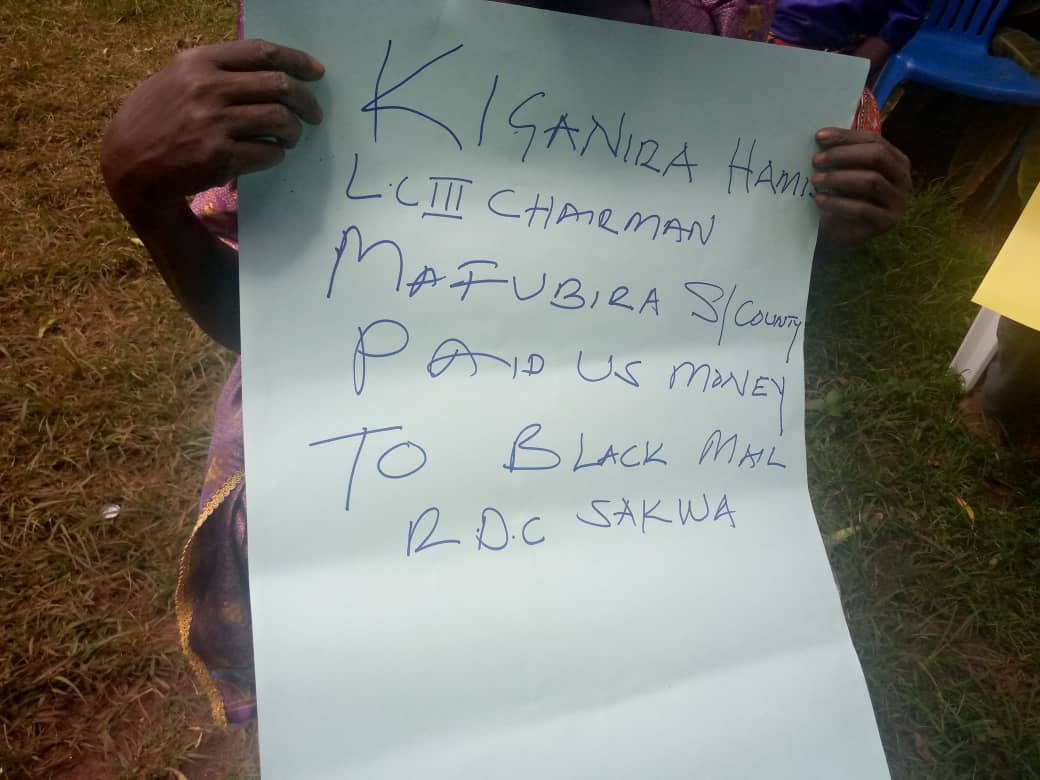
The family accused jinja west legislator Moses Grace. Balyeku for funding the whole saga at an estimate of shillings 50m through different people among which is the LCIII chairperson of Mafubira, Hamisi Kiganira.

Mzee Patrick Tidomu, the late Isanga’s brother accused politicians of intrigue and taking advantage of Isanga’s death to fight their political wars. He said the politicians went as far as even forcing them (family) to offer false witness.

The family has apologized to the office of the president and RDC of Jinja and finally resolved to meet Sakwa for reconciliation.

“I will miss Jinja,” embattled RDC Erick Sakwa finally accepts his interdiction

Eagle online has established that the family press conference took place when the embattled RDC is not in the district. Our efforts to speak to him hit a snug because his known contacts could not go through.

In his last media interview, Sakwa said this Monday the reason for his arrest, arraignment in court and later interdiction was his overzealousness to implement the presidential directives on the fight against COVID-19 pandemic and his spirited fight against corruption and land grabbing by prominent politicians.

Sakwa recalled that last month he closed down Bax Bar belonging to Balyeku which was flaunting the directives of the president and the moment he closed it, the legislator vowed to see him out of office.

He says that since that incident, he never had peace at work with Balyeku and others setting several traps for him.

“The same politicians have stolen all the sub country land. They have ganged up to see that I am out of Jinja because of my personal zeal to fight corruption.

Sakwa says that when he was interdicted last week, politicians incited people to abandon the president’s directives and this has created an opening for disobedience, which is putting many lives at risk in Jinja.

We have also established that when Sakwa was arrested, some politicians had a party at some bar in Jinja town.

Although Balyeku has repeatedly the claims, some journalist told this writer on condition of anonymity that the MP’s allies were bribing reporters to publish stories portraying Sakwa as a bad man and the one who commanded the men who beat up Isanga leading to his death.

Last month, Sakwa was arrested and charged will manslaughter and using an iron hand while implementing the presidential directives on containing the COVID-19 pandemic.

Stories Continues after ad