The Governor of the Bank of Uganda (BoU), Michael Atingi-Ego, has unveiled a major sustainability agenda aimed at aligning Uganda’s financial sector with global environmental, social and governance (ESG) standards, in a move designed to strengthen climate resilience and promote inclusive economic growth.
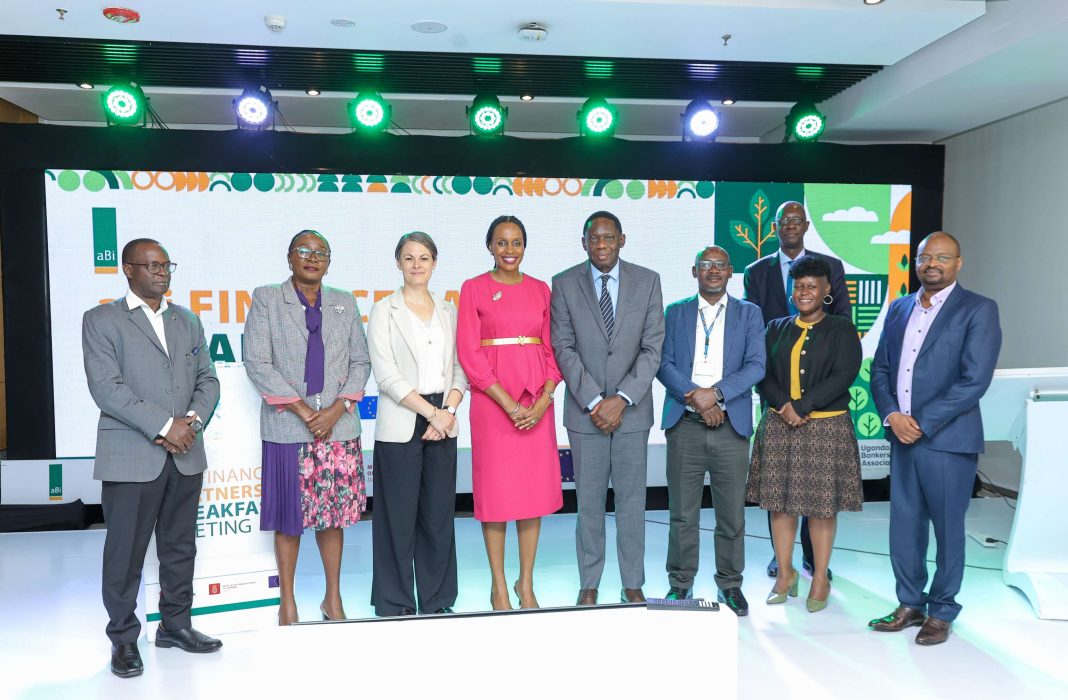
The initiative includes the IFRS S1 and S2 Capacity Building Project and a Tier IV ESG Framework, launched at the aBi Finance Partners Breakfast Meeting in Kampala.

The programmes are being implemented in partnership with the Uganda Bankers’ Association (UBA) and the Association of Microfinance Institutions of Uganda (AMFIU) to deepen the adoption of sustainable finance across the sector.
Atingi-Ego said the introduction of IFRS S1 and S2 marks a major shift in how financial institutions will measure and report sustainability risks, particularly those linked to environmental and social factors. He explained that the standards are intended to help translate sustainability issues into financial information that can guide investment and regulatory decisions.
“The launch of this project ensures that Uganda’s financial sector will not only align with global sustainability standards but also position itself as a leader in shaping the future of sustainable finance,” he said.

He noted that the reforms will improve transparency in the financial system and help stakeholders better understand how institutions are managing risks associated with the global transition to a low carbon economy.
The Governor also praised UBA and AMFIU for their role in advancing sustainable finance, saying collaboration between regulators and industry players remains essential for meaningful progress.
On the regulation of Savings and Credit Cooperative Organisations (SACCOs), Atingi-Ego said the Bank of Uganda is working on integrating larger SACCOs into its supervisory framework. He acknowledged that while SACCOs play a critical role in financial inclusion, many still operate without the formal systems required for central bank oversight.
“We have adopted what we would call a nurturing regulatory approach. This includes customised licensing requirements, targeted training, and hands on support to help SACCOs strengthen risk management, financial controls and governance systems,” he said.
He added that formalisation would unlock several benefits for SACCOs, including access to regulatory oversight, improved financial reporting systems, and deposit protection of up to UGX 10 million through the Deposit Protection Fund of Uganda. SACCOs will also be integrated into the Credit Reference Bureau system and gain access to subsidised financing through facilities such as the Agricultural Credit Facility and the Small Business Fund.
“These reforms are designed to strengthen institutions while expanding financial inclusion and protecting savers,” he added.
Speaking at the same event, aBi Finance Chief Executive Officer Mona Muguma Sebuliba called on stakeholders to focus on progress rather than perfection in implementing sustainability initiatives.
“We cannot afford to wait for perfection. What matters is that we keep moving forward,” she said.
Sebuliba stressed that partnerships have been central to advancing Uganda’s sustainable agribusiness and finance agenda, noting that collaboration has delivered tangible results across the sector.
She highlighted achievements including the development of green taxonomies, the establishment of a Green Finance Fund, and the training of more than 2,000 credit officers across 120 financial institutions.
Over the past 16 years, aBi Finance partnerships have enabled more than 2.2 million smallholder farmers, 70 percent of them women, to access finance. The initiative has also contributed to the creation of over 300,000 jobs and unlocked nearly US$1.4 billion in additional lending to the agricultural sector, which is often considered high risk by commercial lenders.
The Breakfast Meeting brought together regulators, financial institutions and development partners, marking a shift from policy discussions to practical implementation of sustainability frameworks within Uganda’s financial sector.
With the rollout of IFRS S1 and S2 and expanded ESG integration, Uganda is positioning its financial system to embed sustainability at its core while supporting long term inclusive growth.
IFRS (International Financial Reporting Standards) refers to globally recognised accounting rules that ensure financial statements are transparent, consistent and comparable across countries.