Stanbic Bank
Stanbic Bank
18.2 C
Kampala
Stanbic Bank
Stanbic Bank
Home Blog Page 1049

Freelyformd, Reinventing The Delivery of Software Development Solutions in Uganda

Software Development and incorporating IT solutions to business has over the years become an important part and a driving mechanism for the sustainable growth of a company or Small Medium Enterprises (SMEs) if it wishes to even reach its first birthday in the sector.

Founded in 2017, Freelyformd is a Ugandan-headquartered provider of IT consulting services and custom software development with IT professionals located internationally.

The company handles complex business challenges, building all types of custom and platform-based solutions and providing a comprehensive set of end-to-end IT services with customer satisfaction in mind.

Freelyformd brings custom and platform-based solutions to large and mid sized companies in Healthcare, Banking, Retail, Telecom and other industries. Cloud Core Systems, Water for People, Jaguza, URSB, Multiplex, Tegeka, Safarishare, HERS-EA, Proggie and Hire the Youth along with other companies that rely on their solutions in their daily operations.

From the development stage to the end result, the client is able to interface with the developing team which creates a bond like no other. Freelyformd offers services such as Dedicated developer teams, Mobile App Development, Web applications and Website Design,

Enterprise software development, software testing & QA, Security Audit, IT Consulting, DevOps, USSD, and Startup partnerships.

The company has exclusive experience and the expertise to build custom web & mobile solutions of any kind for any client as well as IT consulting, software development and testing as can be testified by many clients.


For any of your IT Solutions and needs, look no further than Freelyformd.

Stories Continues after ad

Police, UPDF join hands to counter all forms of raids in Karamoja

Gen. Sabiiti briefing his men on the security risk in the Karamoja region.


The Chief of Defence Forces (CDF) Gen. David Muhoozi and the deputy Inspector General of Police (DIGP) Maj. Gen.  Sabiiti Muzeeyi, have expressed their determination to counter all forms of raids and counter raids in order to bring perpetrators of such acts to justice.

They made their commitment at the 3rd Divisional Headquarters in Moroto following concerns about growing insecurity and violence due to raids and counter raids in the Karamoja region by legislators under the Karamoja Parliamentary Association.

The DIGP and his team embarked on a critical security assessment in the entire Karamoja sub region, where all detaches and deployments along the borderline and within our borders were thoroughly reviewed; areas for the construction of border posts to regulate entry and exit were identified, the re-positioning of our forces through the creation of new detaches, additional logistical and manpower supplies to ensure better response to armed raids, better surveillance of intelligence led processes.

In last two months of December and January, out of the 31 incidents reported to police, 287 stolen cows were recovered and efforts to recover 616 still in place.

The major concerns raised include; fears of counter raids from across the borders between Uganda, Kenya and South Sudan due to the porous borders, inadequate police and military presence, gun trafficking and the re-emergence of guns, hostile alliances among ethnic groups to mention but a few.

According to the statement released by police, the two security agencies resolved to reorganize and boost manpower, use of aerial capabilities like aircraft’s and drones to counter raiders, regulation of entry and exit through the creation of border posts, faster recovery of raided animals through quicker response, troop mobility and continuous forceful disarmament in grazing areas, identification of violent warriors and perpetrators of raids for arrest and prosecution, training and retraining of personnel.

“ police and UPDF agreed to carryout continuous sensitization and awareness programs across governments, diversifying means of survival through education and commercial farming, dialogue and peace committee meetings to reduce acts of violence, regulating Turkana movements in and out of the country, opening up security roads, effective use of Interpol and the EAPPCO mechanisms in the recovery of raided animals, creation of special courts with deterrent punishments for perpetrators and the possibility of legalizing the Nabilatuk resolution.” reads in part of the statement.

All stakeholders strongly condemned the acts of raids and counter raids and the violence committed by armed criminal groups, from the neighboring countries and also from within the local communities in Karamoja. Members emphasized the importance of a comprehensive approach to combating the threats posed by raids and counter raids including hostile alliances and the illegal re-arming of criminal elements in the community.


Stories Continues after ad

Stanbic Bank, UNOC enter into partnership to promote participation of Ugandan companies in the oil and gas sector

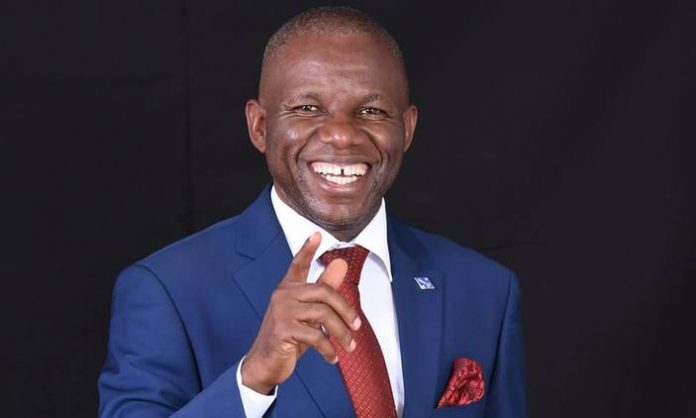
Stanbic CEO, Patrick Mweheire and UNOC CEO, Proscovia Nabbanja


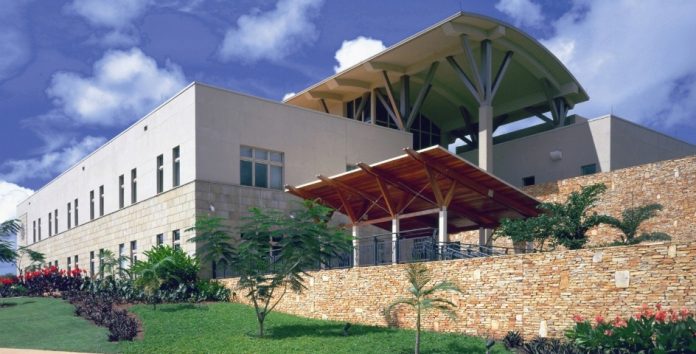
Stanbic Bank Uganda through its business incubator has entered into a partnership with the Uganda National Oil Company (UNOC) to promote national content through capacity building. The memorandum of understanding (MOU) has been signed at Stanbic Bank head offices in Kampala.

Recently the bank established the business incubator with aim to reach as many small and medium enterprises (SME) as possible to support their growth and development across the nation.

To ensure participation of Ugandan companies in the Oil and Gas activities, an estimated $15 billion will be invested in the Oil and Gas sector. To make sure Ugandan SMEs get a significant piece of that pie, the Stanbic business incubator prepares them to leverage the upcoming opportunities in Uganda’s emerging Oil and Gas sector.

Speaking at the signing, Patrick Mweheire, the Chief Executive Officer (CEO) of Stanbic Bank said; “We are pleased to be partnering with UNOC in a critical initiative that aims to facilitate participation and development of national content in the oil and gas sector.”

“We know that the oil sector is a game changer for Uganda’s economy and the only way Ugandans will benefit from this discovery is by having as many local companies participating in its development.” He said

According to MOU, Stanbic Bank will also offer business training for entrepreneurs, sector information sharing and enterprise development.

“Partnerships with institutions like Stanbic are instrumental in promoting national content through providing training and information on the opportunities for local businesses in the oil and gas sector.” Proscovia Nabbanja, Chief Executive Officer UNOC

Head of Business Development Stanbic Bank Uganda, Comrade Otoa said Stanbic Business incubator will provide training to SMEs recommended by UNOC and avail its centres across the country for use by UNOC in its National Content programme.


Stories Continues after ad

FIFA President Infantino: Project African football to the top of the world

Gianni Infantino

FIFA President Gianni Infantino has outlined his wish to ‘project African football to the top of the world’ that is peddled at development of competitions and infrastructure in African football.

Infantino said during the seminar held in Rabat, Morocco. It was attended by the Presidents of FIFA and CAF, delegates from each of CAF’s 54 Member Associations (MAs), African football legends, representatives from the international banking and investment industries and the media, with the aim of harnessing commitment, determination and passion of all of those involved in African football to raise it to the highest levels of the world game.

In his address to delegates, the FIFA President underlined his belief in the immense potential for positive growth and expansion of African football. “Our objective must be to project African football to the top of the world,” he said. “We have been talking about the development of African football for many years. Pelé once said that an African team would win the FIFA World Cup, but this hasn’t happened and it seems we are not making progress. Today must be the day we turn that page.”

The FIFA President then unveiled a joint FIFA/CAF strategy for the elevation of African football focused on three key pillars: Refereeing, investment mobilisation and competition development.

Refereeing will see the creation of a group of professional referees financed and organised by FIFA in partnership with CAF. “Referees have to be above and beyond doubt and to do that we have to protect them,” the FIFA President said. “We will take 20 of the best African FIFA referees, professionalise them, and give them permanent, professional contracts. They should be the guardians of the rules of our game and we must protect them and make them totally autonomous.”

For investment mobilisation, FIFA and CAF will assemble a panel of partners and a minimum fund of USD1bn to make solid and sustainable infrastructural investments in Africa, from which FIFA will ensure that this funding is managed via transparent accountable procedures. “We are elaborating a proposal to mobilise USD1bn to build at least one top stadium in the countries of each of FIFA and CAF’s 54 Member Associations,” Mr. Infantino added. “In the countries where there is already at least one very good stadium, the investments can be done in other infrastructures.”

In relation to competition development, FIFA will seek a range of new initiatives: the creation of a world nations league for women’s football, more frequent youth world championships, more youth competition categories, a re-positioning of the African Cup of Nations to be played every four years and the creation of a new pan-African club competition.

The new pan-African club competition, proposed by the FIFA President, would comprise 20 permanent member clubs and would be supported by additional clubs that qualify via regional competitions. The permanent member clubs would be urged to provide an investment of USD20m to the project annually over five years, taking their total investment to USD100m. They would also have to meet other participation criteria such as investment in youth and women’s football. In this way, the competition would have the potential to generate a revenue of USD3bn over a five-year cycle – and would also create the conditions for African football to be able to retain some of most talented players in the continent.

“We have to reflect about how we can revolutionise African football,” the FIFA President said. “I want to create a real pan-African league that would feature 20-24 clubs with a maximum of maybe two clubs per country that would still play in their national leagues but that would play during the year so we can really crown the club champions of Africa.”

The FIFA President issued a rallying call to African football, concluding: “Let us show the world what we can do. This day is special it’s the start of a new chapter for African football.”

Stories Continues after ad

FIFA bans Ugandan footballer for life over his indulgence in match fixing

The international governing body of football, FIFA, has banned Ugandan footballer, George Mandela for lifetime over his involvement in match fixing.

According FIFA, the disciplinary committee found him and several players guilty of having been involved in match manipulation in violation of article 69 paragraph one of FIFA disciplinary code of 2017.

“In particular given his central role in the conspiracy, the player George Mandela, Uganda has been banned from taking part in any kind of football related activity on national and international level for life,” FIFA said.

Three other Kenyan individuals; Moses Chikati, Festus Okiring and Festo Omukoto were banned from taking part of football related activity on national and international level for a period of four years.

The four banned players were at the time attached to Kakamega Home Boyz FC playing in the first division of Kenya premier league.

The formal disciplinary proceedings against the aforementioned individuals stemmed from an investigation onto various matches in Kenya premier league in 2019.  The investigation alluding to FIFA was conducted through its integrity department with the consent of and in cooperation with relevant stakeholders and authorities.

Stories Continues after ad

Female genital mutilation violates human rights- Mutuuzo

Peace Mutuuzo, state minister for Gender and Culture

Minister of State for Gender, Labour and Social Development, Peace Mutuuzo has said that Uganda is set to commemorate the International Day of Zero Tolerance for Female Genital Mutilation that is aimed at raising awareness among Ugandans about the dangers of this practice and to advocate for its total elimination.

Female genital mutilation (FGM) comprises all procedures that involve partial or total removal of the external female genitalia, or other injury to the female genital organs for non-medical reasons.

Globally, it is estimated that approximately 100 to 140 million girls and women have undergone some form of Genital Mutilation or cutting.  The practice is prevalent in 28 countries in Africa and some countries in Asia and the Middle East.

A disturbing trend of FGM surge was observed within a period of three -four months (Nov 2018 to Jan 2019) in Kapchorwa, Kween and Bukwo which resulted in an estimated 350girls and women being mutilated. This demonstrated the need for consistency and sustainability of interventions.

FMG is categories in four ways which include clitoridectomy and excision, both of them are practiced by the Sabiny in eastern Uganda. The others are infibulation or pharaonic commonly practiced by the Pokot and Mainly Genital elongation practiced by Bantu.

The practice is mostly carried out by traditional circumcisers, who often play other central roles in communities, such as attending childbirths. In many settings, health care providers perform FGM due to the erroneous belief that the procedure is safer when medicalized.

FGM is recognized internationally as a violation of the human rights of girls and women. It reflects deep-rooted inequality between the sexes, and constitutes an extreme form of discrimination against women. It is nearly always carried out on minors and is a violation of the rights of children.

The practice also violates a person’s rights to health, security and physical integrity, the right to be free from torture and cruel, inhuman or degrading treatment, and the right to life when the procedure results in death.

Since 2008, the Ministry of Gender, Labour and Social development (MGLSD) partnered with UNFPA and UNICEF to implement a Joint program to accelerate the abandonment of Female Genital Mutilation or cutting (FGM) in Uganda.

Legal and Policy framework is conducive and the following Laws and Policies are in place, namely: Prohibition of FGM Act 2010, The FGM Regulations 2013, Domestic Violence Act 2010 and its Regulations, National Policy and Action Plan on Elimination of Gender Based Violence (2016).

Stories Continues after ad

Gov’t releases Shs15 billion to fight locusts

Desert-Locust


A Shs15 billion budget has been set aside as contingency to fight the spread of locusts, Accountant General Lawrence Ssemakula has said.

Appearing before the Committee on Public Accounts-Central Government, Semakula said the funds are to be drawn from the Contingency Fund, just in case the destructive insects cross over from Kenya.

“This financial year, Parliament appropriated Shs62 billion for the Contingency Fund; they have so far released Shs32 billion; I can confirm that we have allocated Shs5 billion for the locusts,” said Semakula.

Together with senior officials from the Ministry of Finance, Semakula was led by Permanent Secretary in the Ministry and Secretary to the Treasury, Keith Muhakanizi.

Muhakanizi said releasing money for the locusts is to forearm Uganda as the roving pests are ravaging parts of North Eastern and Western Kenya.

Originating from Yemen all through to the coast of Somalia, scientists believe harsh environment and the conflict in Yemen have denied the government there an opportunity to marshal efforts to contain the insects.

Kenya is using aerial insecticide spray to fight the locusts with the invasion forcing President Uhuru Kenyatta to sack Agriculture Minister, Mwangi Kiunjuri, who has been criticised for making poor attempts to fight the insects.

Members of Parliament and the officials were also locked into an impasse after failing to agree on the definition of Uganda’s public debt.

MPs were keen to trap the technocrats into considering domestic arrears as public debt, an admission that could potentially place Uganda’s debt portfolio above the safe 50 per cent of the overall Gross Domestic Product (GDP), a trap Muhakanizi and his subordinates carefully sidestepped.

“Our national debt is at Shs44 trillion; if you add the arrears, the economy would be on a frying pan; the biggest disservice you can do to this country is to hide information from Parliament,” said MP Mathias Mpuuga (DP, Masaka Municipality).

Muhakanizi admitted to arrears being a hindrance to the growth of local companies, who supply government and have to endure long, painful waits to get paid.


Stories Continues after ad

Museveni steps up the fight against Coronavirus

President Museveni meeting top government officials.

President Yoweri Museveni has directed the Ministry of Health to conduct an aggressive public awareness campaign as one of the measures of preventing and controlling the outbreak of Coronavirus.

President Museveni was meeting government officials to discuss contingency measures and Uganda’s preparedness to prevent coronavirus that is currently ravaging China and is spreading to other countries. They also discussed the impeding locust invasion threat that is currently ravaging the neighbouring Kenya.

“I now understand this disease. I’m going to write about it so that the public is sensitized on how to prevent it” he said.

On Monday World health organisation (WHO) reported that 17336 cases of acute respiratory disease were confirmed in 24 provinces, regions and cities and 21558 suspected cases in China. The virus has claimed 362 people.

Over 50 cases of coronavirus have also been confirmed in other countries in Europe and Asia. Progress as so far been registered with 505 cured cases. So far no case of novel coronavirus has been confirmed Uganda.

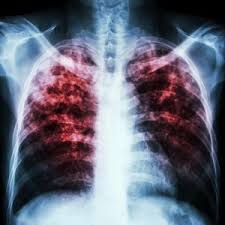
The deadly coronavirus outbreak that has spread from China causes severe acute respiratory infection and symptoms usually start with a fever, followed by a dry cough.

WHO is working closely with global experts, governments and partners to rapidly expand scientific knowledge on this new virus, to track the spread and virulence of the virus, and to provide advice to countries and individuals on measures to protect health and prevent the spread of this outbreak.

The Prime Minister informed the President that the Health Ministry working with its partners were already implementing preparedness activities, like screening of all travellers at Entebbe International Airport and doing risk Communication for public awareness for the general population.

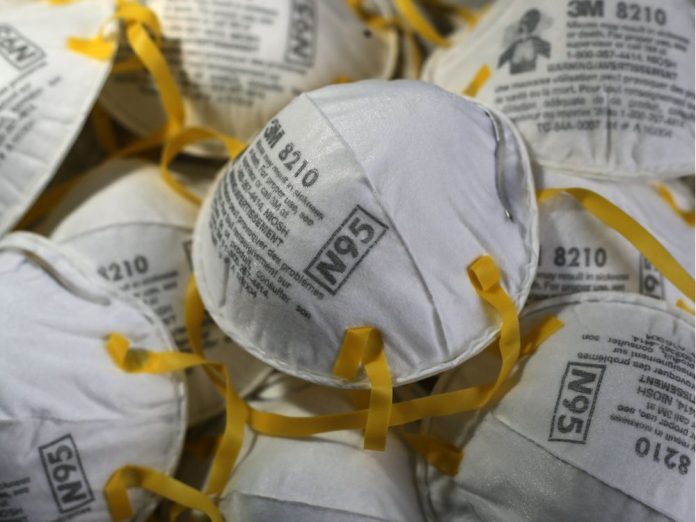
Among the measures discuss to contain the virus include anti-inflammatory vaccine to reduce the body panic, antiviral, antibiotics, rehydration and increase of oxygen in the body as well as preventive measures such as washing of hands with soap and use of masks to prevent the spread of the disease.

Present Museveni also instructed the Ministry of Health to come up with a public awareness document that can be used to engage and educate the public.

He further advised that Ugandans currently in China should remain there since the government of China has already put mechanisms to contain and prevent the transmission of the disease.

Stories Continues after ad

Dr Matshidiso Moeti re-elected as WHO Regional Director for Africa

Dr Matshidiso Moeti

The WHO Executive Board, currently holding its 146th session in Geneva, has re-appointed Dr Matshidiso Moeti for a second term as WHO Regional Director for Africa Re-election of the Regional Director for Africa

Speaking after voting exercise, Dr Matshidiso said “I am greatly honoured to have been appointed to serve a second term as the WHO Regional Director for Africa and I would like to thank you for the trust you have shown,” said Dr Moeti.

He said Africa is increasingly facing the double burden of diseases, the next five years in public health will be crucial in laying a strong foundation to reverse this burden.

Dr Moeti, who is from Botswana, said she will accelerate action towards attaining universal health coverage so that everyone can access care without financial hardship. Despite significant health challenges in the African region, which serves 47 countries, progress is being made in strengthening health systems, combating diseases and improving people’s health. Recent efforts by Member States include policies to tackle tobacco use, vaccines for cervical cancer and malaria prevention as well as joint initiatives to procure medicines affordably.

As the first woman WHO Regional Director for Africa, Dr Moeti was elected as WHO Regional Director for Africa on 1 February 2015. In 1999, she joined the WHO Regional Office for Africa, and has served as Deputy Regional Director, Assistant Regional Director, Director of Noncommunicable Diseases, WHO Representative for Malawi, Coordinator of the Inter-Country Support Team for the South and East African countries and Regional Advisor for HIV/AIDS.

Before joining WHO, Dr Moeti worked as Team Leader of the Africa and Middle East Desk in Geneva (1997–1999) with the Joint United Nations Programme on HIV/AIDS (UNAIDS). She also worked with the United Nations Children’s Fund (UNICEF) as Regional Health Advisor for East and Southern Africa; and with Botswana’s Ministry of Health as a clinician and public health specialist.

Dr Moeti holds a degree in medicine (and a master’s degree in public health from the Royal Free Hospital School of Medicine, University of London and the London School of Hygiene and Tropical Medicine, respectively.

She was awarded an Honorary Fellowship of the London School of Hygiene and Tropical Medicine and an Honorary Doctorate from the University of Health & Allied Sciences, Ghana.

Stories Continues after ad

WHO calls for stepping up cancer services in low and middle-income countries

Cancer Machine

The World Health Organization (WHO) today spelled out the need to step up cancer services in low and middle-income countries. WHO warns that, if current trends continue, the world will see a 60 per cent increase in cancer cases over the next two decades. The greatest increase in new cases will occur in low- and middle-income countries, where survival rates are currently lowest.

This is largely because these countries have had to focus limited health resources on combating infectious diseases and improving maternal and child health, while health services are not equipped to prevent, diagnose and treat cancers. In 2019, more than 90 per cent of high-income countries reported that comprehensive treatment services for cancer were available in the public health system compared to less than 15 per cent of low-income countries.

“This is a wake-up call to all of us to tackle the unacceptable inequalities between cancer services in rich and poor countries,” says Dr Ren Minghui, Assistant Director-General, Universal Health Coverage/ Communicable and Noncommunicable Diseases, World Health Organization. “If people have access to primary care and referral systems then cancer can be detected early, treated effectively and cured. Cancer should not be a death sentence for anyone, anywhere.”

Yet, progress in poorer countries is achievable. WHO and the International Agency for Research on Cancer (IARC) are releasing two coordinated reports on World Cancer Day (4 February), in response to government calls for more research into the scope and potential policies and programmes to improve cancer control.

“At least 7 million lives could be saved over the next decade, by identifying the most appropriate science for each country situation, by basing strong cancer responses on universal health coverage, and by mobilizing different stakeholders to work together”, said Dr Tedros Adhanom Ghebreyesus, Director-General, WHO.

WHO highlights a wide range of proven interventions to prevent new cancer cases? These include controlling tobacco use, vaccinating against hepatitis B to prevent liver cancer, eliminating cervical cancer by vaccinating against HPV, screening and treatment, implementing high-impact cancer management interventions that bring value for money and ensuring access to palliative care including pain relief.

“The past 50 years have seen tremendous advances in research on cancer prevention and treatment,” says Dr Elisabete Weiderpass, Director of IARC.

“Deaths from cancer have been reduced. High-income countries have adopted prevention, early diagnosis and screening programmes, which together with better treatment, have contributed to an estimated 20 per cent reduction in the probability of premature mortality between 2000 and 2015, but low-income countries only saw a reduction of 5 per cent. We need to see everyone benefitting equally.” Dr Elisabete said

The challenge will be for countries to select treatments balancing considerations including cost, feasibility and effectiveness. Each government is tasked with choosing the appropriate innovative cancer therapies, while recognizing that established treatments, many of which are very effective and affordable, can provide benefits for cancer without causing financial hardship.

Stories Continues after ad