Stanbic Bank
Stanbic Bank
16.7 C
Kampala
Stanbic Bank
Stanbic Bank
Home Blog Page 1052

Zimbabwean entrepreneur invents open-sourced technology to improve access to education in Africa

William Sachiti


Zimbabwean AI expert William Sachiti, CEO of UK-based start-up Academy of Robotics has today published an open-source technology known as ‘Trees of Knowledge’ to improve access to education through smartphones in Africa. This free-to-develop technology enables a tree or rural landmark to broadcast a wifi connection providing access to a pre-loaded package of educational content. The wifi connection and content comes from a micro-computer moulded into the landmark to protect it from theft or damage.

A community-driven, secure and cost-free solution
Anyone within a roughly 100m radius can then access the content on any mobile device free of charge. Users can also charge their phone by plugging it into the accompanying solar-powered battery charging station. The micro-computers will run on the power equivalent of a small rechargeable battery and can run for years without maintenance. All the user needs is a wifi-enabled device such as a phone, tablet, laptop or computer. There is no need for the phone to be connected to a carrier or any network provider, removing the issue of expensive data charges.

The technology uses a basic computer like the Raspberry Pi computers which have been used in refugee camps in Lebanon by UNICEF as part of its Raspberry Pi for Learning initiative.

A global crisis in education
Globally there are 258 million children out of school and UNESCO’s new report Education Progress highlights that the problem is particularly acute in Sub-Saharan Africa where the population of primary-school aged children has doubled since 1990 and 1 in 5 children of primary school age are out of school. However, this is also a region witnessing rapid growth in smartphone adoption. Already more than 23% of people in Sub-Saharan Africa have access to a smartphone  –  a number which the GSMA estimates will rise to 39% in the next five years.

AI expert and serial entrepreneur, William Sachiti, who was educated in Zimbabwe before moving to the UK where he started his first technology company at 19 years old highlights the challenges:

One of the challenges in providing education through smartphones is that, while many people have access to a basic smartphone of some description, in many areas 3G coverage is still patchy. The data costs are high for most people and in rural areas keeping the phones charged is a problem when there is limited or no electricity. Trees of Knowledge aims to address all these challenges.”

Sachiti adds: “Every day millions of children walk for hours to get to school in the hope – often a vain hope – that they will find a teacher present at their school. In other cases, children are unable to attend school because they need to take care of the family’s cattle or support their families in other ways.

There is an urgent need to improve access to education for these children. For many children their classes are taught gathered under the shade of a large tree, so ‘Trees of Knowledge’ seemed a natural technical extension of this existing system.”

Last week, UNESCO Director-General Audrey Azoulay noted, “Rethinking tomorrow’s education must be done collectively.”

Sachiti believes that Africa’s burgeoning tech ecosystem can play a vital role in this collective effort commenting: “While many programmes already exist to fix this problem, it is still not enough. With the growth of the developer community in Africa, I believe we have the opportunity to simply release the technology and let local communities build it themselves. If this technology reaches one or two more children, then I feel it would be a success.”

The pre-loaded educational content is likely to be largely video-based and would be free to access by anyone at any time. Whilst the system can work with existing educational content packages, ultimately Sachiti hopes that content can also come from local educators.


Stories Continues after ad

Seven lessons for mobile app developers to beat the odds

Martin Zwilling


By Martin Zwilling


One of the quickest ways to become an entrepreneur these days is to develop and publish a smartphone app. The price of entry can be less than $10,000, so the competition is huge and growing rapidly. According to Tim Cook at Apple, there were over 20 million registered developers in 2018. Yet according to other statistics, vanishing few of these ever generate a significant profit.

We all hear about the big winners, such as the game Clash of Clans, which still pulls in over a million dollars a day, and the smartphone version of Skype, which is making money through credits as an extension of the website version. We don’t hear about the remaining several million apps that are mostly free, and garnering only trivial revenue through advertising.

Yet I still recommend apps as a good starting target for aspiring technical entrepreneurs, since they don’t require a large initial investment, and you can learn an incredible amount about the realities of business, without risking a lifetime of effort and several investor fortunes.

I also recommend the app development strategies outlined in the classic book, “Vaporized: Solid Strategies for Success in a Dematerialized World,” by Robert Tercek, who has lived on the digital edge for many years. Here are some ways we both recommend to beat the odds and thrive in today’s app ecosystem:

Sell a digital service through your app. The ideal business model is to establish a direct-to-consumer service that enables you to bill the customer directly. You provide the free app in the App Store that gives subscribers mobile access to your service. After this connection, you need not share the 30% of all revenue collected by the store platform.

Make your app support all platforms. Port every app to all the popular platforms – IOS and Android. Compensate for low profit by aiming for maximum reach. Cultivate a preferred relationship with Apple, Amazon, Facebook, Microsoft, and Google to ensure the best possible placement of your offering.

Offer premium services after user is hooked. Through a free base product, you give the first taste of the service or game away for free, get users hooked, and then convert as many as possible to paying customers. This freemium model has been used for years by web apps. Even a conversion rate of one percent can build a healthy business.

Build your own marketplace platform. This is a tough one to accomplish, but it has paid off handsomely for the first to win in other categories, such as Amazon Kindle and Netflix. To accomplish this move, you must remain studiously neutral on all contributors, and be prepared to fight to preserve your direct relationship with the customer.

Commoditize complementary products. Complements are products that must be bought together in order to be useful, like apps with mobile phones, and fitness products to go with your fitness app. If you want to drive up the demand for your core product, one smart tactic is to drive down the price of all complementary products.

Look for value points to control. No company has more value control points than Google, which spans advertising, e-commerce, social media, video and mobile, as well as a full suite of hardware products. But there are a wealth of other categories, new ones are constantly appearing, and the ecosystem is always shifting. Be aggressive and alert.

Position yourself to capitalize on the next frontier. Information is certain to grow faster than anything else generated by humans, and the Internet of Things (IoT) is a huge contributor. Apps are adept at collecting information and condensing it, whether it be for healthcare, home control, or gaming. Be there intentionally rather than randomly.

Above all, don’t forget to develop a comprehensive marketing and promotion strategy. Just getting an app accepted into the Store won’t get it found and downloaded by your targeted customers. ‘Free’ doesn’t make it stand out when there are a million alternatives at the same price. Promote your app vigorously, facilitate customer engagement, and listen to the feedback.

The Writer is a veteran startup mentor, executive, blogger, author, tech professional, professor, and investor. Published on Forbes, Entrepreneur, Inc, Huffington Post, etc.


Stories Continues after ad

Africa is the focus of the world as growth and investment frontier

Dr. Akinwumi A. Adesina


By Dr. Akinwumi A. Adesina


Africa is where the focus of the world is right now as the growth and investment frontier. Just last week, I was in London for the UK-Africa Summit. There has been China-Africa Summit, Japan-Africa Summit, India-Africa Summit, Korea-Africa Summit, Russia-Africa Summit, US-Africa Summit and several others.

What do all these countries see? They see opportunities that Africa offers.

With a population of 1.2 billion people that is expected to rise to 2.5 billion by 2050, a rising middle class, rapid urbanization – and a labor work force that will rise from 705 million today to well over 1 billion in the next 10 years – Africa offers huge market and investment opportunities. The Africa Continental Free Trade Area makes Africa a market worth $3.3 trillion.

Africa can no longer be ignored. African economies are growing well, higher than the global average. Our African Economic Outlook estimates show that growth is projected to rise from 3.4 per cent in 2019 to 3.9 per cent in 2020 and 4.1 per cent in 2021. This aggregate growth rate masks highly diversified and resilient growth patterns. Indeed, 20 countries are projected this year to grow at 3-5 per cent, while 20 countries are projected to achieve growth rates of 5 per cent and above. That’s impressive!

Even more impressive is that 6 of the 10 fastest growing economies in the world are now in Africa: Rwanda (8.7 per cent), Cote d’Ivoire (7.4 per cent), Ethiopia (7.4 per cent), Ghana (7.1 per cent), Tanzania (6.8 per cent) and Benin (6.7 per cent).

Some regions are growing faster than others. East Africa is the fastest growing region with growth rate of 5 per cent in 2019, followed by North Africa (4.1 per cent), West Africa (3.7 per cent), Central Africa (3.2 per cent) and Southern Africa (0.7 per cent).

For the first time in more than one decade, growth in Africa is due largely to expansion of investments rather than consumption, as well as from exports.

Just think of the following: Foreign Direct Investment to Africa rose by 11 per cent in 2019, compared to just 4 per cent in Asia, while it declined by -13 per cent globally and by -23 per cent for developed economies.

However, Africa faces important economic headwinds that could affect future growth. Global trade tensions have weakened global trade volumes, whose growth rate declined from 5.7 per cent in 2017 to just 1.1 per cent in 2019.

Another challenge has been the impact of climate change, especially from the extreme weather patterns such as cyclones that devastated Mozambique, Malawi and Zimbabwe, as well as widespread drought across southern Africa and East Africa.

The African Development Bank provided $106 million to support Mozambique, Zimbabwe and Malawi in the immediate aftermath of the cyclones, in addition to other emergency support.

African countries cannot continue to reel from one emergency to another emergency. The African Development Bank has used its Africa Disaster Risk Insurance Facility to pay for insurance premiums for countries facing extreme weather events that have helped to provide $36 million in payout to countries. It is time now for the international community to help scale up this facility to reach many more countries.

We must also address issues of insecurity. Growth in West Africa, which improved as Nigeria’s economy recovered from recession, has been dampened by the rising insecurity challenges, especially in the Sahel. Several countries in West Africa, such as Niger, Mali, Burkina Faso and Chad are spending a very high share of their budgets on security.

It is now time for the African Development Bank, IMF and the World Bank to work out a financial support system that will help address these exogenous security shocks, which if left unaddressed, will have broader spillover effects that will lower growth and investment in the region. In this context, I wish to commend the ECOWAS Heads of State and Governments for their bold decision to set up a fund to help address these insecurity issues in the sub-region.

We must tackle rising debt levels. Total debt stock (external and domestic) currently stands at $500 billion. Median Debt to GDP has risen from 38 per cent in 2008 to 54 per cent in 2018. But there is no need for the panic button.

Let me be clear: Africa does not have a systemic debt crisis. However, we must watch the quality of debt, the mix of debt in terms of concessional and non-concessional, the potential negative effects of rising domestic debt in crowding out private sector access to finance, the increasing level of non-Paris Club bilateral debt, and rising volumes of Euro bonds.

While there is no cause for alarm, greater prudence is needed. We all must now collectively focus on sustainable debt management and greater reliance on domestic resource mobilization to finance rising fiscal deficits.

The bulk of the debt is actually spent on infrastructure, which remains a major challenge for many countries. Governments can improve the cost effectiveness of their expenditures on infrastructure by sharply focusing on quality infrastructure, improved efficiency of public expenditure on infrastructure, while promoting greater participation of private sector in the provision of infrastructure.

Physical infrastructure, while important, is not enough to drive much needed greater growth and productivity of African economies. African countries should accelerate investments as well in the development of human capital.

Youth unemployment must be given top priority. With 12 million graduates entering the labor market each year and only 3 million of them getting jobs, the mountain of youth unemployment is rising annually.

Given the fast pace of changes, driven by the 4th industrial revolution – from artificial intelligence, to robotics, machine learning, quantum computing – Africa must invest more in re-directing and re-skilling its labor force, and especially the youth, to effectively participate.

The youth must be prepared for the jobs of the future – not the jobs of the past.

Especially critical is training in science, technology, engineering and mathematics. The Bank is already working on this, with our support to build scientific centers of excellence, such as the African universities of science and technology – all part of the Mandela Institute of Science and Technology. We have invested in the Kigali Institute for Science and Technology that is providing world-class training in ICT at the Masters level in collaboration with the Carnegie Mellon University.

As part of our Jobs for Youth in Africa strategy, the Bank launched the establishment of Coding for Employment Program, designed to develop young digital entrepreneurs. We hope to develop 130 centers of innovation over the next five years to help create 9 million direct and indirect jobs. Our experience so far from ongoing programs in Rwanda, Nigeria, Kenya and Senegal has been impactful. Some 2,000 youth (46 per cent women) were trained in just three months, between March and June 2019.

Without any doubt, there is need to expand financing for education at all levels, primary, secondary and tertiary. The educational system must adequately prepare the youth for the labor market. Priority must be placed on improving access to vocational skills training, reducing the mismatch between training and needs of the labor market, and providing greater incentives for the private sector to support young people with on-the-job training opportunities, as well as entrepreneurship.

At the end of the day, it is not GDP growth that matters. Nobody eats GDP. Growth must be visible. Growth must be equitable. Growth must be felt in the lives of people. That is why the African Development Bank places particular emphasis on one of our High 5s: Improving the Quality of Life of the People of Africa.

We are a “People-focused Bank”. People are our core business; and their quality of life is our greatest return. It is the people of Africa who motivate us to keep doing what we do best: making prosperity a reality for all.

I hope that the findings of this African Economic Outlook will further challenge us that, while much has been achieved on growth, we still have ways to go to make that growth much higher, more equal and impactful in the lives of people, everyday.

And every single day we work, let’s look at the real lives behind the statistics. Let’s hear their voices. Let’s feel their aspirations. Let’s do a better job to make the dreams of improved quality of life for millions of Africans a reality.

Dr. Akinwumi A. Adesina, is the President, African Development Bank. The article is an abridged version of the speech he delivered at the launch of the African Economic Outlook on Thursday at the bank’s headquarters in Abidjan, Cote d’Ivoire


Stories Continues after ad

African Economic Outlook 2020: Africa’s economy forecast to grow despite external shocks


Africa’s economic growth remained stable in 2019 at 3.4 per cent and is on course to pick up to 3.9 per cent in 2020 and 4.1 per cent in 2021, the African Development Bank’s 2020 African Economic Outlook (AEO) revealed Thursday.

The slower than expected growth is partly due to the moderate expansion of the continent’s “big five” — Algeria, Egypt, Morocco, Nigeria, and South Africa, whose whose joint growth was an average rate of 3.1 per cent, compared with the average of 4.0 per cent for the rest of the continent.

The Bank’s flagship publication, published annually since 2003, provides headline numbers on Africa’s economic performance and outlook.

In 2019, for the first time in a decade, investment expenditure, rather than consumption, accounted for over 50 per cent of GDP growth. This shift can help sustain and potentially accelerate future growth in Africa, increase the continent’s current and future productive base, while improving productivity of the workforce.

Overall, the forecast described the continent’s growth fundamentals as improved, driven by a gradual shift toward investments and net exports, and away from private consumption.

East Africa region leads pace for growth

East Africa maintained its lead as the continent’s fastest-growing region, with average growth estimated at 5.0 percent in 2019; North Africa was the second fastest, at 4.1 per cent, while West Africa’s growth rose to 3.7 per cent in 2019, up from 3.4 per cent the year before.

Central Africa grew at 3.2 per cent in 2019, up from 2.7 per cent in 2018, while Southern Africa’s growth slowed considerably over the same period, from 1.2 per cent to 0.7 per cent, dragged down by the devastating cyclones Idai and Kenneth.

Urgent call to address Africa’s education, skills mismatch

The 2020 AEO, themed Developing Africa’s workforce for the future, calls for swift action to address human capital development in African countries, where the quantity and quality of human capital is much lower than in other regions of the world.

The report also noted the urgent need for capacity building and offers several policy recommendations, which include that states invest more in education and infrastructure to reap the highest returns in long-term GDP growth. Developing a demand-driven productive workforce to meet industry needs, is another essential requirement.

“Africa needs to build skills in information and communication technology and in science, technology, engineering, and mathematics. The Fourth Industrial Revolution will place increasing demands on educational systems that are producing graduates versed in these skills,” the report noted.

To keep the current level of unemployment constant, Africa needs to create 12 million jobs every year, according to the report. With rapid technological change expected to disrupt labour markets further, it is urgent that countries address fundamental bottlenecks to creating human capital, the report said.

“Youth unemployment must be given top priority. With 12 million graduates entering the labour market each year and only 3 million of them getting jobs, the mountain of youth unemployment is rising annually,” said Akinwumi Adesina, African Development Bank President.

“Let’s look at the real lives beyond the statistics. Let’s hear their voices, let’s feel their aspirations.”

Although many countries experienced strong growth indicators, relatively few posted significant declines in extreme poverty and inequality, which remain higher than in other regions of the world.

Essentially, inclusive growth — registering faster average consumption for the poor and lower inequality between different population segments — occurred in only 18 of 48 African countries with data.

“As we enter a new decade, the African Development Bank looks to our people. Africa is blessed with resources but its future lies in its people…education is the great equaliser. Only by developing our workforce will we make a dent in poverty, close the income gap between rich and poor, and adopt new technologies to create jobs in knowledge-intensive sectors,” said Hanan Morsy, Director of the Macroeconomic Policy, Forecasting and Research Department at the Bank.

The AEO provides compelling up-to-date evidence and analytics to inform and support African decision makers. The publication has built a strong profile as a tool for economic intelligence, policy dialogue and operational effectiveness.


Stories Continues after ad

Leaders call for more education partnerships at the Global Education Forum

Solomon Swerwanja


By Solomon Sserwanja


At the center of this year’s conversation by global leaders, educationists and policy makers at the Education World Forum in London was the call for co-operation, partnerships and collaborations between government entities and the private sector as a vehicle to tackle the education crisis.

Uganda was well represented by a delegation led by our First lady and Education Minister Janet Kataaha Museveni, who discussed with fellow delegates the achievements and challenges taking place in Uganda’s education system.

Among the achievements that our Education Ministry boasts about is the increased primary enrollment under the Universal Primary Education program. Even though enrollment grew from 3.1 million children in 1996, to 8.4 million in 2017, the World Bank reports that there are still 700,000 out of school children in Uganda. Enrollment is just one half the equation the other half is making sure than once enrolled children are learning. This is the real challenge faced by not only Uganda but education systems more generally in sub Saharan Africa.

Government’s responsibility to educate children is a large and complex one to be met adequately without participation of diverse partners. This is why it is important for government to explore broader ways of partnerships and collaborations with the private sector to achieve the Standard Development Goal 4.

One such partner is Bridge Schools that arrived in Uganda in 2015. Since it opened its doors, it has educated thousands of children in our countries most impoverished districts with the initial support and collaboration of the Ugandan Investment Authority (UIA) and subsequently the Ministry of Education and Sports (MOE&S).

For three consecutive years, the approach – which combines ongoing teacher training and support with technology – has been seen to bear fruit. Bridge has been producing some of the country’s best performing pupils in the Primary Leaving Exam (PLE), most of who hail from our most impoverished districts. The 2019 national results, recently released by the MOE&S show that this pattern continues. In the Eastern region,  67 per cent of children at Bridge achieved marks in the sought after Division one and two categories whereas only 43 per cent of Ugandan children in the region achieved scores in these divisions. Overall, 57 per cent of Bridge’s top performers achieving Division one marks came from the eastern region. The story is the same, if not even more impressive, in the Northern region; where 78 per cent of Bridge pupils achieved scored Division one or two marks, compared to only 46 per cent of children nationally. 100 per cent of Bridge pupils from Mayuge achieving Division one or two scores. In Arua, 100 per cent of boys and in Bugiri, 100 per cent of girls achieved these marks.

Many of these children are the parents of casual farmers and roadside stall owners. The only hope that they have of living a better life than their parents is education. The PLE shows that Bridge like other social enterprises in the country is supporting the government’s efforts in promoting quality education in Uganda.

Bridge is already partnering with government else where in Africa including Kenya, Nigeria, India, Liberia.  The use of technology in the classroom coupled with innovative ways of delivering lessons is the improved learning outcomes being shown by independent evidence behind the increasing evidence. In neighbouring Kenya, Bridge has now entered students for the Kenyan Certificate of Primary Education (KCPE) fives times. Results now show that Bridge pupils in Kenya benefit from an extra two days learning a week.

The Education World Forum is a key time for ministers and policy makers to come together in dialogue. They can discuss what is working in their countries and what is not. With partnerships producing results like the ones we have seen in this years PLE, Uganda and indeed Africa can go a long way from just tinkering around the edges of education transformation, and act on the evidence accumulated over several years to provide every child with a future anchored in quality learning.


Stories Continues after ad

Coronavirus: Death toll rises as virus spreads to every Chinese region

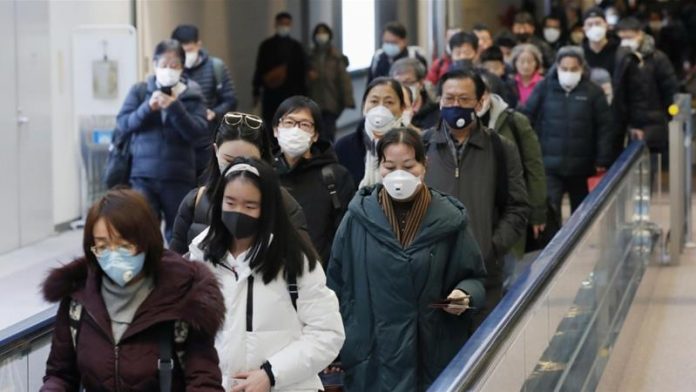
A lady wearing protective gears against coronavirus

The death toll from the coronavirus outbreak has risen to 170, and a confirmed case in Tibet means it has reached every region in mainland China.

Chinese health authorities said there were 7,711 confirmed cases in the country as of 29 January.

Infections have also spread to at least 15 other countries.

The World Health Organization (WHO) will meet on Thursday to again consider whether the virus constitutes a global health emergency.

“In the last few days the progress of the virus, especially in some countries, especially human-to-human transmission, worries us,” WHO Director-General Tedros Adhanom Ghebreyesus said on Wednesday.

He named Germany, Vietnam and Japan, where there have been cases of people catching the virus from others who have been to China.

“Although the numbers outside China are still relatively small, they hold the potential for a much larger outbreak,” the WHO chief said.

More people have now been infected in China than during the Sars outbreak in the early 2000s, but the death toll remains far lower. Sars, also a coronavirus, caused acute respiratory illness.

Researchers are racing to develop a vaccine to protect people from the virus. One lab in California has plans for a potential vaccine to enter human trials by June or July.

What’s the latest on evacuations?

Voluntary evacuations of hundreds of foreign nationals from Wuhan are under way to help people who want to leave the closed-off city and return to their countries.

The UK, Australia, South Korea, Singapore and New Zealand are expected to quarantine all evacuees for two weeks to monitor them for symptoms and avoid any contagion.

Australia plans to quarantine its evacuees on Christmas Island, 2,000km (1,200 miles) from the mainland in a detention centre that has been used to house asylum seekers.

Singapore is setting up a quarantine facility on Pulau Ubin, an island north-east of the city-state’s mainland.

In other developments:

  • Six thousand passengers on board a cruise ship docked near Rome are being barred from disembarking after a woman from Macau was suspected of having coronavirus The 54 year old and her travelling companion are being held in isolation on the ship while tests are carried out
  • Russia has closed its 4,300km (2,670-mile) far-eastern border with China
  • Flights to take British and South Korean citizens out of Wuhan have both been delayed after relevant permissions from the Chinese authorities did not come through
  • Two flights to Japan have already landed in Tokyo. Three passengers have so far tested positive for the virus, Japanese media report
  • Around 200 US citizens have been flown out of Wuhan and are being isolated at a military base in California for at least 72 hours
  • Two aircraft are due to fly EU citizens home with 250 French nationals leaving on the first flight
  • India has confirmed its first case of the virus – a student in the southern state of Kerala who was studying in Wuhan.

How is China handling the outbreak?

Although questions have been raised about transparency, the WHO has praised China’s handling of the outbreak. President Xi Jinping has vowed to defeat what he called a “devil” virus.

The central province of Hubei, where nearly all deaths have occurred, is in a state of lockdown. The province of 60 million people is home to Wuhan, the heart of the outbreak.

The city has effectively been sealed off and China has put numerous transport restrictions in place to curb the spread of the virus.

People who have been in Hubei are also being told by their employers to work from home until it is considered safe for them to return.

The virus is affecting China’s economy, the world’s second-largest, with a growing number of countries advising their citizens to avoid all non-essential travel to the country.

Several international airlines have stopped or scaled back their routes to China and companies like Google, Ikea, Starbucks and Tesla have closed their shops or stopped operations.

There have been reports of food shortages in some places. State media says authorities are “stepping up efforts to ensure continuous supply and stable prices”.

The Chinese Football Association has announced the postponement of all games in the 2020 season.

Stories Continues after ad

Kagame insists Uganda is a bad neighbour as Kampala keeps mum

President Paul Kagame


On Wednesday, President Paul Kagame, while meeting diplomats in Kigali said the dispute between Rwanda and Uganda is far from being resolved that his country will not open its Gatuna border with Uganda nor allow its citizens to travel to Uganda.

Uganda recently released Rwanda prisoners and had expected Kigali to reciprocate but Kagame says Uganda has not done enough as he alleges more Rwandans remain in Ugandan prisons.

Below is part of the speech he delivered before the diplomats in Kigali read.

“Now, earlier the dean of the diplomatic corps mentioned things we achieved as chair of the African Union. Thanks not only for the compliment, but also to you and through you to the Heads of States of Africa. They are really the ones who made my work easier. With them giving the support they did give to me, I couldn’t afford to let them down. So that’s why we made progress.

Apparently, leading the East African Community has become more difficult. Even with fewer countries, being the chair of the Community this past year, is more difficult than leading the whole continent, with so many countries.

Well, I even find a lot of problems leading my own country, and it is just one country. So leading a community is assumed to be more difficult.

Looking back the East African Community has really made good progress over the years. East Africans generally work together, and the East African Community Secretariat has served us well.

Freedom of movement of goods and different things has gone well.

I am sure you are aware of the challenge we had in our country with our neighbour, let me say neighbours, but particularly the neighbour to our north, which is Uganda.

But I think we are making progress as well, and we want to continue to make good progress. But there is always going to be work to do.

You know, people talk a lot about integration. Integration has something that relates to borders. So currently we have some difficulties along our border.

But looking at it, you would assume it is just the border. No, there is what causes the difficulties at the border. And I think those ones need to be paid more attention to.

How did we come to the point where we had difficulties at the border? It’s because of something else. We have to address something else, and by that we will be addressing the difficulties at the border.

Even without borders — let’s suppose borders were removed in the East African Community. For Rwanda, we have Tanzania to the east, Burundi to the south, DRC to the west, Uganda to the north. Let’s assume we removed the borders.

By the way, even without borders, you still have neighbours. You know why? Because even within borders, just talking about Rwanda, within, we still have neighbours. Where I live, an hour away by road, I have a neighbour.

If you remove the border, the one on this side of the borders becomes a neighbour. Then another becomes a neighbour, and another, and another. Communities will always have neighbours.

Why am I saying this? In my community, my home, we have neighbours around.

Depending on how I treat my neighbour, or how the neighbour treats me, we can have freedom of movement, or a relationship, and so forth.

But if my neighbour tells me, if I find you in my home compound, I will do something to you. What that results into is you are now creating a border, a line between your home and mine.

Just by the statement. If I am moving around and loitering and find myself in your compound, and you say this is a no-go area, don’t step here. Stay in your place. You have already created a border between these families.

This is what has happened between Rwanda and Uganda in the recent days. We have had hundreds of Rwandans arrested in Uganda.

And we have raised this matter with Ugandan authorities. We have families of hundreds of families coming and appealing to us asking why don’t you ask Uganda to release our people.

And that matter has been raised with Uganda repeatedly, several times, by different layers of our administration. I myself traveled there.

The families of these people in prison are asking me what I am doing to have their people released and brought back home.

These are people who traveled there for business, students studying there, all kinds of things. But nothing happened.

In fact, what resulted into the so-called closure of the border — it is not really closed as such. I will tell you the facts and you will make your own conclusion.

Because of that, we had to tell Rwandans that the only thing I can do now is tell you not to go to Uganda, those who have not been arrested yet. Just stop going there because if you go there, I have no control.

They may arrest you, and your families will come to me and say you have been arrested. And there is nothing I can do about it.

The only thing I can do is advise you not to go there. But we did not stop Ugandans from coming here.

They have been coming. And the only border that is closed is Gatuna. Kagitumba and Cyanika and other places are being used.

Recently something I would call progress happened.

We went to Angola, with the President of Angola and the President of DRC, the four Heads of State. We said what we wanted to say, and agreed later on that we would do something about it.

Recently the progress is that some of the people who have been held in prison for months or years were released, nine of them.

Well, if you add to others released before, maybe you get to twenty, but unfortunately some of them have been dying as they arrive back home.

If you do a post-mortem you find they have been tortured very badly. Of the nine just released, a number are in hospitals; the Minister of Health knows about that, they are being looked after.

There are clear marks of torture. We get information that some of those who remain there have died.

As that is happening, and I am calling it good progress — forget about the other stories of how they have been mistreated — the other side says, you see we have shown a good gesture. Now you must also do something.

We say, what? Something that tells Rwandans to start traveling to Uganda. And I asked one of the officials who came to see me and told me that: I can easily say that, make a statement that you released nine people, everything is okay, you can start going to Uganda.

I told this official, suppose I start doing that, and the next day and another day more Rwandans are arrested and those still in custody are not released.

Are you suggesting I would go tell these Rwandans, you know what, I was deceived. Again stop going there.

So I told them, look, simply do us a favour. Just stop this thing with Rwandans because most of those arrested have no case, and if they have a case it hasn’t been put to courts for months and years. What kind of situation is this?

Now, if you stop that first, and second, if you really stop associating with these groups you have been giving support to in order to destabilise our country, automatically the borders would be open.

It’s automatic. It’s just a direct consequence, a result of the other.

I said, the matter is simple. Not a question of saying I do that, you do that. No, for us it’s one thing.

What I am being asked to do is say Rwandans can start comfortably going to Uganda. That’s what I am being asked.

And I am holding on to that because I am not yet comfortable that I can tell Rwandans to start doing that. That they won’t be arrested and relatives will then come tell me you put our relatives and friends into trouble.

Soon we will be going back to Angola again to review progress where it has been made, and reasons for lack of it in other cases, but the situation is this.

In the midst of all this, there is so much talk about integration.

Yes, we can have as many lectures for as long as you want about integration, but integration of regions and communities does not happen just because you are making a slogan about it.

No, it happens because you are doing the right thing which actually needs to be done in order for that to be realised.

You can say people are closing borders, because borders are there. In other words, they shouldn’t be there. I completely agree with that statement.

We shouldn’t have even had borders. But for how many decades have we had them? To remove them you must encourage good-neighbourly relations.

Treat your neighbour as you want to be treated. Not just hunt people from the neighbouring country so badly, and then go back and say these border issues are rubbish and nonsense.

No, what is nonsense is what you do to your neighbour that actually creates that barrier.

That’s why I was saying, even if it’s not a country neighbouring another country, it will be a family homestead neighbouring another family homestead.

There will either be a barrier between one family and another, or there will be good cooperation and exchange and things will happen the way they should happen.

It doesn’t matter whether somebody else comes from another neighbouring country to praise you that you are the best person who has ever lived.

I have no problem with anybody being the best person that has ever lived. But we must see it. Somebody has to explain to me that it is because of these reasons that I am saying it.

If you did, maybe you are right to praise this person, but you can’t praise that person on my behalf because I don’t agree with you.

I don’t agree that this person is the best person that has ever lived in this region because I have suffered because of him.

Back in the past, I will also tell you, here in Rwanda we used to have so many grass-thatched homes that we called nyakatsi, which we have been replacing with roofing tile and so on.

When you have so many grass-thatched houses next to each other, you don’t want to play games of throwing fire because you might get burnt too.

When your neighbour’s house catches fire, your own grass-thatched house may also catch fire.

That’s why cooperation is actually the best thing you can have.

Not just somebody who could be praised for being the best person who has ever lived, but plays games of setting fire to other people’s houses.

When I talked of learning from experience, we have learnt from experience. We know how bad it is to burn people’s houses or to hurt people. You know how much it costs.

So for us we don’t play those games of setting fire to other people’s homes.

But we invest ourselves and everything we have in trying to make sure that our homes and houses are well-protected, that they don’t catch fire easily.

And make sure that whoever wants to set fire to our houses will do it at a very huge cost to himself. I’ve said too much, I didn’t want to say this, but sometimes you need to release. This has been weighing on me and I needed to let it go.

But there is much more to be done and we should be prepared to do our part, and I think the Luanda process will continue to be an important framework to address these issues, facilitated by the President of Angola and assisted by the Democratic Republic of Congo’s President.

Otherwise Rwanda appreciates the productive relations with our neighbouring country to the west. We have had troubled relations with that country for some time in the past.

There is now good collaboration on cross-border trade and joint infrastructure, as well as on public health emergencies between Rwanda and DRC.

We commend the efforts of President Tshisekedi and the Congolese Armed Forces to stabilise Eastern Congo. This has produced very good results.

We have already seen some of these groups that have been roaming from place to place, mainly between two of our neighbours.

Some of them have been apprehended, they are here and they are facing the courts. So we appreciate the support of our partners in the rehabilitation and reintegration process.

Globally, there continue to be political shifts in different parts of the world, to which Rwanda and Africa are neither immune, nor indifferent.

At the same time, we must sustain international collaboration on issues that affect us all, including climate change, global trade, and security. Rwanda will always stand ready to play our part.”


Stories Continues after ad

Emirates, Stanbic Bank partner to offer special travel fares

Emirates Airline, and Stanbic Bank, Uganda’s largest commercial bank by assets have unveiled a special discount for customers, on flight tickets across Emirates First, Business and Economy class cabins using the bank’s Platinum Visa and Gold Credit Cards.

The offer applies for online bookings, and is valid from now until 14, November, 2020, for travel until the 14th of December, 2020. Stanbic Bank customers can enjoy discounted fares of 12 per cent across First and Business Class and 10 per cent for Economy Class.

Commenting on the partnership, John Gemin, Emirates Country Manager, Uganda, said; “At Emirates we are continuously looking at new opportunities for making our products accessible to Ugandan customers. The partnership with Stanbic Bank highlights our commitment in providing a chance to more people to explore a range of destinations at great value.”

Customers across all cabin classes can enjoy award-winning levels of comfort and care when travelling with Emirates; from the warm hospitality of its multinational cabin crew to having access to an expansive entertainment catalogue comprising of over 4,000 on-demand channels of the latest movies, music, and games on its entertainment platform, ice as well as regionally inspired meals and complimentary beverages. Families are also well catered for with dedicated products and services for children of all ages.

Kevin Wingfield, the Executive Director Stanbic Bank Uganda said; “Our customers will enjoy special tailor-made packages offered seasonally for specific travel periods, by Emirates. Stanbic Bank also offers a wide range of benefits to its Private Banking customers which range from access to our full range of wealth, insurance, transactional, and financing solutions as well as many partner discounts and rewards. A range of foreign exchange solutions are also at your disposal to cater for all your business and leisure travel needs,”

This offer comes in time for the popular Dubai Shopping Festival the ultimate shoppers’ paradise which goes on until 1 February, 2020. During this festival, Dubai’s malls and shopping destinations come to life. Shoppers can find unbeatable deals on everything, ranging from fashion and jewelry to electronics and accessories. There are also family activities and live shows that take place throughout out the city. Emirates is currently offering 10kgs of extra baggage for those travelling within this period.

Ugandans can also book their flights to Dubai in time to attend the Expo 2020, which is the world’s most awaited event that commences in October 2020. The Expo 2020 Dubai will be a celebration of human brilliance and achievements and will also be an opportunity for people to connect from different corners of the world, experience the best of art, culture, technology, innovation and invention and to set into motion millions of new thoughts and ideas. Perfectly themed on Mobility, Opportunity, and Sustainability, Dubai Expo 2020 is expected to be grander than its grandeur.

Emirates flies daily between Entebbe and Dubai. EK730 flight takes off from Entebbe every day at 4.20 pm and lands in Dubai at 10.50 pm.

Emirates connects people and places around the globe, inspiring travel and facilitating trade across 158 destinations in 84 countries. On-board its modern and efficient fleet of 271 aircraft, Emirates offers award-winning comfort and service, delivered by friendly cabin crew representing over 130 nationalities.

Stories Continues after ad

Teenager killed by stray bullet during police response to an aggressive dog

The territorial Police in Wamala Region is investigating an incident where Patick Manihiro a 13 year old, male juvenile and a pupil at Bukuya Primary School, was accidentally shot and killed by a stray bullet, when officers at Bukuya Police, responded to a disturbance call about an aggressive dog that was threatening to attack and injure residents within Bukuya Town Council.

The incident occurred on the 28/01/2020, at around 6:00pm, at Bukuya Town Council, Kassanda District.

According to police spokesperson, Fred Enanga, the officer identified as ASP Obbu Franco, was the officer in-charge, Bukuya Police station. He confronted and fired at the vicious dog, but unfortunately missed it and the stray bullet caught the victim, killing him instantly. The suspect dropped the gun and escaped from the scene. A serious manhunt for his arrest is ongoing.

“We believe our officer should have handled the matter in a better way. We urge him to come out of hiding and hand himself to the nearest Police unit. We would also like to caution any friends and relatives with knowledge about his whereabouts, to desist from any acts of harboring him” he said.

He said the inspector general of police (IGP), Martin Okoth Ochola has extended his heartfelt condolences and prayers to the immediate family, friends and relatives of the late Patrick Manihiro.

“He has also dispatched a team that has reached out to the family and further tasked them to fast track the investigations and also ensure the suspect is traced, arrested and brought to justice. May the soul of Patrick, rest in eternal peace.” Enanga said.

Stories Continues after ad

Standard Chartered Bank forecasts first oil delays likely to weaken Uganda’s growth

Standard Chartered Bank in its analysis of East Africa Economic Outlook 2020 says a still-solid growth performance in the region should mean that it remains one of the continent’s outperformers, with growth in Sub-Saharan Africa (SSA) accelerating from recent lows in the year 2020.

Uganda: The bank notes that the delay to first oil is likely to weaken the country’s near-term growth prospects. “The bank has lowered its 2020 and 2021 growth forecasts to 6.0 per cent and 6.2 per cent respectively. Prior it had projected growth at 6.2 per cent and 6.5 per cent respectively.

Although the full impact of the regional locust invasion is difficult to assess, the bank in its analysis says food prices have already been pressured higher – from a low base – by December flooding in eastern Uganda. “We now expect the Bank of Uganda to keep its policy rate on hold at 9.0 per cent throughout 2020, having previously seen scope for more easing.”

Given elections in 2021 and rising caution over the extent of the government’s public financing requirement, “We see the BoU adopting a tighter policy stance, with 200bps of rate hikes in 2021.”

Razia Khan, Chief Economist Africa & Middle East further added: “Uganda’s fiscal policy challenges will remain centred on raising its low rate of revenue collection. Ideally, the authorities want to see a gradual increment … of GDP in revenue each year. Achieving sustained progress in revenue mobilisation, especially with elections approaching, has traditionally been a challenge.”

Kenya: The bank expects Kenya’s economy to accelerate 5.8 per cent in 2020, with private-sector credit growth receiving a boost from the loan rate cap removal, and recent central bank easing. According to the analysis, a stepped-up effort to deal with delays in government payments will also help, as will the continued focus on growth-supportive ‘Big Four initiatives’. Although the recent locust invasion is a source of potential pressure on agriculture, creating a firm base for sustained medium-term growth will matter much more, it says.

Favourable credit growth environment should boost activity

Following the loan rate cap removal, existing bank loans will not reprice higher, the bank says. However, it adds that a more favourable credit growth environment should boost activity, creating more business demand for borrowing – not just for working capital purposes, but for longer-term investment

According to Khan: “The key test for Kenya in the years ahead will be the strength of its fiscal consolidation intent. Encouragingly, authorities have unveiled plans for further cuts to discretionary spending. Revenue administration measures are already bearing fruit, with an improved record on tax collection in the recent past. While rising public debt has been a key concern – especially with the October 2019 raising of the debt ceiling to Ksh9 trillion, from an earlier cap of 50 percent of GDP – a sustained and meaningful fiscal consolidation should boost confidence. Kenya’s efforts to replace expensive debt with more affordable sources of financing is encouraging. However, revenue and expenditure measures will need to drive the effort to lower fiscal deficits.”

Tanzania: The bank expects relatively robust growth of 6.5 per cent in 2020 from 6.6 per cent in 2019, with inflation forecast at 4.2 percent from a low of 3.4 percent in 2019. Following an easing of monetary policy in 2018-19, private-sector credit extension is starting to accelerate, having previously been in negative territory in 2017. The current account deficit will likely stay wide in 2020.

“While we have revised our 2019 deficit forecast to 4.2 per cent of GDP (previous 5.6 per cent), we see it expanding in 2020 to 4.5 per cent (5.5 percent) of GDP due to higher imports. In 2019, the trade deficit increased on higher capital goods and oil imports. This was despite higher gold exports, which increased 26 per cent year-on-year in the year to September 2019 due to higher prices; and the recommencement of cashew exports.”

Sarah Baynton-Glen, Economist, Africa: “Although growth has slowed, the outlook for 2020 remains relatively robust. The government’s blueprint to improve the business environment, accommodative monetary policy, and public infrastructure investment should support growth. Agriculture should be a key growth driver in 2020, and the government is targeting US $2bn of annual horticulture exports by 2025 (US $821 million in 2018).”

She added that resolution of issues arising from state intervention in agriculture and mining should also provide a more positive backdrop to growth in 2020 and support Tanzania’s foreign exchange market, with greater cashew exports and the expected resumption of gold and copper concentrates exports. “Elections will be closely watched, although lack of a unified opposition will likely see President Magufuli secure a second term,” she says.

Stories Continues after ad