Stanbic Bank
Stanbic Bank
24.3 C
Kampala
Stanbic Bank
Stanbic Bank
Home Blog Page 1054

FIFA Secretary General calls on Parliament to harmonies the country’s sports laws

The Secretary General of the Federation of International Football Associations (FIFA), Fatma Samoura has urged Parliament to harmonies the country’s sports laws with the international regulations.

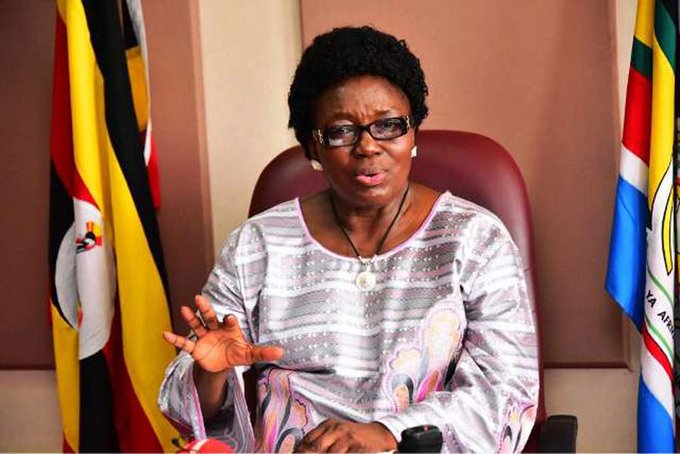
Samoura who is in the country to officially launch the extension of the FUFA headquarters in Mengo said that FIFA has called on national federations to ensure that the sports laws and policies are aligned with the international laws. As part of her programme, the FIFA Secretary General met the Speaker, Rebecca Kadaga. She was accompanied by a FUFA team led by the President, Moses Magogo.

“A letter was recently sent as a reminder to the Federation of Uganda Football Association (FUFA) regarding the necessary adjustments of the statutes of the Federation and football law to be compatible with FIFA statutes. Any support to accelerate the process will be appreciated,” Samoura said.

She added that FIFA will only extend the US$6 million support to local federations that have compiled with the requirements that meet international regulations.

Samoura said that FIFA has scheduled a conference on the mapping situation in Africa to take place in February on the sidelines of the next Executive Committee meeting in Egypt which she said FUFA could use for lobbying.

“It will be a good opportunity for Mr. Magogo to raise his concerns for football in Uganda, because we have invited eminent bankers and influential people in the financial market, to raise US$1 billion for construction of stadia in Africa,” added Samoura.

Kadaga said that there is a gap in the football law and that she would engage the State Minister for Sports to expedite the process.

“We have a new Minister for Sports Affairs who is very enthusiastic; I hope he can quickly work on the law. I will be happy to fast-track it when it comes to the floor of Parliament so that we can become complaint with the conditions that you require of us,” Kadaga said.

The Speaker also called for more support from FIFA to develop stadia across the country to complement those being constructed by Government. She called for support to young girls in football.

FUFA Chief Executive Officer, Edgar Watson said FUFA has on-going projects to develop football in Uganda through construction of facilities like the FUFA Technical Centre in Njeru, a mini stadium in Lugazi and the Kabira Technical Project in Lungujja among others.

Magogo said the only hindrance FUFA faces is acquiring land in the Federation’s names which is a prerequisite for project funding from the International football body.

Stories Continues after ad

Plans to have East African single currency by 2024 underway

EAC Logo

The Secretary General (SG)of East African community (EAC), Liberat Mfumukeko has said that the Bill for the establishment of the East African Monetary Institute (EAMI) has been assented to by the Summit of Heads of State, adding that the EAMI would later be transformed into the East African Central Bank that would issue the single currency.

EAC Partner States are in the process of harmonizing critical policies and putting in place the requisite institutions to attain a single currency for the region by 2024 as outlined in the EAC Monetary Union Protocol.

“The establishment of this institute will help to provide impetus towards the formation of the East African Monetary Union, which is the third pillar of our integration,” said Mfumukeko.

Amb. Mfumukeko disclosed that the Council of Ministers had approved the EAC Domestic Tax Harmonization Policy, adding that proper implementation of the policy would reduce tax competition thereby enhancing cross-border trade and investment in the region.

On the Financial Sector, the SG said that the Community had developed requisite legal instruments (Bills) for the insurance and microfinance sub-sector and strategies for implementation of financial education and insurance certification.

“Further, we implemented the financial market infrastructure for payment and settlement systems as well as finalized regional regulations for portability of pension benefits and consumer protection,” he added.

Mfumukeko was giving his New Year’s Address to the Staff of EAC Organs and Institutions spread across East Africa from the EAC Headquarters in Arusha, Tanzania.

He said that Community would have in place an EAC Investment Helpdesk and a Buyer-Seller Online Platform by June 2020.

“Both facilities will increase intra-EAC trade by creating awareness and markets for products manufactured within the EAC region.”

The Community, with US$20 million support spread over five years the World Bank, had also operationalized an EAC Statistics Development and Harmonization Regional Project.

“The project will support production of quality and harmonized statistics in the region through capacity building in the National Statistical Offices of the Partner States and the EAC Secretariat as well as support the establishment of the EAC Bureau of Statistics,” said Amb. Mfumukeko.

On the East African Court of Justice, the SG disclosed that sub-registries opened in the Partner States’ capital cities had elevated the visibility of the Court and reduced the costs of litigation and access to justice to the citizens of the Community.

“The residents can now easily take advantage of the Court and have their disputes resolved. In addition, the finalization of the review of the EACJ Rules of Procedure in 2019 will now provide seamless procedures to the benefit of the litigants,” said Amb. Mfumukeko.

On fisheries, the SG revealed that the Lake Victoria Fisheries Organization (LVFO) updated the status of fish stocks on the lake registering a 21 per cent increase in total biomass to 2.68 million metric tonnes between 2018 and 2019.

“The Nile Perch population increased by 48 per cent, from 0.55 million to 0.82 million metric tonnes over the same period. LVFO also revised Co-Management Guidelines for Lake Victoria, which provide for enhanced participation of stakeholders in fisheries management as well as capacity of fish traders and inspectors to promote market access, improved revenue collection and enhanced fish quality and safety assurance.”

LVFO received funds from the EU for a Start-up Phase of ECOFISH Project to enable consultations with key stakeholders to facilitate development of the detailed programme for enhancing regional policies and institutional frameworks.

The SG urged all EAC Staff to rededicate themselves to serving the region, a task he described as a privilege, adding that they had been recruited competitively based on their unique skills and expertise.

Stories Continues after ad

Uganda to mark World Wildlife Day

The state minister of tourism, Godfrey Kiwanda Ssuub,i has said Uganda is set to join the rest of the world to mark World Wildlife Day 2020 celebrated on the 3rd day of March every year.

On Dec 20, 2013, 68 session of UN General Assembly proclaimed 3rd March of every year as World Wildlife Day 2020 to celebrate the beautiful and varied forms of wild fauna and flora and to raise awareness of the several benefits that conservation provides to humanity.

Under the theme ‘Sustaining all life on earth’, the day will be celebrated at Ssaza grounds in Kisoro Municipality, Kisoro District in Kigezi sub region. The year 2020, known as a ‘biodiversity super year’, will host several major global events that place biodiversity at the forefront of the global sustainable development agenda.

According to the minister, the theme encompasses all wild animal and plant species as a component of biodiversity as well as the livelihoods of people, especially those who live closest to the nature. It also underlines the importance of sustainable use of natural resources in support of the achievement of the United Nations Sustainable Development Goals

“Uganda boasts of a rich and diverse wildlife heritage owing to its unique location at the zone of overlap between the savannah of East Africa and rainforests of W Africa. We’re distinctly blessed with spectacular landscapes of unrivalled beauty.” He said

“It provides a unique opportunity to deliver transformative progress for the conservation and sustainable use of the species of wild animals and plants in response to global sustainable development challenges that can best be addressed with nature-based solutions.”

Wildlife, namely the species of both wild animals and plants for the purpose of World Wildlife Day, is an integral part of the world’s biological diversity which has the greatest resonance with the general public.

In the run-up to and on World Wildlife Day 2020, the ministry will raise awareness of the multitude of benefits of wildlife to people, the interlinkages between the various components of biodiversity and the threats they are facing.

Attachments area

Stories Continues after ad

A call for vigilance after a strong year for risky assets

Financial asset market indices


By Tobias Adrian and Fabio Natalucci


While we have seen some recent volatility, many risky asset markets around the world had a spectacular year in 2019. Equity market indices were up just over 30 percent in the United States, close to 25 percent in Europe and China, and over 15 percent in emerging markets and Japan. Emerging-market sovereign debt, U.S. high-yield debt, and emerging-market corporate debt all had returns in excess of 12 percent. Remarkably, the fourth quarter of 2019 was especially strong in China and in emerging markets.

What explains the strong performance of risky assets? One important driving force boosting asset prices was the synchronized monetary policy easing throughout 2019. As concerns about the global economy grew, central banks around the world—including the U.S. Federal Reserve and the European Central Bank—eased monetary policy through rate cuts and unconventional tools. The combined number of policy rate cuts in advanced and emerging- market economies was the largest since the global financial crisis in 2008.

The forceful response of many central banks contributed to an easing of financial conditions around the globe, which in turn helped contain downside risks to the global economic outlook.

The improvement in market sentiment is reflected in one of the most commonly cited indicators of downside risks, the 10-year–2-year yield curve slope, which measures the difference between yields on 2- and 10-year government debt. The slope had flattened significantly since early 2018, suggesting increasing investor concern about the economic outlook. However, the slope started to steepen again in the fourth quarter of 2019 in the United States, United Kingdom, and Germany, suggesting that investors had regained some optimism about the outlook.

The most recent WEO update discusses the easing of financial conditions and the reassessment of downside risks, and cautiously forecasts a slight rebound of global economic activity this year and next, albeit to a lower level than previously forecast. In our view, 2019 demonstrated the continuous effectiveness of monetary policy, especially when easing is undertaken in a synchronized manner around the globe. The IMF estimates that global growth would have been 0.5 percentage point lower without global monetary policy stimulus. That is a powerful outcome in the face of heightened downside risks.

Taking a longer-term view, however, the easing of global financial conditions so late in the economic cycle and the continued buildup of financial vulnerabilities—including the rise in asset valuations to stretched levels in some markets and countries, the rise in debt, and large capital flows to emerging markets—could threaten growth in the medium term. For example, default rates have increased in the U.S. high-yield market, as well as in Chinese on- and offshore corporate bond markets, albeit from low levels. Furthermore, while emerging-market spreads—the difference in yields between emerging-market debt and a benchmark such as U.S. Treasuries—are very tight for most countries, there are some specific cases where emerging-market debt is trading at distress levels, admittedly with no signs of spillovers so far.

It is therefore crucial that policy makers continue to monitor the buildup of financial vulnerabilities and take steps to address them where appropriate in order to reduce the chance that such vulnerabilities may amplify the adverse impact of shocks to the global economy. While the easing of monetary policy last year played an important role in containing downside risks to the global economy, the deployment of cyclical macroprudential policy tools, such as the countercyclical capital buffer, is now paramount to keep rising vulnerabilities from putting growth at risk in the medium term.


Stories Continues after ad

UPCLOSE with Jojo Mawejje of Laletty fashion brand that gives back to community

Jojo Mawejje

The president on numerous occasions has come out to speak against the growing number of students pursuing ARTS at tertiary level institutes. At the recent Muni University graduation ceremony held earlier this year, he explained his dissatisfaction with the issue on the basis that Arts subjects weren’t as developmental or lucrative as science oriented disciplines both on an individual and societal level. This statement was met with a lot skepticism from Ugandans of all sectors who believed all students who passed through the education system were equipped with the vital skills to excel in life regardless of their profession or career.

To better understand the depth of the President’s claims we look to the western world-supposedly modernity’s epitome of civilization and development in the world, where the arts industry alone generates billions of dollars annually not just in the creation of arts but also in the preservation of it. Not only have the arts played a huge role in shaping society and creating modern day tradition, the arts culture transcends time by not only preserving history but further dictating the future in terms of what is deemed appealing and what is undesirable.

That aside, this website, Eagle Online caught up with an upcoming Ugandan Fashion designer Jojo Mawejje under the brand name Laletty & Co. based in Boston-Massachusetts and looking to setup shop in the heart of Kampala.

Eagle Online: Hello, can you tell us a little about yourself?

Jojo: Hi, my names are Jojo Mawejje, I was born here in Uganda but then we moved to the United States where I grew up. I am now a mother and fashion designer with the brand name is ‘LALETTY & Co”.

Eagle Online: Did you always grow up wanting to be a fashion designer?

Jojo: Actually no, I studied Neuro-psychology at college and was working before I took on the fashion industry. It sort of dropped on my lap and at first I was bit skeptical but I come from a family with a lot of seamstresses so I guess there was a bit of influence.

Eagle Online: Tell us a little about your journey to where you are at now?

Jojo: Well initially I started getting involved with the African culture and its traditions back when I was still in college, I organized a lot of the cultural expos and a few other gigs that brought awareness around diverse cultures and traditions around the world. This culminated I guess by making a few dresses and outfits for close friends and relatives during my free time and they really liked what I was doing so they kept nudging me towards the fashion industry as something I should take serious and after some time I started to actually really enjoy it and things went on from there.

Eagle Online: Was it easy breaking into the fashion industry and establishing the brand?

Jojo: When I decided to become a professional designer, Laletty was nothing more than one sewing machine, a basement and 700 dollars to spare. It was not easy being a single mother working a 9-5 job; this affected my work schedule and I found that I had no free time to create my designs. Managing all these aspects of a business was overwhelming and at one point I was completely burned out until I took a step back to assess the business and also bring on a few experts like Blue Dhow Partners who help me manage the nitty-gritty stuff.

Eagle Online: This sounds like a tough journey for you; how did you manage to get by and not give up?

Jojo: I owe it all to my Uncle (she begins to tear up), he was such a huge inspiration in my life and continues to be although he passed away. He taught me everything I know and would always tell me: “No matter where you are, you’re a seed; you have to grow-no matter where you are planted.” This and the values like: kindness, never settling and always aiming for the best has always kept me driven and purposeful in life.

Eagle Online: Beautiful, and, may he Rest in Peace. There are thousands of young African designers across the continent who join the industry each year, what do you think will make Laletty stand out amongst all?

Jojo: You know ‘Fashion is a mood’, moods dictate what we wear and so when I make designs I do it with the intention of bringing value to people. I want to make products that bring value to someone; when they wear my pieces-how do they feel? What emotions does it bring out of them?

Eagle Online: This is a rather inspirational journey, what plans do you have for the brand in the future?

Jojo: With time I hope the brand can become international and self sustainable, I’ve always wanted to set up shop in Uganda but I didn’t know how to but currently I’m trying out different local seamstresses that I can fit into the business. I also believe that the brand can do more than just make clothes, it can also solve many other problems in society like: sustainable income for women and with time I hope that Laletty can reduce the poverty levels in Uganda.

Eagle Online: Thank you so much for giving us a few minutes of your time, what can you tell the Ugandan audience and young designers out there trying to make it?

Jojo: I think giving up is not an option, it might be hard at first but eventually things fall in place and you find yourself moving.

Eagle Online: Thank you so much, when can we expect to see your brand in local stores?

Jojo: (laughs heartily) I can’t say for sure but we are working on that and hopefully by this year in the summer hopefully!


Stories Continues after ad

Uganda’s score in Absa Financial Markets Index 2019 improves, but more still remains to be done

David Wandera, Absa Bank Uganda's Head of Markets.

Uganda’s score in the latest Absa Financial Markets 2019 has slightly improved with the country scoring 52 out of 100 points compared to 50 scored in the year 2018.

However, Uganda remained in 10th position behind leaders; South Africa, Mauritius, Kenya, Namibia, Botswana, Nigeria, Tanzania, Zambia and Rwanda respectively. The Index also shows Uganda was fourth, behind her East African Community peers of Kenya, Tanzania and Rwanda, respectively.

The Absa Africa Financial Markets Index evaluates financial markets development in 20 countries and highlights economies with the clearest growth prospects. The aim is also to show how economies can improve market frameworks to meet yardsticks for investor access and sustainable growth.

This was the third year the Absa Financial Markets Index is compiled under six pillars like; Market depth, Access to foreign exchange, Market transparency, tax and regulatory environment, Capacity of local investors, Macroeconomic opportunity and Legality and enforcement standard financial markets master agreements.

The Absa Financial Markets Index 2019 compiled in association with official Monetary Financial Institutions Forum (OMFIF) shows that out of 100, Uganda scored 45, 71, 73, 16, 69 and 35, respectively for the respective pillars listed in that order above.

The report notes that during 2018-2019 Uganda reduced withholding tax on 10-year government bonds to 10 percent from 20 percent, a policy change that can boost growth of financial sector. It also notes that all local Ugandan banks also signed onto the Global Master Repurchase Agreement (GMRA) and the market is able to trade horizontal repos.

Relatedly, the report notes that the Capital Markets Authority of Uganda (CMAU) is ‘developing mandatory listings for firms in strategic sectors such as telecommunications, tier one banks and mining firms to increase the number of listed companies on its bourse, the Uganda Securities Exchange (USE).

However, the report notes that respondents in Uganda complained that the country has the highest tax rates on dividends in the region with no exemptions or incentives to encourage financial market development.

Uganda at glance: Pillar 1 – Market depth

Uganda’s overall performance improved slightly, with the decline in liquidity offset by the higher value of listed bonds and equities. However, Uganda’s market liquidity continued to drop, with $11 million in turnover, down from $25 million. Turnover has been hit by uncertainty over Umeme, the country’s main electricity firm and most-traded stock.

Pillar 2: Access to foreign exchange

Uganda ranks highest in East Africa on access to foreign exchange, in third position after South Africa and Egypt. Uganda performs strongly in this pillar, with almost the same score as top-ranked South Africa.

It has a high level of foreign reserves relative to net portfolio investment flows and enough reserves to cover more than four months of imports.

Pillar 3: Market transparency, tax and regulatory environment

Uganda’s credit quality has improved as the report points out that Uganda has earned international corporate credit ratings for the first time, alongside Cameroon and Senegal. International credit ratings aid transparency and reflect confidence levels.

Pillar 4: Capacity of local investors

Uganda’s pension assets have risen with government securities accounting for 75 per cent of assets and quoted equities tallying up to 14 per cent.

Pillar 5: Macroeconomic opportunity

Uganda registered a decline in non-performing loan ratios, boosting the country’s Pillar 5 scores.

Areas for Improvement

The country has the highest tax rates on dividends in the region with no exemptions or incentives to encourage financial market development.

Uganda’s lowest ranking is on Pillar 4, ‘Capacity of local investors’, reflecting in large part the country’s low level of pension fund assets per capita. Initiatives to broaden access to pension plans should be considered in future financial inclusion strategies.

Uganda’s second-lowest ranking is in Pillar 6, where it is 12th. This is due mostly to weaknesses, as measured by the World Bank, in its insolvency framework. Improving this score can help attract international investors, who want to be sure they can quickly and easily reclaim at least some of their capital from a failing investment.

To bolster market capitalization, Uganda’s Capital Markets Authority is developing mandatory listings for firms in strategic sectors such as telecommunications, tier one banks and mining

The index tracks the progress on financial market developments across South Africa, Nigeria, Mauritius, Botswana, Kenya, Namibia, Ghana, Zambia, Egypt, Uganda, Mozambique, Senegal, Morocco, Ivory Coast, Angola, Tanzania, Rwanda, Cameroon, Seychelles and Ethiopia.

Products available in Uganda’s financial markets; equities, corporate bonds, government bonds, asset-backed securities, exchange-traded funds, cross-currency swaps, mutual funds, repo documented under GMRA and unit trusts.

Stories Continues after ad

Two UPDF officers perish in a plane crash

Major Naomi Karungi and her co-polit who are reportedly to have died in the accident.

Two Uganda People’s Defence Forces (UPDF) officers have died in army jet crash in Gomba. The development has been confirmed by UPDFs Spokesperson, Brig. Richard Karemire.

“We regret to inform that a UPDAF Jet AF 302 Ranger on a training mission has crashed. It had two crew members. Sadly, no one has survived.” He said

Brig Karemire said UPDF has embarked on investigating the cause of the tragic plane crash, “Condolences to their families and the entire UPDF fraternity.” He added.

Stories Continues after ad

FIFA Secretary General calls on Parliament to harmonies the country’s sports laws

Fatma Samoura (L), Speaker of Parliament Rebecca Kadaga and FUFA President Moses Magogo


The Secretary General of the Federation of International Football Associations (FIFA), Fatma Samoura has urged Parliament to harmonies the country’s sports laws with the international regulations.

Samoura who is in the country to officially launch the extension of the FUFA headquarters in Mengo said that FIFA has called on national federations to ensure that the sports laws and policies are aligned with the international laws. As part of her programme, the FIFA Secretary General met the Speaker, Rebecca Kadaga. She was accompanied by a FUFA team led by the President, Moses Magogo.

“A letter was recently sent as a reminder to the Federation of Uganda Football Association (FUFA) regarding the necessary adjustments of the statutes of the Federation and football law to be compatible with FIFA statutes. Any support to accelerate the process will be appreciated,” Samoura said.

She added that FIFA will only extend the US$6 million support to local federations that have compiled with the requirements that meet international regulations.

Samoura said that FIFA has scheduled a conference on the mapping situation in Africa to take place in February on the sidelines of the next Executive Committee meeting in Egypt which she said FUFA could use for lobbying.

“It will be a good opportunity for Mr. Magogo to raise his concerns for football in Uganda, because we have invited eminent bankers and influential people in the financial market, to raise US$1 billion for construction of stadia in Africa,” added Samoura.

Kadaga said that there is a gap in the football law and that she would engage the State Minister for Sports to expedite the process.

“We have a new Minister for Sports Affairs who is very enthusiastic; I hope he can quickly work on the law. I will be happy to fast-track it when it comes to the floor of Parliament so that we can become complaint with the conditions that you require of us,” Kadaga said.

The Speaker also called for more support from FIFA to develop stadia across the country to complement those being constructed by Government. She called for support to young girls in football.

FUFA Chief Executive Officer, Edgar Watson said FUFA has on-going projects to develop football in Uganda through construction of facilities like the FUFA Technical Centre in Njeru, a mini stadium in Lugazi and the Kabira Technical Project in Lungujja among others.

Magogo said the only hindrance FUFA faces is acquiring land in the Federation’s names which is a prerequisite for project funding from the International football body.


Stories Continues after ad

Plans to have East African single currency by 2024 underway

EAC Logo


The Secretary General (SG)of East African community (EAC), Liberat Mfumukeko has said that the Bill for the establishment of the East African Monetary Institute (EAMI) has been assented to by the Summit of Heads of State, adding that the EAMI would later be transformed into the East African Central Bank that would issue the single currency.

EAC Partner States are in the process of harmonizing critical policies and putting in place the requisite institutions to attain a single currency for the region by 2024 as outlined in the EAC Monetary Union Protocol.

“The establishment of this institute will help to provide impetus towards the formation of the East African Monetary Union, which is the third pillar of our integration,” said Mfumukeko.

Amb. Mfumukeko disclosed that the Council of Ministers had approved the EAC Domestic Tax Harmonization Policy, adding that proper implementation of the policy would reduce tax competition thereby enhancing cross-border trade and investment in the region.

On the Financial Sector, the SG said that the Community had developed requisite legal instruments (Bills) for the insurance and microfinance sub-sector and strategies for implementation of financial education and insurance certification.

“Further, we implemented the financial market infrastructure for payment and settlement systems as well as finalized regional regulations for portability of pension benefits and consumer protection,” he added.

Mfumukeko was giving his New Year’s Address to the Staff of EAC Organs and Institutions spread across East Africa from the EAC Headquarters in Arusha, Tanzania.

He said that Community would have in place an EAC Investment Helpdesk and a Buyer-Seller Online Platform by June 2020.

“Both facilities will increase intra-EAC trade by creating awareness and markets for products manufactured within the EAC region.”

The Community, with US$20 million support spread over five years the World Bank, had also operationalized an EAC Statistics Development and Harmonization Regional Project.

“The project will support production of quality and harmonized statistics in the region through capacity building in the National Statistical Offices of the Partner States and the EAC Secretariat as well as support the establishment of the EAC Bureau of Statistics,” said Amb. Mfumukeko.

On the East African Court of Justice, the SG disclosed that sub-registries opened in the Partner States’ capital cities had elevated the visibility of the Court and reduced the costs of litigation and access to justice to the citizens of the Community.

“The residents can now easily take advantage of the Court and have their disputes resolved. In addition, the finalization of the review of the EACJ Rules of Procedure in 2019 will now provide seamless procedures to the benefit of the litigants,” said Amb. Mfumukeko.

On fisheries, the SG revealed that the Lake Victoria Fisheries Organization (LVFO) updated the status of fish stocks on the lake registering a 21 per cent increase in total biomass to 2.68 million metric tonnes between 2018 and 2019.

“The Nile Perch population increased by 48 per cent, from 0.55 million to 0.82 million metric tonnes over the same period. LVFO also revised Co-Management Guidelines for Lake Victoria, which provide for enhanced participation of stakeholders in fisheries management as well as capacity of fish traders and inspectors to promote market access, improved revenue collection and enhanced fish quality and safety assurance.”

LVFO received funds from the EU for a Start-up Phase of ECOFISH Project to enable consultations with key stakeholders to facilitate development of the detailed programme for enhancing regional policies and institutional frameworks.

The SG urged all EAC Staff to rededicate themselves to serving the region, a task he described as a privilege, adding that they had been recruited competitively based on their unique skills and expertise.


Stories Continues after ad

Uganda to mark World Wildlife Day

Mountain gorilla


The state minister of tourism, Godfrey Kiwanda Ssuub,i has said Uganda is set to join the rest of the world to mark World Wildlife Day 2020 celebrated on the 3rd day of March every year.

On Dec 20, 2013, 68 session of UN General Assembly proclaimed 3rd March of every year as World Wildlife Day 2020 to celebrate the beautiful and varied forms of wild fauna and flora and to raise awareness of the several benefits that conservation provides to humanity.

Under the theme ‘Sustaining all life on earth’, the day will be celebrated at Ssaza grounds in Kisoro Municipality, Kisoro District in Kigezi sub region. The year 2020, known as a ‘biodiversity super year’, will host several major global events that place biodiversity at the forefront of the global sustainable development agenda.

According to the minister, the theme encompasses all wild animal and plant species as a component of biodiversity as well as the livelihoods of people, especially those who live closest to the nature. It also underlines the importance of sustainable use of natural resources in support of the achievement of the United Nations Sustainable Development Goals

“Uganda boasts of a rich and diverse wildlife heritage owing to its unique location at the zone of overlap between the savannah of East Africa and rainforests of W Africa. We’re distinctly blessed with spectacular landscapes of unrivalled beauty.” He said

“It provides a unique opportunity to deliver transformative progress for the conservation and sustainable use of the species of wild animals and plants in response to global sustainable development challenges that can best be addressed with nature-based solutions.”

Wildlife, namely the species of both wild animals and plants for the purpose of World Wildlife Day, is an integral part of the world’s biological diversity which has the greatest resonance with the general public.

In the run-up to and on World Wildlife Day 2020, the ministry will raise awareness of the multitude of benefits of wildlife to people, the interlinkages between the various components of biodiversity and the threats they are facing.


Stories Continues after ad