Stanbic Bank
Stanbic Bank
16.3 C
Kampala
Stanbic Bank
Stanbic Bank
Home Blog Page 1056

Health Ministry trains UPDF medics on coronavirus prevention


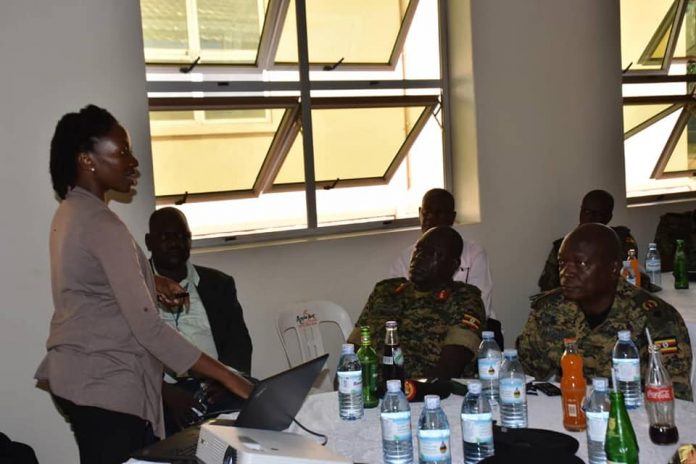
The Ministry of Health has started training UPDF at the Mbuya Senior Officers Diagnostic Centre on the prevention of the deadly Coronavirus (CODIV 19) with the aim of equipping soldiers with skills to combat the outbreak of the virus.

Maj. Gen. Ambrose Musinguzi, UPDF Chief of Medical Services, who represented the Chief of Defence Forces (CDF), lauded the ministry for being timely in equipping the UPDF medical personnel with skills to prevent the spread of Corona virus.

He said that as the UPDF they are mandated to respond to emergencies like they have been doing over the years, therefore, the training only helps them to respond better to the virus in case it hits the country. “As UPDF, we are under obligation to respond to emergencies and help to protect the people we serve” Gen Musinguzi said.

He announced that there will be various training to train soldiers on how to prevent the spread of corona virus, this is the first and another one will be held at Bombo Land Forces headquarters.

“These trained teams will be the ones to further train and sensitize other soldiers from other units countrywide in the UPDF including those in Somalia” he emphasized.

Dr. Bondo Bongomin from the Ministry of Health said that the ministry is partnering with UPDF to deliver the message about Corona Virus which broke out in December 2019. “We thought it wise to equip you with the preventive skills against this global epidemic since UPDF is a very proactive institution when it comes to emergencies”.

He said that after the training, trainees should be in position to know the signs and symptoms of corona virus and be able to prevent the spread of the disease.

Dr. Salome Okware the ministry official assured the trainees that they should be in position to form teams and be ready to fight the epidemic after the training.

She added that hygiene must be a priority in order to avoid the spread of the disease through washing hands thoroughly and quickly identifying the patients with the signs of the virus and isolating them.


Stories Continues after ad

Absa Group reports improving revenue growth momentum for 2019; earnings up slightly amid sluggish economy

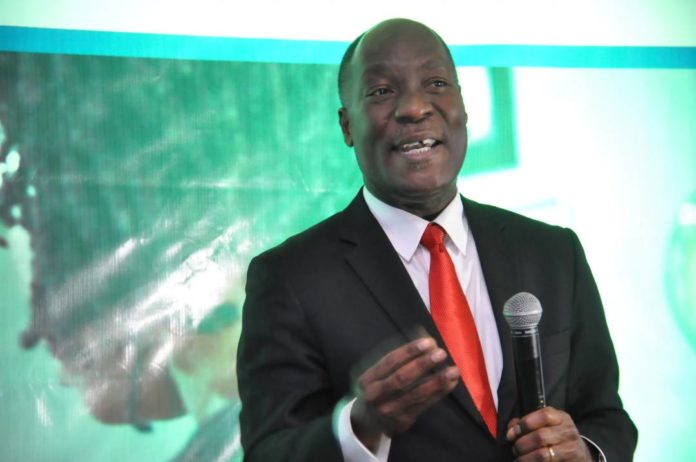
David Wandera, Absa Bank Uganda's Head of Markets.

Absa Group Limited has reported improving revenue growth for the 2019 financial year, with headline earnings growing slightly.

Absa Regional Operations (ARO) comprising Absa Group’s African operations excluding South Africa delivered strong financial performance in 2019 with earnings growth of 16 per cent, enhancing the overall Group’s position.

Revenue grew by 14 per cent, Pre-provision profits increased by 17 per cent and Cost-to-income ratio improved to 57.8 per cent. While separating, ARO has grown its retail primary customer base in 2019 to 1.5 million customers.

“We delivered a resilient performance against a challenging macroeconomic backdrop. We maintained balance sheet momentum and growth was broad-based across most businesses,” said Daniel Mminele, Absa Group Chief Executive.

“We will continue to drive the execution of our strategic objectives with agility, and take advantage of emerging opportunities, while managing risks more effectively in response to changes in the operating environment,” he said

Absa Group revenue increased six per cent while headline earnings, the measure most analysts use to gauge profit, rose to one percent as impairments increased.

“Our revenue growth is showing an improving trend, with strong deposit growth of 12% and customer loan growth of nine percent for the Group,” said Absa Group Financial Director, Jason Quinn.

Overall, Absa’s balance sheet, revenue and earnings growth were in line with peers after lagging for a number of years.

March 2016: Barclays PLC announces that it will reduce its ownership of Barclays Africa Group Limited (now called Absa Group Limited) from 62.3 per cent to a minority shareholding, over time. This comes as global bank regulations tighten after the 2008 financial crisis, making it less attractive for international banks to own stakes in banks abroad.

December 2017: PLC concludes the sell-down, leaving the UK Company with a 14.9 per cent  stake in the Group. Barclays PLC indicates that this is its long-term desired ownership level, and says that it does not plan to effect further sales at this time.

Absa launched its growth strategy in March 2018 after Barclays PLC ceased to be the controlling shareholder in the Pan African banking group. Absa is on track to complete its separation programme, one of the largest in the banking sector in terms of size and complexity, on time and within budget by the middle of 2020.

July 2018: The Group’s name is changed from Barclays Africa Group Limited to Absa Group Limited, and the decision to change subsidiary names to ‘Absa’ is announced. A refreshed brand is unveiled in South Africa.

November 2019: Barclays Bank Uganda and Barclays Bank Mozambique are renamed as Absa. February 2020: All remaining Barclays-branded subsidiaries are renamed as ‘Absa’

Retail and Business Banking in South Africa continues to show signs of turnaround as the unit gained ground in key areas, recording increases in customer loans and deposits. Revenue momentum increased and costs were well contained. However, an increase in impairments eroded earnings.

Gross loans and advances grew by 7 per cent to R530 billion, deposits grew by 10 per cent to R373 billion, Non-interest income grew by 6 per cent, Cost-to-income ratio improved to 57.7 per cent from 58.4 per cent in 2018 and Customer growth of 1 per cent to 9.7 million.

Stories Continues after ad

Do not defraud taxpayers over students in China- MPs

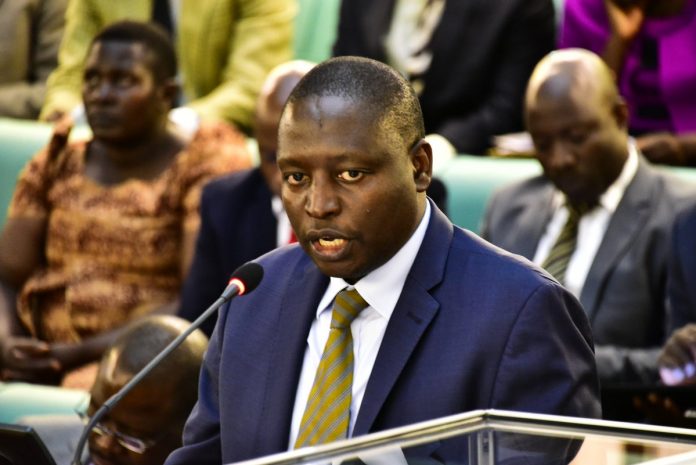
Minister David Bahati

Members Parliament have warned government to resist the temptation of using the plight of Ugandan students quarantined in Wuhan, China over Coronavirus, to defraud tax payers.

The concern was raised by Ayivu County MP, Bernard Atiku, who claimed that the Ministry of Finance had sent up to $600,000 to Uganda’s Embassy over and above the approved $61,000 meant for the Ugandan students stranded in the country.

Atiku urged the August House to interest itself in reports from students in Wuhan that not all of them have been given money.

“Students are saying that not all have received the money and even the US $618 being given out to each student cannot match the rising costs of living in Wuhan,” said Atiku

The State Minister for Finance (Planning), David Bahati, explained that no money will be lost due to the error, as the ministry had already asked the Ugandan Embassy in China to return what is above the approved US $61,000.

“It was just mis-coordination on our part, the original request was for US $600,000 but cabinet approved only $61,000. No money will be lost, and every student is getting what they are supposed to get,” he said.

Bahati’s argument did not seem to convince legislators who said it was becoming a tradition for Ministry of Finance to disburse excess funds, with the excess ending up misappropriated.

“This cannot just be negligence, it is a common occurrence in the Ministry [of Finance]; the Accounting Officer is often asked to remit back money but this money never goes back to the Treasury,” said Reagan Okumu

Relatedly the State Minister for Health (Primary Health Care), Joyce Moriku Kaducu confirmed that one case of Coronavirus has been confirmed in Democratic Republic of Congo. She however said that the ministry would use the same measures used during the Ebola outbreak in the Congo to contain Coronavirus at Uganda’s borders.

Stories Continues after ad

Standard Chartered launches ‘banking as a service’ solution

Standard-Chartered-Bank-Uganda-CEO-Alber-Saltson

Standard Chartered has launched its ‘Banking as a Service’ solution, nexus. Through nexus, digital platforms and ecosystems like e-commerce, social media or ride hailing companies, will be able to offer loans, credit cards and savings accounts co-created with the bank to their customers under their own brand name.

Standard Chartered is starting off with a major e-commerce platform. The bank intends to further roll out the service to markets in Asia, Africa and the Middle East with the right regulatory frameworks and established digital platforms.

The $29 trillion e-commerce markets and the fast growing platform businesses space are constantly looking for innovative solutions that offer customers more choice and greater convenience. nexus will help these businesses benefit from Standard Chartered’s strong balance sheet and world class banking technology to deepen customer loyalty and grow revenues.

Bill Winters, Group Chief Executive of Standard Chartered said “nexus is potentially transformational for the bank and our customers. We will actively partner with leading consumer platforms in our markets to enable convenient access to financial services to millions of new, tech-savvy customers. We are starting with Indonesia, as part of our strategy to grow digitally and expand our business in this important, fast growing market.”

The ‘Banking as a Service’ solution was incubated at SC Ventures, Standard Chartered’s innovation, fintech investment and ventures arm. It started from a business plan mooted by an employee, who now leads the venture with a team of over 100 developers, engineers, and business development professionals across three markets.

Standard Chartered has been actively experimenting with new business models to meet the evolving needs of its clients. The bank recently announced a joint venture with Assembly Payments to develop and deliver next generation payment solutions.

In Hong Kong, it is set to launch a standalone digital retail bank in Hong Kong, Mox, in partnership with PCCW, HKT and Trip.com, and has also built a digital open platform, Solv, to help Small and Medium Enterprises (SMEs) in India and other markets grow by providing access to financial and business services.

Stories Continues after ad

Coronavirus: Fly Emirates offer travelers’ added peace of mind

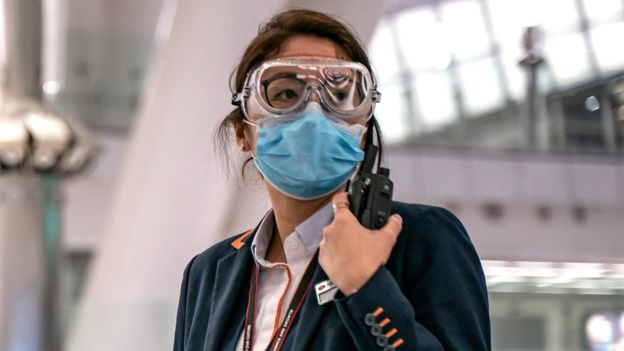
A lady wearing protective gears against coronavirus

In response to the latest developments in the COVID-19 outbreak around the world, Emirates has taken extra steps to ensure its customers’ health and comfort, and provide them with confidence and peace of mind when planning their travel.

On all aircraft departing from its hub in Dubai, are subjected to enhanced cleaning and complete disinfection of all cabins as a precaution. The airline uses an approved chemical that is proven to kill viruses and germs, leaves a long-lasting protective coating against new contamination of viruses, bacteria and fungi on surfaces, and is eco-friendly.

According to Valerie tan, the public relation manager of Emirates, the cleaning process includes a comprehensive wipe down of all surfaces  from windows, tray tables, seatback screens, armrests, seats, in-seat controls, panels, air vents and overhead lockers in the cabin, to lavatories, galleys and crew rest areas. All of this is done in addition to other normal procedures such as changing head rest covers on all seats, replacement of reading materials, vacuuming, and more.

“On any aircraft that were found to have transported a suspected or confirmed COVID-19 case, Emirates implemented deep cleaning and disinfection in a process that takes between six to eight hours to complete. This includes the defogging of cabin interiors and misting with disinfectant across all soft furnishings, and replacement of seat covers and cushions in the affected area. The aircraft’s HEPA cabin air filters will also be replaced.” He said

Emirates has also provided customers across its network added flexibility, choice, and value; with the ability to change their travel dates without change and reissuance fees.

“The safety and well-being of customers and employees is a topmost priority at Emirates. Since January, the airline has activated its contingency response team to monitor daily developments on the COVID-19 outbreak, maintain contact with all relevant health and regulatory authorities, and ensure the airline’s response is current and appropriate.”  He said

He said Emirates will continue working closely with all its partners and industry stakeholders, to ensure travellers can continue their journeys with the assurance that their wellbeing and comfort remains at the forefront.

Stories Continues after ad

Andrew Kakooza appointed CFO at Cipla quality chemical industries

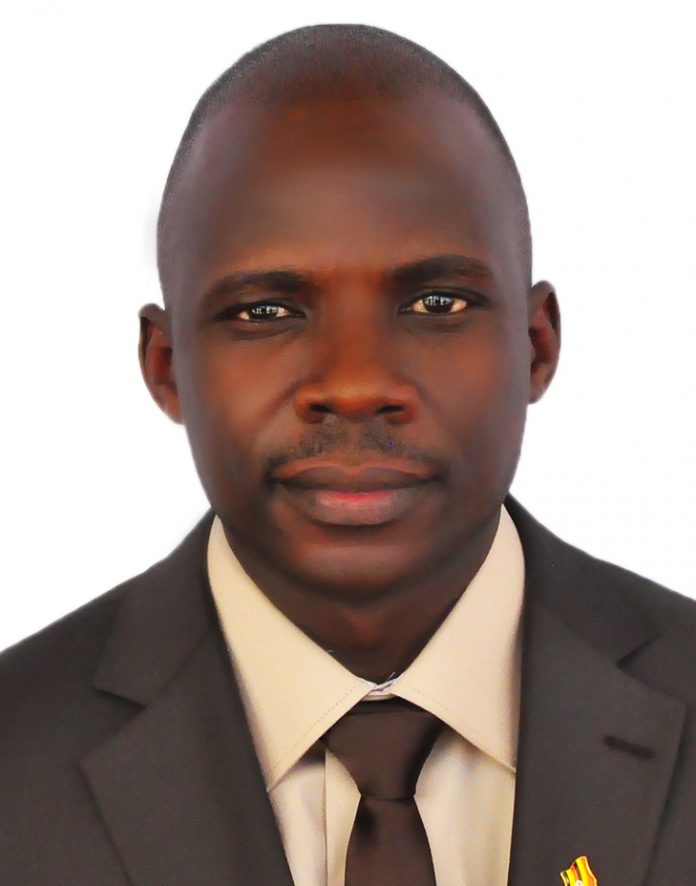
Andrew Kakooza

The Cipla quality chemical industries limited have appointed Fredrick Andrew Kakooza as the Chief Finance Officer.

His appointment was announced by the Executive Chairman of the company, Emmanuel Katongole. “We are confident that his depth of experience in financial management will be a great value addition to the company,” read in part of the statement released by the chemical company.

Kakooza will be responsible for developing and maintaining accounting principles, practices and procedures.  He will also manage the accounting activities including general ledger maintenance, financial reporting, year-end audits, financial analyses, all internal financial controls, tax planning and support of budget forecast activities.

He is a fellow of chartered institute of management accountants (FCMA)- UK, fellow of association  of chartered certificate  accountants of Kenya (CPAK)- Kenya and member  of the institute of certified Public accountants of Ugnada  (CPAU).

He brings experience from Kampala pharmaceutical industries where he has been serving as the chief finance officer. He was appointed to the job in December 2018. He worked as Financial Management Expert/ Chief Financial Officer at Energy Utility Corporation Limited (Rwanda’s national electricity distribution utility), Financial Controller UMEME Limited among other companies.

Stories Continues after ad

Bobi Wine ignores talks with Muhoozi opts for Tumukunde


Kyadondo East legislator and People Power Movement  leader Robert Kyagulanyi aka Bobi Wine has said he is in talks with former Security Minister Lt. Gen. Henry Tumukunde.

Gen. Tumukunde declared last week that he was to run in the 2021 presidential race against the incumbent Yoweri Museveni.

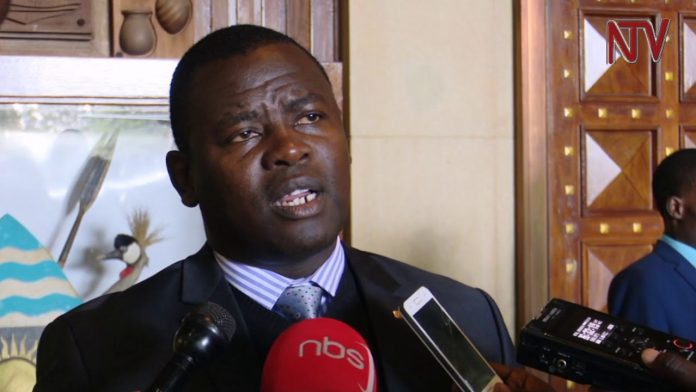
While appearing on NBS-TV morning show said “I must say that I met the General and we are talking. I had even met him in the past. But of course I will not tell you so much of what we discuss,” Mr. Wine said.

Asked whether he was ready to meet Senior Presidential Advisor on Special Duties who also doubles as First Son, Lt. Gen. Kainerugaba Muhoozi said he wasn’t willing since his freedoms had been curtailed by Gen. Muhoozi’s father who doubles as President of Uganda, Yoweri Kaguta Museveni.

“What is there for me to talk with Muhoozi when his father is stepping on my neck? It is important to have good ground for conversation. Let them stop killing Ugandans and stepping on my neck. Nelson Mandela said, only free men can negotiate. Historically, Gen Muhoozi and his father behave like that. They had come to take my life in Arua, but unfortunately, they took that of Yasin Kawuma”.


Stories Continues after ad

National Health Insurance Scheme should cover all Ugandans-UHRC

Fred Baseke


The National Health Insurance Scheme Bill, 2019 will be useful to Uganda if it can ensure access to health not only the contributors and their dependents but even the most indigent, the Uganda Human Rights Commission(UHRC) has recommended.

The commission which was appearing before the Health Committee to present their position on the bill, wants Uganda to take the same direction the world is taking if it is to achieve health for all as enshrined in the Sustainable Development Goal three.

“For the bill to restrict access to health to only contributors and their dependents means that the poor and the most vulnerable who do not earn at all will be left out, yet we are saying we want quality health for all,” said Ruth Ssekindi, Director, Monitoring and Inspections at the UHRC.

The Commission also wants the proposed National Health Insurance Scheme to cater for palliative care for chronic diseases as opposed to simply providing treatment, cognizant that Palliative is more costly and often left to caregivers. “We are saying there is that time when you no longer need treatment but care, and for chronic diseases a lot of care is needed that you can’t expect it from family members or friends” said Ssekindi.

The Commission proposed removal of the restriction within the bill on access to healthcare when one forgets or loses an insurance card, saying that vulnerable people like the elderly are bound to forget their cards.

“If you say that people cannot access health services because they forgot their insurance cards at home, a person with a high fever will most likely collapse and probably die before reaching home,” Ssekindi said.

This, legislators said is most likely to breed abuse of resources by non-contributors or contributors who may not have renewed their premium.

“As a committee, we observed that we cannot expect all people to have self-discipline; if  you give people that liberty, you will open up a window of abuse” said  Ntenjeru South MP Fred Baseke.

Beatrice Rwakimari said the use of insurance health cards will be one of the key safeguards to ensure timely payment of premium.

The Health Committee is at the tail end of public consultations on the bill and will meet the Health Minister before the report on the bill is presented in Parliament.

Stories Continues after ad

COSASE Chairman orders for arrest of  Muhammed Allibhai over irregularities in acquisition of departed Asian properties

MP Ibrahim Kasozi

The Deputy Chairperson of Parliamentary Committee on Commissions, Statutory Authorities and State Enterprises (COSASE) Ibrahim Kasozi has ordered for the arrest of Mr Muhammed Allibhai over his failure to appear before parliament select committee investigating irregularities in the acquisition of departed Asian properties.

Allibhai who is also the chairperson of expropriated properties owners limited was expected to explain how he reclaimed contested properties of the departed Asia and sold them off through his company, Alderbridge Real Estate and Management Ltd.

The city businessman was summoned three times to appear before the committee, however, he has since declined, a move that could clearly indicate that he illegally acquired properties of departed Asians.

Speaking during committee meeting, Kasozi said Allabhai has been given enough time to appear before the committee however he said defied committee orders. “The committee is left with no options other than issuing a warrant of arrest and he should be produced before committee by police on Thursday” Mr. Kasozi ordered.

Allabhai last appeared before the committee in September last year, since then, he has refused to face committee members despite several invitations extended by Legislators.

Departed custodian board (DAPCB) through various sessions they had with the COSASE sub-committee revealed that they have information pinning Allibhai and top government officials and tycoons who illegally repossessed and sold off these properties under questionable circumstances.

Muhammed Allibhai emphasizing a point to colleagues

On January 8, 2020 notice written by Emmanuel Bakwega on behalf of the Clerk to Parliament, COSASE was supposed to travel to Canada, and later to United Kingdom in search of Ugandans who were either paid, or never claimed their properties. The MPs will visit Toronto and Vancouver cities for this exercise mid and later this month.

The businessman, who according to a 2007 published report in the New Vision newspaper, is one of the wealthiest individuals in Uganda, has over 900 properties pegged on his name.

Stories Continues after ad

MPs find secretary to Custodian Board destroying vital documents

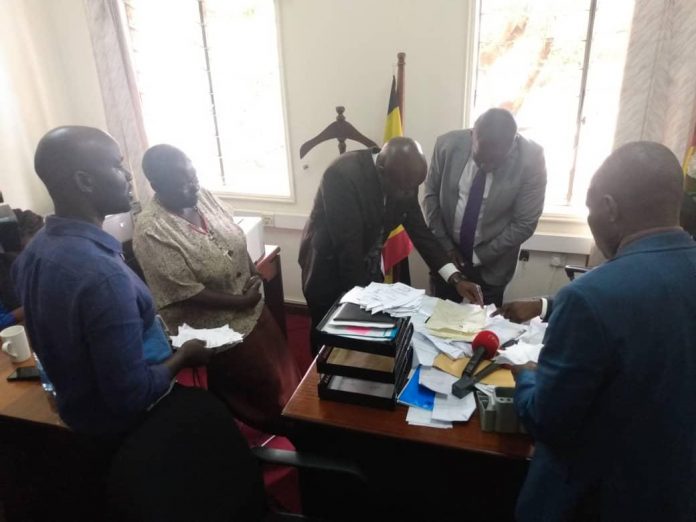
MPs examining the destroyed documents.

Un announced visit to the offices of the Custodian Board by a  section of Members of Parliament on select committee investigating the mess in the custodian board was shocked when they found the secretary to the  Executive Secretary  of the Departed Asians Property Custodian Board (DAPCB) George William Bizibu destroying vital documents in office.

The select sub-committee COSASE is investigating circumstances under which properties that were compensated for by government have been grabbed. The Members of Parliament have since asked the government officials who handled the Departed Asians properties to table proof of compensation for each property. The select sub-committee is chaired by Makindye East MP Ibrahim Kasozi.

Finance Minister Matia Kasaija who is also the Chairman of the Departed Asians Properties Custodian Board (DAPCB) was on last year appeared before select task force of the parliamentary Committee on Commission, Statutory Authorities and State Enterprises (COSASE).

The MPs asked the board to publish a list of the beneficiaries to confirm whether they did not pay ghost claimants.

While appearing before COSASE  last year, Mr. Bizibu, admitted the accountability queries when questioned by MPs. During the interface with the MPs, Bizibu who has been at the helm of the DAPCB for about two years said the board does not have information on the current ownership of several plots despite the records indicating that they were compensated by the government.

However, the MPs accused Bizibu of trying to cover up senior government officials accused of grabbing the Asian’s properties.

The composition of the board has become a matter of public scrutiny.

The Board members include Kasaija, Lands Minister Beti Kamya, Attorney General William Byaruhanga, State Minister for Local Government Jenifer Namuyangu, State Minister for Industry and Cooperatives, Michael Werikhe and Gen. Salim Saleh who is a “co-opted member”.

Section 5 (1) of the Assets of the Departed Asians Act requires the board to sit at least once every month.

However, it has emerged that failure by the board members to meet has over the years encouraged fraud at DAPCB where hundreds of properties have been stolen. An Auditor General’s report has raised accountability queries at the Custodian Board such as theft of public funds through fictitious compensations of up to Shs1.7 billion, double allocation of properties, forged land titles, sale of assets without proper valuation, missing documents among other illegalities.

The February 2011-March 2016 report of the Auditor General, John Muwanga, revealed that the Board chaired by the Finance Minister failed to maintain proper books of account and annual financial statements were not prepared. In the result, it took Auditor General 15 years to audit the Custodian Board activities.

In the process, billions of shillings in taxpayers’ money was misappropriated. The Auditor General’s report for instance, shows that Shs50.2 million cash was not banked and lacked accountability documents at the time of the audit. Another Shs15.2 million was receipted as cash received but could not be traced in the bank statement. Also, about Shs500 million was spent directly from the collection account without the authority of the board.

Stories Continues after ad