Stanbic Bank
Stanbic Bank
27 C
Kampala
Stanbic Bank
Stanbic Bank
Home Blog Page 1059

Kenyan MPs now want to give Uhuru powers to sack Ruto

WHAT NEXT? Kenya's Deputy President William Ruto

A section of Kenyan Members of Parliament has revealed a plot to use looming constitutional changes to try to kick out Deputy President William Ruto.

They are also pushing for the formation of a government of national unity should the referendum be successful.These are some of the behind-the-scenes pushes to introduce amendments on the Building Bridges Initiative (BBI) report.The MPs want to give the President a leeway to initiate the removal of his deputy.
If it succeeds, it will hand President Uhuru Kenyatta powers to fire Ruto or any other deputy president.Proponents of the proposal argue there is the need to revisit the constitutional provision that insulates the position of deputy president, making it difficult for the president to sack his principal assistant. MPs Ben Momanyi (Borabu, Wiper) and Ayub Savula (Lugari, ANC) disclosed the proposal was being canvassed, a development also confirmed by highly-placed sources that could not be named for fear of reprisals.
Momanyi said the country should expect a government of national unity immediately after the referendum, adding that there was a common agreement to address a scenario whereby a president and his deputy are not working in harmony.
Powers to sack DP
“We have agreed to address such emerging issues by handing the president powers to sack his deputy. You cannot openly fight your boss,” said Momanyi.“By July we expect to have a government of national unity,” he added.Savula, however, said they will hand the President the powers to recommend sacking of his deputy subject to approval by the MPs.“We want the President to have the powers to recommend the sacking of Deputy President and Prime Minister but it has to be approved by Parliament,” explained Savula.Another source confirmed that the push to hand the President powers to sack his deputy is part of the ongoing consultations.

“It is part of the ongoing discussions and we should expect more from the final document,” said the source. But Kimilili MP Didmus Barasa, an ally of Ruto, warned such a proposal was informed by selfish short term political schemes and that it would be fought.”That would be a terrible decision because that Deputy President’s position is not permanently for Ruto. You cannot legislate for one person. Will they change the law again if another person occupies the seat? Let them proceed but I don’t think Kenyans will support that and we will fight it as if our lives depend on it,” Barasa said. Currently, the deputy president can only be removed from office through a rigorous procedure supported by a majority of MPs and only on the basis of physical or mental incapacity to perform the functions of the office or on impeachment for gross violation of the constitution or committing a serious crime. Fresh details have also emerged how the State plans to use chiefs and their assistants to collect a million signatures to fast-track the popular initiative with plans to have a referendum by July this year.

ODM Chairman John Mbadi said the BBI is a State project, disclosing that chiefs will be enlisted to help collect signatures to fast-track it.“We have said this thing should be concluded so that we can focus on other issues. Going forward we need to have more meetings within a week so that the public engagement phase is complete,” said Mbadi.Asked if it will take time to collect a million signatures required for such an initiative, Mbadi and Momanyi said the government will deploy state machinery to collect the signatures.“This is a government project. It is a presidential task force. Chiefs will be involved. As ODM we will also help with our machinery,” said Mbadi.To amend the constitution through a popular initiative, a route BBI plans to take, would require the collection of at least one million signatures from registered voters in support of the cause.After verification of signatures by the electoral commission, the Independent Electoral and Boundaries Commission (IEBC) submits the draft Bill to county assemblies. If it garners the support of at least 24 counties it is presented to Parliament and then to a referendum.

A schedule of BBI consultative meetings released yesterday indicates that the team will soon start doing two meetings every week after the Kisii and Bukhungu events. Next Saturday, the meetings spearheaded by ODM leader Raila Odinga will be in Mombasa before moving to Embu/Meru on February 2.And on February 7, there will be a meeting in Wote for Ukambani region before moving to Garissa on February 9.Another consultative meeting has been planned for Eldoret on February 16, just a day before another one in Suswa. The team will then camp in Kiambu on February 25 ahead of a public gathering in Nairobi on the following day.Raila and Siaya Senator James Orengo have insisted that a referendum will take place as early as July this year, as the clock ticks towards the 2022 elections.Yesterday, Wiper leader Kalonzo Musyoka held a meeting with Ukambani MCAs in Machakos in preparation for the Wote meeting. He is also scheduled to meet the region’s Members of Parliament. Jubilee Secretary General Raphael Tuju said there was nothing sinister in fast-tracking the process.Tuju said the debates around the BBI has clouded the public and it was just reasonable to dispense with it as soon as possible.“Being a political process there is a need to dispense with it. It is not about having a sinister motive but common sense so that the country is not held in limbo,” said Tuju.Homabay Women Rep Gladys Wanga said that completing the BBI national meetings will help fast-track the referendum before August which will be exactly two years to the polls.According to Wanga, a referendum should be done before August due to the strict timelines and issues that need to be addressed in time.
Budget for referendum“We will be moving to August 7 which will be exactly two years to the polls. We need to complete the BBI process in time so that Kenyans can decide by July,” said Wanga.National Assembly Minority Whip Junet Mohamed (Suna East) said that it would be better if the referendum is dispensed with at the earliest opportune time.“We need to have a referendum at the earliest possible time so that Kenyans can decide what they want and move on with their lives,” said Junet.Junet, a close ally of Raila, observed that completing the BBI national meetings within the shortest period is a welcome move as it will enable Kenyans from the 47 counties to interact and internalize the BBI report.Nyeri Town MP Ngunjiri Wambugu, Dan Maanzo (Makueni), nominated MP Godfrey Osotsi and Savula said they expect Parliament to appropriate funds for referendum in the June Supplementary Budget.“There is a feeling that by June everything will be done and the country ready for a referendum. And since Ruto and his allies have been saying they don’t have a problem with the proposals, we expect them to support budget allocation for a referendum,” said Ngunjiri a key member of the Kieleweke camp that is allied to Uhuru.Allocation of funds“They need to support budget allocation so that every Kenyan get an opportunity to interrogate the document and make a decision in a referendum. It would be mischievous of them to oppose the allocation of funds.
Although I know they cannot scuttle it, we expect them to support it,” he added.Maanzo was of a similar view saying that Parliament had to budget for a referendum as he projected it would take place in this year.President Uhuru last week signed a gazette notice that handed the 14-member committee the mandate “to propose statutory or constitutional changes necessary for the implementation of the BBI report”.
Stories Continues after ad

UNBS intensifies mandatory standards enforcement in bakeries

Mega Standard Supermarket

The Uganda National Bureau of Standards (UNBS) has intensified mandatory standards enforcement in bakeries.

In the ongoing operations, UNBS sealed off bakery mixers of Mega Standard Supermarket, Capital Shoppers Supermaket, Tuskys supermarket, S andS Supermarket at Nkumba Close, Outlet bakery at Freedom City.

Others are Kaduwa supplies, Kasampa bakery at Bugwere market, Tumwebaze bakery at Indian headquarters and Golden bakery in Mbale, Sofrah bakery in Arua, Vision Bakery in Kiboga, Masindi Masters Bakers and Homeland bakery in Masindi for not complying with standards.

Enforcement following sensitization meeting held with supermarket owners on 30th October 2019, where the standards body cautioned supermarket owners against selling uncertified products.

The Standards body urged supermarket owners to ensure good hygiene of their supermarket premises most especially the fridges that store meat and ensure that expired products are off the shelf and avoid mixing expired products with non-expired products.

“Supermarket owners to ensure that food stuffs are not mixed with soaps or perfumes when displaying products on shelves, deal in only certified products and have quality personnel at their supermarkets and UNBS will train them at no cost.” Reads in part of the statement.

Routine inspections of all products covered under the mandatory standards are ongoing across the country and all those found working contrary to the UNBS Distinctive mark regulation, 2018 and hygiene standards will be held liable.


Stories Continues after ad

Uganda moves to ratify bilateral air services agreements  

Mr. Ofwono Opondo.

Cabinet has approved the ratification of the bilateral air services agreements (BASAS) peddled at liberalizing commercial civil aviation services between various countries in the region.

The signing of BASAS agreements has been Okayed months after the revival of the defunct Uganda airlines. Last year, Uganda received four Bombardier CRJ900 regional Aircrafts, which were ordered by Uganda National Airlines Company in July 2018.

The ratification of the agreements according to government spokesperson, Ofwono Opondo, will put Uganda at equal legal footing with her partners in as far as implementation of these agreements is concerned and also signify Uganda’s sovereign intent to be bound by the terms of the agreements and her commitment to fully implement them.

“The bilateral air services agreements allow to the designated airlines of those countries to operate commercial flight that covers the transport of passengers and cargoes between that two countries. Also they normally regulate frequency and capacity of air services between countries, pricing and other commercial aspects.” He said.

Established in May 1976, Uganda Airlines was the flag carrier of Uganda, started operations in 1977 and was liquidated in May 2001. The commercialization of the revived airliner started in August to various destinations in Kenya, Burundi, Democratic Republic of Congo (DRC), Ghana, Nigeria, Rwanda, Somalia, South Africa, Sudan, Tanzania, Zambia, Zimbabwe and Zanzibar.

The current flights include; Nairobi, Juba twice daily, Mogadishu three times daily, Dar-es-Salaam and Kilimanjaro once a day, Bujumbura and Mombasa thrice a week with two monthly promotional fares of Nairobi Return US$ 278, Juba Return US$ 225, Mogadishu Return US$ 590, Dar Return US$ 286, Bujumbura Return US$ 292, Mombasa Return US$ 325, Kilimanjaro Return USD 311 inclusive of taxes. But the passengers can pay in Ugandan currency as well.

Stories Continues after ad

British Prime Minister, African leaders urge investors to accelerate economic role on the continent

UK companies must leap at the chance to deepen economic ties with Africa, a continent with unmatched investment opportunities, several African leaders said at a high-level panel.

At an oversubscribed opening ceremony for the 2020 UK-Africa Investment Summit, Monday, attended by dignitaries and delegates from 16 African leaders, including President El Sisi of Egypt, British Prime Minister Boris Johnson made the case for bigger investments in Africa and called for increased and renewed partnership  between  the UK and Africa.

Referring to Africa as a booming continent with “staggering levels of growth,” Prime Minister Johnson said:  “Look around the world today and you will swiftly see that the UK is not only the obvious partner of choice, we’re also very much the partner of today, of tomorrow and decades to come,” he said in his opening address.

The UK-Africa Investment Summit, the first of its kind hosted by the UK Government, was attended by foreign secretary, Dominic Raab, the international development secretary, Alok Sharma, and Prince Harry.

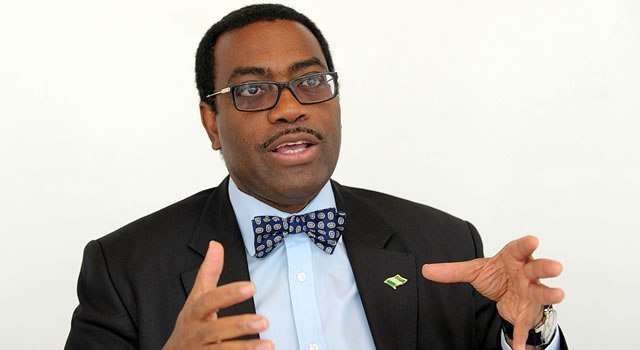
The President of Ghana, Nana Akufo Addo, of Kenya, Uhuru Kenyatta, of Mauritania, Mohamed Ould Cheikh el Ghazouani,  African  Development Bank President Akinwumi Adesina, and Secretary of State for International Development, MP Alok Sharma, addressed a plenary panel discussion on ‘Sustainable Finance and Infrastructure – Unlocking the City of London and UK financial services for growth in Africa.’

President Kenyatta who rang the opening bell at the London Stock Exchange (LSE) marking the launch of Kenya’s first green bond at the LSE, made the case for innovative and sustainable investments in energy infrastructure. “We all must think out of the box in terms of energy…to ensure we produce more green energy. This first-ever sovereign green bond of $41.45 million will be used to build environmentally-friendly student accommodation in Kenya.”

Responding to a question about UK-Ghana partnerships, President Nana Akufo-Addo said in a world where Africa’s wealth is undisputed, “the City of London can play a significant role in bridging Africa’s huge infrastructure gap… and LSE can be a pivot in the new relationship with the continent. Indeed, 1 in 4 consumers will live in Africa by 2030,” Akufo-Addo said.

African Development Bank President Akinwumi Adesina announced a new $80 million Bank-DFID infrastructure financing partnership.

According to Adesina, the continent’s $68-$108 billion infrastructure investment gap per year is massive, but it depends on how you look at it. “Either the cup is half empty or half empty. To us, that is a $68-$108 billion opportunity.”

Adesina added, “The issue of risk in Africa is exaggerated. The risk of loss is lower than Latin America. Yet, funds are not being channeled into Africa. “There are $8 trillion of assets under management in London, but only 1 percent is invested in Africa.”

The Bank president urged investors to look to Africa and recalled the achievements of the Africa Investment Forum – a game-changing initiative led by the African Development Bank and key partners, to accelerate investment in the continent. The unique multi-sector platform is designed to advance bankable deals to financial closure. Deals valued at $40.1 billion secured investment interest in 2019 during the three-day event, which took place in Johannesburg, South Africa.

President Mohamed Ould Cheikh el Ghazouani of the Islamic Republic of Mauritania, shared opportunities offered by the blue ocean economy and substantial reforms currently under way to attract foreign investors.

“We have reinforced security along our coasts. Other measures include the establishment of a Council on Investment. These huge efforts are showing tremendous results and it is giving comfort to investors,” he noted.

The African continent is home to eight of the 15 fastest-growing economies in the world. By 2020, 42% of the world youth will be African and by 2030, will constitute an incredible workforce and potential consumers.

In his concluding remarks, UK Secretary of State of for International Development, MP Alok Sharma expressed confidence in the continent. “Africa has a fabulous future.” Sharma announced five partnerships to mobilise private sector investment in quality infrastructure on the continent. “The City of London can play a role in mobilizing resources for Africa,” Sharma said.

Speaking earlier, Prime Minister Boris Johnson made a major announcement on the UK’s policy on climate change.

“From today, the British government will no longer provide any new direct development assistance for thermal coal mining or coal power plants overseas,” Johnson said.

The declaration aligns with the African Development Bank’s green agenda aimed at increasing investment in renewable energy. President Adesina announced last year at the UN General Assembly that the Bank was moving away from investing in coal.

Stories Continues after ad

US currency monitoring list needs rethink

Mr. Sobel


By Mark Sobel  

Coverage of the US Treasury’s latest foreign exchange report focused on China, given the reversal of the August 2019 manipulation designation and the US-China trade deal’s currency provisions.

But the report discusses other countries’ currency policies, and Treasury’s ‘monitoring list’ garners attention. Treasury should review the structure and integrity of its ‘enhanced analysis’ framework to bolster the report’s credibility.

Its monitoring list names and shames. Some inclusions and exclusions seem odd. A country is essentially included by fulfilling two of three criteria – a bilateral surplus with the US exceeding $20bn, a current account surplus of more than 2% of GDP, and persistent one-sided intervention.

As external imbalances can result from policy mixes or harmful currency practices, euro area countries merit monitoring, even if without their own currency. Germany, whose over-reliance on external demand is reinforced by fiscal policy, warrants inclusion. For Italy and Ireland, the case seems weak. Italy’s current account surplus is a consequence of serious domestic challenges; Ireland’s surplus reflects the presence of multinational enterprises.

Switzerland reappears on the monitoring list. It has a persistently high current account surplus. It now surpasses – barely – the $20bn bilateral surplus threshold. The country intervenes when massive inflows arise due to the franc’s safe haven status. International Monetary Fund estimates don’t suggest significant undervaluation. Switzerland has limited domestic capacity to conduct monetary policy. Intervention is generally unsterilised and sharp franc appreciation could exacerbate deflation.

Thailand and Taiwan fall off the list. Both have enormous current account surpluses and excess reserves. They are now below the intervention threshold, despite massive intervention in the recent past. Their bilateral surpluses are just under the threshold. Perhaps the reduced intervention reflects changed behaviour due to concern over being named in Treasury’s report. That would be welcome. Yet, to keep a close eye on harmful currency practices, these two are prime candidates for inclusion.

South Korea has persistent large current account surpluses and massive reserves. But it is now on the list because it has bilateral surplus just $20bn. Even if its bilateral surplus fell to $19bn, it should still be included.

Vietnam’s current account surplus is below the threshold. Reserve adequacy is modest. Its bilateral surplus is rising, especially as global value chains dismantle from China.

Treasury’s enhanced analysis framework grew out of 2015 legislation, aimed at tying Treasury’s hands. Before that, Treasury examined the same economic factors, but its judgements were more qualitative. Even though by 2015 the case for designating China was largely gone, Congress distrusted Treasury for not having done so in 20 years. The new framework is thus more mechanistic.

To assess if a country pursues harmful currency practices, it is important look at whether it has a large current account surplus, excessive reserves and an undervalued currency, and whether it engages in extensive intervention. Economists dismiss the relevance of bilateral balances.

The Treasury framework has to include bilateral balances because of the law. It does not incorporate currency over- or undervaluation measures; admittedly, such subjective judgements are hard to make.

Again, it seems curious to include Italy and Ireland and exclude Thailand and Taiwan. In the past, India had a current account deficit, but was included. Switzerland’s inclusion should be reconsidered.

The 2% current account threshold seems low, given structural saving in some countries and commodity price movements. Treasury should return to the past 3% threshold.

The intervention threshold – purchases in at least six out of 12 months, totalling 2% of GDP – appears too low, or the period too short.

Treasury should also reflect on the report’s credibility. Many countries think it is hypocritical of the US to write the report. After all, US policy contributes to global imbalances. Treasury could show some humility. Still, it is legally obligated to write the report and harmful currency practices can hurt the US and the global economy. It is not unfair for Washington to spotlight these.

But to better encourage countries to cease harmful currency practices, Treasury judgements should be based on widely accepted economic analysis. Instead, the report’s objectivity is compromised by last August’s meritless designation of China as a currency manipulator. Its objectivity is further dented by including China, when it meets a single criterion rather than the requisite two. The technical and structural flaws discussed above also undermine the report.

On balance, Treasury should re-examine the structure of its framework to ensure its conclusions are sensible. It should use more judgement to avoid an overly mechanistic application, especially when the results are curious. It should depoliticise the document, though political overtones are always present. Absent that, it is much easier for grumbling countries to dismiss the report as a political document, even when Treasury has a point.

Mark Sobel is US Chairman of Official Monetary Institutions Forum (OMFIF).

Stories Continues after ad

Kadaga calls for census of Persons with Albinism in Uganda

Government should make a deliberate effort towards compiling data for Persons with Albinism (PWA) while carrying out national census, the Speaker of Parliament, Rebecca Kadaga has said.

She said this will help in planning for the special needs of PWAs like healthcare and education.
“Even the local council leaders should make it their responsibility to know the number of persons with albinism in their areas so that we can plan for schools,” Kadaga said.

Kadaga made the call after a fundraising walk aimed at raising funds for the construction of a rehabilitation centre for PWAs.

The event on Monday, 20 January 2020 is part of the activities of the Parliament Week.
The event that was attended by Members of Parliament, representatives from various ministries, departments and agencies, private organisations, Non-Governmental Organizations as well as religious leaders saw Shs54 million raised.

Kadaga was also concerned about the continued taxation of sunscreen and other protective gear for the PWA even after Parliament scrapped the taxes.

The Government Chief Whip, Hon Ruth Nankabirwa pledged to be a goodwill ambassador in cabinet for policy related issues on PWA.
“The Speaker’s proposals on making the lives of persons with albinism better require policies and I will ensure that these policies are passed when they are presented in cabinet,” Nankabirwa said.

She applauded the Speaker for initiating the fundraising walk saying that addressing the plight of PWAs requires concerted efforts.

According to the Clerk to Parliament, Jane L. Kibirige, the funds raised from the previous three years will be used to purchase land where the centre will be built. “The money to deposit on the land is available and Parliament is in the process of identifying land without encumbrances,” said Kibirige.

Olive Namutebi, the Executive Director of African Albino Foundation applauded Parliament’s efforts in addressing the plight of PWAs, saying that their condition has now been recognised under the 2019 Bill on Persons with Albinism.

She however, said that they are still faced with the challenge of inaccurate number of persons with disabilities in the country, saying that this affects services for persons with disabilities.
“A recent research carried out by the Albinism Umbrella with support from Oxfam in nine districts of Eastern Uganda shows that, there 263 persons with albinism in those districts. Those who did not want to be counted were left out and therefore the 263 total is not accurate,” Namutebi said.
She also said that the research found that 68 per cent of PWA did not know the cause of albinism.

“What does this mean; they are prone to believe anything, you know albinism has different myths surrounding it and because you do not know that it is a genetic condition inherited from both parents, this is the reason we are discriminated,” said Namutebi.

Albinism is a genetic condition where some people are born without the usual pigment or color in their bodies. Their bodies are not able to make a normal amount of melanin, which chemical is responsible for eye, skin, and hair color.
The Fundraising Walk marked the start of the week-long Parliament week, aimed at bridging the gap between Parliament and the public.

During the week which runs from 20 to 25 January 2020, Parliament engages with the public through various activities including an inter-faith prayer service, the Public Parliament where members of the public become MPs for a day, stakeholders dialogue as well as tours of Parliament. Members of the public will also be able to meet their members of parliament.

Stories Continues after ad

Lt. Col. Nakalema investigating Kasekende, city lawyers in the BoU-Crane Bank in receivership payment deal

Col. Nakalema


The head of State House Anti-Corruption Unit, Lt. Col. Edith Nakalema is reportedly investigating outgoing Deputy Governor Bank of Uganda, Dr. Louis Kasekende, plus a host of other top officials and two city lawyers.

According to a source, the investigation concerns Shs478 billion. Auditor General, John Muwanga in his special audit report of the said amount discovered that only Shs200 could be explained how it was used while the balance of Shs279 was unaccounted for.

Eagle Online has also learnt that Col. Nakalema and her team are also interested why BoU allegedly paid over Shs20 billion as legal fees to two city lawyers. The lawyers are David Mpanga of A.F.Mpanga and Bowmans and Timothy Kanyerezi Masembe of MMAKS Advocates.

It is alleged that BoU recently released Shs4 billion as part of the balance on Shs20 billion to the lawyers. However, what is intriguing investigators is why paying that entire amount to the lawyers and yet some of the cases are jointly handled by BoU own lawyers.

Col. Nakalema is also reportedly investigating how old currency that is supposed to be destroyed is smuggled out by BoU officials who again return into circulation.

“We want to establish whether they deserve that money or it is was a conduit whose other aims aren’t known to the public. Nevertheless, our team will find out” said a security source.

The investigators are also accessing the wealth of the top directors to establish whether their assets resonate with their declaration at the Inspectorate of Government.

Last year as the IGG intensified her investigations of toe top gurus at the central banks,  a  leaked document indicated that Dr. Kasekende had transferred 12 plots of land into the names of his driver Moses Musitwa in an effort to dodge the scrutiny of the Inspector General of Government (IGG).

The IGG among other mechanisms used the Leadership Code Act 2002, to catch senior public officials who may have involved in corruption to grow wealth. The officials are required by the Act to declare their properties for purposes of accountability and transparency.

Other directors of interests at BoU are director legal affairs and director banking.

Meanwhile Eagle Online has learnt five other directors at the bank whose contracts expired or are about to expire will not have them renewed. A source at the bank said this was part of the recommendations from earlier investigation to the appointing authority to retire senior staff at BoU in public interest due to the rampant corruption, overstay but above all, the bad publicity such officials have attracted for the central bank. According among the directors affected are those of legal services, human resources and director Financial Markets Development Coordination (FMDC).

The source further revealed that in less than a month, the governor will also make a shakeup of his troops to replace those that have retired but also make changes as recommended in the earlier report. According to the BoU HR script, the governor is entitled to making changes up the director level while the positions of governor and his deputy are reserved for the president. The changes are also expected at the board level.

This is a second time in less than a year that State House Anti-Corruption Unit is cracking a whip at the central bank.

A whistleblower informed the unit about loss of huge monies getting lost at Entebbe International Airport upon arrival from German where the said cash had been printed. Uganda’s currency, the shilling is printed in German.

Sources then reveal that about two months ago, a team from Bank of Uganda was dispatched to travel to German aboard a chartered airplane to ferry the printed cash to Uganda and upon reaching German, the Uganda team that was led by a one Dr. Barenzi who is the deputy director in charge of operations. Dr. Barenzi represented Charles Malinga Akol, BoU’s Executive Director Operations who was on leave to ferry the money.

As the saga unfolded, Mr. Malinga with a host of other BoU employees were paraded at Anti-Corruption court and charged with negligent of duty, they were remanded but later granted bail.

This website last year reported that BoU officials at their Mbale currency had been arrested with huge sums of money in sacks and yet the money was supposed to be destroyed.  Inside sources told Eagle Online then that the scheme of smuggling out old notes had gone on un-noticed at all the currency centres for a while as it involved big shots at the bank.


Stories Continues after ad

SSP Ezekiel Emitu to eat big in new police shakeup

SSP Emitu

The Aswa Regional Police Commander, SSP Ezekiel Emitu is rumoured to be headed fro bigger assignment in police as he is expected to take over the Kampala Metropolitan Police.

According to impeccable sources, list of who is to be  transferred, retained and maintained in the force is over and the list was more less out if it wasn’t recalled for a few changes.

The Current KMP commander Commissioner of Police Moses Kafeero who was appointed in April in 2018 will be promoted and elevated to another senior assignment.

Police has a placement, recruitment and transfer policy to ensure that transfers and deployments are conducted in a fair and transparent manner based on the approved structure of the police under public service.

According to this policy, the IGP can transfer any police officer at or below the level of director. He also delegates some responsibilities to the human resource director for placement of the transferred officers.

In forthcoming reshuffle, IGP Martin Okoth Ochola is expected transfer and make new appointments of commissioners, assistant commissioners of police (ACPs), regional police commanders (RPCs), superintendents of police (SPs), and division police commanders (DPCs), among others.

In 2015, Emitu was transferred from Nalufenya base command to PTS Kabalye and appointed as deputy commandant of the school, he also handled the youth programme at the centre of excellence in community policing at the school. He was later in 2016, promoted to the rank of senior superintendent of police.

SSP Emitu once served in Kampala Metropolitan Police (KMP) before being transferred to Aswa as regional police commander (RPC) in 2018.

Stories Continues after ad

Uganda Cranes in Pot 2 for 2022 World Cup Qualifiers

Uganda Cranes

Uganda has been placed in Pot two ahead of Qatar 2022 FIFA World Cup qualifiers draw that are scheduled for Tuesday, 21 January 2020 at the Nile Ritz-Carlton in Cairo, Egypt.

The seeding was based on the FIFA World Rankings of December 2019.

There will be ten groups with games starting in March 2020 and coming to an end in October 2021. The sides will play home-and-away fixtures.

The ten group winners will be drawn into five two-legged knockout ties to be played in November 2021. The five victors advance to the final tournament.

The Qatar World cup will be played from 21st November to 18th December 2022.

The Pots:

Pot 1: Algeria, Senegal, Tunisia, Morocco, Ghana, Egypt, Cameroon, Mali, Congo DR.

Pot 2: Burkina Faso, South Africa, Guinea, Uganda, Cape Verde, Gabon, Benin, Zambia, Congo, Côte d’Ivoire.

Pot 3: Madagascar, Mauritania, Libya, Mozambique, Kenya, Zimbabwe, Niger, Central African Republic, Namibia, Guinea-Bissau.

Pot 4: Malawi, Angola, Togo, Sudan, Rwanda, Tanzania, Equatorial Guinea, Ethiopia, Liberia, Djibouti.

Stories Continues after ad

Parliament Week 2020: Over Shs50m raised for establishment of centre for persons with albinism

Uganda's Albinos need special attention

The Parliament Week 2020 has kicked off with the fundraising charity walk where Shs54 million has been raised towards the establishment of a rehabilitation and establishment of community centre for persons with albinism. The charity walk was part of the several activities to mark this year’s Parliament Week which runs from January 20-24, 2020.

Participants including Members of Parliament and the general public were led by the Speaker of parliament Rebecca Kadaga, Leader of Opposition in Parliament, Betty Aol Acan and Government Chief Whip, Ruth Nankabirwa. They walked from Parliament Building into the city centre and back to the starting point.

The Speaker expressed her concern that despite of an earlier recommendation to remove taxes on sunscreens and other equipment that aid persons with albinism mitigate health conditions, taxes haven’t practically been removed. Sunscreen Lotion helps people living with Albinism against the sun rays that cause cancer.

“Albinism is only a genetic condition inherited from both parents and it is not contagious. The misconception that people with it are cursed needs to end as it stigmatizes those suffering from it.” She said.

Government Chief Whip vowed to be the champion for Albino causes in the Cabinet. “I will see to it that taxes are removed from sunscreens which persons with albinism find costly and I will be making a monthly contribution of One Million Shillings” she said.

Dr. Olive Namutebi, president Albinism Association said they are concerned with limited access to treatment for conditions associated with albinism. A recent study conducted in 10 districts found out that 72 persons had an issue with eyesight but only two per cent had received treatment. So far Sub Saharan Africa has over 8725 Albinos and the high incidence is 1 : 4.

She pleaded with all Government bodies to join Parliament in advocating for their wellbeing adding that Persons with albinism say they still face widespread marginalization amidst costly equipment required to mitigate the effect of sunlight.

The Clerk to Parliament, Jane Kibirige that they have so far mobilized the required funds to purchase the plot of land for the albino community centre. About Shs5 billion is needed for build the centre.

Stories Continues after ad