Stanbic Bank
Stanbic Bank
19.3 C
Kampala
Stanbic Bank
Stanbic Bank
Home Blog Page 1061

COVID-19: Gov’t to set up quarantine centers in schools

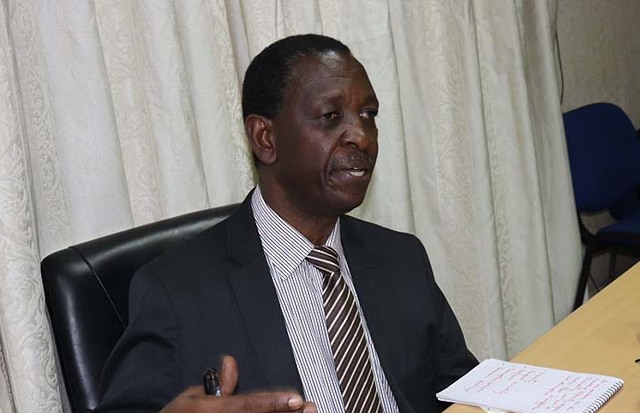
Finance Minister Matia Kasaija

The Minister for Finance, Planning and Economic Development, Matia Kasaija has revealed that government is in the final stages of setting up some schools in Entebbe as quarantine centres.

Kasaija revelation followed concerns by Members of Parliament about the high costs incurred by the persons under isolation in hotels.

It has been reported that persons under isolation in hotels in Entebbe are paying US$100 per day.

The Finance Minister said that the Treasury is grappling with other concerns and is not in position to foot these bills as has been suggested.

“We realized that this was too expensive for these people to afford. They will soon be transferred to schools in Entebbe that have been identified to host them at no cost,” said Kasaija.

According to the Ministry of Health, there are over 1800 people under quarantine with nine cases tested positive for the covid-19.

President Museveni directed that Entebbe Airport is closed to prevent more persons coming into the country as a way of preventing the spread of the virus.

He has also called for limited travel within the country and emphasised hand washing and use of sanitizers as some of the measures.

Stories Continues after ad

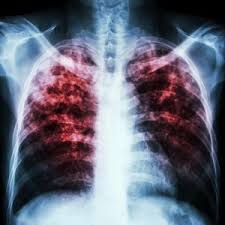
New WHO recommends preventing TB treatment to save millions of lives

Tuberculosis

World Health Organization (WHO) a scaling-up of TB preventive treatment among populations at highest risk

A quarter of the world‘s population is estimated to be infected with TB bacteria. These people are neither sick nor contagious. However, they are at greater risk of developing TB disease, especially those with weakened immunity. Offering them TB preventive treatment will not only protect them from becoming sick but also cut down on the risk of transmission in the community.

As we mark World TB Day 2020, the disease remains the world’s top infectious killer. In 2018, 10 million people fell ill with TB worldwide and 1.5 million people lost their lives to this disease.

“COVID-19 is highlighting just how vulnerable people with lung diseases and weakened immune systems can be,“ said Dr Tedros Adhanom Ghebreyesus, WHO Director-General. “The world committed to end TB by 2030; improving prevention is key to making this happen. Millions of people need to be able to take TB preventive treatment to stop the onset of disease, avert suffering and save lives”.

Dr Tedros highlighted the importance to continue efforts to tackle longstanding health problems, including TB during global outbreaks such as COVID-19. At the same time, programmes already in place to combat TB and other major infectious diseases can be leveraged to make the response to COVID-19 more effective and rapid.

Although some progress has been made towards targets set at the UN high-level Meeting on TB in 2018, TB preventive treatment has been largely neglected. Global leaders committed to ensuring access to TB preventive treatment to at least 24 million contacts of people with active TB and 6 million people living with HIV by 2022.  To date only a fraction of that target has been reached, with countries putting less than 430,000 contacts and 1.8 million people on TB preventive treatment in 2018.

TB remains the top cause of death among people with HIV. TB preventive treatment works synergistically with antiretroviral therapy to prevent TB and save lives. Reinvigorated efforts by governments, health services, partners, donors and civil society will be needed to increase access to TB preventive treatment to the levels targeted.

WHO recommends a scale-up of TB preventive treatment among populations at highest risk including household contacts of TB patients, people living with HIV and other people at risk with lowered immunity or living in crowded settings.

WHO recommended that either a tuberculin skin test or interferon-gamma release assay (IGRA) be used to test for TB infection? Both tests are helpful to find people more likely to benefit from TB preventive treatment but should not become a barrier to scale-up access. Testing for TB infection is not required before starting TB preventive treatment in people living with HIV, and children under 5 years who are contacts of people with active TB.

WHO recommended new shorter options for preventive treatment in addition to the widely used 6 months of daily isoniazid. The shorter options that are now recommended range from a 1 month daily regimen of rifapentine plus isoniazid to 3 months weekly rifapentine plus isoniazid, 3 months daily rifampicin plus isoniazid, or 4 months of daily rifampicin alone.

“As people around the globe come together to commemorate World TB Day, WHO is calling on governments, affected communities, civil society organizations, health-care providers, donors, partners and the industry to unite forces and step up the TB response – notably for TB preventive treatment – to ensure no one is left behind,” said Dr Tereza Kasaeva, Director of WHO’s Global TB Programme. “The new WHO guidance shows the way forward for millions to rapidly access new tools and shorter, safer options for preventive treatment. The time for action is now.”

TB preventive treatment is an affordable intervention that can prevent families from sliding into poverty and preserve the health and economy of whole communities. WHO anticipates that as new and safer drugs come onto the markets, and as prices fall, it will become a highly-cost effective way to save millions of lives.

Stories Continues after ad

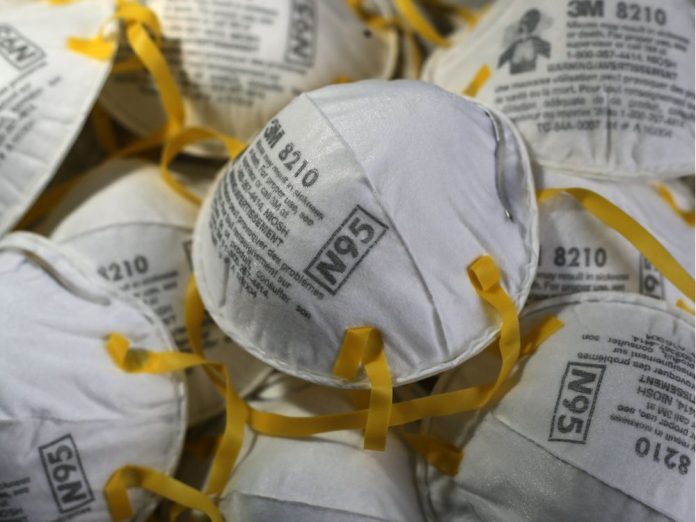
COVID-19: Germany loses six million masks in Kenya

masks

A German army shipment of six million face masks needed to protect against the novel coronavirus has vanished in Kenya, the defence ministry in Berlin confirmed Tuesday.

“We are trying to find out what happened” to the massive order of protective equipment meeting the FFP2 standard for protection against particles and aerosols, a spokeswoman said.

News weekly Der Spiegel had earlier reported that the masks went missing at a Kenyan airport at the end of last week.

It was not immediately clear why the shipment was transiting via the east African country, the spokeswoman said.

The German army’s procurement office – plagued in normal times by equipment shortages and breakdowns – is providing the health ministry with logistical support during the coronavirus crisis.

Due to arrive in Europe’s largest economy on March 20, the missing mask shipment was one of the first major deliveries needed to gird Germany’s health system for its battle against the coronavirus, Spiegel reported.

That makes the loss “more than irritating” for the German health and government workers on the front line of the crisis, Spiegel wrote citing official sources.

According to the Robert Koch Institute disease control authority, the country had 27,436 confirmed virus infections Tuesday – an increase of almost 5,000 over the tally on Monday.

The defence ministry spokeswoman said the German government would not suffer a financial loss on the lost shipment as payment for the masks had been due on delivery.

Stories Continues after ad

UPDF Colonel Sikagi dead

The Ankole region Coordinator of the Operation Wealth Creation Col. Tumusiime Sikagi is dead.

He died at Nakasero Hospital on Wednesday.
Col Sikagi was one of the key commanders during the National Resistance Army war from 198 to 1986.
After the capture of power, Col Sikagi was a battalion commander and fought the Lakwena rebellion in Eastern Uganda

Stories Continues after ad

ISO’s Col. Hannington Kakuura dead 

Col. Frank Kaka Bagyenda who has been appointed Uganda's Ambassador to Angola.


KAMPALA-The Internal Security Organisation Senior Director in charge of western Uganda Lt.Col.  Hannington Kakura is dead.

According to a close family member, Col. Kakuura died on Wednesday from Nakasero Hospital where he had been admitted.

He has been one of the senior intelligence operatives who have served ISO ever since it was established in 1986.

Those who have worked with him say he had been been one of the “most effective operatives” at ISO.

During his three-decade career, he held different positions including; Director of Political Affairs, Director Counter-terrorism, Director Economic Affairs and others.

Col. Kakuura, who is a brother to Brig. Phinehas Katirima, the UPDF Chief of Education and Sports was among the senior ISO officers who are soon retiring.

Meanwhile, the Director General of ISO Col Kaka Bagyenda carried out massive reshuffle at ISO and a number of operatives were moved in the February reshuffle.

Among them is the Pte. Emmy Katabazi, who has been moved from earlier of Deputy Director in-charge of Media to Internal Affairs as a Liaison Officer at the directorate of Small Arms Proliferation.


Stories Continues after ad

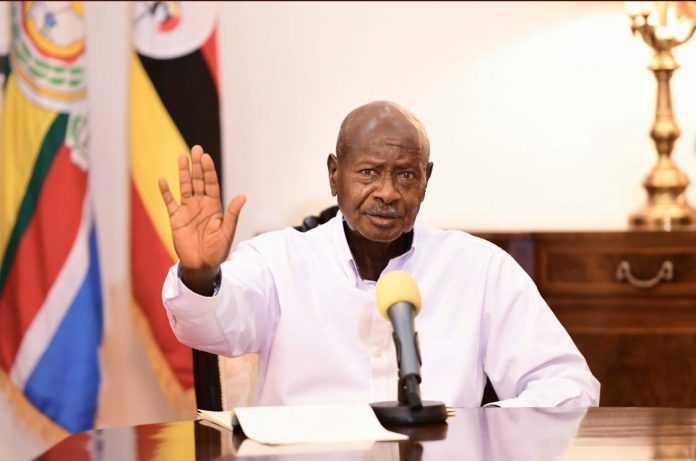
Museveni warns against hiking food prices

President Museveni

President Yoweri Museveni has warned all those taking advantage of the Covid-19 outbreak situation in the country by hiking the prices of foodstuffs.

In his address today, the President said that he has been informed about some ‘crooks’ in Kampala hiking prices because of the measures that have been put in place to curb the spread of the deadly virus.

“Those ‘crooks’ hiking the prices of food am warning you. I will send spies to find you. If found, I will revoke your license for taking advantage of us.” Museveni said.

“Hiking food prices is total nonsense, we have plenty of food in the country, am a farmer myself. In any case I can organize my NRM cadres and they bring food to Kampala.” Museveni added

Meanwhile, Museveni also urged Ugandans to avoid using public means of transport, something he says will go a long way in curtailing the spread of Covid-19.

“If the towns had enough bicycles, by now I would have suspended public transport. It is even healthier. With a bicycle, you are by yourself,” he said.

“If the coronavirus crisis persists, we shall suspend public transport and promote cycling,” the president added.

He also added that he will discuss the possibility of engaging National Water and Sewerage Corporation (NWSC) on slashing the price of water.

Stories Continues after ad

COVID-19 2 suspected Patients Isolated at Mbale municipal Health Centre 2

Two corona virus suspects at Mbale Municipal HC11.


Two suspected Coronavirus patients have been isolated at Mbale regional hospital

The suspects who are the residents of Nabugoye village in  Nabweya parish and Chemongesi Mbale district reported to the facility this morning after they developed symptoms.

The suspects have been known as a 44 year old Shaban Alimuyeye from Nabugoye village Nabweya parish, Namanyonyi Sub County Mbale district and a 35 year old Kenyan Christopher Kamande from Chemongesi an athletic camp in Kapchorwa.

According to Diana Nkesiga a laboratory technician at Mbale municipality health centre 2, the patients were showing signs and symptoms of Covid-19 which is cough, sore throat, shortness of breath, headache, muscle aches, and running nose.

Nkesiga saids that one of the suspects Christopher Kamande has been moving in and out of the country to Kenya.

According to Christopher Kamande a Kenyan, he traveled from Kenya to Kapchorwa chemongesi in an athletic camp.

Kamande further noted that he started developing the signs and he thought it was just weather affecting his health but now it is turning into something else.

Shaban Alimuyeye said  that they came for treatment but after they saw the situation was worsening and after testing they have been isolated and they are waiting for the response from the facility and he said he has been told that the ambulance is coming for them.

So far, very many people from different parts of the country have been suspected and they are under isolation.

The Ministry of Health has confirmed ninth new cases of COVID-19 in the country. All infected are Ugandans who traveled from Dubai. This brings to nine the number of cases Uganda has confirmed, a day after President Yoweri Museveni announced closure of the borders to human traffic.

Minister of Health Ruth Aceng has called on anyone who came into Uganda from Dubai in the past two weeks to get in touch with her officers so they can track and test them.

“The UAE was not among the high risk countries. From what we are seeing we are not sure what was reported was the truth,” said Aceng at a press conference Monday night in Kampala.

Stories Continues after ad

New Hantavirus hits China as Coronavirus takes over the world

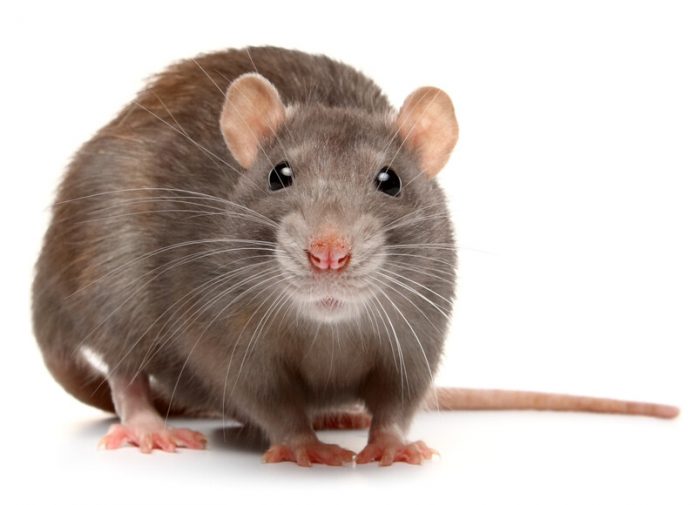
Rodents such as this are the main cause of hantavirus.

Even as the coronavirus outbreak takes the world by storm, a number of other diseases are also rearing their ugly heads. Cases of swine flu and bird flu have already been reported in India and other countries. Now, a man from China has tested positive for hantavirus.

China’s Global Times tweeted that the man from Yunnan Province died while on his way back to Shandong Province for work on a bus on Monday. The 32 other people on the bus were also tested for the virus.

What exactly is the hantavirus?

According to the Centers for Disease Control and Prevention (CDC), hantaviruses are a family of viruses which are spread mainly by rodents and can cause varied diseases in people.

It can cause hantavirus pulmonary syndrome (HPS) and haemorrhagic fever with renal syndrome (HFRS).

The disease is not airborne and can only spread to people if they come in contact with urine, feces, and saliva of rodents and less frequently by a bite from an infected host.

Symptoms of hantavirus

Early symptoms of HPS include fatigue, fever, and muscle aches, along with headaches, dizziness, chills and abdominal problems. If left untreated, it can lead to coughing and shortness of breath and can be fatal, with a mortality rate of 38 percent, according to CDC.

While the initial symptoms of HFRS too remain the same, it can cause low blood pressure, acute shock, vascular leakage, and acute kidney failure.

HPS can’t be passed on from person to person, while HFRS transmission between people is extremely rare.

As per the CDC, rodent population control is the primary strategy for preventing hantavirus infections.


Stories Continues after ad

Tokyo 2020 Olympic Games postponed

Tokyo Olympics 2020

The Tokyo 2020 Olympic Games have been postponed until next year because of the worldwide coronavirus pandemic.

The event, due to begin on 24 July, will now take place “no later than summer 2021”, the International Olympic Committee confirmed.

“I proposed to postpone for a year and [IOC] president Thomas Bach responded with 100% agreement,” Japan’s Prime Minister Shinzo Abe said.

The Tokyo Paralympic Games will also be postponed until 2021.

Prime Minister Abe added: “This will make it possible for athletes to play in the best condition, and will make the event a safe and secure one for spectators.”

In 2013, Tokyo beat Madrid (Spain) and Istanbul (Turkey) to the hosting rights.

The postponement of the world’s largest sporting event came after numerous other delays or cancellations in Japan and around the world. This month, most sporting events and leagues all over the world have been postponed to later dates.

Stories Continues after ad

We cannot viably operate passenger services until countries re-open their borders – Fly Emirates

Emirates-A380-Aircraft

Since the COVID-19 outbreak began, Emirates and dnata have been adapting operations in line with regulatory directives as well as travel demand.

The airline has aimed to maintain passenger flights for as long as feasible to help travelers return home amidst an increasing number of travel bans, restrictions, and country lockdowns across the world. It continues to maintain vital international air cargo links for economies and communities, deploying its fleet of 777 freighters for the transport of essential goods including medical supplies across the world.

With many of its airline customers dramatically reducing flights or ceasing services altogether, dnata has also significantly reduced its operations, including temporarily shutting some offices across its international network.

Sheikh Ahmed bin Saeed Al Maktoum, Chairman and Chief Executive of Emirates Group said: “The world has literally gone into quarantine due to the COVID-19 outbreak. This is an unprecedented crisis situation in terms of breadth and scale: geographically, as well as from a health, social, and economic standpoint. Until January 2020, the Emirates Group was doing well against our current financial year targets. But COVID-19 has brought all that to a sudden and painful halt over the past 6 weeks.

“As a global network airline, we find ourselves in a situation where we cannot viably operate passenger services until countries re-open their borders, and travel confidence returns. By Wednesday 25 March, although we will still operate cargo flights which remain busy, Emirates will have temporarily suspended most of its passenger operations. We continue to watch the situation closely, and as soon as things allow, we will reinstate our services.”

Having received requests from governments and customers to support the repatriation of travellers, Emirates will continue to operate passenger and cargo flights to the following countries and territories until further notice, as long as borders remain open, and there is demand: the UK, Switzerland, Hong Kong, Thailand, Malaysia, Philippines, Japan, Singapore, South Korea, Australia, South Africa, USA, and Canada. The situation remains dynamic, and travelers can check flight status on emirates.com.

Sheikh Ahmed added “Emirates Group has a strong balance sheet, and substantial cash liquidity, and we can, and will, with appropriate and timely action, survive through a prolonged period of reduced flight schedules, so that we are adequately prepared for the return to normality.”

On the decision to reduce basic salary, Sheikh Ahmed said: “Rather than ask employees to leave the business, we chose to implement a temporary basic salary cut as we want to protect our workforce and keep our talented and skilled people, as much as possible. We want to avoid cutting jobs. When demand picks up again, we also want to be able to quickly ramp up and resume services for our customers.”

The Emirates Group has strong liquidity, with a healthy cash position but it is prudent that it take steps to reduce costs at this time. Emirates remains committed to serving its markets and looks forward to resuming a normal flight schedule as soon as that is permitted by the relevant authorities.

Emirates Group closely monitors the situation and keeps in regular contact with all relevant authorities, so that it can implement the latest guidance to keep travelers and its employees safe and healthy.

The company has strongly discouraged its employees from non-essential travel, implemented work from home policies for all employees where operationally feasible, enhanced cleaning and disinfection protocols at its facilities, introduced temperature screening at its key office entry points, and launched internal educational campaigns on hand hygiene and health practices to reduce risk of COVID-19.

Over the past weeks, the airline has also implemented enhanced cleaning and disinfecting measures on all of its aircraft departing Dubai as a precaution, and worked closely with airports to implement screening measures as required by the local authorities.

Front line employees such as crew and airport teams have also been provided with support to stay safe while on duty, including providing hand sanitizers and masks where required.

The Emirates Group fully supports all initiatives to safeguard the health of communities in every market where it operates, including the UAE’s national COVID-19 response.

Sheikh Ahmed said: “These are unprecedented times for the airline and travel industry, but we will get through it. Our business is taking a hit, but what matters in the long run is that we do the right thing for our customers, our employees, and the communities we serve. With the support and unity that we have seen from our employees, partners, customers, and other stakeholders, I’m confident that Emirates can tackle this challenge and come out stronger.”

Stories Continues after ad