Stanbic Bank
Stanbic Bank
19.6 C
Kampala
Stanbic Bank
Stanbic Bank
Home Blog Page 1064

I will buy Arsenal FC – Dangote

Aliko Dangote

The richest man in Africa, Aliko Dangote, has revealed his plans to buy Arsenal Football Club in 2021, with the billionaire Gunners fan determined to oust absentee owner Stan Kroenke.

The Nigerian boasts a net worth of more than £8.5billion and made his fortune after founding Dangote Cement, Africa’s largest cement producer – with the 62-year-old also owning stakes in publicly-traded salt, sugar and flour manufacturing companies.

He had promised a takeover bid in 2020 but, with his Dangote Refinery – set to be one of the world’s largest oil refineries – still under construction, he has moved the date back.

Arsenal fans’ frustration with current owner Stan Kroenke has been bubbling for years, with the Denver Nuggets and LA Rams owner rarely showing his face at the Emirates, while Arsenal continue to look rudderless behind the scenes in their search for a route back to the top four.

Fans would certainly welcome a change in ownership, and Dangote could radically change Arsenal’s fortunes.

‘It is a team that, yes, I would like to buy some day, but what I keep saying is we have $20billion worth of projects and that’s what I really want to concentrate on,’ Dangote told the David Rubenstein

‘I’m trying to finish building the company and then after we finish, maybe some time in 2021 we can.

‘I’m not buying Arsenal right now, I’m buying Arsenal when I finish all these projects, because I’m trying to take the company to the next level.’

Arsenal have been left languishing in 10th in the Premier League after a torrid end to the reign of former manager Unai Emery’s, but there have been signs of life after the appointment of Mikel Arteta.

Scrutiny on the Arsenal owners and board was ratcheted up during the miserable winless run that eventually saw Emery sacked.

Stan Kroenke’s son, Josh, is a director on the Arsenal board, and told fans to ‘be excited’ in the summer after the Gunners signed Nicolas Pepe for a club record fee, as well as Kieran Tierney and David Luiz.

There wasn’t much excitement about by December though, and banners calling for the Kroenkes to leave were on show once again.

The pressure will be somewhat relieved if Arteta delivers on the early positives showed in the 2-0 win over Manchester United, but Arsenal fans will still be hoping Dangote follows through on the promise he made in 2018, saying: ‘Even if somebody buys, we will still go after it.’

Stories Continues after ad

From new normal to new mediocrity, impact investing: Promoting a universal standard

Mark Sobel

By Mark Sobel 

Pundit predictions for the 2020 global economy abound. A consensus exists – global growth will be underwhelming and flattish; the dollar may weaken a bit but remain firm; asset prices may do somewhat well; and bond yields could go back up a bit.

But rather than focus on the global economy’s transition from one year to the next, 2020’s advent offers the opportunity to reflect on the transition from one decade to another. In this two-part series, the first piece will look at the economic outlook of the 2020s; the second will examine how leaders might respond.

Prior to the 2008 financial crisis, world growth readings in the fours and fives were standard fare.

In the last decade, the G20 came together and overcame the financial crisis. But growth fell towards the low threes, hit by halting recovery from the ‘great recession’ and its systemic financial and balance sheet origins. Europe faced its own crisis. China slowed. Emerging market performance underwhelmed.

Leverage exploded. Overburdened monetary policy swung highly accommodative. Societies aged. Populism surged. Falling R* (the equilibrium real rate of interest), lowflation, stall speed, secular stagnation and Japanification became buzzwords.

Economists often debate whether recoveries from low growth will be U- or V-shaped. International Monetary Fund projections through the mid-2020s point upwards, but those forecasts suffer often from an optimistic bias. Rather, the next decade’s outlook may be L-shaped, and the bottom leg of the L may slope downwards.

By many estimates, US potential growth is slowing to around 1.75%. Private saving is up. Fiscal policy is unlikely to be expansionary in the aftermath of digestion of President Donald Trump’s ineffective tax cuts.

The US will not be a global growth locomotive. US consumers will still love to consume, but not enough for the sake of a vibrant world economy. Financial conditions will remain accommodative, but Federal Reserve accommodation in and of itself will not sustain robust global demand. Further, forecasts for global trade growth are in line with world growth estimates – an elasticity of one, rather than closer to two as in the past.

Even with slowing US potential growth, the country’s capacity to grow exceeds that of Europe and Japan. Despite Trump’s attitude towards immigration, US demographic prospects are still more favourable than those in other advanced economies. Despite the diminishing competitiveness of US markets, its capacity for innovation remains high.

Export-led growth models long practiced around the world will be disrupted. Still, the US could be following in the footsteps of Japan and Europe.

Japanese growth has slowed and potential is seen as around 0.5% of GDP per year. Proactive macroeconomic policies have not prevented persistent lowflation, despite Japan’s massive fiscal debt and the Bank of Japan long being in the vanguard of central banks promoting quantitative easing and the zero lower bound.

In the euro area, aging will hit the workforce. Potential growth is projected to fall to around 1.3%, if not lower. The European Central Bank has been ‘the only game in town’ in combating lowflation, while national policies seem incapable of helping Frankfurt, let alone strengthening weak banks or creating stronger euro area institutions.

Chinese growth rates have slowed to 6% per year from around 10% pre-crisis. Given China’s looming demographic kink, the increasing inefficiency of investment and excess leverage, and an economic shift from industry to consumerism and services, the country’s sustainable growth rate will fall over the coming decade – perhaps to 4%, by some estimates. Amid smaller current account surpluses and absent capital controls that bite, China faces perhaps a great wall of capital outflow, even larger than potential inflows, with important implications for managing currency stability.

Emerging markets will face headwinds. Many are dependent on commodity exports. China accounted for more than one-third of global growth over the past decade, boosting demand and commodity prices; that prop will dissipate. Key Latin American countries seem perennially unable to increase productivity. Northeast and southeast Asian economies have long thrived on external demand. Despite important reforms in past years, India will be held back by its inefficient statist banking system, large general government deficits, and other structural rigidities. Geopolitics, as always, presents enormous downside risks.

The next decade may well be one of further slowing growth, presenting major and new challenges to policy-makers everywhere.

The Writer is US Chairman of Official Monetary Financial Institutions Forum (OMFIF).

Stories Continues after ad

Cybersecurity threats call for a global response

David Lipton

By David Lipton

Last March, Operation Taiex led to the arrest of the gang leader behind the Carbanak and Cobalt malware attacks on over 100 financial institutions worldwide. This law enforcement operation included the Spanish national police, Europol, FBI, the Romanian, Moldovan, Belarusian, and Taiwanese authorities, as well as private cybersecurity companies. Investigators found out that hackers were operating in at least 15 countries.

We all know that money moves quickly around the world. As Operation Taiex shows, cybercrime is doing the same, becoming increasingly able to collaborate rapidly across borders.

To create a cyber-secure world, we must be as fast and globally integrated as the criminals. Facing a global threat with local resources will not be enough. Countries need to do more internally and internationally to coordinate their efforts.

How to best work together

To begin, the private sector offers many good examples of cooperation. The industry deserves credit for taking the lead in many areas—developing technical and risk management standards, convening information-sharing forums, and spending considerable resources. International bodies, including the Group of 7 Cyber Experts group and the Basel Committee, are creating awareness and identifying sound practices for financial sector supervisors. This is important work.

But there is more to be done, especially if we take a global perspective. There are four areas where the international community can come together and boost the work being done at the national level:

First, we need to develop a greater understanding of the risks: the source and nature of threats and how they might impact financial stability. We need more data on threats and on the impact of successful attacks to better understand the risks.

Second, we need to improve collaboration on threat intelligence, incident reporting and best practices in resilience and response. Information sharing between the private and public sector needs to be improved—for example, by reducing barriers to banks reporting issues to financial supervisors and law enforcement.

Different public agencies within a country need to communicate seamlessly. And most challenging, information sharing between countries must improve.

Third, and related, regulatory approaches need to achieve greater consistency. Today, countries have different standards, regulations, and terminology. Reducing this inconsistency will facilitate more communication.

Finally, knowing that attacks will come, countries need to be ready for them. Crisis preparation and response protocols should be developed at both the national and cross-border level, so as to be able to respond and recover operations as soon as possible. Crisis exercises have become crucial in building resilience and the ability to respond, by revealing gaps and weaknesses in processes and decision making.

Connecting the global dots

Because a cyberattack can come from anywhere in the world, or many places at once, crisis response protocols must be articulated within regions and globally.

That means the relevant authorities need to know “whom to call” during a crisis, in nearby and, ideally, also in faraway countries. For small or developing countries, this is a challenge that needs international attention. Many rely on financial services or correspondent lines provided by global banks for financial connection. Developing cross-border response protocols will help countries understand their respective roles in a crisis and ensure a coordinated response in the event of a crisis.

The Group of 7 countries has made an excellent start at building collaboration on cybersecurity, but this effort needs to be broadened to each and every country.

Here the IMF can play an important role. With a much broader representation than most of the standard-setting institutions, the IMF has the ability to raise the concerns of emerging-market and developing countries to a global level. Because any place is a good place to start an attack, it is in the ultimate interest of advanced economies to work with other countries to share information, coordinate actions, and build capacity.

At the IMF, we work with countries that need to build this capacity, developing the skills and expertise needed to recognize and effectively counter cybersecurity threats. Our international partners are doing the same, and we work regularly with an array of stakeholders in the public and private sector.

Successful cyber-attacks have the potential to hamper financial development by creating distrust, especially if personal and financial data are compromised.

If we want to reap the benefits of new technologies that can develop markets and expand financial inclusion, we have to preserve trust, and ensure the security of information and communications technologies. With cybersecurity, there is always more to be done simply because the pace of change is breathtakingly fast.

The Writer is First Deputy Managing Director of the International Monetary Fund (IMF)

Stories Continues after ad
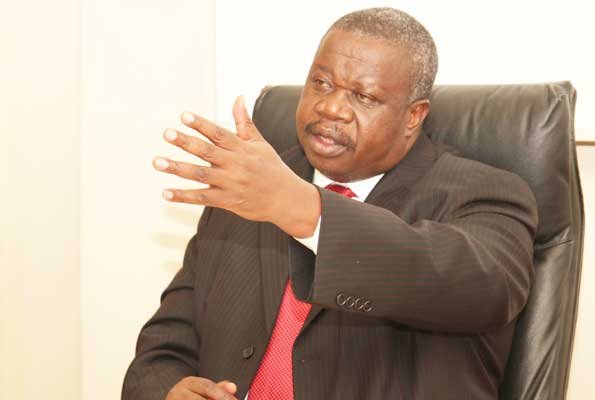
Curtains fall on Kasekende at BoU as his tour of duty comes to an end

On the spot: Former Deputy Governor Dr. Louis Kasekende.

Dr Louis A. Kasekende’s journey as the Deputy Governor at the Bank of Uganda (BoU) is supposed to end on January 13, 2020, after getting the second five-year term on January 18, 2010. He first served the bank from 1999 until 2002. Latest reports show he handed over office today as he awaits his fate, having allegedly asked for contract extension.

Kasekende alongside his boss Emmanuel Tumusiime-Mutebile have been credited for ensuring that the central bank fosters price stability and a sound financial system. Together with other institutions, BoU has played a pivotal role as a centre of excellence in upholding macroeconomic stability.

However, Dr Kasekende had his reputation brought to questions following the probe of BoU on the sale of seven defunct commercial banks whose closure and liquidation were questioned as the exercise ignored laid down guidelines and procedures.

The affected banks that had Kasekende’s reputation tarnished were; Teefe trust Bank, International Credit Bank, Greenland Bank, Cooperative Bank, National Bank of Commerce, Global Trust Bank and Crane Bank Limited.

It should be remembered that Kasekende resisted the idea that the Auditor General probe BoU over the closure of the seven banks to the extent that he had to seek legal opinion from the solicitor general. The Speaker of Parliament Rebecca Kadaga would silence Kasekende over the matter he thought it was subjudice.

The Auditor General in his report would accuse Kasekende and other senior officers of BoU of not giving him all the documents needed at the time to carry out proper investigations. MPs on COSASE late by Abdu Katuntu would later force Kasekende and others to produce some of the required documents which they thought were confidential whereas not.

MPs on COSASE in their recommendations, said that Kasekende’s and Tumusiime-Mutebile’s positions as Chairman and vice chairman of BoU board weakened the institution’s supervision as they reported to themselves. They continue to do so as the recommendations to delink the two officials from the board has not been effected by the Ministry of Finance under which BoU falls.

A committee appointed by President Yoweri Museveni to look into the cause of tension within the BoU staff established that there was a clique aligned to Kasekende and the other supporting his boss Tumusiime-Mutebile, which the senior staff interviewed said it was not good for the institution’s smooth running.

It is said Kasekende wants President Museveni to give him another contract. He is said to be lobbying the Catholic establishment to do this job alongside top gurus in the Ministry of Finance.

Should Kasekende leave BoU, it will be the beginning of the reorganisation of the institution whose image has been tainted by the recent scandals such as the theft of the old currency notes by its staff, just to mention but a few. If he leaves, he will do so leaving BoU in dire need of capitalization, as cited by the 2020/21 budget framework paper. BoU has spent billions of taxpayers’ money carelessly as it dealt with MMKAS Advocates, Sebalu & Lule Advocates who court said were conflicted in the BoU versus Ruparelia Group of Companies.

Kasekende’s other postings

From May 2006 to 2009, he served as Chief Economist of the African Development Bank (AfDB). As Chief Economist, he was the Bank’s spokesperson on socio-economic and development issues of importance for Africa. He supervised the Development Research Department, the Statistics Department and the African Development Institute. Between 2002 and 2004, he served as Alternate Executive Director and later as Executive Director at the World Bank for Africa Group 1, including 22 countries mostly from Anglophone Sub-Saharan Africa.

Prior to joining the World Bank, he had worked for 17 years at the Bank of Uganda in several capacities, including Director of Research Department, Executive Director responsible for Research and Policy and served as Deputy Governor between 1999 and 2002. He has previously served as a member of the United Nations Group of Eminent Persons for the Least Developed Countries and the World Bank Knowledge Advisory Commission.

Currently, Dr Kasekende is a Board Member of the African Export Import Bank (AFREXIMBANK), the International Economics Association (IEA) and the Africa Economic Research Consortium (AERC), and is a member of the National Steering Committee on Capital Markets Development in Uganda.

Dr Kasekende holds A Bachelor of Arts Degree of Makerere University, Diploma in Econometrics, Masters of Arts and PhD in Econometrics of the University of Manchester. He has authored several articles in academic journals and books.

Stories Continues after ad

NRM rebel MP Ssekikubo remanded to Masaka central prison

MP Theodore Ssekikubo

Masaka High Court has charged Lwemiyaga County MP Theodore Ssekikubo, with illegal possession of firearms and four other counts, remanding him to Masaka central prison.

Ssekikubo, one of the NRM rebel MPs who don’t agree entirely with the party on certain political matters in the country, was arrested last Friday for attempting to forcefully enter the Lwemiyaga cattle market that had been closed over the outbreak of foot and mouth disease is facing fresh charges of illegal possession of a firearm and malicious damage to property among others.

While appealing before Masaka chief magistrate on Monday, the court heard that in 2010, during the NRM party primaries Ssekikubo shot Habibu Nsamba Kanyarutoke a security officer during a hotly contested party primary where Ssekikubo was contesting with Patrick Nkalubo.

Court also heard that Ssekikubo maliciously damaged electoral materials for NRM Party that were being used in the party primaries, and obstructed police officers from doing their work.

Ssekikubo was also charged with inciting violence.

Ssekikubo through his lawyer Medard Lubega Ssegona, had applied for bail after presenting four sureties including  Sembabule woman Member of Parliament Hanifah Kawooya, MP Barnabas Tinkasimire, MP Florence Namayanja, and Johnson Kamugisha.

However, the presiding magistrate Deogratius Ssejemba told the court that he needed some time to study Ssekikubo’s case file, adjourning the matter to tomorrow.

Stories Continues after ad

Police finally identifies man killed and dumped in Mukono

Late Ronald Mutebi Gugwa

Uganda Police have finally established the identity of a man who was killed and his body dumped in Mukono district days ago.

Kampala metropolitan deputy spokesperson, Luke Owoyesigyire said the deceased, a one Ronald Mutebi Gugwa, 33, a businessman and resident of Walusibi village in Mukono District was murdered and his body dumped in Mukono by a yet to be established motor vehicle.

Today after running his mug shot picture on social media, his relatives showed up at police and identified him.

The deceased was a fishmonger along Senyi landing site, SSI sub-county in Buikwe District.

Police say they have arrested suspects implicated in the murder.

Stories Continues after ad

Museveni to witness swearing in of new ministers

President Yoweri Museveni

The Chief Justice, Bart Katureebe is set to swear in new ministers after being vetted by the appointments committee of parliament.

Last year, President Yoweri Museveni made minor changes to the Cabinet, giving a chance to youthful MPs who advocated for the removal of presidential cap that was at 75 years.

The new ministers to be sworn in include; Hamson Obua (State Minister for Sports), Judith Nabakooba (Minister for ICT), Peter Ogwang (State Minister for ICT), Raphael Magyezi who was named Minister for Local Government, Robinah Nabbanja (State Minister for Health in charge of General Duties) and Hellen Adoa State Minister for Fisheries and his former Principal Private Secretary Molly Kamukama who was named State Minister for Economic Monitor among others.

The swearing ceremony is scheduled to take place at State House Entebbe in presence of Museveni.

According to sources, the swearing in of Kyaka South MP, Jackson Kafuuzi who was named the Deputy Attorney General hangs in balance over allegations of lack of experience. The designate according to public appointments committee had reportedly not renewed his practicing certificate since 2016 when he joined Parliament.

Stories Continues after ad

Political Nomadism is a fact of life

DP President Norbert Mao

By Norbert Mao

The debate over political nomadism is a healthy one. Crosstitutes are everywhere. The debate about individual choices should also reinvigorate the debate about the role of political parties. Representative democracy needs political parties. That is why some of us campaigned tirelessly for multiparty democracy. But it is not enough to have political parties.

 Parties need internal cohesion, internal democracy, farsighted leadership, constructive inter party relations and creative management of internal conflicts. Unlike football leagues where star players are sold and bought, party politics shouldn’t be about mere power. It should also be about convictions. Without conviction, the exercise of power is an absurdity.

Someone once told me that party politics is characterized by three Ds – disloyalty, defiance and defection. Any party has to contend with those three hazards. The party I lead is no exception. Even developed countries have to deal with these hazards.

In 2008 a former US Vice Presidential candidate for the Democrats snubbed Obama and campaigned for the Republican candidate, John McCain. Even the iconic Churchill was a seasoned switcheroo. In 1904, Churchill who was a conservative crossed to the Liberals then crossed back after 20 years. In his defence he said only fools don’t change their minds!

But the record for criss crossing must go to British MP Bob Spink. On 12 March 2008, he left the Conservatives and became Independent. Six weeks later on 22 April 2008 he joined the UK Independent Party (UKIP). By mid-2009 he declared that he didn’t regard himself as UKIP. At that point UKIP also disowned him saying he had not even paid his membership dues.

Stories Continues after ad

Attorney General withdraws US$2B claim against MTN, refers matter to tax and customs offices

mtn

Nigeria’s Attorney General has withdrawn a tax claim of USD 2 billion against MTN and referred the matter to more relevant authorities.

MTN Nigeria said that its legal council had received a letter dated 08 January stating that after careful review and due consultation with relevant statutory agencies, the Attorney General had decided to refer the matter to the Federal Inland Revenue Service (FIRS) and Nigeria Customs (NC), with a view to them resolving the issues.

Accordingly, the Attorney General has withdrawn its letter of demand for the aforementioned USD 2 billion issued in August 2018. MTN Nigeria says it will follow due court process to withdraw its legal action against the AGF and engage with FIRS and NC on this issue.

MTN said it remains committed to building and maintaining cordial relationships with all regulatory authorities in Nigeria.

On September 4, 2018, MTN announced that MTN Nigeria was disputing a claim for back taxes of approximately US$ 2 billion by the Attorney General of the Federal Republic of Nigeria and Minister of Justice (AGF).

At the time of the claim, the Nigerian central bank said that MTN and others “flagrantly violated foreign exchange violations” in taking cash out of the country over eight years to 2015.

The Attorney General made a calculation that MTN Nigeria should have paid approximately US$ 2 billion in taxes relating to the importation of foreign equipment and payments to foreign suppliers over the prior ten years.

Stories Continues after ad

M7’s Birembo trek – Besigye commendation fantastic. But Africa Kwetu is incomplete without Bugisu’s FRONASA 100Kms version, it would be like a Bible with only new testament

President Museveni leads other trekkers recently.


By Nabendeh S.P Wamoto


Recent narrative emanating from Africa kwetu trek from Galamba in Wakiso district to Birembo in Kakumiiro eliminates the hitherto puzzle in the under 40s and outline the fact that most of the population including myself who have worked with the military and security as a whole are ignorant of our combat chronicles because much of the stories have been misrepresented and or misinterpreted by masqueraders who try to speak with their mouths shut or at least give the impression that they are holding small potatoes in their mouths.

This reminds me, of an old lady I met coming from a church service, carrying her Bible, and when I asked her how she did enjoy Sermon of the day, she replied hastily Not very much. I took the wrong book with me; I ought to have taken a dictionary!” Conscious must be seen in the creation. See it in the thinking but not in the walking.

Most of the masqueraders have their own narrow agenda, seeking simple options, ignoring realities just to appear important and out-lining demands which are not principled hence advocating having a share of the national cake yet they were not ready to understand how to bake the same (cake). The revelation by Gen. Yoweri Museveni to the effect that Dr. Col. Kizza Besigye rescued him from death is an artifact to reckon with and great honesty which supports former Tanzanian President, the late Mwalimu Julius Kambarage Nyerere who once said “Honesty is not the best policy, but should be the only policy.” Remember a blind child doesn’t know even his/her owns mother and what you crave can make you drop what you already have.

Some, especially our young ones, because of the absence of these facts, are always tempted to think President Museveni has a lot in common with Santa Claus, the mythical white-whiskered gentle man who is supposed to bring presents to people during Christmas season. We all know that even though Santa Claus is supposed to bring presents to only good children (read NRM), he doesn’t miss many of our boys and girls no matter how naughty they may have been most of the year. Santa is not very demanding. Somehow he will find a way to over look a child’s naughtiness and will still get toys at Christmas.

The Galamba-Birembo or Africa kwetu trek is incomplete without FRONASA’s  “Mashuja Wa Mianzi-Mashariki”(Bamboo Heroes of the East) marking approximately 95 kilometres whose land mark start point should be Malukhu district  administration grounds where young student Sebastian Namirundu and Tony Masaaba were executed by firing squad by Idi Amin’s Uganda Army (U.A) in 1973.Then to House 49 (late Maube’s residence where Gen. Museveni narrowly escaped death while his two colleagues namely Mpiima Walidi Kazimoto and Martin Mwesiga were shot and killed in cold blood in the same compound). The trek should move through, Butsongola(Late DIGP Maswele’s village and Bishop Wasikye’s home in Mbale district) through Buyobo (late Wadada Nabudere’s village) – Bushiika, Bumasata, Nabweya, Bukirimwa, Bubiita (Mzee makowe’s village) sub counties in Bududa district, Bupoto through the forest to God’s bridge (Daraja la Mungu) and finally to Soono just before Lwakhakha, the border with Kenya in Namisindwa district.

Afrika kwetu trek would be incomplete without Bugisu’s version and contribution.

Nabendeh S.P Wamoto (0776658433)

simonwamoto@yahoo.co.uk

Stories Continues after ad