Stanbic Bank
Stanbic Bank
17.4 C
Kampala
Stanbic Bank
Stanbic Bank
Home Blog Page 1066

Kyambogo barns symbols of political parties and pressure groups on ballot papers

Professor Eli Katunguka the University Vice Chancellor has made it clear that only photographs of aspiring candidates that will bear no symbols shall be used on ballot papers.

“I wish to reaffirm the university management position by stating that no candidate will be allowed to use political party or pressure group symbols on the ballot papers for guild presidential and guild representative council elections 2020” Katunguka says.

Katunguka says this has been the university policy since its inception and the same is clearly reflected under Regulation 22 of the Election Regulation and guidelines of 2020/2021 issued by the office of the chairperson of Kyambogo Electoral Commission 2020/2021.

He requested all the aspiring candidates to submit their photographs without political party or pressure group symbols by 10 am Monday 16th march 16,  2020.

Vice Chancellor says that failure to do this will leave the university with no choice but to print the ballot papers without their photographs.

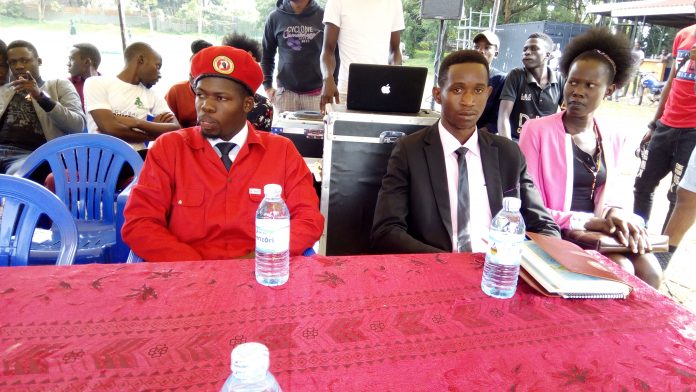
Axam Ssembatya, the chairman electoral commission says that following the banning of symbols, all candidates should abide by the law and act accordingly.

He says that he is going through hard times since he continue to get intimidation messages from some university administrators which the electorate has to know about for transparency since he represent you in this position.

Trust Nduwayo Mugisha, one of the presidential candidate says there are some students, who will just come to vote symbols, and logos and when they fail to get them on ballot papers, they will get confused and end up voting a person they never planned to vote for.

Jameson Bagonza a Kyambogo university student says that banning symbols will make students get hard time in finding out their candidates since some of the students are always not around when candidates are campaigning, and they will only come to vote and minus symbols, such a student will even fail know who is who easily.

Tumusiime Vicent Kyambogo University second year student says that banning symbols in University elections will weaken leadership and this might lead to under performance and that it infringe on the students’ rights.

He says that political parties have a special way how they bring light in university politics because it attracts the outside political figures which makes politics in university fan.

This is not the first time universities banning political parties, in 2016, Bishop Stuart University (BSU) banned political party activities at the institution.

The University vice chancellor, Prof Mauda Kamatenesi, speaking at the swearing-in of the new students Guild council, warned that party politics were against the values of the institution.

“I stand to remind you again of the mission, vision and values of this University that include being non-partisan. You are all requested not to bring political party politics in this University as any such groups are violating what we stand for,” said Prof Kamatenesi.


Stories Continues after ad

Tumukunde charged with treason, remanded until March 23

Gen. Tumukunde supported by police officer on arrival at court.

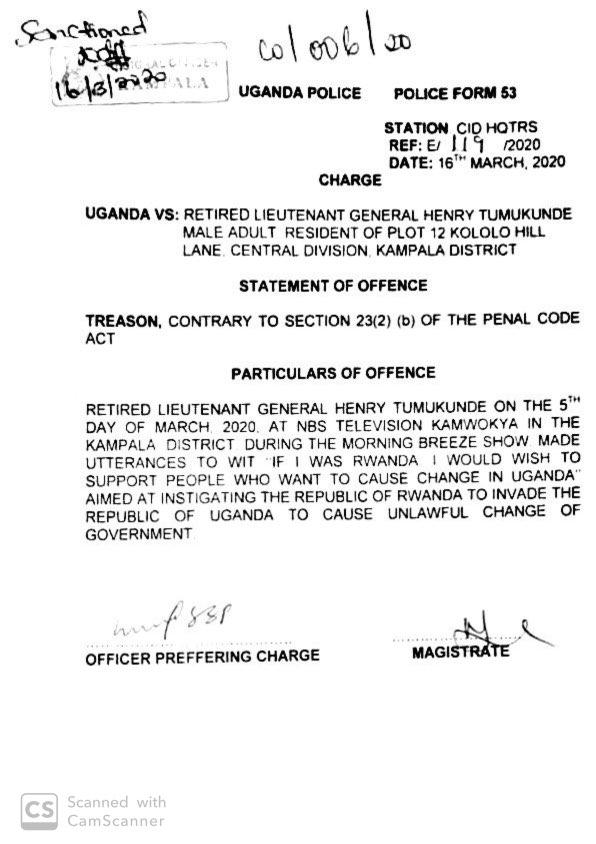
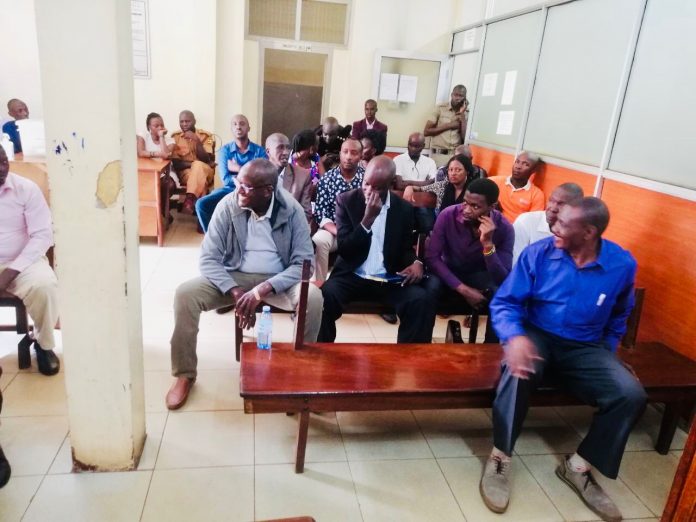
Former Security Minister Henry Tumukunde has been charged with treason by City Hall Court and remanded to Luzira Maximum Prison until March 23.

Gen. Tumukunde at City hall court was brought to court by a combined team of security personnel that had kept him beyond the 48 hours as mandated by the constitution. he appeared before grade one Magistrate Valerian Tumuhimbise.

“I have been produced at City Hall Magistrate’s Court this afternoon. Remain strong and stay focused” reads a message posted on his social media platforms.


Gen. Tumukunde was arrested last week on Thursday from his Kololo offices. He was eventually taken into custody by a combined team of security agencies as they searched his offices, residence and up-country home. Earlier Uganda Police Spokesperson, Fred Enanga had indicated that he would be charged with treason.

He becomes a third politicians to be charged with treason after former Forum for Democratic Change (FDC) party president Dr. Kizza Besigye and Kyadondo East Legislator Robert Kyagulanyi aka Bobi.

Watch Video

Tumukunde earlier this month wrote the Electoral Commission seeking for permission to consult electorates as it mandated by the law because he seeks to contest a president in 2021 general elections. However, before he would be cleared by police, he was arrested, his office and homes searched for evidence pinning him to the treason charge.

Meanwhile the other 11 people that were found with him at his office led by Tororo County legislator, Annet Nyakecho also appeared before Nakawa court Chief Magistrate Ruth Nabasa and read for them two accounts of obstruction.Prosecution had alleged that while at Plot 12, Impala Avenue in Kololo Kampala and accused them of obstructing detectives. They were charged and released on bail.


Stories Continues after ad

Gen. Tumukunde at City hall court as security deny Bobi Wine access to see him

Gen. Tumukude at City Hall Court this afternoon

Former Security Minister Lt.Gen. Henry Tumukunde is s said to be at city hall court.

Sources in security circles say the former spymaster was moved from Kololo hospital to city hall where he is supposed to appear. His lawyers had earlier protested the continued detention of their client beyond the mandatory requirement of 48 hours.

“I have been produced at City Hall Magistrate’s Court this afternoon. Remain strong and stay focused” reads a message posted on his social media platforms.

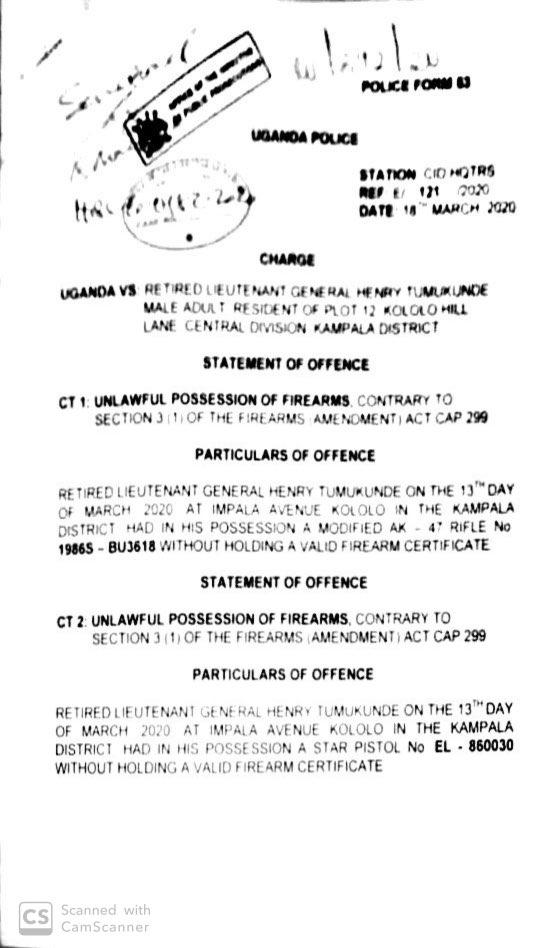
Gen. Tumukunde was arrested last week on Thursday from his Kololo offices. He was eventually taken into custody by a combined team of security agencies as they searched his offices, residence and up-country home. Earlier Uganda Police Spokesperson, Fred Enanga had indicated that he would be charged with treason but sources within the investigating team say the treason charge is likely to hold and as so, a host of other charges are likely to be slapped on him.

Legal Team

Meanwhile Kyadondo East legislator, Robert Kyagulanyi aka Bobi Wine was denied entry at Kololo hospital to see Gen. Tumukunde. Mr. Kyagulanyi had paid a visit to him.

“Earlier, went to Kololo Hospital to see Lt. Gen. Henry Tumukunde who has been admitted there for days after his arrest. Police increased deployment & blocked us despite protests from his family. Minutes later, they whisked him away! We struggle to end injustice by all and to all”

Stories Continues after ad

How to maintain good mental health during COVID-19

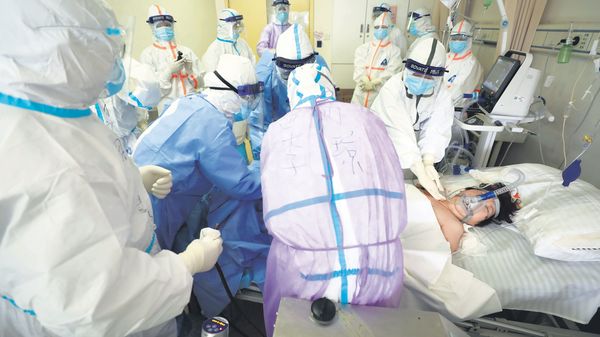
Coronavirus victims

In January 2020 the World Health Organization (WHO) declared the outbreak of a new coronavirus disease to be a Public Health Emergency of International Concern. WHO stated there is a high risk of the 2019 coronavirus disease (COVID-19) spreading to other countries around the world. In March 2020, WHO made the assessment that COVID-19 can be characterized as a pandemic.

WHO and public health authorities around the world are working hard to contain the COVID-19 outbreak. However, this time of crisis is generating stress in the population. These mental health considerations were developed by the WHO’s Department of Mental Health and Substance Use as messages targeting different groups to support for mental and psychosocial well-being during COVID-19 outbreak.

COVID-19 has and is likely to affect people from many countries, in many geographical locations. Do not attach it to any ethnicity or nationality. Be empathetic to all those who are affected, in and from any country. People who are affected by Covid-19 have not done anything wrong, and they deserve our support, compassion and kindness.

Do not refer to people with the disease as “COVID-19 cases”, “victims” “COVID-19 families” or the “diseased”. They are “people who have COVID-19”, “people who are being treated for COVID19”, “people who are recovering from COVID-19” and after recovering from COVID-19 their life will go on with their jobs, families and loved ones. It is important to separate a person from having an identity defined by COVID-19, to reduce stigma.

Minimize watching, reading or listening to news that causes you to feel anxious or distressed; seek information only from trusted sources and mainly to take practical steps to prepare your plans and protect yourself and loved ones. Seek information updates at specific times during the day, once or twice. The sudden and near-constant stream of news reports about an outbreak can cause anyone to feel worried. Get the facts; not the rumors and misinformation. Gather information at regular intervals, from WHO website and local health authorities’ platforms, in order to help you distinguish facts from rumors. Facts can help to minimize fears.

Protect yourself and be supportive to others. Assisting others in their time of need can benefit the person receiving support as well as the helper. For example, check-in by phone on neighbors or people in your community who may need some extra assistance. Working together as one community can help to create solidarity in addressing Covid-19 together.

Find opportunities to amplify positive and hopeful stories and positive images of local people who have experienced COVID-19. For example, stories of people who have recovered or who have supported a loved one and are willing to share their experience.

Honor caretakers and healthcare workers supporting people affected with COVID-19 in your community. Acknowledge the role they play to save lives and keep your loved ones safe.

For health workers, feeling under pressure is a likely experience for you and many of your health worker colleagues. It is quite normal to be feeling this way in the current situation. Stress and the feelings associated with it are by no means a reflection that you cannot do your job or that you are weak. Managing your mental health and psychosocial wellbeing during this time is as important as managing your physical health.

Take care of yourself at this time. Try and use helpful coping strategies such as ensuring sufficient rest and respite during work or between shifts, eat sufficient and healthy food, engage in physical activity, and stay in contact with family and friends. Avoid using unhelpful coping strategies such as tobacco, alcohol or other drugs. In the long term, these can worsen your mental and physical wellbeing. This is a unique and unprecedent scenario for many workers, particularly if they have not been involved in similar responses. Even so, using strategies that have worked for you in the past to manage times of stress can benefit you now. You are most likely to know how to de-stress and you should not be hesitant in keeping yourself psychologically well. This is not a sprint; it’s a marathon.

Some healthcare workers may unfortunately experience avoidance by their family or community due to stigma or fear. This can make an already challenging situation far more difficult. If possible, staying connected with your loved ones including through digital methods is one way to maintain contact. Turn to your colleagues, your manager or other trusted persons for social support- your colleagues may be having similar experiences to you.

Use understandable ways to share messages with people with intellectual, cognitive and psychosocial disabilities. Forms of communication that do not rely solely on written information should be utilized if you are a team leader or manager in a health facility.

Know how to provide support to, for people who are affected with COVID-19 and know how to link them with available resources. This is especially important for those who require mental health and psychosocial support. The stigma associated with mental health problems may cause reluctance to seek support for both COVID-19 and mental health conditions. The mhGAP Humanitarian Intervention Guide includes clinical guidance for addressing priority mental health conditions and is designed for use by general health workers.

Keeping all staff protected from chronic stress and poor mental health during this response means that they will have a better capacity to fulfil their roles. Be sure to keep in mind that the current situation will not go away overnight and you should focus on longer term occupational capacity rather than repeated short-term crisis responses.

Ensure good quality communication and accurate information updates are provided to all staff. Rotate workers from higher-stress to lower-stress functions. Partner inexperienced workers with their more experienced colleagues. The buddy system helps to provide support, monitor stress and reinforce safety procedures. Ensure that outreach personnel enter the community in pairs. Initiate, encourage and monitor work breaks. Implement flexible schedules for workers who are directly impacted or have a family member impacted by a stressful event. Ensure you build in time for colleagues to provide social support to each other.

If you are a team leader or manager in a health facility, facilitate access to, and ensure staff is aware of where they can access mental health and psychosocial support services. Managers and team leaders are also facing similar stressors as their staff, and potentially additional pressure in the level of responsibility of their role. It is important that the above provisions and strategies are in place for both workers and managers, and those managers can be a role-model of self-care strategies to mitigate stress.

Orient responders, including nurses, ambulance drivers, volunteers, case identifiers, teachers and community leaders and workers in quarantine sites, on how to provide basic emotional and practical support to affected people using psychological first aid.

Ensure availability of essential, generic psychotropic medications at all levels of health care. People living with long-term mental health conditions or epileptic seizures will need uninterrupted access to their medication, and sudden discontinuation should be avoided.

Help children find positive ways to express feelings such as fear and sadness. Every child has their own way to express emotions. Sometimes engaging in a creative activity, such as playing, and drawing can facilitate this process. Children feel relieved if they can express and communicate their feelings in a safe and supportive environment.

Keep children close to their parents and family, if considered safe for the child, and avoid separating children and their caregivers as much as possible. If a child needs to be separated from their primary caregiver, ensure that appropriate alternative care is provided and that a social worker, or equivalent, will regularly follow up on the child. Further, ensure that during periods of separation, regular contact with parents and caregivers is maintained, such as twice-daily scheduled phone or video calls or other age-appropriate communication.

Maintain familiar routines in daily life as much as possible, or create new routines, especially if children must stay at home. Provide engaging age appropriate activities for children, including activities for their learning. As much as possible, encourage children to continue to play and socialize with others, even if only within the family when advised to restrict social contract.

During times of stress and crisis, it is common for children to seek more attachment and be more demanding on parents. Discuss COVID-19 with your children using honest and age appropriate way. If your children have concerns, addressing those together may ease their anxiety. Children will observe adults’ behaviors and emotions for cues on how to manage their own emotions during difficult times.

Older adults, especially in isolation and those with cognitive decline/dementia, may become more anxious, angry, stressed, agitated, and withdrawn during the outbreak/while in quarantine. Provide practical and emotional support through informal networks (families) and health professionals.

Share simple facts about what is going on and give clear information about how to reduce risk of infection in words older people with/without cognitive impairment can understand. Repeat the information whenever necessary. Instructions need to be communicated in a clear, concise, respectful and patient way. It may also be helpful for information to be displayed in writing or pictures. Engage their family and other support networks in providing information and helping them practice prevention measures.

If you have an underlying health condition, make sure to have access to any medications that you are currently using. Activate your social contacts to provide you with assistance, if needed.

Be prepared and know in advance where and how to get practical help if needed, like calling a Taxi, having food delivered and requesting medical care. Make sure you have up to 2 weeks of all your regular medicines that you may require.

Learn simple daily physical exercises to perform at home, in quarantine or isolation to maintain mobility and reduce boredom.

Keep regular routines and schedules as much as possible or help create new ones in a new environment, including regular exercising, cleaning, daily chores, singing, painting or other activities. Help others, through peer support, neighbor checking, and childcare for medical personnel restricted in hospitals fighting against COVID-19 when safe to do so. In accordance with previous ones. Keep regular contact with loved ones.

Stay connected and maintain your social networks. Even when isolated, try as much as possible to keep your personal daily routines or create new routines. If health authorities have recommended limiting your physical social contact to contain the outbreak, you can stay connected via e-mail, social media, video conference and telephone.

During times of stress, pay attention to your own needs and feelings. Engage in healthy activities that you enjoy and find relaxing. Exercise regularly, keep regular sleep routines and eat healthy food. Keep things in perspective. Public health agencies and experts in all countries are working on the outbreak to ensure the availability of the best care to those affected.

A near-constant stream of news reports about an outbreak can cause anyone to feel anxious or distressed. Seek information updates and practical guidance at specific times during the day from health professionals and WHO website and avoid listening to or following rumors that make you feel uncomfortable.

Stories Continues after ad

Judiciary enrolls over 90 new advocates

Advocates

Judiciary has enrolled 93 new advocates of the High Court. The enrollment ceremony was presided over by the Public Relations Officer of the Judiciary who doubles as Assistant Inspector of Courts, Jamson Karemani.

 Karemani congratulated the new advocates on the milestone. “We as courts take pride in you as advocates. Handling a matter where there is an advocate makes our work easy.” He said

He urged the new officers of court to embrace new Judiciary initiatives such as Plea Bargaining, Electronic Court Case Management Information System, and mediation. He cautioned them not to hold brief unless they are ready to precede as per the practice directions.

“Honesty is the first chapter in the book of wisdom. Being honest may not get you a lot of friends but it will always get you the right ones.” He said

The President Uganda Law Society, Simon Peter Kinobe, urged them to among other things be humble, always give back to the community and protect their brand. He urged them to aim at uplifting the profession.

Stories Continues after ad

KIU Western Campus gets new Assistant Deputy Vice-Chancellor for Academics

Dr. Jonans Tusiimire

Dr. Jonans Tusiimire has been appointed as the new Assistant Deputy Vice Chancellor (ADVC) in charge of Academics and Research at Kampala International University – Western Campus.

Dr. Tusiimire, 37, a Senior Lecturer in the School of Pharmacy, has been serving as Dean of the School of Pharmacy at KIU for the past three years. He takes over from Dr. Alice Namatovu, who has been steering the office of ADVC for the past four years.

During his time as Dean School of Pharmacy, Dr. Tusiimire ensured the school’s reputation and academic performance through rigorous mentor-ship and team-oriented approaches.

As a result, the students’ performance in pre-internship and pre-registration assessments conducted by the Council of the Pharmaceutical Society of Uganda (PSU) became a benchmark for other Pharmacy Schools. This led to KIU being recognised by the Pharmacy Council in 2017 as best trainer of pharmacists in the country.

Dr Tusiimire, a senior pharmacist and member of PSU, also spearheaded the review and re-accreditation of several curricula in the school, particularly the Bachelor of Pharmacy, Bachelor of Science in Pharmacology, and Master of Science in Pharmacology.

The Diploma in Pharmacy earned its accreditation by the Allied Health Professionals Council (AHPC) in 2018. He also spearheaded the development of new postgraduate curricula including the Master of Pharmacy in Pharmaceutics and Master of Science in Pharmaceutical.

Dr. Tusiimire thanked the University administration and board of trustees for the opportunity and pledged to improve the academic and research programmes at the university.

“I look at this responsibility as a vote of confidence in my capability and my office will always be open to whoever wants my support, and I also request for the support of my colleagues because it’s impossible to succeed alone.”, Dr. Tusiimire said.

Stories Continues after ad
Police breaks into Gen. Tumukunde’s village home


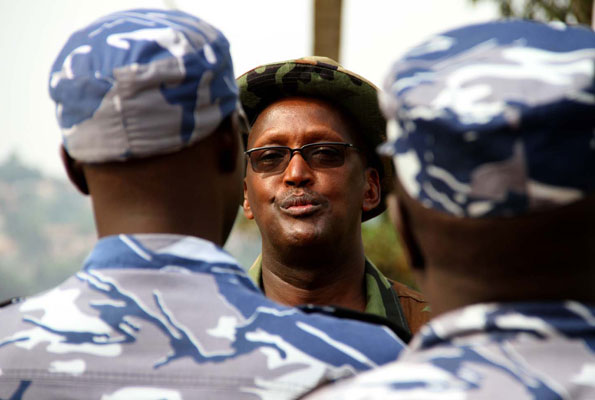
A team of police officers has this evening raided the Rukungiri home of Lt. Gen. Henry Tumukunde and is in the process of breaking into it under the guise of searching for undisclosed military items.

Sources at the scene have confirmed to Eagle Online that Police first sealed off Lt. Gen. Tumukunde’s home in Buyanja sub-county, rounded up all the occupants before beginning on breaking up the doors and windows of the residence.

Dan Kaguta, the Rukungiri Resident District Commissioner (RDC), who chairs the District Security Committee, is leading the operation. Operatives from the Special Forces Command (SFC) and the Chieftaincy of Military Intelligence (CMI) are also part of the operation.

Asked why the security team is breaking into Lt. Gen. Tumukunde’s home even without a search warrant, Kaguta responded that he is “simply witnessing” and referred further inquiries to Police Spokesman Fred Enanga.

“I am just a witness. The operation is being conducted by Uganda Police, Kaguta said in a telephone interview.

Enanga confirmed that there is an operation going on at Lt. Gen. Tumukunde’s home, insisting that other family members are witnessing the search.

“We do not use informal methods like he [Lt. Gen. Tumukunde] is claiming. Other family members are witnessing since he has just been discharged and he is away in Kampala,”Enanga said.

Lt. Gen. Tumukunde confirmed on his social media platforms that Police was breaking into his Rukungiri home and also dismissed a report by The New Vision-the government mouthpiece,that he was being transferred to Rukungiri.

“A team of investigators from both @Police/ Security organs have raided my house in Rukungiri rounding up all people @ the premises. @newvisionwire is falsely reporting that I am currently on route to Rukungiri. The search is happening WITHOUT my presence led by RDC Dan Kaguta!” Lt. Gen. Tumukunde posted on Twitter and Facebook.


Stories Continues after ad
Ministry of Health Intensifies UPDF training on COVID-19


The Ministry of Health under its Case Management structure has carried out more training on COVID-19 disease.

Dr. Gorge Upenytho, the Commissioner Community Health  Ministry of health (MOH), while opening the training said the main purpose of this training is to create a core competent critical mass among the uniformed personnel who can quickly respond to a disaster within any community.

The commissioner said they are building capacity in those various units to be able train and reach out to the community in case of an outbreak of COVID-19. “Corona virus is a new disease so very little is known about it and yet the fear out there is so huge, so we say the people who can chase away fear are the fearless who are the uniformed colleagues, this is why you were selected for this training.”

Dr.Upenytho was optimistic that after the training the fear people have out there will come down. He further said this is just the beginning of the very many trainings in store for you.

He said the case management team will take them through a training on how to manage in case of an outbreak. As ministry of health, their target is to utilize those trained to become part of the Case Management Team.

The commissioner thanked the participants for accepting to be part of this training. The facilitators included Dr. Okwere  Solome from IDI (Infectious Disease Institute) and Dr. Daniel Bulwadda.

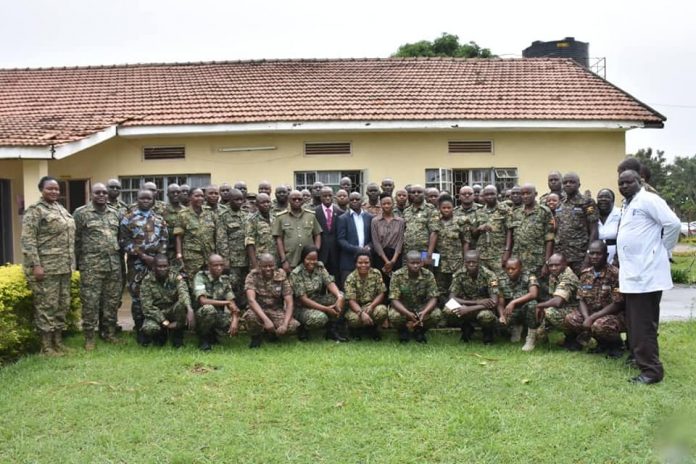
The training was attended by the UPDF Director of Medical Services Maj.Gen. Ambrose Msinguzi, Brig. Steven Kusasira, Deputy Director General Military Hospital Lt Col Basaaliza, Col.Ndagije,Director Pharmaceutical UPDF, Lt. Col. Bakehena Deputy Director Public Health- UPDF, Maj. Jennifer Alanyo among other high profile UPDF medical personnel.

The participants were drawn  from Kaweweta Training School, Peace Support Operations Training Centre Singo, Jinja Cantonment, Senior Staff Command College Kimaka, Magamaga, General Military Headquarters Bombo, Air force and Special Forces Command.

The training is expected to last for two days and by the end of it, the participants are expected to be in position to respond to the COVID- 19 epidemic if it strikes.


Stories Continues after ad
Kadaga pledges support to Kiira Motors

Speaker Kadaga

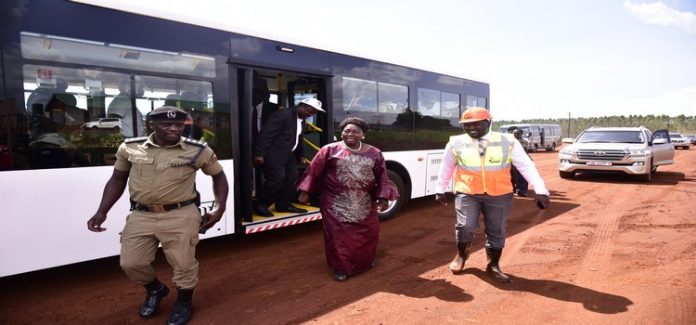
The Speaker of Parliament, Rebecca Kadaga, has visited and pledged continued support to the Kiira Motors Plant, the local makers of electric motor vehicles.

Kiira Motors Corporation (KMC) is located in Jinja Industrial and Business Park in Kagogwa village, Kakira Town Council, in Jinja district.

“I want to thank the president for his foresight to establish National Enterprises Corporation (NEC) and Kiira Motors. I want assure Kiira Motors and [the Minister for Science, Technology and Innovation] Dr. Elioda Tumwesigye that you have my support,” she said during the visit on Saturday March 14, 2020.

Kadaga encouraged the people present to invest in the growing of bamboo out of which the floor of the Kayoola EVS, one of the products of KMC, is made.

During the visit, the Speaker took a ride on one of the buses from the Source of the Nile to Kagogwa.

KMC working with China High-Tech Corporation has two Kayoola EVS buses, which are currently providing selected shuttle services.

The Director General of the Busoga Consortium for Development, Anthony Mula, thanked the Speaker for pushing for the project to grow and appealed to the firm to employ more locals.

He also appealed to government to locate more industries in Busoga, which he said has plenty of underutilized land.

The Permanent Secretary, Ministry of Science, Technology and Innovations, David Obong, commended Kiira Motor’s dedication to the project and said he looks forward to the commissioning of the site.

He appealed to government to provide more funds so the project, which has now stalled.

The Executive Chairman of the project, Prof Sandy Stevens Tickodri, appealed to government to provide Shs49.5 billion and two square miles of land required for testing of their products. KMC is expected to create over 14,000 jobs.

Stories Continues after ad
Sudhir presents credentials as Nepal Consul to Uganda

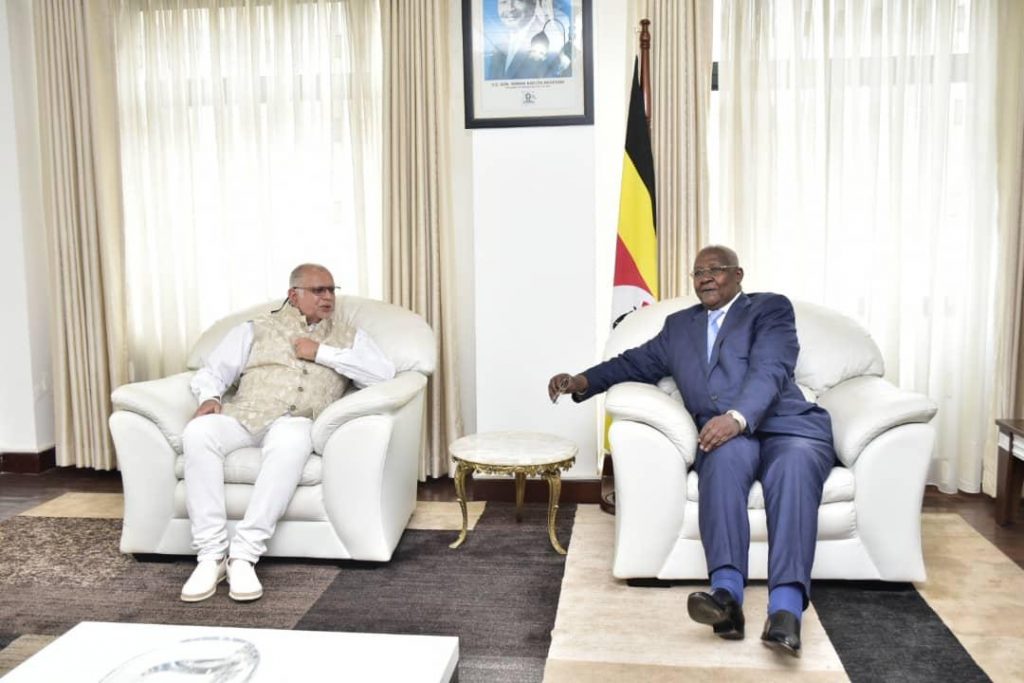
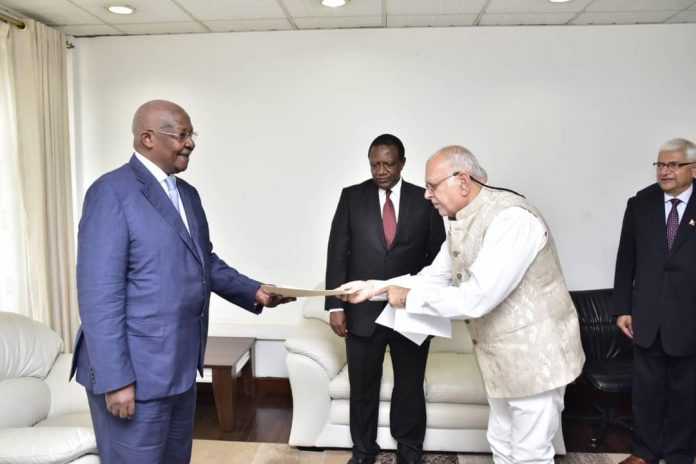
Mr. Sudhir presenting his credentials to Foreign Affairs Minister, Sam Kutesa.

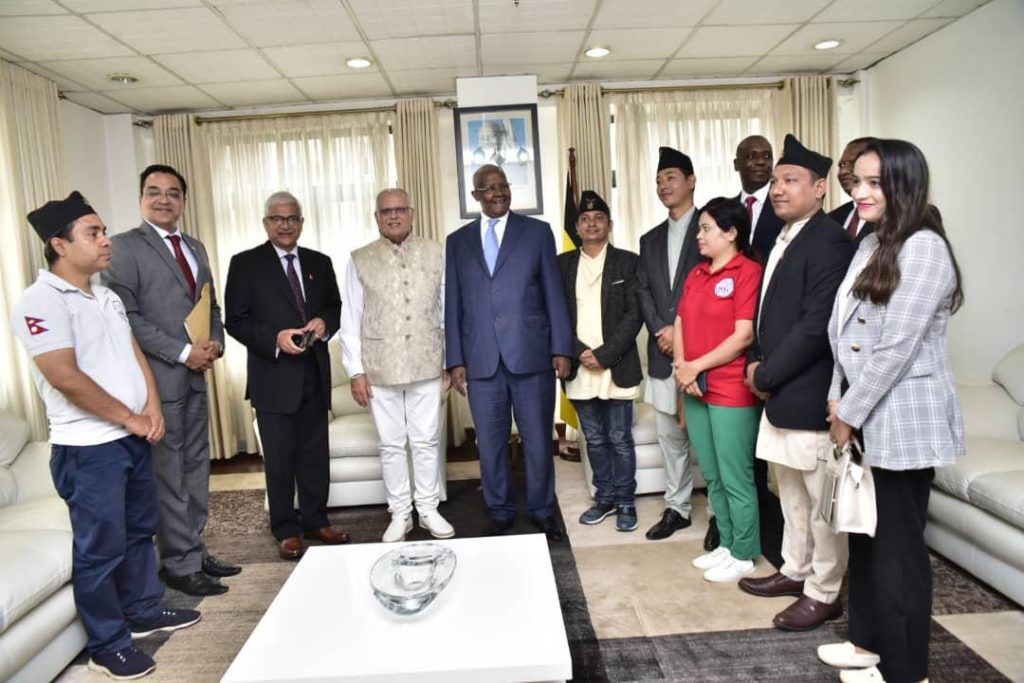
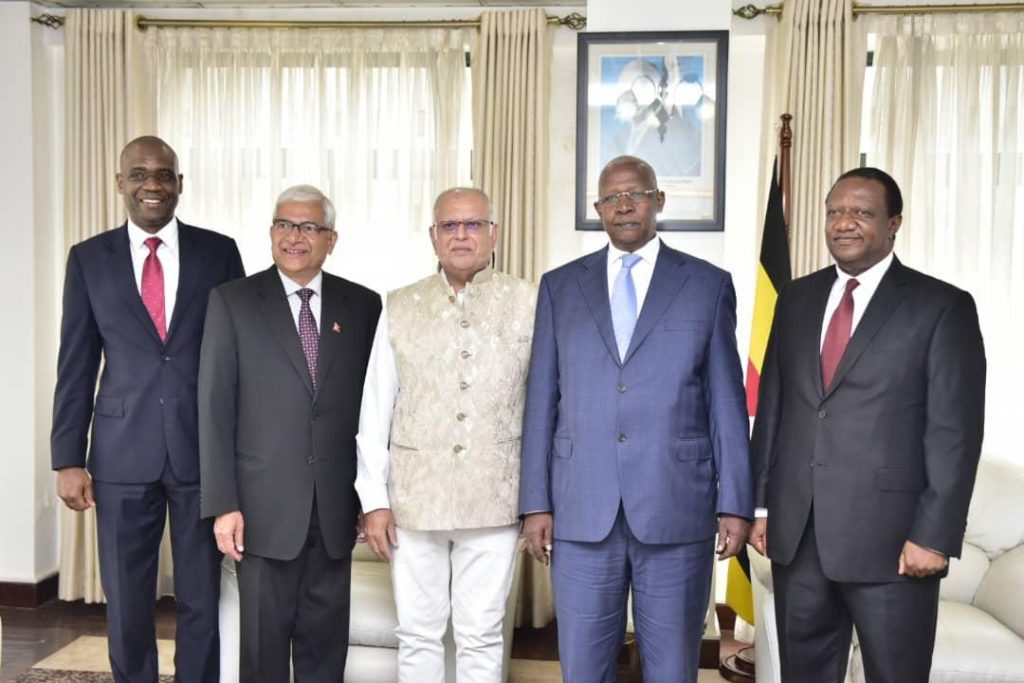
East Africa’s s richest man, Sudhir Ruparelia has presented his credentials to Minister of Foreign Affairs Sam Kutesa as Honorary Counsel of the Republic of Nepal to Uganda.

The ceremony that took place at the ministry headquarters was witnessed by Ambassador Jhabindra Aeyal Rajdoot, the Nepal ambassador to Egypt who introduced Mr. Sudhir to Mr. Kutesa and was accompanied by Nepalis residents in Uganda.

A seasoned businessman who was listed by Forbes Magazine as the East African richest man controls several investment portfolios within the region and beyond.

In a bid to boost its relations and trade, the Republic of Nepal appointed Sudhir whose business ventures have continued to expend to cover many sectors of the economy.

Sudhir was appointed in February but the formal ceremony had to wait Ambassador Jhabindra Aeyal Rajdoot who would present him to Foreign Affairs Minister Sam Kutesa.

Mr. Ruparelia was last month appointed by the President of Republic of Nepal Bidhya Devi Bhandari.

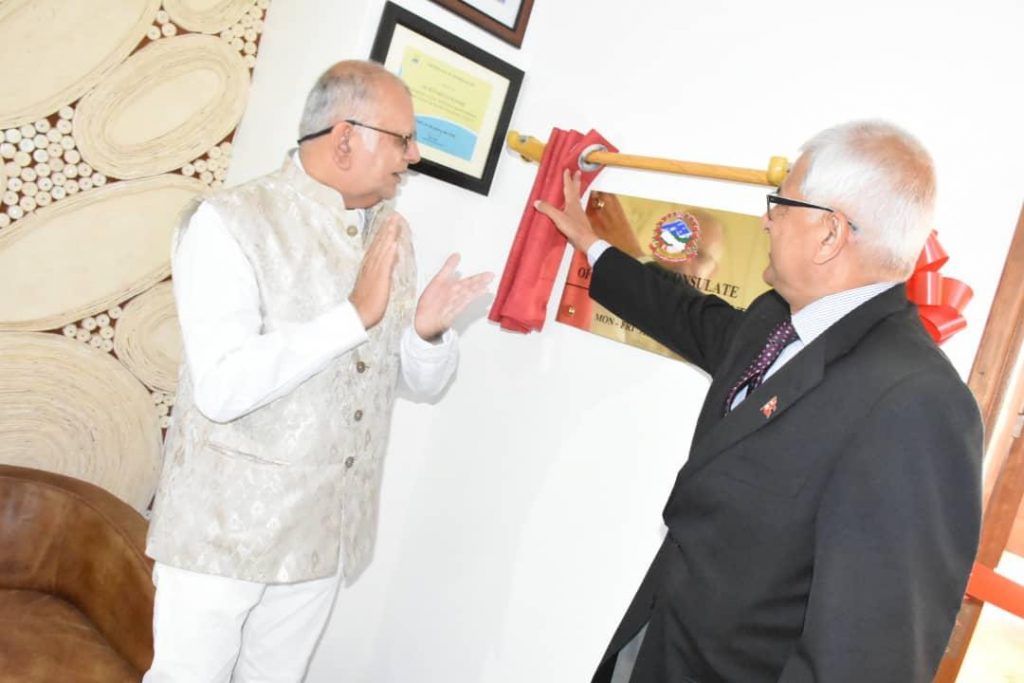
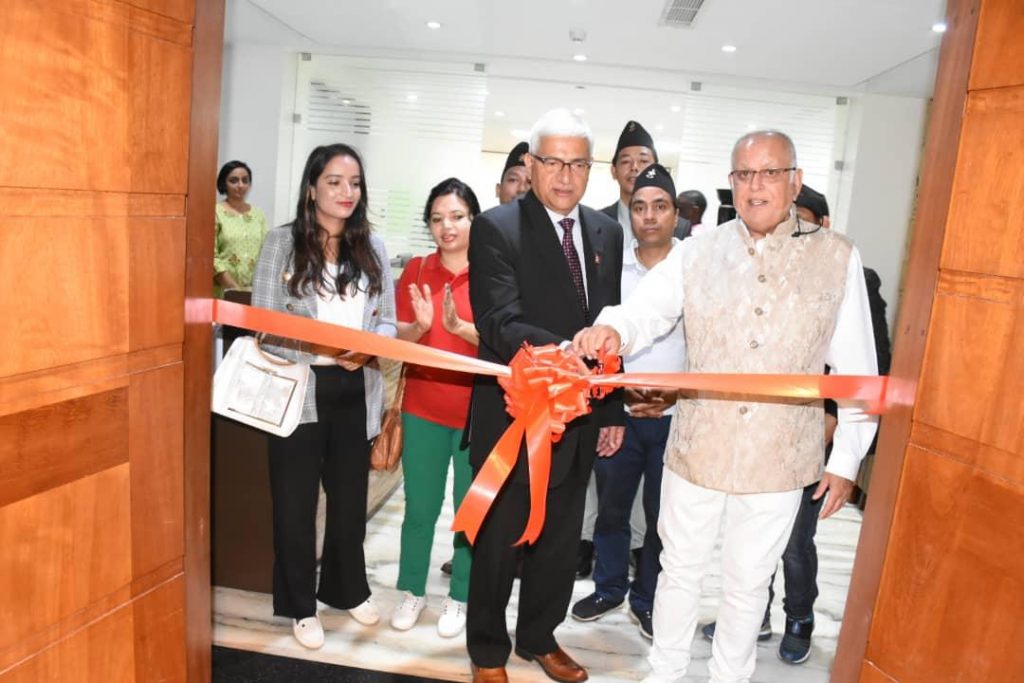
After presenting the credentials, Sudhir and Ambassador Rajdoot opened the consulate offices at Crane Chambers on Kampala Road.


About Nepal

Federal Democratic Republic of Nepal is a landlocked country in South Asia. It is located mainly in the Himalayas, but also includes parts of the Indo-Gangetic Plain. With an estimated population of 26.4 million, it is 48th largest country by population and 93rd largest country by area.

Mr. Sudhir unveils his office at Crane Chambers .

Nepal borders China in the north and India in the south, east and west while Bangladesh is located within only 27 kilometres (17 miles) of its southeastern tip and Bhutan is separated from it by the Indian state of Sikkim. Nepal has a diverse geography, including fertile plains, subalpine forested hills, and eight of the world’s ten tallest mountains, including Mount Everest, the highest point on Earth. Kathmandu is the capital and the largest city.

Nepal is a multiethnic country with Nepali as the official language.

Stories Continues after ad