Stanbic Bank
Stanbic Bank
18.5 C
Kampala
Stanbic Bank
Stanbic Bank
Home Blog Page 1068

Uganda- Rwanda relationship: Kagame to open Katuna Boarder within 15 days

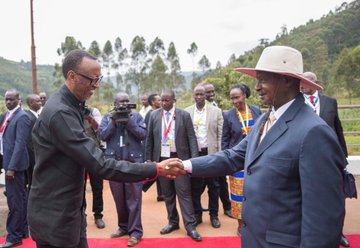
Museveni and Kagame reach-out for each other at Katuna boarder.


The President Rwanda, Paul Kagame and his Ugandan counterpart, Yoweri Kaguta Museveni have reached conscious and agreed to open Katuna border within 15 days. It is eight days away from making a year since Rwanda closed its boarder.

last year, Rwanda closed it boarders for Ugandan goods and has since stopped its nationals from traveling to Uganda using the boarder but there are those that have been using flights. Since then there has been a number of arrests in both countries and shootings in the territory of Rwanda.

Last year, Kagame flew to Tanzania asking President Pombe Magufuli to  interven bying reaching out to Museveni for peace  talks but Magufuli refused forcing him to seek Angolan President Joao Lourenco  help and indeed, President Lourenco embarked on the campaign to restore the souring relationship between the two sister states.  Dubbed as the Quadripartite Summit, the first, second and third meeting convened in Angola’s capital, Luanda in July 2019, August 2019 and January 2020 respectively. The meetings were facilitated by Angola’s President Joao Lourenco, while DRC’s Felix Tshisekedi is an observer.

During summits, leaders have been accessing the progress made in previous meetings and setting up new targets for restoration of cross boarder relationship between the two countries.

According a statement delivered by Rwandan minister of external affairs, Manuel Gomingos Augusto,  the heads of state expressed their gratitude towards the progress made on the release of prisoners on both sides in regard to rule of law and elimination of tension factors.

So far Uganda has released 22 Rwandan prisoners who had been on trial in General court martial. Recently Rwanda said that two of the 13 released nationals had been wanted over treason charges. Rwanda as a country, has only released two Ugandans despite shooting scores of them on an attempt to cross to the Kagame’s side.

“The summit recommended that Uganda should in one month verify allegations of the republic of Rwanda about actions from its territory by forces hostile to government of Rwanda. F all proved, Uganda will take all measures to stop it and prevent it from happening,” he said adding that actions must be proved by Ad-hoc ministerial committee for implementation of memorandum of understanding of Luanda.

The two countries represented by Uganda’s minister for Foreign Affairs Sam Kutesa and Manuel Gomingos Augusto signed on behalf of Rwanda the  extraordinary treaty that constitutes legal framework to handle cases of justice.


Stories Continues after ad

Why threaten Judicial officers with eviction from Court premises

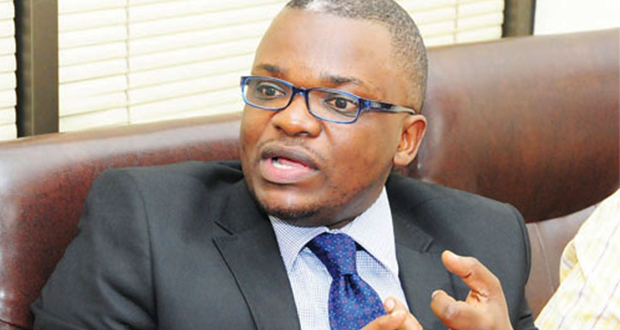
Mr. Muwema


By Fred Muwema


The Uganda Judicial Officers Association (UJOA) has three months to vacate its offices at Buganda Road Court and the Supreme Court or face eviction. This is the directive issued ironically by the Secretary to the Judiciary Mr. Pius Bigirimana according to a story published by the Monitor Newspaper of 20th February, 2020 at page 3 under the title “Judicial Association told to vacate office”.

In the story, it is reported that the reason for the impending eviction is that UJOA is not an entity of the judiciary and that their use of the Court premises contravenes treasury accounting instructions. It is not clear whether UJOA has always been or it has just become a non entity of the judiciary. It is also not clear whether the so called treasury accounting instructions have just recently been put in place or they pre-exist the directive. What is clear though is that this directive is very intentional and intense. This then begs the question, is the directive right and lawful? I will argue here that it is not right and lawful.

Consistent with its lack of clarity, the directive does not explain what an entity of the judiciary means nor does it explain whether there are different entities of the judiciary which are entitled or not entitled to use the Court premises. If this explanation had been given, it would have been easy to find the legal grounding behind the directive. However, since no explanation was given, its legal grounding (if any) will be subject to a lot of speculation. The purpose of this opinion is to contribute to the erasure of any speculation about the legal propriety of this directive because it has none.

For starters, it is important for us to define what an entity is. The Oxford Advanced Learners Dictionary defines an entity to mean a thing with distinct and independent existence. From the above definition, I would like to understand the judiciary to be one entity of distinct and independent existence. It is comprised of the Justices of the Superior Courts, Judges of the High Court, Registrars and Magistrates. This is the view which informs the provisions of chapter 8 of the Constitution which establishes the institution of the judiciary. All the different structures and offices of the judiciary are part and parcel of the same entity called the judiciary. According to the Constitution once any officer is part of the judiciary, he or she remains part of the judiciary unless removed in accordance with the law.

You therefore cannot talk about the judiciary without the constituent judicial officers who man it individually and collectively. So when judicial officers congregate under UJOA, their umbrella professional body which advocates for their welfare, they don’t become another entity with distinct and independent existence from that of the judiciary. They still remain a constituent part of the judiciary. To put it in another way, UJOA is the judiciary and the judiciary is UJOA.

Consequently, UJOA cannot be evicted from the Court premises at Buganda Road Court and the Supreme Court because they are in lawful occupation and use of the Court premises. With respect, the Secretary of the judiciary acted under a misdirection to ask UJOA to vacate the Court premises since by law, its members are required to occupy and work at the very premises. Their right to form or join professional associations which is guaranteed under Article 29 of the Constitution is enjoyed contemporaneously with their right to work at the Court premises. Therefore UJOA is an expression of these fused constitutional rights which can best be enjoyed at the work place of its membership.

Indeed in the public service like the Uganda Police, Parliament, Mulago Hospital etc, similar associations are not prohibited from operating within the precincts of the institution itself. In this case, what is not prohibited is permitted. This is re-enforced by the provisions of Order 7 of the Uganda Public Service Standing Orders, which mandates the Government to recognize such associations as an engagement platform with the concerned public officers. Therefore by attempting to throw UJOA out of its work premises, the Secretary to the judiciary is trying not to recognize the Association. This is contrary to established public policy.

Lastly, the directive alleged that UJOA’s presence at the Court premises would contravene treasury accounting instructions. I want to believe that this was a reference to the need for the judiciary to uphold the principles of public sector accountability to avoid misuse and abuse of judiciary assets. I also want to believe that this was a veiled suggestion that perhaps by sitting at the Court premises, UJOA was misusing or abusing public property.

Again my understanding here is that any talk of accountability for judiciary assets must be premised on the legal and organizational structure of the institution which is required to account. As I have already explained above, UJOA is the foundation of the legal and organizational structure of the judiciary and so it is not only required but expected to use the judiciary premises and other assets. I don’t see how UJOA through its members, can be guilty of misusing or abusing public property which is entrusted to it for discharge of its public duties. On the contrary, I would find that it is an act of public misfeasance for any public officer to prevent another public officer from doing their public duty individually or in association with others. I think this is what the Secretary to the judiciary was trying to do with his eviction notice. It is time for the judiciary to put its act together and address the more pressing issues which affect delivery of justice to the public. The public is not interested in such fractional fights which only serve to undermine its performance.

Fred Muwema
Managing Partner
Muwema & Co. Advocates
21st February, 2020

Stories Continues after ad

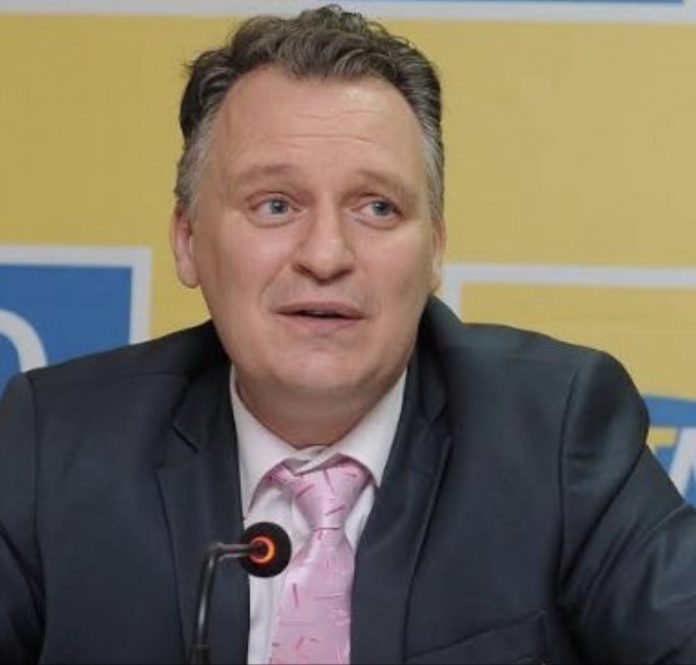
Mutebile, Kasekende on the spot as Shs2 trillion losses hit BoU

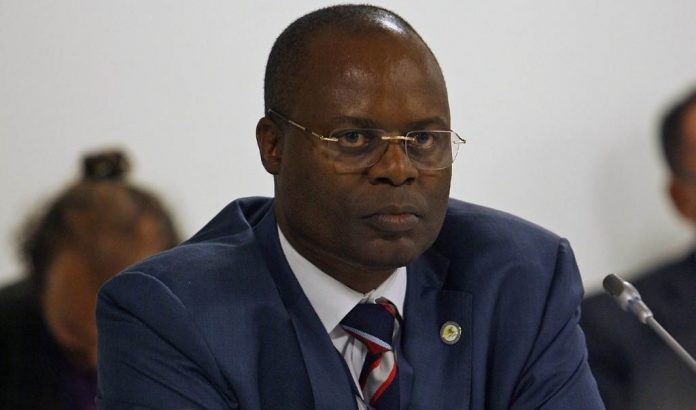
On the spot: Former Deputy Governor Dr. Louis Kasekende.


Bank of Uganda Governor Emmanuel Tumusiime Mutebile and his outgoing Deputy Louis Kasekende are under fire after it was revealed that the central bank has posted mind-boggling losses amounting to over Shs2 trillion over the past five years.

To cover up the losses, investigations by Eagle Online discovered that the outgoing Deputy Governor Kasekende took a decision of closing some central banks and using the money recouped from the closed banks’ assets  to offset the loans.

Our investigations also reveal that Deputy Governor Louis Kasekende largely contributed to the debt crisis at the central bank when he unilaterally took a decision to invest billions of dollars in Uganda’s reserves in Europe, a move that badly backfired as the interest rates there were negative.

This particular controversial move by the embattled outgoing Deputy Governor Kasekende was confirmed by Bank of Uganda(BoU)’s Executive Director for Research Adam Mugume, who told Parliament’s Finance Committee last month that the central bank had indeed invested in reserves in Europe, a decision that was not well-thought, ultimately inflicting further losses on the central bank.

To offset the losses, Mugume suggested to MPs that the central bank should be re-capitalised with a Shs 250billion kitty to help it remain afloat as it risked going burst under the weight of debts, a worst case scenario that would plunge the economy into disarray.

However, with unanswered questions over how BoU used the She200 billion that was advanced to it for re-capitalization in the FY2018/19 ,Mugume faced a tough time convincing MPs who demanded to know the role that Kasekende, as BoU Deputy Governor, played in investing tax payers money in risky markets in Uganda.

Furtrermore,a broad inquiry into Bank of Uganda’s closure of seven commercial by Parliament’s Committee on Commisisons,Statutory Authorities and State Enterprises(COSASE) found that the closure of the banks was irregular, noting that procedures were not followed by the top technocrats at the bank.

Investigations by this website have also discovered that in 2017, BoU’s losses took a turn for the worse as the central bank hired dubious law firms at astronomical amounts of money to help defend the illegal 2016 closure of Crane Bank.

Mr Sudhir Ruparelia, a City businessman and a major shareholder in the closed Crane Bank, had sued the Central Bank over his bank’s closure and has since won key legal battles despite the central bank spending billions of shillings to pay syndicated law firms.

The Cosase report also noted that billions of shillings were paid by the central bank to private lawyers as legal fees, even as BoU maintains a fully-fledged legal department, raising questions over the possibility of collusion between Deputy Governor Kasekende and the dubious city law firms.

The losses that have hit the central bank are one of the reasons that the World Bank has demanded that stringent measures be implemented under a unit called the Bank Resolution Unit to ensure that no loopholes are exploited by unscrupulous officials in future.

State Minister for Finance(Planning) David Bahati told MPs  this week that the central bank last made a profit in 2007,noting that the bank has been reeling from losses over the course of the past 13 years.


Stories Continues after ad

Sudhir gives Shs10mtowards  enthronement of new Archbishop


City tycoon, Sudhir Ruparelia has contributed Shs10 million toward the enthronement of the new Archbishop.

Sudhir handed over the cheque to government Chief Whip, Ruth Nankabirwa at Crane Chambers this afternoon. Ms Nankabirwa is the chairperson of the enthronement committee that is charged with overseeing the installation of the new Archbishop and handover from Archbishop Ntagali.

Bishop Samuel Stephens Kazimba Mugalu will be installed on March 1.

The Rt. Rev Bishop, Samuel Stephens Kazimba Mugalu, was elected the Archbishop of the Church of Uganda succeeding Rt.Rev. Archbishop Stanley Ntagali who retires in March 2020.

Kaziimba was born to Mr. Besweri Kaddu and Ms. Jessica Nanyonjo on August, 15 1962 at Gulama-Najja Kyaggwe and the first son of Jessica and Besweri.

Stephen grew up with his mother at Katwe who took the responsibility of his primary education in Gakuwebwa Munno Nursery and Lusaka Primary School. Life was a real challenge that he almost failed to get fees for his primary.

Leadership

Kazimba was trained as a Lay-Leader at Baskerville Theological College Ngogwe in 1985 and posted to Lugazi St. Peter’s Church.

1988 – 1990 trained at Uganda Martyrs’ Seminary (Provincial Certificate), and ordained in December 1990 by Bishop Livingstone Mpalanyi Nkoyoyo. He served as Assistant Vicar at Nakibizzi Parish in 1990 – 1994.

In 1994 – 1996, he completed his Diploma in Theology at Bishop Tucker College, and posted to Katente Parish as Parish Priest (1997 – 2000).

Stories Continues after ad

Winner 2019 Rising Woman: I want to be the biggest beekeeping value chain addition in Africa

Sandra Ajang

The winner of 2019 ‘Rising Woman’ Season II, Sandra Ejang has revealed that she wants to be the leading beekeeping value chain addition in Africa. She who ventures in bee keeping harvest over 300 kilograms  of honey every year.

Currently, beekeeping gaining prominence and continues to be among the top trending agribusinesses that are becoming more profitable. While Honey is obviously the main source of beekeepers’ income, there is a lot more revenue to be earned from beekeeping.

Sandra Ajang Dfcu Bank’s ‘Rising Woman’ Season II winner shares her passion for the beekeeping business. Annually, she harvests 300kgs of honey a year from her farm and sells 2-5 tonnes of honey locally.

Who is Sandra Ejang?

I am a mother of four, a co-founder of Western Silk which is a family business I started with my husband who was my boyfriend back then. We practice beekeeping and honey processing among other things. Currently, we are producing everything that has honey as an ingredient under the brand name ‘Asali wa Moyo’ which directly translates to ‘Honey for the heart or sweet heart’. This was my husband’s genius idea. We make honey with spices, peanut butter and we are soon introducing a baby’s cosmetic line that will include; soap, lotion and also normal bathing soap for adults all made with honey.

How did this idea come up?

It’s been quite a journey, about six years of beekeeping. The first years were about trying to get it right. We started by buying very fancy hives, because the person who marketed them did a very good job. My husband and I were very convinced, so we got 10 hives and some other equipment which cost us about Shs10 million. By then Shs10 million was a lot of money. They told us we would recover our initial investment within one year.

One year later, we didn’t have any honey in the hives, all we had were insects. My husband suggested we count our losses but I wasn’t ready to give up yet. I told myself, beekeeping can’t be this hard. I started looking up things on the internet and applying whatever I could learn, reached out to some of the companies that do beekeeping and training.

I sought out one of my friends who offered to share his experience. I spent a whole day at the training, and whatever little knowledge I picked took back to my farm. A year later, we harvested some honey. The people that had sold the hives to us, told us they would buy the honey back as a way to give people ready market for the produce.

We went to them and told them we had about 100 litres of honey, they had initially told us they would buy a litre at Shs12,000 but back tracked offering us  Shs10,000 per litre. It didn’t make sense for me to put in all the hard work and sell my honey at a wholesale price of Shs10,000. I kept it in the house. I didn’t know what to do with it because I was new in the business.

The honey crystalized, and was rejected when I tried to sell it (note: I didn’t know that honey crystalizes). If you put it under the sun, it would liquefy but when you put it back inside, it would crystalize. I looked up crystallization and I learnt that apparently good honey is actually supposed to crystalize, if it doesn’t then it’s not good. Depending on the nectar source, it is supposed to crystalize. So I found myself stuck with about 90 litres of honey in my house. The money was tied in there, I didn’t have the packaging, no brand name and no way forward.

How did you get your business out of that hurdle?

My husband and I discussed our options. First this was to come up with a brand name – so Asali wa Moyo was birthed. We tried several logos but it didn’t work. The first labels were so bad that the ink would get smudged and look so terrible, the jars that we got leaked, it was a proper disaster. We managed to only sell about 30kgs out of the 90kgs. It was then that an opportunity came along and I was selected to participate in the Mandela Washington Fellowship. While there, I picked up best practices and applied them when I came back home.

When I was starting out, it was purely for me to make money but after we started, I became more involved in the community upcountry. I realized there was a need for them to earn an extra income because most people upcountry depend on agriculture. I saw this as an opportunity, if I was going to involve myself in packaging honey, then I would need people to be my out-growers. So I started talking to them, of course, they didn’t have money to buy the hives, so I came up with a plan to give them some sort of microfinance loans. Usually, when you go in the village, people think you have money especially when you are taking a project to them. They think you are funded by an NGO, so you have to give them free money.

Some people in the villages had hives that they had converted to storage. That is because most NGOs take projects to rural areas and don’t follow up. Whatever little money I would make out of selling honey, I would buy hives and take to them. Now the deal is, I gave them hvies in exchange for 30 per cent of the harvest (for the hives) and I give them cash for the 70 per cent to encourage them to keep farming.

How many out-growers are you working with?

To date, I work with a network of over 500 out-growers across Uganda. I have some farmers in Gulu, Kamuli, Kitgum, Lamor and majority in Kigumba where the production happens. We are trying to expand to Karamoja, but they have a network issue. We used to work with them previously but they disappeared off the grid so we have to look for them physically.

What inspired you to go into Honey farming and processing? I assume you had no prior experience in beekeeping?

Orphaned at an early age, I grew up with my grandparents.  My first experience with honey was eating it from the comb. My grandmother was a farmer who mostly grew cash crops, like sunflower, millet, sorghum and also had hives. The honey produced then was only for home consumption. So every now and then, she would come with honey very different from what we get in the supermarket. So when I started beekeeping again, it just refreshed my memory.

You could have done so many other things with your Telecommunication Engineering degree, why did you choose entrepreneurship?

I did work with security firms as a technical person before venturing into entrepreneurship. I started working from the time I joined the university. After several years, I needed a new challenge, I was also tired of being employed. Sitting in office from 8am -5pm, you have no control of your day, you have to give excuses to leave office, lie sometimes since you can’t tell them you have personal things to attend to. I needed more freedom to do the things that I love. I still maintain an extra job on the side, we need all the money we can get.

How do you balance family and work? Don’t you get overwhelmed sometimes?

It’s extremely overwhelming, but I guess I am one of those parents that have ninjaed the kids, they don’t even cry for me when I leave home. They know mummy has to go and look for money. My husband is extremely helpful and understanding. He is very much supportive. Whatever I need to do, he can even take a day off to stay with the kids if need be.

How do you handle the pressure and the challenges that come with this kind of work?

My husband is my biggest cheerleader, if women are going to make it, they need spousal support. My husband helps whenever the need arises. One of the biggest challenges in beekeeping is that it’s a man dominated trade. People keep asking me why I am involved in beekeeping. I tell them you can be & do anything you choose to. The other challenge is with standards, Uganda Registration Services Bureau (URSB) doesn’t have set standards for the kind of products we sell. URSB has to develop standards otherwise lack of standards limits where I am supposed to take my products.

Tell me about your Rising Woman experience.

When they advertised, I was about 7 months pregnant. Usually, I am very active during pregnancy until my last day. This time around, I decided to relax and take it slow. But you know if you are not used to taking things slow, you get bored. So I started applying for whatever opportunity I came across. I was mostly really looking for an opportunity to learn something new.

I met last year’s winner Linnet Akol at the Runlabs event who encouraged me to apply for this competition. I wasn’t confident because I am terrible at proposal writing. So I decided to give it a go, I applied, at first I didn’t think I would get in because my proposal was not good enough. I think I was among the last people to apply.

 In early November, they asked me to come to Dfcu at 3 pm for the interviews. I had an 11 days old baby, I contemplated on whether to go or not. I called my husband and told him about the opportunity. He asked me to get someone to drop me at Dfcu and later he would organize pick up.

I also went with some of my products, a little bit of everything. I showed them and they were very impressed. After the presentation, I went back home.

To be honest, I didn’t think I would win. I came across women who really knew their businesses so well. The day I was recognized as the winner, I was very excited. I was with my 10-year old daughter for moral support. My husband wasn’t around.

Nairobi Trip experience

I admire Kenyans, I like how they are very fast in everything they do. They make you feel like you are not doing enough. I was excited about seeing other women in business and how they collaborate. I learnt so much and wrote down so much. I am slowly unpacking my ideas and resetting my goals.

Advice to women

For those that are not yet married, make sure you get someone who is supportive of your dreams. Later when you become a parent, the money will never be enough, you will need to get a side hustle to supplement your income.

Entrepreneurship is not rocket science. Start small and grow.

Stories Continues after ad

Umeme in spotlight over Shs100b payment

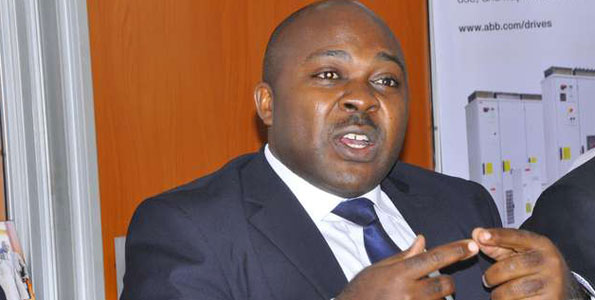
UMEME CEO Selestino Babungi.

Legislators on the Committee of Commissions, Statutory Authorities and State Enterprises(Cosase) have tasked officials of Umeme Uganda Limited, over circumstances under which the power distributor received Shs100 billion from the Ministry of Finance.

In a meeting between the committee and electricity power entities, Jinja Municipality East MP, Paul Mwiru raised a red flag over an audit query where Umeme is said to have withdrawn the whole amount from the Umeme Escrow account yet it was eligible to withdraw only Shs65 billion that was owed to them.

An Escrow account is an account on which the government makes deposits for bills.  Umeme is only supposed to withdraw from that account if the government is in arrears of 60 day after giving the Uganda Electricity Distribution Company limited (UEDCL) a 14-day notice.

According to the report, Umeme withdrew the whole Shs100 billion yet the government only owed it Shs65 billion in arrears of 60 days.

“You helped yourself to money that was over and above what you were actually owed by the government without any explanation. You have thrown UEDCL into a position where it is struggling to recover the money,” added Mwiru.

Umeme Managing Director, Selestino Babungi stated that the government was heavily indebted and that the payment was made by Ministry of Finance directly to Umeme.

“Umeme would never pay itself in excess of money not owed to it,” said Babungi adding that, “the Ministry made the payment and through the accounts of the other government agencies that had bills to be cleared”.

He added that the money was never paid through an escrow account.

The UEDCL Managing Director, Paul Mwesigwa confirmed that the money had not been paid through an escrow account but directly.

However, he argued that the government only owed Umeme Shs65 billion in arrears.

The MPs called for a verification of the report of the Auditor General on the issue and all respective entities involved would be summoned at a later date to handle the issue.

Stories Continues after ad
Standard Chartered commits $75bn towards sustainable Dev’t goals

Standard Chartered Bank

Standard Chartered has announced new business targets for supporting its clients as they transition to a low carbon economy as part of its Sustainability Aspirations.

The Bank intends to reduce its emissions across its global properties by 2030. With an office footprint spanning 60 countries, including many large emerging markets, the Bank will achieve net zero emissions by only sourcing energy from renewable sources and continuing to pursue energy efficiency measures across its 12 million square feet of property.

Tracey McDermott, Group Head, Corporate Affairs, Brand and Marketing, commented: “Over the past 18 months, we have made a series of commitments which are all geared towards supporting the Paris Agreement on climate change and the transition to a cleaner, greener, fairer economy. We know that the investment required cannot be provided by governments and NGOs alone, so it is critical that investors embrace the Sustainable Development Goals at pace and scale.

“Our unique footprint means we are well placed to help get finance to where it matters most. That is why, as well as ceasing support for clients who generate more than 10% of earnings from thermal coal by 2030, we also have a renewed target for financing and facilitating USD35 billion of clean technology and renewables, and USD40 billion of sustainable infrastructure.”

Sunil Kaushal, Regional CEO for Standard Chartered, Africa and the Middle East, said: “It is estimated that emerging markets need an annual Shs2.5 trillion investment to meet the SDG targets by 2030. A bulk of this investment will need to be focused on Africa and the Middle East, which is home to some of the key sustainable development opportunities.

The financing gap in Arab countries has been estimated to be over $100 billion annually, whilst in Africa this figure stands between $500 billion and $1.2 trillion. For the goals to be met by 2030, investors and banks need to coordinate and connect capital to promote sustainable development.”

“With our unique footprint into emerging and developing markets, we can use our banking knowledge, people, and products to catalyse capital to where it matters most for SDG financing.  The Africa and Middle East region is home to some of the world’s fastest-growing economies, though we also face some of the world’s most pressing environmental and social issues. Our ability to solve for the issues here will have tremendous impact on our 2030 ambition to meet global SDGs.”

Standard Chartered has a broad range of sustainable finance product offerings that can be deployed to help clients pivot their business towards a more sustainable model. In October 2018, it created the Sustainable Finance team and has since launched sustainable deposit products in London, Singapore, Hong Kong and New York; plus, a EUR500 million Sustainability Bond, the proceeds of which will be used to provide finance in areas aligned with the Sustainable Development Goals including clean energy projects, smaller business lending and microfinance loans.

Stories Continues after ad

Internet service provider protest new UCC rates as they claim Airtel is favoured

MTN UG CEO, Wim Vanhelleputte

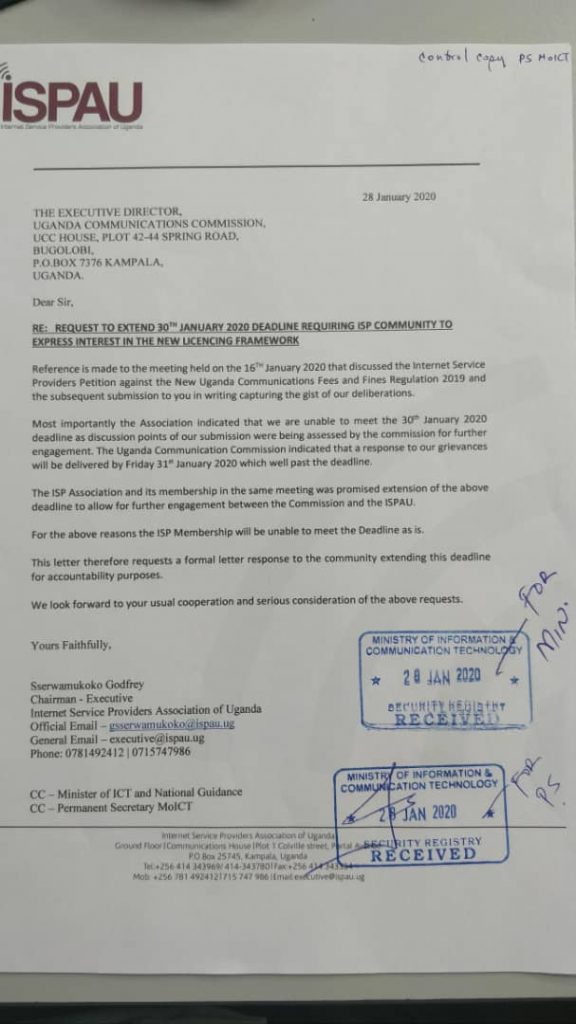
The Internet Service providers of Uganda have written to the Ministry of ICT  protesting the new fees and fines structure that was imposed on them last year.

The ISP is one of the longest serving internet providers within the country, having started its work as early as 1990 to date and they believe that the new Uganda Communication Commission (fees and fines) regulations 2019, is unacceptable and would only serve to hinder their services.

The Chairman of the ISP, Mr, Godfrey Sserwamukoko wrote to the Ministry of ICT seeking for a review of the fines and regulations imposed on them without any consultations and further requested for government to distinguish Internet providers from major telecommunication companies such as MTN and Airtel. Within the letter are various risks highlighted by the chairman should the government continue with the new proposed fines and regulations.

In the letter, the increment of the fees is described as ‘exorbitant’, ‘unreasonable’ and ‘out of the true state of the earnings of the ISPAU membership collectively.’ The ISP also believe that such fines would affect the community since such a levy will generate an increase in the price of data mbs despite the ISP having reduced the prices from $4000 per mb in 2006 to to $3 per mb currently. Furthermore, such a levy would contradict the National Broadband Policy 2018 that seeks to include a wider compass of Ugandan internet users through digital inclusions and universal awareness under the Uganda 4040 vision bracket.

Although the new fees and regulations have not been effected, before the end of his tenure, Mr, Godfrey Mutabazi, the Exectuvie Director, Ugandan Communications Commission, assured the ISPUA that the matter would be looked into and asked for a certain period of time to review the new regulations proposed and thereafter would meet with the concerned parties and stakeholders to see how they could forge away forward.

This is not the first time the government has been called out for its irregular taxation of individual businesses after it was discovered that while MTN was recently forced to cough a whopping $100 million(Shs 350 billion) in taxes other telecommunication companies such as Airtel only released $1090,000(350 million) to operate within the same jurisdictions for same period of time (10 years).

Eagle Online has learnt that MTN-Uganda isn’t against the payment of $100 million but they argument is that they are willing to pay that money give that duration is increased from 10 years to 20. According the inside sources, MTN has proposed that this same amount should apply across board on other similar service providers.

“Why would they expect us (MTN-Uganda) to pay that amount when Airtel on paid $100,000 for same duration and yet Airtel as well operates across the country like we do? Secondly we also appeal to authorities that we shall pay that money on similar date like others because if it is not then, that means they are discriminating.” a source said.

The ISP maintains that an increment in the taxes would not only cause huge losses since the population of internet users would not be able to support it and this will further scare away any future investors in the I.T sector.

Two weeks president held a meeting with both MTN representatives and Mutabazi before he was sacked where the issues came.


Stories Continues after ad
Bank of Uganda makes a loss of Shs2 trillion

ON THE FIRING LINE: Governor Mutebile and former deputy Louis Kasekende.


The Central Bank has reported up to Shs2 trillion in losses for the past 15 years, Finance State Minister (Planning), David Bahati said.

In a response to a question for oral answer posed by MP Kenneth Lubogo, Bahati said the Bank of Uganda posted only Shs40 billion in profits in 15 years, which was remitted to the consolidated fund acount as required by the Bank of Uganda Act.

MP Lubogo sought to know the “profits or losses BoU has made annually for the last 15 years; when was the last time BoU made profits?”

The Shs40 billion profits were registered in 2007, and since then, the Central Bank has been making losses.

West Budama North MP, Richard Othieno who was holding forte for MP Lubogo, asked a supplementary question.

“Bank of Uganda trades in securities; the minister is talking of making losses; can the minister brief the country the circumstances under which the bank made the losses yet it trades in securities,” said Othieno.

Minister Bahati, however, said the bank made losses and nothing can be done about it. “The bank truly trades in securities but it invests in monetary policies that involves in making losses; these are the facts on the ground; we cannot do anything about it because a loss is a loss,” said Bahati.

Central banks worldwide invest in securities hoping to make profits to offset national revenue needs by beefing up the Consolidated Fund Account, but unpredictability and volatility of the securities market puts central banks at risk of always making losses.

The Central Bank of Kenya toyed with the Eurobond securities, which ended up badly, stirring a scandal that roped in key politicians.

Bank of Uganda’s securities misadventures are undocumented, and the Rules of Procedure governing questions for oral answers restricts further enquiries, making it difficult for MPs to interrogate the matter further.

This revealation come at the time when BoU is embroiled in many scandals including the printing of extra money, stealing of old notes and failure to account for the Shs478 billion purportedly used during the Crane Bank in receivership and paying of billions to city lawyers as legal fees.

Stories Continues after ad

EAC Secretariat builds Partner States’ capacities for diagnosis of the novel Corona Virus

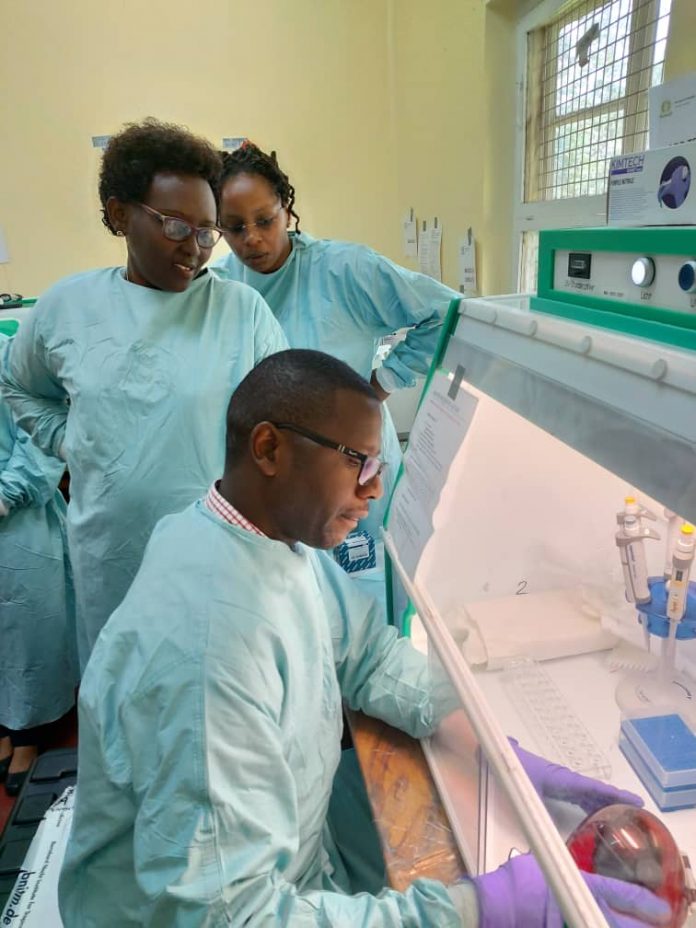
The EAC Secretariat just finalised an intensive training programme for laboratory experts to detect and diagnose the new novel corona virus in the East African Community region.

The training was conducted under the EAC Network of Public Health Reference Laboratories for Communicable Diseases in collaboration with the Bernhard Nocht Institute for Tropical Medicine (BNITM). The programme is part of the financial support provided to the EAC Region by the German Development Bank (KfW) on behalf of Federal Republic of Germany. The training aimed at building capacity in the region to detect corona virus.

The EAC Secretariat further acquired diagnostic kits for the novel corona virus that will be distributed among the EAC Partner States soon after the training as part of the regional preparedness plan against COVID-19.

Until 19 February 2020 in China alone more than 74,000 people were infected and over 2,000 died of the disease. 25 countries outside China confirmed cases of COVID-19; 12 of these countries reported cases of human-to-human virus transmission. As of Feb 11, Africa did not have any confirmed cases, but suspected patients have been quarantined in Ethiopia, Kenya, Côte d’Ivoire, and Botswana, according to WHO. However, on 14 February Egypt reported the first confirmed case on the continent.

The Acting Head of Health Department at the EAC Secretariat, Dr Michael Katende, says: “The Secretariat provided the training in an effort to enable all EAC Partner States to detect and diagnose the novel corona virus promptly and thereby avoiding its spread”.

He further emphasized that this initiative is in response to WHO’s Strategic Preparedness and Response Plan (SPRP) for the new coronavirus. The objectives of the plan are to limit human-to-human transmission of the virus, particularly in countries that would be most vulnerable if they faced an outbreak, to identify, isolate and care for patients early, communicate critical risk and event information, minimize social and economic impact, reduce the spread of the virus from animal sources and address still existing unknowns.

Dr Katende further noted that while no case has yet been confirmed within the EAC region, it was of high priority and importance to ensure that all EAC Partner States maintain high levels of preparedness and surveillance.

Stories Continues after ad