Stanbic Bank
Stanbic Bank
17.4 C
Kampala
Stanbic Bank
Stanbic Bank
Home Blog Page 1068

EAC mulls adopting French as an official language of the Community

Flags of East African countries


French could in the near future become an official language of the East African Community in addition to English.

This became apparent after the French government agreed to assist the EAC in conducting a study on the modalities to include French as an official language of the Community.

The support from the French Government comes after the EAC requested the French Government to support a study on the modalities to include French as a language of the Community in addition to English. The request from the EAC Secretariat came as part of implementing the directive of the Resolution no. 25 of the 15th Summit of Heads of State of the EAC held on November 30th, 2013.

Speaking at the signing ceremony of Memorandum of Understanding (MoU) with EAC, the French Ambassador to Tanzania, H.E Frederic Clavier, said his country was more than willing to assist the EAC in conducting a study on the modalities to include French as one of the official languages of the EAC.

“We are dedicated to support the execution of the study in order to contribute to social and economic development of the integration agenda,” said Clavier.

The French envoy said the operational implementation of the study and related funding costs estimated to be Euros 42,511, would be covered by the Embassy of France in Burundi, adding that the embassy would regularly update the EAC on the progress of the study.

On his part, EAC Secretary General, Liberat Mfumukeko expressed his appreciation to the French government for the support given to the EAC for the study.

The Secretary-General thanked France for her continued support to EAC programmes and projects.

“This support comes at the right time when the Community is continued to deepen its ties with the other French speaking blocs,” said Mfumukeko.

Article 137 of the Treaty for the Establishment of the EAC provides that English shall be the official language of the Community while Kiswahili will be developed as a lingua franca of the Community.

The East African Legislative Assembly passed a resolution to adopt Kiswahili as an official language of the Community.


 

Stories Continues after ad

Rwanda confirms first case of corona virus

A lady wearing protective gears against coronavirus

Rwanda has confirmed the first case of corona virus, a day after Kenya had just confirmed the virus in the east African community (EAC).

Rwanda joins others African countries of Kenya, Algerian Nigeria, South Africa, and Congo which first confirmed the virus earlier this month. The virus which exploded in China’s Wuhan City in Hubei Province has claimed 4,600 lives with over 126,000 people infected globally out of whom 67,000 have recovered.

According to Rwandan ministry of health, the confirmed case is of an Indian citizen who arrived from Mumbai, India on March 8, 2020.

“The patient had no symptoms upon arrival in Rwanda and reported himself to the health facility on 13th March 2020 where he was immediately tested,” read in part of the statement released by health ministry.

The patient is currently under treatment in a stable, isolated from other patients and the tracing of all other contacts is underway to minimise the spread of the virus.

The ministry urged all its nations to observe all guidelines set up in the fight against the virus.

Stories Continues after ad

Amanya Tumukunde arrested as Historicals are divided over crackdown

Mr. Amanya Tumukunde


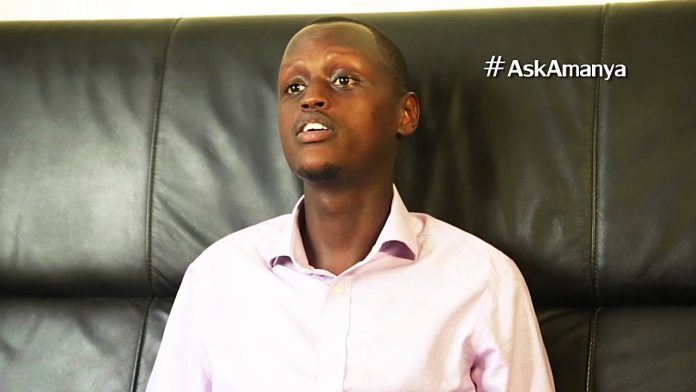
Commandos from the elite Special Forces Command (SFC) today arrested Amanya Tumukunde,a son to Lt Gen Henry Tumukunde.

Amanya was picked from the Kololo office of his father and is being detained at an undisclosed military safe house.

The arrest comes as the military rachets up the crack down on Lt Gen Tumukunde and his family following his declaration to run for the presidency in next year’s General elections. However, a section of the public believe the ongoing arrests are meant to scare away his supporters. as it has happened in the past with supporters of Robert Kyagulanyi aka Bobi and Dr. Kizza Besigye.

Meanwhile, Eagle Online has exclusively learnt that some NRA/M historicals are unhappy over the crackdown on Lt Gen Tumukunde.

Stories Continues after ad

Kadaga appeals to UN to finance Women Councils

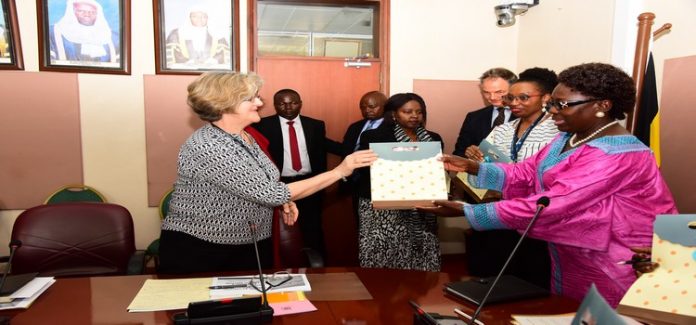
The Speaker of Parliament, Rebecca Kadaga has appealed to UN agencies to support the operations of the National Women’s Council to enable it reach women at grassroots level.

Kadaga said she was concerned that although women council leaders were elected countrywide, they remain largely redundant.

“When I go for meetings of women councils, many ask that, ‘Madam Speaker: we were elected, but what can we do?” Kadaga said.

Kadaga said this while meeting representatives from the United Nations Population Fund (UNFPA), UN Women, United Nations Children’s Fund (UNICEF), United Nations Development Programme (UNDP) and the National Women Council at Parliament on Thursday, 12 March 2020.

The National Women’s Council was established in 1993 by an Act of Parliament, with a mandate to bring together all women in Uganda for social, economic and political empowerment.

Kadaga said the council with its representation from village to the national level has potential to make a turn around on issues of women economic empowerment and their participation in developing communities.

The Council’s Executive Secretary, Collin Mwijukye said that with 356,000 women leaders spread across the country, the council survives on limited resources of less than Shs1 billion per annum to run operations and grass root programmes.

“This leaves us constrained to implement visible programmes much as we are happy that many of our initiatives have been taken up by our partners,” Mwijukye said.

The Council Chairperson, Farida Kibowa interested the UN agencies in its new initiative termed ‘the 15 house hold model’ where five council leaders are attached to monitor 15 households in a village.

“Through this system, the council shall reach out to households, small hold farmers, domestic workers, landless women, and school girls and women entrepreneurs,” Kibowa said.

The UNFPA Representative in Uganda, Alain Sibenaler said UN was in a process of drafting new cooperation framework for the next five years and added that some of the priority areas of the council such as child health and adolescent health are core to certain UN agencies.

The UN Women, Deputy Country Representative Adekemi Ndieli, advised that women councils can take advantage of some of the UN programmes already running.

“For example the spotlight programme which was launched on Sunday (8 March 2020) benefits women movements; we could leverage on its resources and connections as we see how we shall work together,” Ndieli said.

Stories Continues after ad

BREAKING NEWS: Gen.Tumukunde arrested

Gen. Henry-Tumukunde.


A team of security commandos from the Special Forces Command, Chieftaincy of Military Intelligence have in the past few minutes raided the Kololo Office of Lt Gen Henry Tumukunde and arrested him.

The Commandos are being commanded by the head of the CMI boss Maj Gen Abel Kanduho and CIID Director Grace Akullo.

Our reporter at the scene says the security operatives first ransacked Lt Ggen Tumukunde’s office before telling him that he is under arrest.

This story will be updated as it unfolds.

Stories Continues after ad

Tullow Oil plc registers $2b loss after exploration write-offs with Uganda and other countries

Tullow

Tullow Oil plc has registered a financial loss of $2.0 billion following exploration write-offs and impairments in Uganda and other countries.

In August 2019, Tullow announced that its farm-down to Total and CNOOC lapsed following the expiry of the Sale and Purchase Agreements (SPAs). The expiry of the transaction was a result of being unable to agree all on aspects of the tax treatment of the transaction with the government of Uganda which was a condition precedent to completing the SPAs.

According to full year results ended December 31, 2019, the oil company registered a year-end net debt of $2.8 billion and loss after tax of $1,694 million.

 The Group working interest production averaged 86,800 barrels of oil equivalent per day (BOEPD), capital investment of $490 million. The company registered revenue of $1,683 million and gross profit of $759 million.

According to Dorothy Thompson, Executive Chair, Tullow Oil plc, this has been an intense period for Tullow as we have worked hard on a thorough review of the business which has led to clear conclusions and decisive actions.

“We are focused on delivering reliable production, lowering our cost base and managing our portfolio to reduce our debt and strengthen our balance sheet. Even with recent events in oil markets, Tullow’s assets remain robust: we are a low-cost African oil producer, with a strong hedging position, substantial reserves that underpin our business and a high potential exploration portfolio.” She said

“Tullow remains committed to reducing its equity in the project ahead of FID and is working constructively with the Joint Venture Partners and the government of Uganda to agree a way forward.”

The planned development of Uganda’s material oil resources remains at an advanced stage, with the project’s major technical aspects completed. For the upstream components of the project, the ESIA Certificate was awarded for the Tilenga Project, and the final ESIA report has been submitted for the Kingfisher Project.

The company noted that progress has been made on land access secured for both upstream projects and construction costs and schedules have been confirmed from the main EPC bid submissions. For the East Africa Crude Oil Pipeline (EACOP) project, the ESIA certificate has been awarded in Tanzania, and the final ESIA report has been submitted to the Government of Uganda. The key project legal and commercial prerequisites have been outlined to Government by the Joint Venture Partners, with the schedule to FID now dependent on the progress of these negotiations.

Stories Continues after ad

Health Ministry trains UPDF medics on coronavirus prevention


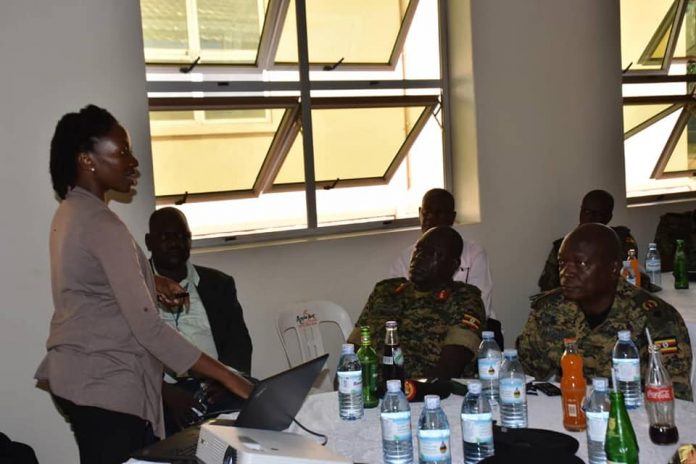
The Ministry of Health has started training UPDF at the Mbuya Senior Officers Diagnostic Centre on the prevention of the deadly Coronavirus (CODIV 19) with the aim of equipping soldiers with skills to combat the outbreak of the virus.

Maj. Gen. Ambrose Musinguzi, UPDF Chief of Medical Services, who represented the Chief of Defence Forces (CDF), lauded the ministry for being timely in equipping the UPDF medical personnel with skills to prevent the spread of Corona virus.

He said that as the UPDF they are mandated to respond to emergencies like they have been doing over the years, therefore, the training only helps them to respond better to the virus in case it hits the country. “As UPDF, we are under obligation to respond to emergencies and help to protect the people we serve” Gen Musinguzi said.

He announced that there will be various training to train soldiers on how to prevent the spread of corona virus, this is the first and another one will be held at Bombo Land Forces headquarters.

“These trained teams will be the ones to further train and sensitize other soldiers from other units countrywide in the UPDF including those in Somalia” he emphasized.

Dr. Bondo Bongomin from the Ministry of Health said that the ministry is partnering with UPDF to deliver the message about Corona Virus which broke out in December 2019. “We thought it wise to equip you with the preventive skills against this global epidemic since UPDF is a very proactive institution when it comes to emergencies”.

He said that after the training, trainees should be in position to know the signs and symptoms of corona virus and be able to prevent the spread of the disease.

Dr. Salome Okware the ministry official assured the trainees that they should be in position to form teams and be ready to fight the epidemic after the training.

She added that hygiene must be a priority in order to avoid the spread of the disease through washing hands thoroughly and quickly identifying the patients with the signs of the virus and isolating them.


Stories Continues after ad

Absa Group reports improving revenue growth momentum for 2019; earnings up slightly amid sluggish economy

David Wandera, Absa Bank Uganda's Head of Markets.

Absa Group Limited has reported improving revenue growth for the 2019 financial year, with headline earnings growing slightly.

Absa Regional Operations (ARO) comprising Absa Group’s African operations excluding South Africa delivered strong financial performance in 2019 with earnings growth of 16 per cent, enhancing the overall Group’s position.

Revenue grew by 14 per cent, Pre-provision profits increased by 17 per cent and Cost-to-income ratio improved to 57.8 per cent. While separating, ARO has grown its retail primary customer base in 2019 to 1.5 million customers.

“We delivered a resilient performance against a challenging macroeconomic backdrop. We maintained balance sheet momentum and growth was broad-based across most businesses,” said Daniel Mminele, Absa Group Chief Executive.

“We will continue to drive the execution of our strategic objectives with agility, and take advantage of emerging opportunities, while managing risks more effectively in response to changes in the operating environment,” he said

Absa Group revenue increased six per cent while headline earnings, the measure most analysts use to gauge profit, rose to one percent as impairments increased.

“Our revenue growth is showing an improving trend, with strong deposit growth of 12% and customer loan growth of nine percent for the Group,” said Absa Group Financial Director, Jason Quinn.

Overall, Absa’s balance sheet, revenue and earnings growth were in line with peers after lagging for a number of years.

March 2016: Barclays PLC announces that it will reduce its ownership of Barclays Africa Group Limited (now called Absa Group Limited) from 62.3 per cent to a minority shareholding, over time. This comes as global bank regulations tighten after the 2008 financial crisis, making it less attractive for international banks to own stakes in banks abroad.

December 2017: PLC concludes the sell-down, leaving the UK Company with a 14.9 per cent  stake in the Group. Barclays PLC indicates that this is its long-term desired ownership level, and says that it does not plan to effect further sales at this time.

Absa launched its growth strategy in March 2018 after Barclays PLC ceased to be the controlling shareholder in the Pan African banking group. Absa is on track to complete its separation programme, one of the largest in the banking sector in terms of size and complexity, on time and within budget by the middle of 2020.

July 2018: The Group’s name is changed from Barclays Africa Group Limited to Absa Group Limited, and the decision to change subsidiary names to ‘Absa’ is announced. A refreshed brand is unveiled in South Africa.

November 2019: Barclays Bank Uganda and Barclays Bank Mozambique are renamed as Absa. February 2020: All remaining Barclays-branded subsidiaries are renamed as ‘Absa’

Retail and Business Banking in South Africa continues to show signs of turnaround as the unit gained ground in key areas, recording increases in customer loans and deposits. Revenue momentum increased and costs were well contained. However, an increase in impairments eroded earnings.

Gross loans and advances grew by 7 per cent to R530 billion, deposits grew by 10 per cent to R373 billion, Non-interest income grew by 6 per cent, Cost-to-income ratio improved to 57.7 per cent from 58.4 per cent in 2018 and Customer growth of 1 per cent to 9.7 million.

Stories Continues after ad

Do not defraud taxpayers over students in China- MPs

Minister David Bahati

Members Parliament have warned government to resist the temptation of using the plight of Ugandan students quarantined in Wuhan, China over Coronavirus, to defraud tax payers.

The concern was raised by Ayivu County MP, Bernard Atiku, who claimed that the Ministry of Finance had sent up to $600,000 to Uganda’s Embassy over and above the approved $61,000 meant for the Ugandan students stranded in the country.

Atiku urged the August House to interest itself in reports from students in Wuhan that not all of them have been given money.

“Students are saying that not all have received the money and even the US $618 being given out to each student cannot match the rising costs of living in Wuhan,” said Atiku

The State Minister for Finance (Planning), David Bahati, explained that no money will be lost due to the error, as the ministry had already asked the Ugandan Embassy in China to return what is above the approved US $61,000.

“It was just mis-coordination on our part, the original request was for US $600,000 but cabinet approved only $61,000. No money will be lost, and every student is getting what they are supposed to get,” he said.

Bahati’s argument did not seem to convince legislators who said it was becoming a tradition for Ministry of Finance to disburse excess funds, with the excess ending up misappropriated.

“This cannot just be negligence, it is a common occurrence in the Ministry [of Finance]; the Accounting Officer is often asked to remit back money but this money never goes back to the Treasury,” said Reagan Okumu

Relatedly the State Minister for Health (Primary Health Care), Joyce Moriku Kaducu confirmed that one case of Coronavirus has been confirmed in Democratic Republic of Congo. She however said that the ministry would use the same measures used during the Ebola outbreak in the Congo to contain Coronavirus at Uganda’s borders.

Stories Continues after ad

Standard Chartered launches ‘banking as a service’ solution

Standard-Chartered-Bank-Uganda-CEO-Alber-Saltson

Standard Chartered has launched its ‘Banking as a Service’ solution, nexus. Through nexus, digital platforms and ecosystems like e-commerce, social media or ride hailing companies, will be able to offer loans, credit cards and savings accounts co-created with the bank to their customers under their own brand name.

Standard Chartered is starting off with a major e-commerce platform. The bank intends to further roll out the service to markets in Asia, Africa and the Middle East with the right regulatory frameworks and established digital platforms.

The $29 trillion e-commerce markets and the fast growing platform businesses space are constantly looking for innovative solutions that offer customers more choice and greater convenience. nexus will help these businesses benefit from Standard Chartered’s strong balance sheet and world class banking technology to deepen customer loyalty and grow revenues.

Bill Winters, Group Chief Executive of Standard Chartered said “nexus is potentially transformational for the bank and our customers. We will actively partner with leading consumer platforms in our markets to enable convenient access to financial services to millions of new, tech-savvy customers. We are starting with Indonesia, as part of our strategy to grow digitally and expand our business in this important, fast growing market.”

The ‘Banking as a Service’ solution was incubated at SC Ventures, Standard Chartered’s innovation, fintech investment and ventures arm. It started from a business plan mooted by an employee, who now leads the venture with a team of over 100 developers, engineers, and business development professionals across three markets.

Standard Chartered has been actively experimenting with new business models to meet the evolving needs of its clients. The bank recently announced a joint venture with Assembly Payments to develop and deliver next generation payment solutions.

In Hong Kong, it is set to launch a standalone digital retail bank in Hong Kong, Mox, in partnership with PCCW, HKT and Trip.com, and has also built a digital open platform, Solv, to help Small and Medium Enterprises (SMEs) in India and other markets grow by providing access to financial and business services.

Stories Continues after ad