Stanbic Bank
Stanbic Bank
28.7 C
Kampala
Stanbic Bank
Stanbic Bank
Home Blog Page 1073

Number of males using tobacco globally on the decline

Cigarettes

For the first time, the World Health Organization projects that the number of males using tobacco is on the decline, indicating a powerful shift in the global tobacco epidemic. The findings, published yesterday in a new WHO report, demonstrate how government-led action can protect communities from tobacco, save lives and prevent people suffering tobacco-related harm.

“Declines in tobacco use amongst males mark a turning point in the fight against tobacco,” said Dr Tedros Adhanom Ghebreyesus, WHO Director-General. “For many years now we had witnessed a steady rise in the number of males using deadly tobacco products. But now, for the first time, we are seeing a decline in male use, driven by governments being tougher on the tobacco industry. WHO will continue working closely with countries to maintain this downward trend.”

During nearly the past two decades, overall global tobacco use has fallen, from 1.397 billion in 2000 to 1.337 billion in 2018, or by approximately 60 million people, according to the WHO global report on trends in prevalence of tobacco use 2000-2025 third edition.

This has been largely driven by reductions in the number of females using these products (346 million in 2000 down to 244 million in 2018, or a fall over around 100 million).

Over the same period, male tobacco use had risen by around 40 million, from 1.050 billion in 2000 to 1.093 billion in 2018 (or 82% of the world’s current 1.337 billion tobacco users).

But positively, the new report shows that the number of male tobacco users has stopped growing and is projected to decline by more than 1 million fewer male users come  2020 (or 1.091 billion) compared to 2018 levels, and 5 million less by 2025 (1.087 billion).

By 2020, WHO projects there will be 10 million fewer tobacco users, male and female, compared to 2018, and another 27 million less by 2025, amounting to 1.299 billion. Some 60% of countries have been experiencing a decline in tobacco use since 2010.

 “Reductions in global tobacco use demonstrate that when governments introduce and strengthen their comprehensive evidence-based actions, they can protect the well-being of their citizens and communities,” said Dr Ruediger Krech, Director of Health Promotion at WHO.

Despite such gains, progress in meeting the global target set by governments to cut tobacco use by 30% by 2025 remains off track. Based on current progress, a 23% reduction will be achieved by 2025. Only 32 countries are currently on track to reach the 30% reduction target.

However, the projected decline in tobacco use among males, who represent the overwhelming majority of tobacco users, can be built on and used to accelerate efforts to reach to the global target, said Dr Vinayak Prasad, head of WHO’s tobacco control unit.

“Fewer people are using tobacco, which is a major step for global public health,” said Dr Prasad. “But the work is not yet done. Without stepped up national action, the projected fall in tobacco use still won’t meet global reduction targets. We must never let up in the fight against Big Tobacco.”

Other key findings of the report included:

  • Children: Approximately 43 million children (aged 13-15) used tobacco in 2018 (14 million girls and 29 million boys).
  • Women: The number of women using tobacco in 2018 was 244 million. By 2025, there should be 32 million fewer women tobacco users. Most gains are being made in low- and middle-income countries. Europe is the region making the slowest progress in reducing tobacco use among females.
  • Asian trends: WHO’s South East Asian Region has the highest rates of tobacco use, of more than 45% of males and females aged 15 years and over, but the trend is projected to decline rapidly to similar levels seen in the European and Western Pacific regions of around 25% by 2025. The Western Pacific Region, including China, is projected to overtake South East Asia as the region with the highest average rate among men.
  • Trends in the Americas: Fifteen countries in the Americas are on track to reach the 30% tobacco use reduction target by 2030, making it the best performing of WHO’s six regions.
  • Policy action: more and more countries are implementing effective tobacco control measures, which are having the desired effect of reducing tobacco use. Tobacco taxes not only help reduce tobacco consumption and health-care costs, but also represent a rev­enue stream for financing for development in many countries.

Every year, more than 8 million people die from tobacco use, approximately half of its users. More than 7 million of those deaths are from direct tobacco use while around 1.2 million are due to non-smokers being exposed to second-hand smoke. Most tobacco-related deaths occur in low- and middle-income countries, areas that are targets of intensive tobacco industry interference and marketing.

The WHO report covers use of cigarettes, pipes, cigars, waterpipes, smokeless tobacco products (like cheroots and kretek) and heated tobacco products. Electronic cigarettes are not covered in the report.

The report supports the monitoring of Sustainable Development Goal (SDG) target 3.a, which calls for strengthening implementation of the WHO Framework Convention on Tobacco Control (WHO FCTC). The WHO “MPOWER” measures are in line with the WHO FCTC and have been shown to save lives and reduce costs from averted healthcare expenditure, including:

  • Monitoring tobacco use and prevention policies.
  • Protecting people from tobacco smoke.
  • Offering help to quit tobacco use.
  • Warning people about the dangers of tobacco.
  • Enforcing bans on tobacco advertising, promotion and sponsorship.
  • Raising taxes on tobacco.
Stories Continues after ad

Freelancer photographer drags New vision to Court, seeks Shs400m for damages

Mr. Esagala and his lawyers at court after filing the case.

Award winning and freelance photographer, Alex Esagala, has dragged New vision printing and publishing company limited to court for infringing on copyright of his photograph.

Through his layers of Kaggwa and Kaggwa Advocate, the plaintiff seeks Shs 400billion arising from infringement of copyright being usage fees, damages from the date of publication of the photography until full settlement of the suit and costs.

The plaintiff avers that on the 25th day of November,2019, New vision printing and publishing company through its local dialect newspaper Bukedde, published the said photograph on page 18 without accrediting or seeking the his consent yet it was a special report on how to overcome strikes in universities .

He contends that last month through his lawyers, he wrote a notice of intention to sue to New vision printing and publishing company limited however it was ignored.

According to Mr Esagala, he took that picture and several others during one of the student protests in Makerere University in April, 2018. The said pictures were taken under extreme circumstances that included police brutality.

The infringed photo at the centre of the legal battle.

On the 17th day of April, 2018, the Daily Monitor published the said photograph on the front page and its various media platforms and accredited the same to the Plaintiff and the said photo won Uganda Press Photo Award in 2018 that was sponsored by the European Union, Democratic Governance Facility (DGF), Canon and the United States Embassy in Kampala.

He said the Vision Group earns through advertising and circulation revenue from Bukedde newspaper and other media platforms like Bukedde 1 and 2 television, twitter and facebook from running such award winning photos.

The defendant has enjoyed a benefit at the exploitation and detriment of Esagala as the author of the photograph. In the circumstances, New vision is liable to pay the said sum of money and has no defence to the claim whatsoever either at law or at all.

Stories Continues after ad

WHO prequalifies first biosimilar medicine to increase worldwide access to life-saving breast cancer treatment

Today the World Health Organization (WHO), has prequalified its first biosimilar medicine trastuzumab in a move that could make this expensive, life-saving treatment more affordable and available to women globally.

Breast cancer is the most common form of cancer in women. 2.1 million Women contracted breast cancer in 2018. 630 000 of them died from the disease, many because of late diagnosis and lack of access to affordable treatment.

Trastuzumab, a monoclonal antibody, was included in the WHO Essential Medicines List in 2015 as an essential treatment for about 20 per cent of breast cancers. It has shown high efficacy in curing early stage breast cancer and in some cases more advanced forms of the disease.

“WHO prequalification of biosimilar trastuzumab is good news for women everywhere,” says Dr Tedros Adhanom Ghebreyesus, WHO Director-General. “Women in many cultures suffer from gender disparity when it comes to accessing health services. In poor countries, there is the added burden of a lack of access to treatment for many, and the high cost of medicines. Effective, affordable breast cancer treatment should be a right for all women, not the privilege of a few.”

The global average cost of trastuzumab from originator companies is $20 000, a price that puts it out of reach of many women and healthcare systems in most countries. The biosimilar version of trastuzumab is generally 65 per cent cheaper than the originator. With this WHO listing, and more products expected in the prequalification pipeline, prices should decrease even further.

The medicine, supplied by Samsung Bioepis NL B.V. (Netherlands), was assessed by WHO and found comparable to the originator product in terms of efficacy, safety and quality. That means it is eligible for procurement by United Nations agencies and for national tenders.

Biotherapeutic medicines, which are produced from biological sources such as cells rather than synthesized chemicals, are important treatments for some cancers and other non-communicable diseases. Like generic medicines, biosimilars can be much less expensive versions of innovator biotherapeutics while keeping the same effectiveness. They are usually manufactured by other companies once the patent on the original product has expired.

A few biosimilars of trastuzumab have come to market in the last five years, but none had been prequalified by WHO before today. WHO prequalification gives countries the assurance that they are purchasing quality health products.

A recent study of breast cancer in sub-Saharan Africa found that of 1325 women surveyed in three countries, cancer treatment had not been initiated within one year of diagnosis for 227 women and for 185 women with stage I-III disease. Self-reported treatment barriers confirmed treatment costs as a major contributor to not receiving treatment.

WHO’s International Agency for Research on Cancer estimates that by 2040 the number of diagnosed breast cancers will reach 3.1 million, with the greatest increase in low- and middle-income countries.

“We need to act now and try to avoid more preventable deaths,” says Dr Mariângela Simão, WHO Assistant Director General for Medicines and Health Products. “The availability of biosimilars has decreased prices, making even innovative treatments more affordable and hopefully available to more people.”

Stories Continues after ad
Former NTV Journalist and rally navigator Leon Ssenyange goes missing

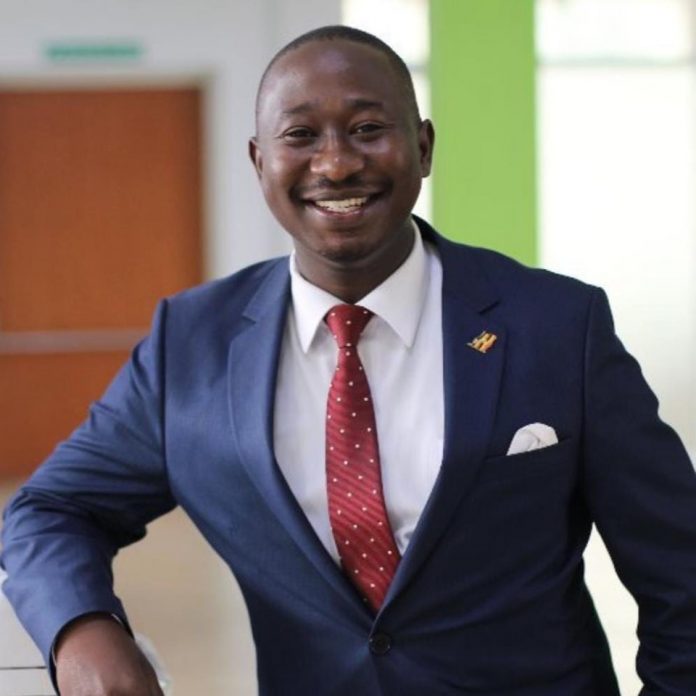
Mr. Leon Ssenyange

Police has announced that they have commenced investigation into the where about of former NTV sports Journalist Leon Ssenyange.

Mr Ssenyange who lately is a rally navigator is reported to have gone missing yesterday night.

According to Kampala Metropolitan police Spokesperson, Patrick Onyango, Mr. Ssenyange went missing after he reportedly went out to watch a match between FC Barcelona and Real Madrid.

“We have started investigating a case of disappearance of Mr. Leon Ssenyange a rally navigator. Mr. Ssenyange disappeared yesterday at around 10:30pm. His colleagues left him at Throne Hotel going to watch a match between Barcelona FC and Real Madrid FC.
We appeal to anybody with information about the disappearance of Mr. Ssenyange to pass it in confidence to the nearest police station or ring telephone number 0800122291 (toll free)” Mr. Onyango wrote.

Stories Continues after ad
Contested land isn’t Kirumira’s-Surveyors 

kirumira in shorts trying to defend himself


A team of surveyors hired from State House has revealed that the contested land in Muyenga which involves businessman Godfrey Kirumira and Mulago Hopital Surgeon, Dr. Ben Khingi isn’t Kirumiras.

The surveyors instead have blamed Kirumira of encroaching on the land which isn’t his and recommend that a wall constructed on the piece of land be erased down.

Kirumira and his neigbhours especially Dr. Khingi in the Muyenga suburb which is inhabited by the A class of Kampala has been at the centre of contention of the land which they claim is part of the public road drawing the involving of two army generals.

Both Mr Kirumira and Dr Khingi have been embroiled in the land dispute which resulted into a public face spat between Gen Elly Tumwine who doubles as Minister for Security and former Deputy Chief of Defence Forces Lt. Gen. Charles Angina as they intervened on opposing sides.

Gen Angina, the deputy coordinator of Operation Wealth Creation is a tenant to Dr Khingi on the property neighbouring Hotel International 2000, Muyenga owned by Mr Kirumira.

Stories Continues after ad
UIA announces partnership with Ugandans abroad to organise investment events in Kampala

UIA boss Byensi

The Ag Executive Director of Uganda Investment Authority (UIA), Lawrence Byensi, has announced Partnership with Ugandan Diaspora Network to organise the diaspora investment events in Kampala.

In the pipeline is the upcoming 9th Annual Ugandan Diaspora Business Breakfast scheduled for December 27, 2019 followed by what has become a signature Ugandan Diaspora Social Networking Gala on December 28, 2019. Both events will take place at the Kampala Serena Hotel.

Annually, UIA organises The Diaspora Home is Best Summit as one of the major efforts to inform the Ugandan Diaspora about the status of investment in the country and investment opportunities so that they can invest back home.

“The events will avail opportunities to discuss the status of a number of Government initiatives to make the investment and social environment more enabling for Ugandans in Diaspora to do business back home,” he said.

He added: “UIA appreciates our Partners, the Ugandan Diaspora Network, NBS TV that streams and shows the events live and all who are contributing to the events in one way or another. Without them this initiative would not be as successful.”

According to the World Bank 2018 Report on migration and remittances, Ugandans from the Diaspora globally remitted US$ 1.4 billion in 2017 with a decline to US$ 1.3 billion in 2018. The amounts translate to about five percent of Uganda’s GDP of US$ 27.9 billion as announced in last financial year’s Budget Speech.

This goes to how important Diaspora remittances are and UIA’s aim is to assist in channeling these into investment that should provide the remitters with high returns for their savings or money sent home. It is important to note that most of the money sent by Ugandans in the Diaspora goes directly into the households, thereby improving the population’s welfare and providing for cheaper funds to invest in productive activity.

Over years since 2004 we have witnessed Diaspora investment in varied sectors including agro processing, real estate development, renewable energy, commercial agriculture and services like education and health. It has been a joint effort with a number of stakeholders to promote and facilitate investment and UIA is grateful for the partnerships that have yielded positive results.

Together with the Ministry of Foreign Affairs, UNDP, Ministry of Internal Affairs, Bank of Uganda, Uganda Revenue Authority and many other stakeholders, UIA has participated in the development of the National Diaspora Policy, development of the Diaspora Bond and the Compendium on Business and Investment Opportunities which was published and disseminated. The compendium is due for review considering the many other investment opportunities that have come up in new sectors like the oil and gas, Fintech and other innovative

Stories Continues after ad

Sudan: AfDB approves US$60m loan to support Elnefeidi Group’s agricultural expansion

Elnefeidi Group Holding Company

The African Development Bank’s Board of Directors has approved a US$60 million loan to Elnefeidi Group Holding Company to help finance its long-term agriculture and food expansion programme.

The planned expansion includes increasing agricultural productivity, enhancing related infrastructure, food processing and distribution. It will directly contribute in developing Sudan’s livestock value chain (poultry and beef) by increasing the country’s export capacity for value-added livestock products. This will help reduce the economic value that the country loses by exporting millions of live animals each year.

“Agricultural transformation is one of the Bank’s top five strategic priorities and the Bank is delighted to have identified a viable private sector actor like Elnefeidi Group which has a proven track record and through which we can channel the Bank’s support” said Atsuko Toda, African Development Bank Director for Agriculture Finance and Rural Development.

The loan is expected to contribute significantly to food security, food import substitution, and household incomes by creating jobs and increasing local productivity and distribution by over half a million metric tonnes each year across several countries. Elnefeidi Group employs over 1,842 people and has distribution networks covering North, East and Central Africa.

“This approval to Elnefeidi Group is another demonstration of the African Development Bank’s continued support and strong commitment to enable, deepen, and empower the private sector in Sudan, as an engine of economic and inclusive growth,” said Raubil Durowoju, the Bank’s Country Manager for Sudan. “This is also consistent with Sudan’s National Agriculture Investment Plan, which seeks to achieve agriculture-linked growth, largely through private investments.”

Sudan is widely considered to hold immense food production potential. Sixty-three percent of its land area is classified as agricultural, and its competitive advantages include: a promising demographic profile, projected growth in household food demand, and proximity to a range of markets in Central Africa, North Africa and the Middle East, many of them food-deficit countries.

Stories Continues after ad
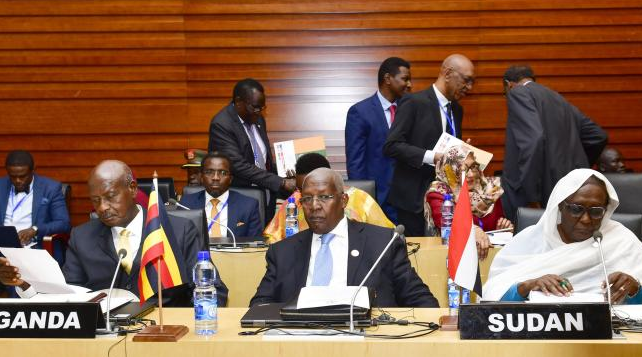
MPs ask Museveni to punish Gen. Tumwine over Lt. Gen. Angina humiliation

Gen. Tumwine

A group of Members of Parliament (MPs) have asked President Yoweri Museveni to reign on the minister for Security Gen. Elly Tumwine after he was last week captured in a video publicly humiliating Deputy Coordinator of Operation Wealth Creation, Lt. Gen. Charles Angina, also a former Deputy Chief of Defence Forces.

Gen. Tumwine humiliation of Angina in public came after the latter intervened in the land wrangle involving Kampala businessman and his neighbour in Muyenga, one of Kampala’s expensive places in terms of buying land.

MPs led by Elijah Okupa of Kasilo County aver that the manner in which Gen. Tumwine demeaned his fellow General Angina in public was uncalled for.

The MPs said it was high time Museveni who is the commander in Chief of the Armed Forces, took serious action on the conduct of Gen. Tumwine who they believe has gone beyond the limit.

However Lt Gen Pecos Kutesa said civilians should stop meddling into the affairs of the UPDF. However, Tumwine has in the past been complained about by fellow politicians as regards his discipline, with one minister recently labelling him a “bully”. Dokolo Woman MP Cecilia Ogwal recently accused him of attacking her with a pistol.

UPDF Spokesperson, Brig. Richard Karemire recently said the matter involving the two generals will be handled according to the UPDF method of operation.

Top politicians from across regions of Uganda were not happy that Tumwine humiliated Angina in public, accusing him of “abusing” the army.

Meanwhile after a meeting, Angina and Kirumira have reconciled.

Stories Continues after ad
Former works minister Monica Azuba hands over office

Eng. Monica handing over office documents to Gen. Wamala who is standing on her right

The newly appointed Senior Presidential Adviser, Eng. Monica Azuba Ntege, has handed over office to the new Minister of Works and Transport, Gen Edward Katumba Wamala who was elevated in the recent cabinet reshuffle. Wamala was formally State Minister for Transport.

During her leadership, the transport and works sector achieved key milestones including the revamping of Uganda Airlines and completion of major roads and others like the New Nile Bridge in Jinja. Ntege was appointed to the position in 2016.  One of the first tasks that she was handed, soon after taking the oath as the works and transport minister, was to evaluate how the government of Uganda is going to revive the defunct Uganda Airlines. The national airline was liquidated in 2001, after it was deemed unprofitable.

In his remarks, Gen. Wamala lauded Eng.  Azuba for diligently leading the sector and delivering on her mandate. “I want to pledge my total commitment, I am ready to work with the team to ensure that we deliver and take the sector to a higher level” he said.

Azuba was dropped alongside other former ministers like Eng. Irene Muloni, Charles Bakkabulindi, Erios Ida Nantaba and Abdul Nadduli

Stories Continues after ad
AG William Byaruhanga to face investigation over grabbing Nakasero Primary School land

Attorney General William Byaruhanga

The Prime Minister, Ruhakana Rugunda has informed Parliament that the government will probe circumstances under which the Attorney General, William Byaruhanga allegedly, through his company, acquired land which formerly belonged to Nakasero Primary School. Byaruhanga wants to sell the same land back to the government.

“Government is going to investigate these allegations. In the next sitting, the government will provide a preliminary report about this matter, we take allegations being made seriously especially ownership of the land,” he said yesterday while responding to MP Latiff Ssebaggala who warned that taxpayers are bound to lose billions if government proceeds to buy the land from Byaruhanga.

Sebaggala took to the floor of Parliament requesting both the Speaker Rebecca Kadaga and Rugunda to confront Byaruhanga, saying that officials from the Ministry of Finance were planning to award Byaruhanga’s Pine Investments Co, a contract to sale land for the construction of headquarters AfroExim Bank.

“We are likely to lose tax payer’s money, the land which they are putting pressure that Government buys was part of Nakasero Primary School land and it was taken under unclear circumstances and they are selling it back to Government,” Ssebaggala said.

MP Latif Ssebaggala petitioned Speaker

This comes amidst media reports that a whistleblower petitioned Speaker Rebecca Kadaga on grounds that Pine Investments Co, was being fronted to win the contract to sell three acres of land to the Ministry of Finance to construct headquarters of Afro Exim bank in Uganda.

This was after officials of Afro Exim Bank approached President Yoweri Museveni with a proposal to build a bank in Uganda, a proposal the president welcomed with a conditionality for the bank to establish its headquarters in Uganda.

Four companies are said to have expressed interest in selling land including; Pine Investments Co which offered 2.2 acres near Nakasero Primary School at $4 million (about Shs14.676 billion) per acre, Vara Enterprise offered 2.4 acres in Bugolobi with the company settling for $3.1 million (about Shs11.366 billion). SGL proposed three acres at Kololo Lugogo bypass at $2.7 million (about Shs 9.896 billion).

Kadaga asked the Prime Minister to assure the country that government won’t be duped into buying the land whose ownership is under contention.

“That is a serious allegation if it is true if the land being sold is actually government land at an exorbitant price and possibly involving a member of your cabinet cost. Can you undertake that nothing shall happen, that government will not be forced to buy that land before you come back to this house,” Kadaga said.

Stories Continues after ad