Stanbic Bank
Stanbic Bank
22.8 C
Kampala
Stanbic Bank
Stanbic Bank
Home Blog Page 1078

VP Ssekandi commissions Luyanzi Institute of Technology

Ssekandi commissioning building offices


Vice President Edward Kiwanuka Ssekandi has commissioned Luyanzi Institute of Technology and the Confucius classroom in Bweyogerere, Wakiso district where a number of vocational skills and technical skills are going to be taught to Ugandans in addition to teaching them Chinese lingual and culture.

The first intake will take up 500 Ugandan youth that will be drawn from across the country.

The ceremony is being attended by the state Minister for cooperatives Fred Gume, the deputy Chinese ambassador to Uganda, the head of Makerere University Confucius Institute among other.

Stories Continues after ad

Museveni holds thanksgiving at State House Entebbe, says Ugandans are intoxicated with religion

Museveni adrresing guests


President Yoweri Museveni and First Lady Janet Kataaha Museveni yesterday held the national thanksgiving service at State House Entebbe. The service was attended by politicians, ministers, diplomats, senior government officials and religious leaders and senior security officers among other guests invited.

Below is Museveni’s written statement posted on his Facebook Page on Saturday after hosting the event yesterday. He says Ugandans are intoxicated with religion though, he added there are those intoxicated with alcohol. Read full statement for more issues he addressed:

Choir entertaining guests

Yesterday we held the National Thanksgiving Service at State House Entebbe. Mama Janet Kataaha Museveni and I are honored to have graced this important event.

I thank the inter-religious council, religious leaders from the different denominations and everyone who was present both physically and spiritually as we continued to dedicate this country and thank God for the far he has brought us as a nation.

It is good to thank for the Bible says (In Luke 17:15-18): “And one of them, when he saw that he was healed returned, and with a loud voice glorified God, and fell down on his face at His feet, giving Him thanks. So Jesus answered and said: “Were there not ten cleansed? But where are the nine? Were there not any found who returned to give Glory to God?.

Security officers

We are that 10th lepper who returned to give thanks. This event gathered all the different religious groups, when I saw all of them here, I got the exact feeling that God is with us here, God loves this country.

I see that Ugandans are intoxicated with religion. Of course, there are those intoxicated with alcohol but there are also those intoxicated with religion, you see them shouting and jumping, very drunk on the Holy Spirit. In the Acts of the Apostles, when the Holy Spirit came, those people were acting the same. There is no harm in being intoxicated with the Holy Spirit because it is not comparable to anything in this world.

MTN-Uganda board chairman, Charles Mbiire was among the guests.

However, intoxication in religion should not end at intercession, prayer, and fasting, but should translate into development, just as God wants.

The big problem in Africa has been a spiritual problem. Africa is a rich continent that has lagged behind in development. Development is a biblical commandment if you are Christians. Other religions also teach about that.

In the book of Genesis, it is clear that man was created in God’s image hence we are not like other creatures, also in the same book, we are supposed to multiply and fill the earth (Ugandans do this very well and we have not so much argument here), but we must also establish dominion over nature, we must develop.

What Africa does is multiplying and filling the earth, the other of establishing dominion, we have not done. Africa has been asleep, that is why you find Europeans with just one season, producing much more than us who have two seasons.

Now, this is sleeping, Basoga call it Kulambaala, actually, there is also a village there (In Busoga, Iganga) called Lambaala.

Muslim clerics and leaders

I am glad that the National Resistance Movement has ensured to provide a favorable condition to support development. First we chose peace, by building a disciplined army. We were against the idea that a soldier should be mad and feared for it.

A soldier should be disciplined than ordinary people because the latter are not disciplined. In other parts of Africa, you find the UN guarding the people, then we said what sort of people are you that can not guard yourselves? We said we shall not let that happen, the UN will not guard Uganda. We established a resistance against the idea of a crazy army and a defense system that relies on foreign capacity.

On under development, we said let everyone go to school first, yes people are talking about many youths who are not employed but they are educated. Why are they educated? Because they have been educated. Now we have a new problem with educated children but some of them are learning things that are not relevant. But they are educated, which solves our initial problem, because prior, our children were neither educated nor employed. This is half the struggle.

Clerics

We also had the question of not producing, even those with land were not producing, everything was being imported. But now we are awakening people and you can hear farmers crying of too much maize, milk, and reduction of prices on different items. This is good, it is a bit of waking up. This waking up however means we should look for market in East Africa, Africa and beyond just in case everybody wakes up.

I congratulate those families that have woken up already to engage in Agriculture, industry, service, and ICT, I encourage them.


Stories Continues after ad

Commonwealth and United Nations sign new agreement

Officials ready to sign agreement document


Commonwealth Secretary-General Patricia Scotland and United Nations Deputy Secretary-General Amina Mohammed have formally committed their organisations to work more closely together.

The two leaders signed a Memorandum of Understanding today at the Commonwealth’s headquarters in Marlborough House, London. The document outlines how the two organisations will work together on pressing global issues such as governance and peace, sustainable development, inclusive growth, climate change, ending violence against women and girls and sports for development and peace.

In a joint statement, the Secretary-General of the Commonwealth and the Deputy Secretary-General of the United Nations said:

“The United Nations and Commonwealth have long shared a genuine relationship based on shared goals and values.

“We are today proud to enhance this friendship and take it to a new level which the delivery of the 2030 Agenda demands.

“As we turn to a new decade of action, the challenges we face in order to deliver on the world that we want by 2030 demand we address sustainable development, climate change, improving governance and promoting peace.”

The Commonwealth is committed to the delivery of the Sustainable Development Goals and has made particular progress on the goals of gender equality and tackling climate change.

Across the Commonwealth, gender parity is close to being achieved in primary schools. According to research undertaken by the Commonwealth Secretariat in 2018/2019, a girl is as likely to attend primary school as a boy, and in some Commonwealth countries, more likely to.

Working on tackling climate change and ocean conservation is also an area where the Commonwealth has had a significant influence. Last year, all 53 nations in the Commonwealth, covering one third of the world’s oceans, signed the Blue Charter a landmark agreement to actively co-operate on ocean governance. So far 12 nations have stepped up to lead action groups on areas such as marine pollution, ocean acidification and coral reef protection.

The agreement stresses that ‘prevention’ will underpin each of the collaborative areas and leaves the door open for additional areas of co-operation at a later date.


Stories Continues after ad

Global community renews commitment to the world’s poorest countries with $82b

World Bank President David Malpass


A global coalition of development partners announced today their commitment to maintain momentum in the fight against extreme poverty, with US $82 billion for the International Development Association (IDA), the World Bank’s fund for the poorest.

The financing, which includes more than US $53 billion for Africa, will help countries invest in the needs of their people, boost economic growth, and bolster resilience to climate shocks and natural disasters.

“Today’s commitment by our partners is a strong sign of their support for the urgent mission to end extreme poverty and promote shared prosperity in the poorest and most vulnerable countries,” said World Bank Group President David Malpass. We are grateful for their continued trust in IDA and its ability to deliver good development outcomes for people most in need.”

Two thirds of the world’s poor almost 500 million people now live in countries supported by IDA. The funding will allow IDA to reinforce its support to job creation and economic transformation, good governance, and accountable institutions. It will also help countries deal with the challenges posed by climate change, gender inequality, and situations of fragility, conflict, and violence, including in the Sahel, the Lake Chad region, and the Horn of Africa.

IDA will renew its support to facilitate growth and regional integration, including investments in quality infrastructure. The IDA Private Sector Window will continue enabling the International Finance Corporation (IFC) and the Multilateral Investment Guarantee Agency (MIGA) to mobilize private sector investment in challenging environments, a critical component to meet the scale of financing needed in developing countries.

IDA’s resources are replenished every three years; this 19th replenishment will cover the period from July 1, 2020, to June 30, 2023. The new funding will support projects that deliver life-changing results, including: Essential health, nutrition, and population services for up to 370 million people, Safe childbirth for up to 80 million women through provision of skilled health personnel, Enhanced access to broadband internet for 50 to 60 million people.

Immunizations for up to 140 million children, Better governance in up to 60 countries through improved statistical capacity and an additional 10 GW of renewable energy generation capacity.

To promote greater equity and economic growth, IDA will also tackle broader development challenges, such as enhancing debt sustainability and transparency; harnessing and adapting to transformative digital payment technology; promoting inclusion of those living with disabilities; strengthening the rule of law; and investing in human capital, including efforts to achieve universal health coverage.

Along with these priority areas, IDA will sharpen its focus on crisis preparedness, resilience building, and supporting countries in their national climate-related action plans.

The successful replenishment of IDA has been supported by contributions from 52 governments; additional countries are expected to pledge in the near term. It is also supported by repayments of outstanding IDA loans, contributions from the World Bank, and financing raised from the capital markets. This unique financial model enables IDA to achieve greater development impact than any other organization.

The International Development Association (IDA) is one of the largest sources of funding for fighting extreme poverty in the world’s poorest countries. IDA provides zero- or low-interest loans and grants to countries for projects and programs that boost economic growth, build resilience, and improve the lives of poor people around the world.

Since 1960, IDA has provided more than $391 billion for investments in 113 countries. As an institution of the World Bank Group, IDA combines global expertise with an exclusive focus on reducing poverty and boosting prosperity in the world’s poorest countries. Seventy-four countries, including low-income countries, small states, and island economies, are eligible to benefit from this replenishment package.


Stories Continues after ad

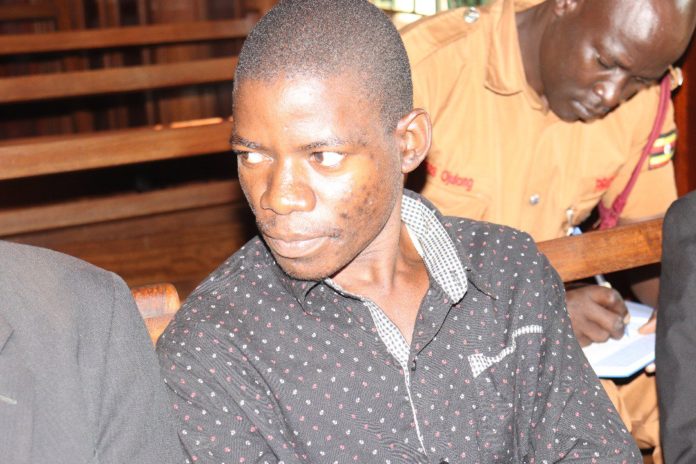
Security guard charged with defiling his 17-year-old sister-in-law


A 25-year-old security guard was on Friday charged with defiling his 17-year-old sister-in-law at his rented house in Kiambiu village in Eastleigh, Nairobi.

The guard, an employee of Hatari Security company, is accused of sexually assaulting the minor on December 8 after his wife left him with her siblings.

He is also facing charges of indecent act with a child.

The suspect is said to have taken advantage of his wife’s absence to commit the alleged offence.

The victim and her younger brother had been left in the house under the care of the suspect.

On the fateful day, the accused is said to have sent the minor to a nearby butchery and sent away her brother before she returned.

The victim returned only to find the brother-in-law home alone and he sent her to warm tea for him before he accosted her and dragged her to his bedroom where he reportedly committed the act in his matrimonial bed.

However, the victim’s younger brother returned and knocked on the door prompting the suspect to let go of the minor to let him in.

She later reported the suspect to his wife, her elder sister, who found her sitting outside the house dejected.

The matter was then reported to the police who launched an investigation before arresting the suspect.

He however denied the charges before Makadara senior principal magistrate Angelo Kithinji and was released on a bond of Sh500, 000.

Hearing of the case starts on April 15, 2020.


Stories Continues after ad

Free visas for all Africans as Nigeria opens up for more business

Nigerian entry visa

Despite earlier xenophobic attacks that transpired across South Africa earlier this year killing and injuring hundreds of foreigners and their businesses, most especially Nigerians, Nigeria refuses to allow such horrific events to set back the integration and progress of the Africa by going ahead and declaring free Visas on arrival for all visiting African nationalities in what can best be described as a ‘unifying endeavor.’

The Nigerian President, Muhammadu Buhari made the announcement in a conference before a statement was released on his official platforms, ‘Nigeria is committed to supporting the free movement of Africans within Africa. Yesterday at the Aswan Forum in Egypt I announced that, in January 2020, we will commence issuance of visas at the point of entry into Nigeria, to all persons holding passports of African countries.’

This declaration comes at a time when Nigeria is facing one of its longest social-economic crises and although it is considered a fast growing African super power with one of the strongest economies across the continent, it’s borders still remained closed off to all its neighbors despite pressure on President Buhari to lift the blockade who believes it will greatly reduce on the smuggling of imports and exports across the country’s borders.

It joins a number of African countries such as: Seychelles, Rwanda, Senegal, Benin and Ghana that have declared the open visa policy for all Africans. However 49% of the continent still remains under the visa policy. Buhari believes that such a gesture would definitely boost the tourism and make the country more appealing for foreign investors although he still refuses to announce when his border blockade will be lifted.

The move by Nigeria and a few other African to offer free visas to Africans countries will support the African Continental Free Trade Area (AfCFTA) outlined in the African Continental Free Trade Agreement among 54 of the 55 African Union nations.  The agreement initially requires members to remove tariffs from 90% of goods, allowing free access to commodities, goods, and services across the continent.

The United Nations Economic Commission for Africa estimates that the agreement will boost intra-African trade by 52 percent by 2022.

Stories Continues after ad

Union Supermarket opens at Kingdom Mall as Sudhir praises Museveni on investors

Businessman Sudir Rupaleria has commended the government and more so President Museveni for his continued support towards encouraging foreign investors to come and invest in Uganda.

Sudir was speaking while commissioning shopping union supermarket, established by Chinese investor at Kingdom Mall Kampala.

He noted this enterprise will serve all people in the country and it coming to Kingdom Mall Kampala is a big achievement in terms of attracting more business.

Chen xido zu, the proprietor of the shopping union supermarket, says the facility will serve not only Chinese people but all people from different continents.

She says, her main focus will be offering good and quality services to all kinds of people at affordable prices.

President Museveni has been at the forefront of attracting foreign investors to invest in Uganda given that the country still has untapped resources. The investors have in turn employed Ugandans and some also tap into the local resources for those in the manufacturing sector.

Stories Continues after ad

Kenya and Tanzania: Over 3 million people to benefit from African Development Bank’s €345 million road construction support

Roads are key for development

Over three million people in Tanzania and Kenya will benefit from a €345 million financing package for road construction support, approved by the African Development Bank on Thursday.

The Bank’s support for the Mombasa-Lunga Lunga/Horohoro and Tanga-Pangani-Bagamoyo roads Phase I, is in the form of African Development Bank and African Development Fund loans and represents 78.5% of the total €399.7 million project cost.  The European Union contributed a grant of €30 million, 7.7% of the total project cost, to the government of Kenya.

The road is a key component of the East African transport corridors network, connecting Kenya and Tanzania. Producers, manufacturers and traders will be able to move goods more quickly and cheaply. In addition, farmers and fishermen will benefit from improved access to local and regional markets and amenities, including better schools and health centres.

“The project will have spillover benefits for hinterland countries such as the Democratic Republic of the Congo, Burundi, Rwanda, Uganda and South Sudan that depend on Mombasa as gateway to global markets,” said Hussein Iman, the Bank’s Regional Sector Manager for infrastructure, private sector, and industrialization.

The Bank’s support will also provide roadside trading facilitates for sellers, half of them women who currently operate in disorganized and unsafe conditions.

The road crosses regions with high rates of youth unemployment. In light of this, the project includes a vocational training component for 500 unemployed youth (half of them women) to acquire marketable skill and improve their economic prospects.

The Bank anticipates that the intervention will boost regional integration by reducing transit times, facilitating trade and the cross-border movement of people, opening access to tourist attractions. The project will also link the ports of Dar es Salaam, Tanga and Mombasa, and stimulate the blue economy in coastal areas.

This first phase involves the construction of 175 km of road sections:  the 121 km Mkanga-Pangani road section in Tanzania and the 54 km Mombasa-Kilifi road section in Kenya.

The intervention is a priority item in the Bank’s Eastern Africa Regional Integration Strategy (EA-RISP), the Country Strategy Papers (CSPs) of both countries and aligns with two of the Bank’s High 5 priorities – Integrate Africa and Improve the quality of life for the people of Africa.

Regional integration is a priority for Kenya, and Tanzania. However, poor infrastructure has been a major constraint.

This week, the Bank witnessed the signing of a $440 million agreement between Japan International Cooperation Agency (JICA) and the government of Kenya for the first phase construction of a bridge connecting Mombasa island and Likoni, a major international port area of East Africa.

The Mombasa Gate Bridge will be the longest cable-stayed bridge in Africa, providing a critical link over the Indian Ocean along the just approved Mombasa – Lunga Lunga/Horohoro and Tanga – Pangani – Bagamoyo corridor phase I.

The total amount of co-financing is expected to be more than $ 1.2 billion when subsequent phases of the project are concluded – the largest co-financing agreement between the Bank and JICA.

“We are confident that we can all work together to accomplish this important task and other projects in the future,” Nnenna Nwabufo, the Bank’s Acting Director General for the East Africa Region, said at the signing.

As at the end of November 2019, the Bank’s portfolio in Kenya comprises 27 public and 7 private operations with a total commitment of 2.7 billion euros.

The Bank’s portfolio in Tanzania as at the end of November 2019 comprises 21 public and 2 private operations with a total commitment of 1.82 billion Euros.

Stories Continues after ad

Museveni receives his counterpart Mbasogo of Equatorial Guinea

President of Equatoria Guinea Mbasogo (Left) at Entebbe State House with President Museveni

President Yoweri Museveni hours ago received his counter-part President Teodoro Obiang Nguema Mbasogo of Equatorial Guinea who arrived in the country this afternoon on a three day official visit.

President Mbasogo’s visit comes shortly after United Nations High Commission for Refugees (UNHCR) welcomed Equatorial Guinea’s accession to the Kampala Convention on internally displaced people (IDPs), becoming the 29th African Union (AU) member state to do so according to the UNHCR.

The Kampala Convention is the world’s first and only regional legally binding instrument for the protection and assistance of IDPs, who often face heightened risks, violations and sexual violence because of their displacement, while they struggle to access their rights and basic protection.

Equatorial Guinea deposited its instrument of ratification of the Kampala Convention at the AU headquarters in Addis Ababa, Ethiopia in October this year. With this development, 29 of the AU’s 55 member states have now acceded to the Kampala Convention.

The move by Equatorial Guinea is particularly opportune as the Kampala Convention is marking its 10th anniversary this year with activities organized by the AU with support from UNHCR and other partners.

President Mbasogo who is the official AU champion of 2019 on finding solutions to forced displacement in Africa and will represent the AU at the Global Refugee Forum in Geneva had a tete-a-tete meeting with President Yoweri Museveni.

Tomorrow he will tour Kiryandongo Refugee Settlement center, Panyandoli Health Centre 111 and Panyandoli vocation school to have a first hand experience on how Uganda has successfully handled the refugee situation.

Over one million refugees have fled to Uganda in the last two and a half years, making Uganda the third largest refugee-hosting country in the world after Turkey and Pakistan1 , with 1.36 million refugees by June 2018.

Wars, violence and persecution in the Horn of Africa and Great Lakes Region were the main drivers of forced displacement into Uganda, led by South Sudan’s conflict, insecurity and ethnic violence in the Democratic Republic of the Congo (DRC) and political instability and human rights violations in Burundi.

Stories Continues after ad

Gen. Tumwiine scolds Lt. Gen. Angina, orders junior to stop abusing UPDF

Gen. Tumwine

The Minister of Security, Gen. Elly Tumwiine in a video clip circulating on the social media, has lashed-out to the deputy coordinator of Operation Wealth Creation (OWC), Lt. Gen. Charles Angina over his involvement in the recent Muyenga land wrangle where city tycoon who doubles as the chairman of Bagagga Kwagalana group, Godfrey Kirumira was wrestled by soldiers.

Few weeks back, Kirumira battled out Uganda Peoples Defence forces (UPDF) officers deployed by Lt. Gen. Angina to guard a one Dr. Ben Khing who was carrying out road expansion works in the neighbourhood.

kirumira in shorts trying to defend himself

It is said the construction work was being done on part of Kirumira’s land without his consent and guidance from Kampala capital city Authority (KCCA).

In civilian attire, Gen. Tumwine said he has land wrangles with a lot of people but he does not use the UPDF soldiers to beat and mistreat his nemeses.

“Don’t abuse our forces. We all have wrangles but we don’t use the force like this. We have worked to build the image of our force.  Have you heard?” Tumwine said.

He urged Angina to take proper measures and if there is a dispute on the land. He said KCCA should be left to enforce the law and not the army.

Stories Continues after ad