Stanbic Bank
Stanbic Bank
24.8 C
Kampala
Stanbic Bank
Stanbic Bank
Home Blog Page 1086

Female genital mutilation violates human rights- Mutuuzo

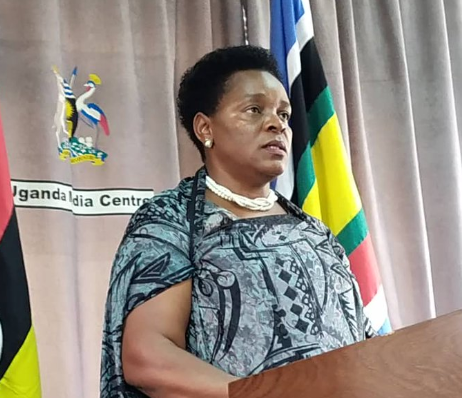
Peace Mutuuzo, state minister for Gender and Culture

Minister of State for Gender, Labour and Social Development, Peace Mutuuzo has said that Uganda is set to commemorate the International Day of Zero Tolerance for Female Genital Mutilation that is aimed at raising awareness among Ugandans about the dangers of this practice and to advocate for its total elimination.

Female genital mutilation (FGM) comprises all procedures that involve partial or total removal of the external female genitalia, or other injury to the female genital organs for non-medical reasons.

Globally, it is estimated that approximately 100 to 140 million girls and women have undergone some form of Genital Mutilation or cutting.  The practice is prevalent in 28 countries in Africa and some countries in Asia and the Middle East.

A disturbing trend of FGM surge was observed within a period of three -four months (Nov 2018 to Jan 2019) in Kapchorwa, Kween and Bukwo which resulted in an estimated 350girls and women being mutilated. This demonstrated the need for consistency and sustainability of interventions.

FMG is categories in four ways which include clitoridectomy and excision, both of them are practiced by the Sabiny in eastern Uganda. The others are infibulation or pharaonic commonly practiced by the Pokot and Mainly Genital elongation practiced by Bantu.

The practice is mostly carried out by traditional circumcisers, who often play other central roles in communities, such as attending childbirths. In many settings, health care providers perform FGM due to the erroneous belief that the procedure is safer when medicalized.

FGM is recognized internationally as a violation of the human rights of girls and women. It reflects deep-rooted inequality between the sexes, and constitutes an extreme form of discrimination against women. It is nearly always carried out on minors and is a violation of the rights of children.

The practice also violates a person’s rights to health, security and physical integrity, the right to be free from torture and cruel, inhuman or degrading treatment, and the right to life when the procedure results in death.

Since 2008, the Ministry of Gender, Labour and Social development (MGLSD) partnered with UNFPA and UNICEF to implement a Joint program to accelerate the abandonment of Female Genital Mutilation or cutting (FGM) in Uganda.

Legal and Policy framework is conducive and the following Laws and Policies are in place, namely: Prohibition of FGM Act 2010, The FGM Regulations 2013, Domestic Violence Act 2010 and its Regulations, National Policy and Action Plan on Elimination of Gender Based Violence (2016).

Stories Continues after ad

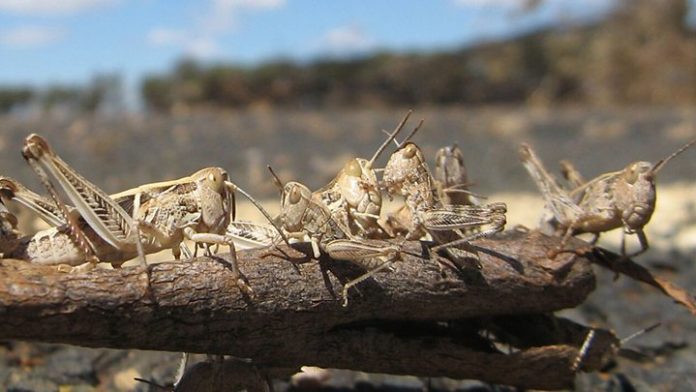
Gov’t releases Shs15 billion to fight locusts

Desert-Locust


A Shs15 billion budget has been set aside as contingency to fight the spread of locusts, Accountant General Lawrence Ssemakula has said.

Appearing before the Committee on Public Accounts-Central Government, Semakula said the funds are to be drawn from the Contingency Fund, just in case the destructive insects cross over from Kenya.

“This financial year, Parliament appropriated Shs62 billion for the Contingency Fund; they have so far released Shs32 billion; I can confirm that we have allocated Shs5 billion for the locusts,” said Semakula.

Together with senior officials from the Ministry of Finance, Semakula was led by Permanent Secretary in the Ministry and Secretary to the Treasury, Keith Muhakanizi.

Muhakanizi said releasing money for the locusts is to forearm Uganda as the roving pests are ravaging parts of North Eastern and Western Kenya.

Originating from Yemen all through to the coast of Somalia, scientists believe harsh environment and the conflict in Yemen have denied the government there an opportunity to marshal efforts to contain the insects.

Kenya is using aerial insecticide spray to fight the locusts with the invasion forcing President Uhuru Kenyatta to sack Agriculture Minister, Mwangi Kiunjuri, who has been criticised for making poor attempts to fight the insects.

Members of Parliament and the officials were also locked into an impasse after failing to agree on the definition of Uganda’s public debt.

MPs were keen to trap the technocrats into considering domestic arrears as public debt, an admission that could potentially place Uganda’s debt portfolio above the safe 50 per cent of the overall Gross Domestic Product (GDP), a trap Muhakanizi and his subordinates carefully sidestepped.

“Our national debt is at Shs44 trillion; if you add the arrears, the economy would be on a frying pan; the biggest disservice you can do to this country is to hide information from Parliament,” said MP Mathias Mpuuga (DP, Masaka Municipality).

Muhakanizi admitted to arrears being a hindrance to the growth of local companies, who supply government and have to endure long, painful waits to get paid.


Stories Continues after ad

Museveni steps up the fight against Coronavirus

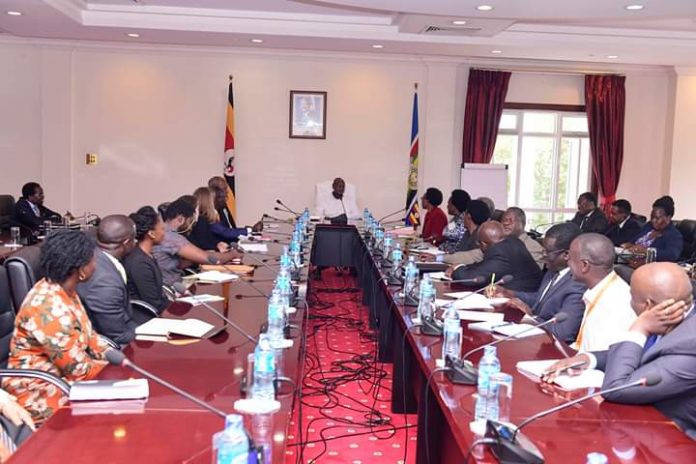
President Museveni meeting top government officials.

President Yoweri Museveni has directed the Ministry of Health to conduct an aggressive public awareness campaign as one of the measures of preventing and controlling the outbreak of Coronavirus.

President Museveni was meeting government officials to discuss contingency measures and Uganda’s preparedness to prevent coronavirus that is currently ravaging China and is spreading to other countries. They also discussed the impeding locust invasion threat that is currently ravaging the neighbouring Kenya.

“I now understand this disease. I’m going to write about it so that the public is sensitized on how to prevent it” he said.

On Monday World health organisation (WHO) reported that 17336 cases of acute respiratory disease were confirmed in 24 provinces, regions and cities and 21558 suspected cases in China. The virus has claimed 362 people.

Over 50 cases of coronavirus have also been confirmed in other countries in Europe and Asia. Progress as so far been registered with 505 cured cases. So far no case of novel coronavirus has been confirmed Uganda.

The deadly coronavirus outbreak that has spread from China causes severe acute respiratory infection and symptoms usually start with a fever, followed by a dry cough.

WHO is working closely with global experts, governments and partners to rapidly expand scientific knowledge on this new virus, to track the spread and virulence of the virus, and to provide advice to countries and individuals on measures to protect health and prevent the spread of this outbreak.

The Prime Minister informed the President that the Health Ministry working with its partners were already implementing preparedness activities, like screening of all travellers at Entebbe International Airport and doing risk Communication for public awareness for the general population.

Among the measures discuss to contain the virus include anti-inflammatory vaccine to reduce the body panic, antiviral, antibiotics, rehydration and increase of oxygen in the body as well as preventive measures such as washing of hands with soap and use of masks to prevent the spread of the disease.

Present Museveni also instructed the Ministry of Health to come up with a public awareness document that can be used to engage and educate the public.

He further advised that Ugandans currently in China should remain there since the government of China has already put mechanisms to contain and prevent the transmission of the disease.

Stories Continues after ad

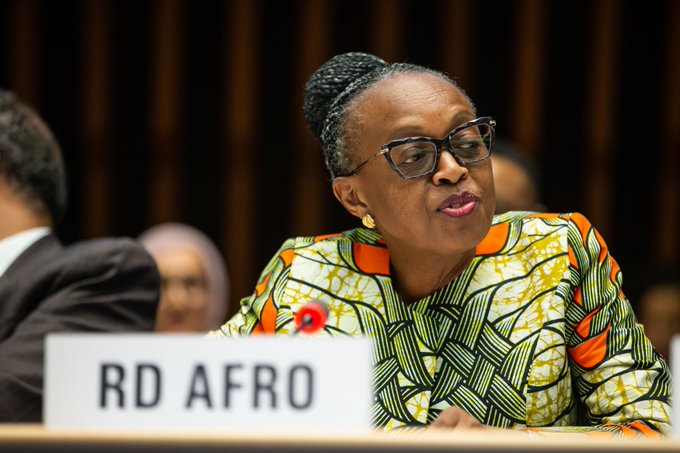
Dr Matshidiso Moeti re-elected as WHO Regional Director for Africa

Dr Matshidiso Moeti

The WHO Executive Board, currently holding its 146th session in Geneva, has re-appointed Dr Matshidiso Moeti for a second term as WHO Regional Director for Africa Re-election of the Regional Director for Africa

Speaking after voting exercise, Dr Matshidiso said “I am greatly honoured to have been appointed to serve a second term as the WHO Regional Director for Africa and I would like to thank you for the trust you have shown,” said Dr Moeti.

He said Africa is increasingly facing the double burden of diseases, the next five years in public health will be crucial in laying a strong foundation to reverse this burden.

Dr Moeti, who is from Botswana, said she will accelerate action towards attaining universal health coverage so that everyone can access care without financial hardship. Despite significant health challenges in the African region, which serves 47 countries, progress is being made in strengthening health systems, combating diseases and improving people’s health. Recent efforts by Member States include policies to tackle tobacco use, vaccines for cervical cancer and malaria prevention as well as joint initiatives to procure medicines affordably.

As the first woman WHO Regional Director for Africa, Dr Moeti was elected as WHO Regional Director for Africa on 1 February 2015. In 1999, she joined the WHO Regional Office for Africa, and has served as Deputy Regional Director, Assistant Regional Director, Director of Noncommunicable Diseases, WHO Representative for Malawi, Coordinator of the Inter-Country Support Team for the South and East African countries and Regional Advisor for HIV/AIDS.

Before joining WHO, Dr Moeti worked as Team Leader of the Africa and Middle East Desk in Geneva (1997–1999) with the Joint United Nations Programme on HIV/AIDS (UNAIDS). She also worked with the United Nations Children’s Fund (UNICEF) as Regional Health Advisor for East and Southern Africa; and with Botswana’s Ministry of Health as a clinician and public health specialist.

Dr Moeti holds a degree in medicine (and a master’s degree in public health from the Royal Free Hospital School of Medicine, University of London and the London School of Hygiene and Tropical Medicine, respectively.

She was awarded an Honorary Fellowship of the London School of Hygiene and Tropical Medicine and an Honorary Doctorate from the University of Health & Allied Sciences, Ghana.

Stories Continues after ad

WHO calls for stepping up cancer services in low and middle-income countries

Cancer Machine

The World Health Organization (WHO) today spelled out the need to step up cancer services in low and middle-income countries. WHO warns that, if current trends continue, the world will see a 60 per cent increase in cancer cases over the next two decades. The greatest increase in new cases will occur in low- and middle-income countries, where survival rates are currently lowest.

This is largely because these countries have had to focus limited health resources on combating infectious diseases and improving maternal and child health, while health services are not equipped to prevent, diagnose and treat cancers. In 2019, more than 90 per cent of high-income countries reported that comprehensive treatment services for cancer were available in the public health system compared to less than 15 per cent of low-income countries.

“This is a wake-up call to all of us to tackle the unacceptable inequalities between cancer services in rich and poor countries,” says Dr Ren Minghui, Assistant Director-General, Universal Health Coverage/ Communicable and Noncommunicable Diseases, World Health Organization. “If people have access to primary care and referral systems then cancer can be detected early, treated effectively and cured. Cancer should not be a death sentence for anyone, anywhere.”

Yet, progress in poorer countries is achievable. WHO and the International Agency for Research on Cancer (IARC) are releasing two coordinated reports on World Cancer Day (4 February), in response to government calls for more research into the scope and potential policies and programmes to improve cancer control.

“At least 7 million lives could be saved over the next decade, by identifying the most appropriate science for each country situation, by basing strong cancer responses on universal health coverage, and by mobilizing different stakeholders to work together”, said Dr Tedros Adhanom Ghebreyesus, Director-General, WHO.

WHO highlights a wide range of proven interventions to prevent new cancer cases? These include controlling tobacco use, vaccinating against hepatitis B to prevent liver cancer, eliminating cervical cancer by vaccinating against HPV, screening and treatment, implementing high-impact cancer management interventions that bring value for money and ensuring access to palliative care including pain relief.

“The past 50 years have seen tremendous advances in research on cancer prevention and treatment,” says Dr Elisabete Weiderpass, Director of IARC.

“Deaths from cancer have been reduced. High-income countries have adopted prevention, early diagnosis and screening programmes, which together with better treatment, have contributed to an estimated 20 per cent reduction in the probability of premature mortality between 2000 and 2015, but low-income countries only saw a reduction of 5 per cent. We need to see everyone benefitting equally.” Dr Elisabete said

The challenge will be for countries to select treatments balancing considerations including cost, feasibility and effectiveness. Each government is tasked with choosing the appropriate innovative cancer therapies, while recognizing that established treatments, many of which are very effective and affordable, can provide benefits for cancer without causing financial hardship.

Stories Continues after ad

Fast track implementation of copy right law- Kadaga

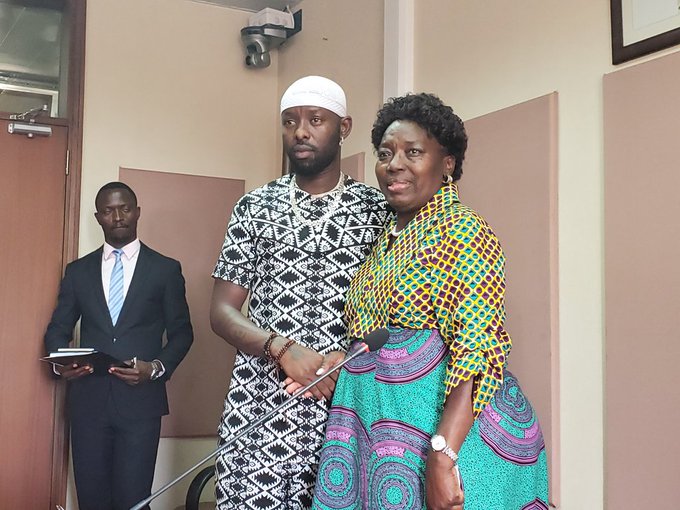
Eddy Kenzo with Speaker Kadaga

Speaker of Parliament, Rebecca Kadaga wants government to implement the copyright law to benefit musicians who she says do not substantially benefit from their work.

Kadaga, who was meeting Uganda’s international music star Edrisa Musuuza aka Eddy Kenzo, said she had asked the Attorney General to explain government’s delays in implementing section 82 of the Copyright and Neighboring Rights Law which caters for the work done by musicians.

“Two weeks ago, I asked the Attorney General to come to parliament to explain why section 82 of the copy right act has not been implemented, because it protects your work,” Kadaga said during the meeting on Monday 3, February  2020.

According to Section 82 of the Act, the Minister of Justice may, on the recommendation of the Registrar General and after consultation with the established collecting societies make regulations generally for the better carrying into effect of the provisions of the Act and to prescribe or provide for anything required or authorized to be prescribed or provided under the Act.

Kadaga said that despite its enactment in 2006, performing artists, designers and authors still witness high levels of piracy in their industry because of failure of the Minister to establish a collecting society.

Kenzo visited the Speaker to update her on progress in his music career.

Kadaga who confessed to be a fan of the artiste was thrilled on learning the magnitude of the work done by Kenzo in empowering children from slum areas or ghettos and promoting Uganda worldwide through his music.

“What you have done is a lot; thank you for showing the world that living in a ghetto doesn’t stop one from becoming productive,” she said.

She was however, concerned with the vast talent in the music industry which has gone untapped and proposed that government should consider a separate ministry in charge of the industry.  This she added she would henceforth be the advocate on behalf of musicians.

Musuuza said a separate ministry in charge of the music industry is likely to put to better use the many talented musicians whose work lies idle.

“My music is now playing in many countries; even people who do not know Luganda listen to it. Imagine if government grooms other Kenzos” said Musuuza.

He asked Kadaga to use her position to urge government to recognize artists, whose work has sold Uganda abroad, saying through his music many tourists have come to Uganda.

On the copy right law, Musuuza was glad that the speaker is fighting for its implementation saying that many musicians create songs but still remain poor. He observed that instead music users make more money from it than the originators.

“For me I get food from my music, I am able to fend for my family but not all musicians are, some only stop at entertaining you but have nothing,” he said.

Stories Continues after ad

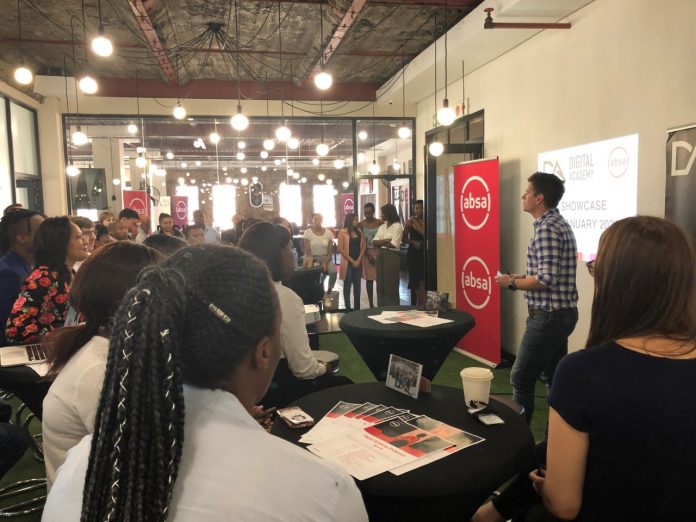
Absa group, Digital Academy showcase young tech talent

Absa bank group


Absa Group Limited and The Digital Academy have showcased solutions designed to solve everyday problems, developed by students at the academy.

A course in software development is offered as a collaboration between Absa and The Digital Academy.

Since the start of the initiative in 2015, The Digital Academy has trained 380 students, 196 of whom have been placed at Absa’s technology division as interns, contract workers or in permanent posts.

“Absa has collaborated with The Digital Academy for the last five years to build the talent pipeline in the local tech industry and within Absa. Through the academy’s six-month fast-track software development training course, run twice a year, 40 to 60 students are currently being upskilled every year,” said Thabo Mashaba, Head of the People Function for Engineering Services at Absa.

“The academy offers a unique approach to rapidly building the tech talent pipeline, while creating real career prospects and skills for young people who have the passion, but not the means to pursue tertiary training,” said Mashaba.

Statistics South Africa’s third quarter 2019 Labour Force Survey indicated that the percentage of people aged 15 to 44 years who were not in employment, education or training stood at 32.3 per cent.

“Through our collaboration with The Digital Academy, we are striving to build a much-needed pipeline of technology talent, both for Absa and the local economy,” said Mashaba.

“Currently, more than four in every ten young females are not in employment, education, or training,” which is why this collaboration with Absa is so important, said Gary Bannatyne, The Digital Academy founder.

The academy aims to bridge the technical knowledge gap between matric and work, and brings students up to speed with the latest technology being used in the rapidly changing environment.

“It bridges the gap between the technology theory that students are exposed to at school or other tertiary training courses, and the practical experience they need to succeed in a real-world working environment,” said Mashaba.


Stories Continues after ad

UPDF cleans Jinja town ahead of Tarehe sita celebrations

UPDF soldiers cleaning Jinja town

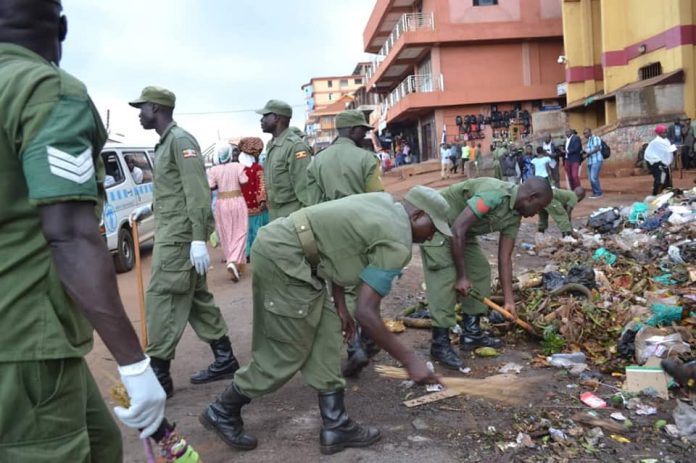
Uganda Peoples’ Defence Forces soldiers from Jinja Cantonment and Senior Command and Staff College Kimaka have conducted Civil Military activities in Jinja town by cleaning Jinja central market in preparation for the upcoming Tarehe Sita celebrations.

The soldiers who were led by the Commandant of Non Commissioned Officers Academy (NCOA) Col. Saad Katemba kicked off the activities by matching from Gadaffi barracks to Jinja town.

The Chief participant Col.Saad Katemba said that, civil military activities help UPDF to identify themselves with the people by giving back to them whatever is within the Army’s means as a token of appreciation.

“This is so because people are the foundation of UPDF and this stretches back in our history” Col. Katemba emphasized.

In his remarks, the RDC Jinja District Mr. Eric Sakwa said the day reflects the foundation of UPDF that is based on discipline and hard work which must be maintained He appreciated the cleaning of Jinja town and asked the leadership and residents of Jinja to emulate.

He implored soldiers to remain vigilant security wise and ready to deal with any one who tries to destabilize peace in Uganda.

The Deputy Mayor of Jinja municipality Ms.Medius Asiimwe lauded the Commander in Chief and the entire UPDF for championing peace in Uganda. She further said that the people of Jinja feel and love the presence of UPDF and pledged her full support.

Stories Continues after ad

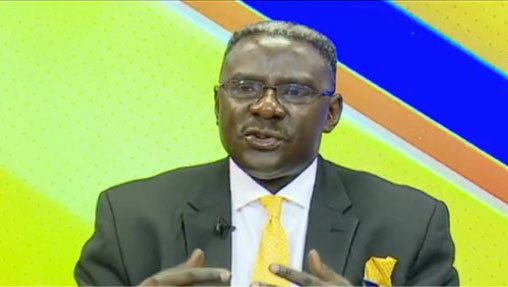
Coronavirus: Ambassador Mayega urges Ugandans to be vigilant

Amb. Mayega


Uganda’s deputy Ambassador to China, Henry Mayega, has said Chinese authorities have assured them of safety following the outbreak of coronavirus in China. The outbreak of coronavirus was confirmed in December last year.

Yesterday, World health organisation (WHO) reported that 17336 cases of acute respiratory disease were confirmed in 24 provinces, regions and cities and 21558 suspected cases in China. The virus has claimed 362 people.

Over 50 cases of coronavirus have also been confirmed in other countries in Europe and Asia. Progress as so far been registered with 505 cured cases. So far no case of novel coronavirus has been confirmed Uganda.

As the virus continue to bite, many countries have been seen airlifting their nationals back home as China continues to launch rapid action against the Wuhan virus.

Currently, Uganda has a total of 71 students in Wuhan, a province where the virus was first confirmed. He also said there is so much business between Uganda and China to a tune of 1 billion US dollars annually and if there is a stoppage due to the Coronavirus, we might get some issues.

The deputy head of mission however said there is nothing to worry since an agreement between Uganda and China for Ugandans to stay in China due to the safety precautions was laid out. “We believe the epidemic is going to be handled so that business goes back to normal.” He said.

As recommended by WHO, the ambassador urged Ugandans to avoid close contact with people suffering from acute respiratory infections, Frequent hand-washing, especially after direct contact with ill people or their environment and staying away from unprotected contact with farm or wild animals.

 “People with symptoms of acute respiratory infect practice cough etiquette of maintaining distance, cover coughs and sneezes with disposable tissues or clothing, and wash hands.” He said

Yesterday, The President of Uganda Yoweri Kaguta Museveni has commended the screening of all travelers for Ebola and Coronavirus at Entebbe Airport. These are some of the measures put in place by Ministry of Health with support from partners to ensure that the country is kept safe

The minister of health, Jane Ruth Aceng, has since urged the Ugandan business community travelling back from China to adhere to our strict rules of isolation too. She said the ministry will continue screening all travelers since the virus is spread to many other countries but travelers from China will be isolated for 14 days for follow up.

“Please let’s do this willingly to ensure our country is safe. I appeal to all of you to wash hands at all times and report any suspected cases to nearest health facility” she said.


Stories Continues after ad

Amisom sector commanders meet to discuss operations


Military commanders of the African Union Mission in Somalia (AMISOM) are meeting to discuss the planned reduction of AMISOM military personnel in line with recommendations by the UN Security Council.

The meeting held in Mogadishu sought to enable the AMISOM contingent commanders across the various sectors in Somalia, agree on operational matters ahead of a two-day Operations Coordination Committee (OCC) meeting that started yesterday, February 3, 2020.

AMISOM commanders, officials from the AMISOM troop-contributing countries (TCCs), international partners, and the Federal Government of Somalia (FGS) will attend the OCC meeting to discuss the security situation in Somalia.

AMISOM Force Commander, Lt. Gen. Tigabu Yilma Wondimhunegn, said the OCC would discuss the security situation in Somalia and realignment of planned operations with the revised Concept of Operations (CONOPs).

“The main agenda is the drawdown based on the UN Security Council Resolution of 2019, which states that we drawdown by another 1000; the general security situation and future operations, especially the rearrangement of the CONOPs 2020,” Lt. Gen. Tigabu stated.

Lt. Gen. Tigabu urged the AMISOM contingent commanders to develop strategies for future operations and agree to reduce personnel without jeopardizing the security gains so far.

Stories Continues after ad