Stanbic Bank
Stanbic Bank
28.3 C
Kampala
Stanbic Bank
Stanbic Bank
Home Blog Page 1091

Lux Afrique Boutique now offers international luxury brands a way into Africa

African fashion lovers

Lux Afrique Boutique (LAB) is the first luxury online shopping platform that offers its VIP clients an opportunity to purchase and take delivery of luxury goods anywhere in Africa.

Strong ambitions

Historically, luxury brands have traditionally been associated with developed nations, as a result of this, it became common practice for both Ultra High Net Worth (UHNW) & High Net Worth (HNW) markets of African nations to dominate well known international luxury retailers such as Harrods, Saks, Harvey Nicholls and other respected retailers. Subsequently with the growing trend of online buying, luxury retailers entered the same market.

For example, Net-A-Porter first made its appearance in the year 2000 and has now firmly solidified itself as one of the market leaders in Europe for online luxury brands. This too can be said for FarFetched, Lane Crawford in Asia Pacific, and Nordstrom for North & South America.

What remains to be explored is a market leader for the continent of Africa. This is where the expertise of Lux Afrique has a clear benefit and advantage to partnering brands.

Brands like Louis XIII, David Morris, Yoko London, Montegrappa, Boadicea, Stephen Webster are just a some of the brands already signed up to the shopping platform, with more joining on a daily basis. The online shopping platform offers its HNW clients across the African continent an opportunity to shop at the same prices as retail outlets in Paris, London or Milan from the comfort of their homes.

The growing world of luxury constantly draws in new consumers and in fact, according to a recent study published by Bain & Company the market is expected to grow by 5% in 2019. This growth is due in particular to the developing digital world, and to Generation Z, Millennials – who will represent around 55% of the market in 2025 and will contribute 130% growth during this period – and the increase in a new-found demand of customers in emerging countries.

Alexander Amosu, CEO of Lux Afrique Boutique states: “We already have great experience with the requirements of the African HNW market, a classic example is a client in Lagos, Nigeria going to an event in 48hrs and needing the perfect ensemble right through from cocktail dress, to matching shoes and accessories. As soon as she placed her order, LAB got it on a plane for our client to receive it the very next day. LAB offers a variety of logistic services, however in this case what was required was the pinnacle, being an expedited white glove delivery service. Essentially, African luxury consumers now have a company they can rely on to deliver all their favourite luxury brands to their homes or office anywhere on the continent.”

Trendy products

Luxury brands will continue to capture the imagination and set trends, even in an environment of dynamic financial conditions, typical of emerging markets. Additionally, the global luxury market is constantly looking to reach untapped markets, especially in Africa. LAB already offers a selection of luxury products that correspond to current trends and are aligned with the expectations of HNW customers. “LAB’s unique advantage is that Through its client base, it can support the growth of its luxury brand partners on the African continent in any market where they wish to strengthen their presence. With the rise of new forms of commerce linked to the digital economy, this is an opportunity for LAB and we are better placed to meet consumer demand in Africa,” Amosu adds.

Made in Africa

Lux Afrique Boutique is delighted to and will offer a selection of Africa’s most talented and respected designers as part of our ‘Made in Africa’ range.

Elegant and luxurious creations from across the continent will be featured on the online platform, side by side, with traditional western luxury creators.

Stories Continues after ad
Lionel Messi wins Ballon d’Or for record sixth time

MESSI

Barcelona forward Lionel Messi has won the Ballon d’Or award for the world’s best player for a record sixth time.

It is the 32-year-old Argentine’s first Ballon d’Or since 2015 and comes after he scored 54 times for club and country in 2018-19, in which Barca won La Liga.

Virgil van Dijk was second – one of four Liverpool players in the top seven, including Sadio Mane in fourth.

Juventus and Portugal forward Cristiano Ronaldo, who has won the award five times, was third in the voting.

England defender Lucy Bronze was beaten to the women’s award, finishing second behind Megan Rapinoe, who was Golden Ball winner as USA claimed a second successive World Cup in 2019.

Liverpool keeper Alisson won the inaugural Yashin Trophy for best goalkeeper, ahead of Barcelona’s Germany international Marc-Andre ter Stegen and Brazilian compatriot Ederson of Manchester City.

Defender Matthijs de Ligt took the Kopa Trophy, awarded to the best under-21 player and selected by former Ballon d’Or winners.

The 20-year-old, who joined Juventus this summer after helping Ajax reach the semi-finals of last season’s Champions League, beat Borussia Dortmund and England forward Jadon Sancho to the award.

Messi’s win means the Ballon d’Or award has been won by a player from Spain’s La Liga in each of the last 11 years, including last year’s winner Luka Modric, who broke the 10-year Messi-Ronaldo monopoly on the prize.

“Today is my sixth Ballon d’Or. It’s a completely different moment, lived with my family and my children,” Messi said.

“As my wife said, you must never stop dreaming but always work to improve and continue to enjoy. I am very lucky, I am blessed.

“I hope to continue for a long time. I realise that I am very lucky, even if, one day, retirement will ring. It will be difficult.

“But I still have beautiful years ahead of me. Time goes very quickly, so I want to enjoy football and my family.”

The Argentine forward recently notched up 700 appearances for Barca, during which time he has scored a phenomenal 614 goals while winning 34 trophies, including 10 La Liga and four Champions League titles, and a host of other records and awards.

What is the Ballon d’Or?

The Ballon d’Or has been awarded by France Football every year since 1956, with England’s Stanley Matthews the first winner.

It was only for European players until 1995, when it expanded to become open for any player at a European club. From 2007 it opened up to the rest of the world.

The 30-man list of nominees is compiled by the editorial staff of the French magazine, with the winner voted for by journalists from around the world, with one representative per nation.

From 2010 to 2015 it merged with Fifa’s awards, but they split and the world governing body set up its own awards again in 2016.

Stories Continues after ad
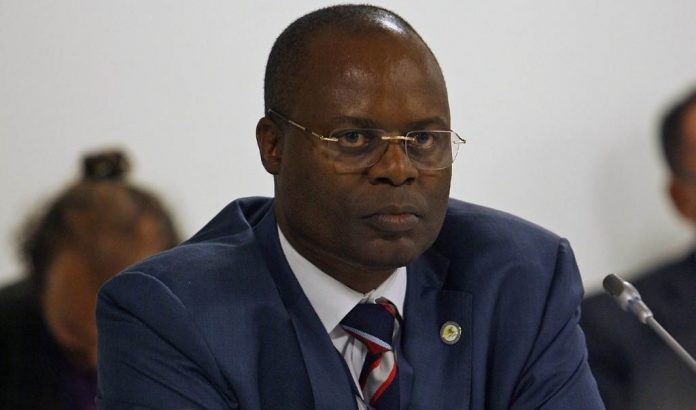
No institution or individual can stand on the sidelines in the fight against climate change

Kristalina Georgieva

By Kristalina Georgieva

When I think of the incredible challenges we must confront in the face of a changing climate, my mind focuses on young people. Eventually, they will be the ones either to enjoy the fruits or bear the burdens resulting from actions taken today.

I think of my 9-year-old granddaughter. By the time she turns 20, she may be witness to climate change so profound that it pushes an additional 100 million people into poverty. By the time she turns 40, 140 million may become climate migrants—people forced to flee homes that are no longer safe or able to provide them with livelihoods. And if she lives to be 90, the planet may be 3–4 degree hotter and barely livable.

Unless we act. We can avoid this bleak future, and we know what we have to do—reduce emissions, offset what cannot be reduced, and adapt to new climate realities. No individual or institution can stand on the sidelines.

Reality check

Our efforts to reduce greenhouse gas emissions through various mitigation measures—phasing out fossil fuels, increasing energy efficiency, adopting renewable energy sources, improving land use and agricultural practices—continue to move forward, but the pace is too slow. We have to scale up and accelerate the transition to a low-carbon economy. At the same time, we must recognize that climate change is already happening and affecting the lives of millions of people. There are more frequent and more severe weather-related events—more droughts, more floods, more heat waves, more storms.

Ready or not, we are entering an age of adaptation. And we need to be smart about it. Adaptation is not a defeat, but rather a defense against what is already happening. The right investments will deliver a “triple dividend” by averting future losses, spurring economic gains through innovation, and delivering social and environmental benefits to everyone, but particularly to those currently affected and most at risk. Updated building codes can ensure infrastructure and buildings are better able to withstand extreme events. Making agriculture more climate resilient means investing more money in research and development, which in turn opens the door to innovation, growth, and healthier communities.

The IMF is stepping up its efforts to deal with climate risk. Our mission is to help our members build stronger economies and improve people’s lives through sound monetary, fiscal, and structural policies. We consider climate change a systemic risk to the macroeconomy and one in which the IMF is deeply involved through its research and policy advice.

Mitigation plus adaptation

On the mitigation side of the equation, this means intensifying our work on carbon pricing and helping governments craft road maps as they navigate their way from brown economies dependent on carbon to green ones that strive to be carbon free. Carbon taxes are one of the most powerful and efficient tools at their disposal—the latest IMF analysis finds that large emitting countries need to introduce a carbon tax that rises quickly to $75 a ton in 2030, consistent with limiting global warming to 2°C or less. But carbon taxes must be implemented in a careful and growth-friendly fashion. The key is to retool the tax system in fair, creative, and efficient ways—not just add a new tax. A good example is Sweden, where low- and middle-income households received higher transfers and tax cuts to help offset higher energy costs following the introduction of a carbon tax.

This is a path others can follow, strategically directing part of the revenues that carbon taxes generate back to low-income households that can least afford to pay. With the revenues estimated at 1–3 percent of GDP, a portion could also go to support firms and households that choose green pathways.

While we continue to work to reduce carbon emissions, the increasing frequency of more extreme weather like hurricanes, droughts, and floods is affecting people all across the world. Countries already vulnerable to natural disasters suffer the most, not only in terms of immediate loss of life, but also in long-lasting economic effects. In some countries, total economic losses exceed 200 percent of GDP—as when Hurricane Maria struck Dominica in 2017.

Our emergency lending facilities are designed to provide speedy assistance to low-income countries hit by disasters. But the IMF also works across various fronts on the adaptation side to help countries address climate-related challenges and be able to price risk and provide incentives for investment, including in new technologies.

We support resilience-building strategies, particularly in highly vulnerable countries to help them prepare for and rebound from disasters. And we contribute to building capacity within governments through training and technical assistance to better manage disaster risks and responses.

We work with other organizations to increase the impact of our climate work. One of our most important partnerships is with the World Bank, in particular on Climate Change Policy Assessments. Together, we take stock of countries’ mitigation and adaption plans, risk management strategies, and financing and point to gaps where those countries need investment, policy changes, or help in building up their capacity to take the necessary action.

New frontiers

Moving forward, we must also be open to stepping in where and when our expertise can help, and there are other areas where we will be gearing up our work. For example, we will be working more closely with central banks, which, as guardians of both financial and price stability, are now adapting regulatory frameworks and practices to address the multifaceted risks posed by climate change.

Many central banks and other regulators are seeking ways to improve climate risk disclosure and classification standards, which will help financial institutions and investors better assess their climate-related exposures—and help regulators better gauge system-wide risks. The IMF is offering support by working with the Network of Central Banks and Supervisors for Greening the Financial System and other standard-setting bodies.

Central banks and regulators should also help banks, insurers, and nonfinancial firms assess their own exposures to climate risk and develop climate-related “stress tests.” Such tests can help identify the likely impact of a severe adverse climate-driven shock on the solvency of financial institutions and the stability of the financial system. The IMF will help push forward efforts around climate change stress testing, including through our own assessments of countries’ financial sectors and economies. Careful calibration of stress testing for climate change will be needed, because such testing requires assessing the effects of shocks or policy actions that may have little historical precedent.

All these efforts will help ensure that more money will flow into low-carbon, climate-resilient investments. The rapid increase of green bonds is a positive trend, but much more is required to secure our future. It is that simple: we all need to intensify our efforts to work together to exchange knowledge and ideas, to formulate and implement policies, and to finance the transition to the new climate economy. Our children and grandchildren are counting on us.

The Writer is the President of IMF

Stories Continues after ad

Bebe Cool gets Shs1.4b grant to combat Tuberculosis

Bebe Cool receiving grant document from partners

Singer Moses Ssali aka Bebe Cool has been granted Shs 1.4 billion (US$ 400,000) to find missing TB patients within the districts of Kampala, Jinja and Mbarara.

The 1.4 billion has been availed through his newly founded nonprofit organisation ‘The Amber Heart Foundation’ by Stop TB Partnership’s TB REACH initiative at a ceremony that took place in Ho Chi Mihn City, Vietnam. The TB REACH initiative is funded by the Government of Canada and the Bill and Melinda Gates Foundation.

According to Bebe Cool, the grant is a result of a vigorous application exercise that saw The Amber Heart Foundation triumph over 600 applications that had to be chosen from all over the world.

“This is a great boost to my charity efforts. For years I have been undertaking different charity works at my personal expense, it feels great when someone else recognizes such efforts and decides to chip in. This is a great boast for our health care system,” he said.

He said over 80,000 Ugandans die of Tuberculosis annually yet the disease is treatable in all government facilities moreover for free. It is also absurd that many of my fellow Ugandans do not know the symptoms of TB and never think to get screened or tested until it is too late and they have passed it on to their loved ones.

“The Amber Heart Foundation using this grant comes in to feel the gap of awareness and mobilization of people for testing and treatment,” he said.

Bebe Cool was last year appointed Uganda’s Tuberculosis Ambassador and he has been engaging in many charitable activities under Amber Heart Foundation and last year he donated over Shs 60 million from  his concert towards the treatment of children with heart defects.

Stories Continues after ad

School for Husbands and Future Husbands established in Burkina Faso

Waimbabie wanted to be present for the birth of their last child

Waimbabie Gnoumou is unlike any other husband; an athletically built 38-year-old farmer and polygamous father of eight, he helps both his wives with household tasks. This concept is unheard of in a region steeped in tradition, where the distribution of household responsibilities among women and men remains very unequal. Just a few years ago such a sight was nonexistent. But today in Mamboué, in the Houndé commune in western Burkina Faso, this small revolution can be described in three words: school for husbands.

Financed by the International Development Association through the Sahel Women’s Empowerment and Demographics Project (SWEDD), and implemented with technical support from the United Nations Population Fund (UNFPA), the school or club for husbands, composed of about 15 married men like Waimbadie, meets once a week. In this brick building, they discuss family life, guided by a facilitator.

Women’s rights, reproductive health, maternal health, family planning, hygiene–all these topics are addressed and explained with the goal of spurring behavior change among men in the village. The husbands’ club allows men to share their experiences, ask questions, and learn from each other so that they are no longer merely spectators, but instead contribute fully to promoting the well-being of mothers and children in a region where there were 747 cases of neonatal death in 2018 and where 95 women died during childbirth.

An innovative approach, bringing peace to couples and to the village

“The school for husbands creates an environment in which men can feel confident sharing with and learning from each other,” explained Ouanibaouiè Bondé, a female facilitator from the neighboring village of Boni. “Here, they can speak without fear of what people will say about subjects traditionally left to women, such as family planning, prenatal consultations, the need to give birth in a health center, and postnatal consultations. Convincing husbands that they have a role to play in these issues helps promote harmony among couples and families,” she added.

Waimbabie and his wife

Waimbabie Gnoumou believes this approach is bearing fruit. “Before the school for husbands was launched in the village, there was a lot of tension among members of my family. And when I drank too much millet beer, I argued with my wives,” he explained, with regret evident in his voice. “But that is now all in the past!”

Waimbabie Gnoumou is not the only one feeling the impact of the school for husbands. His wife, Martine, noted with delight and pride, “Now, my husband often brings me seasonings from the market for cooking. When I want to do the laundry, his eldest son goes with him to collect water from the creek. When I am pregnant, he goes to the health center with me for the weighings. On the day I gave birth, he was the one who drove me to the hospital and wanted to stay at my side during the birth. I was so happy on that day that I forgot about the pain from the contractions!”

The project is also targeting future husbands to prepare them to assume the responsibilities of married life. “I learned a lot about family life and reproductive health. When I get married, I will have many discussions with my wife about contraceptive methods and family planning,” vowed Sienimi Gnoumou, a young, 22-year-old farmer in Mamboué and a member of the future husbands’ club.

A long-term investment in human capital

For Dofinta Gnoumou, the Mamboué village chief and frequent arbitrator in marital disputes, “the launch of the school for husbands is a blessing. All the members of the husbands’ club have improved their behavior toward their wives and outreach is continuing in places of worship and bars in the village.” His wish is that other villages benefit from this initiative.

Since he joined the husbands’ school, Waimbabie has been fully involved in household chores

What the men in the village of Mamboué do not yet realize is that by accompanying their wives to prenatal consultations and helping them with household tasks, they are contributing to boosting the human capital of their families and the community. Studies show? a healthy woman who feels secure and supported by her husband will give birth to healthier children with sound cognitive development that will improve their likelihood of academic success.

Meanwhile, statistics from the Boni Health and Social Promotion Center (CSPS) in the Houndé health district are encouraging. The number of women using new contraceptive methods increased during the first quarter of 2019, and about 10 husbands attended prenatal consultations during the second trimester of the pregnancy, as well as the births.

Stories Continues after ad

‘America’s Got Talent’ producers release statement regarding Gabrielle Union

Mandatory Credit: Photo by Broadimage/Shutterstock (10418173k) Gabrielle Union 'America's Got Talent' TV show, Season 14, Live Show Final, Dolby Theater, Los Angeles, USA - 18 Sep 2019

The trio of producers behind America’s Got Talent—NBC, Fremantle and Simon Cowell’s Syco—have released a joint statement where they claimed to be working with Union to “hear more about her concerns” and act accordingly.

“We remain committed to ensuring a respectful workplace for all employees and take very seriously any questions about workplace culture,” the statement reads. “We are working with Ms. Union through her representatives to hear more about her concerns, following which we will take whatever next steps may be appropriate.”

Union has responded to their statement by retweeting another person who may have summed up her feelings towards what the producers of America’s Got Talent had to say.

Gabrielle Union has spoken up about the support she’s received following her firing from America’s Got Talent. “So many tears, so much gratitude. THANK YOU,” she wrote on Twitter. “Just when you feel lost, adrift, alone… You got me up off the ground. Humbled and thankful, forever.”

Additionally, further details about the toxic work environment on the show have begun to surface via Vulture. Simon Cowell reportedly labeled Union “difficult” during her time on the show, and he repeatedly refused to stop smoking indoors around her even though she is allergic to cigarette smoke. Sources close to the situation suggested that an NBC executive and production staff all told her no one could stop him from smoking.

Union also allegedly felt as though producers were trying to get her to side with a white dance group from Texas over a black 10-year-old rapper, who was enthusiastically embraced by the audience when he performed. She was so frustrated that she went outside to get some air, and when she came back she was told that Cowell was angry that she had left.

Sources added that Cowell told Union if the 10-year-old rapper, Dylan Gilmer, was important to her then he would be willing to keep him around. Other sources painted him as being hostile and aggressive upon delivering this message, and Union was not happy with the situation as a whole. She was later pushed to have a meeting with Cowell at his home last year, but it is not clear how it went.

It was originally thought that America’s Got Talent judges Gabrielle Union and Julianne Hough amicably parted ways from the reality show, but a new report from Variety details a toxic work environment behind the scenes.

After guest judge Jay Leno made a joke about what Asians eat. Gazing upon a picture of executive producer Simon Cowell with his dogs, Leno reportedly said the dogs looked like something you’d find “on the menu at a Korean restaurant,” Variety reports. Union reportedly spoke up against the racist joke and asked for the incident to be reported to human resources. Although the joke never aired, it was also never reported to human resources, just one example of racist insensitivities on set.

Union and Hough both reportedly were given various notes about their physical appearance while working on the reality talent competition. Union was also reportedly told multiple times that her hairstyles were “too black” for the America’s Got Talent audience, while Hough was critiqued often on her hair, makeup and outfits.

Hough has denied the allegations. “I had a wonderful time on America’s Got Talent, I loved working with the cast, crew and producers. I am happy to continue my working relationship with NBC,” she said. Union has not offered any comment as of yet, but sources at NBC told gossip website LoveBScott that she was fired directly as a result of speaking out about “problematic situations.”

“America’s Got Talent has a long history of inclusivity and diversity in both our talent and the acts championed by the show,” NBC and Fremantle, a production company, told USA TODAY in a statement regarding the allegations. “The judging and host line-up has been regularly refreshed over the years and that is one of the reasons for AGT’s enduring popularity. NBC and the producers take any issues on set seriously.”

AGT has yet to name replacements for Union and Hough.

Stories Continues after ad

KCCA ED Andrew Kitaka in trouble over Shs1b fuel scam

Former KCCA Acting ED Eng. Andrew Kitaka

A whistleblower, names withheld, has petitioned Members of Parliament to investigate circumstances under which Shs1 billion meant to purchase fuel for Kampala Capital City Authority (KCCA) was instead allegedly swindled by KCCA’s Acting Executive Director Eng. Andrew Kitaka in convince with other officials.

The whistleblower alleges in a letter date November 30, 2019 that Kitaka and two other KCCA officials connived with the Managing Director of Total Uganda to fleece the taxpayers of the money in the fake fuel deal.

“A theft racket involving Engineer Andrew Kitaka the Acting Executive Director KCCA, Richard Lule the Director Administration and Human Resource; and George Opio, the Deputy Director Human Resource have stolen KCCA/Tax payer’s money to the tone of over Shs1 billion worth of fuel in alliance with the Managing Director of Total Uganda James Obi. They used fake/concocted Invoices against fuel that was never taken by KCCA vehicles/ drivers,” the whistleblower said.

To…confuse the unsuspecting members of the public, the whistleblower says a one George Opio was sent on forced leave over this scam. “But the two people in the same theft racket cannot take appropriate action with regards to this theft,” the whistleblower says.

“The purpose of this letter is to request you to cause the relevant organs to investigate this theft and bring the thieves to book,” he says.

The whistleblower has copied his letter to Mr. Erias Lukwago, Lord Mayor, IGG, Lt. Col. Edith Nakalema, State House Anti-Corruption Unit and all the media houses in Uganda.

Days ago, seven people identifying themselves as ‘taxpayers and concerned citizens’ wrote to Kitaka to vacate office citing the expiry of his acting tenure he holds after the former ED Jennifer Musisi Semakula resigned in mid-December  2018.

In their November 21, 2019 notice, the applicants say Kitaka has continued to execute the duties of executive director for the past eleven months in acting capacity contrary to Public Service Standing Orders, which provides for only six months.

It states that “An appointment on acting basis is expected to last not more than six months, and is subject to direction by the appointing authority. Any period of acting appointment beyond six months will be null and void and the officer holding such an appointment shall automatically revert to his or her substantive post, unless the appointing authority extends the appointment for another period of six months, but shall not exceed 12 months in total. This arrangement will only apply when a statutory office is temporarily vacated.”

They also refer to Section 17 of the KCCA Act of 2010, which provides for the appointment of the executive director and mandate, which includes execution of duties of the authority and at the same time being the accounting officer. They contend that the responsibilities are enormous, arguing that one is likely to cause loss to the authority as well as the taxpayers once they execute the roles in an acting capacity.

“We further notify you that acting appointments as done in public service do not apply indefinitely and any such act is illegal and unlawful,” reads the notice in part.

“Provide an inventory of all contracts, expenditures and any related activities done in your ‘acting’ capacity”, the notice reads.

Recently, KCCA councillors chased Kitaka from a council meeting, citing a letter written by the chairperson of the Public Service Commission, Justice Ralph Ochan reminding minister of Kampala Beti Kamya that Kitaka’s tenure in ‘acting’ capacity had ended and it would most likely be challenged in court.

Stories Continues after ad

Tycoon Wavamuno earmarks Shs1b for new television channel

Businessman Gordon Wavamunno

The founder of the defunct Wavah Broadcasting Services (WBS), Gordon Wavamunno, has put a side Shs1billion for setting up a new television station in Uganda.

In 2016, Uganda Revenue Authority (URA) placed a local television station, WBS under receivership over Shs7.2b tax arrears. This process was to ensure that the tax arrears are paid. The station later on December 14, 2016 ceased to operate as a public broadcaster.

The TV was reportedly sold off to Kwese Sports, a continental sports TV owned by Zimbabwean businessman, Strive Masiyiwa and it was renamed ‘Kwese Sports’.

Speaking over the weekend, Wavamunno said he is also setting up a museum where almost everything that WBS TV used when it first went on air. They include; studio equipment, cameras, office furniture, the accolades and all the shows that aired on WBS.

The museum will also have a collection of things about the man Wavamunno himself; his journey in business, culture and family among others.

Stories Continues after ad

Ruparelia Foundation to launch groundbreaking ceremony for building toilets in Kamwokya

Ascot Goat Races raised fund for the construction of sanitary facilites

The Royal Ascot Races and Ruparelia Foundation will this Friday carry out a groundbreaking ceremony for the construction of toilets and other sanitary facilities in Kamwokya slums, a Kampala city suburb.

The toilets and related facilities will be built at the Good Samaritan Primary School in Kamwokya and are expected to improve the sanitation in the area.

The Ruparelia Foundation is supporting Good Samaritan Primary School through the Ghetto Research Lab to keep the environment clean and create employment opportunities.

This year, the annual Royal Ascot Goat aces took place on October 12, 2019, at Speke Resort in Munyonyo, attracting some of the biggest names in the country. The event was attended by Deputy Speaker of Parliament Jacob Oulanyah, diplomats, politicians, businessmen and socialites like Judith Heard.

Ruparelia Foundation’s Rajiv Ruparelia, also the organisers of the event, said the goat races is a place where people can come and network and mix along with business, pleasure and have a fun humorous time with good food and drinks all day long.

Tickets for the general public ranged from Shs25000 –Shs3000 for kids aged 8-10 years and for those who booked early pay. While Shs50000 is charged at the gate. VIP tickets went for Shs350, 000 for those who booked early while Shs400, 000 was charged at the gate.

The proceeds from the Royal Ascot Races are used to help communities meet their needs like sanitation facilities.

The Royal Ascot Races is part of the social corporate responsibility of the Ruparelia Group and Ruparelia Foundation. Cash collections from the event in 2018 funded Totos Tag Rugby and Outreach programme benefiting. Under the programme 250 children were supported to train at the Kyadondo Rugby Club.

Uganda Breweries Limited Tusker Malt were the main sponsor with Robbialac, NTV, Goldstar Insurance Company, Sanyu FM and Speke Resort Munyonyo, Ruparelia Foundation being the other sponsors.

Stories Continues after ad

Payment acceptance at an inflection point of growth in Africa – new report

Tools of new payment systems

Network International the leading enabler of digital commerce across the Middle East and Africa, has published research highlighting the key trends putting Payment Acceptance at an inflection point of growth in Africa. The report further builds on its findings by outlining strategic opportunities for banks in the region.

The White Paper – Payment Acceptance in Africa – has been produced as part of Network International’s work in supporting financial inclusion. The pace of growth in the adoption of digital payments and bank accounts provides financial services providers with brand new opportunities to roll out new fintech solutions, credit facilities for SMEs and retail banking services to the world’s fast-growing ‘banked’ population.

The report details the broad pillars of growth across bank accounts (now held by 41% of adults), Point of Sale devices (up 26% per annum) and transactions per card (up 61% per annum) according to Network’s research of nine African markets. The report also highlights the untapped opportunity, with transactions currently concentrated on the travel and entertainment sector and within major cities.

Commenting on the scale of opportunity, Andrew Key, Managing Director – Africa, Network International, said: “The Network International White Paper shows that the amount of money processed through Point of Sale devices environments remains only 5% of GDP in Africa, compared to over 30% in some countries. Closing this gap offers Africa significant economic development potential. Our research also shows a growing untapped opportunity through the rapidly increasing bankability of Africa’s population stemming partly from the region’s digitally engaged customer base and fintech-hungry businesses, in addition to falling hardware costs, sophisticated pricing and more flexible technologies.”

The  report indicates that Africa’s banking sector is now at a crossroads – a moment in history where financial services has an opportunity to transform how they interact with the unbanked population, how they engage with SMEs and how they can support small-scale businesses in high-employment sectors like agriculture where there are enormous opportunities.

The research paper suggests multiple opportunities for the banking sector, including:

Transforming the profitability of Payment Acceptance through lower costs, new revenue lines and greater scale.

Creating a ‘halo effect’ on the issuing side of the business by creating more usage opportunities and the potential to drive customer loyalty as more merchants equate to more opportunities for the use of issuing products, boosting transaction-driven revenue

Feeding the flow of liabilities and hard currency to a bank.

Transforming how personal customers transact with their bank and encouraging a deeper engagement with a bank’s brand.

Supporting the growth of efficient lending to both companies and individuals.

Creating a new delivery channel through flexible technology enabling additional services.

Stories Continues after ad