Stanbic Bank
Stanbic Bank
19.9 C
Kampala
Stanbic Bank
Stanbic Bank
Home Blog Page 1096

Most workers in the world still go without social protection

Workers

With informality affecting 61 percent of the world’s employed population, it is crucial to secure the livelihoods of workers and families who rely on the informal economy, according to Tackling vulnerability in the informal economy.

The joint report by the Development Centre of the Organisation for Economic Co-operation and Development (OECD) and the International Labour Organisation (ILO) examines the diverse reality and multiple faces of informality, based on a large sample of countries representing various conditions, locations and stages of development.

It uses recent ILO individual-based indicators of informality, available for 119 developing and developed countries, and the new OECD Key Indicators of Informality based on Individuals and their Household (KIIbIH), available for 27 emerging and developing countries.

The report finds that informality occurs in all types of employment and globally affects more than 4 in 5 own-account workers, 1 in 2 employers, 2 in 5 employees and all contributing family workers. The agriculture and industry sectors are the most exposed: nearly 94 percent of agriculture workers and 57 percent of industry workers are informal.

Furthermore, informality represents 70 percent of all employment in developing and emerging economies, compared with about 18 percent in developed countries. Globally, 81 percent of all enterprises are informal. While globally, informal employment is a greater source of employment for men, in a small majority of countries (55 percent), the share of women is higher.

The level of informal employment also varies substantially over the lifecycle, with youth and older workers more exposed. Informal employment absorbs less-educated workers: globally, about 94 percent of workers with no education are in informal employment, compared with 52 percent of those with secondary education and 24 percent of those with tertiary education.

The report, which for the first time adds a household dimension to the profiling of informal workers, shows that working individuals within households may be informally or formally employed.

A majority of households are completely informal (all working members in informal employment) in most countries for which data are available. The share of completely informal households also varies greatly across countries and regions, from 3 percent in Chile to 92 percent in Burkina Faso.

A large number of children and older individuals are indirectly exposed to informality: on average among the 27 countries covered, around 60 percent of all children (under age 15) and older individuals (over age 60) in developing and emerging economies live in completely informal households. The figure is 80 percent or above in some African countries.

The report shows that contrary to common belief, informal workers and firms contribute somewhat to tax collection efforts both directly, through indirect taxes and presumptive taxes, and indirectly, through the links between formal and informal outputs.

Furthermore, the informal economy also contributes to economic growth in several direct and indirect ways that go unrecognised, including the systematic transfer of hidden subsidies to the formal economy. Recent estimates point to a large contribution by the informal sector to GDP: as high as 30 percent with agriculture and 17 percent without agriculture.

The goal of universal social protection can only be reached if it is effectively extended to workers in the informal economy. This requires expanding both social insurance, which relies on employment-related contributions and thus may not reach the poorest, and social assistance, which targets the poor but relies on scarce public finance.

Ensuring that both social insurance and social assistance are designed and implemented in a gender-responsive way is indispensable to promote gender equality and achieve universal social protection. po


Stories Continues after ad

First HIV-positive ‘sperm bank’ launched to ‘break the stigma’ around the disease

Sperm cells

The world’s first sperm bank has launched for HIV-positive people in an effort to reduce the disease stigma.

Sperm Positive has begun with three male donors from across New Zealand  who are living with HIV but cannot pass the virus on.

Their medication ensures they have an undetectable viral load, meaning the amount of virus in their blood is low.

Although it doesn’t mean the patient is cured, there is no possibility they can transmit the virus to a sexual partner or child.

Sperm Positive is not operating as a fertility clinic at this time, but said it will put two agreed parties in contact with a fertility clinic if needs be.

Damien Rule-Neal is one of the first to donate to SpermPositive. He was diagnosed with HIV in 1999 but was confirmed undetectable after starting treatment some 18 years ago.

He said there was still a lack of education among the public in New Zealand about what an undetectable status meant, and that he had experienced stigma about living with HIV in both his work and personal life.

‘I have many friends who are also living with HIV who’ve gone on to have children,’ the married man said.

‘Being able to help others on their journey is so rewarding, but I also want to show the world that life doesn’t stop post-diagnosis and help to remove the stigma.’

The online sperm bank said it will be made clear to people looking for a donor that they have HIV but are on effective treatment and so cannot pass the virus on.

The initiative, created by the New Zealand Aids Foundation, Positive Women Inc and Body Positive, hopes to educate people in New Zealand about HIV transmission.

Dr Mark Thomas, an infectious diseases doctor and Auckland University associate professor, said he had seen changes in public opinion after working with those diagnosed with HIV for more than 30 years.

He said: ‘I’m glad to say that in this time there have been great changes in public understanding of HIV, but many people living with HIV still suffer from stigma.

‘Stigma can lead to inconsistent taking of medicines, and result in much less effective treatment of HIV, and risk of transmitting HIV.

‘Fear of stigma and discrimination can stop people at risk from getting tested, and those living with HIV from accessing treatment and support.’

As well as informing the public, the online clinic aims to give people diagnosed with the virus the opportunity to create life and to raise awareness that fertility services are available for them.

The online bank, initiated by the New Zealand AIDS Foundation (NZAF), Positive Women Inc and Body Positive, was launched ahead of World Aids Day 2019, on December 1.

HIV is spread by certain body fluids, including blood, semen, vaginal fluids, and breast milk.

The chance of any HIV-positive person with an undetectable viral load transmitting the virus to a sexual partner is scientifically equivalent to zero, scientists have confirmed.

However, criteria to donate sperm includes having a screening for medical conditions, including sexually transmitted infections (STIs), for example HIV.

The drugs that suppress HIV and protect HIV-negative people from getting it

  1. Drugs for HIV-positive people 

It suppresses their viral load so the virus is untransmittable

In 1996, anti-retroviral therapy (ART) was discovered.

The drug, a triple combination, turned HIV from a fatal diagnosis to a manageable chronic condition.

It suppresses the virus, preventing it from developing into AIDS (Acquired Immunodeficiency Syndrome), which makes the body unable to withstand infections.

After six months of religiously taking the daily pill, it suppresses the virus to such an extent that it’s undetectable.

And once a person’s viral load is undetectable, they cannot transmit HIV to anyone else, according to scores of studies including a decade-long study by the National Institutes of Health.

Public health bodies around the world now acknowledge that U=U (undetectable equals untransmittable).

  1. Drugs for HIV-negative people 

It is 99% effective at preventing HIV

PrEP (pre-exposure prophylaxis) became available in 2012.

This pill works like ‘the pill’ – it is taken daily and is 99 percent effective at preventing HIV infection (more effective than the contraceptive pill is at preventing pregnancy).

It consists of two medicines (tenofovir dosproxil fumarate and emtricitabine). Those medicines can mount an immediate attack on any trace of HIV that enters the person’s bloodstream, before it is able to spread throughout the body.

Stories Continues after ad

UNBS revises procedures to ensure faster clearance of imported goods

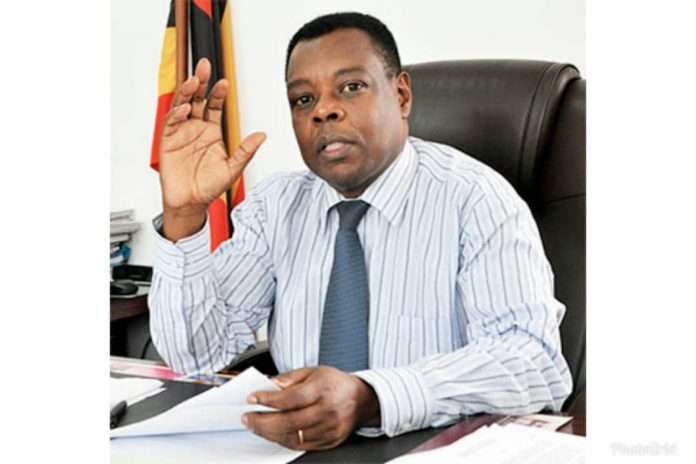
Dr. Ben Manyindo

Importers whose goods have been inspected in the country of origin are now assured of faster clearance, following the revision of the Uganda National Bureau of Standards (UNBS) Imports Clearance Procedures.

Under the new procedures all goods with valid Certificates of Conformity (CoCs) for general goods and Certificate of Road Worthiness (CRW) for motor vehicles will be cleared automatically without subjecting them to further assessment from UNBS Inspectors.

While launching the New Clearance Procedures, UNBS Executive Director, Dr. Ben Manyindo, said, ““The new procedures have been designed as trade facilitation measure to guarantee faster clearance of goods that comply with the requirements of Imports Inspection and Clearance Regulation, 2018.”

The Imports Inspection and Clearance Regulation, 2018 requires that all goods covered by compulsory standards must be inspected in the country of origin before they are allowed on the market in what is known as Pre-Export Verification of Conformity (PVoC).

The new clearance procedure is a result of integrating data generated by UNBS appointed PVoC Service providers from all over the world with the National Electronic Single Window (ESW) and ACYUDA World. The development of an integrated system was supported by Trade Mark East Africa.

It means that for each customs declaration logged into the imports clearance system on arrival, the ESW will validate the COC/CRW data and effect immediate release thereby reducing the time taken to clear the goods.

“The approach will ensure that compliant importers get faster clearance leaving our inspectors to concentrate on importers whose goods have not been inspected in the country of origin,” Dr. Manyindo said.

Goods that have not been inspected attract a penalty of 15% Cost Insurance Freight (CIF), payment of destination inspection fees and Testing. UNBS inspectors often retain such goods until tests have been carried out and results obtained.

UNBS has now embarked on raising awareness among traders about the automatic clearance process which is expected ensure faster clearance of goods and reduce the cost of doing business.

Stories Continues after ad

CSBAG ED Julius Mukunda joins World Bank CSO Working Group

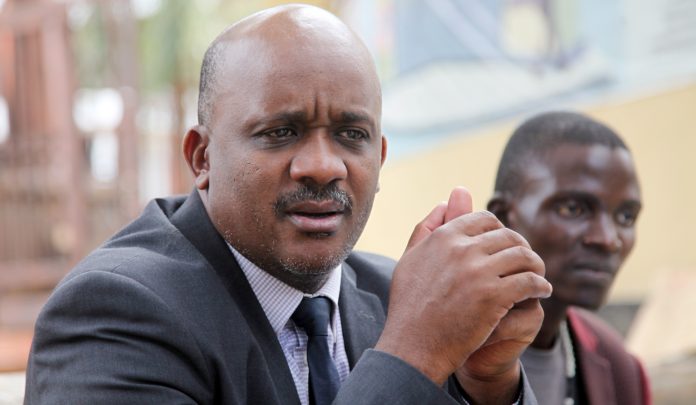
Julius Mukunda

The Executive Director of the Civil Society Budget Advocacy Group (CSBAG), Julius Mukunda has been elected for a two-year term as Africa’s representative at the World Bank Civil Society Policy Forum (CSPF) Working Group.

The CSPF Working Group is an elected group of representatives that serve as a civil society interlocutor with the WB and IMF civil society teams to effectively achieve the objectives of the Forum as a means for engagement and a platform for a globally and thematically diverse group of civil society to voice their concerns, share ideas and experiences, and dialogue with staff on a wide range of issues and development topics.

CSPF provides space for Civil Society Organizations (CSOs) to dialogue and exchange views with World Bank Group and IMF staff, their peers, government delegations, and other stakeholders on a wide range of topics.

The World Bank Africa region’s strategy for civil society focuses on four pillars:

Strengthening engagement with civil society, parliamentarians and faith-based organizations at the country and regional levels for effective local development solutions

Partnering on actions to promote social inclusion of the marginalized in the development process.

Promoting social accountability including CSOs’ monitoring of Bank operations for development effectiveness.

Advocating for and promoting greater voice and space for African civil society in the development debate.

CSOs according to the World Bank are at the forefront of the development work in the countries. By working closely with communities, CSOs can help ensure that the voice and needs of local populations are taken into account in the design of development programs.

CBTP congratulates Mr Julius Mukunda on this great appointment for service. We wish him and the team a successful term. We will be looking forward to interacting with the team during their term of service.

Stories Continues after ad

U.S diplomat launches campaign against Gender Based Violence

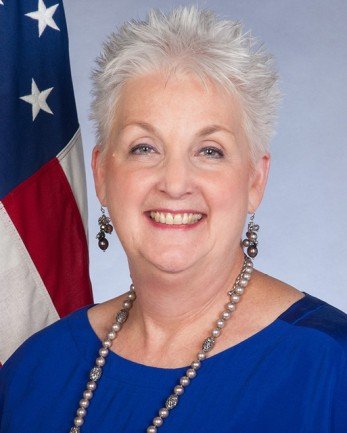
Deborah Malac

The outgoing U.S Ambassador to Uganda, Deborah Malac, has launched a campaign dubbed ’16 Days of Activism Against Gender-Based Violence.’

The launch event took place days ago at Waluwerere Church of Uganda Primary School in Bugiri District and was attended by the Bugiri District leadership and other officials, along with students and teachers.

The event highlighted the U.S. government’s commitment to prevent gender-based violence through its programs, including the USAID/Uganda Literacy Achievement and Retention Activity (LARA) that works to improve children’s reading skills in 3,450 primary schools in 43 districts of Uganda.

LARA is currently expanding to Bugiri, and in coordination with the U.S. President’s Emergency Plan for AIDS Relief (PEPFAR), is launching its Journeys program to prevent and respond to HIV and gender-based violence in 25 government-aided primary schools in the district.

In her remarks at the event, Malac said, “The introduction of this program into the school is dependent on the teachers, but the parent and community components are in your hands.  For those of you here who are parents, from one parent to another I ask you please to engage with your school and utilize the opportunities for parental and community involvement in this program.  Make it a success!”

As part of the campaign activities, Malac and students toured the U.S. Mission’s Nile Explorer Bus, a library and computer lab on wheels.  Supported through a partnership between the U.S. Mission and a Ugandan technology incubator called HIVE Colab. The bus promotes literacy; science, technology, engineering, and mathematics (STEM) skills; and life skills for Ugandan school children in underserved rural areas.  U.S. Peace Corps Volunteers regularly contribute to the Nile Explorer’s teaching activities throughout the country, and Peace Corps participated in Monday’s launch.

Through the life skills component of the bus, the children at Waluwerere Church Primary School will receive an introduction to the Journeys curriculum throughout this week.

In addition, the U.S. Mission has provided the bus with handouts for the community containing violence reporting and victim support resources, including the 116 Uganda Child Help Line (UCHL).

The bus will stay in Bugiri for one week to involve students in innovative educational activities, introduce the LARA/Journeys curriculum, and provide GBV reporting resources, before moving to other areas of Uganda.

Stories Continues after ad

Gov’t to disburse Shs20b for emergency response in areas hit by floods

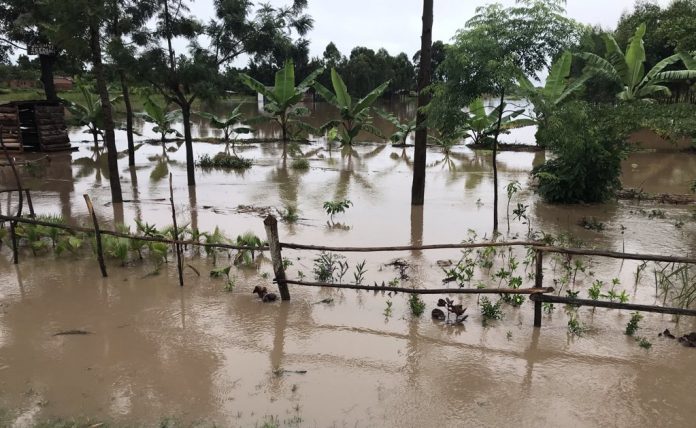
Floods have hit sections of Uganda of recent

The Ministry of Finance is to release Shs20 billion for emergency response to areas which have been recently hit by flooding.

The Minister of State for Finance (Planning), David Bahati who was responding to a Shs43 billion request from the Ministry of Disaster Preparedness, said that all that money cannot be released immediately.

“Not all the money is needed now. We shall avail the shs20 billion in the next two days,” Bahati said.

Bahati’s commitment follows a report by the Minister of State for Disaster Preparedness, Hon Musa Ecweru during plenary sitting on 26 November 2019.

Ecweru said there is need for an urgent response to 38,000km of district roads, 98,000km of urban roads and 79,000km of village access roads which have been destroyed by floods. He added that 20 bridges require overhaul.

“The above normal rain has caused water logging in many villages causing huge post-harvest destruction. Affected population of over eight million requires immediate shelter and relief food. Twenty districts are most prone to waterborne diseases,” said Ecweru.

He added that the impact of flooding is highest in the regions of Bugisu, Teso, Bukedi, Kigezi and Rwenzori as well as the districts of Ntoroko, Bundibugyo and Kasese.

“Eighty five per cent of the population in these regions and districts are facing severe losses of livelihoods in addition to destruction of commonly used infrastructure. The Bugisu region has experienced landslides in addition to flooding,” he said.

The Minister of State for Health, n Sarah Opendi advised the Minister for Disaster Preparedness to identify priority areas so that the funds are properly utilized.

“The ministry should explain to the House the identified priority areas because it looks like the bulk of the money will go to roads,” she said.

The Speaker, Rebecca Kadaga advised the ministry to involve the district disaster committees while identifying priority areas.

“The minister should prepare a schedule of the priority areas and report to the House tomorrow,” said Kadaga.

Legislators raised concern over the distribution of the funds saying that the ministry should ensure that all affected regions are covered.

Buyaga West County MP, Barnabas Tinkasimire, pointed out that there should be no repeat of reports where the Minister for Disaster was accused of misusing funds.

MP Hellen Asamo (NRM, PWDs Eastern) called for affirmative action for Persons With Disabilities (PWDs) while distributing relief.

“PWDs miss out because distribution of relief items is characterised by struggles which we cannot engage in,” she said.

In October this year, the Meteorological Department forecast that the country would experience above-normal rains between the months of September and December.

Stories Continues after ad

NSSF Friends with Benefits Season 3: How Mr. Simon Aliira left his job and made Shs470m in sugarcane plantation

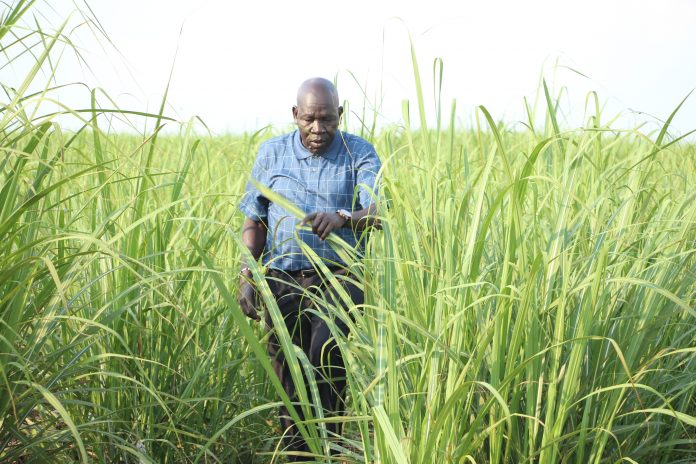
Mr Simon Aliira in his sugarcane plantation

Aliira Simon who worked for Kinyara Sugar Works Limited from 1993 to 2012 retired into sugarcane plantation farming in Kinyara, Masindi district after he received his NSSF retirement benefits in 2013.

Simon whose NSSF benefits were Shs85 millions called for an emergency family meeting after receiving his NSSF benefits to discuss on how to use it. Many business ideas such as erecting a residential house or buying a car many more were suggested but the money was not enough, therefore, they settled on investing in a sugarcane plantation

“For one to be able to succeed in any farming business, one must have enough land. I bought 23 hectares and leased 64.8 hectares of land. That’s how I invested my benefits because I knew that without enough land, this would have been a poor investment,” Mr. Aliira said.

In Kinyara, sugarcane is a contracted crop implying that Kinyara Sugar Works Limited gives a contract to a farmer for him to be able start growing and supplying sugarcane. Kinyara goes on to distribute seed canes and some money in form of fertilizers to all its contracted farmers.

The sugarcane plantation that started with an initial investment of Shs85 million in October 2012 produced its first sale worth Shs250 million in 2015 and Shs 220 million  in 2016. Mr. Aliira has continued to buy more land for him to able to plant on a large scale

Compared to other businesses, sugarcane growing too has its own challenges. Mr. Aliira decries of fire as the main challenge to the plantation. These fires are either wild fires or intended fires set by hunters with an aim of scaring animals and fellow farmers who are always clearing their garden after harvest.

Despite the prevailing challenges Simon appreciates NSSF for chasing illiteracy out of his home. He has been able to educate his children and those of his fallen siblings up to a graduate level. Secondly, he employs over 30 employees on his farm hence improving the welfare of the community members

Simon, who is not sure of what the rest of the contestants are doing, is very optimistic about the ultimate prize money in the NSSF Friends with benefits season 3 campaign. And this is because he has ably invested all his benefits and made incredible returns and therefore can account for his money.

Unlike many old people, Simon realises that age is slowly catching up with him and therefore, he anticipates to construct rentals in Kampala for him to be able to have a stable source of income that can sustain him during old age.

“Some people do not save because they do not have but many of them do not save because they don’t care about their future. I wish to thank NSSF for helping some of us who would not have saved voluntarily, I therefore call upon all those who have not yet started saving with the fund to quickly do so because it’s the only the way one can be sure of a better retirement,” Aliira said.

To vote for Mr. Aliira Simon in the NSSF Friends with Benefits competition, dial *254# or go to www.nssfug.org.

Stories Continues after ad

NSSF Friends with Benefits Season 3: How Shs36m reignited Mr. David Birungi’s business

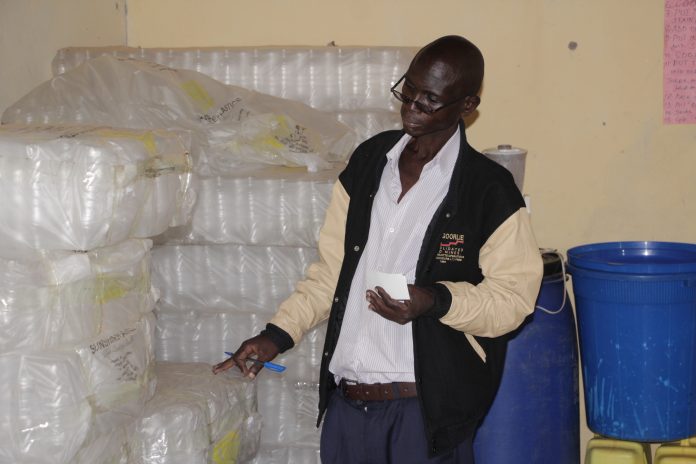
Mr Birungi at workplace

Sometimes giving someone a second chance, is like giving them an extra bullet for their gun, National Social Security Fund (NSSf) offered a second chance to Mr. Birungi David of Masaka to keep his business dream alive.

Birungi who had worked in DFCU Bank for over 10 years retired in 2006 at the age of 46 years and started on his long-term dream of creating his own business empire.

Setting up a city supermarket in Kampala was his first business venture immediately after retirement but this could not sustain itself hence collapsed, an ambitious Birungi did not give up then he started drinking coffee business, like the previous enterprise, it could celebrate its first birthday.

 You might think that after all this consistent failure, Birungi gave up, well no, he did not. He continued to invest in the alcohol (Waragi) business but unfortunately the raw materials and packaging materials were not enough to sustain a stable production hence collapsed as well

Now, back to the drawing board, Birungi decided to withdraw his NSSF benefits that were worth Shs 36 million in 2018 and this was another bullet in his gun and therefore it reignited his business dream.

Mr. Birungi used Shs 10 million to start a splendid residential house in Masaka and used Shs 15M to start up a pineapple factory. As we speak, Mr. Birungi produces 20 cartons of pineapple juice on a daily basis selling each bottle of juice at Shs 500.

“There is nothing like failure in my life, I am sure that determination leads to success, therefore, I must chase my dream until it’s alive. Without doubt, I must succeed by all means no matter what challenges come my way, “Birungi said

His product (pineapple wine) has already been tested twice by Uganda National Bureau of standards (UNBS) and according to Birungi, their response towards his product has consecutively been positive.

Currently his juice is being sold in Masaka town and the neighboring towns of Kyotera, Rakai, Lyantonde and Sembabule and his target market is mainly the school going children, Boda-Boda and supermarkets.

Birungi’s pineapple juice business was inspired by the brawny Mukwano industries that have existed for almost 50 years in Uganda dealing in small products such as soap, juice and mineral water with a constant supply overtime

You probably might be wondering, if Mr. Birungi has any challenges, yes, he does and his main challenge is the heavy taxes imposed by the existing regime on small scale industries. He continued to stress that high taxes stifles growth of small-scale industries

But like he said, Mr. Birungi is a hardliner and has managed to stand all the challenges and this has been possible because of his Banking background that rotates around record keeping for accountability and minimising cost for each purchase.

Lastly, Mr. Birungi who is in his late 50 years gives a free advice to everyone to adopt the saving culture because according to him, it is still lacking among many Ugandans and he endorses the NSSF as the only trustworthy saving fund.

To vote for Mr. Birungi David in the NSSF Friends with Benefits competition, dial *254# or go to www.nssfug.org

Stories Continues after ad

China 5G roll-out to drive first smartphone shipment rise in 4 years – IDC

5G Smart phone

The global smartphone market is set to return to growth for the first time in 4 years in 2020 on the back of China’s huge investment in 5G technology, according to the latest report from International Data Corporation (IDC).

Worldwide shipments are expected to grow 1.5 percent year on year in 2020 to just over 1.4 billion following falls of 0.3 percent in 2017, 4.3 percent in 2018 and an expected 1.4 percent this year.

The 2020 figure is set to include 190 million 5G smartphones, accounting for 14 percent of the total, driven by recent developments in the China market along with anticipation of aggressive activity from the smartphone supply chain and Original Equipment Manufacturers (OEMs), said IDC.

The report expressed the hope that 5G smartphone prices will quickly come down quickly to boost the growth of this market segment. “Following three straight years of declining smartphone volumes there leaves little room for 5G to raise smartphone ASPs,” said IDC, adding that Android vendors are expected to drive down the cost of 5G smartphones.

Apple is expected to enter the 5G smartphone market in September 2020, with the real focus around pricing and market availability.

In contrast to the expected rapid 5G growth in China, demand in other markets such as Australia, Japan, and Korea in Asia/Pacific as well as some European countries is set to be slower than predicted, added IDC.

The report said shipments so far in the second half of 2019 have come in much lower than expected, with accelerated 5G adoption globally depending on factors such as the arrival of 5G networks, operator support, as well as substantial price reductions.

Stories Continues after ad

TP Mazembe v Zamalek – Ten titles on the pitch!

Between the two sides, they have won ten CAF Champions League titles divided to five each, a number that’s only exceeded by record eight time champions Al Ahly of Egypt. This makes it a “Clash of Titans” when DR Congo giants TP Mazembe welcomes Egyptian counterparts Zamalek, in the opening match day of the 2019/20 Total CAF Champions League Group A at the TP Mazembe Stadium in Lubumbashi..

“Les Corbeaux” as Mazembe are fondly called are eyeing their sixth title in the Holy Grail of African club football; same as their opponents, the “White Knights” as Zamalek are christened. Mazembe last won the prestigious premier continental club championship in 2015, while Zamalek, last season’s CAF Confederation Cup winners tasted glory in the CAF Champions League back in 2002.

It’s going to be the seventh CAF match between both giants, with all six previous meetings being in the CAF Champions League. After Zamalek’s semifinal 3-1 (1-1 and 2-0) aggregate win on their way to the 2002 title, the two sides met four times in the group stage of 2012 and 2014, with Mazembe winning three of them and managing one draw. Overall Mazembe have won three times compared to Zamalek’s lone victory, whereas two other games ended in stalemates. Les Corbeaux scored six goals against four for the White Knights.

Led by their former captain Pamphile Mihayo, who tasted the Champions League glory twice as captain (in 2009 and 2010), Mazembe is – as always known – a blend of African talents, including players from DR Congo, Cote d’Ivoire, Mali, Zambia, Uganda, Ghana, Congo, Tanzania and Benin.

Meanwhile Zamalek banks on their North African mixture which includes two Tunisians and as many Moroccans besides their regular Egyptian internationals. They enter this season’s group stage guided by an experienced coach on the African football landscape in ex-Uganda and Orlando Pirates Serbian Milutin “Micho” Sredojevic.

Angola’s Primeiro de Agosto hosts Zambia’s Zesco United in the other Group A match in Luanda, also on Saturday.

Fixtures

Group A

30.11.2019 Lubumbashi TP Mazembe (DR Congo) – Zamalek (Egypt)

30.11.2019 Luanda Primeiro de Agosto (Angola) – Zesco United (Zambia)

Group B

29.11.2019 Rades Etoile du Sahel (Tunisia) – Al Ahly (Egypt)

29.11.2019 Omdurman Al Hilal (Sudan) – Platinum (Zimbabwe)

Group C

30.11.2019 Algiers USM Alger (Algeria) – Wydad Casablanca (Morocco)

30.11.2019 Pretoria Mamelodi Sundowns (South Africa) – Petro de Luanda (Angola)

Group D

29.11.2019 Tizi Ouzou JS Kabylie (Algeria) – AS Vita (DR Congo)

30.11.2019 Casablanca Raja Casablanca (Morocco) – Esperance (Tunisia)

Stories Continues after ad