Stanbic Bank
Stanbic Bank
18.1 C
Kampala
Stanbic Bank
Stanbic Bank
Home Blog Page 1099

Miss Uganda Oliver Nakakande makes it to top 40 Miss World Models

Miss Uganda Oliver Nakakande

Miss Uganda, Oliver Nakakande, has made it to the Miss World Top 40 Models after going through elimination round of this year’s fast track event.

The event saw 112 contestants, started with a solo runway where judges got to see each contestant’s style. Then in pairs, they walked together for a final look, see them spinning, posing and flirting with the cameras.  The challenge is all about confidence, personality and how they presented themselves.

Remarking after the announcement of the top 40 models, Nakakande said Uganda has made it to the top 40 miss world models.

She said he most beautiful fact about miss world is that we get to meet beauties from around the world, learn about different cultures, languages and most importantly share our beauty with a purpose projects, most of them connect in one way or the other and that makes it even easier to come up with a solution strategy.

“I just got to realize that the world is facing similar challenges, from Africa to Asia, to Americas, to Australia and to Europe. And yes, I feel even more humbled to be in London right now representing my country Uganda.” She said.

Countries which made through to the top 40 include: Antigua and Barbuda, Argentina, Australia, Barbados, Bosnia & Herzegovina, Brazil, China PR, Croatia, Czech republic, Denmark, Dominican republic, Finland, Mexico, Moldova, France, Haiti And  Hong Kong china.

Others are Hungary, India, Indonesia, Italy, Jamaica, Kazakhstan, Kenya, Macau china, Montenegro, Nigeria, Philippines, Poland, Puerto Rico, Russia, Slovakia, South Sudan, Trinidad & Tobago, Turkey, Uganda, Ukraine, Venezuela, Vietnam and wales

Zandra Rhodes, one of the Top Model judges said: “I was so impressed by the quality of the girls and how well they walked, it was great seeing all their different personalities coming over.”

Miss World Top Model winners who have gone on to wear the famous blue crown include: Zhang Zilin from China (Miss World 2007), Ksenia Sukhinova from Russia (Miss World 2008), Megan Young from Philippines (Miss World 2013) and Mireia Lalaguna from Spain (Miss World 2015).

Joining Zandra on the Top Model judging panel were Lady Wilnelia Merced, Miss World 1975 and Marsha Rae Ratcliffe.

The next round, which will take place on 14 December 2019 at The Fashion and Textile Museum, London and will be topped with the crowning of Miss World 2019 Top Model.

Stories Continues after ad

Uganda’s health sector is a death trap – FDC claims

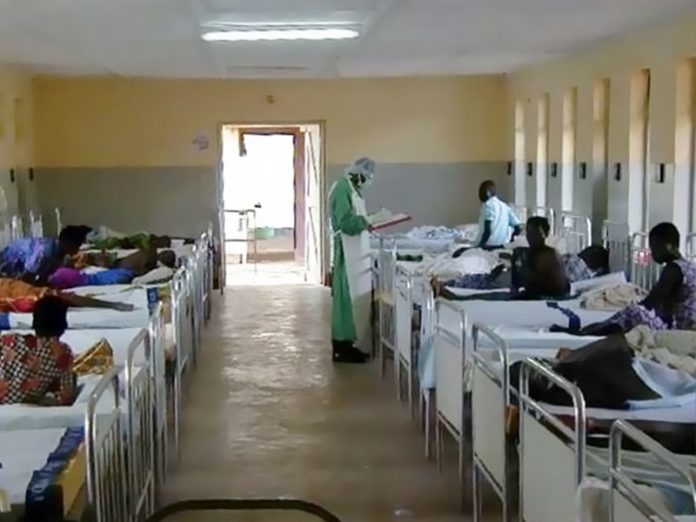
Patients in Gulu Municipal Hospital

The leading opposition party, Forum for Democratic Change (FDC), has expressed its concern over the declining state of the public healthcare system in Uganda and referred to it as a death trap to the extent that senior government officials go for treatment abroad .

Last week Late Meddie Ssozi Kaggwa, who was the Chairperson of Uganda human Rights Commission (UHRC), collapsed near Mulago round about adjacent to the gate to the National Referral Hospital, Mulago on his way to work and instead was taken by a Doctor who works in the same hospital to a private medical facility for emergency treatment.

According to FDC deputy spokesperson, John Kikonyogo, the ailing health sector has made dignitaries both in government and private sector to run to either private clinics, hospitals or abroad for treatment.

“Today, even a sweeper in state house runs to either Agha khan in Nairobi, South Africa or India for a simple headache treatment. We have seen Museveni’s daughters chartered for private jets to deliver in Germany, a clear indicator of mistrust in our health care system. Unfortunately, people working in these hospitals are Ugandan trained Medical doctors who ran away from Uganda because of poor working conditions and remuneration,” he said.

He said that even when Dr. Apollo Milton Obote and Idi Amin Dada’s governments continued to be referred as bad by the ruling party, the NRM, the leaders of the same past regimes had their children delivered at Mulago Hospital and treated from the same facility. In 1969 when Dr. Milton Obote was shot, he was treated at Mulago National Referral Hospital.

For the last 20 years, the government of Uganda has been spending abnormal sums of money on treatment of government officials, and their relatives abroad. “In the last three years, the total spent on treatment abroad is Shs377 billion s which would have been utilized in refurbishing Mulago and upgrading regional referrals to international standards. This would benefit all Ugandans irrespective of their positions.”

According to party FDC’s 2016-2021, they highlighted that health services workforce will be given a rewarding and compensation package. The starting salary for a doctor will be shs3.5 million.

They had pledged to establish a nation-wide emergence ambulance and air rescue service that will be accessible to every citizen in need and offer specialized services for women and especially mothers and health insurance scheme to ensure coverage for all citizens who do not have insurance from private health service providers or work-based insurance schemes.

Stories Continues after ad

Uganda tops in pork, chicken consumption

Pork ready for consumption

The World Animal Protection has released a report: “Consumer Perceptions on Animal Welfare  and Food Safety across East Africa”

One of the findings is that Uganda tops four nations in pork consumption, with figures standing at 65.4%, followed by Zambia (60.5%), Tanzania (59.6%) and Kenya trailed with (50.7%)

The study showed that most people don’t eat pork due to religious reasons, while others perceived the possible health risks associated with its consumption.

Uganda also led the pack in chicken consumption (95.4%) followed by Tanzania (93.5%), Zambia (93.2%) and Kenya (92.6.).

Kenya topped as best fish eaters standing out at (79.4%), Uganda came second at (78.7%), while Tanzania ranked third with (70.8%) and Zambia had 69.1%).

Zambia emerged best among the best beef eaters with figures standing at (85.8%), Tanzania (85.4%), Kenya (84.2%) while Uganda trailed at (82.9%).

When it comes to goat meat, Uganda emerged the best here again ranking at 78.2%, followed by Kenya at 75.7%, Zambia with 71.6% and Tanzania at 67.7%.

Dr. Victor Yamo, the World Animal Protection Campaigns Manager –Animals in Farming, said Animal welfare is inextricably linked with animal health, and human health and welfare.

Yamo said the purpose of the study was to evaluate consumer’s knowledge, Attitudes, and Practices around sourcing and consumption of meat products.

The study also sought to identify the main supermarkets and fast-food restaurants where meats are purchased, and to determine the main types of meats consumed and consumption the various patterns.

Chicken Most consumed

The study conducted in four countries: Uganda, Kenya, Tanzania and Zambia revealed that chicken (93.1%) still remains the most consumed among the meat products, followed by Beef at (84.3%), Fish (76.0%), Goat (72.0%), Pork (57.3%), Mutton (34.6%) and Rabbit meat (21.0%),

The study targeted consumers within major centers of the four Eastern Africa countries:

1.Kenya, Nairobi, Kisumu, Mombasa

2.Tanzania, Arusha, Dares-Salaam

3.Uganda, Kampala, Entebbe, and Jinja

4.Zambia, Lusaka

Other Countries captured included: South Africa, Nigeria, Egypt,  Namibia,  Brazil, Mozambique, and  Rwanda.

Releasing the findings in Kampala, Dr. Yamo noted that most East Africans have the desire for healthy meals that are chemical-free, majority, as per the study willing to pay more for humanely reared animals and animal products.

“Majority said they were ready to buy more meat and meat products if it is safer, and locally produced and if animals were raised in an environmentally sustainable way that is free of antibiotics,” he said

He said stress and poor welfare in farm animals increase the transmission and virulence of a number of zoonotic diseases.

“Protecting the welfare of farm animals can, therefore, be an important factor in decreasing the spread of disease,” he said.

Stories Continues after ad

Mainstreaming gender in African policymaking: Ensuring no voice is unheard

Dr Hanan Morsy

By Dr Hanan Morsy

Despite remarkable progress made on women’s participation in policymaking, Africa is still far from achieving the 50 percent gender parity target set by the UN’s Sustainable Development Goals (SDGs).

Between 1995 and 2018, the proportion of women in African parliaments almost tripled from 8% to 23% but remains insufficient. Out of 11,037 African parliamentarians as of October 2018, only 2,591 were women and out of 1,348 ministers on the continent only 302, or 22%, were women.

The challenges in achieving gender equality and women’s empowerment, will be the focus of the Global Gender Summit to be held in Kigali, Rwanda from the 25-27 November. The Summit, hosted by the African Development Bank in partnership with the Government of Rwanda, will spotlight innovative financing, fostering an enabling environment and ensuring women’s participation and voices.

Mainstreaming gender in policymaking in Africa is crucial for at least three main reasons. First, women are the main driving labor force in most African countries, making a vital contribution to the economy. Empirical studies, including the African Development Bank’s own research, have found that if women had equal access to productive resources such as land, modern inputs, technology, or financial services, then the gender productivity gap in agriculture of 20%-35% would almost disappear.

This suggests that African countries could significantly increase their production by just closing the gender gap across economic sectors, particularly in agriculture. Second, increasing women’s participation in policymaking has been found to lead to higher GDP growth through increases in higher-skilled women in the labor force and women’s employment in high-productivity sectors. Africa is therefore losing socio-economic opportunities by not doing enough to

encourage the voices of women. The continent cannot afford to wait any longer to empower women.

Gender empowerment in policymaking can also boost women’s role as business leaders. Although Africa boasts the world’s highest rate of women entrepreneurs (at 27%) and is the only continent where more women than men choose to become entrepreneurs, most female-led enterprises are small businesses, in the informal sector with little growth prospects.

Access to finance is a key constraint and the Bank’s research found that women entrepreneurs in Africa are more likely to self-select out of the credit market due to perceived low creditworthiness compared to men.

By influencing policymaking in their countries, women can help lift barriers to their participation in labor markets which at 61% remains lower than men at 67%.

And to ensure that no voice remains unheard, much work needs to be done. Improving women’s access to education is key. Better educated women are more likely to influence policy. Despite commendable efforts, the gender gap in educational attainment persists in most African countries, creating barriers to women’s advancement.

For instance, the average number of schooling years between  2010-2017 was 4.33 for females but 5.6 for males in Africa. In many countries, the educational disadvantage of women starts at primary school and by the time girls become adolescents the educational gap has significantly widened.

One solution to explore is to ensure universal access to education to all girls and promote education parity at primary, secondary and tertiary levels. Several findings indicate that countries with greater education parity have realized higher economic growth5. In addition to bringing girls into school, having them complete their grades is also important, as the drop-out rate of girls in primary education is still very high in Africa, with a third of girls dropping out between 2010-2017.

Second, government efforts to support the development of women’s political competency is particularly important in raising their participation in policymaking. Mentoring and training programs can equip women candidates with the necessary skills to successfully run for political office. For elected women, leadership trainings would strengthen their influence in policymaking and advocacy.

Third, scaling up of programs and initiatives or implementation of laws aimed at fostering an enabling political environment for women will ensure that women’s voices are heard. Although many African countries have made legal provisions guaranteeing equal rights of men and women in policymaking and have even established gender parity in their electoral systems, only a handful have implemented these laws.

Only Rwanda, Ethiopia and Seychelles have achieved or are close to achieving gender parity in their ministerial cabinets. Rwanda is the only country in Africa where women outnumber men in the parliament (61.3% as of January 1, 2019). Other countries such as Namibia (46.2%), South Africa (42.7%), or Senegal (41.8%) have set examples for other nations to follow in mainstreaming gender in policymaking.

In its own operations, the African Development Bank in 2018 launched a Gender Marker System to track gender mainstreaming in its work. It has also developed an Africa Gender Index in partnership with the United Nations Economic Commission for Africa to measure gender parity across economic, social, and political representation dimensions.

With its Affirmative Finance Action for Women in Africa (AFAWA) initiative, the Bank will extend women’s access to finance through commercial banks and financial intermediaries, provide technical assistance to women, and engage policy and regulatory bodies to create an enabling environment for women.

With initiatives such as AFAWA, and the Global Gender Summit in Kigali, the African Development Bank is advancing the course of women and ensuring that no voice is unheard.

The Writer is the Director, Macroeconomics Policy, Forecasting and Research Department, African Development Bank Group.

Stories Continues after ad

Tax Alert: Court of Appeal finds URA’s imposition of interest pending dispute resolution untenable in law

Damalie Tibugwisa

By Damalie Tibugwisa

On the 12th day of November, 2019, the Court of Appeal Justices Kenneth Kakuru JA, Ezekiel Muhanguzi JA, and Christopher Madrama JA in the case of Airtel Uganda Ltd v Uganda Revenue Authority; Civil Appeal No. 40 of 2013 delivered a landmark decision against the imposition of Penalty/Interest for the period covering objection proceedings and/or appeals.

Brief facts of the case

In 2004, Airtel objected to an assessment by URA to a tune of UGX 428,269,883/= with the Tax Appeals Tribunal. As part of the requirement under Section 15 of the Tax Appeals Tribunal Act, Airtel paid 30% of the disputed tax. The said objection was unsuccessful and so were the subsequent appeals to the High Court and the Court of Appeal respectively. As a result, Airtel paid the said tax. No sooner had it paid the tax in dispute than URA came demanding that it pays a whooping UGX 1,555,836,915/= as interest for failing to pay 70% of the tax assessed during the period of objection and/or appeals. URA argued that the said interest was founded in Section 65(3) of the Value Added Tax Act Cap 349 which is to the effect that;

‘Any person who fails to pay tax imposed under the Act on or before the due date is liable to pay a penal tax on the unpaid Tax at the rate specified in the 5th Schedule on the tax which is outstanding’

Airtel paid the said interest without prejudice and commenced High Court Civil Suit No. 457 of 2010 which was dismissed by Honourable Justice Kiryabwire [as he then was] hence the appeal.

The Grounds of Appeal

On Appeal to the Court of Appeal, Airtel faulted the learned judge for finding that;

  1. a)   URA has a right to claim interest because is it provided for under the law;
  2. b)   Payment of 30% of the tax in dispute does not absolve the taxpayer from paying penalties in the event that the objection is dismissed.

Ratio Decidendi of the Judges

In allowing the appeal, the learned justices noted that the case raises an important question of law on tax collection to wit;

‘‘Whether a tax payer who contests the tax assessment through the Tax Appeals Tribunal ought to be subjected to penal tax in the event the objection is dismissed.’’

They restated the provisions of the 1995 Constitution of the Republic of Uganda which give a basis for taxation and tax dispute resolution. Article 17(1) (g)imposes a duty on every citizen to pay taxes. Article 152(1) and (3) empower Parliament to impose taxes and create the Tax Appeal Tribunal through legislation.

As a result of the above provisions the Tax Appeals Tribunal Act Cap 343 permits any aggrieved party to seek redress from the Tax Appeals Tribunal and under Section 15 (1),the applicant is required to pay 30% of the tax in dispute or the sum in dispute whichever is greater pending final resolution of the objection.

The Court opined that the aforementioned tax legislations derive their legitimacy from the Constitution and must therefore be read together with the Constitution otherwise, it would lead to the “absurd conclusion that a person who objects to an assessment is deemed to have failed to pay that Tax’’.

The Court therefore found that;

‘The Requirement to pay 30% of the objected tax suspends the requirement to pay the whole sum which is objected to which may only be paid after the objection is dismissed.’

This finding by Court has a very interesting implication of equating the application for review by the Tribunal to an injunction or a stay of execution upon payment of the 30% of the tax in dispute.

The Judges also noted that they recognize the necessity of prompt payment of tax to support service delivery to Government. However, Tax Appeals Tribunal which has the power of the High Court is required to apply rules of natural justice which includes the non derogable right to a fair hearing provided for under Article 44 of the Constitution.

The Court further found that;

‘A person who has objected to a tax assessed, appealed against, paid 30% of the tax assessed on arrears, cannot in our view be penalized for having sought redress from the Tat Appeals Tribunal. The law protects him from penalties during this period of dispute resolution. To hold otherwise would create an absurdity in which a person appealing a tax assessment is treated as a criminal defaulter under Section 65(3) of the VAT Act.”

The Court therefore allowed the appeal and ordered that the interest in dispute be refunded to Airtel with interest of 15% per annum.

My Opinion of the Decision

As a representative of several tax payers, and a believer in the rule of law and the need to pay and enforce a lawful, fair and just tax, the decision of the Justices of the Court of appeal is welcomed for the following reasons:

  1. The decision further promotes access to justice for many taxpayers who are threatened by the consequences of not paying a tax assessed even if it’s not due under the law and ought to be contested.
  2. Many taxpayers were aggrieved by the decision of Rabbo Enterprises v URA SCCA No.  12 of 2004  which had the effect of requiring all tax payers to file their objection applications through TAT and not the High Court thereby by requiring them to pay 30% of the tax in dispute. This decision has the effect of showing the benefit of seeking redress through TAT for tax payers who pay the 30% of the disputed tax as it freezes the interest.
  3. The decision also is in harmony with the decision of Ndimwibo Sande Pande v URA HCCS No. 24 of 2012 in which Justice Madrama [as he then was in the Commercial Division] found that penalties should be imposed upon establishment of criminal liability of the tax payer through a partial and independent tribunal and not by the independent decision of URA.
  4. The right to seek redress in tax matters is constitutional and ought to be fostered rather than hindered. The tax payer should not be penalized further for delayed justice which is not of his own making. The first objection was filed in the Tax Appeals Tribunal in 2004 and the Appeal to the Court of Appeal was made in 2013 yet the decision was only made only this month. Would it be fair to demand that the tax payer pays penal interest that has accrued during the pendency of the hearing? Absolutely not. It must be remembered that this is not simple interest but penal interest which under the 5th Schedule of the Value Added Tax Act is 2% per month, compounded which would be so harsh and unconscionable in the circumstances.

In conclusion I applaud the Court of Appeal for the well-reasoned decision. It must however be noted that this decision to a greater extent only serves the interests of applicants who have paid 30% of the tax in dispute. To that extent therefore the decision reaffirms the requirement to pay 30% before the objection is determined.

The author is a commercial law practitioner and founder of M/s Tibugwisa and Co. Advocates. For comments and inquiries contact her at damalie@tibugwisaadvocates.com

Tibugwisa & Co. Advocates

Stories Continues after ad

A culture of purpose in business leads to doing well

Martin Zwilling

By Martin Zwilling

Many entrepreneurs still don’t understand that building a business culture today of doing good, like helping people (society) and planet (sustainability), is also a key to maximizing profit. Employees and customers alike are looking for meaning, not simply employment and commodity prices. Every company needs this focus to attract the best minds and loyalty in both categories.

In the classic book by Christoph Lueneburger, “A Culture Of Purpose,” he details how to build this new culture, and why it is becoming more instrumental in bringing about success, as well as sustainability, in organizations as diverse as Unilever and Walmart. He outlines a three-phase process to develop the necessary business culture of energy, resilience, and openness:

Nurture your current leadership strengths. Learn how to recognize, cultivate, and leverage the competencies of your current talent to develop your leadership team. Highlight leaders with business acumen as well as purpose as role models. Change leadership is a critical competency in the early stages of a transformation.

Hire the right team. Ask the right questions to identify the innate personality traits in potential new hires, regardless of level and function, to bring on board those most likely to succeed in and shape your organization. Employees with a purpose actually are easier to recruit and retain, and are likely to be more engaged. They also tend to stay longer with the organization, reducing costs.

Craft your culture into an actionable plan. Create an environment that unleashes these competencies and trains and pushes them to the fore. Shape how people relate to one another and collectively go for what would be out of reach to them individually. Success is people moving from a reactive to a proactive focus on doing good.

In all cases, the transformation starts with placing leaders with a purpose at the core, hiring talent with a purpose at the frontier, and then building and extending the culture of purpose both inside and outside the organization. I can think of at least five ways that this benefits the business, as well as customers:

Products in a purpose culture more readily sell at a premium price. Evidence is growing that consumers are willing to pay at least a small premium for sustainability, and have started to demand a discount for “un-sustainability.” Companies can use this strategy to improve their profitability and competitive advantage.

Doing good opens the door to a broader customer base. By adding to perceived value, a company attracts more sophisticated and demanding customers less expensively and more quickly. More and more customers choose a company based on their perceptions about the good that they do, as well as their price and service.

Customer loyalty and trust go up for companies with a purpose culture. According to marketing surveys, 76 percent of global consumers believe it is acceptable for brands to support good causes and make money at the same time. We all know the cost of retaining customers is far less than the cost of new customers.

Companies with a purpose culture have more productive teams. Doing business is a human process. Team members interact on a daily basis with the stakeholders of the company and the way they feel about the organization has a major and direct impact on how they perform their tasks and do their job at the end of the day.

Investors like startups that foster planet and social responsibility. Investors believe these startups demonstrate more integrity and less risk, as well as being better positioned to deliver long-term, sustainable value to their stakeholders. Of course, investors still require a profitable business model, and the potential for high returns.

Thus doing good leads to doing very well, not less well. Lueneburger contends, and I agree, that the most effective and remembered leaders of our time, and the most successful companies, will be builders of cultures of purpose, which inspire the hearts and minds of people both inside and outside the organization. Is your personal leadership shining well or less well in this direction?

The writer is a veteran startup mentor, executive, blogger, author, tech professional, professor, and investor. Published on Forbes, Entrepreneur, Inc, Huffington Post, etc.

Stories Continues after ad

Catastrophy as Tesla Company loses US$770m

Tesla cars

In what was supposed to be a spectacular showcasing of the new Tesla’s Truck turned into a rather disastrous affair only seconds after the automobile was unveiled by the company’s CEO, Elon Musk.

The event that took place on the 21st of this month took a turn for the worse after the supposedly “bulletproof” glass windows of the truck couldn’t withstand the pressure of a metallic ball that was thrown at them and broke immediately during the presentation.

Despite the CEO joking about it, the damage had already been done, especially after his chief designer Franz Von Holzhausen continued to shatter the second window with another try.

The company that is named after the famous inventor Nikola Tesla has greatly monopolized the electrical car market as it’s hybrids are highly sort after not just for their economical value but also due to their futuristic and sports like designs that make them quite appealing to the modern day consumer.

“We threw wrenches, we threw everything even literally the kitchen sink at the glass and it didn’t break, for some weird reason, it broke now. I don’t know why. We will fix it in post,” Musk explained to a surprised audience.

The failed presentation has not only affected the sales of the new truck but cost the pioneering company of electrical cars a lot as its shares dropped 6% by Friday and a further whopping US$770million in monetary value as of this weekend.

The founder of Space X acknowledged the need for improvement despite having called it the ‘official car to Mars’ earlier.

Although some critics think that the failed demonstration was detrimental to the company’s worth and integrity, other don’t believe that the shattered windows should take the limelight away from the unveiling of the entire truck.

Stories Continues after ad

Getting women in the driver’s seat of Africa’s agribusiness revolution

Women entrepreneurs

By Mariam Yinusa and Edward Mabaya

Monica Musonda, CEO of Zambian food processing company Java Foods , certainly faced hurdles in her rise to the top, but she overcame them.

“Although the barriers to entry for women can be frustrating, they are often basic and relatively easy to resolve,” she said, playing down her struggles. “My climb up the agribusiness ladder has been challenging but definitely worthwhile.”

Musonda, whose company produces affordable and nutritious food snacks made from local ingredients, is one of just a handful of female agripreneurs who have successfully broken through the proverbial glass ceiling in Africa’s agribusiness industry.

Women are the backbone of Africa’s agricultural sector. From farm to fork, African women are players along the entire agricultural value chain, be it as farmers, livestock breeders, processors, traders, workers, entrepreneurs or consumers. While their influence on the continent’s growing agribusiness industry is undeniable, more solutions are needed to address the gender-specific challenges they face to boost their participation.

The average African woman is a budding entrepreneur either by choice or by circumstance. According to the Global Entrepreneurship Monitor Women’s Report 2016/17 , the continent has the highest percentage of female entrepreneurs in the world, with one in four women starting or managing a business. The agribusiness industry is often the natural focus of this entrepreneurial drive.

Across the continent, women dominate as primary processors post-harvest, as traders with bustling market stalls, as owners of fast food restaurants and with increasingly frequency as manufacturers of packaged ready-to-eat food products. Yet despite this dynamism, female-led agribusinesses tend to remain small, fragmented and informal in nature. They struggle to sustain and scale-up their agribusinesses into well-organized profitable enterprises.

Admittedly, the challenging business environment in many African countries including poor infrastructure and unreliable legal and regulatory systems affects all business activities of both men and women. However, in addition women-led businesses must also grapple with a number of gender-specific constraints, inhibiting their expansion into more lucrative market segments.

Firstly, African women often lack the technical know-how.  Despite the gains in female education on the continent, highly productive agribusinesses require specialized vocational and technical skills in fields such as food safety, food conservation, packaging and product certification which many African women do not readily possess.

Access to finance is the most frequently cited obstacle by African SMEs. Women entrepreneurs face multiple difficulties in securing funding mainly due to lack of collateral in the form of land and other tangible assets and a high-risk perception. According to the African Development Bank, an estimated $42 billion financing gap exists for African women across business value chains, including $15.6 billion in agriculture alone. Women are forced to rely on personal savings and family loans which are rarely enough to fund their businesses to scale.

Thirdly, socio-cultural barriers and stereotypes persist. African women remain the primary caregivers in families meaning that managing those responsibilities while growing a thriving business can become a difficult balancing act.

Over the last two decades, many governments and development institutions have rolled out programs to promote access to finance, agricultural inputs and provide technical support and business training to female agripreneurs. The African Development Bank recently set up the Affirmative Finance Action for Women in Africa (AFAWA) , a bold pan-African initiative to bridge the financing gap facing women. It adopts a three-pronged approach centered on improving access to finance, providing technical assistance and strengthening the enabling environment.

It often takes very little to make a difference. The capital injection required by the majority of female led SME agribusinesses on the continent is typically less than $50,000. And women have consistently proven to be more credit-worthy than men, usually paying back loans within agreed timeframes. Successful solutions by women for women such as microfinance and saving groups, peer-to-peer training and information sharing should also be reinforced and taken to scale.

More of such initiatives are urgently needed across the continent. Solutions must be based on in-depth engagement with the women business owners themselves to properly understand their frustrations and needs. Tailored programs designed to specifically address these pain points are critical. The Global Gender Summit is a timely opportunity to drive this forward.

Women are central for Africa’s agricultural transformation to be successful, sustainable and inclusive. More African female agripreneurs must be supported to grow and progressively transition into the business segments of agricultural value chains which are most profitable. It has been proven time and time again that when African women thrive the entire society shares in those dividends.

Mariam Yinusa and Edward Mabaya are Principal Economist and Manager, respectively, in the Agribusiness Development Division of the African Development Bank.

Stories Continues after ad

URA threatens to prosecute tax defaulters as it releases first list

URA Commissioner General Doris Akol

In a bid to collect more taxes, the Uganda Revenue Authority (URA) has threatened to prosecute tax defaulters in Uganda if they don’t settle their liabilities within two weeks.

URA says it has published the first list of tax defaulters that includes individuals and companies. The list comprises over 100 companies and are mostly domiciled in Uganda.

“The taxpayers listed below have accumulated tax liabilities with Uganda Revenue Authority (URA) and are hereby notified to settle their respective liabilities within two weeks from the date of this notice. Failure to comply will attract enforcement action including prosecution,” it warns.

Some the institutions cited as tax defaulters are; Aboke High School, Bwogi, Kawalya & Partners, Christ The King Kindergarten & Primary School, Arua School of Comprehensive Nursing, Arum Sub County, All Saints University, Gulu and Ambassador Joseph Tomusange.

URA says more tax defaulters will be revealed in the days coming ahead.

URA is tasked to collect about Shs20 trillion in the financial year 2019/20. President Yoweri Museveni has always criticized the agency for failing to collect enough tax revenue to fund the country’s development.

While addressing delegates attending the recently concluded 4th International Conference on Tax organised by African Tax Administration Forum in Kampala (ATAF), Museveni said Uganda can collect more taxes from booming real estate sector if the electronic means are applied by URA.

Museveni said the real estate sector was one area of leakage due to tax evasion. “Ugandans have put up a lot of buildings and many of them are rented. If you digitally map all the properties, you can know which ones are occupied by owners and the ones for rent,” he said although he urged tax authorities to impose more taxes on luxuries than production side to boost economic growth.

In the fiscal year 2018/19, URA performed better as than it did in the previous year, as it collected tax revenue of about Shs16.6 trillion which was above the target of about Shs 16.4 trillion.

Stories Continues after ad

Uganda drawn in Group A for 2019 Cecafa Senior Challenge Cup

Cranes team

Cranes have been placed in Group A alongside Burundi, Eritrea and Ethiopia for the 2019 Cecafa Senior Challenge Cup to take place from December 7th to 19th in Uganda.

The Democratic Republic of Congo will feature in this year’s competition as guests.

DR Congo were placed in Group B against Sudan, South Sudan and Somalia in the draws conducted at the Tiffany Diamond Hotels on Sunday afternoon.

Kenya’s Harambee Stars, the defending champions have been drawn alongside Tanzania, Dibouti and Zanzibar in Group C.

There are three groups of four and the best two teams from each group and the best two losses will make it to the quarter finals.

The games will be played at Namboole stadium, StarTimes stadium in Lugogo and Technical center in Njeru.

Rwanda pulled out of the regional tournament citing lack of funds to finance the team.

The tournament will be used by the teams to prepare for the 2020 Total Africa Nations Championship (CHAN) in Cameroon.

Uganda are the record champions having won the championship on 14 occasions with the last one coming in 2015 in Ethiopia.

Group A: Uganda, Burundi, Ethiopia, Eritrea

Group B: Sudan, South Sudan, Somalia, Democratic Republic of Congo

Group C: Kenya, Tanzania, Djibouti, Zanzibar

Stories Continues after ad