Stanbic Bank
Stanbic Bank
21.3 C
Kampala
Stanbic Bank
Stanbic Bank
Home Blog Page 1103

Arteta appointed Arsenal head coach

arteta

Arsenal have confirmed the appointment of Mikel Arteta as their new head coach.

The former Arsenal midfielder takes up his first job in management, leaving his role as assistant coach under Pep Guardiola at Manchester City.

The 37-year-old succeeds Unai Emery, who left Emirates Stadium last month, on a three-and-a-half-year deal.

“This is a huge honour,” Arteta told the club’s official website. “Arsenal is one of the biggest clubs in the world.

“We need to be competing for the top trophies in the game and that’s been made very clear to me in my discussions with Stan and Josh Kroenke, and the senior people from the club.

“We all know there is a lot of work to be done to achieve that but I am confident we’ll do it. I’m realistic enough to know it won’t happen overnight but the current squad has plenty of talent and there is a great pipeline of young players coming through from the academy.”

Interim head coach Freddie Ljungberg picked up four points from the last four matches, leaving the Gunners in 10th, seven points adrift of Chelsea in fourth.

Arteta made 119 Premier League appearances for Arsenal, having joined the north Londoners from Everton in August 2011.

The club say Arteta will take charge from Sunday in preparation for the trip to AFC Bournemouth, after their match away to Everton, who he spent seven years with as a player, on Saturday.

Stories Continues after ad

URSB exposes AG William Byaruhanga in the Nakasero Primary School land saga

A leaked document has revealed the real owners of Pine Investments Co. Limited, confirming that the Attorney General (AG) William Byaruhanga owns 400 shares. Other shareholders are Charles Lubega and Henry Lubwama, also taking 400 shares each.

The company’s other directors are; Melinda K. Atubet, Dorothy Lubega and Jacquelyn. MMAKS Advocates act as Company Secretary.

The company’s share capital is Shs120 million, divided into 1200 ordinary shares of Shs100, 000 each.

The company is alleged to have acquired land formerly belonging  to Nakasero Primary School through unclear circumstances. The school is owned by  the  government.

Prime Minister, Dr. Ruhakana Rugunda days ago told MPs that the government would probe circumstances under which Pine Investments Co. Limited acquired the school’s land. The company wants to sell the same land back to the government.

“Government is going to investigate these allegations. In the next sitting, the government will provide a preliminary report about this matter, we take allegations being made seriously especially ownership of the land,” he said on Wednesday while responding to MP Latiff Ssebaggala who warned that Ugandan taxpayers were bound to lose billions of shillings if government proceeds to buy the land from the company.

 “We are likely to lose taxpayers’ money, the land which they are putting pressure that Government buys was part of Nakasero Primary School land and it was taken under unclear circumstances and they are selling it back to Government,” Ssebaggala said.

A whistleblower petitioned Speaker Rebecca Kadaga on grounds that Pine Investments Co, was being fronted to win the contract to sell three acres of land to the Ministry of Finance to construct headquarters of Afro Exim bank in Uganda.

This was after officials of Afro Exim Bank approached President Yoweri Museveni with a proposal to build a bank in Uganda, a proposal the president welcomed with a conditionality for the bank to establish its headquarters in Uganda.

Four companies are said to have expressed interest in selling land including; Pine Investments Co which offered 2.2 acres near Nakasero Primary School at US$4 million (about Shs14.676 billion) per acre, Vara Enterprise offered 2.4 acres in Bugolobi with the company settling for US$3.1 million (about Shs11.366 billion). SGL proposed three acres at Kololo Lugogo bypass at $2.7 million (about Shs 9.896 billion).

Kadaga asked the Prime Minister to assure the country that government won’t be duped into buying the land whose ownership is under contention.

“That is a serious allegation if it is true if the land being sold is actually government land at an exorbitant price and possibly involving a member of your cabinet cost. Can you undertake that nothing shall happen, that government will not be forced to buy that land before you come back to this house,” Kadaga said.

Stories Continues after ad
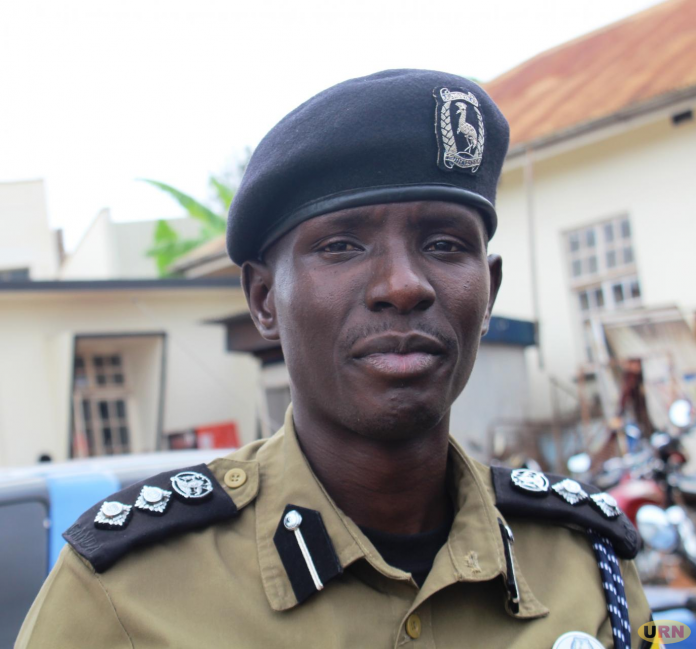
She Cranes finish 6th in 2019 World Netball rankings

she cranes players

After a busy year of netball, the Uganda National Netball Team, known as ‘She Cranes’ finish sixth in the 2019 International Netball Federation (INF) World Rankings.

The She Cranes complete the year with a total of 3,928 points and a rating of 123.

Uganda remain the second in Africa behind South Africa (5th). Malawi (7th), Zimbabwe (13th) and Zambia (15th) complete the continent’s top five.

The Africa Netball Cup allowed Zimbabwe to move up to 13th, while Zambia retained their place at 15th and Kenya enter the world rankings at 39th.

After the M1 Nations Cup, Namibia move up by 3 places to 30th, Botswana move to 24th while Ireland move down to 26th and Papua New Guinea move down to 31st.

The overall rankings reflect the games played up to 2nd of December 2019 which include the Netball Europe Open Championship, the Canada – America test series, the Constellation Cup, the Africa Netball Cup, Battle of the Saints, the M1 Nations Cup, the Southeast Asian Games and the South Africa test series against England.

The world rankings see no change within the top 5, with Australia retaining their place in 1st after their performance at the Constellation Cup. New Zealand consolidate their place in 2nd, England remain 3rd followed by Jamaica in 4th and South Africa.

After a strong performance at the Netball Europe Open Championship, Wales move into the top 10 in 9th place, followed by Trinidad and Tobago who move up from 11th to 10th, with Northern Ireland moving down two places to 11th.

Following the Battle of the Saints, St Kitts and Nevis re-enter the rankings at 27th, Antigua and Barbuda move to 36th, Cayman Islands rise 7 places to 28th, and St Maarten move down to 44th.

Stories Continues after ad

A “Meeting of Minds” Report identifies five main challenges facing African banks

Bank of Uganda regulates all commercial banks in the country

In October 2019, during the tenth Africa Forward Together (AFT) forum in Mauritius and spearheaded by Mauritius Commercial Bank (MCB) a special workshop aptly called “Meeting of Minds” session leveraged the insight and brainpower of over 35 C-level and senior banking leaders across the African region and beyond.

The aim of the session was to identify and prioritise the main challenges faced by their banks in five distinct but interlinked areas that were purposefully scoped to look beyond numbers:, Expertise, people, operational efficiency, risk and corporate Sustainability

Further to the “Meeting of Minds” workshop, a report probing into discussions has been published this week by MCB. It identifies five main challenges facing African banks and financial institutions, as follows: Lack of technical expertise amidst the increased cybersecurity risk, Know Your Corporate (KYC) issues hampering financial inclusion, talent management, retention and development, customers’ education and staff skills gap, IT & digitalisation and transformation programme and expertise

In the editorial of the report, MCB Group CEO, Pierre-Guy Noël speaks of an alignment of African banks and institutions on the key issues they have to face. “Considering the relative heterogeneity of African markets in terms of distinct characteristics and level of maturity in consumer behaviour, there was a remarkable alignment on the challenges facing the region’s financial institutions,” he said.

On the main threat posed by cybesecurity, MCB Group CEO observed : “Additionally, there is a lack of appropriate risk assessment and framework that caters for the exigencies arising from the use and adoption of new digital solutions. The rise of cybersecurity attacks and other cyber frauds were therefore highlighted as the most significant challenge, compounded by the lack of technical expertise and familiarity at senior levels in these fields (…) In parallel across the rest of most institutions, is the significant shortage of technical expertise and know-how in IT, digitalisation and related transformation programmes…”

The lack of KYC and other compliance frameworks “to facilitate the on-boarding of unbanked segments remain a key obstacle for regional banks to further financial inclusion. This challenge emerged in many discussions”, added Mr. Noël, who also stresses upon the challenge of developing solutions from customer segments that are distinct and sometimes unrelated (urban customers with high digital literacy vs rural unbanked segments requiring traditional supports and channels).

Last but not least, sustainable development and the necessity to embed its principles into corporate DNA are also issues highlighted by Mr. Noël. “The alignment of long-term value to stakeholders with corporate sustainability requires a considerable strategic push, a deep adjustment of corporate culture and a more measured risk-management mindset. This adjustment will have to take place sooner than later, because a trusted bank with a wider positive impact is increasingly being upheld as the minimum standard vis-à-vis stakeholders ranging from our own customers and central banks, to providers of lines of credit”.

MCB’s CEO insists on the fact that the insights of the report can help prioritise strategies for the future and promote awareness “that collaboration and partnership within the region has potential to address many of the common challenges facing African banking and financial services today”.

Based in Mauritius, MCB Group is currently ranked 1st in East Africa, 19th in Africa and 613th among the Top 1000 Banks in terms of Tier 1 capital. The Group is investment grade- rated by Moody’s and Fitch, and currently ranks 31st in Africa in terms of assets (Jeune Afrique Top 200 Banks, The Africa Report, September 2019) and 81st on the African continent in terms of market capitalisation (African Business Top 250 Companies, May 2019).

Stories Continues after ad

Ugandan gets MBE honour

Atim being honoured by Prince William

Ugandan-born stage actress Sheila Atim has received a prestigious MBE (Member of the British Empire) honor from Prince William (Grandson of Queen Elizabeth).

Atim, 28, is best known for her role as Marianne in the original production of Girl from the North Country and was given the honour by the Duke of Cambridge. She went to the UK from Uganda at only five months old.

She has also played Emilia opposite Mark Rylance’s Iago in Othello, at the Globe, in 2018.

Stories Continues after ad

Rwandan national could face 30 years in jail over genocide

Fabien Neretse (left)

Belgian prosecutors have urged court to impose a 30-year jail term on a former Rwandan official convicted of genocide for his part in his country’s 1994 killing of minority Tutsis.

Fabien Neretse was arrested in France in 2011 and was found guilty of genocide and war crimes on Thursday after a trial in the Brussels high court.

Neretse, who protested his innocence throughout the trial, is the first person to be convicted in Belgium on a genocide charge.

He was also convicted of war crimes for 11 murders in Rwanda, under Belgium’s code of universal jurisdiction for the most serious offences.

Neretse remained silent in the dock as the verdict was being delivered on Thursday, but many have a chance to speak during Friday’s sentencing hearing.

Stories Continues after ad

Tanzania: African Development Bank lends $272 million for construction of Msalato International Airport

Msalato International Airport Artistic impression

The Board of Directors of the African Development Bank has approved a US$272.12 million loan to Tanzania for the construction of a new international airport in the capital Dodoma.

The funding package, approved on Wednesday, comprises a US$198.6 million loan from the Bank,  US$23.52 million from the African Development Fund (ADF) and $50 million in co-financing with the Africa Growing Together Fund (AGTF) — a co-financing facility of the People’s Republic of China managed by the Bank.

The new airport will be built in the district of Msalato, 12 kilometres from the capital.

The project involves the construction of high-capacity airport infrastructure to meet the expected growth in air transport from the city’s new role as the administrative capital of Tanzania. Work will be carried out over four years and will include a passenger terminal, a runway, air navigation equipment. The project includes other related operational services such as a fuel distribution company, water supply systems, electrical power distribution substations and a fire-fighting service.

The new facility is expected to handle at least 50,000 aircrafts and a million passengers per year, most of which will be international. It will benefit and serve more than 200 million passengers in East Africa, as well as international trade networks, and especially business travellers and tourists.

“An expanded air transport network in Dodoma, together with the ongoing high-speed railway construction on the central corridor, are necessary infrastructure investments to help unlock and disperse spatial development in the countryside. This will strengthen the city’s potential as a strategic growth pole in keeping with Tanzania’ national development aspirations of fostering shared growth for all the regions,” said Amadou Oumarou, the Director of the Bank’s Infrastructure and Urban Development Department.

As of late November 2019, the African Development Bank portfolio in Tanzania comprised of 21 public and two private-sector operations, with a total commitment of approximately $2.1 billion. The transport sector alone accounts for 51% of project funding, followed by energy (16%), water and sanitation (12%), finance (6%), agriculture (6%), multisector interventions (5%) and social projects (4%).

Stories Continues after ad

Striking the right balance between sustainable development and sustainable debt

Kristalina Georgieva

By Kristalina Georgieva

Over the past two decades, sub-Saharan Africa has made considerable economic progress: extreme poverty levels have declined by one third; life expectancy has increased by a fifth; and real per capita income has grown by about 50 percent on average. Yet, sub-Saharan Africa is still only half-way to meeting the Sustainable Development Goals.

To achieve these goals, sub-Saharan Africa will need financing. One of the ways to access financing is through borrowing. It makes sense for governments to incur debt if done wisely. If debt is used to finance projects that boost productivity and living standards, such as investing in roads, schools, and hospitals—and if governments can recoup enough of the benefits of these investments to repay the incurred debt—then borrowing is worthwhile.

But room for borrowing has become more limited in this region as public debt levels increased rapidly between 2011 and 2016—they have since stabilized at around 55 percent of GDP on average. Countries in the region have also relied more heavily on commercial borrowing on domestic and international financial markets—such borrowing accounted for more than 70 percent of the increase in debt stock this decade. This shift to non-concessional financing means more spending on debt service, and less on social and infrastructure investment.

It is clear that sub-Saharan African countries will not be able to simply “borrow their way” to the SDGs.

So, what is needed? This was the topic of a conference organized by the IMF together with the Government of Senegal on December 2, in partnership with the United Nations and the Cercle des économistes. Dakar was a fitting venue as Senegal has launched its Plan Sénégal Émergent aimed at transforming its economy, creating jobs, and boosting living standards. It was also apt because, as I told the conference attendees, policymakers can draw inspiration from the Lions of Teranga—Senegal’s national soccer team, which impressed everyone at last year’s Africa Cup of Nations.

A balanced approach

The Lions of Teranga’s success is based on a balanced approach—between the urge to attack and the need to defend, between individual efforts and team performance. Similarly, Africa is seeking to find the right balance between financing development and safeguarding debt sustainability, between investing in people and upgrading infrastructure, between long-term development objectives and pressing immediate needs. In short, a balanced approach is needed; and, in order to get there, all stakeholders will need to raise their game.

There are five powerful tactics that we can all pursue to find the right balance between development and debt, three directed at sub-Saharan policymakers and two at the international community and the private sector.

The first tactic is to generate higher public revenue. This is an area where sub-Saharan Africa lags other regions. We estimate that revenue collection is 3–5 percentage points of GDP below revenue potential. Closing that gap can be done, as shown by the good example of Uganda, where, with technical support from the IMF, reforms helped raise the revenue-to-GDP ratio from 11 percent in 2012 to almost 15 percent last year.

The second tactic is to make investment spending more efficient. The reality is that only about 60 percent of the region’s infrastructure spending translates into public capital stock. For every dollar spent, you are getting only about 60 cents worth of assets.

The third tactic is to strengthen public debt management. A key objective is to boost debt transparency by providing accurate, comprehensive, and timely data. This in turn can help build trust with investors, support domestic capital markets, and reduce debt service costs.

The global team

And yet, even as countries pursue the three tactics, we all need to do more. Boosting domestic resources is critical, but not enough. Even strong domestic efforts are likely to cover just a quarter of the estimated SDG needs. So, the global team also needs to do more.

So, fourth tactic: Advanced economies can do more, especially when it comes to aid. The goal is to raise official development assistance to 0.7 percent of donors’ national income. Donors could also focus more on infrastructure by providing grants and concessional financing for projects with credibly high rates of return.

Fifth tactic: We also need to bring in more private-sector players—including more foreign direct investment—to help close the significant financing gap. Responsibility for achieving the SDGs must begin with efforts by the public sector, but it cannot end there. Above all, we need to ensure that private and public players can both end up on the winning side. A good example can be “blended finance,” which brings together grants, concessional financing, and commercial funding.

How can we encourage risk-sharing? How can we scale up development finance for the benefit of all? These are just some of the issues that Africa is now grappling with. But it is clear that we all benefit if we act jointly to promote the good of Africa. As the Senegalese proverb puts it: “Whatever one person can do, two people can do it even better.” That is the spirit of the Lions of Teranga. It is the same spirit that lies at the heart of what we are trying to achieve across sub-Saharan Africa.

Kristalina Georgieva is President of IMF

Stories Continues after ad

Number of males using tobacco globally on the decline

Cigarettes

For the first time, the World Health Organization projects that the number of males using tobacco is on the decline, indicating a powerful shift in the global tobacco epidemic. The findings, published yesterday in a new WHO report, demonstrate how government-led action can protect communities from tobacco, save lives and prevent people suffering tobacco-related harm.

“Declines in tobacco use amongst males mark a turning point in the fight against tobacco,” said Dr Tedros Adhanom Ghebreyesus, WHO Director-General. “For many years now we had witnessed a steady rise in the number of males using deadly tobacco products. But now, for the first time, we are seeing a decline in male use, driven by governments being tougher on the tobacco industry. WHO will continue working closely with countries to maintain this downward trend.”

During nearly the past two decades, overall global tobacco use has fallen, from 1.397 billion in 2000 to 1.337 billion in 2018, or by approximately 60 million people, according to the WHO global report on trends in prevalence of tobacco use 2000-2025 third edition.

This has been largely driven by reductions in the number of females using these products (346 million in 2000 down to 244 million in 2018, or a fall over around 100 million).

Over the same period, male tobacco use had risen by around 40 million, from 1.050 billion in 2000 to 1.093 billion in 2018 (or 82% of the world’s current 1.337 billion tobacco users).

But positively, the new report shows that the number of male tobacco users has stopped growing and is projected to decline by more than 1 million fewer male users come  2020 (or 1.091 billion) compared to 2018 levels, and 5 million less by 2025 (1.087 billion).

By 2020, WHO projects there will be 10 million fewer tobacco users, male and female, compared to 2018, and another 27 million less by 2025, amounting to 1.299 billion. Some 60% of countries have been experiencing a decline in tobacco use since 2010.

 “Reductions in global tobacco use demonstrate that when governments introduce and strengthen their comprehensive evidence-based actions, they can protect the well-being of their citizens and communities,” said Dr Ruediger Krech, Director of Health Promotion at WHO.

Despite such gains, progress in meeting the global target set by governments to cut tobacco use by 30% by 2025 remains off track. Based on current progress, a 23% reduction will be achieved by 2025. Only 32 countries are currently on track to reach the 30% reduction target.

However, the projected decline in tobacco use among males, who represent the overwhelming majority of tobacco users, can be built on and used to accelerate efforts to reach to the global target, said Dr Vinayak Prasad, head of WHO’s tobacco control unit.

“Fewer people are using tobacco, which is a major step for global public health,” said Dr Prasad. “But the work is not yet done. Without stepped up national action, the projected fall in tobacco use still won’t meet global reduction targets. We must never let up in the fight against Big Tobacco.”

Other key findings of the report included:

  • Children: Approximately 43 million children (aged 13-15) used tobacco in 2018 (14 million girls and 29 million boys).
  • Women: The number of women using tobacco in 2018 was 244 million. By 2025, there should be 32 million fewer women tobacco users. Most gains are being made in low- and middle-income countries. Europe is the region making the slowest progress in reducing tobacco use among females.
  • Asian trends: WHO’s South East Asian Region has the highest rates of tobacco use, of more than 45% of males and females aged 15 years and over, but the trend is projected to decline rapidly to similar levels seen in the European and Western Pacific regions of around 25% by 2025. The Western Pacific Region, including China, is projected to overtake South East Asia as the region with the highest average rate among men.
  • Trends in the Americas: Fifteen countries in the Americas are on track to reach the 30% tobacco use reduction target by 2030, making it the best performing of WHO’s six regions.
  • Policy action: more and more countries are implementing effective tobacco control measures, which are having the desired effect of reducing tobacco use. Tobacco taxes not only help reduce tobacco consumption and health-care costs, but also represent a rev­enue stream for financing for development in many countries.

Every year, more than 8 million people die from tobacco use, approximately half of its users. More than 7 million of those deaths are from direct tobacco use while around 1.2 million are due to non-smokers being exposed to second-hand smoke. Most tobacco-related deaths occur in low- and middle-income countries, areas that are targets of intensive tobacco industry interference and marketing.

The WHO report covers use of cigarettes, pipes, cigars, waterpipes, smokeless tobacco products (like cheroots and kretek) and heated tobacco products. Electronic cigarettes are not covered in the report.

The report supports the monitoring of Sustainable Development Goal (SDG) target 3.a, which calls for strengthening implementation of the WHO Framework Convention on Tobacco Control (WHO FCTC). The WHO “MPOWER” measures are in line with the WHO FCTC and have been shown to save lives and reduce costs from averted healthcare expenditure, including:

  • Monitoring tobacco use and prevention policies.
  • Protecting people from tobacco smoke.
  • Offering help to quit tobacco use.
  • Warning people about the dangers of tobacco.
  • Enforcing bans on tobacco advertising, promotion and sponsorship.
  • Raising taxes on tobacco.
Stories Continues after ad

Freelancer photographer drags New vision to Court, seeks Shs400m for damages

Mr. Esagala and his lawyers at court after filing the case.

Award winning and freelance photographer, Alex Esagala, has dragged New vision printing and publishing company limited to court for infringing on copyright of his photograph.

Through his layers of Kaggwa and Kaggwa Advocate, the plaintiff seeks Shs 400billion arising from infringement of copyright being usage fees, damages from the date of publication of the photography until full settlement of the suit and costs.

The plaintiff avers that on the 25th day of November,2019, New vision printing and publishing company through its local dialect newspaper Bukedde, published the said photograph on page 18 without accrediting or seeking the his consent yet it was a special report on how to overcome strikes in universities .

He contends that last month through his lawyers, he wrote a notice of intention to sue to New vision printing and publishing company limited however it was ignored.

According to Mr Esagala, he took that picture and several others during one of the student protests in Makerere University in April, 2018. The said pictures were taken under extreme circumstances that included police brutality.

The infringed photo at the centre of the legal battle.

On the 17th day of April, 2018, the Daily Monitor published the said photograph on the front page and its various media platforms and accredited the same to the Plaintiff and the said photo won Uganda Press Photo Award in 2018 that was sponsored by the European Union, Democratic Governance Facility (DGF), Canon and the United States Embassy in Kampala.

He said the Vision Group earns through advertising and circulation revenue from Bukedde newspaper and other media platforms like Bukedde 1 and 2 television, twitter and facebook from running such award winning photos.

The defendant has enjoyed a benefit at the exploitation and detriment of Esagala as the author of the photograph. In the circumstances, New vision is liable to pay the said sum of money and has no defence to the claim whatsoever either at law or at all.

Stories Continues after ad