Stanbic Bank
Stanbic Bank
20.7 C
Kampala
Stanbic Bank
Stanbic Bank
Home Blog Page 1104

Lt. Col. Nakalema investigating Kasekende, city lawyers in the BoU-Crane Bank in receivership payment deal

Col. Nakalema


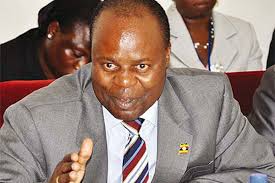
The head of State House Anti-Corruption Unit, Lt. Col. Edith Nakalema is reportedly investigating outgoing Deputy Governor Bank of Uganda, Dr. Louis Kasekende, plus a host of other top officials and two city lawyers.

According to a source, the investigation concerns Shs478 billion. Auditor General, John Muwanga in his special audit report of the said amount discovered that only Shs200 could be explained how it was used while the balance of Shs279 was unaccounted for.

Eagle Online has also learnt that Col. Nakalema and her team are also interested why BoU allegedly paid over Shs20 billion as legal fees to two city lawyers. The lawyers are David Mpanga of A.F.Mpanga and Bowmans and Timothy Kanyerezi Masembe of MMAKS Advocates.

It is alleged that BoU recently released Shs4 billion as part of the balance on Shs20 billion to the lawyers. However, what is intriguing investigators is why paying that entire amount to the lawyers and yet some of the cases are jointly handled by BoU own lawyers.

Col. Nakalema is also reportedly investigating how old currency that is supposed to be destroyed is smuggled out by BoU officials who again return into circulation.

“We want to establish whether they deserve that money or it is was a conduit whose other aims aren’t known to the public. Nevertheless, our team will find out” said a security source.

The investigators are also accessing the wealth of the top directors to establish whether their assets resonate with their declaration at the Inspectorate of Government.

Last year as the IGG intensified her investigations of toe top gurus at the central banks,  a  leaked document indicated that Dr. Kasekende had transferred 12 plots of land into the names of his driver Moses Musitwa in an effort to dodge the scrutiny of the Inspector General of Government (IGG).

The IGG among other mechanisms used the Leadership Code Act 2002, to catch senior public officials who may have involved in corruption to grow wealth. The officials are required by the Act to declare their properties for purposes of accountability and transparency.

Other directors of interests at BoU are director legal affairs and director banking.

Meanwhile Eagle Online has learnt five other directors at the bank whose contracts expired or are about to expire will not have them renewed. A source at the bank said this was part of the recommendations from earlier investigation to the appointing authority to retire senior staff at BoU in public interest due to the rampant corruption, overstay but above all, the bad publicity such officials have attracted for the central bank. According among the directors affected are those of legal services, human resources and director Financial Markets Development Coordination (FMDC).

The source further revealed that in less than a month, the governor will also make a shakeup of his troops to replace those that have retired but also make changes as recommended in the earlier report. According to the BoU HR script, the governor is entitled to making changes up the director level while the positions of governor and his deputy are reserved for the president. The changes are also expected at the board level.

This is a second time in less than a year that State House Anti-Corruption Unit is cracking a whip at the central bank.

A whistleblower informed the unit about loss of huge monies getting lost at Entebbe International Airport upon arrival from German where the said cash had been printed. Uganda’s currency, the shilling is printed in German.

Sources then reveal that about two months ago, a team from Bank of Uganda was dispatched to travel to German aboard a chartered airplane to ferry the printed cash to Uganda and upon reaching German, the Uganda team that was led by a one Dr. Barenzi who is the deputy director in charge of operations. Dr. Barenzi represented Charles Malinga Akol, BoU’s Executive Director Operations who was on leave to ferry the money.

As the saga unfolded, Mr. Malinga with a host of other BoU employees were paraded at Anti-Corruption court and charged with negligent of duty, they were remanded but later granted bail.

This website last year reported that BoU officials at their Mbale currency had been arrested with huge sums of money in sacks and yet the money was supposed to be destroyed.  Inside sources told Eagle Online then that the scheme of smuggling out old notes had gone on un-noticed at all the currency centres for a while as it involved big shots at the bank.



Stories Continues after ad

SSP Ezekiel Emitu to eat big in new police shakeup

SSP Emitu

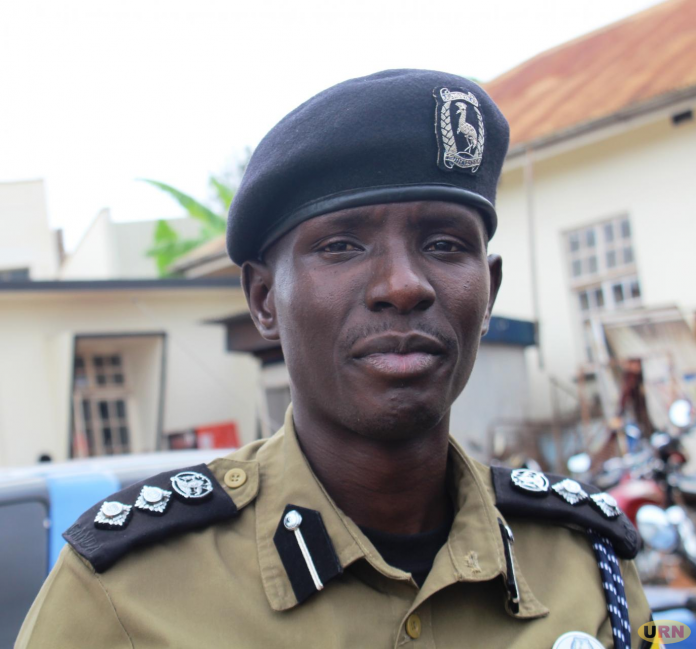
The Aswa Regional Police Commander, SSP Ezekiel Emitu is rumoured to be headed fro bigger assignment in police as he is expected to take over the Kampala Metropolitan Police.

According to impeccable sources, list of who is to be  transferred, retained and maintained in the force is over and the list was more less out if it wasn’t recalled for a few changes.

The Current KMP commander Commissioner of Police Moses Kafeero who was appointed in April in 2018 will be promoted and elevated to another senior assignment.

Police has a placement, recruitment and transfer policy to ensure that transfers and deployments are conducted in a fair and transparent manner based on the approved structure of the police under public service.

According to this policy, the IGP can transfer any police officer at or below the level of director. He also delegates some responsibilities to the human resource director for placement of the transferred officers.

In forthcoming reshuffle, IGP Martin Okoth Ochola is expected transfer and make new appointments of commissioners, assistant commissioners of police (ACPs), regional police commanders (RPCs), superintendents of police (SPs), and division police commanders (DPCs), among others.

In 2015, Emitu was transferred from Nalufenya base command to PTS Kabalye and appointed as deputy commandant of the school, he also handled the youth programme at the centre of excellence in community policing at the school. He was later in 2016, promoted to the rank of senior superintendent of police.

SSP Emitu once served in Kampala Metropolitan Police (KMP) before being transferred to Aswa as regional police commander (RPC) in 2018.

Stories Continues after ad

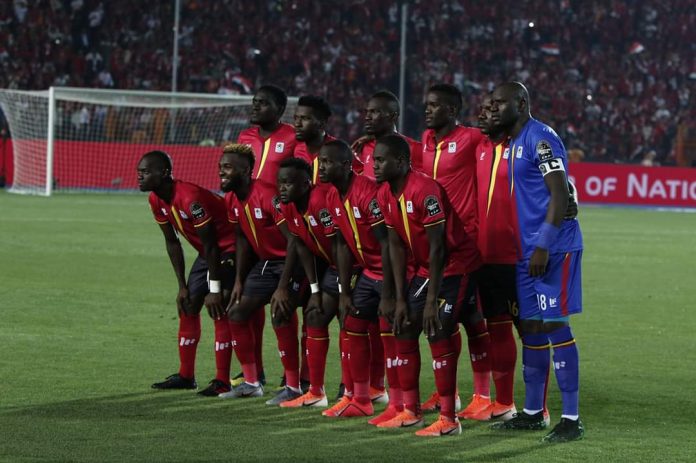
Uganda Cranes in Pot 2 for 2022 World Cup Qualifiers

Uganda Cranes

Uganda has been placed in Pot two ahead of Qatar 2022 FIFA World Cup qualifiers draw that are scheduled for Tuesday, 21 January 2020 at the Nile Ritz-Carlton in Cairo, Egypt.

The seeding was based on the FIFA World Rankings of December 2019.

There will be ten groups with games starting in March 2020 and coming to an end in October 2021. The sides will play home-and-away fixtures.

The ten group winners will be drawn into five two-legged knockout ties to be played in November 2021. The five victors advance to the final tournament.

The Qatar World cup will be played from 21st November to 18th December 2022.

The Pots:

Pot 1: Algeria, Senegal, Tunisia, Morocco, Ghana, Egypt, Cameroon, Mali, Congo DR.

Pot 2: Burkina Faso, South Africa, Guinea, Uganda, Cape Verde, Gabon, Benin, Zambia, Congo, Côte d’Ivoire.

Pot 3: Madagascar, Mauritania, Libya, Mozambique, Kenya, Zimbabwe, Niger, Central African Republic, Namibia, Guinea-Bissau.

Pot 4: Malawi, Angola, Togo, Sudan, Rwanda, Tanzania, Equatorial Guinea, Ethiopia, Liberia, Djibouti.

Stories Continues after ad

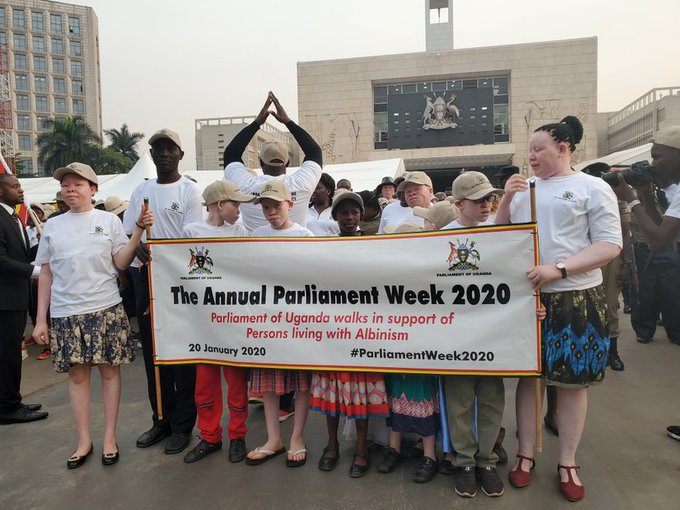
Parliament Week 2020: Over Shs50m raised for establishment of centre for persons with albinism

Uganda's Albinos need special attention

The Parliament Week 2020 has kicked off with the fundraising charity walk where Shs54 million has been raised towards the establishment of a rehabilitation and establishment of community centre for persons with albinism. The charity walk was part of the several activities to mark this year’s Parliament Week which runs from January 20-24, 2020.

Participants including Members of Parliament and the general public were led by the Speaker of parliament Rebecca Kadaga, Leader of Opposition in Parliament, Betty Aol Acan and Government Chief Whip, Ruth Nankabirwa. They walked from Parliament Building into the city centre and back to the starting point.

The Speaker expressed her concern that despite of an earlier recommendation to remove taxes on sunscreens and other equipment that aid persons with albinism mitigate health conditions, taxes haven’t practically been removed. Sunscreen Lotion helps people living with Albinism against the sun rays that cause cancer.

“Albinism is only a genetic condition inherited from both parents and it is not contagious. The misconception that people with it are cursed needs to end as it stigmatizes those suffering from it.” She said.

Government Chief Whip vowed to be the champion for Albino causes in the Cabinet. “I will see to it that taxes are removed from sunscreens which persons with albinism find costly and I will be making a monthly contribution of One Million Shillings” she said.

Dr. Olive Namutebi, president Albinism Association said they are concerned with limited access to treatment for conditions associated with albinism. A recent study conducted in 10 districts found out that 72 persons had an issue with eyesight but only two per cent had received treatment. So far Sub Saharan Africa has over 8725 Albinos and the high incidence is 1 : 4.

She pleaded with all Government bodies to join Parliament in advocating for their wellbeing adding that Persons with albinism say they still face widespread marginalization amidst costly equipment required to mitigate the effect of sunlight.

The Clerk to Parliament, Jane Kibirige that they have so far mobilized the required funds to purchase the plot of land for the albino community centre. About Shs5 billion is needed for build the centre.

Stories Continues after ad

World’s 22 richest men have more than all women in Africa: Oxfam

The number of billionaires has doubled in the past decade and the world’s 22 richest men now have more wealth than all the women in Africa, Oxfam said Monday in an appeal to the Davos elite to get serious about inequality.

“Our broken economies are lining the pockets of billionaires and big business at the expense of ordinary men and women. No wonder people are starting to question whether billionaires should even exist,” Oxfam’s India head Amitabh Behar said.

“Women and girls are among those who benefit least from today’s economic system,” Behar said ahead of the annual World Economic Forum in Davos, where he will represent Oxfam.

There will be at least 119 billionaires worth about $500 billion attending Davos this year, Bloomberg reported, with the highest contingents coming from the United States, India and Russia.

“The very top of the economic pyramid sees trillions of dollars of wealth in the hands of a very small group of people, predominantly men,” the Oxfam report said.

“Their wealth is already extreme, and our broken economy concentrates more and more wealth into these few hands,” it said.

The report said women and girls put in 12.5 billion hours of unpaid care work each and every day, estimated to be worth at least $10.8 trillion a year.

Oxfam’s annual report on global inequality is traditionally released just before the forum opens on Tuesday in the Swiss Alpine resort.

– Startling stats –

It had some astonishing statistics.

If the world’s richest one percent paid just 0.5 percent extra tax on their wealth for 10 years, it would equal the investment needed to create 117 million new jobs in elderly and child care, education and health, Oxfam said.

Oxfam’s figures are based on data from Forbes magazine and Swiss bank Credit Suisse, but they are disputed by some economists.

The numbers show that 2,153 billionaires now have more wealth than the 4.6 billion poorest people on the planet.

Women and girls are burdened in particular because they are most often care givers that keep “the wheels of our economies, businesses and societies moving,” Behar said.

They “often have little time to get an education, earn a decent living or have a say in how our societies are run,” and “are therefore trapped at the bottom of the economy,” he added.

“Across the globe, 42 percent of women cannot get jobs because they are responsible for all the caregiving, compared to just six percent of men,” Oxfam figures showed.

The report called on world governments to “build a human economy that is feminist and values what truly matters to society, rather than fuelling an endless pursuit of profit and wealth”.

Stories Continues after ad

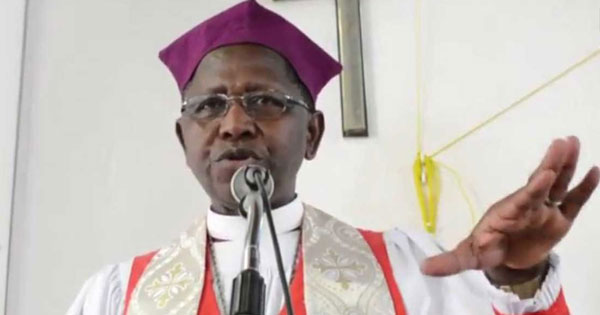
Makerere to set up centre of excellence in honor of Archbishop Ntagali

The Most Rev. Stanley Ntagali

Makerere University is set to establish a centre of excellence in the honor of the outgoing Archbishop of Church of Uganda, The Most Rev Stanley Ntagali.

The centre will focus on either research, conflict resolution or peace studies depending on his wish.

This was revealed today by Prof. Eria Hisali the Principal of Makerere University’s College of Business and Management Sciences (COBAMS) who represented the university’s Vice Chancellor Prof Barnabas Nawangwe during the farewell service for Ntagali at St Francis Chapel, Makerere University.

“The Lord has abundantly blessed Archbishop Ntagali and as such, a lot has been achieved under his leadership. The centre of excellence will be to keep his legacy alive,” Hisali said.

He commended Ntagali for preaching the gospel of development, peace and reconciliation which was exhibited through a calm and peaceful tenure as the 8th Archbishop of the Church of Uganda.

“I am blessed to have heard a lot of your sermons Your Grace. They were so inspiring and transformational. You are leaving behind a very powerful legacy and we want to thank the Lord for enabling you to achieve all those landmark achievements,” he said.

St Francis Chapel’s Chaplain, Rev Onesmus Asiimwe applauded Ntagali for his tremendous achievements in the spiritual realm which have also been manifested in physical infrastructure.

He commended the Archbishop for the completion of Archbishop Janani Luwum Church House which had stalled for 40 years.

He further lauded him for the establishment of Uganda Martyrs Museum in Namugongo, construction of All Saints Cathedral Kampala, his firm stand for the authority of Scripture against same sex unions, his focus on Mission, Evangelism and Family life Ministry, Insurance of clergy and Christians through the KIDO Program, creation of new Dioceses, revitalization of Youth and Students Ministry and maintaining peace in the entire Province.

“I have had the singular privilege of serving under three Archbishops and I have seen turbulent times in COU. I can testify that the Province has never been this peaceful,” Asiimwe said.

On his part, Ntagali appreciated the cordial relationship between the university management and the Church.

He welcomed the idea of the University establishing a Centre of Excellence in his honor and pledged total support to see the idea come to fruition.

Quoting Acts 20:32, he commended Christians of St Francis Chapel Makerere to God and to the word of His Grace to build them up and give them the inheritance among those who are sanctified.

Ntagali is set to retire on 1st March 2020 when he turns the Church of Uganda’s Constitutional retirement age of 65 years and will hand over to Rt Rev Dr Samuel Stephen Kazimba Mugalu the Bishop of Mityana Diocese who was elected by the House of Bishops on 28th August 2019 as the 9th Archbishop of the Church of Uganda and 8th Bishop of the Diocese of Kampala.

Stories Continues after ad

Liquid Telecom to launch first 5G wholesale roaming network service

Liquid Telecom Gareth Davies Capture Comms Ltd

Liquid Telecom is set to launch the first 5G wholesale roaming service in South Africa. Available from early 2020 in all major South African cities, this latest fifth generation of mobile internet connectivity will enable wholesale operators to create innovative, ultra-fast and scalable digital services for their customers.

The 5G wholesale network will also help accelerate the evolution of the Fourth Industrial Revolution (4IR) in South Africa. Reliable connectivity up to 10 times faster than 4G will allow businesses to harness trends such as the Internet of Things (IoT), robotics and artificial intelligence (AI) to innovate transformative new services, increase productivity and deliver more connected customer experiences.

“This breakthrough 5G wholesale service will create innovation in every aspect of South African society and industry,” says Strive Masiyiwa, Chairman, Liquid Telecom. “For the first time, mobile network operators and ISPs will have open access to Liquid Telecom’s new 5G mobile network. The launch of the service also underscores Liquid Telecom’s vision to bring high-speed connectivity to everyone.”

Liquid Telecom will use its 3.5GHz spectrum asset to build the 5G network and provide nationwide 5G wholesale services to the market early in 2020.

One of the most profound implications of the new service will be its impact on South Africa’s 4IR ambitions, where connected devices communicate with each other, automating the factory floor without the need for human intervention. The fusion of 5G, IoT and other technologies like AI and robotics will touch and transform every facet of business, creating entirely new ways of serving existing needs.

“This is a milestone moment for Liquid Telecom South Africa,” said Nic Rudnick, Group CEO. “Our wholesale operating partners can exploit our new ultra-fast 5G roaming network to build the next generation of communications and make innovation possible, anytime, anywhere. 5G will facilitate real-time remote collaboration, improved business efficiency and lower costs – ultimately driving growth in the South African economy.”

The launch of the 5G wholesale roaming service is another step towards Liquid Telecom ‘Building Africa’s digital future’. The organisation has been investing heavily across the continent where it operates Africa’s largest independent fibre network, spanning almost 70,000km in length.

Stories Continues after ad

Kasekende finally bids farewell to BoU staff, lauds Museveni for giving him job

Dr Louis Kasekende

Dr Louis Kasekende, the former deputy governor Bank of Uganda (BoU) last week bid farewell to the institution’s staff.

Kasekende’s contract expired on January 13. He had hoped his contract would renew but so far not nothing is in the pipeline.

In a brief statement, Kasekende wrote: “As you already know, my contract as Deputy Governor of Bank of Uganda came to an end on January 14, 2020. It has been a great honor to serve in the position of DG for the last 10 years.”

“I express my profound gratitude to the appointing authority, H.E. President Museveni, for according me the opportunity to serve the Bank, and to represent the country in various continental and international assignments,” he said.

“I also thank the various Ministers of Finance, Governors and the Board of Directors of the Bank for the support over the many years I have served the Bank.”

“Last but not least, I would like to thank you all for the love and tremendous support during my employment with BoU. Excluding the years I was at the World Bank and the AfDB, I have spent close to thirty years in total with BoU, thus many of my colleagues have become friends.”

Kasekende has worked in BoU for the last 33 years having joined in 1986.

He served in different capacities before rising to the position of deputy governor in 1999.

In 2002, he left the central bank to serve at the World Bank before returning to occupy the same position.

But recent scandals in BoU tarnished Kasekende’s name and he leaves the institution not happy man especially when the sale of seven banks probe is considered.

In April 19, 2018, Kasekende tried to block a forensic audit by the Auditor General into the operations of the Central Bank and its role in the closure of seven commercial banks.

Mr Kasekende wrote to the Attorney General on April 19, 2018, protesting an investigative audit by the Auditor General on the resolution process of Crane Bank Ltd (in receivership) on grounds that such an inquiry offends the sub-judice rule.

The Solicitor General, Mr Francis Atoke, wrote back to the BoU Governor on May 2, 2018 ordering the bank not to cooperate with either the Auditor General or Parliament regarding an investigation into the sale of Crane Bank on grounds that any such inquiry would offend the subjudice rule.

But Kasekende and other senior colleagues at BoU were dealt a blow when Speaker of Parliament and President Museveni supported the investigation and finally the BoU officials were exposed by Auditor General John Muwanga as wanting in the way they did official work.

Stories Continues after ad

More countries ratify tripartite free trade area agreement

The Tripartite Free Trade Area.


Namibia has become the eighth country to ratify the Tripartite Free Trade Area (TFTA) Agreement moving the region closer to having a fully operational agreement this year. Six more countries are required for the agreement to enter into force.

Tripartite Coordinator at COMESA Secretariat, Dr Seth Gor confirmed in Lusaka that seven more countries from the EAC-COMESA-SADC are at advanced stages of ratifying the important document which will spur intra-regional trade.

“We are optimistic that the remaining six countries will ratify the Agreement and we can have it fully operational this year,” said Dr Gor.

He has also revealed that the Republic of Burundi deposited its instrument of ratification in November 2019. The TFTA is a building block for the African Continental Free Trade Area (AfCFTA) and its aim is to gradually reduce the tariffs for all goods traded in the bloc to zero percent.

The TFTA is focusing on three pillars, Market Integration, Industrial Development and Infrastructure Development.  These three areas have been prioritised to support the regional economic integration efforts in the region and the continent.

Other Member States that have so far ratified the TFTA Agreement are Egypt, Uganda, Kenya, South Africa, Rwanda, Botswana and Burundi.

The TFTA was launched in Sharm-el-Sheikh, Egypt on 10 June 2015 and signed by 22 of the original 26 countries covered by the deal. Tunisia, Somalia and South Sudan have since joined the configuration, bringing the total membership to 29 countries. These countries together represent 53 percent of the African Union membership, 60 percent of continental GDP and a combined population of 800 million.

According to trade experts, if the TFTA countries were one country, it would be the thirteenth largest economy in the world. Merchandise trade within the Tripartite region grew from US$23 billion in 2004 to US $55 billion in 2012 – an increase of 140 per cent during this period, reinforcing the ‘Africa rising’ narrative.


Stories Continues after ad

Museveni in Togo for Africa summit on drug trafficking and counterfeit medicines

Museveni was received at the Lome- Tokoin International airport by his host President Faure Essozimna Gnassingbe


President Yoweri Museveni has arrived in the Togolese Capital Lome for a two-day France – Africa summit on drug trafficking and counterfeit medicines on the continent, according to State House Press Unit.

Museveni arrived at the Lome- Tokoin Gnassingbe Eyadema International airport and was received by his host President Faure Essozimna Gnassingbe.

Seven African leaders from the Republic of Congo, Gambia, Ghana, Niger, Senegal, Togo and Uganda will sign an agreement for stronger legislation to criminalise the sale of fake drugs at a two-day summit on counterfeit medicines being held under the theme; “Fake drugs a real crime”.

The summit is an initiative of the Brazzavile Foundation, a charity organization based in the United Kingdom whose patron is HRH Prince Micheal of Kent and is led by Sir David Richmond. The Brazzaville Foundation is expected to lead to a “Lomé Initiative” to end the illegal trafficking and use of fake drugs, and also help to combat a deadly trade that claims hundreds of thousands of lives every year in Africa and funds transnational crime and terrorism.

The foundation is managed by an international advisory board made up of highly distinguished individuals including Uganda’s former Prime Minister Amama Mbabazi who was at the airport to receive the President on behalf of the foundation. Other leaders to receive the president included ministers and officials from both governments and cultural leaders from Togo.

It is hoped that the leaders will sign an agreement for criminalising trafficking in fake drugs. The aim is to bolster cooperation between governments and encourage other African nations to join the initiative.

The world health organization estimates that every year, some 100,000 people across Africa die from taking falsified or substandard medication. According to reports, globally, the trade in counterfeit pharmaceuticals is worth up to US$200bn annually with Africa among the worst affected regions.

Weak legislation, poor healthcare systems and widespread poverty have encouraged the growth of this parallel — and deadly — market. Since 2013, Africa has made up 42 percent of the fake medicine seized worldwide. According to experts, the two drugs most likely to be out-of-date or poor, ineffective copies are antibiotics and anti-malarials.

The President who is representing the East African region will ba making his presentation today. East Africa is one of the regions facing increased threats from drug trafficking and counterfeit medicines.


Stories Continues after ad