Stanbic Bank
Stanbic Bank
20.1 C
Kampala
Stanbic Bank
Stanbic Bank
Home Blog Page 1105

CDC Group finally exits Dfcu as it sells shares to Danish entity

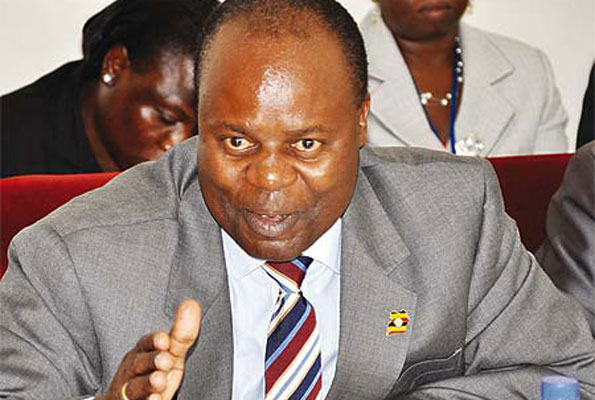
Mr. Jimmy Mugerwa, the board chairman of Dfcu bank who is accused by some shareholders for the bank's poor management.


Dfcu Limited has finally confirmed that Britain’s Commonwealth Development Corporation (CDC) Group sold 74,580,276 shares which make up 9.97 per cent of the total 748, 144,033 ordinary shares.

Like Eagle Online reported earlier, the shares were sold to the another Nordic mafia the Investment Fund for Development Countries, owned by the Danish Government.

Days ago Dfcu in a cautionary announcement disclosed that CDC would sell its shares after receiving approvals from authorities, given that Dfcu is listed on the Uganda Securities Exchange, regulated by the Capital Markets Authority.

Eagle Online last year reported that CDC Group was looking for another offshore company to buy its shares in dfcu. CDC’s Investment Director Irina Grigorenko wrote a confidential letter to Dfcu Chairman Elly Karuhanga of CDC Group’s intention to sell some or all of its shares.

Grigorenko said then that CDC Group was “undertaking a review of its investment in Dfcu Limited which may lead to the disposal or some of some or all of its shares in Dfcu over the short to medium term.” It is said CDC Group were not happy Dfcu’s controversial acquisition of Crane Bank Limited.

When asked, analysts said it is normal for shareholders to sell their shares within or get buyers from outside when they think it is the right time to exit. However, he hastened to add that some shareholders exit when they anticipate that the company’s business in future might not be profitable at the level they want it.

However, the latest announcement that a significant minority shareholder has got the buyer of its shares comes at the time when Dfcu is facing challenges following the controversial acquisition of Crane Bank Limited (CBL) in January 2017. Dfcu Limited is the holding company of Dfcu bank which bought CBL as offered to it by the Bank of Uganda (BoU).

Recently Dfcu bank realised that it could not take up freehold properties of Meera Investments Limited which had been leased to defunct CBL. Dfcu now wants BoU to compensate it for the loss of the properties it values at Shs47 billion even though it is understood it valued the same properties at Sh10 billion when it took over CBL an estimated Shs200 billion.

About IFU

Rune Norgaard, IFU’s Communication Director, says the institution, an independent government agency provides risk capital and advice to companies wishing to set up business in Africa, Asia, Latin America and parts of Europe. Investments are made on commercial terms in the form of equity and loans. The purpose is to contribute to economic and social development in the investment countries.

IFU and IFU managed funds have co-invested in close to 1300 companies in 100 countries in Africa, Asia, Latin America and parts of Europe.


Stories Continues after ad

Tanzania’s Karia elected new CECAFA President

Karia Wallace (third from right)

The Tanzania Football Federation (TFF) President, Wallace Karia has been elected new President of the Council of East and Central African Football Associations (CECAFA).

The regional football body held its General Assembly at the Silver Springs Hotel in Kampala on Wednesday.

Karia, who was elected unopposed, will serve for the next four years. “I am glad that members have had confidence in me to serve the region. I promise we shall work hard to see that football in the CECAFA region continues to develop,” said Karia.

“One of the major challenges facing CECAFA today is the lack of commitment from some Member Associations (MAs). We have to change this attitude and commit to work in unison and build a culture of inclusivity and cohesiveness,” he said.

President of the South Sudan’s Francis Michael Amin and Ethiopia’s FA President Esayas Jira were also unopposed as 1st Vice President and 2nd Vice President respectively. Eritrea’s Abraham Esayas and Rwanda FA boss Gen. Sekamana Jean Damascène are the two Board members.

Out-going CECAFA President Mutasim Gafaar advised the new team to work hard for more development of football in the region.

The Assembly was attended by representatives from all CECAFA members; Uganda, Tanzania, Kenya, Rwanda, Burundi, Ethiopia, Eritrea, Djibouti, Somalia, Sudan, South Sudan and Zanzibar.

Stories Continues after ad

WorldRemit celebrates International Migrants Day

World Remit

WorldRemit was founded on a migrant’s story, and over the years one man’s experience has solved a problem for millions of migrants across the world. Our journey at WorldRemit has allowed us to hear and learn about brave and courageous individuals who have left their homes and comfort for a ‘better life’, not only for themselves but for their family. A sacrifice that is easier said than done, it is the reason why, globally, we celebrate every migrants story this International Migrants Day.

Over the past decade in Africa, the continent has experienced a rise in international migration taking place within the region. Throughout the 1950’s – 1990’s Africans strived to cross the shores to the West for a better life, now, with political stability, economic development, social development and technological advancement we see more Africans relocating within the region.

Migration is widespread in Africaa large number of households have at least one member who has migrated, either internally or externally.  Many households consider migration as a strategy to improve their livelihood, minimize their risks and diversify their income sources.

After Kenya and Senegal, Uganda has a relatively high number of households with international and internal migrants. For example, within the region – Uganda has the highest number of households with internal migrants by 42% versus Kenya which recorded 35%.

In addition to internal/ international migration, Uganda is the third largest refugee-hosting nation in the world, with more than 1.8 million refugees in the past 3 years.

A migrant’s story is at the heart of WorldRemit, as we strive to assist families to stay connected and support each other with ease, no matter where they are around the world.

A testimonial from Kwizera Dieudonne Andrew is the reason why we work to be the best remittance service to our customers;

“I’m from Uganda, I’ve been in the US for six years, the first time I got to the US it was very hard for me especially sending money to support my family and friends back home. As everyone knows, USA is one of the busiest countries and it was getting hard for me to manage time to go to the store to transfer money to my family.

During my second year in the US I came across WorldRemit on Facebook. Someone said I could remit money easily with them, so I downloaded the app and tried it out at home.  The money went through, I felt so relieved.  From 2016 I’ve been sending money with WorldRemit I’ve had no bad experiences with them but instead good testimony.

Now I can send money from anywhere at work, home, whilst cooking etc that means a lot to me and to many other African brothers and sisters.

I love WorldRemit because they have these friendly charges that enable everyone to send money, and their exchange rate actually beats Western Union and MoneyGram as they charge higher transfer fees. So, I really recommend WorldRemit to everyone, it has brought joy to me and my family as I have been able to help support many projects back home.”

At WorldRemit our focus is not solely based on remitting monies, but also about being affordable, convenient and part of the migrant story. Our service offers senders savings of up to 48% off the cost to send US$200 compared to most banks, and up to 22% compared to most money transfer operators based on World Bank data.

Happy International Migrants day to Ugandans throughout the world!

Stories Continues after ad

Zawadi involved in accident

Zawidi bus

A bus belonging to Zawidi Bus Services heading to Yumbe district from Kampala was involved in accident. Six people injured including three staff members and 3 passengers. No deaths have been recorded. More details to follow.

Stories Continues after ad

Celebrating Christmas: Sex workers donate to police station

Kenyan Media report that sex workers under an umbrella body ‘Smart Ladies, ‘ cleaned the office of the local Officer Commanding Police Division (OCPD) and put up new curtains.

They scrubbed the floors at Collectively Central and Bondeni police stations in an exercise that awed both the officers and citizens.

Dressed in red t-shirts written on ‘Smart Ladies’ to mark the day, led by their chair Daisy Achieng, the more than 200 women handed over seedlings for flowers to the OCPD, Elena Kabukuru.

They further planted trees at the station as they marked the day whose theme was dubbed ‘communities make the difference’.

“We decided to clean the two police stations because we rush here whenever we have our right violated in our line of duty. The police have played a big role in ensuring we operate smoothly irrespective of challenges we face,” said Ms Achieng.

They too cleaned the compound and cut overgrown vegetation at the two stations as they freely mingled with police officers.

They also donated mattresses, buckets, water tanks and brooms to the two police stations.

“We believe we are part of the society who should ensure implementation of police reforms. The bedding and items we have bought might be so little, but we appreciate what role police plays,” said the chair.

Kabukuru who received the donation promised to help the sex workers push for their rights.

She asked them to report cases of assault for action.

“We are happy to have sex workers acknowledge role played by the police in policing. There are several cases reported to us by sex workers, cases that have been solved and others handed over to court,” she said.

According to the sex workers, major challenges they face in line of their duty include gender violation more so rape, economic violation, intimidation and harassment by the public, clients and the police.

“There are times sex workers book a room, but the client turns against them, for instance they are beaten and too raped,” she said.

She said through stigma from the society has also been an issue facing the women, the more than 15,000 women registered as members of Smart Ladies have been trained on paralegal and their rights.

In 2015, at least 15 sex workers were brutally killed in Nakuru town with several attacked while on their line of duty.

One of the victims of attack was found dead at Kanu Street, eyes gouged out and a breast and her private parts chopped off.

Several others were mysteriously killed in hotel rooms, killings that led to protest, with sex workers demanding an action by the police.

Two suspects linked to the brutal attack were arrested and charged at Nakuru law court.

“We have coherent relationship with the police, for instance whenever we are assaulted, we report to the police and victims are arrested and charged,” she said.

There are about 800 sex workers operating within Nakuru’s CBD, 5,000 within Nakuru town and about 15,000 in the county.

At least 2,750 cases on violation of sex workers have been reported from October 2018 to November 2019.

“This year, we have about seven cases of assault reported, some of which are ongoing at the court, while others were solved through police medication,” said the chair.

Achieng said Smart Ladies is working closely with other organisations to empower sex workers with knowledge on their rights and legal affairs.

Through empowerment, women are now able to report violation and harassment without fear for action.

Janet Timona, is among trained paralegal sex worker who help empower other woman across the county.

“We discourage intimidation of sex workers because we provide sex to earn a living. We are happy that through regular training we can fight for our rights,” she said.

Timona, 42, said though sex work is demonized by the society, she has been able to educate her six children after joining the ‘businesses.

“I have two paid university fees for my tow children who have completed their studies, while others are accessing quality education through earning I make,” she said.

Before becoming a sex worker, she said she was a waiter in one of the clubs within Nakuru, but was earning little money that could not pay her bills.

She decided to join Smart Lady in 2010.

“I am a model to many women, I am economically empowered and I like the work I do,” she said during the celebration.

Catherine Gaithuma, a mother of two also said she is product of her work, that she has done for the past 22 years.

“I decided to become a sex worker after death of my mother at a teenage age. I am now a proud mother able to provide for my two boys who know what I do for a living,” said the 34-year-old woman.

Catherine Wanjiku on her part asked the public to help fight decriminalization of sex workers.

“It is unfortunate that we face a lot of violation while at work because we are demonized by the society. We are asking for acceptance to help us do our work freely,” said the mother of three.

Wanjiku is among those violated while on duty.

In 2010, she was attacked gang raped by criminals she met at Shabab area, while heading back home from streets of Nakuru.

She said she did not report because she feared repercussion and was also not empowered about her right.

“I am happy because I am now empowered about my rights, that I too help other women fight for. Nobody should face discrimination because of being a sex worker,” she said.

Stories Continues after ad

Multilateral development banks pledge to bolster support for forcibly displaced people

Forcefully displaced people looking for safe place

Multilateral Development Banks (MDBs) are stepping up their support for refugees and people affected by forced displacement, including hosting communities, across a wide range of sectors and policy instruments.

The pledges were made by the African Development Bank, the Asian Development Bank, the European Bank for Reconstruction and Development, the European Investment Bank, the Inter-American Development Bank, the Islamic Development Bank and the World Bank Group.

“Forced displacement is not only a humanitarian issue, but also a developmental issue which calls for holistic, inclusive and durable solutions. This includes supporting our regional member countries in the prevention of forced displacement by addressing drivers of fragility and building resilience in Africa as well as significantly expanding livelihood opportunities in rural and urban areas,” said Yero Baldeh, Director of the Transition States Coordination Office at the African Development Bank.

He was speaking during the Global Refugee Forum, being held from 16 to 18 December in Geneva, Switzerland.

“Fostering stronger strategic partnerships in this regard is absolutely crucial, which was also highlighted by President Adesina during the Aswan Forum for Sustainable Peace and Development last week,” Baldeh said.

More than 70 million people are forcibly displaced globally, with African countries hosting about 8 million refugees and 16 million Internally Displaced Persons (IDPs). In order to help resolve these often times protracted situations, in December 2019, African Development Fund (ADF) donors committed US$7.6 billion to help address fragility, build resilience and stimulate inclusive growth in 37 African countries. The ADF is the concessional window of the African Development Bank Group.

The MDB Coordination Platform on Economic Migration and Forced Displacement is strengthening regional, national and local coordination, and targeted programming in order to advance socio-economic and climate resilience, women empowerment, and the creation of decent jobs, particularly for the youth, to mention a few of the core areas.

The MDBs will also promote and support the essential contribution of the private sector to developing sustainable and inclusive programmes with refugees and host communities.

The Global Compact on Refugees is a framework to ensure more predictable and equitable sharing of responsibility. The MDBs acknowledged the importance of the Compact as a key enabler to help achieve the United Nations’ Sustainable Development Goals (SDGs).

Stories Continues after ad

UNBS opens state of the art food safety laboratories

Minister of state for trade Michael Werikhe being assisted to cut the tape by UNBS Chairperson Eng. Masitula Munyaami Male

Uganda National Bureau of Standards (UNBS) has officially opened state of art food safety laboratories, which will enhance safety and quality of food through testing of foods for adulterants and for assessment of product quality and nutritive value.

Speaking at the function of opening of laboratories, the State Minister for Trade, Michael Werikhe said, “Government has prioritized the construction of laboratories which will go a long way in improving the entire food control system in Uganda.”

“The impact of unsafe products and services globally is very grave and has severe implications on the health, safety and livelihood of the people. Trade has become much more globalized as well as movement of goods which has increased risk of unsafe products, trade disputes and product recall,” Werikhe said.

The UNBS Executive Director, Dr. Manyindo revealed that the UNBS laboratories are now internationally accredited which means their results are recognized globally.

“Our labs now act as centres of excellence in training other laboratory practitioners from industry and other government institutions both from Uganda, the EAC region, and many African countries,” Dr. Manyindo said.

The new laboratories will improve the turnaround time in the laboratories, which will further facilitate trade, as well as increase revenue growth that will lead to further development of the country.

UNBS also awarded small enterprises that have been certified over the years and have been consistent in implementing standards and having their products certified companies that have consistently renewed their permits and those that have never been suspended or had products seized for non-conformity.

These included owners of brands like Kaziire drinks, Bessa drinks, Numa flour products, Banna Font Packaged Natural Mineral water, YILDI Lemon Grass Flavoured Black Tea and Denovo bread among others

Stories Continues after ad

Church of Uganda launches Archbishop Janani Luwum Foot Pilgrimage

Late Archbishop Janani Luwum

The Archbishop of the Church of Uganda, The Most Rev Stanley Ntagali and Prime Minister Dr Ruhakana Rugunda have launched the first ever Archbishop Janani Luwum Foot Pilgrimage.

The Pilgrimage will begin on January 29, 2019 at Namirembe Cathedral and end on February 14, 2019 in Mucwini Kitgum ahead of Janani Luwum Day, commemorated every year on February 16th, since 2015.

Archbishop Ntagali said the pilgrimage is aimed at evoking spiritual and historical milestones of the late bishop, remembrance and thanksgiving for the extraordinary life of Archbishop Luwum. He said it is also an opportunity for renewal and deepening of faith of Christians in Uganda.

He said the pilgrimage also aims at unifying Christians from various denominations, humility and fellowship, ‘emulating the witness and example of Archbishop Janani as a role model for our world today.’

“I have the pleasure to announce that Church of Uganda has initiated a foot pilgrimage to Mucwini in Kitgum in remembrance of Archbishop Janani Luwum, the Martyr of the 21st Century,” he said at Namirembe Cathedral in Kampala.

This Pilgrimage will be led by the Church of Uganda, but is open for all Christians who feel called to undertake this devotion. “That is why we have sent out invitation to all Christian brothers and sisters, through Uganda joint Christian council (UJCC),” he said.

Those who wish to participate in the pilgrimage are encouraged to register in their parishes and places of worship. Ntagali however urged those who may not be able to participate in this historic journey of faith to support the pilgrimage by sponsoring pilgrims.

Arcbishop Stanley Ntagali and PM Dr. Ruhakana Rugunda

He commended the Planning Committee for the pilgrimage, under the chairmanship of the Provincial Secretary which is proceeding well with planning and arrangements. “Am very certain that it will keep the public informed as the arrangements unfold over the next several weeks.”

He lauded government for gazetting February 16th as Archbishop Janani Luwum Day which is a public holiday for the country to celebrate the life of the late bishop who was killed on February 16, 1977 under orders of former President Idi Amin after the late clergyman blamed the dictator for his regime’s cruelty. Official accounts Bishop Luwum say he died in a car crash, which is disputed as it said to have been stage managed.

Dr Rugunda commended the Late Archbishop Janani Luwum for standing for the truth and preaching against bad governance, dictatorship and lawlessness. He pledged government’s total support towards the pilgrimage.

Stories Continues after ad

Bus companies hike fares as thousands rush to villages for Christmas

Congested bus park

Some bus companies in Uganda have sharply hiked transport fares as Ugandans living in urban areas rush to their home villages to enjoy Christmas festivities with their relatives.

Currently, many passengers in Kampala are stranded in various bus parks around Kampala as the available buses are few to transport them at ago to upcountry homes. They are waiting for those coming from upcountry.

Transport fares range from Shs3500 to Shs100, 000 for those travelling to Juba.

Bus managers like always, when it comes to this period of the year, say the sharp increase in transport fares is meant to compensate for fuel consumption from upcountry as a few passengers board to Kampala. Taxi operators to places like Mbale, Tororo and Busia have also upped their fares.

“We have increased transport fares because when we return to Kampala, the taxi is almost empty with a few passengers yet we have to refill fuel and pay taxes,” said Abdu Kafeero a taxi operator who operates between Kampala and Mbale, which distance is normally charged Shs10, 000 but has now rose to Shs35000 from Kampala due to many clients going for Christmas.

Meanwhile, Y.Y Coaches has maintained its record of not increasing the fares. Isaac Olanya, the Manager at Y.Y Coaches says the fare is stagnant at Shs25, 000 from Kampala to Lira as other Companies charge between Shs30, 000 and Shs40, 000.

A booking assistant at Bakuli Bus Terminal for Buses going to western Uganda says the rates depend on the influx of passengers and availability of buses in the park.  To Western Uganda, different Companies have introduced different fares in accordance to the number of travelers.

The bus operators say the hiked transport fare rates were agreed upon with the Transport Licensing Board under the Works and Transport Ministry last Friday. The board allowed the increment on condition that they rest all their drivers and turn men who have operated one way during the return journey for all destinations above 300 Kilometers.

However, Eagle Online understands some private car owners, schools and other institutions have taken advantage of the Christmas season to offer their vehicles for commercial purposes. They are transporting passengers upcountry as well.

Current Transport fares for selected routes

Kampala -Juba = 100,000

Kampala-Elegu = 75,000

Kampala-Bwindi = 80,000

Kampala-Kabale = 45,000

Kampala-Kisoro = 45,000

Kampala-Gulu = 40,000

Kampala-Mbarara = 40,000

Kampala-Rukungiri = 40,000

Kampala-Lira = 40,000

Stories Continues after ad

How to highlight a sustainable competitive advantage

Martin Zwilling

By Martin Zwilling

Don’t bash the competition. Every investor knows how vulnerable a new startup is to competitors, so investors always ask about your sustainable competitive advantage in the marketplace. How an entrepreneur answers this question speaks volumes about their knowledge of business realities, customers, confidence, and their ability to handle investor funding.

There is no perfect answer to the competitive advantage question, but investors are looking for how your offering will keep ahead of competition, not just at this moment, but throughout the life of their three to five-year investment. They are also seeking to find out how you handle one of the many tough questions that a new founder will get in today’s market.

A strong answer should be something like “Our product introduces a new lower-cost technology, which we have patented and trademarked, that makes us very attractive today, and will provide a wealth of additional products as we move forward.” That says you are competitive today, have a real barrier to entry, and the potential to remain ahead of the competition for a long time.

Based on my own experience as an angel investor, and feedback I get from many other investors, here are a collection of answers that we often hear instead, from the least credible to at least reasonable:

  1. Insist you have no competitors. Leading with this answer will likely terminate any further investment opportunity with this investor. He or she will assume your comment means there is no market for your product or service, or you haven’t looked. Neither speaks well for you or your startup. Even if you hedge by saying no direct competitors, we all know that existing cars are still big competition to your new flying automobile.
  2. Claim the first mover advantage. This is one of the most frequent responses I hear, and is rarely convincing. The problem is that startups have limited resources to keep them ahead of big companies. If your early traction highlights an opportunity they have missed, they can mobilize their huge resources and run over you. First mover advantages are only sustainable by large companies, or founders with deep pockets.
  3. Proclaim your solution as a paradigm shift. If you insist that your technology is so new and unique that it will disrupt your competitors and the whole market, investors will fear that neither they nor you can afford the time and marketing required to weather the change. They will likely decline on the basis that historically, pioneers get all the arrows.
  4. Highlight your world-class team as the secret sauce. Insisting that your team is better than any other, giving you a sustainable competitive advantage for the long term, will likely come across as naiveté or arrogance. Investors know that no startup has a lock on the best people and processes, and investors don’t deal with unrealistic founders.
  5. Declare that you will offer the product or service free. Free is a dirty word to investors, since they need a return on their investment. Perhaps you intend to collect money from advertisers, but this requires a large investment to get the audience you need before monetization can work. Facebook spent over $150 million before revenue.
  6. Intellectual property as barrier to entry. I like patents, trademarks, and trade secrets, so this answer is a better sustainable competitive advantage than the other five answers. Now all you have to do is defend your position, and we all know that patents can break a startup in court battles, and will have alternative implementations if the price is right.

Thus, there is no perfect answer to this question, so the best entrepreneurs see it as an opportunity to highlight their own advantages, rather than put down a competitor. Being negative is never the answer. For example, it’s tempting to say that your worst competitor has poor quality products, requiring costly maintenance, but it’s much better to say that you provide a five-year free warranty that no competitor can match.

After highlighting your best competitive features and your intellectual property barriers to entry, I encourage you to put on your humble face, and proclaim your determination to never stop improving your products and processes to out-distance competitors. You want investors to believe that you are a realist, but have the confidence and determination to win.

Investors know that winning in today’s highly competitive environment is more a mindset than a product feature. Competitor bashing is not a skill that you need to hone. I look for entrepreneurs that can sell themselves and their offering to discerning customers. Money from customers and investors is the same color.

The Writer is a veteran startup mentor, executive, blogger, author, tech professional, professor, and investor. Published on Forbes, Entrepreneur, Inc, Huffington Post, etc.

Stories Continues after ad