Stanbic Bank
Stanbic Bank
20 C
Kampala
Stanbic Bank
Stanbic Bank
Home Blog Page 1106

New report underlines the great potential of renewables as a source of reliable power for refugee settlements

Refugee settlement in Uganda

On-site renewable energy solutions can cost-effectively supply refugee communities with low-cost, reliable electricity, according to the findings of a new report by the International Renewable Energy Agency (IRENA) in cooperation with UNHCR, the UN Refugee Agency. There are currently almost 26 million refugees in the world today. Unreliable energy exposes them to additional and associated risks which renewables can serve to overcome.

Renewables for refugee settlements: Sustainable energy access in humanitarian situations, released at the Global Refugee Forum currently taking place in Geneva, examines the energy needs at refugee camps and identifies renewables-based solutions for four sites in Iraq and Ethiopia. Solar mini-grids in particular, are highlighted as being able to boost the efficiency of humanitarian operations, avoid costly diesel consumption, and support recently arrived refugees with immediate, reliable electricity access.

The report was launched as both organisations agreed in a new Memorandum of Understanding (MoU) to enhance their existing cooperation on promoting renewable energy solutions for the improvement of the humanitarian situation for millions of people displaced from their homes today.

“In line with our Global Strategy for Sustainable Energy, we aim to ensure that refugees can meet their basic energy needs in exile while also minimizing environmental degradation. Sustainable energy access will bridge this gap, enabling refugees to pursue education, supporting businesses and social enterprises, spurring innovation and exponentially enhancing the safety and well-being of people and communities, until such time that they can return home,” said UN High Commissioner for Refugees, Filippo Grandi. “This report and this new partnership between IRENA and UNHCR, is the beginning of an important alliance to mainstream access to energy for refugees and displaced people as well as their local communities, ensuring that they are not left behind.”

“Renewables can quickly and effectively change the lives of refugees for the better,” added IRENA’s Director-General Francesco La Camera. “Off-grid and grid connected small and medium sized solar installations are available, affordable and can bring reliable power to millions of displaced people around the world. We are looking forward to closely work and support UNHCR in its effort to protect life in humanitarian situations. Renewable solutions could become essential to the humanitarian toolkit.”

The study contributes to UNHCR’s Global Strategy for Sustainable Energy 2019-2024 and highlights prime opportunities to strengthen any humanitarian operation which can be replicated in other similar situations.

Findings and recommendations of the new report are based on data collected from field missions to the Darashakran and Domiz camps in Iraq and Tsore and Sherkole in Ethiopia.

It concludes that in Iraq, blackouts and brownouts remain frequent even at grid-connected settlements, leaving refugees and the humanitarian community dependent on expensive, polluting diesel generators.

In Ethiopia, most refugees lack any reliable access to electric lighting. Stand-alone solar systems with battery banks could cushion the impact of voltage fluctuations on the grid. Larger solar parks could provide electricity in and around settlements, as well as creating an enduring asset for host communities.

Stories Continues after ad

Uganda to face Eritrea in 2019 Cecafa Senior Challenge Cup final

fahad bayo in action

Uganda Cranes will face Eritrea in the final of the 2019 CECAFA Senior Challenge Cup at the StarTimes Lugogo Stadium in Kampala on Thursday.

This was confirmed after the two semi-final matches played on Tuesday, 17th December 2019.

Eritrea reached their first-ever final knocking out defending champions Kenya Harambee Stars 4-1.

Oscar Wamalwa (own goal), Abel Solomon Okbay, Michael Habte Gebremesqel and Robel Kidane found the goals for Eritrea while Wamalwa scored the consolation for Kenya.

Uganda progressed to the finals after overcoming Tanzania Taifa Stars 1-0 with the winning goal coming from striker Fahad Bayo four minutes from time.

Kenya and Tanzania, the two losing semi-finalists will now battle for third place before the final.

The two faced off in the group stages with Kenya winning 1-0 during a physical group B contest.

Thursday’s final between Uganda and Eritrea will also be a repeat of the group A contest where Uganda won 2-0.

Uganda Cranes will be eyeing their 15th title since 1926, the founding year of the tournament, arguably the oldest championship on the entire African continent.

2019 CECAFA Challenge Cup Final

Thursday, 19th December 2019

Uganda vs Eritrea

StarTimes Stadium, Lugogo (4pm)

Stories Continues after ad

Uganda secures Shs19b grant from Denmark

Minister Matia Kasaija and Danish Ambassador Nicolaj Hejberg Petersen after singing the agreement

The Minister of Finance, Matia Kasaija has signed a grant agreement worth Shs19 billion with the Government of Denmark represented by the Danish Ambassador to Uganda Nicolaj Hejberg Petersen.

The grant is for supporting Uganda’s public financial management reform programme executed under the resource enhancement and accountability programme (REAP) under the Ministry of Finance.

With this support, Government seeks to consolidate earlier gains and will focus on enhanced resource mobilisation, enhanced policy based planning and budgeting as well as enhanced accountability systems and compliance.

Focus will also be on improving transparency and accountability of local government public financial management systems.

Kasaija lauded the Royal Danish Government for the continued commitment to systems’ strengthening in Uganda.

“I want to assure you that the government of Uganda is fully committed to achieving the goals enshrined in the public financial management reform strategy,” said Kasaija.

He urged his Ministry and all other stakeholders to ensure proper utilization of the grant.

The Danish Ambassador said this support to REAP is part of the bigger Country programme launched in 2018 to also support agriculture, trade, Uganda’s refugee response and private sector development among other areas.

“Denmark recognizes that corruption within the public sector deprives Ugandan citizens of quality services, but also acknowledges the existence of accountability champions and initiatives such as REAP that works towards addressing this vice,” said  Petersen.

Stories Continues after ad

Archbishop Ntagali urges families to stand firm in fight against greed, witchcraft and corruption

Ntagali

The Archbishop of the Church of Uganda The Most Rev Stanley Ntagali has urged parents to stand firm for the families of the nation, salvation and a spirited fight against greed, witchcraft and corruption.

For the last three years, church of Uganda has been focusing on promoting the Family and Children, the back of a living and triumph nation.

In his Christmas message, the Archbishop said families are grappling with domestic violence, marital infidelity, pornography, human trafficking; defilement; pre-marital sex, homosexuality, abortion, illness and untimely deaths from road accidents, poor medical care for women giving birth, and preventable and treatable diseases that still take many lives.

“At Christmas, we need to remember that we are celebrating the birth of a child into a family. Like many of us, Jesus was born into poverty and grew up in a small village. God’s favour was not only on Jesus, but also on his mother, Mary, and his family. Remember the wise men that enriched this family with their treasures? I pray for such favour on our children and on our families today.”

He castigated parents and several adult relatives for being greedy, going to the shrines and engaging in witchcraft that puts children at risk of being sacrificed. And expressed his grievances over UN’s pro-promiscuity, pro-gay, and pro-abortion sexual agenda that are trying to infiltrate Uganda, sneaking through re-writing government policies and through UN-funded NGO’s.

 “We continue to say ‘No’ to Comprehensive Sexuality Education and fully support UJCC’s efforts to intervene on this matter. We also say ‘No’ to efforts to legalize abortion. There is plenty of evidence that demonstrates that legalizing abortion is not a significant factor in reducing maternal mortality, despite the rhetoric we commonly hear. Abortion is just another form of child sacrifice and our government should not legalize it.” He said

He applauded the youths with support from our partners developed an App called ‘Just Good Work’ which is a free interactive mobile app that aims to promote safe migration and prevent human trafficking and exploitation of migrant workers in labour supply chains by providing informed, safe, transparent pathways to work. Just Good Work gives job-seekers and workers critical information on working abroad in simple, jargon- free, home language.

The app provides information and advice on your rights and responsibilities during the recruitment process and at work in your destination country. The app gives workers abroad guidance on accessing help and advice at every stage of their employment, including returning home. It provides insights into life and work in specific countries, on topics such as the weather, local customs and leisure activities.

The goal of the app is to make sure Ugandans have access to safe and decent work that enhances the quality of their lives and is free from exploitation. That they have the information they need to make safe decisions about taking work abroad.

“I send warm Christmas greetings to His Excellency, President Yoweri Kaguta Museveni, Mama Janet Museveni and their entire family. To all our government and civic leaders, all the Bishops and their wives, the Clergy, Lay Readers and all Christians of the Church of Uganda. I also send my sincere greetings, along with prayers for a blessed Christmas to our Roman Catholic, Orthodox and Pentecostal brethren, and all those who have looked in hope to the Child who has been born and the Son who has been given, Jesus the Christ.”

Stories Continues after ad
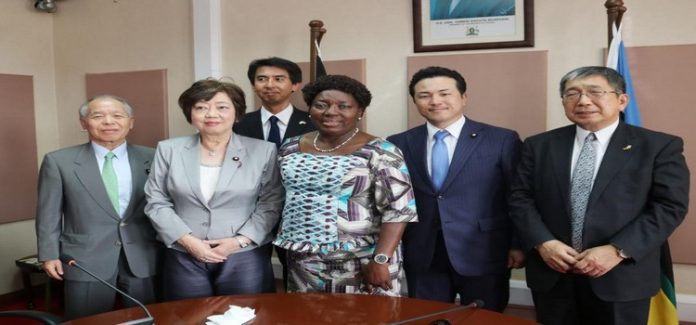
Subscribers to stay longer on internet as MTN announces unlimited data bundles

Unlimited data bundles will help subscriber stay on the internet for longer hours

MTN Uganda has decided to make its data bundles unlimited for its subscribers. The chief executive officer (CEO) Wim Vanhelleputte on Tuesday announced the ‘freedom data bundles’ saying they never expire as had been the case in the past.

Vanhelleputte announced the launch of the unlimited bundles during the inaugural annual information and technology (ICT) Expo at Nakawa and encouraged MTN subscribers to embrace the service.

“I take this opportunity to announce the long awaited MTN Freedom bundles. You can now get data bundles that never expire. Simply dial *150*7# to enjoy the freedom,” he said, adding that it has been the concern of subscribers in Uganda as well as Nigeria and Ghana where they have sister companies.

He said MTN subscribers would surf the internet till their data bundles are used up. At first all bundles would expires after 24 hours even if one had not used it from the time of subscribing.

The bundles have been welcomed by many MTN subscribers saying, it is the best Christmas present this year. “2020 blessings have been bestowed on us this early courtesy of MTN” One Muya Chris wrote on twitter.

The outgoing ICT minister Frank Tumwebaze, thanked MTN for the initiative, saying that it would boost ICT uptake in the country.

Despite the good gesture from telecom companies to make data cheap, subscriber still believe social media tax levied per day is a hindrance to the enjoyment of the internet.  The Social Media tax requires users to pay a tax of Shs20 per day to access over-the-top (OTT) services

Recently the company introduced voice bundles that can call across all networks. Despite all the incentives, MTN subscribers have decried the depletion rate of data bundles and called for reduction of prices for people to embrace internet services.

However, analysts say MTN is using the freedom bundles as one of the strategies for government to renew its licences at favourable conditions.

Among others, Government wants MTN Uganda to register on the Uganda Securities Exchange so that Ugandans can buy shares in the company whose parent company MTN Group is domiciled in South Africa.

Stories Continues after ad

Confirmed: Danish company to acquire 9.97% CDC shares in dfcu bank

Dfcu head office

Eagle Online yesterday published an article saying that UK’s Commonwealth Development Corporation (CDC) Group had identified the buyer for its 9.97 per cent shares in Dfcu bank. That buyer has now been revealed as IFU- Denmark, the Danish Development Finance Institution/ Investment Fund for Developing Countries.

Yesterday dfcu published a cautionary announcement dated December 13, 2019 informing its shareholders and potential investors of the transaction now awaiting the approval of authorities in the financial sector, particularly the Capital Markets Authority which regulates the Uganda Securities Exchange on which Dfcu is listed .

“Dfcu limited…advises its shareholders and the general public that a significant minority shareholder has received and accepted an expression of interest for the purchase of its shareholding in the Company by another,” Dfcu said in a recent cautionary announcement,” Dfcu said in the statement.

But the transaction, according to the announcement, remains subject to obtainment of regulatory approvals and satisfaction of all conditions precedent.

Due to expected sell of shares by the unnamed minority shareholder, the company has therefore advised shareholders and potential investors to be cautions when transacting in the company’s shares. “Shareholders and potential investors are advised to exercise caution when dealing in the Company’s shares until a further announcement is made,” the announcement reads in part.

Eagle Online last year reported that UK’s Commonwealth Development Corporation (CDC) Group was looking for another offshore company to buy its shares in Dfcu. The company owns 9.97 per cent. CDC’s Investment Director Irina Grigorenko wrote a confidential letter to Dfcu Chairman Elly Karuhanga of CDC Group’s intention to sell some or all of its shares.

Grigorenko, said then that CDC Group was “undertaking a review of its investment in Dfcu Limited which may lead to the disposal or some of some or all of its shares in Dfcu over the short to medium term.”

In its letter, CDC also expressed hope that Dfcu would continue to “succeed with the support of Arise B.V., its major shareholder.” CDC’s investment in Dfcu, according to the institution’s official website, is $15.1m (equity) and $10m (subordinated loan).

About nine institutional investors own Dfcu, with Arise BV holding the largest shareholding at 59 per cent. CDC is in second position, followed by National Social Security Fund (NSSF). Months ago, Arise BV Executive Director Deepak Malik resigned from the Dfcu bank’s board of directors.

When asked, analysts said it is normal for shareholders to sell their shares within or get buyers from outside when they think it is the right time to exit. However, he hastened to add that some shareholders exit when they anticipate that the company’s business in future might not be profitable at the level they want it.

However, the latest announcement that a significant minority shareholder has got the buyer of its shares comes at the time when dfcu is facing challenges following the controversial acquisition of Crane Bank Limited (CBL) in January 2017. Dfcu is the holding company of Dfcu bank which bought CBL as offered to it by the Bank of Uganda (BoU).

Recently Dfcu bank realised that it could not take up freehold properties of Meera Investments Limited which had been leased to defunct CBL. Dfcu now wants BoU to compensate it for the loss of the properties it values at Shs47 billion even though it is understood it valued the same properties at Sh10 billion when it took over CBL an estimated Shs200 billion.

About IFU

Rune Norgaard, IFU’s Communication Director, says the institution, an independent government agency provides risk capital and advice to companies wishing to set up business in Africa, Asia, Latin America and parts of Europe. Investments are made on commercial terms in the form of equity and loans. The purpose is to contribute to economic and social development in the investment countries.

IFU and IFU managed funds have co-invested in close to 1300 companies in 100 countries in Africa, Asia, Latin America and parts of Europe.

Key shareholders in Dfcu

DFCU Shareholding percentages

Arise BV 58.71 per cent

CDC Group of the United Kingdom 9.97 per cent

National Social Security Fund (Uganda) 7.69 per cent

Kimberlite Frontier Africa Naster Fund 6.15 per cent

undisclosed Institutional Investors 3.22 per cent

SSB-Conrad N. Hilton Foundation 0.98 per cent

Vanderbilt University 0.87 per cent

Blakeney Management 0.63 per cent

Retail investors 11.19 per cent

BoU staff retirement benefit scheme is 0.59 per cent

Stories Continues after ad

Boeing to halt production of 737 MAX planes

Boeing

Boeing will suspend the production of 737 MAX planes beginning January 2020. The suspension follows the grounding of Boeing 737 MAX passenger airliner after two new airplanes belonging to Lion Air and Ethiopian Airlines crashed within five months, killing all 346 people aboard.

According to a statement released by Boeing, they are in the process of approving the 737 MAX’s return to service and determining appropriate training requirements, extraordinarily thorough and robust, to ensure that our regulators, customers, and the flying public have confidence in the 737 MAX updates.

Recently Boeing announced a $50 million compensation fund for the families of people killed in Boeing 737 Max plane crashes. The Fund officials in September said that they have started accepting applications, with a deadline of December 31 for submitting claims. Administrators of the fund include Kenneth Feinberg, who oversaw compensation for victims of the September 11, 2001, terror attacks.

“As we have previously said, the FAA and global regulatory authorities determine the timeline for certification and return to service. We remain fully committed to supporting this process. It is our duty to ensure that every requirement is fulfilled, and every question from our regulators answered.” Reads in part of the statement.

Throughout the grounding of the 737 MAX, Boeing has continued to build new airplanes and there are now approximately 400 airplanes in storage.

“We would continually evaluate our production plans should the MAX grounding continue longer than we expected. As a result of this ongoing evaluation, we have decided to prioritize the delivery of stored aircraft and temporarily suspend production on the 737 program beginning next month.” Reads in part of the statement.

The company stated that the suspension is least disruptive to maintaining long-term production system and supply chain health.  This decision is driven by a number of factors, including the extension of certification into 2020, the uncertainty about the timing and conditions of return to service and global training approvals, and the importance of ensuring that we can prioritize the delivery of stored aircraft.

“During this time, it is our plan that affected employees will continue 737-related work, or be temporarily assigned to other teams in Puget Sound. As we have throughout the 737 MAX grounding, we will keep our customers, employees, and supply chain top of mind as we continue to assess appropriate actions. This will include efforts to sustain the gains in production system and supply chain quality and health made over the last many months.”

They pledged to provide financial information regarding the production suspension in connection with our 4Q19 earnings release in late January.

Stories Continues after ad

Court asks gov’t to pay over Shs300m for land probe mess on private property

Lady Justice Catherine Bamugemereire whose parts of the report was quashed.

The government  has been asked to pay Shs310 million as punitive damages, Shs5 million to each of the 62 applicants who challenged the Attorney General  in court over Justice Catherine Bamugemereire’s land commission interference with private land code named block 127, plot 49.

The applicants led by a one Francis Namara sued the Attorney General after the Commission stopped all activities on the said plot, even though the court had pronounced itself on the matter.

Court ruled that the actions of the Commission were illegal, wanton and committed with impunity and in utter disregard of the law and that it abused the established legal process.

Justice Bashaija K. Andrew who wrote the ruling also said the money awarded attracts 8 percent interest per annum from the date of the ruling on the matter, which is December 13, 2019.

He also awarded the applicants costs of the application.

The Commission of Inquiry into Land Matters wound up its work on November 9 after a 30-month tenure. The Commission has been investigating the effectiveness of the law, policies and processes of land acquisition, management and registration in the country since it was set up by President Museveni on December 8, 2016.

Stories Continues after ad

AfDB approves US$5m grant to scale up Tony Elumelu Entrepreneurship Programme

Youth sponsored by Tony Elumelu Foundation Entrepreneurship Programme

The Board of Directors of the African Development Bank has approved a grant of $5 million to enable the Tony Elumelu Foundation Entrepreneurship Programme to scale up its outreach and impact to 1,000 select youth entrepreneurs.

The grant follows the signing of a letter of intent between the Bank and the Tony Elumelu Foundation, which took place during the Tony Elumelu Foundation Entrepreneurship Programme launch in March this year. The partnership will bring about future collaboration focused on strengthening small to medium-sized enterprises as well as talent and skills development for Africa’s youth.

The partnership will support 3,050 young entrepreneurs across 54 African countries. The Bank’s participation will enable an additional 1,000 entrepreneurs to benefit from the Tony Elumelu Entrepreneurship Program, which provides much needed opportunities to help stem the rising tide of unemployment and inequality facing the continent’s youngest citizens.

The programme aligns with the Bank’s ten-year Jobs for Youth in Africa strategy launched in 2016, to support the creation of 25 million decent jobs across the continent. The strategy is also expected to equip 50 million young African people with employable skills that enable them to access economic opportunities and realize their full economic potential across the continent.

The Tony Elumelu Foundation Entrepreneurship Programme will deliver business training, mentoring, access to networks, markets and capital for business development to selected youth-led start-ups in order for them to grow and create jobs.

The Entrepreneurship Programme demonstrates a strong alignment with the Bank’s Youth Entrepreneurship and Innovation Multi-Donor Trust Fund objectives to build the African youth entrepreneurship ecosystem by scaling innovative youth led start-ups, expanding youth market opportunities and improving youth access to finance.

Other development partners involved in supporting the Tony Elumelu Entrepreneurship Programme are Agence Française de Développement, the German Agency for International Cooperation, the United Nations Development Programme and the International Committee of the Red Cross. They will also work to provide more business opportunities to youth entrepreneurs across the continent.

In 2017, the Bank established the Youth Entrepreneurship and Innovation Multi-Donor Trust Fund, in partnership with the governments of Norway, Denmark, Sweden, Italy and the Netherlands. The fund is a grant vehicle managed by the Bank to support the African entrepreneurship ecosystem directly and indirectly by leveraging on the Bank’s instruments. Its interventions will equip Africa’s youth with the right tools to establish start-ups and micro, small and medium enterprises.

Stories Continues after ad

Gorilla numbers rise to spur Uganda’s Tourism sector

Mountain gorillas

Outgoing Uganda Minister of Tourism Wildlife & Antiquities, Prof. Ephrahim Kamuntu, yesterday unveiled the mountain gorilla populations in the Greater Virunga Conservation Area by declaring the long-awaited global number of the endangered species between Rwanda, Democratic Republic of Congo and Uganda. This was after the release of the December 2018 Census results released at the Kampala Serena International Conference Centre.

The unveiling was presented in collaboration with the Greater Virunga Transboundary and Bwindi-Sarambwe ecosystem revealing that the number of gorillas (gorilla beringei)  in the 340-square-kilometer boundary of protected forest to have increased to 459 in 50 groups and 13 individuals up from an estimated 400 in 2011.

Combined with the published results of the Virunga Mastiff 2015/16 survey of 604, the global figure stands at 1,063. Uganda has 51 percent of the total population and the remaining 49 percent shared between the three countries.

This is the fifth count for this area and the first to include Sarambwe Nature Reserve since surveys began in the 1970s.

The Warden of the Ecological Monitoring and Research Bwindi Mgahinga Conservation Area (BMCA), Joseph Arinitwe, said the process started from the eastern end of the forest to the Sarambwe Nature Reserve in the west.

It involved more than 75 trained survey members in 6 teams in 250 to 500-meter stretches with the support of local governments and communities living around the protected areas. They moved at standard intervals at agreed times in shifts of 2 weeks each collecting elephants, duikers, and gorillas fecal matter from fresh nests whereby samples were collected and preserved for genetic analysis. Additional publications are expected from the survey. Signs of human activity were also studied. The team persevered through challenging rugged terrain, floods, twigs, and insect bites.

Arinitwe emphasized the importance of surveys in monitoring trends and to prove that conservation strategies are working.

Dr. Pantaleon Kasoma who represented the Board of Trustee for the Uganda Wildlife Authority (UWA), reiterated the value of the income generated from the gorillas, noting that there are other conservation areas in the country that do not generate income that are sustained by revenue from gorillas.

Tourism State Minister Suubi Kiwanda lauded minister Kamuntu for his effort to turn around Human Wildlife Conflict into Human Wildlife Relationship having traversed the country to sensitize communities surrounding the National Parks and Wildlife corridors as well as revenue sharing.

Kamuntu welcomed the incoming Tourism Minister Tom Butime. Also in attendance were Japanese Ambassador to Uganda Kazuaki Kameda; Tourism State Minister Suubi Kiwanda; Permanent Secretary MTWA Doreen Katusime; Director of Tourism Mr. James Lutalo; Dr. Andrew Seguya, Executive Secretary at Greater Virunga Transboundary Collaboration; Dr. Gladys Kalema, Conservation Through Public Health (CTPH); Executive Director UWA, Sam Mawanda; Director of Business Services UWA, Stephen Masaba; Professor Robert Bitariho of Mbarara University; and ITFC (Institute of Tropical Forest Conservation) and researchers.

Kamuntu stated, “The Constitution of The Republic of Uganda is enshrined to protect and promote important natural resources including land, air, wetlands, flora, and fauna on behalf of future generations.”

He said God created man and woman and gave the earth under man’s charge. “Therefore, we have custodial responsibility to conserve not only for Ugandans but for the entire human race.”

He lauded international organizations, stating that the gorillas would have been wiped out without their support. They include IGCP (International Gorilla Conservation Program), ICCN (Institut Congolais pour la Conservation de la Nature), RDB (Rwanda Development Board), ITFC (The Institute of Tropical Forest Conservation), WCS (Wildlife Conservation Society), CTPH (Conservation Through Public Health), Diane Fosey Gorilla Fund, WWF (World Wildlife Fund), BMCT (Bwindi Mgahinga Conservation Trust), IGCP (The International Gorilla Conservation Program),Gorilla Doctors, and UC Davis.

In addition to gorillas, he said the country hosts the Big Five Plus Two – namely the gorillas and chimpanzees; 11 percent of bird species globally accounting for 50 percent of Africa’s species; 39 percent of mammals; 19 percent of amphibians; 1,249 species of butterflies; and 600 species of fish.

“Tourism is a transformative force fueling the development of Uganda with US$1.5 billion in foreign exchange earnings and 8 percent of the labour force with 10 percent of the landmass devoted to conservation,” said the minister.

The minister attributed the increase in gorilla numbers and wildlife in general as representing a positive path to development surpassing pre-independence numbers. However, he acknowledged the challenges that come with increasing numbers including pressure from human populations.

He reiterated that Uganda remains committed to the Greater Virunga Wildlife Transboundary Conservation, because the gorillas provide an example that we must remove borders between humans. Representatives from Rwanda and DRC were conspicuously absent.

Much as Ugandans had for centuries stayed with the gorillas, they were discovered in 1902 by Captain Robert von Beringe in his mission to map the boundaries of German East Africa (Tanzanyika). Gorillas were eventually brought to world attention by researcher Diane Fossey who inspired by Dr. Leakey dedicated and gave her life to research on the gorillas and the famous former “poacher dog,” Digit, the mountain gorilla with whom she formed a bond in life and death inspiring the 1988 drama “Gorillas in The Mist.”

Stories Continues after ad