Stanbic Bank
Stanbic Bank
17.4 C
Kampala
Stanbic Bank
Stanbic Bank
Home Blog Page 1118

Caf appoints Ugandan officials for Botswana’s game against Algeria

Ali-Sabila-left

African football governing body, CAF has appointed four Ugandan match officials for the 2021 Afcon Group H qualifier between Botswana and the holders Algeria in Gaborone.

Ali Chelanget Sabila will be the centre referee and will be assisted by Lee Okello and Isa Masembe as his first and second assistants respectively.

Willam Oloya will be the game’s fourth official.

The match Commissioner will be Manuel Inacio Candido from Angola while the Referee Assessor will be Seth Seth Lebaka Rethusitsoe from Lesotho.

The match will be played on Monday, 18th November 2019 at 10pm.

Match Officials for Botswana vs Algeria:

Referee: Ali Chelanget Sabila (Uganda)

Assistant Referee 1: Lee Okello (Uganda)

Assistant Referee 2: Isa Masembe (Uganda)

Fourth official: William Oloya (Uganda)

Commissioner: Manuel Inacio Candido (Angola)

Referee Assessor: Seth Seth Lebaka Rethusitsoe (Lesotho)

Stories Continues after ad

Police blocks Besigye’s procession to Namboole, tows him in vehicle

Besigye's white car

Police has blocked the former presidential candidate, Dr. Col Kizza Besigye from accessing Namboole stadium in Kampala where the main opposition party, Forum for Democratic Change (FDC) was scheduled to hold its weekly press briefing.

The standoff follows Dr Kizza Besigye return from  Geneva, Switzerland where he had gone to witness  his wife Winnie Byanyima start her new role as new Executive Director of the Joint United Nations Programme on HIV/AIDS (UNAIDS).

Besigye’s procession was blocked at Kireka on grounds that group did not seek clearance from the police as Public Order Management Act stipulates. During the procession, police arrested scores of FDC stalwarts and it hurled teargas among party members.

Earlier police tried to stop him from proceeding to venue however he insisted and drove off prompting police to deploy more officers to arrest the situation.

At Kireka, there was a standoff when he declined to leave his vehicle as ordered, a decision that prompted police to tow him in the vehicle.

Stories Continues after ad

NSSF Friends with Benefits Season 3: How Mayeku used his savings to grow super-rice in Pallisa

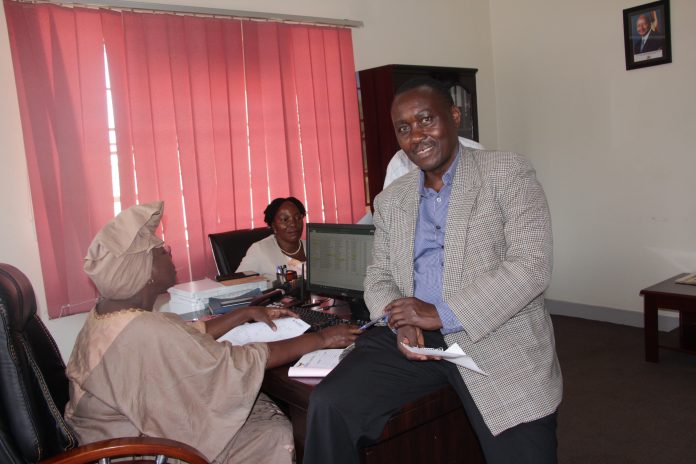
Mayeku and his workers in office

A decision to drop a tie and hold a hoe is unusual for many of our leading elites however, Mr. David Mayeku stood out when he dropped his regular necktie and went into rice farming.

Mr. Mayeku who had worked with Barclays Bank now Absa for three decades decided to retire from regular employment at the age of 60 years. He therefore, opted to withdraw his NSSF benefits since he was qualifying to receive his benefits under the current provisions of the fund.

“Our forefathers constructed granaries for all their harvests, this was not because they were hiding their food from neighbors but instead, were saving for the future. Unfortunately, that custom has been dropped like many abandoned African Traditional customs,” Mr. Mayeku said

Mr. Mayeku who had saved for close to 27 years with NSSF received Shs 200 million as his NSSF retirement benefits. After a long period of engagement with several rice farmers and the middle class, Mayeku decided to zero down to growing super rice in the areas of Palisa.

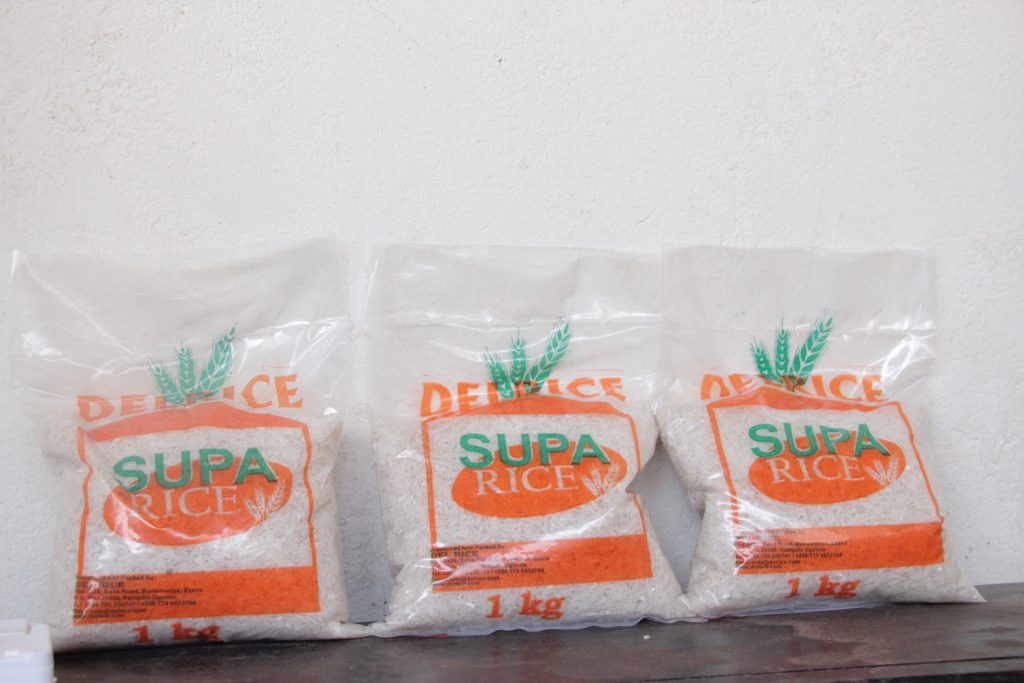
Mayeku’s packed Supa Rice

The decision to grow this type of crop in Palisa was informed by the presence of lowlands with high moisture levels throughout growing seasons. Super rice is by the latest findings the best rice for consumption on the Ugandan market.

Mayeku started with the intention of improving the quality of the rice produced in the region. He did this by supplying quality seedlings to all rice farmers and purchasing rice drying equipment to eradicate the habit of drying rice on Land hence eliminating stones from rice.

He then used Shs30 million of his NSSF benefits to purchase a rice milling machine which he describes to be most sophisticated in its operation compared to the rest of the machines available in Uganda. Del rice is a company that was started by Mr. Mayeku with an aim of buying, processing and selling quality super rice to the middle class in Kampala at a reasonable cost.

Apparently, Del rice is being processed and packed at his urban home in Zaana along Entebbe road, Supermarkets and Hotels are their target market but they hope to penetrate into the main markets in Uganda.

Mr. Mayeku said that climate change has greatly affected the growth of rice in Palisa, Mayeku narrated the tragic incident that happened during the 2017-2018 season when heavy rains came and washed away rice. Still on the issue of climate change, prolonged sunshine has also stunted the growth of rice.

With such a challenge, Mr. Mayeku chose to go for out of season growing. This is when planting is done at any time without having to wait for a traditional planting or harvesting season of the year, this is dominantly supported by irrigation which is obviously expensive.

Despite the existing challenges, Del rice has improved the standards of living of community members example buying from them at better prices, distributing quality rice seeds and improved farming methods and they can now access basic needs such as education, food, and medical services.

“Participating in the NSSF friends with benefits competition was not accidental, I sat with my family and agreed that we should participate because we had fully invested all our money and If we win, we intend to expand Del rice and improve on farming methods such as irrigation and out of season growing,” Mr. Mayeku said

An expert banker, Mayeku applauded the NSSF for its exceptional customer care but, he then requested the fund to invest more in financial literacy especially the saving culture that is lacking among many Ugandans.

To vote for David Mayeku in the NSSF Friends with Benefits competition, dial *254# or go to www.nssfug.org.

Stories Continues after ad

NSSF Friends with Benefits Season 3: Kalapata Village got first private primary school courtesy of NSSF member’s savings

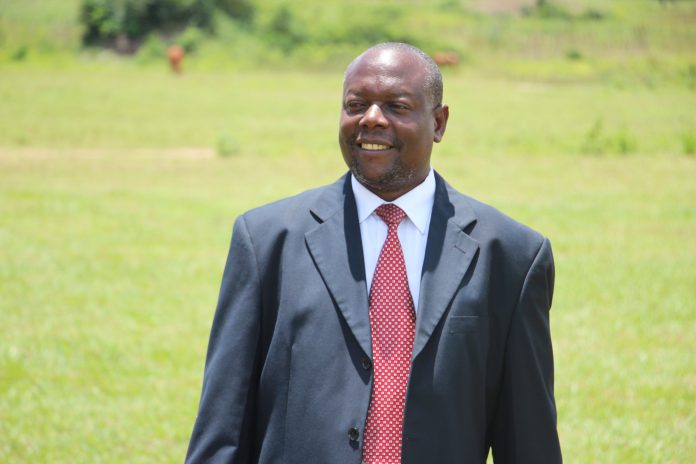
John Stephen Okirol

A small village in Kumi district known to many as Kalapata had its voices heard after it received its first ever private primary school. This milestone was achieved after the son of the soil Mr. Okiror John Stephen received and invested his NSSF benefits in a school.

Mr. John Stephen Okiror, an accountant by profession worked with the Uganda Revenue Authority for 22 years decided to opt for an early retirement at the age of 50years.In 2016, Okirol applied and received Shs100 millions as his NSSF benefits. At that time, he had many ideas running in his mind, some of them coming from relatives and friends. Some of the ideas included fixing benefits for a certain period time, transport business and farming.

 Okirol whose love for education is unmeasurable felt that the right idea was still missing among the options given to him at the moment. He zeroed down on constructing a school in one of the remotest areas in this country, Kalapata, Kumi district. Passion alone was not enough for him to construct a school, the community members after realizing that one of their own had a good plan, they gave him 4 free acres of land.

“For a long time, Arapata village had never had this kind of education services we offering today, it’s very unfortunate that in this 21st century, a pupil of Primary Seven can’t speak a single word in English. What is more alarming is that this pupil is expected to compete with fellows in urban areas who speak English like it’s their first language,” Okiror said with grief on his face.

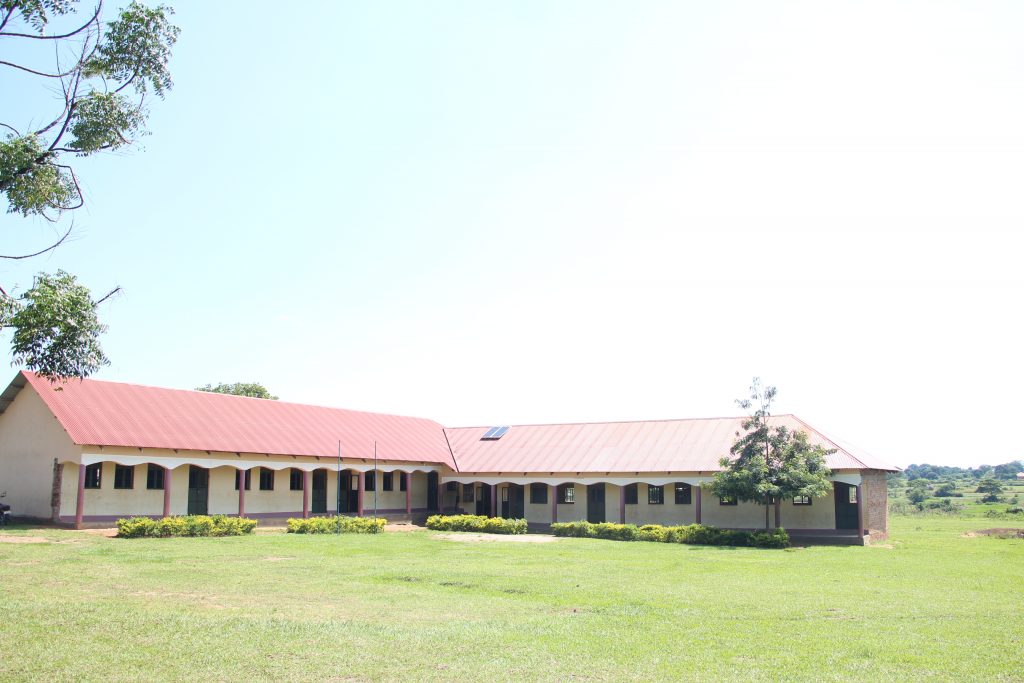
Kapalata Parents and Primary School

Kapalata Parents and Primary School officially started in 2018 with 80 students and now the numbers have increased up to 300. Okiror attributes the increase of pupils to the unique teaching standards and providing scholarships to bright but unprivileged pupils from the community. The Nursery section pays Shs50,000 and the Primary section pays Shs60,000-100,000 for tuition which is reasonable for the community.

Beyond providing education, Kalapata Parents and Primary School has gone on to empower the community by giving them contracts to supply food and firewood. According to Mr. Okiror John, this has increased believability of the School among the community members.

Despite being a long-term investment with minimal returns, Kalapata Parents and Primary School has managed to register success stories. These include; improvement in performance of pupils, employment opportunities especially for the teaching and non-teaching staff.

“Kalapata being one of the most affected areas during the insurgency instigated by the Lords’ Resistance Army under the command of the war lord Joseph Kony, challenges are still outcompeting the successes but this has not taken away the hope of the community,” Okiror explained

Kalapata is a village of hardworking people and all the future plans of the school such as constructing dormitory and a staffroom are going to be achieved in the targeted period of time.

Okiror who was surprised to be called by the Fund to participate in the beneficiaries’ campaign dubbed NSSF Friends with Benefits, first hesitated but after sometime of consultations, he was convinced to take part in the competition. Okiror believes that his story is worth telling because he is the only born of the village who has ever worked and made such an investment that helps to improve the literacy levels of the community members.

A very optimistic Okiror believes that he will win the ultimate prize money and he plans to use the same to construct a dormitory and a school library. He believes that this will improve the welfare of the pupils and increase recruitment especially those that come from distant places.

Mr. Okiror calls on everyone either in formal or informal employment to opt for saving with NSSF because it’s the only organization one can trust with his/her future. He continued to applaud the fund for their quick response in the process of accessing the benefits.

To vote for Mr. Okiror John Stephen in the NSSF Friends with Benefits competition, dial *254# or go to www.nssfug.org.

Stories Continues after ad

Young IT gurus identified as they hack into banks and walk away with huge cash

Hackers use computers to access banks' money systems

Young IT graduates have been profiled as the major culprits in the hacking of bank systems in Kenya, a cybercrime that is facing banks in east Africa if we are to go by the latest reports.

The graduates, a majority of whom are aged 27 years and below, have been identified as the main suspects in cybercrime cases, Kenya media platforms report.

The suspects are said to be well armed with education that the banks have had to up their game by employing IT experts to try to stop them.

The Central Bank of Kenya (CBK), which has been following the rising cases of cyber fraud, recently issued a new policy that will require banks to report cases of cybercrime in real time, media reports say.

The new regulation that came into force last month requires banks and mobile money operators to report to the CBK any cyber-attack within two hours of the incident.

Companies with systems that clear huge amounts of money in bank-to-bank transfers were also directed to immediately file reports with the CBK.

Telecommunication companies with systems that move huge volumes of cash, such as mobile money transfer, have also been directed to file reports.

The new guidelines by the CBK come in the wake of increased cybercrime attacks targeting banks and other financial institutions.

Statistics from Kenya’s Directorate of Criminal Investigations (DCI) Banking Fraud Unit reveal that many of the suspects involved in cases of electronic fraud are well-educated university graduates with an IT background.

The suspects work in cahoots with bank staff who provide them with crucial information about IP addresses.

Google defines an IP address as a unique string of numbers separated by full stops that identifies each computer using the Internet Protocol to communicate over a network.

Once they get the IP address, the IT experts can remotely access a bank’s system, including its computers. After corrupting a bank’s system, they are able to transfer money from one account to another.

At times, they use mobile money networks to siphon the cash, according to data collected by banking fraud investigators.

The revelations come a day after eight Kenyans believed to be IT graduates were arrested in Rwanda over plans to steal money from an Equity Bank branch.

Due to the high number of hacking cases reported to the DCI by banks, a special team of IT investigators has been seconded to the CBK to handle investigations.

The team comprises IT experts from the DCI cybercrime unit and the National Intelligence Service (NIS).

The eight, whose identities Rwandan investigators are yet to reveal, were arrested together with four other suspects, including a Rwandan and Ugandan nationals.

“Rwanda Investigation Bureau (RIB) arrested an organised group of eight Kenyans, three Rwandans and a Ugandan over a cyber-fraud attempt on Equity bank,” Rwanda police said on Twitter.

“This group was arrested while in the process of hacking into the bank system to steal money from clients’ accounts.” Police said the same group was linked to another attack on the same bank in Kenya and Uganda.

“A case file has been submitted to the National Public Prosecution Authority for further management,” RIB added.

Last month, the DCI conducted a swoop on youth suspected to be cybercriminals in parts of Juja and Kabete.

During the October 9 operation, DCI officers arrested seven young men believed to be IT experts who are said to have defrauded the public of millions of shillings in a mobile phone hacking scheme.

More than 200 SIM cards, mobile phones and several mobile money transfer agent registers in Kenya were confiscated.

The suspects were described by the DCI on Twitter as aged 28 years and below.

Earlier, investigators raided a house in Juja and recovered over 40,000 mobile phone SIM cards and arrested five suspected fraudsters.

Cybercrime, in line with technology, continues to evolve, taking new forms and finding new ways to infiltrate financial enterprises, and banks are struggling to maintain pace with this evolution. This is largely due to the fact that there are so many new methods of banking along with the strong shift from traditional banking to mobile banking.

Stories Continues after ad

KCCA and Proline crash out of Caf Confederations cup

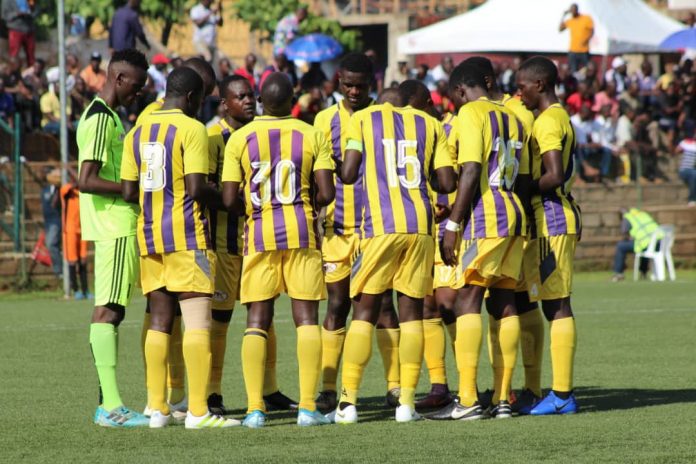
proline players pray before the match

Uganda representatives in the CAF Confederations Cup, KCCA FC and Proline FC were both knocked out in the final qualification round and failed to make the group stages.

Libyan side Al Nasr Football Club rallied with a 2-0 victory over Proline in the return leg of the CAF Confederation Cup playoff at the StarTimes Stadium, Lugogo.

A goal in each half from Khalid Almaryami and Ibrahiem Osama Albedwi secured a spot for the Libyans into the CAF Confederation Cup group stages with a 4-2 aggregate win.

Paradou Athletic Club reached the Total CAF Confederation Cup group stage defeating Ugandan giants Kampala City Council Authority (KCCA) 4-1 in Algiers.

The Algerians took an early lead through Salaheddine Herrari after just nine minutes, but had to deal with a scare when Allan Okello equalized for the Ugandan champions after 23 minutes.

allan okello celebrates his goal

But Paradou restored their lead seven minutes before the recess when Yousri Bouzouk made it 2-1 for the hosts.

After the break it was all one way, as the newcomers added two more goals in the space of five minutes. Abdelkahar Kadri scored after 65 minutes to make it 3-1 on the night, and just five minutes later Aimen Biugera scored the fourth to send his side to the group stage.

The group stage draw will be held on Sunday November 10 with the first fixtures scheduled for Sunday December 1.

The winners of the 2019–20 CAF Confederation Cup will earn the right to play against the winners of the 2019–20 CAF Champions League in the 2020 CAF Super Cup.

Egypt’s Zamalek are the title holders.

Qualified Teams: Pyramids, El Masry (Egypt), Enyimba, Rangers (Nigeria), RS Berkane, HUSA (Morocco), Nouadhibou (Mauriania), Horoya (Guinea), Zanaco (Zambia), San Pedro (Cote d’Ivoire), El Nasr (Libya), Djoliba (Mali), Motema Pembe (DR Congo), Bidvest Wits (South Africa), Paradou (Algeria).

Stories Continues after ad

Museveni commissions Lira-based St. Gracious Secondary School

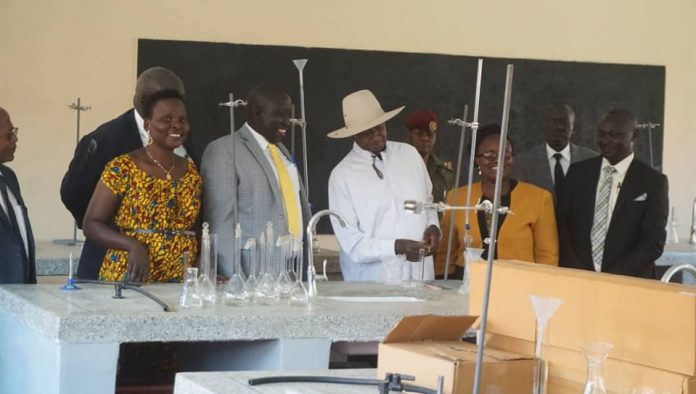
Museveni in the school's science lab

President Yoweri Museveni has attributed the mushrooming growth of private sector investments in the country to the National Resistance Movement (NRM) Government’s principles of peace, democracy and freedom of individuals to work and own property.

Museveni was speaking days ago at the ceremony of the commissioning of St. Gracious Secondary School in Adagayela village of Adekokwok Sub-County in Lira District in Northern Uganda. The school’s proprietor is Mr. Olet Patrick.

“Because of the peace and freedom, that is how you get people like my son here, who have schools, petrol stations and hotels,” he said.

“The man has got money during the time of NRM. Nobody is stopping him from building schools because in the past you were not allowed to build schools. Hotels were owned by government, but NRM said let the people be the ones to own the hotels,” he added.

School’s hall named after Museveni

Using the analogy of the Bible of reaping what one sows, Museveni reminded the people of Lira that the development in their area is a clear manifestation of the NRM’s principles of peace, patriotism, Pan Africanism, democracy, reconciliation and freedom for people to undertake what they like.

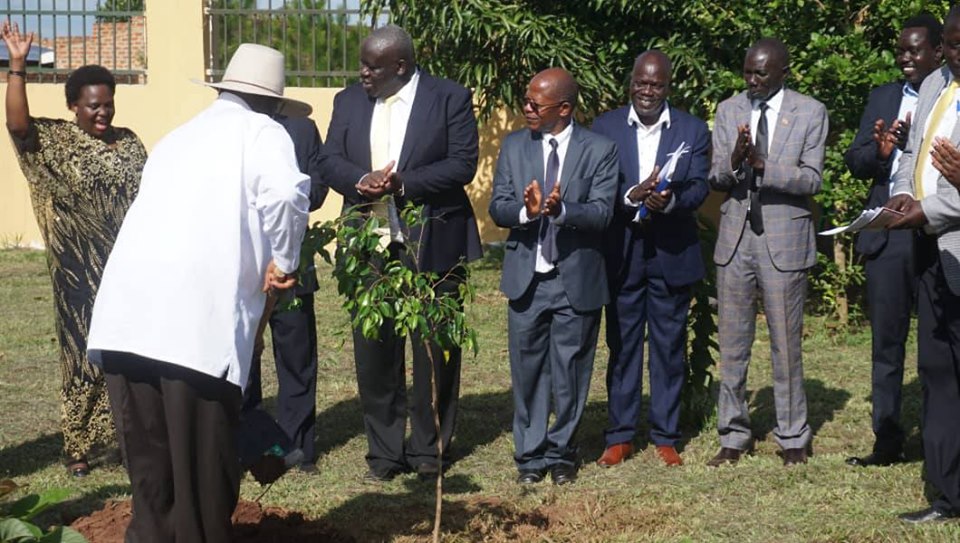
Museveni planting a tree in school’s compound

“Patrick told me that his father was an Army Sergeant but was killed by Amin. When NRM came, we emphasized reconciliation and that is how we got people like Amin’s grandson in Parliament in my Party, Obote’s daughter-in-law as my Minister; and the son of Tito Okello is also my Minister,” he said.

Museveni, therefore, commended the school’s proprietor Olet for the investment that is worth over Shs.4 billion. He thanked him for his love and support to the NRM Government and the honour he bestowed on the President’s parents in christening the girls’ and boys’ halls and science laboratories after their names.

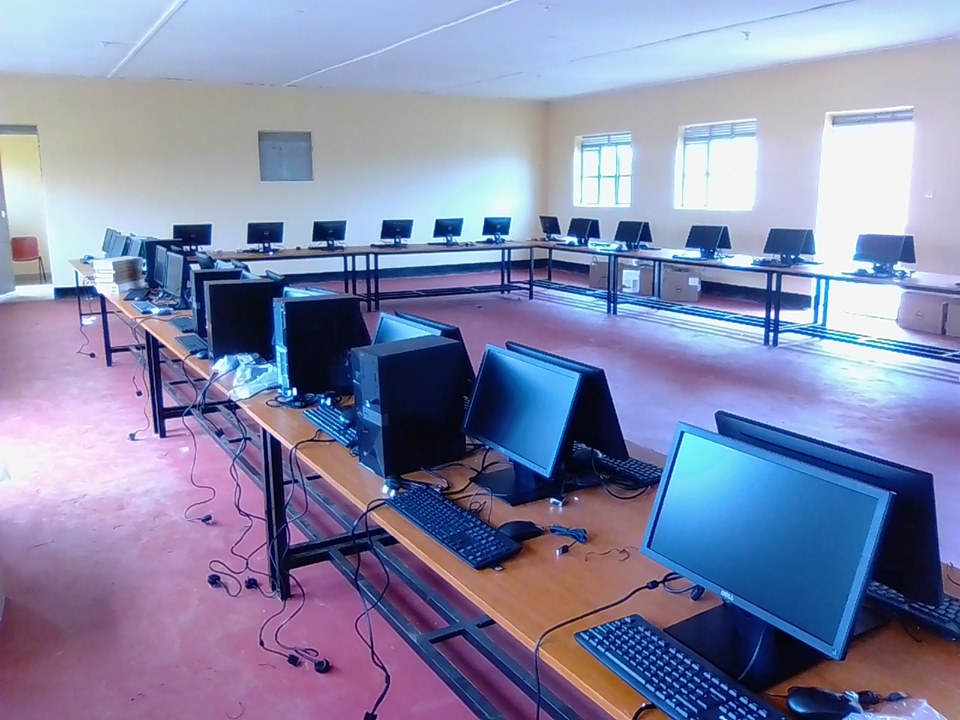
School’s computer lab

Olet, on his part thanked President Museveni and the NRM Government for the conducive atmosphere that has enabled work and accumulate money that he has invested in his home area adding that this has enabled him to contribute to the development of his community.

Stories Continues after ad
5 tips for doing business Down Under in 2020

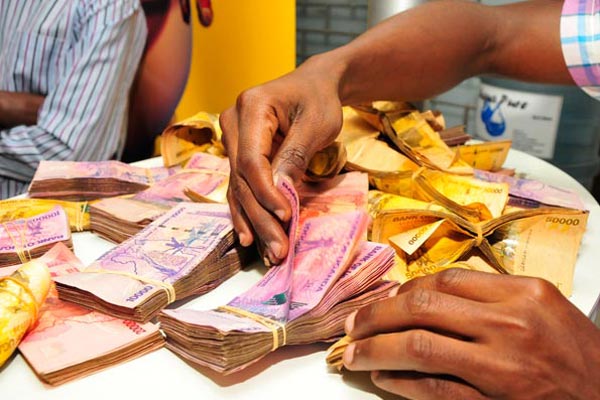
Money

Generations ago, Africa and Australia were world’s apart in many ways and business connections between these terrific two territories were very limited.

But Aussies and Africans actually have plenty in common – both boast diverse cultures, rich natural resources and unique fauna and flora.

And thanks to technology developing at breakneck speed, doing business across borders is easier now than it’s ever been before.

So if you’re thinking of dipping your investment toes into the waters in Aus, there are plenty of opportunities on offer, but you’ll need to plan properly to make any factfinding trip worthwhile.

But if you’ve never been there before, you might not know a kangaroo’s pouch from a koala’s claw, so where do you start?

Right here – these five tips for doing business Down Under in 2020 will provide perfect peace of mind and propel your plans.

  1. Attend Africa Down Under

If you’re interested in investing in minerals, Western Australia is definitely worth a closer look. So attending the Africa Down Under Conference in Perth between 2-4 September will raise your awareness of the opportunities available in the Aussie mining and energy sector and let you mingle with potential collaborators.

And whether you’re a geologist, health and safety expert or explosives ace, your skills and expertise could be very sought-after indeed.

  1. Secure Your Business Visa

Before planning too far ahead, please bear in mind that since the purpose of your visit to Australia is business-related, you’ll need to secure the relevant visa from authorities before booking any flights, accommodation and events tickets.

Depending on the nature of your prospective business Down Under, you’ll either need a Business Talent or Business Innovation and Investment Visa – find out more at business.gov.au.

  1. Find cheap flights

You’ll want to save as much cash as possible on your international flights to and from Australia and on any internal flights to various conferences, meetings and networking events.

So browse kayak.com.au for early bird deals on domestic Aussie flights and check out Shyscanner.net for top value international flights – this way, you’ll have more to splash out on relaxation and entertainment during your sojourn.

  1. Hire a car

Australia is a vast territory, so if you’ve arranged coast to coast meetings, as discussed, you’ll need to arrange internal flights.

However, if you’re based in a charming city like Sydney or Melbourne for a week or more, hiring a care can be a comfy and convenient way to meet contacts and enjoy everything the country has to offer – consult vroomvroomvroom.com.au for the best deals on corporate car hire.

  1. Airport parking

With your hire care fuelled up and ready to ferry you from one high powered meeting to another, you won’t want to get your power-suit crumpled by travelling to air hubs via cramped public transport.

So find Australian airport parking at Looking4.com and feel cool, calm and collected for your trans-Australian business trips.

So ends our list! But please share your own Africa to Australia business tips in the comments section.

Stories Continues after ad

SG Lumumba lauds patriotism secretariat


Secretary General of the National Resistance Movement, Justine Kasule Lumumba has lauded the National Secretariat for patriotism corps for reminding Ugandans their history which is very key in nation building.

Lumumba says Uganda being a young population, it is paramount to have programmes – like patriotism that doesn’t only encourage them to love their country but teaches them what happened before they were born.

Lumumba was this Saturday officiating at the pass-out of hundreds of youth in Kasambya Constituency, Mubende district who have undergone patriotism training organised by the national secretariat for the patriotism corps.

“It’s proper for all Ugandans to know where we have come from as a country because it propels us to love and protect our achievements,” she said.

Lumumba lectured the thousands of youth gathered for the camp on what Uganda expects from them as patriots.

“We shouldn’t be reminded to love our country, it should rather be something we freely feel proud to do,” she explained.

The Secretary General also applauded the residents of Kasambya Constituency for overwhelmingly voting NRM in the recent village local council elections and argued them to continue supporting the ruling party and president Yoweri Kaguta Museveni. In the recent elections NRM won all the LCI seats in Kasambya.

Stories Continues after ad
South Africa humiliate England 32-12 to lift Rugby World Cup in Japan

South African players lift Rugby World Cup trophy


South Africa broke English hearts with a ruthless display of power rugby to seize their third Rugby World Cup in devastating fashion.

Twenty two points from the boot of nerveless fly-half Handre Pollard and second-half tries from wingers Makazole Mapimpi and Cheslin Kolbe ground England into the Yokohama dirt on a horrible night for Eddie Jones’s men.

England had trailed 12-6 at the interval after taking a hammering in the scrum and making a series of handling errors.

And despite four penalties from captain Owen Farrell they never looked like closing that gap as the Springboks produced an outstanding display to match those of 1995 in Johannesburg and 2007 in Paris.

Those were iconic moments for a nation besotted with rugby and when Siya Kolisi lifted the William Webb Ellis trophy aloft as the first black man to captain the Springboks they will have the final part of a triptych that will endure forever in the country’s collective memory.

For England it was a chastening end to a campaign that had promised to end the 16-year wait for the World Cup glory.

They were out-muscled, out-run and out-thought by a team transformed by the leadership of skipper Kolisi and the coaching of Rassie Erasmus.

Never before has a team beaten in the group stages gone on to win the trophy, but this is a triumph to match that of the teams of Francois Pienaar and John Smit with a wider story that perhaps surpasses both.


Stories Continues after ad