Stanbic Bank
Stanbic Bank
16.2 C
Kampala
Stanbic Bank
Stanbic Bank
Home Blog Page 1131

World Bank Doing Business 2020 ranks Uganda 12th in Sub-Saharan Africa

World Bank's Doing Business Reforms

World Bank’s Doing Business Ranking 2020 puts Uganda in position 12 in Sub-Saharan Africa behind top performers Mauritius, Rwanda, Kenya, South Africa and Zambia respectively.

Uganda is ranked 116 globally way below its neighbors Rwanda and Kenya ranked 38 and 56 respectively. In East Africa Rwanda and Kenya are the best performers, followed by Uganda.

According to the latest study which measures the ease of doing business in countries, 115 economies implemented 294 business regulatory reforms across the 10 areas. “Reforms inspired by Doing Business have been implemented by economies in all regions,” it says.

Uganda has implemented the following reforms since Doing Business 2008, according to the World Bank Doing Business study 2020 that covers 190 economies, with New Zealand and Georgia being top performers.

The rankings were based on ten reforms carried out by each of the 190 countries such as’ Starting a BusinessDealing with Construction PermitsGetting ElectricityRegistering PropertyGetting CreditProtecting Minority InvestorsPaying TaxesTrading across BordersEnforcing Contracts and Resolving Insolvency. The reforms had Uganda come in positions 169, 113, 168, 135, 80, 88, 92, 121, 77 and 99 respectively.

Stories Continues after ad

Improvement for Cranes in the October 2019 Fifa rankings

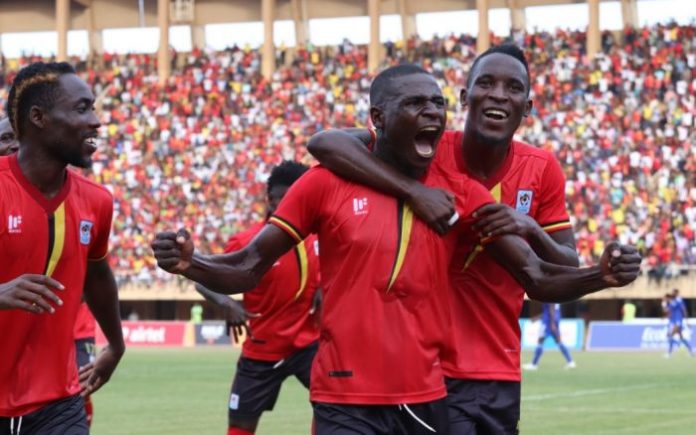
Patrick Kaddu celebrates a goal

Uganda Cranes have moved up in the latest Fifa football rankings released today by one slot.

The Cranes now climb to 79th position in the world with a total of 1311 points and are placed at 16th in Africa, remaining the best in the Cecafa region.

The rise comes after Uganda Cranes beat Ethiopia 1-0 in an international friendly in Adis Ababa and also secured a place in the 2020 CHAN tournament after a 6-0 aggregate win over Burundi in the final round of the qualifiers.

Uganda’s 2021 Afcon qualifier opponents; Burkina Faso are in the 60th position, Malawi (124) and South Sudan at 162.

Neighbours Kenya dropped by one slot to 108, while Tanzania moved 2 places up to 133, Burundi is at 143 and Rwanda at 129.

The top five countries in Africa are; Senegal (20), Tunisia (29), Nigeria (35), Algeria (38) and Morocco (42).

Belgium (1st, unchanged) still lead the way from France (2nd, unchanged) and Brazil (3rd, unchanged), although top-ten rivals Uruguay (5th, up 1), Croatia (7th, up 1), Argentina (9th, up 1) have at least edged closer to the summit.

But the most significant rises are to be found down the Ranking, where the in-form quartet of Ukraine (22nd, up 3), Japan (28th, up 3), Turkey (32nd, up 4) and Russia (37th, up 5) are among the more notable climbers.

Jumps of ten or more places have also been made by a clutch of teams outside the top 50, namely Nicaragua (137th, up 11), South Sudan (162nd, up 11), Barbados (160th, up 10) and São Tomé and Príncipe (180th, up 10).

And there is fresh celebrate, too, for Kosovo (114th, up 5), who can again reflect with pride on their best Ranking position to date.

Nicaragua was the best mover, moving up by 11 ranks to 137, while Mauritius fell hardest, dropping by 12 places to 173.

The next FIFA/Coca-Cola World Ranking will be released on 28 November 2019.

Stories Continues after ad

Eight teams confirmed for Cecafa senior women’s challenge cup 2019

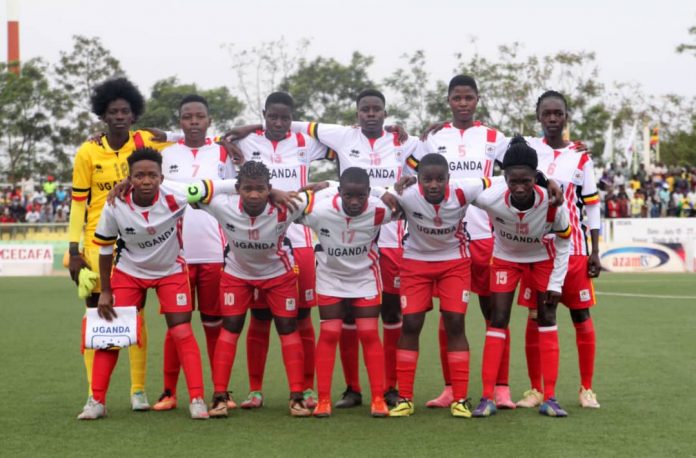
Crested Cranes team

The Council of East and Central African Football Associations (Cecafa) has announced that eight teams will take part in the 2019 Cecafa Senior Women’s Challenge Cup.

Tanzania is slated to host the regional tournament from November 14th to 23rd in the capital Dar es Salaam.

“We have received confirmation from eight countries and we are making all preparations to have a successful tournament,” Nicholas Musonye, the Cecafa Secretary General is quoted by the cecafa website.

Musonye said fixtures and related information about the event will be shared with all the participants before the end of this week.

“The Tanzania Football Federation and Cecafa have proceeded to make formal application to FIFA through CAF for funds to run the event,” said Musonye.

The eight countries that have confirmed participation include; Uganda, Burundi, Djibouti, Zanzibar, Kenya, Ethiopia, South Sudan and hosts Tanzania.

Tanzania are the defending champions having won it last year in Rwanda.

Stories Continues after ad

Police nets Kawempe robbers in Bujjuko

One of the Kawempe thugs, Allan Ggayi.

Police in Bujjuko yesterday intercepted thugs who had robbed people from Kawempe.

On receiving a call from Kawempe Lugoba police that the thugs after robbing in that area had taken Mityana Road, Officer in Charge (OC) Bujuuko responded with Local Defence Unit guards and intercepted the thugs as they were proceeding towards Nswanjere LCI heading to Jezza and they were intercepted.

The two thugs were intercepted in a motor vehicle reg no UBE 641A Toyota Alex. One thug took off and one was arrested.

The thug who was arrested was identified as Allan Ggayi a resident of Kyanja Gayaza and the one who took off is called Ssozi Tonny a resident of Entebbe road.

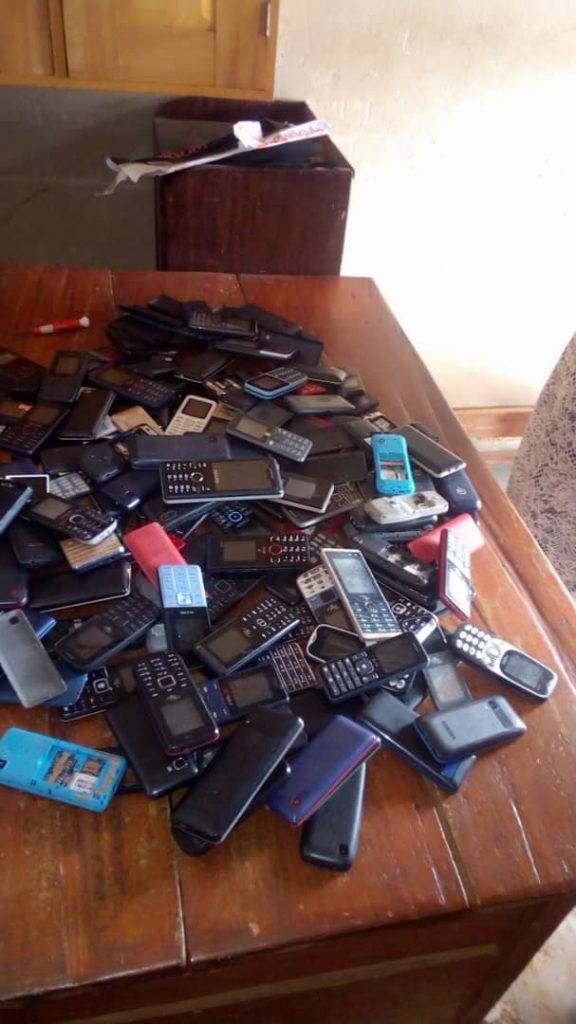
Mobile phones recovered from thugs.

“When the vehicle was searched we found over 160 mobile phones”. Patrick Onyango, the Kampala Metropolitan said  before adding “They were targeting mobile money agents by pretending that they are either withdrawing or depositing money and in that process they exchange their phones with the agent or steal the agent’s phone without the knowledge of the agent”.

Ggayi was transferred to Kawempe Police station and the likely charges are robbery and theft.”We are looking for Ssozi Tonny who is on the run. We appeal to members of the public whose phones were stolen in this manner to report to Kawempe Police station or to the Police they reported the cases”

Stories Continues after ad

Uganda to mark International Rural Women’s Day: Gov’t has made some achievements

Mutuuzo Peace Regis

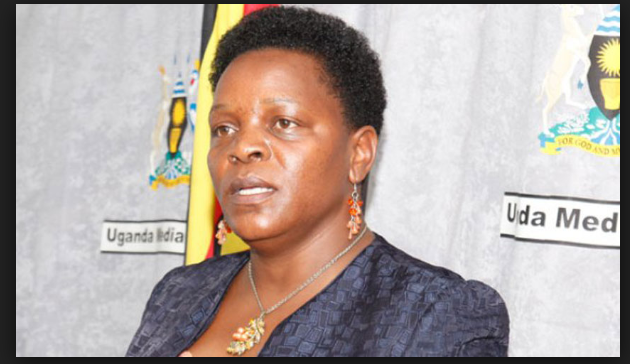
BY Hon. Mutuuzo Peace Regis

On Thursday October 24, 2019, Uganda joins the rest of the world to celebrate the International Rural Women’s Day. The Day was established by the United Nations General Assembly and is observed around the world on 15th October as a platform for the rural women to raise their voices, air out their challenges, share their achievements and for stakeholders to give greater recognition of rural women’s contribution to development of their communities.

Commemorating the Day provides us with the opportunity to remind State and non-State Actors and other stakeholders to develop Programmes that enhance women’s ability to increase production, access services and social protection, be economically empowered and increase their participation in development Programmes.

Some of the challenges faced by rural women and girls include; Gender based violence manifested through high levels of teenage pregnancies, child marriages, forced marriages, Female Genital Mutilation (FGM) among the Sabiny in Sebei region and the Pokots of Karamoja and trafficking in persons;

 Unfair distribution of productive resources including access to and control to land, access to agricultural inputs, water, transport, access to affordable credit and appropriate technologies that reduce their workload. With limited productive resources at their disposal, women and girls therefore struggle to fend for large families including orphans and vulnerable children.

Limited access to services and opportunities – low education levels and access to training, inadequate care and support, lack of legal support and poor health;

The heavier workload including unpaid care work continue to constrain women’s participation in decision-making and politics. Rural women make up over a quarter of the world population and 43% of women in the global agriculture labour force. They till the land to ensure food security for their communities. Seventy six percent (76%) of the extremely poor women live in rural areas.

Uganda’s economy is basically agricultural with over 70 per cent of persons engaged in agriculture, majority of whom are women. It is therefore important to ensure their access to sustainable infrastructure, services and social protection in order to contribute to a reduction in world hunger and poverty, as a critical strategy for the success of the new sustainable development agenda.

There is also need to value and celebrate the great contribution of rural women and girls to national development as well take deliberate interventions to empower rural women and girls if Uganda is to achieve its vision of a modern and prosperous country by 2040. In this regard, the NRM Government has prioritized the empowerment of rural women and girls as critical actors in the economic growth and sustainable development agenda of the country.

Ladies and Gentlemen, 2019 marks 11 years since International Rural Women`s Day was recognized. The National celebration will be held at Arapai, in Soroti District Local Government under theme: “Rural Women’s Economic Empowerment through Savings and Affordable Credit.”

Among the numerous interventions undertaken by Government to empower rural women to enable them contribute effectively to household wealth creation is the Uganda Women Entrepreneurship Programme (UWEP) which has been implemented in all Districts and Municipalities with the Ministry of Gender, Labour and Social Development as the lead implementation agency.

The design and vision of the programme was informed by the constraints that women face in attempting to establish businesses and these include among others; limited access to affordable credit, limited technical knowledge and skills for business development, limited access to markets as well as information regarding business opportunities. These constraints affect rural women at a much greater magnitude. To-date, UWEP has funded 10,502 women projects across the country, directly benefiting 131,390 women.

The Programme has specifically registered notable benefits including, but not limited to; (i) Increased access to affordable credit by women. In this regard, 131,390 women have accessed credit to initiate, manage and expand their enterprises. (ii) Financial inclusion of women. To date, 10,502 women groups have group bank accounts that were opened to access UWEP funds. (iii) Acquisition of assets. The women that have benefited from the Programme have been able to acquire assets such as domestic animals (59.7%), mattresses (54.5%), phones (51.9%), and beds (28.3%). In addition, the Programme has enabled women to acquire assets such as land (1.1%) and houses (0.8%). (iv) Women have reported increased incomes as evidenced by their ability to pay school fees, access to health services and improved nutrition. (v) 131,390 women have opportunities for direct selfemployment and over 587,755 dependents have benefit through multiplier effects at household and community levels. (vi) Enhanced knowledge and skills for women. 131,390 supported women have acquired skills in various disciplines such as, basic financial management, record keeping, entrepreneurship, group dynamics and marketing among others.

At a macro-level, the Programme is making a contribution towards enhancing import substitution and export promotion through financing of projects in grain milling, fruit drying and processing, shear butter processing, wine making, liquid soap making, agricultural feed production, metal fabrication, food processing, tie and dye, manufacturing of leather products such as shoes, and bags among others. Infrastructure development, particularly road infrastructure, is critical to empowering rural women.

Government has undertaken heavy investments in building trunk and rural roads to facilitate improved access to markets by women, trading opportunities, farm inputs and consumer goods all of which are critical ingredients for women and youth empowerment. The Beijing Platform for Action (BPfA) spells out actions governments should take to improve participation of women in the economy to “Promote and strengthen micro-enterprises, new small businesses, cooperative enterprises, expanded markets and other employment opportunities and, where appropriate, facilitate the transition from the informal to the formal sector, especially in rural areas”.

The questions of security around the market areas, connections to their homes, and the time of resuming the market operations and street lighting for the areas where the markets are located have been answered by the enforcement of security right from the grassroots level. Government has established security units right from village to national level to be able to effectively respond to any concerns arising in an area, and this has shown in the peace dividends enjoyed by Ugandans over the last three decades.

Uganda’s electricity sector has also registered growth in the available generation capacity from 359.5 MW since the liberalization of the electricity sector in 1999 to 601.1 MW in 2018. This growth is predominantly from renewable sources, which are most used by women and girls in rural areas. This growth eliminated load-shedding and doubled the access to electricity from 7% to 15%. In the education sector, significant improvements have been made in the accessibility and quality of girls’ education in Uganda. The female literacy rate increased from 45 percent in 1991 to 68 percent in 2014. Much of this progress was a result of the 1997 implementation of free, universal primary and secondary education. With one in every four girls aged 15-19 years have begun childbearing, keeping girls in school is one way of supporting them to delay pregnancy.

A World Bank study shows that an extra year of primary school education boosts girls’ future wages by 10% –20%, and an extra year of secondary school adds 15 – 25 per cent. This goes to underscore the importance of UPE, USE and Post Primary Education and Training. Giving women extra one and half (1.5) points for public university entrance (affirmative action) can’t be overemphasized.

I would like to assure the country that Government, development partners and community development organisations are sparing no effort in ensuring that the current shortfalls in accessibility and quality in education are bridged. Other Government Programmes to support women move out of poverty include the Social Assistance Grants for Empowerment (SAGE) Programme, the Community Based Rehabilitation (CBR) program, Operation Wealth Creation (OWC), the Youth Livelihood Programme (YLP), and the Community Driven Development (CDD) Programmes among others.

We believe that the celebrations in Soroti will amplify rural women`s voices and provide a platform for dialogue. As the Ministry of Gender, Labour and Social Development, we are concerned over the emerging human trafficking – young girls are “sold” at the human market at Arapai market, and on Thursday, which is a market day there, I intend to make an on-spot inspection of the market and also speak about the ills of such actions. The event will involve a marching process through Arapai town to the venue, an exhibition by rural women with enterprises and lots of entertainment. As I conclude, I wish to take this opportunity to invite you all to the Celebrations in Arapai-Soroti this Thursday. Our appreciate goes to UN Women, Soroti District Local Government and other organisations that have supported this day. I thank you.

For God and My Country

The writer is the Minister of State for Gender and Cultural Affairs

Stories Continues after ad

Minister Bahati urges students to stay away from sex to avoid catching HIV/AIDS

State Minister for Finance Mr David Bahati

The state minister for finance in charge of planning, David Bahati, has advised students to stay away from the temptation of engaging in unprotected sex to avoid contracting HIV/Aids.

This month, President Yoweri Museveni launched Presidential Fast-Tracking Initiative on the Elimination of HIV/AIDS that targets total elimination of the scourge from the Uganda by 2030 and the young generation which form the biggest portion of Uganda’s population is one of the targets of the initiative.

“We all know where Aids comes from so we should avoid taking that route. Follow President Yoweri Museveni’s advice of abstinence and faithfulness,” the minister said while meeting University students and graduates hailing from Ndorwa West in Kampala

He urged them to be agents of change among the people around them noting that the country was spending so much money on treatment of Aids, which money would be used on other development activities.

 “We are spending more than US$400 million on HIV/AIDS treatment annually, yet we don’t even have that money. In fact, this government only contributes just less than US$50 million while the bigger part comers from donors. What if these donors pull out?” He asked.

“Tell people that if they don’t change their ways, they will not live long to enjoy the many good plans this government has for them. Tell those men to go to hell with their money. You will make your own money if you live healthy lives for long,” he said.

He implored them to work hard and never to get pass degrees, “Why should you allow to fail? Your parents are struggling to get school fees, so make them happy by excelling,” he added

Bahati also advised the students to come up with business ideas so that they can start their earning income while still studying.

“We need to know the difference between development and improving household income. The former is for the government to take care of while the latter is for the individual.”

Stories Continues after ad

Challenges that stand against NGO’s efforts to improve lives of ordinary citizens

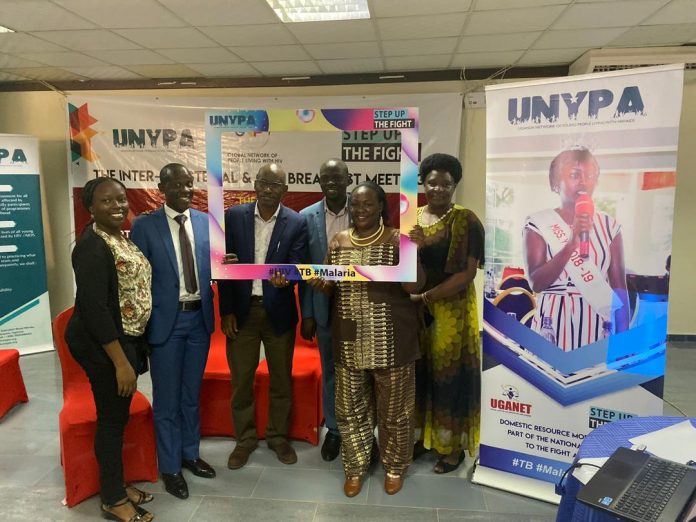
NGO reps. at the event

By Benon Herbert Oluka

On the morning of Tuesday, October 22, 2019, I attended a meeting of civil society organisations that made me appreciate some of the challenges that stand in the way of NGO efforts to try and improve the lives of ordinary citizens where they operate.

No, I am not talking about the third annual national sex workers’ dialogue, although I saw my fair share of odds in that one too.

There was another before that, a breakfast meeting. It was called to discuss the mechanisms for domestic resource mobilization to combat Tuberculosis, HIV and malaria.

The organizers and funders of the meeting were all Non-Government Organizations (NGOs). The organizing team was led by the Uganda Network of Young People Living with HIV and UGANET (hitherto the Uganda Network on Law, Ethics and HIV/AIDS), while the co-funders were the Global Network of People Living with HIV (GNP+) and the East African Network of AIDS Service Organizations (EANASO).

The government wasn’t expected to inject even a penny into the meeting. All its officials had to do was honour the invitation.

Now, for a long time now, about 70 per cent of the funds that the Uganda government uses to respond to those three diseases have come from donors, channeled especially through the Global Fund and PEPFAR (United States).

That arrangement means that Uganda is standing on shaky ground. The day the providers of that money decide to close the taps, then Uganda would almost instantaneously fall into a health-sector funding crisis.

In fact, according to the Vice Chairperson of the Uganda Country Coordinating Mechanism (UCCM) Board, Titus James Twesige, some donors have implied that they may not be around for a long time.

“The development partners are encouraging us to put in place more sustainable domestic funds. At the moment, they are supporting us, they have not clearly indicated that they are not going to continue funding us but there are signs that they will not continue funding us for a long time,” he said.

Uganda CCM is responsible for mobilizing resources and overseeing/monitoring the implementation of the Global Fund supported programmes in Uganda to ensure that the approved funds are used for the intended purpose. Therefore, faced with fears of possible foreign budget cuts, Twesige says the importance of an AIDS Trust Fund that is bankrolled by citizens through government revenue collection mechanisms cannot be understated.

“The earlier we put the AIDS Trust Fund on the ground and it starts working, the better. But is it enough on its own? It’s not enough. We will need to look for other innovative resource mobilization strategies to ensure that we have enough resources to sustain the response,” he said.

Indeed, it was in a bid to start mobilizing resources locally that the Uganda Parliament passed the provisions in the HIV/AIDS Prevention and Control Act of 2014 that would pave the way for the government to establish the AIDS Trust Fund.

“This [money] was to be collected through tax by Uganda Revenue Authority. There are taxes like on beverages like water, a component of which would be going to the AIDS Trust Fund directly. It’s not that the government is putting in money,” explained Twesige.

However, that is as far as the government has gone in its commitment to the AIDS Trust Fund. Since the legal framework was put in place five years ago, the government has not injected any money from the taxes its collects daily to where its mouth once was.

Some NGO sector officials intimated that every time they have gone to meet Finance Ministry officials to lobby for some money to be set aside for the AIDS Trust Fund, they are intimidated into silence.

From the evidence at yesterday’s meeting, it is likely that no money will be set aside for the AIDS Trust Fund in the next financial year as well (2020/2021), if the indifference of government officials is anything to go by.

The meeting was touted as an “inter-ministerial & CSO breakfast meeting,” and the theme was “domestic resource mobilization as part of the national response to the fight against TB, malaria and HIV.”

However, for the entire meeting, the chairs that were reserved for officials from the ministries of finance and health, the two government institutions that hold the key to the funds that could end up in the AIDS Trust Fund kitty, were empty. Not even a junior government official turned up.

“I note with serious concern that there is no government [official] here to listen to all [the discussions] but also to account as this is their responsibility,” said Twesige.

Incidentally, when the government was “benchmarking” for the establishment of that fund, government officials formed the bulk of the delegations that made a number of foreign trips for that exercise.

The head of HIV prevention at the Uganda AIDS Commission (UAC), Dr Daniel Byamukama, said the government ministries need to increase their support in the fight against HIV/AIDS, especially as Uganda seems to ceding some of the ground it had gained over the disease in the past.

“AIDS is a disease unlike any other. If we don’t put in place measures to ensure for sustaining the response, [we will be doomed] because people who have HIV, unlike malaria, live long and they need constant care and we need to plan for this. It shouldn’t take us by surprise,” he said.

Dr Byamukama said one of the challenges with establishing the AIDS Trust Fund is that there is no precedent to learn from “so it becomes a difficult negotiation. At every level, there is a roadblock but we are sure that along the way to put this Trust Fund in place.”

The civil society is encouraged by the return of President Museveni to lead the latest fight against HIV/AIDS. In the past few weeks, Museveni has recorded messages that are broadcast to the public. Civil society organizations hope that the president will hear their cry and send a message to the top honchos at the finance ministry who have decided to sit on their hands over the AIDS Trust Fund.

Stories Continues after ad
Ethiopia’s PM Abiy says no one can stop construction of US$5B dam as Egypt fumes over River Nile

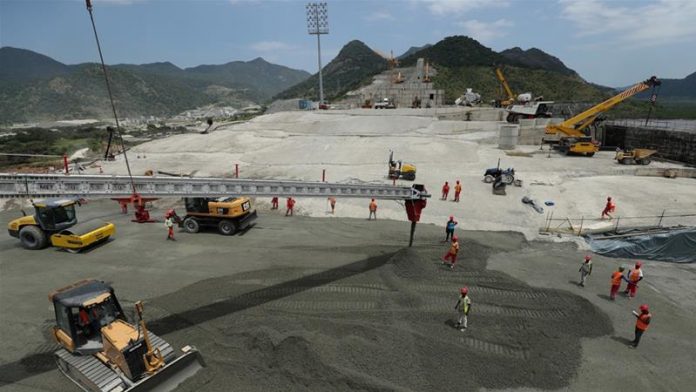
The dam

Ethiopia‘s prime minister has warned that if the need arises to go to war over a dam project disputed with Egypt, his country could ready millions of people, but that only negotiation can resolve a current deadlock.

Abiy Ahmed made the remarks on Tuesday during a parliament question-and-answer session, his most prominent public appearance since winning the Nobel Peace Prize on October 11.

“Some say things about use of force (by Egypt). It should be underlined that no force could stop Ethiopia from building a dam,” Abiy said.

“If there is a need to go to war, we could get millions readied. If some could fire a missile, others could use bombs. But that’s not in the best interest of all of us,” he added.

Abiy stressed that his country is determined to finish the dam project, which was initiated by former leaders, “because it’s an excellent one.”

Talks collapsed earlier this month over the construction of the $5bn dam, the largest in Africa, which is approximately 70 percent complete and is expected to provide much-needed electricity to Ethiopia’s 100 million people.

Egypt, with a similar population, fears the Nile dam will reduce its share of the river and leave the country with dwindling options as it seeks to protect its main source of fresh water.

Pro-government media in Cairo have cast the issue as a national security threat that could warrant military action.

Earlier this month, Egypt blamed Addis Ababa after talks between the two countries ended without an agreement.

“The negotiations on the Renaissance dam have reached a deadlock,” Egypt’s irrigation ministry said in a statement on October 6.

The statement claimed the Ethiopian delegation “rejected all the proposals that take Egypt’s water interests into account” and presented one that “lacked guarantees” on how to deal with droughts that may occur in the future.

Egypt depends on the Nile for about 90 percent of its needs for irrigation and drinking water and says it has “historic rights” to the river guaranteed by treaties from 1929 and 1959.

Ethiopia responded by dismissing Cairo’s assessment of the latest talks.

“The allegation that talks ended in a deadlock is completely false,” Ethiopian minister for water and energy, Selishi Bekele, said.

“Some progress has been made… there are some pending issues, but we believe that these pending issues can be solved before completing the construction of the dam,” he added.

Stories Continues after ad

Fufa launches Afcon 2021 qualification campaign

fufa launch 2021 afcon campaign

FUFA has officially launched the campaign for the 2021 Africa Cup of Nations to be hosted by Cameroon code named “366 Back to Namboole with Cranes”.

The launch was held at the FUFA Headquarters in Kampala on Wednesday, 23rd October 2019 during a special press conference addressed by the Acting FUFA President Justus Mugisha, Vice President Darius Mugoye, Cranes Coach Johnathan McKinstry and Deputy CEO- Football Decolas Kiiza.

The campaign name “366 Back to Namboole with Cranes” was derived from the date when Cranes last played against Cape Verde on 17th November 2018 when Patrick Kaddu scored to confirm Uganda’s berth at AFCON 2019 in Egypt.

The campaign will kick off with an away fixture in Ouagadougou against Burkina Faso on the 13th November 2019 before the home game on 17th November 2019 with Malawi.

“The launch of the AFCON 2021 campaign shows our desire to see the Uganda Cranes keep delivering on the continent. We know the value of this campaign. When we win we give our fans happiness. We shall give the coach Jonathan McKinstry maximum support.” Justus Mugisha said

Given the time span between the two games, FUFA confirmed a chartered flight courtesy of the Uganda Airlines to fly the Uganda Cranes and fans.

The chartered flight will depart Entebbe International Airport on 12th October for the match on 13th November and return on the 14th November 2019.

Uganda will be seeking for qualify for a third straight time for the continental showpiece having played in 2017 Gabon and 2019 Egypt. They will need to finish in top two of group B which has Malawi, Burkina Faso and South Sudan.

“We are now beginning the AFCON 2021 qualification campaign. I have been around three weeks now but have been able to gather some information about the players and our opponents including an international friendly match away to Ethiopia. Burkina Faso is expected to be a very difficult game for us but Cranes away record has improved a lot” Jonathan McKinstry, Uganda Cranes Head Coach

FUFA has also financed a chartered flight for the Uganda Cranes and reserved 30 seats for fans who wish to travel with the team at a fee of $1500 per head (Full board, one night accommodation) and access to the stadium.

“We thank the Government of Uganda for the continued support over time and again. Special regards to all our sponsors and partners, the media and fans. We need your support in this very campaign,” said FUFA Vice President Darius Mugoye.

McKinstry will name the provisional team next Wednesday, 30th October 2019.

Uganda Cranes fixtures:

Matchday one: Burkina Faso v Uganda, 11th November 2019 – Ouagadougou

Matchday two: Uganda v Malawi, 17th November 2019 – Kampala

Matchday three: Uganda v South Sudan, 31st August 2020 – Kampala

Matchday four: South Sudan v Uganda, 8th September 2020 – Juba

Matchday five: Uganda v Burkina Faso, 5th October 2020 – Kampala

Matchday six: Malawi v Uganda, 9th November 2020 – Lilongwe

Stories Continues after ad

Oulanyah urges gov’t to adopt result oriented financing

Oulanyah

The Deputy Speaker of Parliament, Jacob Oulanyah, has called on Government to adopt a new financing mechanism where programmes are financed based on results.

Oulanyah said by doing this, Government will not only fight resource wastage but overcome dependence on donor funding.

“We are saying that if you prove that you built the school as per the specifications and money allocated, also tell us how many children are passing exams because of the school built. We want to see the changes in the community not just reports,” he said, while launching a Shs40 billion USAID funded project dubbed ‘Enabling Health in Acholi’.

“I say this because I am sure the money Parliament passes every year is sufficient to handle the affairs of the country without external help,” he said at Koch Goma HCIII, Nwoya district.

He said that the current financing mechanism is hindered by corruption and diversion of resources, as some money is stolen and incompetent people are hired to do jobs.

The ‘Enabling Health in Acholi’ project will run for four years and will be implemented in districts of Gulu, Omoro, Nwoya and Amuru.

The Minister of Health, Dr. Jane Ruth Aceng said that the four districts benefiting from the US donation have performed well in areas of maternal health, validating the essence of result based refinancing.

She said that the funds will mainly focus on improving maternal and child health.

“I want to task health workers to ensure that our mothers and babies do not die when they reach health facilities,” said Aceng.

The US Ambassador to Uganda, Deborah Malac, said she was hopeful that the funding from her government will reduce maternal and child deaths which she said are way too many yet from preventable causes.

“We have given a gift of US$11 million to government of Uganda to help expand services in the four districts with hope that it will transform child and maternal health in Acholi sub region,” she said.

Stories Continues after ad