Stanbic Bank
Stanbic Bank
16.2 C
Kampala
Stanbic Bank
Stanbic Bank
Home Blog Page 1132

Strange but true:  Story of how Mpanga allegedly planned to take over Sudhir’s house in the Crane bank saga

Sudhir's Kololo residence


As the saga involving the closure of Crane Bank continue to unfold, more information reveals on how many players in the banking especially Bank of Uganda, Dfcu and legal sector (MMAKS and Bowmans and Mpanga) positioned themselves to share the loot from bank and properties of the shareholders.

According to credible sources within BoU one such person who positioned himself strategically was the showy city lawyer, David Mpanga who according to sources, ‘allegedly asked that after accomplishing his task as hired by BoU, he would on top of that be given Sudhir’s Kololo home.

This website understands that in the initial meetings that were held in one of the posh homes of one the BoU employee around one of the suburbs and attended by BoU Deputy Governor Dr. Louis Kasekende,  Former Executive Director in charge of Supervision, Justine Bagyenda, Ex-Dfcu bank Managing Director Juma Kisaame, Dfcu bank board chairman Jimmy Kiberu among others, Mpanga is alleged to have said that for him he understood Crane Bank matters well and more so those of the majority shareholder Sudhir Ruparelia and therefore, he wouldn’t waste time but the only favour he needed was that after the closure of Crane Bank and thereafter the attachment of several properties belonging to Mr. Sudhir, he (Mpanga) would be allowed to take over Sudhir’s Kololo home.

Bank of Uganda which had to file its defence in Court through external lawyers MMAKS advocates and AF Mpanga advocates.

But the affluent businessman Sudhir again failed another legal suit challenging the presentation of David Mpanga and Timothy Masembe as BoU’s lawyers.

One of the main reasons, Sudhir informed court that the duo at one time were his legal counsels and therefore it would be unfair for the defendant to hire these conflicted lawyers.

Court indeed ruled that Mpanga and Masembe should immediately be dropped from the case.

It must be noted that Bank of Uganda had paid close Shs1 billion to these lawyers.

“The plan was to take away his bank. Because these people knew very well the bank was earning Sudhir good money. Which they succeeded in executing,” said a source close to this lawyer but asked to remain unnamed.

In executing their deadly mission, this lawyer and his cohorts calculated that after selling the bank, it would be a great move in crippling Uganda’s richest man financially. However, Sudhir realized their move and crippled them using the very court they would use to grab his long earned property.


Stories Continues after ad

UPDF receives Shs100m for taking part in inaugural Armed Forces Motocross Championship

CDF Gen David Muhoozi receiving a cheque from UMU officials

The Uganda Motocross Uganda (UMU) has awarded Uganda Peoples’ Defence Forces (UPDF) Shs 100 million as a token of appreciation for participating in recently concluded Inaugural Armed Forces Appreciation Motocross Championship.

The event that was  between international riders and locals, at the Uganda Motocross Arena (UMA) Busiika on October 6, 2019 registered a huge crowd that turned up to witness the motorbike competition amongst teams drawn from USA, Belgium, France, DRC , Israel, South Africa and the host Uganda.

The Chief of Defence Forces (CDF) Gen. David Muhoozi, while receiving the dummy cheque, appreciated the initiative by UMU, saying the event creates a lot of opportunities such as having fun, business networking and strengthening the bond between the military and the population.

The money was part of the proceeds collected as gate fee and from sponsors. The prize was also a token to thank the UPDF for securing the country’s borders as well as participating in regional peace initiatives.

During the Press Conference held at the Ministry of Defence and Veteran Affairs headquarters in Mbuya, General Muhoozi emphasized that the Motocross show piece ‘is a great innovation and continues to bring people closer to the army and vice-versa since UPDF is a Peoples’ Army.’

He commended both organisers and sponsors for being realistic to Uganda’s process of transformation

The UPDF Chief of Staff Land Forces and Chairman Organizing Committee of the event, Maj Gen Leopold Kyanda, lauded the wanainchi who turned up for supporting the event and reiterated UPDF’s commitment towards supporting activities geared towards nation building.

The President of UMU Dusman Okee said the championship provided a platform for interaction between UPDF and civilians on top of proving to the world that UPDF is truly a Pro-People Army.

He promised a better outreach next time and commended sponsors for contributing towards the success of the event.

American Ryan Surrat, Stav and Brother Alon Orland, William Blick Jr and Uganda’s Captain Maxime Van Pee, were among the world stars who participated in the ride held mid-October.

Stories Continues after ad

Police force Makerere students to stay in lecture rooms

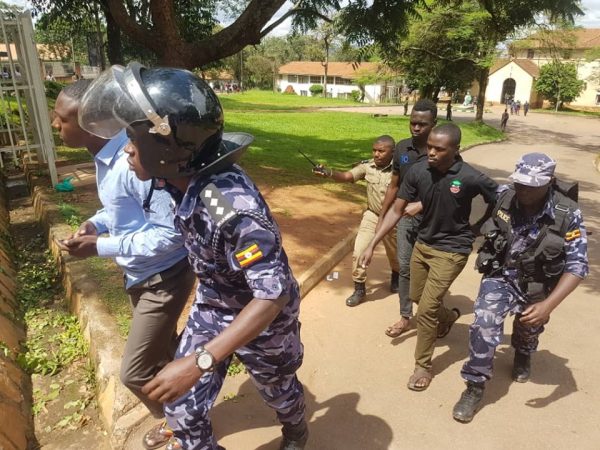
Police arresting students

Police and the military yesterday afternoon forced Makerere University students to stay in their lecture rooms although most of them had no lectures to attend.

This came as a result of a strike organised by students over the 15 percent tuition increment policy by the university council.

The police was set all over the campus and some routes blocked in order to keep security.

While at Nkrumah hall, policemen commanded all students to go into lecture rooms though they were free which forced many of them to exchange words with the men in uniform.

Talking to one of the students, he said, ‘these policemen just are not fair and nationalistic. They should let us fight for our rights as students.’

He added that these policemen are jealous of us as they can raise this tuition to pay for their children.

This strike was mainly spearheaded by girls who wanted to march to President’s Office for redress of the issue, claiming they are selling their bodies so as to raise tuition as their parents have failed to raise it.

Deputy Students’ Guild President, Judith Nalukwago said,” we know the university needs money to run activities but this is too much. We the mothers of this nation are losing value as we are selling off our bodies for tuition.”

Prof Barnabas Nawangwe, the Vice Chancellor warned these students and told them to resort to other measures solving the problem other than the strike.

“Tell those students to stop striking and this policy will not stop because it was supported by the university council,” said Nawangwe.

According to Dr. Paul Omach a political science lecturer, the timetable is out as students resort to striking. He encouraged second year students doing International Relations to focus on academics.

However, students are planning to continue with the strike.

Stories Continues after ad

Bobi Wine, LoP Betty Aol Ocan castigate UPDF for battering Makerere female students

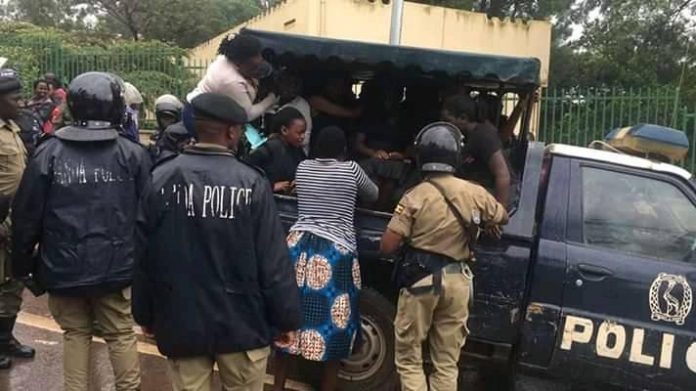
Students being loaded on police vehicle

The People Power Movement leader and Kyandondo East MP Robert Kyagulanyi aka Bobi Wine, and Leader of Opposition in Parliament (LoP) Betty Aol Ocan, have accused soldiers of the Uganda People’s Defence Forces (UPDF) for allegedly  battering Makerere University students yesterday as they tried to hold a peaceful demonstration over 15 percent tuition increment.

“Instead of protecting their constitutional right to protest peacefully, the military was called in. Students, especially ladies, were roughed up and arrested. Others were brutalised and taken to jail. Information coming in shows that some are being dismissed from the University, while others have been given warning letters,” Bobi Wine wrote.

He commended the courage of female students to hold the demonstration. “I must salute the courage of these young women. It gives me great pleasure to see women rise up to speak for social justice. This is evidence that our struggle has come of age- dictatorship and bad governance are in trouble,” he said.

Soldier and Police confront students

“In the same manner, I condemn the violent crackdown of a peaceful demonstration by unarmed students who are only expressing their frustration with an unfair and oppressive policy. It is not a crime to peacefully demonstrate! It is a right! Our struggle is about restoring fundamental human rights, as well as ensuring social justice for all citizens.”

Commenting on the demo, Aol said: Makerere University’s female students led a peaceful protest against tuition increment at the University. This is a positive manifestation towards women appreciating that policies in public institutions directly affect their lives and thus they must play an active role in advocacy and questioning of policies that they deem oppressive.”

She said peaceful demonstrations do not call for arrests and ‘the images of the military confronting the harmless students only armed with Manilla cards is signal of a failed State and I condemn such in the strongest terms possible.’

She said Makerere University should instead provide a benchmark for the enjoyment of the fundamental Freedom of Expression to not only Uganda, but to the region at large.

Meanwhile the university is reported to have suspended two students for protesting the tuition increment.

The vice chancellor Prof Barnabas Nawangwe said that two students had been suspended for allegedly inciting violence.

Soldiers confronting Makerere students who were holding a peaceful demonstration

At least 20 students were Tuesday arrested for attempting to march to the office of the president to present a petition to President Museveni to have the 15 percent cumulative policy scrapped on grounds that it was unfair to privately sponsored students.

The students were, however, released Tuesday evening on police bond.

He named the two as Mollie Siperia (the Guild Representative Councillor for School of psychology and one Frank Bwambale.

Warning letters were issued to several other students who had allegedly engaged in yesterday’s protest.

The soldiers are still stationed at the university as lectures have been suspended.

Stories Continues after ad

Changes at Tullow Oil as company plans next move in Uganda farm-down talks

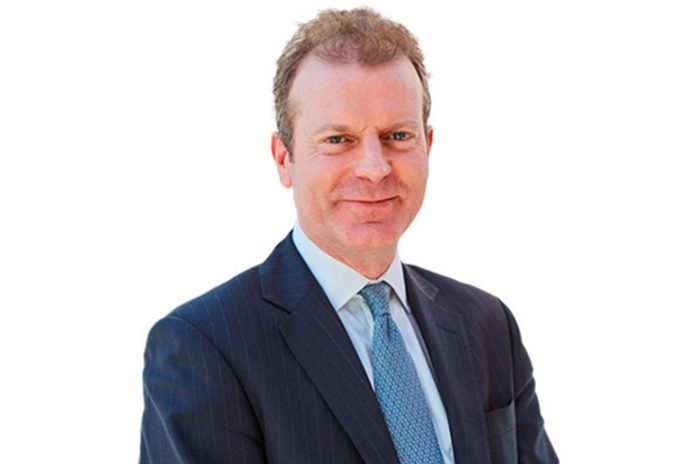
Martin Greenslade

As Tullow Oil plc ponders the next move in Uganda regarding failed talks on its farm-down tax negotiations, it has announced the appointment an experienced executive in the names of Martin Greenslade who will serve as a non-executive director with effective November 1, 2019.

Martin has also been appointed as a member of the Audit Committee and will stand for election to the Board at the 2020 Annual General Meeting (AGM).

Meanwhile, Steve Lucas, non-executive Director, will step down from the Board following the conclusion of the Group’s 2020 AGM, after eight years with Tullow. At the same time, Martin Greenslade will be appointed Chair of the Audit Committee.

Martin brings extensive financial experience to Tullow from his current position as Chief Financial Officer and member of the Board of Land Securities Group plc which he has held since 2005. Martin, a qualified accountant, also brings multi-sector experience to the Group from senior positions held in real estate, financial services, defence and manufacturing. He is currently a Trustee of International Justice Mission UK and was Group Finance Director of Alvis plc from 2000-2005.

“I am delighted to welcome Martin to the Board of Tullow, where he will bring important insight and diversity of thought from both his current position as Chief Financial Officer of Land Securities and his extensive experience from other sectors.  His timely appointment will allow for a suitable handover of Audit Committee responsibilities ahead of Steve Lucas stepping down in April next year.” Dorothy Thompson, chair of Tullow oil plc

According to directors’ declarations pursuant, there are no further disclosures required under Rule 9.6.13R of the Listing Rules of the UKLA and 6.6.7 of the Listing Rules of the Irish Stock Exchange in respect of the appointment of Martin Greenslade.

On August 29, 2019, Tullow Oil announced the termination of its farm-down to Total and CNOOC, following the expiry of the Sale and Purchase Agreements (SPAs).

The termination of this transaction was a result of Tullow Oil being unable to agree all aspects of the tax treatment of the transaction with the Government of Uganda which was a condition to completing the SPAs.

While Tullow’s capital gains tax position had been agreed as per the Group’s disclosure in its 2018 Full Year Results, the Ugandan Revenue Authority and the Joint Venture Partners could not agree on the availability of tax relief for the consideration to be paid by Total and CNOOC as buyers.

Tullow now plans to initiate a new sales process to reduce its 33.33% Operated stake in the Lake Albert project which has over 1.5 billion barrels of discovered recoverable resources and is expected to produce over 230,000 bopd at peak production. The Joint Venture Partners had been targeting a Final Investment Decision for the Uganda development by the end of 2019, but the termination of this transaction is likely to lead to further delay.

Announcing the collapse of talks in August Paul McDade, chief executive officer, commented then that: “Tullow has worked tirelessly over the last two and a half years to complete this farm down which was structured to re-invest the proceeds in Uganda. Whilst this is a very attractive low-cost development project, we remain committed to reducing our operated equity stake. It is disappointing to report this news at a time when we are making so much progress elsewhere towards the growth of the Group with our recent oil discovery in Guyana and the first export of oil from Kenya.”

The termination of tax talks created anxiety among many stakeholders including the media, civil society organizations, business community and the general as Tullow (Tullow Uganda Operations Pty Limited and Tullow Uganda Limited) was farming down some of its interests to Total E&P Uganda B.V and CNOOC Uganda Ltd for its interests in Blocks EA1, EA1A,EA2 and EA3A. The expiry of this transaction occurred before resolution of the outstanding issue between the Government and the Partners regarding some aspects of the tax treatment of the transaction.

Uganda Revenue Authority issued Tullow with assessed of US$ 167.8 million in Capital Gains Tax (CTG) arising from the sale of US%900 million. Tullow Oil had sought to take home US$200 million in cash while the remaining US$700 million would be reinvested by Total and CNOOC, the reason why joint ventures partners the tax levied is unfair, given that they have not recovered capital costs.

The failure by both partners to agree on tax treatment of the transaction value forced the companies to delay the final investment decision (FID) that would have propelled plans for the construction of the East Africa Crude Oil Pipeline (EACOP) from Hoima in Uganda to the Port of Tanga in Tanzania.

“Government is fully aware that, the above developments affect the taking of the Final lnvestment Decisions (FID) which were expected late this year and/or next year. The FID would give way to the Engineering Procurement and Construction (EPC) phase of the projects that would be characterized by the award of contracts to providers of the required goods and services for construction of the facilities. Failure to take FID affects our obligations with the developers of the Refinery who cannot proceed with the development without certainty of crude oil availability,” Energy Minister Irene Muloni said recently.

Other projects affected by pull out of EACO are; The Tilenga Project, which includes the Central Processing Facilities, the drilling pads, flowlines located in Buliisa and Nwoya Districts and the Kingfisher Development Area (KFDA) which will include the Central Processing Facilities, the drilling pads, flowlines in Kikuube and Hoima Districts.

The impasse between government and the companies has caused anxiety amongst local subcontractors who had invested their money in anticipation that the projects would begin soon and hence get tenders for supply of goods and services.

Stories Continues after ad

URA bitter as soda and water companies fleece Shs14 trn in illicit financial flows

The Uganda Revenue Authority (URA), which is responsible for collecting taxes in the country, has accused local beverage companies manufacturing soda and water, of cheating government of Shs14.16 trillion in Illicit Financial Flows (IFFs) for the financial years 2016/17 and 2017/18, hence government losing the would-be tax revenue.

“According to information obtained from Uganda Manufacturing Association (UMA), the Soda and Water sector currently produces 231,379,200,000 bottles per annum,” URA Commissioner General Doris Akol says. However when computing taxes for the bottles recorded, the figures don’t add up.

“At a unit price of UGX.625 per bottle, the sectors (water & sodas) are expected to have remitted UGX.14.4 Trillion per annum but only remitted UGX 105 Billion in FY 2016/17 and UGX 135 Billion in FY 2017/18, she says.

Further, using UMA figures, Akol says the sector is currently comprised of 256 manufacturers against the 46 clients currently registered with URA.

Read full submission by Akol on the effects of IFFs

Illicit Financial Outflows (IFFs) are a major source of leakage of economic value from African economies. Illicit Financial Flows (IFFs) can be traced back to commercial activities such as tax evasion, trade mis-invoicing and abusive transfer pricing.

IFFs reduce and eliminate expected growth benefits and undermine the development potential of our economies.  The erosion of the tax base deprives our governments of the financial resources required for provision of public goods such as education, health and infrastructure.

Under the African Union Commission report of 2019, Domestic Resource Mobilization is one of the remedies to combat illicit financial outflows and these involve among other initiatives, the enhancement and improvement of existing tax systems by taking advantage of initiatives for opportunities of digitalization and increasing transparency in trade.

The manufacturing sector in Uganda is the principle provider of the goods that we consume and export.  It is the second contributor to tax revenue in Uganda and takes up 27.1% of our GDP.

Existing deficiencies in tracking and tracing the locally manufactured products has contributed to less than adequate tax receipts from the manufacturing sector as well as those importing the excisable products. For instance, according to information obtained from Uganda Manufacturing Association (UMA), the Soda and Water sector currently produces 231,379,200,000 bottles per annum. At a unit price of UGX.625 per bottle, the sectors (water & sodas) are expected to have remitted UGX.14.4Trillion per annum but only remitted UGX 105Billion in FY 2016/17 and UGX 135Billion in FY 2017/18. Further, according to UMA, the sector is currently comprised of 256 manufacturers against the 46 clients currently registered with URA.

The introduction and implementation of the Digital Tracking and Tracing Solution (DTS) commonly known as the Digital Tax Stamp will deliver transparency in the outputs of the manufacturing process from industrial production lines and the tracking and tracing of manufactured products.

This transparency is key in not only curbing illicit trade in substandard goods, boosting our trade balances by tracing exported products as originating from Uganda but also contributes to accuracy of tax receipts from the manufacturing sector through accurate declarations of excise duty from excisable products.

The DTS will help identify and enforce on the non-compliant manufacturers. To this end therefore, the introduction and implementation of the Digital Tracking and Tracing Solution is also critical in protecting legitimate local manufacturers against the trade in illicit and counterfeit products. In levelling the playing ground, it greatly facilitates inter and intra national and regional trade of Ugandan products.

With the introduction and going live of the Digital Tracking and Tracing Solution, Uganda scores a huge milestone of curbing the illicit financial outflows from the tax evasion from this considerable segment of our GDP, thus enhancing our Domestic Resource Mobilization effort.

We thank the entities in the manufacturing sector that have been supportive in adopting this trade and revenue enhancing initiative for the good of all Ugandans.

Uganda Revenue Authority remains committed to supporting all our stakeholders and ensuring the success of this initiative as we continue Developing Uganda Together.

Stories Continues after ad

African countries endorse cross-border collaboration on Ebola outbreak preparedness and response

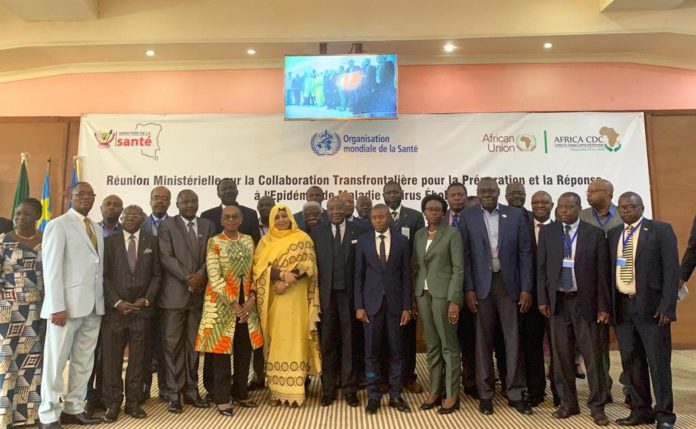
Delegates pose for photo

The Democratic Republic of the Congo (DRC) and its nine neighboring countries, during a meeting of ministers, senior health and immigration officials and partners in Goma, endorsed a joint framework to strengthen cross-border collaboration on preparedness and response to Ebola virus and other disease outbreaks.

Representatives of the 10 countries of  Angola, Burundi, Central African Republic, Republic of the Congo, the Democratic Republic of the Congo, Rwanda, South Sudan, Uganda, United Republic of Tanzania and Zambia – noted with concern the Ebola outbreak in north-eastern DRC, which has continued for more than one year, and the increasing potential to spread into the neighbouring countries. They recognized the shared threat that the outbreak poses to health and economic security in the subregion and other parts of Africa and the need to develop an action plan to mitigate the effects of these threats.

“Resources are always limited, and there are always gaps in emergency contingency plans. Setting up a mechanism for cross-border collaboration and the sharing of assets will contribute to the mitigation of suffering and minimize the social and economic impact of disease outbreaks,” said Amira Elfadil Mohammed, African Union Commissioner for Social Affairs.

In her opening address, Dr Matshidiso Moeti, World Health Organization (WHO) Regional Director for Africa, emphasized that cross-border collaboration will particularly enhance information sharing on disease outbreaks and emergencies in line with the legally binding International Health Regulations (2005).

“In recent times, Ebola has been in the spotlight. Other diseases also pose a significant threat. These events highlight the immense importance of cross-border collaboration to improve the sharing and exchange of information to quickly contain outbreaks, harmonize resources, increase coordination and stop diseases from crossing the borders,” said Dr Moeti.

The movement of people, goods and services across borders can heighten the risk of transmission of infectious pathogens that cause diseases, such as Ebola, cholera, measles and yellow fever.

“As the African Union advances towards implementation of Agenda 2063, which aspires for the political and economic integration of Africa, including the free movement of people across the continent, there will be a change. We need to be prepared for the risks that this change poses to the continent. A multi-country effort on Ebola outbreak response and preparedness will be a good example of the use of our collective capabilities in this regard,” said H.E. Mohammed.

The ministerial meeting was co-organized by the Government of the DRC, WHO and the African Union Commission through its Africa Centres for Disease Control and Prevention (Africa CDC). Participants reviewed the situation of the outbreak in the DRC and level of preparedness by the 10 neighboring countries, and discussed a road map for effective and sustained collaboration.

“It is a good thing for the DRC to formalize a framework for collaboration and adopt a road map with its neighbouring countries on Ebola preparedness and response. In this way, we will be able to pull our resources together to strengthen health security and safety,” said Dr Albert Biyombo, Vice Minister of Health in the DRC.

Representatives of the Member States agreed to strengthen mechanisms for the exchange of timely and accurate information on Ebola preparedness and response and other health security risks and noted that withholding or falsifying information and data on Ebola violates the International Health Regulations and threatens peace, security and prosperity of the affected Member States and the entire continent.

“We acknowledge the solidarity that other African countries are showing today by organizing this very important meeting. The meeting will allow us to agree on communication mechanisms across borders on EVD and a common action plan on preparedness and response in case of emergencies,” said H.E. Carly Nzanzu Kasivita, Governor of North Kivu Province, where the meeting took place.

“Information sharing is improving, but we need to bring it to an acceptable level. We need countries to openly share information necessary to save lives. Our mission is to establish cross-border collaboration that will cover all outbreaks and all public health emergencies,” said Dr Moeti.

The ministers and senior health and immigration officials also endorsed the establishment of a coordination task force on EVD and other disease outbreaks, which will be hosted in the African Union Commission headquarters in Addis Ababa. The task force is expected to facilitate sustained political commitment to preparedness and response to disease outbreaks. Technical support will be facilitated through the WHO subregional Ebola partnership coordination platforms in collaboration with the Africa CDC and other partners.

Although this framework does not contain any funding commitment for emergency response and preparedness, WHO and the African Union/Africa CDC encourage countries to invest more in this area. Countries that have ramped up their preparedness are better able to handle emergencies, minimizing the social and economic costs of outbreaks and other public health events.

Stories Continues after ad
Health ministry, Sex workers hold sensitisation dialogue in Kampala

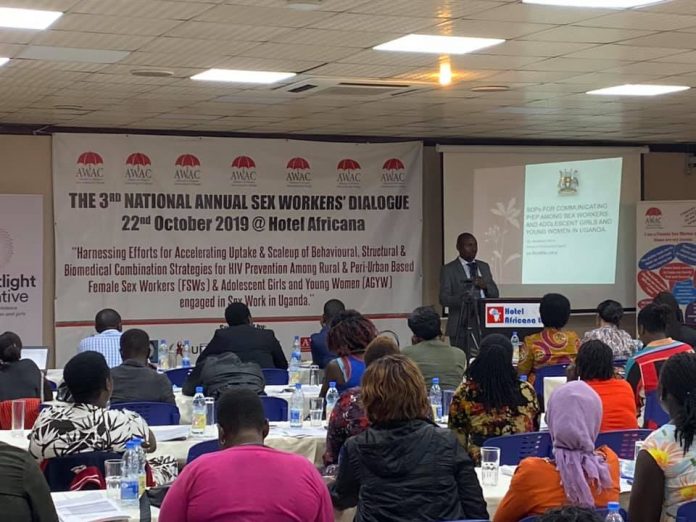
Participants at workshop

The third annual national sex workers’ dialogue is currently ongoing at Hotel Africana in Kampala aimed at sensitising sex workers on HIV/AIDS.

Officials from the Ministry of Health are sharing strategies on HIV/AIDS prevention and are leading discussions on awareness creation about HIV/AIDS while the Uganda Police is represented by a senior officer as well.

HIV prevalence among sex workers was estimated at 37% in 2015/16. It is estimated that sex workers and their clients accounted for 18% of new HIV infections in Uganda in 2015/16.

A 2015 evidence review found between 33% and 55% of sex workers in Uganda reported inconsistent condom use in the past month, driven by the fact that clients will often pay more for sex without a condom.

Violence is common, with more than 80% of sex workers experiencing recent client-perpetrated violence and 18% experiencing intimate partner violence. More than 30% had a history of extreme war-related trauma.

The criminalisation of sex work and entrenched social stigma means sex workers often avoid accessing health services and conceal their occupation from healthcare providers. Indeed, many sex workers in Uganda consider social discrimination as a major barrier in their willingness or desire to test for HIV

Stories Continues after ad

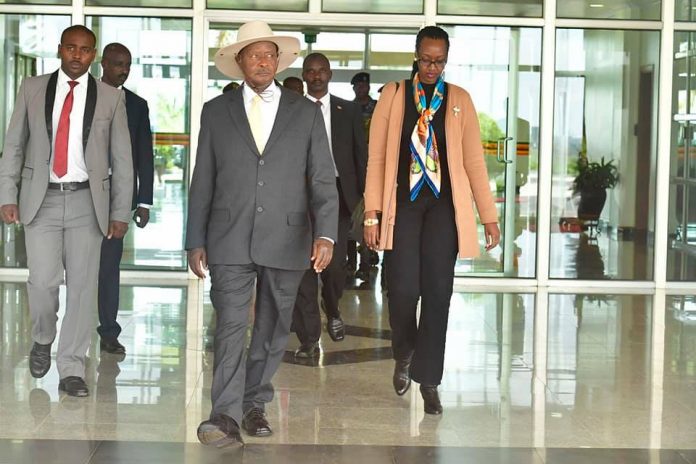
Museveni leaves for Russia-Africa Summit in Sochi

Museveni leaving for Russia

President Yoweri Museveni has left for the Russian Coastal city of Sochi where he is to meet other African leaders for Russia -Africa Summit aimed opening up new opportunities to overcome challenges facing the continent that has most its resources still unexploited but also characterised by high rates of corruption, leaving masses in abject poverty.

The first ever Russia African summit kicks off tomorrow Wednesday with Moscow seeking to have influence on the continent where china and the west have a great influence in as far as investment is concerned.

Accompanied by his daughter Patience Museveni, the president was seen off at Entebbe International Airport by Minister for Presidency, Esther Mbayo, Head of Civil Service John Mitala, Commander Air Force Major General James Lutaaya and Commissioner for Prisons, Johnson Byabasheija.

As African Union’s strategic framework Agenda 2063 highlights the importance of preserving African values and Pan-Africanism, the discussion by participants will outline the most pressing issues that dictate the future of Africa and discuss possible solutions.

In addition, another important topic in the session participants’ speeches will be Russian assistance to African countries in drafting a development strategy, including in matters concerning the preservation of sovereignty and the right to take independent decisions.

One of the sessions of the Russia–Africa Economic Forum’s business programme will focus on ways for Russia and African countries to develop cooperation in the energy sector. Participants will discuss how to utilize international partnerships to create a competitive landscape and increase efficiency as well as how the ‘green agenda’ will impact the development and diversification of investors as a guarantee for ongoing development.

In the process of strengthening economic ties, Russia and other partners must take into account the whole range of new trends in African development.

Business opportunities in Africa will be the front and centre at the upcoming Economic Forum. The event will include a plenary session, a series of round tables and panel discussions, and the organization of a major venue for business meetings.

Russia’s President Vladimir Putin has said his country can help Africa tackle its challenges without the conditions attached by Western powers.

“We see how an array of Western countries are resorting to pressure, intimidation and blackmail of sovereign African governments,” Mr Putin said in an interview with Tass news agency, ahead of a summit with African leaders.

“They are using such methods to try to return lost influence and dominance in their former colonies in a new guise and rushing to pump out maximum profits and to exploit the continent,” he said.

Russia is expecting to host 47 African leaders at the 23-24 October summit in the Black Sea resort of Sochi.

Mr Putin said relations with Africa had improved, pointing to military cooperation agreements that Russia currently has with more than 30 African countries which it supplies arms to.

Rwanda is among countries that have deepened relations with Russia.

The technology will be used in the agriculture, energy production and environment protection, the report says.

Stories Continues after ad
Kenya finally legalises polygamy, criminalises homosexuality as Kenyatta signs law

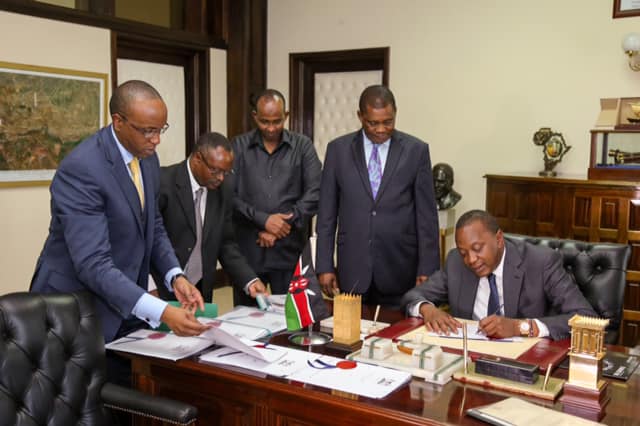
Kenyan President Kenyatta signing document

Kenya’s President, Uhuru Kenyatta, has signed into law, a marriage bill which legalises polygamy and criminalises homosexuality in that country.

The new law that went into effect in Kenya this week makes it legal for a man to marry as many women as he wants.

President Kenyatta signed the polygamy measure into law Tuesday, formally recognising what has long been a cultural practice in the nation.

The Kenyan Parliament passed the bill in March despite protests from female lawmakers who angrily stormed out of the late-night session at the time.

The bill initially allowed the first wife the right to veto the husband’s choice of additional spouses. Male members of parliament successfully pushed to get that clause dropped.

“Marriage is the voluntary union of a man and a woman whether in a monogamous or polygamous union…. It is time for Africa to recognize that we cannot continue to promote the culture of others over ours,” the President said in his address.

No limit on number of wives

The law legalizes polygamous unions, but does not provide an official limit on the number of wives a man can have.

The Federation of Women Lawyers, a powerful women’s rights group, applauded aspects of the bill and criticized others.

Polygamy already is a common fixture among many cultures in Kenya and in some other African countries.

The bill, the group said, is long overdue because polygamous unions were previously not regarded as equal to regular marriages.

“We are happy with the law because finally all marriages are being treated equally,” said Christine Ochieng, executive director of the nation’s Federation of Women Lawyers.

“All marriages will be issued with marriage certificates, including customary marriages. Before this, customary marriages were treated as inferior with no marriage certificates. This opened up suffering for the women because they could not legally prove they were married to a particular man.”

Stories Continues after ad