Stanbic Bank
Stanbic Bank
17.7 C
Kampala
Stanbic Bank
Stanbic Bank
Home Blog Page 1133

Donkeys face population ruin due to skin trade

Donkeys

Donkeys are in a state of global crisis with the animals facing population collapse across a number of countries as traders target their skins to export as an ingredient for ejiao, a traditional Chinese medicine, international animal welfare charity The Donkey Sanctuary can reveal.

The charity’s latest report into the trade, Under the Skin Update, has found that local donkey populations have crashed in a number of countries as increasing demand for ejiao has led to an unsustainable number of donkeys being slaughtered.

Gelatine in donkey hides is a key ingredient in ejiao and The Donkey Sanctuary is now calling for an urgent halt to the largely unregulated global trade in donkey skins before donkeys are virtually wiped out in some areas.

The supply of donkey skins cannot meet demand in China, which needs around 4.8 million hides per-year for ejiao production, so traders, mainly in Africa, Asia and South America, are exporting additional skins to China.

Donkey populations in China have collapsed by 76 percent since 1992. Since 2007 donkey populations have declined by 28 percent in Brazil, by 37 percent in Botswana and by 53 percent in Kyrgyzstan.

In Kenya and Ghana, both countries where the skin trade operates, donkeys are also being exploited by traders with fears that their numbers could be devastated in the near future.

With just under five million skins needed every year for ejiao production, the industry would need more than half the world’s donkeys over the next five years to meet demand.

The collapse of the donkey population will have a hugely damaging impact on the livelihoods of an estimated 500 million people in some of the world’s poorest communities that the animals support.

Donkeys transport goods to market, carry water and wood, provide access to education and are a vital source of income for vulnerable communities, particularly women.

The report reveals appalling animal welfare abuses and biosecurity risks at every stage of the skin trade both in its legal and illegal forms.

Tens of thousands of donkeys, many of whom are stolen, are rounded up to endure long journeys to slaughterhouses on crowded trucks without access food, water or rest with an estimated 20 percent of animals dying on route, in some cases.

Demand for skins is so high that even pregnant mares and young foals as well as sick and injured donkeys are indiscriminately caught and transported, contrary to international animal welfare guidelines.

The report revealed that many skin trade donkey handlers have little or no training in animal handling, often resorting to cruel and illegal methods of controlling donkeys such as kicking, dragging and the use of spiked sticks called goads.

Conditions in many of the donkey slaughterhouses are appalling. The Naivasha slaughterhouse in Kenya was immediately closed after witnesses recorded footage of dead and dying donkeys some with open, maggot-infested wounds. Aborted foetuses were also seen as well as skinned carcasses dumped next to live donkeys awaiting slaughter. The slaughterhouse has since reopened.

In Bahia, Brazil, 800 donkeys were found starving to death in holding pens alongside hundreds of rotting carcasses which had polluted their only water source.

Donkeys are often brutally slaughtered in front of other animals. Footage obtained by The Donkey Sanctuary from a slaughterhouse in Tanzania revealed animals being repeatedly hit with hammers in failed attempts to stun them.

The Donkey Sanctuary has also discovered links between the skin trade and wildlife crime, with some traders offering donkey skins for sale on online platforms that are also selling illegal wildlife products including ivory, pangolin scales and rhinoceros horn. In one instance, tiger skins were found hidden underneath donkey skins.

Unhygienic practices during transport, in slaughterhouses and when the hides are processed onwards have resulted in an increased risk of the spread of dangerous diseases such as anthrax and equine diseases, equine flu and strangles.

More than 60,000 donkeys died in West Africa this year along live skin trade routes, which the World Organisation for Animal Health have said are almost certainly linked to the trade.

These deaths demonstrate the potentially high risk of contagious diseases being spread as a result of the skin trade. Donkey skins from this area are being exported untreated direct to China.

Mike Baker, Chief Executive of The Donkey Sanctuary, said: “This is suffering on an enormous and unacceptable scale. This suffering is not just confined to donkeys as it also threatens the livelihood of millions of people.

“The skin trade is the biggest threat to donkey welfare we have ever seen. Urgent action needs to be taken.”

Stephen Njoroge from Kiserian, near Nairobi, Kenya, is totally dependent on his donkeys for his livelihood. He said: “I used my donkeys for general transport, collecting water, taking vegetables to market and carrying construction materials.

“My donkeys were very close together and were stolen in the same night, and I am still recovering from the loss. I have heard much about the donkey slaughterhouses and they are causing the donkey thefts in this area – they should be closed down straight away; it is the only way to stop the thefts.”

The Donkey Sanctuary is calling for the ejiao industry to cut links with the global skin trade and move towards more sustainable sources of raw materials provided by cellular agriculture such as the use of artificially grown donkey-derived collagen.

The charity is also recommending that the Chinese Government suspends the import of donkeys and their products until both can be proven to be disease free, humane, sustainable and safe and for national governments to take immediate steps to stop the trade.

Stories Continues after ad

Police mourns Medi Kaggwa, contributes Shs1m towards burial expenses

Late Meddie Kaggwa

The inspector general of police (IGP), Martin Okoth Ochola, has mourned the death of the chairperson of Uganda Human Rights Commission (UHRC), Medi Kaggwa who passed on yesterday and contributed Shs1 million towards burial arrangement.

Mr. Kaggwa died yesterday after he collapsed in his car near Mulago round about. His car stopped suddenly and knocked the car that was in front of it. He was rushed into intensive care unit (ICU) at Case medical Center where he was pronounced dead.

In a condolence message issued by police IGP said “It is with great sadness that I learned about the passing on of the chairperson of Uganda human rights commission which occurred yesterday.”

Mr Ochola described him as a gentle but a recognized champion for human rights and a great teacher, Medi Kaggwa has been a very great ally with police leadership in articulating links between human rights and law enforcement.

“Just a day before this sad occurrence, on the 19th day of November, he delivered a lecture to police council at police headquarters in Naguru. His fight for having equal human rights and opportunities was not only for civilian population but also for the law enforcement officers. His gentle approach and interaction with government offices, stands a testament human rights enforcement and law enforcement can co-exist peacefully.” He said.

”As the inspector general of police, I was also fortunate to have been one of his students at Law development centre in 1983/83 academic year and every time I met him I was struck by both the force of his personality and the quality of his intellect.” He wrote

Ochola, said the demise of this great man is a great loss to human right activists and law enforcement officers and therefore we all mourn that our dearest friend has passed away. Therefore on behalf of Uganda police force and I send our deepest condolence to the family of the med Kaggwa, human rights commission and the entire country at this difficult time.

He said police force mourns with you and celebrates the extra ordinary life of this remarkable teacher and the friend of police who devoted his life to peacefully protecting rights of all Ugandans. The force makes a humble contribution of Shs1 million towards burial expenses.

Stories Continues after ad

NSSF advocates for more pension contribution to finance health care

Patrick Ayota

The National Social Security Fund (NSSF) has proposed that individuals in formal employment should contribute an extra two percent to close the gaps in the health sector as opposed to the proposed National Health Insurance scheme.

The proposal is that collections be made where both the employee and employer contribute one percent bringing the total contribution to NSSF to 17 percent.

According to Patrick Ayota, the Deputy Managing Director of NSSF, this will not only ensure universal health coverage but will be sufficient for infrastructural development like renovation of health centres.

“If I fall sick and I seek care from a health centre III in my village, I will have all I need; there will be a nurse with all the required diagnostic equipment,” said Ayota.

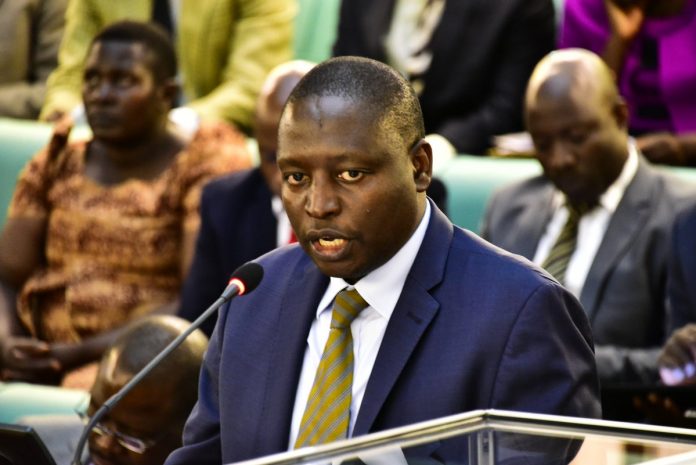
Ayota said this while appearing before the Committee on Health over the proposed National Health Insurance Bill, 2019.

He explained that currently NSSF collects shs 96 billion per month and estimated that the extra two per cent fees will yield shs13 billion per month.

“If you collect this money and you deploy a billion to a health centre III, in one month you could stock 20 health centres in a district and within a year you could have renovated about 200 health centres,” said Ayota.

The Fund also proposes a one per cent charge on the minimum wage of shs130, 000. This form of funding, NSSF observed will ensure quality services in public health facilities leaving private health facilities to offer specialized services.

Legislators on the Health Committee were concerned that the public may reject this proposal, thinking it is one way of government evading its core mandate on health care provision and infrastructure.

“We had a challenge with OTT; people thought we were charging them more money. This might be worse if they know their contribution will also be output to construction of hospitals,” Kyotera District Woman MP, Hon Robinah Ssentongo said.)

Robert Ntende was concerned that NSSF’s proposal loads a huge burden on citizens and proposed that Government should take a pivotal role by making substantial contribution.

“Our people will ask why they should shoulder this burden when it is government’s mandate,” he said.

The Committee Chairperson, Hon Michael Bukenya said that the committee will have to assess and weigh NSSF’s proposal against the proposed National Health Insurance scheme.

Stories Continues after ad

Ugandan referee to officiate at U23 AFCON final

dick-okello

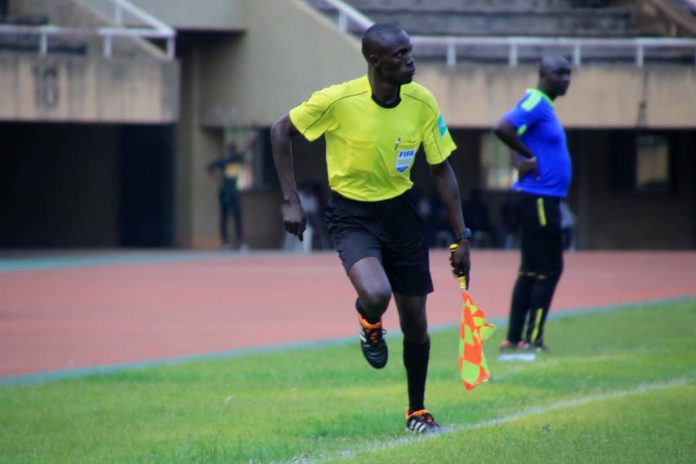
Ugandan match official Dick Okello has been selected as the first assistant referee for the U-23 Africa Cup of Nations final between Egypt and Ivory Coast on Friday, 23 November.

The center referee for the game will be Andofetra Avombitana Rivolala Manda Aroniaina Rakotojaona from Madagascar while James Fredrick Emile from Seychelles will be the second assistant referee.

The fourth Official will be Ahmed Souleiman Djama (Djibouti), match commissioner will be Jean Guy Blaise Mayolas from Congo and the Referee Assessor Sidi Bekaye Magassa (Mali).

FUFA CEO Edgar Watson Ssuubi has been selected as the head of Technical Study Group.

Hosts Egypt proved too strong for South Africa, defeating them 3-0 in the semifinal on Tuesday evening at the Cairo International Stadium, to reach the final and the Tokyo 2020 Olympics in style.

Cote d’Ivoire needed a penalty shootout to defeat Ghana 3-2 after a 2-2 draw in regular time of the semifinal at the Cairo International Stadium to secure their place in Friday’s final and grab an automatic ticket in next year’s Tokyo 2020 Olympic Games.

South Africa will face Ghana for the third place and the last Olympics ticket earlier on the same day.


AFCON U-23 Final

Friday, 22nd November 2019

Egypt Vs Cote D’Ivoire

Cairo International Stadium

Stories Continues after ad

EC starts update of voters’ register for 2020-2021 general elections

President Yoweri Museveni casting his vote in past election

In accordance with Article 61 (1)(e) of the Constitution of the Republic of Uganda (as amended), and Sections 18 and 19 of the Electoral Commission Act (Cap 140), the Electoral Commission (EC) has started a general update of the national voters’ register, in preparation for the 2020-2021 General Elections, its Chairperson, Justice Simon Byabakama Mugenyi has said.

According to Byabakama, the exercise will be conducted at update stations as shall be publicised for each parish throughout Uganda, from November 21, 2019 to Wednesday December 11, 2019, starting from 8:00am to 6:00pm, on each of the appointed dates, including weekends.

“During the General Update exercise, the Electoral Commission will register eligible Ugandan citizens of 18 years and above, who are not yet registered as voters,” said Byabakama on Thursday at the Commission’s head offices in Kampala.

An eligible person who wishes to register as a voter will be able to do so at any of the update centres countrywide where a registration kit will be stationed. However, a person who is already registered as a voter anywhere in Uganda must not register again.

During the update exercise, registered voters who wish to transfer to new voting locations will be able to apply for such transfer. A voter who wishes to transfer to a new voting location will be required to present confirmation that he/she originates from or is, at the time of application for transfer, a resident of the Parish of that (new) voting location. Such applicants should ensure they have details of their previous voting location.

The update exercise will also enable registered voters to check and confirm that their particulars are on the Register at voting locations which they indicated during registration.

Byabakama said his office would display at each update station, the Register of each polling station within the respective Parish/Ward.

During this exercise, the details of learners who were registered under the Learners Project in 2017 and have since attained the age of 18 years will be updated and assigned a polling station within their parish of residence or origin.

The eligible learners will not register afresh but will be required to present themselves at the registration/update centre with their National Identification Number (NIN) in order to specify their preferred polling stations for purposes of voting.

“The Electoral Commission has appointed Wednesday December 11, 2019, as the cut-off date for registration of voters in Uganda. Registration and transfer of voters from one polling station to another within Uganda will not be conducted after this date,” Byabakama said.

After the processing of returns from the reorganisation exercise, Byabakama said the EC has updated its list to the current figure of 34,236 polling stations.

As of November 21, 2019, the number of registered voters was 16,435,315 from 135 districts of Uganda with 34,236 polling stations.

Stories Continues after ad

Uganda positions as meetings and conferences destination at IBTM world 2019

Ms. Muhwezi interacting with hosted buyers at the event

A team from Uganda Tourism Board (UTB) led by Susan Muhwezi the Vice-Chairperson of the board, along with tourism and hospitality private sector are currently representing Uganda at the 32nd edition of IBTM World 2019 in Barcelona, Spain. This is one of the leading marketplaces for the Meetings, Incentives, Conferences, and Events (MICE) industry. Some of the attending private sector from Uganda include; Lake Kitandara Tours, Speke Resort, The Uganda Safari Company, Purposeful Incentives, MICE Uganda, Serena Hotels and Last Events; among others.

IBTM World 2019 is taking place from November 19-21, 2019 at Fira Barcelona Gran Via and will host more than 3000 exhibitors from different destinations and quality suppliers ready to meet and network with over 15,000 industry professionals and 4000 buyers from over 150 countries across the world.

Leading the delegation, Muhwezi said that IBTM presents an enormous opportunity for Uganda and in particular the hotel and accommodation segment to meet leading hosted buyers. She noted, “MICE tourism boosts hotel revenue and the economy. Our visit here is strategic and ties into the overall plan to not only boost tourism receipts and contribute to the growth of Uganda’s economy.”

According to a report published by Allied Market Research, titled, “MICE Industry by Event Type: Global Opportunity Analysis and Industry Forecast, 2017-2023”, the global MICE industry was valued at US$752 billion in 2016 and is projected to reach US$1,245 billion in 2023, registering a compound annual growth rate of 7.5 percent from 2017 to 2023.

Commenting on the same, Lilly Ajarova, the UTB CEO said that Uganda’s participation in MICE exhibitions has been part of our bigger strategy to position Uganda as not only a leisure destination but a business host destination as well. The development of the MICE tourism sector offers vast opportunity to diversify Uganda’s tourism offering thus deepening and sustaining its tourism success, providing new business opportunities, building human resources, stimulating economic growth and earning significant additional tourism revenues.

In the recent past, Uganda has joined the league of preferred MICE Tourism destinations in the global MICE industry through the participation in MICE expos, hosting of international conferences and meetings such as the just-concluded Commonwealth Parliamentary Conference and membership of key MICE associations such as ICCA (International Congress and Convention Association), MPI – (Meeting Professionals International) and SITE – Society for Incentive Travel Excellence.

IBTM World is the leading global event for the Meetings, Incentives, Conferences, and Events industry, taking place annually in Barcelona – Spain. The event has one goal; to inspire the events world to deliver exceptional experiences for their customers. It brings together the global meetings industry, with everyone having that one common purpose – to meet the right people that can create better business results for their organisation. Furthermore, it helps build face to face connections with the right people, gain key industry insight and of course, engage in unrivalled networking opportunities over the three days.

Stories Continues after ad

ADF kill 19, burn church in Eastern DR Congo

ADF rebels in DR Congo

The Ugandan Allied Democratic Forces (ADF) rebels based DR Congo killed at least 19 people overnight in eastern part of that country, stepping up attacks on civilians in response to a military campaign against them in border areas with Uganda, local officials said on Wednesday.

 ADF, an Islamist group is also said to have kidnapped several people and torched a Catholic church during two separate attacks about 35 km (22 miles) apart.

The Congolese army began an offensive three weeks ago near the Ugandan border. The ADF has been operating there for more than two decades and is one of dozens of rebel groups active in the mineral-rich areas where civil wars resulted in millions of deaths around the turn of the century.

Several previous ADF attacks have been claimed by Islamic State, but the extent of their relationship remains unclear.

Army spokesman Mak Hazukay said the ADF killed at least seven people on the outskirts of the city of Beni, adding that two soldiers were wounded and several people were missing.

Stories Continues after ad

Denis Onyango amongst CAF Best XI nominees

Onyango with the absa PSL trophy

Uganda Cranes Captain Denis Masinde Onyango has been listed amongst the 2019 CAF Best XI nominees after his exceptional performances for both club and country.

Onyango had an outstanding year winning the Absa Premiership league title with Mamelodi Sundowns in South Africa and captaining the Cranes back to Afcon having kept five clean sheets out of the six qualifier games.

Last year Onyango was named the best goalkeeper in the Caf FIFPro team of the year 2018.

Africa Cup of Nations champions Algeria dominate the list with a total of 10 players amongst the full list of 55 players.

The final team will be announced on the 7th of January 2020 at the CAF headquarters in Cairo at the annual awards ceremony.

Nominees in full:

Goalkeepers: Moez Ben Cherifia, Yassine Bonnou, Mohamed El Shenaway, Sylvain, Gbohouo, Rais M’bolhi, Edouard Mendy, Richard Ofori, Andre Onana, Denis Onyango, Francis Uzoho.

Defenders: Youcef Atal, Serge Aurier, Mehdi Benatia, Ahmed El-Mohammadi, Lamine Gassama, Faouzi Ghoulam, Achraf Hakimi, Ahmed Hegazi, Kalidou Koilibaly, Christian Luyindama, Issa Mandi, Joel Matip, Noussair Mazraoui, Yassine Meriah, Youssouf Sabaly.

Midfielders: Andre-Frank Anguissa, Ismael Bennacer, Sofiane Feghouli, Idrissa Gueye, Tarek Hamed, Alex Iwobi, Wahbi Khazri, Naby Keita, Franck Kessie, Wilfried Ndidi, Riyad Mahrez, Thomas Partey, Mubarak Wakaso, Victor Wanyama, Hakim Ziyech.

Forwards: Pierre-Emerick Aubameyang, Jordan Ayew, Anis Badri, Cedric Bakambu, Youcef Belaili, Baghdad Bounedjah, Odion Ighalo, Sadio Mane, Moussa Marega, Mbaye Niang, Nicolas Pepe, Mohamed Salah, Islam Slimani, Percy Tau, Wilfried Zaha.

Stories Continues after ad

Quelling German excess saving: Why Britain should care about EMU’s shortcomings

David Marsh


By David Marsh  


Europe’s expectations of economic and monetary union have gone into reverse. Two decades ago, member states hoped the euro would hand them back their economic and political destiny, making them more self-reliant, less vulnerable to external crises, less dependent on foreigners. In fact, since the 2008 financial crisis, the opposite turns out to be true.

Outside turbulence ranging from the US-China trade dispute to the UK’s European Union withdrawal hampers EMU’s dynamism. Low growth produces a spiral of resentment and fatigue. Enacting much-needed changes in European economic structures becomes increasingly complex. And shorter-term palliatives such as more European Central Bank bond-buying through this month’s resumption of quantitative easing run into political flak that counters positive effects and intensifies detrimental ones.

The diagnosis is particularly prevalent among policy-makers in Italy, where OMFIF held last week at the Banca d’Italia its latest seminar  on the future of the area. Senior figures rail against a German-orientated export-led continent-wide model that relies unduly on external demand and locks EMU into a vicious circle of over-saving , low wages and insufficient domestic demand. The critics – well-regarded technocrats with high standing in Berlin – make plausible points. Their arguments find resonance in the UK, too – and should be given greater attention during the 12 December election campaign. Whatever its future EU links, Britain has no wish to rely partly (still) on a currency area that remains its most important business partner but is condemned to years of lacklustre growth.

German and Italian representatives agree that solutions to ‘break the deadlock’ (as Ignazio Visco, the Banca d’Italia governor, put it in a lunchtime speech  remain bedevilled by enormous political complications. Rome officials welcome as a conciliatory gesture proposals by Olaf Scholz, the German finance minister, for breaking the impasse on European banking union with a route to a common European deposit insurance (or reinsurance) system. However, they criticise Scholz’s plan as incomplete, and hedged with caveats about introducing (even with phasing-in) capital weightings for banks’ holdings of sovereign (i.e. Italian) bonds that would be dangerously procyclical – disruptive in a crisis, likely to spark rather than damp capital flight. Visco, in public remarks, highlights Scholz’s failure to address the need for a ‘safe asset’ for the euro area. He sees this as ‘a clear and immediate objective’ – ‘the common denominator to the three unions (banking, capital markets, fiscal) that must flank monetary union.’ German officials, suspected of seeing the ultimate safe asset as the German government bond, dismiss talk of a technically constructed ‘safe asset’ as ‘financial engineering’. They prefer blending European financial assets into a ‘safe portfolio’ – seen among southern euro states as, at best, a long-term solution.

One German official in Rome predicted wrangling about sequencing ‘risk-sharing’ and ‘risk-reduction’ would follow past patterns and end in an Italian-German compromise. But it could be uglier. At the heart of tension lies a lack of trust. The euro was the harbinger of a post-modern Europe, setting aside past centuries’ conflicts and confrontations with a new form of stateless money. ‘Probably more than any other currency, the euro represents the mutual confidence at the heart of our community,’ said Wim Duisenberg, the first ECB president, in 2002. ‘It is the first currency that has not only severed its link to gold, but also its link to the nation-state.’ Compare this with Visco’s sobriety last week: ‘The tide of the global financial crisis and the sovereign debt crisis has long fallen, but its poisonous legacy and geopolitical tensions are fuelling distrust, fears and even prejudices once thought long buried.’

Euro area real domestic demand has risen an annual average 1 per cent over the last 10 years, compared with 2.2 per cent in the UK and 2.5 per cent in the US – although UK-euro area (downwards) convergence has become much more marked in the last five years and especially since the 2016 EU referendum. The arithmetical accompaniment to substandard domestic expansion: a euro area current account surplus averaging 3.5 per cent of GDP in recent years, nearly $500 billion, led by Germany with a surplus of 7 per cent of GDP, 60 per cent of the EMU total. Quelling German excessive saving – through tax cuts, scrapping the balanced budget constraint, infrastructure spending, higher wages – is the key to a better EMU future. Easier said than done. Almost certainly, more ECB QE is not the answer.

David Marsh is Chairman of OMFIF.


Stories Continues after ad

Making our own luck: What Africa’s future liquefied natural gas producers can learn from Qatar in the era of Billions At Play

NJ Ayuk


By NJ Ayuk


As I got into the process of writing my recent book Billions At Play, The future of African Energy and doing deal, the story of Qatar intrigued me. Its success is contagious and African LNG producers can learn from this country.

Qatar learned that it possessed truly huge reserves of natural gas in 1971, when Royal Dutch/Shell discovered the North Dome structure, also known as the North field. At the time, though, neither Shell nor Qatar’s government had a great deal of interest in developing the site. Their focus was on crude oil, which was then making the country very rich.

As a result, nothing much happened at North Dome for more than a decade. Shell did not actively pursue development work there, and neither did Qatar General Petroleum Co. (QGPC, now known as Qatar Petroleum or QP), which was the beneficiary of Doha’s nationalization of the oil and gas industry in 1977.

Conditions began to change in the late 1970s. Qatari crude production started to decline after 1979 as the country’s largest oil fields matured. In turn, international oil companies (IOCs) began to lose interest in signing service contracts with QP, since they did not believe Qatar’s aging reserve base warranted massive long-term investments.

These developments did not have much immediate impact, since crude prices were rising enough to keep revenues high. But in the 1980s, oil prices sank – and brought oil revenues down along with them. As a result, Qatar’s government began looking for new ways to generate income. Gas was an obvious option, since global demand was rising and national reserves were ample. Officials in Doha began to draw up plans for monetizing production from the North field, which is now known to contain at least 450 trillion cubic feet (13 trillion cubic meters) of gas in recoverable reserves.

Eventually, they developed a three-phase plan that called for beginning with domestic sales and then proceeding to pipeline exports before finally launching marine exports of liquefied natural gas (LNG). To implement the plan, they set up a joint venture known as Qatar Liquefied Natural Gas Co. Ltd. (Qatargas) between QP, BP (UK) and Total (France).

The first phase, which provided for domestic gasification, was a relatively simple process due to the small size of Qatar’s population. But events in the late 1980s and early 1990s made the second phase, which called for the construction of an export pipeline capable of delivering up to 20 billion cubic meters per year to other member-states of the Gulf Cooperation Council (GCC), more difficult.

There were multiple reasons for this, including but not limited to the following: Saudi Arabia lost interest in Qatari gas after discovering reserves of its own, Qatar and Bahrain became embroiled in a border dispute, and Kuwait found itself preoccupied by the Iraqi invasion that led to the First Gulf War. Doha floated proposals for alternative routes in the hope of drawing interest from markets outside the GCC, but to no avail.

The failure of the pipeline gave Qatargas an opportunity to skip the second phase of the project and proceed directly to the third – namely, using production from the North field as feedstock for a gas liquefaction plant that could turn out LNG for export by tanker. At the same time, rising demand for gas in Japan, South Korea and Taiwan gave Qatar an incentive to focus on LNG. Additionally, BP made the decision to exit Qatargas, the venture formed to develop North. This cleared the way for the U.S. company Mobil (now part of ExxonMobil) to join the project.

Mobil was a good fit, partly because it had ample financial resources and partly because it had extensive experience with LNG through its participation in the Arun scheme in Indonesia. It was able to access and deploy the technologies needed to launch Qatar’s first LNG plant. That facility brought its first 2 million ton per year production train on line in late 1996 and began commercial production and exports the following year.

Since then, Qatar has continued to ramp up gas production and to expand its LNG industry. It has worked with foreign partners to build more gas liquefaction facilities and is now home to three LNG mega-trains with a combined production capacity of 77 million tons per year. These plants helped make Qatar into the world’s largest LNG producer in 2006, and they have kept the country at the top of the list ever since. Meanwhile, Doha decided last year to build another mega-train that will raise the figure to 110 million tons per year by 2024. Qatar operates the largest fleet of LNG tankers in the world, and its LNG goes to customers all over the world.

In short, its LNG program has been a smashing success.

Showing the way

The story of Qatar’s success is interesting in its own right. But does it have any deeper meaning? Could it serve as a template – that is, as a map that other gas-producing countries can use to blaze their own trails toward success?

I believe it can. Specifically, I believe African gas producers pursuing LNG projects have a lot to learn from Qatar. They will have a better chance of maximizing their gains if they follow Qatar’s example.

Obviously, Africa can’t duplicate Qatar’s experience. Its gas-producing states don’t have the same geography or demography, and they don’t have access to the same marine trade routes. But it can benefit from some of the lessons that Qatar learned along the way. I’ll list a few of them here.

A little help from my friends

Qatar began looking into plans for launching LNG production less than a decade after nationalizing its own oil and gas industry. Even so, it had a clear understanding of the fact that it could not pursue this goal without outside help.

More specifically, QP and the Qatari government knew they would need partners with plenty of cash, experience, and access to gas liquefaction technology. They also knew they would need partners that were willing to absorb the risks involved in opening up a new frontier. As it happened, Mobil met all these criteria.

Africa’s future LNG producers like Senegal, Equatorial Guinea, Mozambique, Tanzania, Congo, Cameroon, South Africa, Nigeria and Angola will need help too. Like Qatar, they will need to pair up with IOCs that can help cover the costs of establishing a new sector of industry, that have experience in handling all of the physical and logistical complications of such projects, and that can supply the sophisticated technologies needed to compress and cool gas into a liquid state that can be transported by tanker. Also like Qatar, they will need investors that are ready to build this sector of the economy from the ground up (this last point is particularly important in countries such as Mozambique, Tanzania, Senegal and South Africa that are trying to launch LNG projects in short order after the first discoveries of gas.)

Staying flexible

Qatargas’ original plan called for starting small, with domestic gasification, and then scaling up – first by building pipelines, a type of infrastructure that had already been in use for the better part of a century, and then by taking on the more complicated task of building a gas liquefaction plant, marine terminal, and other associated facilities. But as noted above, efforts to move the pipeline phase of the project forward foundered due to unexpected obstacles.

Instead of focusing on these obstacles, Qatargas decided instead to take a different approach. It accepted that its efforts to draw up new plans and engage in further negotiations had failed, and it moved on. It dispensed with the second phase of the project altogether and got to work on the third phase. And that marked the first step of Qatar’s journey to becoming the largest LNG producer in the world.

This is an important lesson for Africa’s future LNG producers: sometimes the original plan simply doesn’t work out, even when all parties make good-faith efforts to resolve their differences. So, it’s time to try something different. It’s time to look for a new solution. For example, if an African gas producer reluctantly concludes that there’s no way to build an onshore gas liquefaction plant without incurring unacceptable environmental, financial, or social risks, it shouldn’t give up. Instead, it should look into floating LNG (FLNG) options or consider the possibility of using gas liquefaction facilities in a neighboring country.

Resource management

Qatar can also teach African gas producers a thing or two about resource management. This is a crucial consideration for QP and its partners in Qatargas, since most of their feedstock comes from a single source – the North field. This field may be huge, but it is hardly inexhaustible. In fact, Doha imposed a moratorium on new development initiatives at North in 2005, saying that it needed to conduct a thorough study of the site in order to assess its long-term potential and keep reservoir pressure at adequate levels.

The moratorium was not permanent. Qatar’s government lifted it in 2017, and QP responded by drawing up plans for the North Field Expansion (NFE) project and for the construction of new gas liquefaction facilities. In September of this year, the company said it had shortlisted several firms and invited to bid for the NFE contract.

These events are significant because they demonstrate that Qatar wants to keep its LNG plants in business for a long, long time. They show that the country is willing to accept some short-term setbacks in order to ensure that its largest source of gas can remain in production over the long term.

Again, Qatar’s example should give African gas producers food for thought. It shows that there are good reasons for taking a measured approach to the development of major reserves – and that the LNG sector can keep growing even when key feedstock suppliers must abide by certain restrictions on production levels. In other words, it serves as a reminder that Africa ought to do more than simply extract and sell its gas. African producers should aim to develop their resources in ways that offer the most benefit to the most people for the most amount of time.

Making our own luck

Of course, Qatar owes some of its success to sheer luck. Its gas sector emerged at a time when the country was highly motivated to find a replacement for dwindling oil revenues, when demand for gas was on the rise, when there were few viable alternative markets in the region, and when Mobil happened to be on the lookout for a new LNG project following the maturation of the Arun field in Indonesia.

Once again, Africa can’t duplicate Qatar’s experience. It can’t count on that sort of luck, on everything coming together at just the right time.

But it can learn from Qatar’s example – and create a little bit of its own luck. Hopefully, Africa can benefit from the fact that global demand for gas is still rising and will continue to do so for some time, even as more and more consumers pin their hopes on renewable energy. Now is certainly a good time to try – not least because LNG projects should also generate interest in gas-to-power projects and other African initiatives. The Gas Exporting Countries Forum’s meeting in Malabo Equatorial Guinea will be a good start.

NJ Ayuk is an experienced oil and gas dealmaker who heads the Pan-African legal conglomerate Centurion Law Group and serves as executive chairman of the African Energy Chamber. He is a passionate advocate of the idea that oil and gas can help propel economic development in Africa, as detailed in his newly released book, Billions at Play: The Future of African Energy and Doing Deals.


Stories Continues after ad