Stanbic Bank
Stanbic Bank
15.8 C
Kampala
Stanbic Bank
Stanbic Bank
Home Blog Page 1133

Museveni advises dairy farmers to research on milk prices on international market

President Museveni

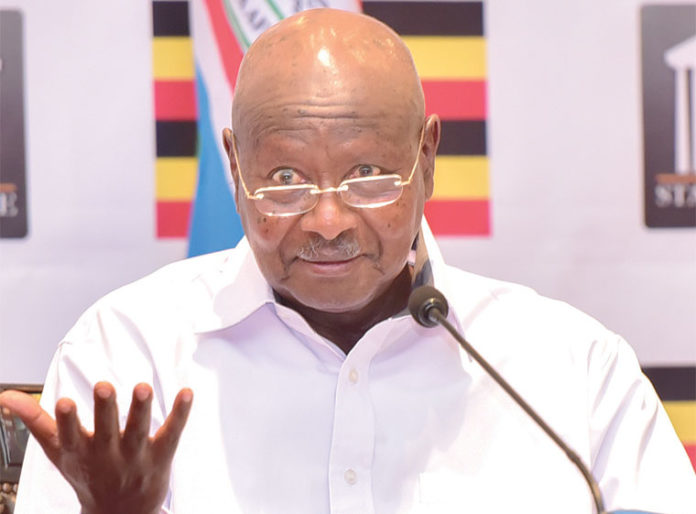
President Yoweri Museveni has advised dairy farmers in Uganda’s cattle corridor to do research on the prices of milk on the international market before they can set a collective price of milk in the country.

While meeting dairy farmers from the cattle corridor at his country home in Rwakitura, Kiruhuura District on Sunday, the President observed that failure to make research and take informed decisions about the source of market for milk, will make farmers and other stakeholders take irrational and non-helpful decisions that is liable to distorting the dairy sector in the country.

The dairy sector in the country has been facing challenges pertaining to the fluctuation of milk prices to as low as Shs.300 a litre, a situation that has greatly angered farmers.

Museveni, who attributed the fall in agricultural produce to the forces of demand and supply on the international market, told the dairy farmers’ meeting that as the domestic consumption market is small, producers must churn out quality products in order to target the international market which we must access with quality products,” he said.

“Milk has a big market of US$480 billion annually. We have to access that market because our domestic market is not enough. We, however, have to ensure that we organize ourselves better and churn out high quality products to access those international markets. We also have to find a way of minimising our farm expenditure, maximise profit and be competitive on the international market” he said.

Museveni informed the meeting that as Uganda looks at accessing international markets, the people of East African and Africa in general should work on the integration of the East African and African markets in order to create an integrated and formidable market for our produce.

Addressing himself to the request by the farmers to be given government subsidies in the wake of the fall in produce prices, the President stressed that it was unattainable for government to re-focus funding resources from crucial development sectors, like numerous infrastructural areas, to subsidising farmers. He added that taking such a course of action would negatively impact the economy and the country’s development agenda.

Museveni, however, informed the meeting that he had secured a big milk and meat market in China that they should move to exploit. He stressed the need for high quality milk and beef if they have to access the Chinese market because they are not alone in marketing of the mentioned products.

He assured farmers of his determination and commitment to the promotion of dairy farming in the country with a target of 8 dairy cows per family in rural Uganda. He also assured farmers that government will continue to avail affordable agricultural loans at 10% per annum to all farmers, through the Uganda Development Bank (UDB).

Mr. Museveni told the meeting that the government, through the Ministry of Agriculture, Animal Industry and Fisheries, had ordered the procurement of better acaricides to fight ticks and tick related diseases. He assured them that tick-related diseases will soon be history.

He pledged support to local cooperatives that wish to be autonomous and start their own milk processing plants adding that funds for such ventures are available in Uganda Development Bank.

Agriculture, Animal Industry and Fisheries Minister, Vincent Sempijja said the challenge of lack of sufficient market in the dairy sector also affects other areas of agriculture as well due to bumper harvests. He, however, assured farmers that government was working to access big international markets and called for calm and cooperation from them. He appealed to them to be mindful of the quality of the produce they export.

Milk producers, on their part, requested government to avail them affordable loans to start their own cooperatives and build own processing plants in order to preserve milk and access international markets.

Stories Continues after ad

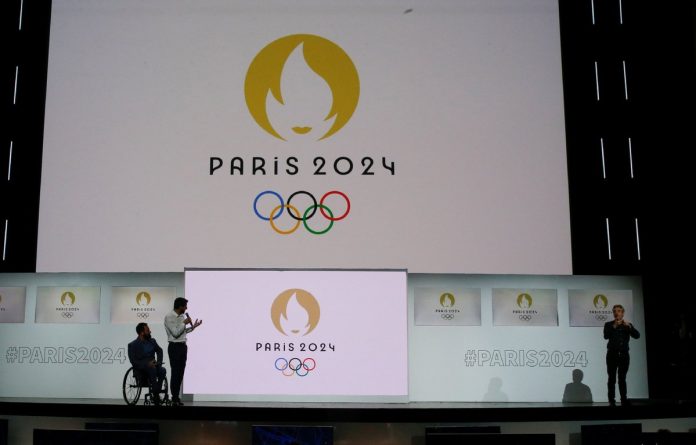
Paris unveils 2024 Olympic Games logo

2024 paris olympics logo

The organising committee for the Olympic and Paralympic games Paris 2024 has unveiled its new emblem.

It was revealed following an innovative launch ceremony, which saw over 700 runners – led by Olympic and Paralympic medalists including Renaud Lavillenie, Nantenin Keita and Sarah Ourahmoune – run different routes around the center of Paris and saint-seine-Denis, forming the outline of the new paris 2024 emblem.

The emblem was then revealed in full on a giant screen at the grand rex cinema in paris at precisely 20.24.

The new design brings together three iconic symbols connected to sport, the Games and France – the gold medal, the Olympic and Paralympic flames, and Marianne.

International Olympic Committee Coordination Commission Chair for the Olympic Games Paris 2024, Pierre-Olivier Beckers-Vieujant, said: “I congratulate Paris 2024 on the launch of their new emblem. It perfectly reflects their vision and desire to put people at the heart of the Olympic Games Paris 2024.

“The combination of the gold medal, the Olympic flame and Marianne brings together the values, history and French touch that will make these Olympic Games truly special. I believe that this innovative design will be quickly recognised around the world and be a wonderful calling card for the Olympic Games Paris 2024.”

The emblem embraces the shape and colour of the most beautiful medal of all to express one of the core values of sport: striving for excellence. That same commitment also informs every step that Paris 2024 is taking in organising the Olympic and Paralympic Games Paris 2024, so that it can fulfil the pledges it has made to stage a different, grounded, sustainable and inclusive Games.

The Olympic and Paralympic flames always conjure up special memories. The flame invites us to dream, to engage and to come up with new ways of staging the Olmypic and Paralympic Games. It reflects the unique energy of the Games, which bring people together and drive solutions forward.

The Games will help improve the lives of the inhabitants of the Seine-Saint-Denis area by bequeathing useful infrastructure to them: eco-neighbourhoods, through the conversion of the athlete and media villages into housing, and the creation of local sports facilities, such as the Olympic Aquatics Centre.

Finally, Marianne. With its feminine traits, the Paris 2024 emblem pays tribute to a woman who is a French national symbol known around the world. She embodies the revolutionary spirit that infuses the Paris Olympic and Paralympic Games. She encapsulates the desire to bring the competitions out of the stadium and into the heart of the city.

A familiar figure who is everywhere in the everyday lives of French people, she is also a reminder that these Games will be Games for everyone, Games that will belong to the people. Her face is also a homage to female athletes and a nod to history, as it was in 1900 at the Olympic Games in Paris that women were first allowed to compete.

For the first time, the emblem will be the same for the Olympic and Paralympic Games, only differentiated by the Olympic rings or Paralympic agitos, which will appear underneath.

The logo also pays tribute to Paris as the host city of the Games, as its pure, understated lines and its original typeface take their inspiration from Art Deco, the first complete artistic movement, which reached its height at the 1924 Games in Paris. It expresses just how proud the country is to be welcoming the world to its capital city in 2024.

Stories Continues after ad

Tricky mission for former champions Zamalek against Generation Foot

Milutin “Micho” Sredojevic

Five-time African champions Zamalek of Egypt are facing a tricky mission when they play hosts to Senegalese champions Generation Foot this Thursday in the second leg of 2019-20 Total CAF Champions League first rounds, at Cairo-based Al Salam Stadium.

Against all odds, Zamalek conceded a 2-1 defeat in Thies last month. Mame Gueye scored in each half to give Senegal’s academy club a 2-0 lead and put the Egyptian giants in a tough situation, but substitute Mostafa Mohamed scored what might be a vital away goal for the White Knights fifteen minutes from time to leave things open.

The return leg was scheduled for 28 September, but some unfortunate events led to the encounter being called off. Following a meeting by the CAF Organizing Committee for Interclub Competitions and Club Licensing System in Cairo on 8 October, the match was rescheduled for Thursday, 24 October 2019 in Cairo at 20:00 local time.

Zamalek coach Milutin “Micho” Sredojevic is banking on his two decades of African experience in his overturn the results and land the Whites Knights a place at the group stage of the Total CAF Champions League. The Serbian who has had spells with the likes of SC Villa (Uganda), Saint George (Ethiopia), Young Africans (Tanzania), Al Hilal (Sudan), Kaizer Chiefs and Orlando Pirates (both South Africa) and in between stints with Rwanda and Uganda national teams, is desperate for continental glory with the Cairo giants , whose last of five CAF Champions League titles date back to 2002.

The return leg was scheduled for 28 September, but some unfortunate events led to the encounter being called off. Following a meeting by the CAF Organizing Committee for Interclub Competitions and Club Licensing System in Cairo on 8 October, the match was rescheduled for Thursday, 24 October 2019 in Cairo at 20:00 local time.

Zamalek coach Milutin “Micho” Sredojevic is banking on his two decades of African experience in his overturn the results and land the Whites Knights a place at the group stage of the Total CAF Champions League. The Serbian who has had spells with the likes of SC Villa (Uganda), Saint George (Ethiopia), Young Africans (Tanzania), Al Hilal (Sudan), Kaizer Chiefs and Orlando Pirates (both South Africa) and in between stints with Rwanda and Uganda national teams, is desperate for continental glory with the Cairo giants , whose last of five CAF Champions League titles date back to 2002.

Micho will once again rely on the experience of the Tunisian duo of Ferjani Sassi and Hamdi Naguez, and the brilliance of the Egypt U-23 international Mostafa Mohamed who scored the crucial away goal in the first leg.

Mohamed ,who turns 22 next month has scored four goals in three games this term, and is gradually warming himself to the Zamalek faithful.

The aggregate winner will be placed in Group A besides DR Congo giants TP Mazembe, Angola’s Primeiro de Agosto and Zambia’s ZESCO United. While the loser will qualify to the second additional preliminary round of the Total CAF Confederation Cup, where they face Beninois torchbearers ESAE, with the first leg to be played on 30 October 2019 and the second leg on 5 November 2019.

Stories Continues after ad

Airtel Africa and Ecobank Group ink deal to ease clients’ access to mobile financial services

Airtel, Ecobank mobile financial services partnership has been announced

Airtel Africa and Ecobank Transnational Incorporated (“ETI”), the parent company of Ecobank, have signed a partnership which will allows millions of Airtel Money and Ecobank customers across Africa to improve their access to mobile financial services and carry out a variety of mobile transactions.

This partnership, which is subject to regulatory approval in each market, will enable Airtel Money customers, through Ecobank’s digital financial services ecosystem, make online deposits and withdrawals, effect real time domestic and international money transfers, make in-store merchant payments, and access loans and savings products amongst others.

The partnership will also allow Ecobank corporate account holders to make bulk disbursements, such as payroll payments, directly into Airtel Money customer wallets. Additionally, Ecobank will be able to sponsor Airtel Money to issue both virtual and physical debit and pre-paid cards to Airtel Money customers.

Raghunath Mandava, CEO for Airtel Africa, said: “This partnership is a further demonstration of Airtel Africa’s commitment to provide affordable, simple and innovative solutions for our consumers across Africa. We will continue to offer locally relevant M-Commerce solutions with partners like Ecobank in order to enhance the daily lives of our customers.”

Ecobank Group CEO, Ade Ayeyemi, commented: “We believe that financial inclusion can ultimately contribute to economic development, collaborating with major telecommunications providers in Africa is therefore a key strategic driver towards closing the gap between the banked and the under-banked.

“Hence this partnership with Airtel Africa which makes Ecobank financial services available to any Airtel line registered on Airtel Money, in our markets where regulatory approvals are in place. This potential extensive reach will further provide convenience to customers, intra-country and particularly for cross-border transactions and remittances across Africa.”

Stories Continues after ad

KnowBe4 Africa partners with Cyber Security Africa to go continental

KnowBe4 Africa is partnering with Cyber Security Africa

KnowBe4 Africa is partnering with Cyber Security Africa as its African distributor as the former aims to make access to its cyber-security awareness training platform easier for African businesses through CS Africa and offer a necessary solution to the threat of cyber-crime in growing economies.

At the recent World Economic Forum in Cape Town, African business owners flagged cyber-security as the biggest threat to a successful operation, with 94 percent of companies in Africa and the Middle East experiencing a cyberattack in the past year.

Stronger together

The distribution agreement between KnowBe4 Africa and Cyber Security Africa will allow for relationship building as well as provide local support on the ground for channel partners and end users. Considering the rapid rate of digital transformation in African countries, it’s vital that employees develop a security culture that will benefit them both personally and professionally.

Cyber Security Africa was the top choice as a continental distributor and has quickly established itself as an industry-leading Value-Added Distributor with a single-minded focus – the mitigation of information security risk for their clients. They focus their attention on niche, generally complex and certainly relevant security solutions that can utilized by organisations of all sizes and sectors.

Lead by Martin Britz as founder, Cyber Security Africa prides itself on being small enough to remain agile and large enough to apply a dedicated approach to each client experience. For this new venture, Martin is assisting in the North and Central African regions.

Gayle Britz will serve as the KnowBe4 champion and care for the SADC region. She guides a highly experienced team that includes Femi Ibine in West Africa, Susan Ndungu and Gladys in East Africa along with Andrew Ajuchi in Nigeria. Together, the Cyber Security Africa team will be able to provide support to business in close to 20 countries across the continent.

Martin Britz, believes great things are on the horizon for the fledgling partnership. “What sets us apart from our competitors is our keen understanding of this ever-evolving cybersecurity industry, with all its technologies, innovations, threats and solutions, positions us as “future-proof” to clients, while maintaining availability to attend to their more immediate needs. The offering from KnowBe4 Africa is unique and it’s exciting to be able to offer local training content that will have big benefits for African businesses.”

Transforming security culture

At the heart of this partnership is an authentic desire to empower and protect the greatest assets of any business: its people. Both KnowBe4 Africa and Cyber Security Africa focus on minimizing cyber risk for clients by educating their employees on how to spot threats like phishing, social engineering and training them with general information security practices. This fortifies the clients’ cybersecurity posture, saving them time and money while also drastically reducing the risk of falling prey to a cyberattack.

Anna Collard, managing director of KnowBe4 Africa firmly believes in securing a human firewall and creating a culture of security awareness in the digital age. “The human factor has become very important to the security of the organisation. People need to understand that if they use technology, they have to be cognisant of the risks. Organisations can support this understanding by investing in training that’s relevant, targeted and memorable. Training that can sustainably transform the company’s security culture.”

Whether it’s an SME, a healthcare institution or even a manufacturing business, there’s no doubt that all organisations will come to understand the importance of security awareness training. We certainly know that Africa is ready to make smarter security decisions, every day.

Stories Continues after ad

Private sector credit stock jumps 0.9 percent in August as trade sector absorbs most bank loans

Stanbic bank

The outstanding stock of private sector credit (PSC) in Uganda increased by 0.9 percent in August 2019 to Shs15,357.38 billion, up from Shs15,226.26 billion recorded in the previous month, according to the Finance ministry’s Performance of the Economy Report for September 2019.

The ministry in its report attributes the growth in PSC stock to the supportive monetary policy coupled with high levels of economic activity. The Bank of Uganda has set its bank rate at 9 percent for October, from 10 percent in August.

The report says loans extended to the private sector amounted to Shs 1,150.89 billion in August, with 19 percent of the approved loans going to the trade sector which accounted for the biggest share in the month.

According to the report, agriculture was one of the sectors that registered the biggest improvement in terms of shares as it accounted for 17 percent of approved loans in August 2019, up from 9 percent registered for the month before. Other sectors to receive notable shares in August include; transport and & communications, electricity and water services (17 percent), and personal and household loans (15 percent).

Gov’t expenditure attracts Shs692 billion deficits

Government operations during the September resulted into a Shs 692 billion deficit which was higher than the programmed Shs 623 billion. The ministry attributes the deficit to shortfalls in revenues and grants which were offset by the underperformance in expenditure and net lending.

“Domestic revenues during the month totalled to Shs 1,381 billion which is an 89% performance against the programme of Shs 1,560 billion since both tax and non-tax revenues registered shortfalls. All major tax categories registered short falls as direct, indirect and international taxes were below their targets by Shs 27 billion, Shs 52 billion and 66 billion respectively,” the report says.

According to the report, the poor performance in international taxes was largely due to lower imports than had been projected for the month. “Non-Tax Revenue (NTR) during the month amounted to Shs 81.68 billion registering a Shs 37 billion shortfall.”

It says expenditure and net lending in September amounted to Shs 2,143 billion which was Shs 213 billion below the program, as recurrent expenditures were above projection by Shs 52 billion as both wages and salaries and other recurrent expenditures performed above their set targets.

However the report says there was lower expenditure in both Development expenditure (Shs 82 billion) and net lending (Shs 183 billion) as both externally financed and domestically financed development projects performed below the projection for the month.

Uganda’s trade balance with the EAC

According to the report, during the month of August 2019, Uganda traded at a surplus with all EAC Partner States save for Tanzania and Kenya. Within the region, Kenya was the main destination of Uganda’s exports, followed by South Sudan.

Over the same period, Tanzania was the largest source of imports. Overall, Uganda traded at a deficit with all EAC Partner States combined, although a trade deficit of US$ 22.7 million was recorded in August 2019 compared to a surplus of US$ 61.09 million recorded a year ago.

Uganda’s exports to EAC declined by 28.2 percent to US$ 88.64 million in August 2019 from US$ 123.47 million recorded a year ago. On the contrary the import bill increased by 78.5 percent from US$ 62.38 million in August 2018 to US$ 111.33 million in August 2019.

Merchandise trade deficit narrows to US$181 million

Uganda`s merchandise trade deficit narrowed both on an annual and monthly basis following growth in export revenues and a reduction in the import bill, the report says. On a monthly basis, Uganda`s merchandise trade deficit narrowed by 16.8 percent (US$ 36.6 million) to US$ 181.43 million in August from US$ 218 million in July 2019. “Compared to August 2018, the merchandise trade deficit narrowed by 33.2% (US$ 36.57 million) from US$ 271.43 million to US$ 181.43 million in August 2019,” the report adds.

The value of merchandise exports increased both on an annual and monthly basis. Export earnings grew by 1% from US$ 318.43 million registered in July 2019 to US$ 321.67 million in August 2019. The report tags the increase to increased earnings from commodities of maize, coffee, fish and sim sim.

“Increased earnings from maize and sim sim follows an increase in the prices, whereas, the growth in earnings from fish and coffee are explained by increases in their respective volumes. Compared to the same month last year, export receipts increased by 9.4% from US$ 293.93 million to US$ 321.67 million in August 2019,” the report says.

Destination of Uganda’s exports

The report says the Middle East was Uganda’s main destination for merchandise exports in the month of August 2019, followed by EAC, then the Rest of Africa. In comparison with the preceding month, exports to EAC and the Rest of Africa increased whereas exports to other regions declined. Within the EAC, Kenya was the main destination of Uganda`s exports, whereas, United Arab Emirates was the top destination in the Middle East.

Uganda’s merchandise imports

The value of merchandise imports declined both on a monthly and annual basis. The import bill reduced by 6.2 percent to US$536.42 million in August 2019 from US$503.1 million in July, primarily driven by a decline in private sector imports (both oil and non-oil imports).

Oil private sector imports declined by 11.8 percent whereas non-oil private sector imports decreased by 6.6 percent. Compared to August 2018, the import bill decreased by 11 percent from US$ 565.36 million to US$549.85 million in August 2019. Both Government and private sector imports declined.

Origin of Uganda’s imports

Asia, EAC and Middle East were the largest sources of imports, contributing 42.5 percent, 22.1 percent and 12.8 percent respectively during the month of August 2019. Of the total Imports from Asia, 86.7 percent were from China, India, Indonesia and Japan. Kenya and Tanzania contributed 95.6 percent of the total imports from EAC region.

Trade balance by region

The country traded at a surplus with the Middle East, European Union, and Rest of Africa, whereas Uganda posted merchandise trade deficits with the regions of Asia, Rest of Europe and EAC. Uganda had the biggest surplus with the Middle East (US$ 25.09 million) and the largest deficit with Asia (US$ 194.78 million). In the month of August 2019, Uganda traded at a deficit of US$ 22.7 million with the EAC an improvement from a deficit of US$ 51.94 million reported the earlier month.

Stories Continues after ad

Six new organisational lessons from Amazon and Alibaba

Martin Zwilling


By Martin Zwilling


In my current role as a business consultant, I still find that most companies, large and small, organize themselves wholly based on what goes on inside the company, rather than looking outside – at their networks, their partners, and the niche they wish to dominate. The result is a hierarchy and a static group of silos that doesn’t adapt to market changes and competitors.

In fact, it is so tough to reinvent a legacy organization, that new businesses, such as Amazon, Apple, and Alibaba, are rapidly replacing former powerhouses, including Blockbuster, Sears, and Nokia. According to experts, as many as 50 percent of the existing S&P 500 companies will be pushed aside in the next 10 years, and the lifespan of traditional organizations is getting shorter.

Thus I was impressed with the dynamic new organizational approach outlined in a new book, “Reinventing the Organization,” by Arthur Yeung and Dave Ulrich. These authors are widely recognized, both in the U.S. and China, as thought leaders in this area, so their framework for reinventing your business organization, with some of my own insights, is definitely worth a look:

Environment: Fund a group to track market changes. Not many businesses today spend any real resources, or organizational focus, on understanding and anticipating the changing forces facing every industry and business. We all need a well-defined and systematic approach for keeping up with today’s fast changing market environment.

For example, not many of the big retail store chains, including Sears and Macys, had any tracking of how quickly online shopping was changing the environment, until Amazon and Alibaba became bigger than most brick and mortar retailers in their best years combined.

Strategy: Define an execution pathway for growth. All businesses I know will tell you they have a strategy for growth, but I often have a hard time finding any group or silo really incented and measured on growth targets. The challenge is a growth rate greater than the market and new competitors, and a process to implement growth at that rate.

While Amazon was growing at an average rate of twenty-five percent per year in each of the last five years, most of the big retailers found their business shrinking every year, and despite their best efforts, had no organizational ability or process to turn it around.

Capability: Focus on customer innovation and agility. A market-oriented organization doesn’t focus on internal budget allocations and power struggles between functions, but remains customer obsessed, external data driven, and measured on their rate of innovation and agility. They focus on anticipating customer needs before the crisis.

Individual unit leaders in this ecosystem are incented to meet regularly to share experiments, initiatives, insights, and lessons learned on the never-ending journey of capability enhancement. They share and celebrate successes, and analyze failures.

Morphology: Organize around teams and partners. It’s time to take a new look at your organizational structure. Deep hierarchies and large functional silos don’t highlight agility and constant innovation. Evidence today points to the effectiveness of short-term teams, strategic partners, and a flat organization supported by a common resource platform.

Amazon is organized into autonomous teams, each running a particular product or business and not a function like marketing, product or engineering. Amazon leaders are strong general managers, relying on external partners, rather than functional experts.

Culture: Shape priorities and behaviors to your values. Your culture is what you want to be known for by your key customers, and it must be imbedded throughout the organization. It shapes and sustains employee well-being and productivity, business results, customer reputation, and investor confidence.

Accountability: Inspire and tie focus to business results. In traditional large organizations, people lose sight of the big picture, and want to be accountable only for the internal results of their silo. Your challenge is to keep them connected and positively accountable to external results through all communications, standards, and incentives.

In all cases, organizations today have to learn to mine unstructured data for what could be, instead of structured data on what has been, and how to pivot the organization fluidly to transform the company as fast as the market changes. Reinventing your existing organization may be hard, but it’s not as painful as the long downhill journey to obscurity now being experienced by many.

The writer is a veteran startup mentor, executive, blogger, author, tech professional, professor, and investor. Published on Forbes, Entrepreneur, Inc, Huffington Post, etc.

Stories Continues after ad

2019 FUFA Drum quarterfinals draw conducted

The quarterfinal stage draw for the second edition of the FUFA Drum tournament were on Monday held at the FUFA house in Mengo, Kampala.

The remaining eight provinces have been pooled into two groups; one based in Gulu and the other in Lira and the matches will kick off on 21st November 2019.

The teams in the quarterfinals are; Cup holders Buganda, runners Up West Nile, Lango, Acholi, Busoga, Bukedi, Bugisu and Tooro.

Buganda is joined by Acholi, Bukedi and Tooro to complete group A while West Nile on the other hand, have been pitted against Lango, Busoga and Bugisu.

Acting FUFA President, Justus Mugisha indicated that the FUFA Drum has produced several success stories in just two years such as taking the game of football to every part of the country and bringing together Ugandans.

“We appreciate the reception that the people have given to the FUFA Drum. We have a good story to tell in the last two years because the tournament has given people a sense of belonging. The cultural leaders have embraced it and rallied their subjects to support the teams,” said Mugisha.

Gulu and Lira were chosen to host the quarterfinals because the residents in the two districts show passion for the football game, both still have teams competing and turn up in big numbers to watch these games.

The two leaders in each group at the end of the first round will seal a spot in the semi-finals of the 2019 FUFA Drum.

The final is expected to be played on Saturday, 30th November with the winner getting a cash prize of 30 million Ugandan shillings.

Buganda Province won the first edition having defeated West Nile in Arua last year.

Group A (Gulu): Buganda, Acholi, Tooro, Busoga

Group B (Lira): West Nile, Lango, Bukedi, Bugisu

Stories Continues after ad

Removing the padlock on children’s minds

Mr. Ibrahim


By Ibrahim Bashir


Over the last few years working as a teacher I have undergone an amazing transformation in the way I teach. The changes have been in the things I do when I am in the classroom, the ways that I motivate the children and instruct them.

Before, I spent a lot of time expecting the children to just work from their textbook, reading and answering questions. I stood at the front of the class or sometimes just did marking in the corner. But now, after more training, I have a lot of interaction in the classroom, more discussion, more questions from them and from me as we go along. Lots of time for feedback. I believe you must be ready to try new things as a teacher, in what you do and how you do it.

When I joined this school, the first thing I did was to go on a residential training course, to spend time thinking and learning about the best ways to teach. Not what to teach but how to teach. Many teachers were there, those who had been teaching for many years and for just a few. We were looking at the different ways children learn and how a good teacher can make a classroom a more powerful place to learn. It was all so new and interesting to me.

I see the change in my pupils and know for sure I am a better teacher now because of the new approaches and techniques I have learnt. I can see it in the way the children respond to me.

One of the most effective teaching techniques I have learnt through the training sessions provided is known as ‘STRIVE’. This is an acronym where each letter stands for something that will help pupils learn. ‘S’ requires pupils to sit down and be attentive, so they can absorb all of the information in the lesson. ‘T’ requires pupils to track teachers with their eyes, preventing them from losing concentration and vital information. ‘R’ requires pupils to respond whenever they are asked a question, so that the teacher can acknowledge whether the pupil has understood what is being taught. ‘I’ requires pupils to inquire whenever they have any queries or may have a question about the content. ‘V’ requires pupils to visualise success so that they can visibly see the improvements in their work. Finally, ‘E’ requires pupils’ ears to be listening at all times, as this is the pathway to the brain.

Video Classroom behaviour has really changed:

I believe that all of my pupils are better able to learn their lessons due to the teaching philosophy I was taught in my training. It sounds so simple: narrating the positive, giving children time to think before choosing someone to answer, watching the whole room. But before I didn’t know all this and now I do. Through the training, I felt as though I was a student all over again.

Every couple of weeks the Academy Manager will come and watch me teach. She has much more teaching experience than me. She watches how I do the lesson, and then after that she talks to me about how I could do better. I also have a leadership and development coach who comes to the school and do the same thing. It gives me fresh perspective. This simple thing – ongoing feedback – has made me grow, over the years, to be the best I have ever been. Teaching is a precious skill that needs focus – I feel that more and more now.

Some children here have parents who cannot read and write, so it is up to me to teach everything. I can do it, and it is wonderful to see. Many children can now help their parents on their stalls or to read some little information. It is a change, we can all see that the children are learning new things and that they are excited for school to start and for my lessons.

How you work in the classroom is not just how you teach the lessons but also how you manage the classroom to get the best out of the children. I do not beat the pupils. If you beat a child, you put a padlock on their minds. No, it’s important to have discipline in other ways that are much better for the child and the whole class. Now, I have a strong relationship with my pupils because they have no fear to try.

Overall, the training and support has boosted my confidence and ability as a teacher. I feel stronger; that people are appreciating my work and that it is making a difference. I wish for all teachers that they could have my experience; so they know how to succeed. Teaching is a skill and we have responsibility, we need to be able to teach the best way possible and we need to be supported and to be helped to do that.

As part of the UN World Teachers Day activities, teachers around the world are sharing their stories of success, despite working in challenging environments. Teacher Ibrahim shares this story of personal development in Uganda, as part of the campaign #TeachersTransformLives.


The writer is a teacher at Bridge School, Yesu Amala 


Stories Continues after ad

FDC ready to take over IPOD leadership

fdc

The main opposition party, Forum for Democratic Change (FDC), is to ready to officially take over the leadership of Inter Party Organisation for Dialogue (IPOD) after the expiry of Democratic Party’s (DP) six month tenure.

The FDC has taken over and await the official handover ceremony and handover reports from both DP party President Norbert Mao and party secretary Dr. Gerald Siranda. The DP took over IPOD on March 25, 2019.

According to the MOU, IPOD leadership rotates every after six months. The FDC therefore is currently both the chair of the IPOD Summit and IPOD Council. The Summit is composed of leaders of political parties and the Council is composed of the Secretary Generals and other four representatives. The Government and Opposition Whip are also members of the Council.

The FDC Secretary General Nandala Mafabi will in consultation with the IPOD Summit Chair Eng. Patrick Amuriat present proposals on the issues the FDC wants IPOD to consider in the next six months of our leadership

FDC has snubbed two IPOD meeting citing various reasons. On Dec 12, 2018 FDC snubbed IPOD meeting for among others, the closing of doors for JEEMA and conservative party (CP) yet they were among the founders and  in the May 2019 they declined to attend (IPOD) Summit that took place in Lira on grounds that the party is still under siege by various security agencies.

The party will aim at pushing for the ratification of decisions that were made Munyonyo where IPOD Council deliberated on the management of public rallies. They were supposed to be ratified by the Summit.

President Yoweri Museveni declined to sign on the agreed regulations before not fully constituted Summit. The president said he had given different instructions to his security chiefs and he needed to convene a meeting of the National Security Council to discuss the IPOD regulations.

To date, Museveni has not convened the National Security Council to reverse his draconian orders as a result, our rallies and meetings are still being interfered with.

The FDC considers access to the population a major issue in the political processes of our country. Removing the military and Police from our politics if achieved, will be the single most important thing IPOD has ever done. Negotiating an end to the life presidency will be another milestone. This is what the IPOD must strive to achieve.

Currently, IPOD houses for four parties which include; Democratic Party (DP), Forum for Democratic Change (FDC), Uganda People’s Congress (UPC) and National Resistance Movement (NRM).

IPOD is facilitated by the Netherlands Institute for Multiparty Democracy (NIMD) and was formed to initiate dialogue and exchange of ideas among political parties in the country with a view of improving electoral democracy.

Stories Continues after ad