Stanbic Bank
Stanbic Bank
22 C
Kampala
Stanbic Bank
Stanbic Bank
Home Blog Page 1135

Buhweju artisanal miners demand licenses from government as scramble for minerals hits up

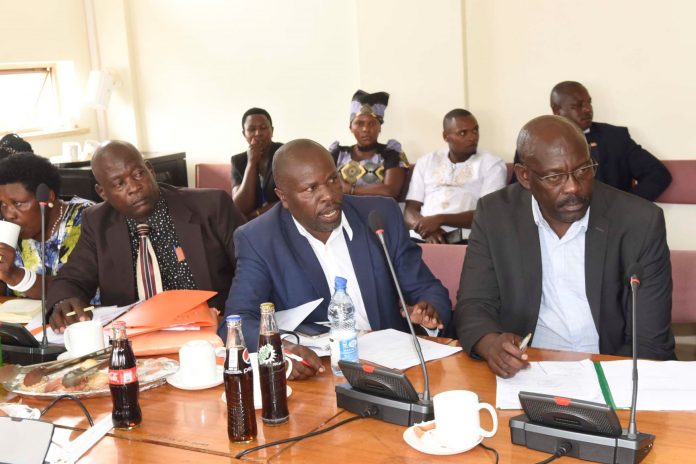
Artisanal miners from Buhweju district in western Uganda are seeking licenses to explore gold, following their eviction from the fields by the Mineral Protection Unit.

In their petition to Parliament’s Committee on Natural Resources on Friday, the miners under their umbrella body, Uganda Association of Artisanal Small-Scale Miners argued that mining is the biggest source of livelihood in Buhweju.

The Chairperson of the Association, John Bosco Bukya told the committee members that the artisanal miners are ready to start legal operations because they are organised and have been mining gold since 1918.

“Despite the fact that government has delayed to review the Mining Act, the current policy should be used to see these people licensed and doing business legally,” he said.

He also urged government to halt further alleged evictions of artisanal miners, saying that they have received information that there are planned evictions in Karamoja and Busia.

“Instead of harassing these small miners, let government assist them to get organised. As a national Association, we have tried to organise the small miners but it’s government’s role to do that,” he said.

The spokesperson of the Buhweju Artisanal Miners Association, DeusdeditBainomugisha, recounted the events leading to the evictions, saying that the miners were given only two hours to vacate their mines.

“These people have been threatening us that they were going to evict us, and true to their word, they carried out their threat. They found miners on the fields and ordered them to leave, giving them no room to take some of their properties,” he said.

Bainomugisha accused the commandant of the Mineral Protection Unit, JesicaKegomba, of intimidating miners after they petitioned President Museveni.

“She addressed people in one of the meetings and told them that she is answerable to the Inspector General of Police and the President. I can do whatever I want. I have the money and I can do anything I want. With all these events, we are worried,” he said.

Bainomugisha added that the Mineral Protection Unit is instead protecting and giving a Chinese mining company, Hebei,access to the mining fields.

The Buhweju MP Francis Mwijukye, who was the lead petitioner called for the expeditious revision of the mining Act to legalize activities of artisanal miners.

“Government should recognise that artisanal mining is not a crime but a source of livelihood. Artisanal miners are not recognised and yet they exist,” he said.

Mwijukye also asked government to investigate the Mineral Protection Unit, saying that the officers violated the rights of miners in the process of evicting them.

“The miners were forced out of their homes and gardens since the mines are within their homesteads. Since then, some children cannot attend school and the locals cannot access their gardens,” said Mwijukye.

He added that despite evicting the locals and denying them access to their source of livelihood, the officers are engaging in extortion of money from the miners.

“They are asking for money from miners who seek to access their fields. The miners are forced to pay between Shs500, 000 to Shs3 million,” he said.

The Chairperson of the Natural Resources Committee, Keefa Kiwanuka, assured the miners that the issue will be handled objectively and expeditiously.

“We shall visit Buhweju and speak to the locals on the ground and come up with an informed report,” he said.

The Committee on Natural Resources is investigating the alleged eviction of over 250 artisanal miners from Buhweju district in August 2019.

Stories Continues after ad

UPDF officer undergo conducts fitness exercises

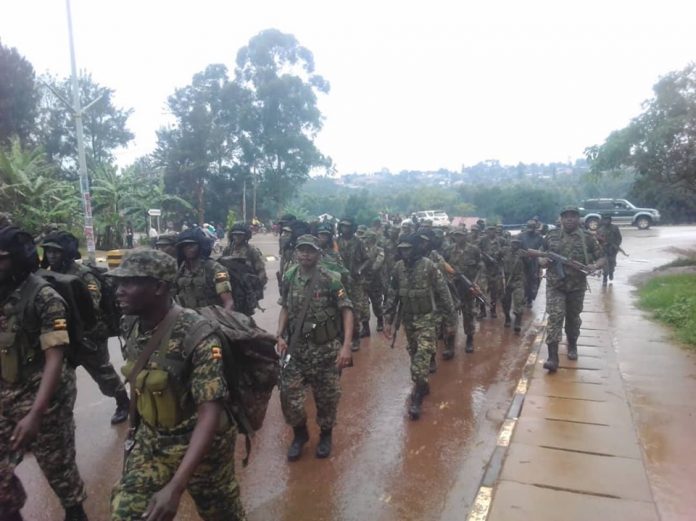
The Uganda Peoples’ Defence Forces’ (UPDF) whose major responsibility is to defend the country’s territory, had its officers of the Armoured Brigade (A/Bde) complete a two-day basic and combat fitness tests carried out in Masaka town.

The officers went through a 3 Kilometre run, push-ups and sit-ups as part of basic fitness test. The combat fitness test included a 20 Kilometre route-march while carrying and wearing all the basics of an infantry soldier in the field.

The exercise was supervised by the commander of A/Bde, Brig Gen Joseph Ssemwanga. He said the exercise was a followed that which the Commander Land Forces, Lt Gen Peter Elwelu, launched on November 2, 2019, attracting senior commanders and directors under UPDF under that section.

“This is part of the wider national exercise meant to not only improve on soldiers’ fitness and health but also asses their combat readiness,” said Brig. Ssemwanga.

The exercise coordinator who is also the Brigade’s Operations and Training Officer, Col Kantinti said all the participants satisfactorily passed the tests and exhibited high morale typical of the UPDF.

UPDF in 2015 came up with a number of measures to improve the health and fitness of its officers and militants. Fitness tests and having running files for routine medical examination are some of the measures meant to keep the troops mentally, physically and medically fit to execute their military roles.

Stories Continues after ad

Sub-Saharan Africa growth to remain at 3.2 percent in 2019-IMF

Growth in sub-Saharan Africa is projected to remain at 3.2 percent in 2019 and rise to 3.6 percent in 2020. The expected recovery, however, is at a slower pace than previously envisaged for about two-thirds of the countries in the region, partly due to a challenging external environment, according to the IMF’s October 2019 regional economic outlook.

Growth is projected to remain strong in non-resource-intensive countries, averaging about 6 percent. As a result, 24 countries, home to about 500 million people, will see their per capita income rise faster than the rest of the world. In contrast, growth is expected to move in slow gear in resource-intensive countries (2½ percent). Hence, 21 countries are projected to have per capita growth lower than the world average. Reducing risks and promoting sustained and inclusive growth across all countries in the region requires carefully calibrating the near-term policy mix, building resilience, and raising medium-term growth.

Navigating Uncertainty

Growth is forecast to be slower than previously envisaged for about two-thirds of the countries in the region. The downward revision reflects a more challenging external environment, continued output disruptions in oil-exporting countries, and weaker-than-anticipated growth in South Africa.

Growth prospects vary considerably across countries in the region in 2019 and beyond. Growth is projected to remain strong in non-resource intensive countries, averaging about 6 percent. As a result, 24 countries, home to about 500 million people, will see their per capita income rise faster than the rest of the world. In contrast, growth is expected to move in slow gear in resource-intensive countries (2½ percent). Hence, 21 countries are projected to have per capita growth lower than the world average.

Competition, Competitiveness, and Growth in Sub-Saharan Africa

Although there is considerable heterogeneity across countries, more than 70 percent of the countries in the region are in the bottom half of countries globally in terms of market competition indicators. Firm markups are about 11 percent higher in sub-Saharan African countries relative to other emerging market economies and developing countries and are more persistent. State-owned firms are also more prevalent. Empirical analysis suggests that increased competition can boost real per capita GDP growth rate by about 1 percentage point through improved export competitiveness, productivity growth, and investment.

Domestic Arrears in Sub-Saharan Africa: Causes, Symptoms, and Cures

Based on a database of domestic arrears in sub-Saharan African countries, the report  finds that domestic arrears have been pervasive in many countries, reflecting weak public financial management. Furthermore, arrears have increased in recent years (to about 3.3 percent of GDP in 2018), following the 2014 commodity price shock. However, despite the prevalence of arrears, their causes, effects, and consequences are not well understood. The report finds that domestic arrears negatively impact private sector activity and the delivery of social services while increasing banking sector vulnerabilities and undermining citizens’ trust in the government.

 Arrears also weaken the ability of fiscal policy to support growth, casting doubt on the merit of relying on arrears financing to avoid spending cuts. The chapter then discusses approaches to clear arrears (verification, prioritization, liquidation) and to prevent their accumulation, including through public financial management reforms, building buffers, and timely external supports.

Stories Continues after ad

Gov’t finally accept to engage pastors in formulation of policy to guide religious activities 

Fr Simon Lokodo


The minister of Ethics and Integrity, Fr. Simon Lokodo has bowed to pressure and called on religious organisations to participate in the formulation of the National Policy on Religious and Faith-Based Organisations (R&FBOs) in Uganda.

In 2016 government embarked on formulating the policy to guide the religious leaders following public outcries as some pastors fleeced their followers of money as well as engaging in acts seen to be against the Christian faith.

The policy was in the advanced stages of formulation and cabinet was ready to discuss it to pave the way for the enactment of the law, when pastors came out to denounce it due to lack of their input.

One of the proposals in the policy is that religious leaders must acquire formal theological training from a recognized institution before establishing a church.

The policy has been  however criticized by various pastors alleging that it came from a malicious source and thoughts intended to crash the Church.

In a prayer conference organised by the pastors last month, led by the founder and Senior Pastor of Rubaga Miracle Centre, Robert Kayanja, the Pentecostal preachers reechoed their voice, calling for their participation in the drafting of the policy. President Yoweri Museveni also attended a meeting organised by the pastors where he promised to address their concerns on the policy.

Speaking in Kampala earlier today, Father Lokodo said a highly consultative and analytical approach was adapted in the development of this policy. “Countrywide and regional consultative meetings involving key stakeholders who practice faith and religion in this country were conducted.”

Key stakeholder groups such as the Inter-Religious Council of Uganda, Born Again Faith, National Fellowship of Born Again & Pentecostal churches, Evangelical fellowship of Uganda, Miracle Centre churches, Full Gospel Churches of Uganda; Anglican Church, Catholic Church, Muslim faith, Seventh Day Adventist, Orthodox church and other independent faith groups.

“Whereas Article 29(1) (c) of the Constitution gives Ugandans freedom to practice any religion which includes right to belong &participate in the practice of any religious body or organization, government has never put in place a regulatory framework,” he said.

“As a result, members of the public are facing a lot of challenges from some faith/religious organisations. These challenges include; manipulation, exploitation of followers, loss of property, promotion of witchcraft instability in society,” he said.

He said the state has no mechanism of vetting, monitoring and identifying the unethical faith practitioners in order to protect citizens from the harmful effects of these unethical religious practices.

Stories Continues after ad

Controversy as Dfcu Bank demands Shs47b from BoU as tax evasion is sighted in transaction

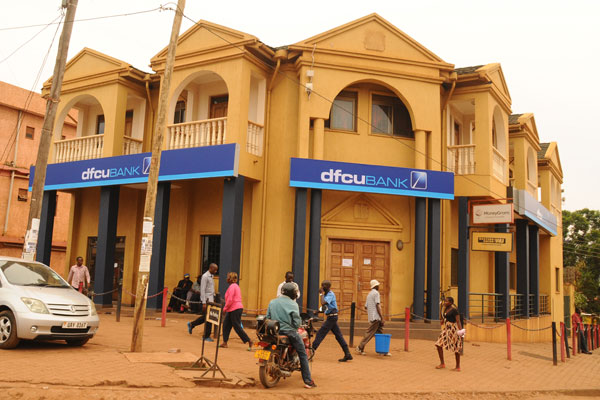
dfcu bank


The Bank of Uganda in the latest report confirmed that Dfcu Bank is in preparations to leave 48 Meera Investment Limited properties some of which were being used by the defunct Crane Bank Limited (CBL) branches before it was taken over by its rival.

However, it has now emerged that Dfcu Bank wants BoU to pay them Shs47 billion as a result of the decision to exit properties and they are basing that claim on the Purchase of Assets and Assumption of Liabilities Agreement signed between the bank and BoU on January 25, 2017.

The valuation of Meera investment properties was Shs47 billion as dfcu Bank took over CBL. Yet Dfcu Bank paid BoU only Shs10 billion for the properties and has used them for almost now three years without paying rent, leading Meera Investments Limited to sue them.

The latest scenario now shows Dfcu Bank underdeclared the value of the properties as they did the valuing which BoU based on to accept Shs10 billion. Dfcu Bank should have paid more in stamp duty based on the value of the properties, which amounts to tax evasion and criminality.

Dfcu bank is demanding for the money after realising BoU is unlikely to recover the money as sighted in the agreement.

“Following court’s dismissal of HCCS No.493 of 2017 on 26th August 2019, it is unclear how long it will take BoU to recover the reversion from MIL. This state of affairs creates uncertainty for the Bank which is prejudicial to its business interests. In line with its strategic interest and risk management framework, the Board has resolved that it is in the best interest of the Bank to exercise its option to rescind the purchase of the MIL properties,” DFCU Bank in a letter dated September 12, 2019 and signed by CEO Mathias Katamba and others says.

However, the demand by Dfcu Bank per the agreement with BoU means taxpayers will incur loss of Shs37 billion.

“Following the Court’s ruling … Dfcu Bank Limited in a letter dated September 12, 2019 communicated to BOU its decision to exercise its option to rescind its interest in purchasing the 48 properties pursuant to clause 8.7 of the Agreement,” BoU says in its latest annual report, even though BoU failed to announce in the report that Dfcu Bank demands them those billions.

The BoU says that as part of the rescinding of this purchase, dfcu will return to Bank of Uganda Certificates of title for Meera Investments Limited ‘and requires Bank of Uganda to pay dfcu the new  book value of properties recorded in the assets and inventory compilation as October 20, 2016.’

Under the agreement, BoU as the receiver of CBL undertook to recover the reversionary interest relating to 48 leasehold properties acquired by DFCU Bank. The money was to be recovered in 24 months from the date of the agreement but BoU failed.

Former Dfcu Managing Director, Juma Kisaame who was in charge of the transactions.

Dfcu Bank says that after BoU realised that it could not recover the money within the 24 months as stated in the agreement, it asked for an extension of the contract timelines under certain conditions, even though DFCU says they have not reached an agreement with BoU over the same especially when BoU/Crane Bank in receivership lost a case against Sudhir and Meera Investments Limited.

On August 26, 2019, Court ruled on Miscellaneous Application No.320 of 2019 in favor of Sudhir Ruparelia and Meera Investments Limited dismissing Suit No.493 of 2017 where Crane Bank (receivership) had sued Sudhir Ruparelia and Meera Investments Limited to recover Shs397 billion allegedly swindled. Sudhir and Meera investments Limited (MIL) has argued that Crane Bank in Receivership had no right to sue them.

Court ruled that costs of the application be paid by the Bank of Uganda on the basis that Crane Bank (in receivership) is non-existent and does not have locus standi to put forth any claim against Sudhir and Meera Investments Limited.

A recent leaked document showed Dfcu Bank calling for bids from companies that want to provide consultancy services at it seeks to relocate its branches to new areas in various districts and towns across Uganda.

In August this year it emerged that the bank was misled by city Law firm Sebalu & Lule Advocates to illegally transfer title properties into its name yet the properties belong to Meera Investments Ltd even though it had leased them to Crane Bank Limited.


Stories Continues after ad

Gen. Sabiiti lays strategy for wiping out criminal gangs in Kampala

Maj. Gen. Sabiiti-Muzeei on the left


The Deputy Inspector General of Police (IGP), Brig. Muzeeyi Sabiiti has released a strategic plan aimed at combating criminal gangs committing atrocities against people in Kampala metropolitan area.

On Monday President Yoweri Museveni ordered Sabiiti to come up with a plan of combating the gangs who seem to be on rampage even as government has installed CCTV cameras at key spots in the city and surrounding suburbs.

“I have given two days to Commander Sabiiti of the Police to come out with a plan to combat these gangs. The IGP is away in Peru for a meeting. I will look at that plan, comment on it and it will, then, be communicated to all of you,” he said in his brief message posted on social media platforms.

Remarking at police headquarters, Brig Sabiiti, said proper and effective use of the CCTV cameras, finger printing of all guns, personal and premise security including linking the police contacts to all members of the public are key strategies aimed at wiping out criminality in the country.

Alluding to the plan, police said response rate to distress calls will be enhanced by linking calls to alert squads and patrollers.  Suggestion boxes at all LC 1 offices and useful WhatsApp info to 0707144144 in the DIGP’s office.

“We shall ensure a thorough and effective investigations and multiple offenders will be handled through the judicial system.” He said adding that they will discuss with the directorate of public prosecution (DPP) for modalities on how to handle matters for speedy trial.

“This multidimensional security plan will be implemented first in KMP and will then be rolled out to other parts of the country facing related security problems.  Media houses are encouraged to display security contacts to the public to ease reporting of incidents and suspicions.’

He warned police commanders saying action will be taken against them for failure to implement the program.

Stories Continues after ad

New Absa-OMFIF report: African countries progressing towards investment-supportive financial market

New financial products, regulatory improvements and more responsive economic policies have enhanced the performance of countries in the Absa Africa Financial Markets Index 2019, produced by OMFIF. Now in its third year, the index evaluates financial market development in 20 countries across the continent.

South Africa retains the top position due to its sizeable lead in Pillar 1, ‘market depth’. While it is likely to remain an outlier in this pillar, the creation of new bourses and key mergers between existing ones will improve the standing of other countries in coming years. This year, Botswana, Kenya and Namibia join the ranks of countries that score more than 50 in Pillar 1, indicating a deepening of individual markets.

Other countries are catching up in the rest of the index. Egypt has the highest score in ‘macroeconomic opportunity’, while Mauritius and Kenya claim the two top spots in ‘legality and enforceability of standard financial markets master agreements’. Ethiopia, although lagging behind, has significant potential for improvement in the coming year. It has announced plans to establish a stock exchange in 2020.

‘The steady improvement across African countries is partly a testament to the impact of our index across the continent,’ says George Asante, head of global markets for Absa regional operations.

‘There has been a concerted effort among African policy-makers to react to the findings. This can be seen in the vast improvements in Pillar 6, ‘legality and enforceability of standard financial markets master agreements’, where countries have responded to past findings in order to align with best practice. The index is becoming a powerful barometer for policy-makers and playing a role in building an Africa which is able to fund itself.’

‘As a business with strong pan-African aspirations, we are constantly trying to find ways to facilitate and encourage progress in the region. We are excited about the impact the index is having on African financial markets. We believe in the power of thought leadership and insights to help strengthen the region and build stronger and more robust financial markets,’ says Charles Russon, chief executive officer at Absa Corporate and Investment Banking.

The improvements outlined in the third Absa Africa Financial Markets Index underline significant progress across Africa’s financial markets. The first edition in 2017 shed light on the disadvantages of rigid foreign exchange regimes, which handicapped investors and constrained countries’ ability to deal with global developments. Subsequently, many countries have moved to more flexible exchange rates, improving their policy responsiveness and shock absorption capability. Similar positive changes can be seen in growing consciousness of the importance of local investors and improvements in the transparency and availability of market data.

‘We welcome these vital signs of improvement in several African countries,’ says David Marsh, chairman of OMFIF. ‘New products like the world’s first sovereign blue bond issued by the Seychelles, or regulatory improvements in Mauritius and Ghana, prove that the African continent is moving in the right direction. The index is now a piece of important evidence for tracking progress in the region.’

‘The Africa Financial Markets Index has helped our country design its reform plans with a view to promoting macroeconomic stability,’ says Akiules Neto, executive director and board member at the Angola Securities Exchange.

The 20 countries covered by the index are Angola, Botswana, Cameroon, Egypt, Ethiopia, Ghana, Ivory Coast, Kenya, Mauritius, Morocco, Mozambique, Namibia, Nigeria, Rwanda, Senegal, the Seychelles, South Africa, Tanzania, Uganda and Zambia. The index evaluates countries across six pillars: market depth; access to foreign exchange; market transparency tax and regulatory environment and market transparency; capacity of local investors; macroeconomic opportunity; and legality and enforceability of standard financial markets master agreements.

In addition to quantitative analysis, OMFIF gained further insights by surveying more than 40 policy-makers and top executives from financial institutions operating across the 20 countries, including banks, investors, securities exchanges, central banks, regulators, audit and accounting firms and international financial and development institutions.

Stories Continues after ad

Spanish El Clasico postponed over safety fears amid major protests in Catalonia

El Clasico


This month’s El Clasico between Barcelona and Real Madrid has been postponed because of fears of civil unrest.

The match was scheduled for 26 October but there have been days of protest in Barcelona after nine Catalan separatist leaders were jailed on Monday.

Both Barcelona and Real Madrid disagreed with calls to switch the game to Madrid.

The clubs must agree a new date by Monday.

Manager Ernesto Valverde had said the Barcelona were against switching the game to Madrid as they play away to Slavia Prague in the Champions League on 23 October, three days before El Clasico had been scheduled.

La Liga made the postponement request because of “exceptional circumstances beyond our control” as more protests are expected in Barcelona on the day of the match.

Protests have continued into a fifth day in Spain’s Catalonia region with protesters clashing with riot police.

Hundreds of thousands of people waving pro-independence flags and chanting “freedom for political prisoners” took part in marches across Catalonia on Friday

At least 96 people have been hurt across the region.

Catalonia is a semi-autonomous region in north-east Spain and in a referendum on 1 October 2017, declared illegal by Spain’s Constitutional Court, about 90% of Catalan votes cast backed independence. Turnout was 43%.

The nine separatist leaders were convicted of sedition over their role in the referendum and handed jail sentences of between nine and 13 years by Spain’s Supreme Court.

Stories Continues after ad

Kadaga in move to bolster relations with Nile Basin Member States

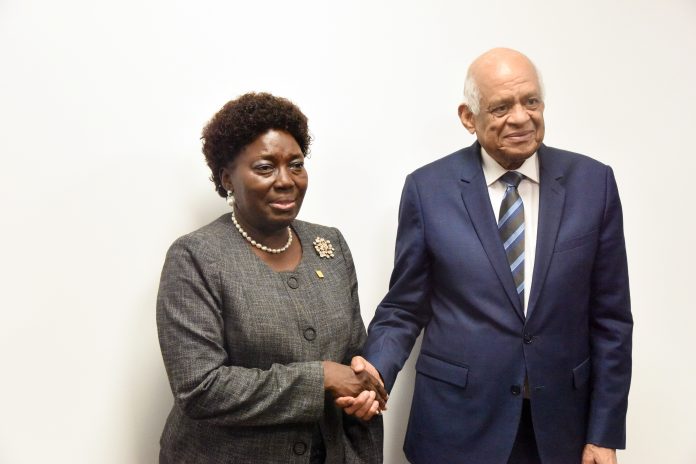
Speaker Rebecca Kadaga and Egypt Speaker Ali abdel-Aal pose for a photo after a bilateral meeting held on the side-lines of the IPU in Serbia.


The Speaker of Parliament, Rebecca Kadaga, has allayed concerns raised by the Speaker of the House of Representatives of Egypt, Ali Abdel-Aal, on the use of the River Nile, whose basin is situated in Uganda, on Lake Victoria.

 Kadaga assured the Egyptian Speaker that Uganda had not taken any action that could affect the use of the Nile waters by Egypt, noting that the waterbody was their major source of livelihood.

“I have discussed this issue with President Yoweri Museveni and I want to bring the reassurance of my Government that nothing will happen unless all stakeholders have a consensus,” said Kadaga.

The Speaker, in a bilateral meeting with the delegation from Egypt, on the sidelines of the 141st Inter Parliamentary Union in Belgrade, Serbia, also highlighted the need to revive the Nile Basin Association to improve cordial relations among the Nile Basin Member States.

“Here at the IPU Assembly, we have been talking about the need for parliamentary diplomacy; resuscitating this Association that was introduced about 10 years ago, should be a highlight of our Parliamentary work,” Kadaga added.

Speaker Ali Abdel-Aal noted that the Nile was a major contributor to the Egyptian national economy, noting that the proposed construction of the Reconnaissance Dam in Ethiopia could affect them, thus the need for Uganda’s support.

“Egypt is entitled to 55.5 billion gallons of water according to an international treaty signed in 1929 where the population was only 20 million people. We now have a population of 104 million people but we still get the same amount of water,” noted Ali Abdel-Aal.

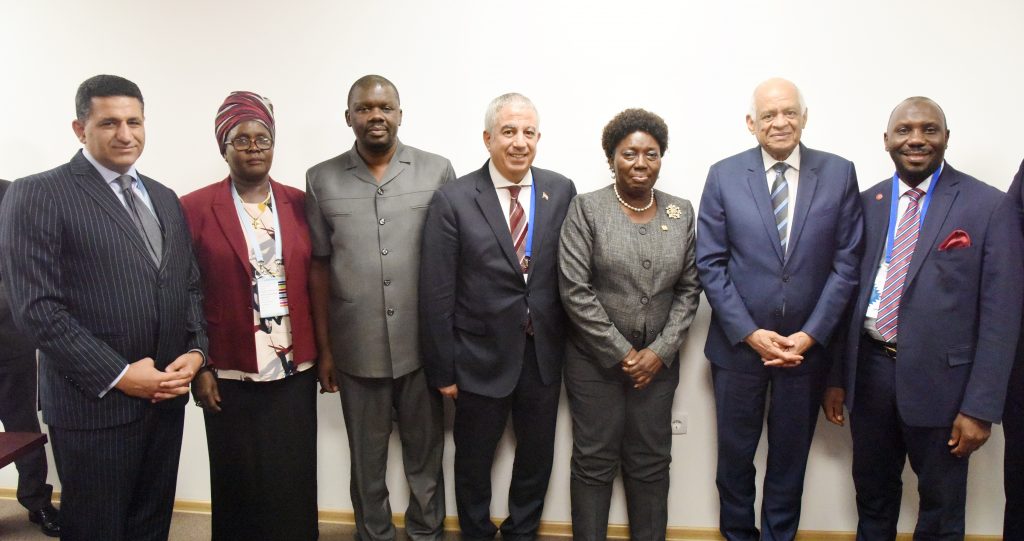
Third from right Speaker Rebecca Kadaga, second from right Egypt Speaker Ali abdel-Aal pose for a photo with MPs, and Ambassadors of Uganda and Egypt to Serbia

He added that it would only be prudent for the Reconnaissance Dam in Ethiopia to be built over a period of 7 years to allow sufficient flow of water on to Egypt.

Kadaga also commended Egypt’s support to Uganda through its companies like the Arab Contractors among others, adding that Uganda had a lot to learn from Egypt with regards construction.

“I have told Parliament severally that we need to encourage more of these companies to come and set up base in Uganda so that we can create more employment opportunities for our people,” said Kadaga.

She also held a bilateral meeting with the Speaker of the Grand National Assembly of Turkey Türkiye Büyük Millet Meclisi Baskanı, where she called for better trade relations.

“Mr. Speaker, our Ugandans who are doing trade with Turkey have often faced double taxation. We need your support on this matter, and also to encourage more exports from Uganda to Turkey so that we can benefit mutually,” said Kadaga.

Millet Meclisi commended Kadaga for her work in fighting for the rights women, girls and youth in Uganda, and also committed to follow up a Memorandum of Understanding to improve legislative practices between the two countries.


Stories Continues after ad

BoU confirms dfcu Bank is exiting Meera Investment properties

The Former Crane Bank Ntinda branch, which DFCU took over and illegally rebranded in its name, was ordered by the court to vacate and compensate Meera Investments because the property belongs to Meera.

The Bank of Uganda (BoU) in its 2018/ 2019 Annual Report has confirmed that dfcu Bank is in preparations to leave 48 properties that the defunct Crane Bank Limited (CBL) was operating its branches before it was taken over by its rival in January 2017 in a Shs200 billion transaction.

“Following the Court’s ruling … dfcu Bank Limited in a letter dated September 12, 2019 communicated to BOU its decision to exercise its option to rescind its interest in purchasing the 48 properties pursuant to clause 8.7 of the Agreement,” BoU says in its latest annual report.

The report adds that as part of the rescinding of this purchase, dfcu will return to Bank of Uganda Certificates of title for Meera Investments Limited ‘and requires Bank of Uganda to pay dfcu the new book value of properties recorded in the assets and inventory compilation as October 20, 2016.’

On August 26, 2019, Court ruled on Miscellaneous Application No.320 of 2019 in favor of Sudhir Ruparelia and Meera Investments Limited dismissing Suit No.493 of 2017 where Crane Bank (receivership) had sued Sudhir Ruparelia and Meera Investments Limited to recover Shs397 billion allegedly swindled.

Court ruled that costs of the application be paid by the Bank of Uganda on the basis that Crane Bank (in receivership) is non-existent and does not have locus standi to put forth any claim against Sudhir and Meera Investments Limited.

A recent leaked document showed dfcu Bank calling for bids from companies that want to provide consultancy services at it seeks to relocate its branches to new areas in various districts and towns across Uganda.

Dfcu Bank has been operating its business in buildings/properties belonging to Meera Investments Limited since it acquired CBL over two years ago.

In August this year it emerged that the bank was misled by city Law firm Sebalu & Lule Advocates to illegally transfer title properties into its name yet the properties belong to Meera Investments Ltd even though it had leased them to Crane Bank Limited.

According to a leaked dossier, the Sebalu & Lule Advocates who have been barred by court from representing the same bank against city tycoon Sudhir Ruparelia for being conflicted. The law firm misled dfcu Bank to transfer freehold titles from Crane Bank Ltd during the controversial takeover.

Stories Continues after ad