Stanbic Bank
Stanbic Bank
25.9 C
Kampala
Stanbic Bank
Stanbic Bank
Home Blog Page 1137

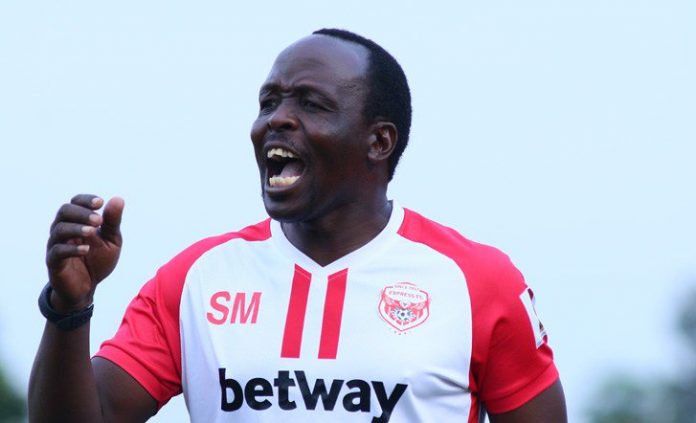
Express head coach fined Shs500,000 for time wasting

George Ssemwogerere


Express Football Club head coach George Ssemwogerere has been fined Shs500,000 fine for time wasting during their Uganda Premier league game against Police in Wankulukuku, on October 4th, 2019.

It was being reported that Ssemwogerere ordered the ball boys to hide the match balls from the pitch especially in the second half when Express took the lead.

In a letter signed to Express FC from UPL, the former Cranes captain was warned against repeating any similar actions in future.

“It was reported in the referee’s match report that during SUPL match #49 Express FC Vs Police FC played on Friday 4th, October, 2019 at Betway Muteesa II Stadium Wankulukuku, the head coach George Ssimwogerere ordered the ball boys to hide balls in the 58th minute which led to delayed restart to the game,” the letter reads.

“Mr George Ssimwogerere is warned against repeating the same actions and fined UGX 500,000 (Five hundred Uganda shillings only) to be paid by 23rd, October, 2019. Failure, the said fine shall lead to suspension from the technical bench.

“Express FC is encouraged to prevail over its club officials.”

Express side won the game 5-3 against Police.

The Red Eagles are currently 11th on the log with 10 points from their first 9 games with their next game hosting Busoga United FC on the 29th October.

Stories Continues after ad

Uganda ready to host African population conference-Says minister Bahati

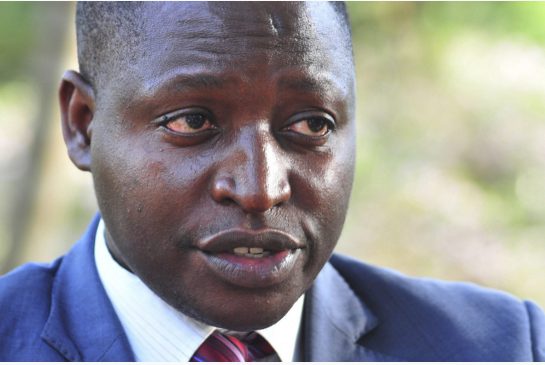
State Minister for Finance in charge of General Duties David Bahati


Uganda is set to host the eighth African Population Conference where delegates will share and disseminate information on key population, health and development issues facing the African continent.

The Conference to be held from November 18-22, 2019 provides an opportunity for networking and knowledge sharing between researchers, policy makers, programme managers, public health experts, international development partners, and other key stakeholders in the population and development field.  This also means that any policies and programmes formulated are evidence-based.

The conference to be held at Imperial Resort Beach Hotel, Entebbe will focus on the theme, “Harnessing Africa’s Population Dynamics for Sustainable Development:  25 Years after Cairo and Beyond.”

According to state minister of finance, David Bahati, “Hosting the forthcoming conference will be another opportunity to share with the rest of the world, the Pearl of Africa’s hospitality, beautiful environment, great weather and wonderful facilities that will certainly make the Conference a success.”

He added: “The theme is also relevant to Uganda which is one of the youngest nations in the world.  It is important to note that Uganda’s population is predominantly young (over 70 per cent are under the age of 30 years). This young population is a potential asset for national development through harnessing the Demographic Dividend which is also important for achieving Vision 2040 and the National Development Plan.”

The minister said  Uganda will not only share the pathways towards attaining the Demographic Dividend in cognizance of the Country’s Vision 2040 as well as the Sustainable Development Goals, but will learn from countries that have advanced in domesticating the 2017 African Union Roadmap of Harnessing the Demographic Dividend.”

The conference is held every four years and seven conferences have so far been successfully organized by the Union of African Population Studies (UAPS) Secretariat and respective African countries.

Africa, in general, is a very young continent. About 40 percent of the population is below 15 years of age, and an additional 30 percent fall between 15-24 years. This demographic profile presents a unique opportunity to achieve massive socio-economic transformation through harnessing the Demographic Dividend (DD). The Demographic Dividend is the economic benefit that arises following a significant increase in the ratio of the working-age population relative to dependents (children and the elderly), in the workforce.

Africa at a glance

.            The current population of Africa is 1.3 billion in 2019, based on the latest United Nations

estimates.

·        Africa’s population is equivalent to 16.7 per cent of world population.

·        The total land mass (area) is 29 million Km2 (or 11 million sq. miles)

·        43 per cent of the population is urban

·        The median age in Africa is 19.4 years.

Africa’s demographic dynamics are shaping its present and future development agenda. Perhaps the greatest and most fundamental challenge is to address the economic and social development issues of a continent that will be home to 1.5 billion people in the next ten (10) years (UNECA 2016) and is expected to reach 2.5 billion by 2050.


Stories Continues after ad

African Parliament honours Robert Mugabe

Late Zimbabwean President Robert Mugabe

Pan African Parliament (PAP) MPs have honoured President Robert Gabriel Mugabe, referring to him as a fervent Pan-Africanist who defended his country and Africa on the world stage.

The motion to honour the late former President of Zimbabwe was moved by  Jaynet Kabila (DR Congo) and seconded by  Haidara Aïchata (Mali, PAP 2nd Vice President) with support from Hon. Jacqueline Amongin (Uganda) during the plenary sitting on Wednesday, October 16, 2019 in South Africa.

Speaker after speaker were all praises for Mugabe, who ruled Zimbabwe for 38 years. He died in a Singapore hospital on September 6, 2019 aged 95.

Hon. Yeremia Chihana said Malawi is what it is today because of the selfless indulgence of Mugabe. “The fight against the Federation of Rhodesia and Nyasaland was properly facilitated and anchored by Robert Mugabe to support Late Dr. Kamuzu Banda in the fight for freedom.”

Referring to Mugabe as a true hero, Uganda’s representative James Kakooza said “Not only did Mugabe involve himself with Zimbabwe affairs, he also went an extra mile. After the Scramble of Africa, he came to the centre stage for various African countries helping them fight for their freedoms.” Kakooza called on today’s leaders to follow in Mugabe’s footsteps to ensure that Africa is united.

The 3rd Vice President of PAP, Chief Fortune Charumbira, a representative of Zimbabwe, revealed that Mugabe was a principled man who left his lucrative lecturing job in Ghana to come and liberate his motherland and paying for it with a 10-year jail term.

Charumbira used the occasion to ask for Members support for removal of sanctions slapped on Zimbabwe during the Mugabe presidency.

Hon. Sidia Sama Jatta (The Gambia) said that in freeing the black person from the oppression of the white person, the late Mugabe actually succeeded in freeing the whites.

We all know, as Africans, that we have never had a Pan-Africanist of the calibre of Robert Mugabe; he is the best Pan-Africanist we have ever had in Africa. He led his people to independence and taught his people to be very courageous. He empowered his people; the youths, the women and the men equally,” Hon. Beatrice Kones (Kenya) said.

The MPs unanimously agreed to rename the Presidential Lounge in the chamber at the Pan African Parliament, Robert Mugabe Room, in honour of Zimbabwe’s first post-independence leader.

Stories Continues after ad

AC Milan suffer record 146 million euro losses – reports

AC Milan team


Troubled former Italian footballing giants AC Milan have suffered record losses, according to reports in Italy on Wednesday.

Gazzetta Dello Sport claimed that in the year to June 30, 2019, losses rose by 16 percent to 146 million ($162 million) euros compared to 126 million euros for the same period the previous year.

Gazzetta said the figures were far worse than the predicted loss of 90 million euros.

US hedge fund Elliott took over the debt-ridden seven-time European champions from Chinese businessman Li Yonghong in July 2018.

The club’s absence from European football has had an impact on merchandising and sponsors, with income from sponsors slipping by 6.7 million euros and ticket sales down by 1.2 million euros.

However, revenues from TV rights rose from 109.3 million to 113.8 million.

Milan finished fifth in Serie A last season but surrendered their Europa League berth after breaching UEFA’s financial fair play rules.

Revenues from the sale of players in particular dropped from 42 million euros to 25.5 million euros.

To keep the club afloat, Elliott have injected 325 million euros in total up until this September, Sky Sport Italia reported.

On the pitch the 18-time Serie A champions are also in turmoil with Marco Giampaolo sacked as coach after just seven games and Stefano Pioli coming in as the club’s eighth coach in five years.

Milan won their last Serie A title in 2011, and have not played in the Champions League since the 2013-2014 season.

The club are 13th place in Serie A, following a run of four defeats in seven games.

Italian media mogul and former prime minister Silvio Berlusconi, who oversaw Milan’s glory years during his 31-year ownership, sold the club to Li in 2017 with Elliot assuming control after the Chinese businessman defaulted on a loan payment.

AC Milan are currently working with city rivals Inter Milan on a new 1.2 billion euro ($1.34 billion) stadium project to rebuilt the San Siro and the area surrounding stadium to the west of the city.

Stories Continues after ad

Commercial bank rates come down to 20% in 2019-BoU report

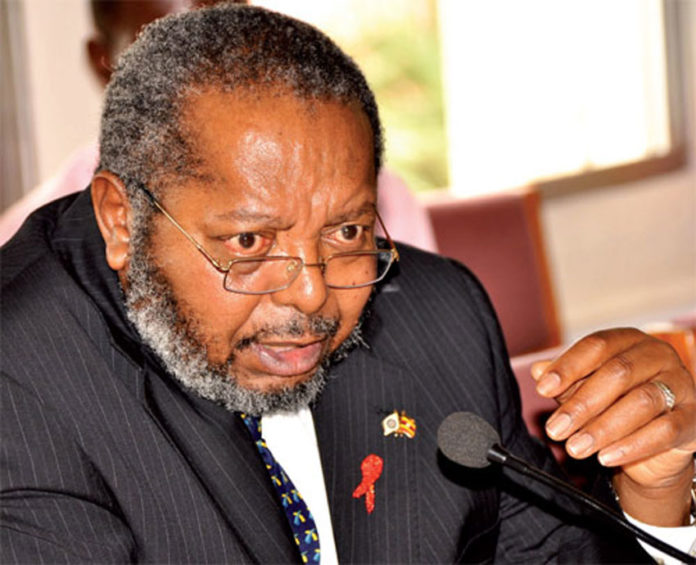
Late Emmanuel Tumusiime-Mutebile


In the financial year (FY) 2018/19, the shilling denominated lending rates declined to an average of 20 per cent, relative to 20.3 per cent in FY 2017/18 and 22.6 per cent in FY 2016/17, according to the Bank of Uganda (BoU).

However BoU in its 2019 Annual Report notes that as at June 2019, shilling denominated lending rates were higher at 19 per cent relative to 17.7 per cent as at end-June 2018. The rise in lending rates is partly attributed to the increase in the CBR to 10 per cent in October 2018, from 9 per cent.

BoU attributes the drop in lending rates partly to the accommodative monetary policy stance it has established since April 2016, where the CBR stood at 16 percent and by June 2018, it had declined to 9 percent.

Declining NPLs

According to the report, the ratio of Non-Performing Loans (NPLs) to total gross loans declined to 3.8 per cent as of March 2019, from 5.3 per cent in December 2018 and 4.4 per cent in June 2018. “Lending rates are expected to decline further as banks leverage on technology to increase operating efficiency,” the report says.

It says some of the measures undertaken by Government to reduce structural rigidities such as the passing by Parliament of the Immovable Property Bill will give borrowers alternate collateral to land and property, in the end also contributing to the decline in lending rates.

Time deposit rate

The time deposit rates gradually increased during FY 2018/19 opening at 9.2 per cent and closing the year at 10 per cent, an average of 10.1 per cent, which is much higher than 8.9 per cent in FY 2017/18.

However, the report says the spread between lending and time deposit rates narrowed, to the range of 9-11 per cent in FY 2018/19 compared to 8-13 per cent in FY 2017/18. Overall, the spread fell to 9.8 per cent in FY 2018/19, down from 11.5 percent in FY 2017/18. “The narrower spreads augurs well with financial sector efficiency and if sustained would enhance the financial sector’s contribution to economic growth through higher savings and investment,” it says.

Average lending rate on foreign currency declines

The weighted average lending rate on foreign currency denominated loans averaged 7.5 percent in FY 2018/19, from 7.7 per cent the previous year, and the foreign currency spread averaged 4.3 per cent, from 5.0 per cent in the previous year, says the report.

Agriculture attracts higher interest rates

In terms of sectoral interest rates, Agriculture, Building, Mortgages, Construction and Real Estate, Personal and Household Loans attracted the larger average market lending rates.

Private Sector Credit strengthens by 12.7 per cent as banks give loans of Shs1, 890.8 billion

Growth in Private Sector Credit (PSC) continued to strengthen in FY 2018/19, consolidating gains realized in the previous year supported by an accommodative monetary policy, improvement in asset quality and continued improvement in economic activity, the report says.

“PSC grew on average by 12.7 percent in FY 2018/19, which is higher than 11.5 percent in the previous year. In May 2019, PSC reached an unprecedented rate of 15.3 percent since October 2016 when PSC started recovering at 1.9 percent. Similarly, the annual PSC growth, net of valuation changes on account of exchange rate movements, averaged 12.5 percent in FY 2018/19, compared to 10.8 percent in FY 2017/18,” says the report.

Credit went to all sectors

Sector-wise, the report says robust credit growth was observed in all the sectors . “Credit to agriculture sector, though robust, was slower, at an average of 15 percent during FY2018/19 relative to 23 percent in FY2017/18,” it says.

The report adds that lending to the services sector (with a share of 1 percent of total lending) has recovered. Annual credit growth for the services sector, having been negative from July 2016, has recovered since March 2019. This reflects improved risk aversion towards this sector, which if sustained, could boost business activity of Small and Medium Enterprises (SMEs), lending support to private investment and consumption and in turn boost growth.

Credit extension

On a net basis (new loans disbursement less recoveries) loans by commercial banks improved over the financial year. Net extensions in FY 2018/19 increased to UGX 1,890.8 billion, from Shs1,106.3 billion in FY 2017/18, and from Shs714.6 billion in FY 2016/17.

The continued recovery in credit extension was in partly due to less risk aversion by banks towards some sectors as asset quality improved, continued recovery in economic activity that stimulated demand and an accommodative monetary policy that kept the cost of lending relatively stable, the report says.


Treasury bill and bond holdings

The report shows a total of Shs10,385.47 billion was issued of which Shs6,959.41 billion was in Treasury bills and Shs3, 426.06 billion was in Treasury bonds during the year. Government securities redemption in the period amounted to Shs7, 985.02 billion, out of which Shs6,675.54 billion was Treasury Bills and Shs1, 309.48 billion was Treasury Bonds. As at end-June 2019, the total stock at face value of Treasury bills and Treasury bonds was Shs 4,144.6 billion and Shs11,881.8 billion representing an increase of 7.4 percent and 22.6 percent respectively.

As at June 30, 2019, commercial banks held the largest portfolio of government securities at 41.32 per cent of the total stock, while pension and provident funds held 40.98 per cent and offshore investors held 5.59 per cent. Other financial institutions held 5.60 per cent and insurance companies and retail investors held 2.20 per cent and 1.70 per cent, respectively.

Stories Continues after ad

The World Economy: Synchronized Slowdown, Precarious Outlook

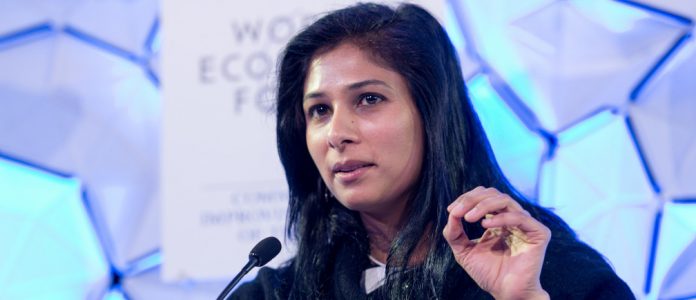
Gita Gopinath

By Gita Gopinath


The global economy is in a synchronized slowdown and we are, once again, downgrading growth for 2019 to 3 percent, its slowest pace since the global financial crisis. Growth continues to be weakened by rising trade barriers and increasing geopolitical tensions. We estimate that the US-China trade tensions will cumulatively reduce the level of global GDP by 0.8 percent by 2020. Growth is also being weighed down by country-specific factors in several emerging market economies, and by structural forces, such as low productivity growth and aging demographics in advanced economies.

In the October World Economic Outlook, we are projecting a modest improvement in global growth to 3.4 percent in 2020, another downward revision of 0.2 percent from our April projections. However, unlike the synchronized slowdown, this recovery is not broad-based and remains precarious.

The weakness in growth is driven by a sharp deterioration in manufacturing activity and global trade, with higher tariffs and prolonged trade policy uncertainty damaging investment and demand for capital goods. In addition, the automobile industry is contracting owing also to a variety of factors, such as disruptions from new emission standards in the euro area and China that have had durable effects. Overall, trade volume growth in the first half of 2019 has fallen to 1 percent, the weakest level since 2012.

In contrast to extremely weak manufacturing and trade, the services sector continues to hold up almost across the globe. This has kept labor markets buoyant and wage growth and consumption spending healthy in advanced economies. There are, however, some initial signs of softening in the services sector in the United States and euro area.

Monetary policy has played a significant role in supporting growth. In the absence of inflationary pressures and facing weakening activity, major central banks have appropriately eased to reduce downside risks to growth and to prevent de-anchoring of inflation expectations. In our assessment, in the absence of such monetary stimulus, global growth would be lower by 0.5 percentage points in both 2019 and 2020.

Advanced economies continue to slow towards their lower long-term potential. Growth has been downgraded to 1.7 percent for 2019 (compared to 2.3 percent in 2018) and it is projected to stay at this level in 2020. Strong labor market conditions and policy stimulus are helping to offset the negative impact from weaker external demand for these economies.

Growth in emerging market and developing economies has also been revised down to 3.9 percent for 2019 (compared to 4.5 percent in 2018) owing in part to trade and domestic policy uncertainties, and to a structural slowdown in China.

The uptick in global growth for 2020 is driven by emerging market and developing economies that are projected to experience a growth rebound to 4.6 percent. About half of this rebound is driven by recoveries or shallower recessions in stressed emerging markets, such as Argentina, Iran, and Turkey, and the rest by recoveries in countries where growth slowed significantly in 2019 relative to 2018, such as Brazil, India, Mexico, Russia, and Saudi Arabia. There is, however, considerable uncertainty surrounding these recoveries, especially when major economies like the United States, Japan, and China are expected to slow further into 2020.

Escalating risks

In addition, there are several downside risks to growth. Heightened trade and geopolitical tensions, including Brexit-related risks, could further disrupt economic activity, and derail an already fragile recovery in emerging market economies and the euro area. This could lead to an abrupt shift in risk sentiment, financial disruptions, and a reversal in capital flows to emerging market economies. In advanced economies, low inflation could become entrenched and constrain monetary policy space further into the future, limiting its effectiveness.

Policies to reignite growth

To rejuvenate growth, policymakers must undo the trade barriers put in place with durable agreements, rein in geopolitical tensions, and reduce domestic policy uncertainty. Such actions can help boost confidence and reinvigorate investment, manufacturing, and trade. In this regard, we look forward to more details on the recent tentative deal reached between China and the United States. We welcome any steps to de-escalate tensions and to roll back recent trade measures, particularly if they can provide a path towards a comprehensive and lasting deal.

To fend off other risks to growth and to raise potential output, economic policy should support activity in a more balanced manner. Monetary policy cannot be the only game in town. It should be coupled with fiscal support where fiscal space is available, and policy is not already too expansionary. Countries like Germany and the Netherlands should take advantage of low borrowing rates to invest in social and infrastructure capital, even from a pure cost-benefit perspective. If growth were to deteriorate more severely, an internationally coordinated fiscal response, tailored to country circumstances, may be required.

While monetary easing has supported growth, it is essential that effective macroprudential regulation be deployed today to prevent mispricing of risk and excessive buildup of financial vulnerabilities.

For sustainable growth, it is important that countries undertake structural reforms to boost productivity, improve resilience, and lower inequality. Reforms in emerging market and developing economies are also more effective when good governance is already in place.

The global outlook remains precarious with a synchronized slowdown and uncertain recovery. At 3 percent growth, there is no room for policy mistakes and an urgent need for policymakers to support growth. The global trading system needs to be improved, not abandoned. Countries need to work together because multilateralism remains the only solution to tackling major issues, such as risks from climate change, cybersecurity risks, tax avoidance and tax evasion, and the opportunities and challenges of emerging financial technologies.

The writer is IMF Chief Economist

Stories Continues after ad

MTN tops URA tax payer list for 2018/19

URA Commissioner General, Doris Akol

Africa’s telecommunication giant, MTN-Uganda has emerged as the biggest tax payers according to the latest ratings by the tax collector, Uganda Revenue Authority. Sources within URA can reveal.

The latest list of Uganda’s largest tax payers obtained from sources within has placed MTN Uganda on top with a whooping Shs682.4 billion for financial year 2018/2019. Airtel Uganda came second with Shs535.9 billion while fuel giants Vivo Energy came inthe third place with Shs398.9 billion.

In the fourth place is Nile Breweries Limited on fourth with She394.8 billion closely followed by Bank of Uganda in fifth position with Shs390.4 billion.

Nile Breweries competitor, Uganda Breweries Limited had Shs308.4 billion and Total Uganda Shs300.6 billion.

Also on the list are Umeme Limited, Tororo Cement, Kakira Sugar Limited and Bidco Uganda limited topping up the top 11 tax payers list.

Others include Crown Beverages, Nile Energy, Century Bottling company and Centenary Development Bank Limited. MTN has maintained its lead for several years.

Stories Continues after ad

We have lived under the control of guns for so long, we must reclaim our country- Besigye

Dr. Kizza Besigye


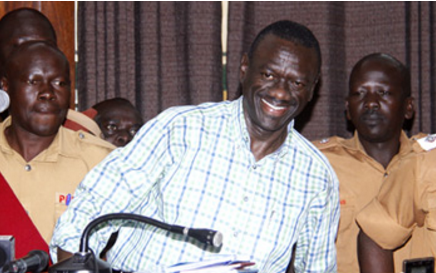
The former presidential candidate, Dr. Kizza Besigye has urged Ugandans to join forces in the fight against President Museveni’s  for alleged militarized governance system.

“We have been living under the control of guns for so long, that’s why the struggle shouldn’t be trivialized to the struggle of Besigye. It’s for everyone ending rule by guns isn’t going to happen through a throw of a piece of paper in a box.”

Speaking earlier today, Besigye said the governance system in the country has not changed from the time when the country was taken over by foreigners noting that since 1962, no president has handed over power willingly indicating that people have no say on how and who governs them.

He said dictators and people who dominate others use four tools of fear, bribes, divide and rule as well as controlling information and propaganda. To his dismay, forces that try to fight against the current regime are being infiltrated and that’s how the government survives.

“We must reclaim the country. Once we have the power, we can organize how that power is managed and create rules. By the grace of God, we shall take action to regain our freedom and that is why we have been in the struggle for all these years to have an election. The reason I went to the bush was to have an election. If there is a need to struggle, we must figure out how to do so.” He said on NBS TV

Besigye said the act of security forces attacking parliament is high treason and the country has not dealt with it, “I gave up my life for an election” he added

“The artificial categorization of our politics is deliberate to distort and confuse us. It affects how we solve the problem we’re dealing with. I was a candidate in 2016 but still on bail. I was charged with treason but still insist I won the 2016 elections. Mr Museveni is illegally and illegitimately in the office of the president.” He reminisced

“We need to put it into context. We have an illegitimate president who changed the constitution, appointed a new Electoral Commission and attacked the parliament.”

Stories Continues after ad

Women call for involvement in peace building in Africa

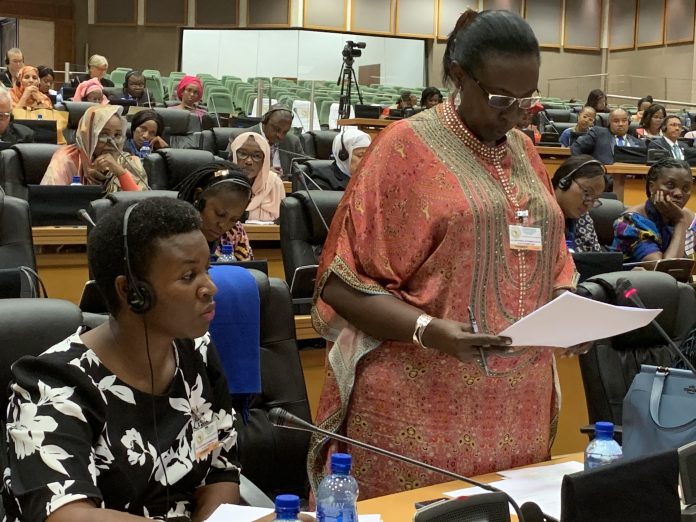
Robina Rwakoojo makes a contribution during the PAP Conference on women's rights in Midrand, South Africa. To her right is Justine Khainza


Legislators and civil society groups have called for the inclusion of women in all peace building activities and processes in order to bring about lasting peace on the African continent.

In resolutions adopted at the end of a two day Pan African Parliament Conference on women’s rights, participants were concerned that women and children are the most affected by conflicts and displacement.

The conference was held at the Pan African Parliament headquarters in Midrand, South Africa 14 – 15 October 2019. It was attended by African women legislators and persons involved in work and advocacy in the areas of women and gender.

Uganda was represented by Anifa Kawooya (NRM, Sembabule district),  Jacquiline Amongin (NRM, Ngora district), the Chairperson of the Uganda Women Parliamentarians, Pamela Kamugo (NRM, Budaka district), Robina Rwakoojo (NRM, Gomba) and Justine Khainza (NRM, Bududa district).

Participants noted “with regret that women bear the burden of poverty, owing to limited access to decision making processes, finance, education, health and means of production.”

The conference, held since 2008, provides an avenue for ongoing monitoring and evaluation of women’s issues; revisiting progress made by the PAP in the promotion of gender mainstreaming; the economic advancement of women on the continent; and a discussion on the planning, implementation and monitoring of gender focused programmes, policies and activities of the African Union and PAP.

The meeting called upon African Union Member States to strengthen comprehensive mediation, peace building and conflict resolution mechanisms, including the full participation of women in all peace building activities and processes, to pursue national reconciliation through the African Peace and Security Architecture, to strengthen Africa’s peacekeeping and enforcement capabilities and collaboration with the United Nations system.

During a debate on the role of parliamentarians, Hon. Anifa Kawooya (NRM, Sembabule district) appealed to fellow legislators to gain confidence to be able to lobby their male colleagues and government to see that issues affecting women are passed in Parliament.

“We lack skills and we are not confident and due to our low numbers we need to lobby governments to push our issues through Parliament,” she said.

Recommendations on the African Women’s Decade, 2010 – 2020, ratification of the African Continental Free Trade Agreement, the AU theme for 2019 on refugees and internally displaced persons and on women and ICT were adopted.

Participants urged member states to put the concerns of refugees, internally displaced persons and stateless persons on the agendas of the AU Peace and Security Council and Regional Economic Communities.

Other recommendations included:

On the African Continental Free Trade Agreement:

  • Urge member states to ratify the African Continental Free Trade Agreement;
  • Call upon member states to put in place deliberate programmes to empower women to actively participate in the free trade and to opt for gender responsive policies to improve inclusiveness;
  • Call on member states to ensure access to trade information, services, finance, ICT and market opportunities;
  • Call on parliamentarians to monitor the negotiations, the implementation and impact of the AfCTA with a particular focus on the participation of women;
  • Call on Member States to build the capacity of women so that they can add value to commodities with the view to increase production and supply of services.

On women and ICT

  • Call upon parliamentarians to advocate in their member states for Internet access as a basic right;
  • The integration of ICT into school curriculum and the elimination of barriers to enable young girls pursue programmes in the field of Science, Technology, Engineering and Mathematics (STEM).


Stories Continues after ad
Nominees for 2019 FUFA Awards revealed, more categories added

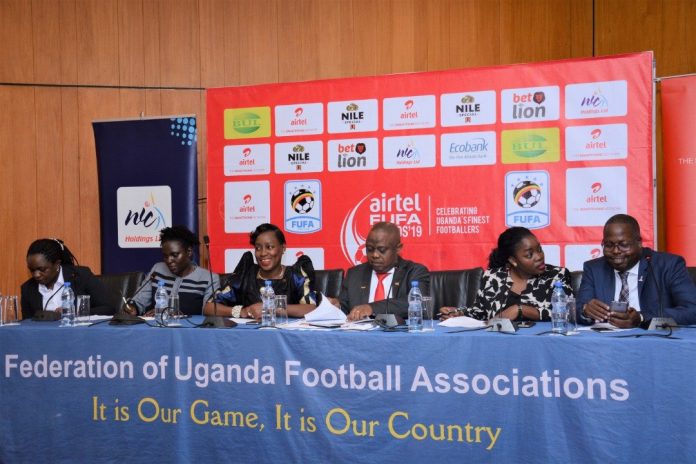
The 2019 FUFA Awards have been officially launched at the Serena Hotel in Kampala on Wednesday morning.

The launch at Serena was attended by the Acting FUFA President Justus Mugisha, FUFA Executive Committee members, Sponsors and partners.

The main sponsors Airtel Uganda Limited offered Shs100 million. The other co-sponsors include Bet Lion, Nile Breweries Limited, Bidco Uganda Limited, Pepsi, NIC Holdings Limited and Eco Bank.

New Categories have been added from the previous awards are these are; Airtel – FUFA Best XI 2019 (Women), Airtel – FUFA Women Football Coach of the Year, Best Squad (Club/National Team) of a particular Year, FUFA Member Associations’ Award and the Team Fans of the Year (FUFA Competitions).

“In 2013, we thought we could take Uganda’s football higher. We presented our manifesto and it was accepted by the stake holders who endorsed it. In 2014, we transformed the manifesto into a five year strategic plan with the vision of being the number one footballing country on and off the pitch,” said the Acting FUFA President Justus Mugisha.

The awards gala shall be held on Saturday, 14th December 2019 under the theme “Celebrating Uganda’s footballers”.

This year’s awards are valid for the Season effective 7th December 2018 to 14th December 2019.

The coaches and captains made nominees for the male and female players of the year. There will be two rounds of voting. There are three categories of voters; Coaches, Captains and fans. 50% will belong to coaches and 25% to captains and fans.

“We are here excited for the fifth year running to unveil the awards where we recognize the best of talents. Objective of these awards is to reward excellence. We also recognize those that have built a strong foundation to
the game.” Rogers Byamukama, FUFA Executive Committee member and Chairperson Airtel FUFA Awards Committee said.

*Nominees for Airtel FUFA Male Player of the Year 2019*

Shafiq Kagimu (URA), Saidi Kyeyune (URA), Mike Mutyaba (KCCA), Viane Ssekajjugo (Wakiso Giants), Joel Mutakubwa (Kyetume), Bashir Mutanda (SC Villa), Joel Madondo (Busoga United), Daniel Sserunkuma (Vipers), Allan Okello (KCCA), Paul Mucureezi (Mbarara City), Deogratious Ojok (BUL), Bright Anukani (Proline), Hillary Mukundane (Mbarara City), Mustafa Kizza (KCCA), Allan Kayiwa (Vipers), Ivan Bogere (Proline)

*Nominees for Airtel FUFA Team Fans of the Year 2019*

SC Villa, Onduparaka, KCCA, Tooro United, West Nile Province, Acholi Province Fans, Lango Province Fans, Bunyoro Province Fans

*Nominees for Airtel – FUFA Female player of the Year, 2019*

Juliet Nalukenge (Kawempe Muslim), Fauzia Najjemba (Isra Soccer Academy), Daisy Nakaziro (Lady Doves), Lillian Mutuuzo (Kampala Queens), Hasifah Nassuna (UCU Lady Cardinals), Ruth Aturo (UCU Lady Cardinals), Leticia
Nabbosa (Lady Doves), Margaret Kunihira (Kawempe Muslim), Shadia Nankya (Uganda Martyrs), Amina Nababi (Makerere University), Shamirah Nalujja (Isra Soccer Academy), Maureen Kinavudori (UCU Lady Cardinal

*Full List of the 2019 Airtel FUFA Awards Categories:*

1 – FUFA Male Player of the Year 2019

2 – FUFA Female Player of the Year 2019

3 – FUFA Best XI 2019 (Men)

4 – FUFA Best XI 2019 (Women)

5 – FUFA Coach of the Year 2019

6 – FUFA Women Football Coach of the Year

7 – FUFA Presidential Award

8 – FUFA Fair Play Award 2019 (UPL)

9 – FUFA Upcoming Talent Award 2019 (FJL)

10 – FUFA Beach Soccer Player of the Year

11 – FUFA Fans’ Favorite Uganda foreign based Player

12 – Best Squad (Club/National Team) of a particular Year

13 – FUFA Member Associations’ Award

14 – Team Fans of the Year (FUFA Competitions)

Stories Continues after ad