Stanbic Bank
Stanbic Bank
19.4 C
Kampala
Stanbic Bank
Stanbic Bank
Home Blog Page 1138

Kadaga urges gov’t to close health centres operating without latrines

Rebecca Kadaga


All government run health centres operating without latrines should close, the Speaker of Parliament, Rebecca Kadaga, has intimated.

During the opening of the inaugural parliamentary symposium on water and sanitation at Parliament Kadaga, said she was disgusted to learn that a big number of government health centres in Uganda do not have latrines.

“If 85 per cent of government health facilities do not have toilets, we should close them. We should create a crisis in the country. Let us close them and then government will wake up,” she said.

Speaker Kadaga said she was disturbed that just like it is the case with latrine coverage, Uganda is also grappling with low levels of water coverage, calling on the Ministry of Water and Environment to refrain from painting a wrong picture of a higher coverage in the country.

“I want to ask the Ministry of Water to stop talking about the 79 per cent water coverage because I have spent the last four years providing water in Kamuli District. I have moved around Karamoja and the percentage is about 45. Be sincere and we shall help you,” Kadaga said.

She revealed that in her constituency, water shortage had become the source of domestic violence as more men were beating their wives for spending more time fetching water from far off areas. She further said children were getting raped as they trekked long distances searching for water.

Kadaga urged legislators on the Parliamentary Forum on Water, Sanitation and Hygiene (WASH) to interest themselves in budgetary allocations for water and sanitation in the next financial year, urging them to fight for increased funding.

The Chairperson Parliamentary Forum on Water, Sanitation and Hygiene who is also the woman MP for Ngora District), Jaqueline Amongin, reiterated the forum has in response to poor sanitation indicators,  prepared a Private Member’s Bill on menstrual health and hygiene to urge government to commit to issues of menstrual health and hygiene.

The Commissioner for Environmental Health in the Ministry of Health, Dr Julian Komuhangi, said the country is generally performing poorly in a range of sanitation and hygiene indicators, with people in many districts still practicing open defecation.

The symposium themed, “The role of Parliament in positioning water, sanitation and hygiene as a key driver for national development” was organised by Parliament’s Forum on Water, Sanitation and Hygiene in partnership with Ministry of Health, Ministry of Water and Environment and UNICEF among many others development partners implementing WASH programmes.


Stories Continues after ad
Coca-Cola Beverages contributes to improved access to clean drinking water for 100 households in Ndeeba Parish

Nyonta Relief Patron, Joyce Nabosa Ssebugwawo giving out the kits to the beneficiaries.

Coca-Cola Beverages has launched a collaboration with Nyonta Relief to provide increased access to safe water for vulnerable households in Ndeeba, in Kampala.

Supporting the project ‘Nyonta Tree for Life’, Coca-Cola Beverages Africa will supply 100 ‘Nyonta Kits’ to families in Ndeeba, which will give them clean drinking water for use in their households for drinking, cooking and other uses.

The Nyonta Kit uses gravity to purify over 100 LPD of any water from a fresh water source making it safe for human consumption. The contribution is valued at Shs 33 million and will go to 500 people in the Ndeeba community.

At the launch, Sales Director of Century and Rwenzori Bottling Companies, Ivan Oboth, said the company support to the vulnerable communities in Ndeeba was underpinned by the belief that all people around the world deserved a chance to access safe water for life.

“Water was a key issue for the Coca-Cola system around the world and pledged that the company would continue using water responsibly to ensure that the bottling operations in Uganda reduced water use and supported the provision of safe, clean drinking water to communities.” He said.

Ms. Diana Apio Kasyate, Relations Manager Coca-Cola East and Central Africa Franchise said, “It is critical for us, as part of the world’s leading beverage company, to use water responsibly in our operations and lead in giving it back. We work to protect local water resources and provide safe, clean drinking water to communities in need.”

Explaining the project, Nyonta Relief Patron, Joyce Nabosa Ssebugwawo, the Mayor of Rubaga Division said that In Uganda, it is estimated that 33 children die every day due to diarrhea from contaminated drinking water.

“That is why we launched the ‘Anti33’ campaign; to bring together people and organisations who feel the moral obligation to help reduce the number of children dying of preventable drinking water diseases. We are happy that the Coca-Cola System has joined us today,” she said.

Ssebugwawo said that since mothers are the custodians of household health, ensuring the availability of drinking water in homes is their direct responsibility. She encouraged all women to join the campaign.

Having access to clean drinking water is key to a healthy life. Additionally, availability of clean drinking water has the power to encourage gender equality, stable education for children in a home and income generation for mothers who will have ample time since sickness in a home is eliminated.

It is worth noting that millions of people across the world are deprived of this essential need. The issue is particularly problematic in Southern Africa. According to UNICEF, in Uganda it is estimated that 60 per cent of the population has no access to potable water, leading to the death of 33 children every day.

The Ministry of Water and Environment in July this year presented Coca-Cola Beverages Africa with an award for Water Usage Efficiencies at the Mbarara Plant, after a sector audit covering 24 companies in Uganda. The project will benefit 500-700 people in 100 households.


Stories Continues after ad
Absa launches first digital branch in Kampala

ABSA

Absa bank has launched its first digital branch moments after it had just been granted a banking license to operate in the country.

Located at Jubilee Insurance Building along Parliamentary Avenue, the branch will offer 24/7customers greater convenience through self-service at automated digital platforms.

The branch was launched by the Executive Director Supervision in Bank of Uganda, Dr. Twinemanzi Tumubweine and Absa Bank Uganda’s Managing Director, Nazim Mahmood.

“Absa has launched with a bang because within a space of 4 days, you have managed to show your commitment to Ugandans by opening a digital branch that is open 24/7” Twinemanzi said

He congratulated the bank for complying with bank of Uganda directives and procedures acquiring operating license.

Absa Uganda Managing Director, Nazim Mahmood applauded central bank for all the support they have rendered to us for the last two and a half years, “We couldn’t have managed to achieve all of this without your support” he added

“The concept of a digital branch is based on the principle of convenience. This branch is going to be open 24 hours a day, 7 days a week.” Mahmood said

Absa rebranded after the sell-down by Barclays PLC of its majority shareholding in Barclays Africa Group to a minority position.

In May this year, shareholders of Barclays Africa Group Ltd gave approval for the entity’s name to be changed to Absa Group Limited in July, setting in motion the start of one of the largest rebrand projects in Africa at this time.

As part of the separation agreement, Barclays Africa Group, will cease using the Barclays brand in Africa in 2020.

The group’s Barclays-branded banks in Botswana, Ghana, Kenya, Mauritius, Mozambique, Seychelles, Tanzania, Uganda and Zambia, has continued to trade as ‘Barclays’ even after the group name changed to Absa in July.

The Barclays-branded banks in these countries rebranded at a later stage, subject to regulatory approvals in those markets.

Stories Continues after ad
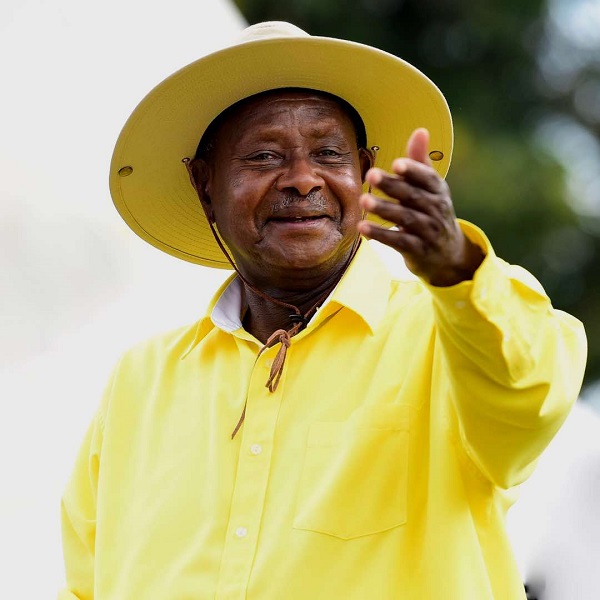
Amama Mbabazi set to return to gov’t as PM in the new reshuffle as Rugunda heads to Foreign Affairs

The good olden days between Museveni and Mbabazi are back.


Whoever coiled a saying that in politics there is no permanent enemy and permanent friend could be a genius as far as politics is concerned. And perfectly that is what can be said former Prime Minister John Patrick Amama Mbabazi and President Yoweri Museveni.

According to highly credible sources within government and intelligence, the return of Mr Mbabazi to the manifold is more less a done deal.

Accordingly, Mr Mbabazi is bouncing back as PM replacing his childhood friend Dr. Livingston Ruhakana Rugunda who actually replaced Mr Mbabazi after failing to work with Mr Museveni who he accused of having failure to honour an earlier agreement of stepping aside so as to enable Mr. Mbabazi succeed him as party chairman and subsequently as a presidential candaiate for the ruling National Resistance Movement (NRM).

Eagle Online has established that the underground meetings have been ongoing involving Mr. Mbabazi and President Museveni and the only thing item left is the meeting between President Museveni on one side Mr Mbabazi and Rugunda on the other side in order to harmonize the two gentlemen. It is said that Mr. Mbabazi lately has been using his Kololo based home as his office to carryout some of government work assigned to him by Museveni.

Sources further say Dr. Rugunda is reportedly heading back to diplomacy and therefore, he will be replacing Foreign Affairs Minister, Sam Kahamba Kutesa who has indicated, he is retiring from active politics.

It was revealed that upon the emergency of Kyadondo East Member Parliament, Robert Kyagulanyi aka Bobi Wine on the national scene especially the episodes that engulfed parliament during the age limit amendment debt, it exposed government as it lacked serious maneuvers who move things without necessarily being exposed. Sources further say there has been lack of coordination of government programmes and department by the office of Prime Minister which blame was heaped on Dr. Rugunda as being ineffective due to his soft approach to issues.

It is therefore, not surprising when cabinet chaired by Mr. Museveni nominated Rachael Kichoco Mbabazi to chair the board of National Water and Sewerage Corporation and in the same spirit, last weekend Mr. Museveni gave his military helicopter to Mr. Mbabazi to fly him to Lyatonde to attend a wedding of a daughter of city businessman Ben Kavuya.

It is said in the impending reshuffle which insiders say could take slightly before or after festive   season, Mr. Museveni is set to unveil his former blue-eyed boy again as leader of government business.


Stories Continues after ad

Over 19 million children vaccinated against Measles Rubella

The minister of health Dr Jane Ruth Aceng has revealed that a total of 19,476,110 children have been vaccinated against Measles Rubella out of the 18,100,000 targeted representing 108 percent.

They were vaccinated under the 18 million dollar immunization campaign funded by the Government of Uganda, Global Alliance for Vaccines (GAVI), World Health Organization (WHO) and United Nations Children’s Fund (UNICEF) is intended to tackle such public health challenges.

Remarking at media centre, the minister said over 7,955,597 children were vaccinated against Polio out of the 8,200,000 targeted representing 97 per cent.

“We utilized 20,000,000 doses of Measles and Rubella vaccines, 9,649,500 doses of Oral Polio Vaccines, engaged more than 16,000 schools and 20,000 vaccination posts; 133,920 VHT members, 66,960.” She said.

She said the country will continue to defend its polio free status despite the high risk of importation of Polio from neighboring countries some of which continue to harbor polio viruses while others have challenged surveillance systems.

It is therefore against this risk that all children at risk of polio aged 0 to 5 years were vaccinated with the aim of boosting community immunity.

Over the last three years, at least 120 districts annually reported suspected cases through the weekly surveillance system.  96 per cent of the reported cases were between the ages one to 15 years; hence informing our target population for the vaccination exercise.

In the recent past, the country has experienced Measles and Rubella outbreaks in over 60 districts. At the same time, Polio remains a big threat given evidence of wild and vaccine-derived strains circulating in neighboring Democratic Republic of Congo and South Sudan.

Stories Continues after ad

Parliament commends UCU for holistic education

UCU

Parliament has commended the Vice Chancellor of Uganda Christian University (UCU), Rev John Senyonyi and his administration for taking an interest in the students’ life while at the university.

Kadaga made the remarks as she witnessed the swearing in of the new UCU, Guild President and Guild Representative Council held at the university’s main campus in Mukono, today 14 November 2019.

“I want to thank the Vice Chancellor and the administration of the University for taking an interest in the entire process of election of the students. They are guiding the students ensuring that they achieve the objectives while keeping God first,” said Kadaga adding that “While I was at the university the VC was very distant from us and what we did was purely students’ affairs.”

In the elections held this month, Timothy Kivunike Kadaga beat Elias Nyakahuma to become the 21st Guild President of UCU.

The Vice Chancellor, Senyonyi, hailed the loser for expressing humility and conceding defeat in the race.

Timothy Kivunike Kadaga, a second year law student, swore to be faithful and bear true allegiance and to preserve, protect, defend and uphold UCU guild constitution.

“Now that we have taken oath we have started work. I will work with Nyakahuma who had good ideas that if implemented we shall move many steps forward,” Kivunike Kadaga said.

Kivunike Kadaga was the Speaker of the Commonwealth Youth Parliament (African Region) held in Uganda in April 2019.

Stories Continues after ad

Winnie Byanyima sworn in as UNAIDS Executive Director

Winnie Byanyima

The former Executive Director of Oxfam international, Eng. Winnie Byanyima has been sworn in as the Executive Director of UNAIDS.

The swearing in ceremony was conducted by the United Nations (UN) Secretary-General, Antonio Guterres at the UN headquarters in New York.

Eng. Byanyima who is also a wife to Uganda’s main opposition politician, Dr. Kizza Besigye, has replaced Michel Sidibé who departed earlier this year.

She was appointed in August as the UNAIDS Executive Director and Under-Secretary-General following a comprehensive selection process that involved a search committee constituted by members of the UNAIDS Programme Coordinating Board.

UNAIDS Programme is dedicated to the elimination of AIDS as a public health threat by 2030.

“The end of AIDS as a public health threat by 2030 is a goal that is within the world’s reach, but I do not underestimate the scale of the challenge ahead. Working with all its partners, UNAIDS must continue to speak up for the people left behind and champion human rights as the only way to end the epidemic,” she said.

Ms Byanyima began her career as a champion of marginalized communities and women 30 years ago as a member of parliament in the National Assembly of Uganda.

She became the Director of Women and Development at the African Union Commission, in 2004, working on the Protocol on the Rights of Women in Africa, an international human rights instrument that became an important tool for reducing the disproportionate effect of HIV on the lives of women in Africa.

Stories Continues after ad

PICTORIAL: Rema rocks, sees off to Dr Sebunya’s home

rema

Yesterday, singer Rehama Namakula introduced her long awaited fiancé Dr. Sebunya Hamza at a colorful function held at their ancestral home in Nabbingo.

The function was attended by a number of guests from Buganda kingdom, central government, city tycoons, talented musicians, Muslim clerics, friends and relatives.

Nabagereka Sylvia Nagginda was the chief guest as Uganda witnessed Rema move to a recognized marriage. She implored Rema to always respect her husband, and take care of him for their desired life to move on.

Sebunya, donated a number of gifts to Rema’s family members who included Halima Namakula among others.  Among the gifts included: A Refrigerator, Television set, Sofa sets, solar panel and more.

Stories Continues after ad

Mosquito sterilization offers new opportunity to control dengue and Zika

Aedes aegypti; adult female mosquito taking a blood meal on human skin

A technique that sterilizes male mosquitoes using radiation will soon be tested as part of global health efforts to control diseases such as chikungunya, dengue, and Zika.

The Sterile Insect Technique (SIT) is a form of insect birth control. The process involves rearing large quantities of sterilized male mosquitoes in dedicated facilities, and then releasing them to mate with females in the wild. As they do not produce any offspring, the insect population declines over time.

The Special Programme for Research and Training in Tropical Diseases (TDR) and the International Atomic Energy Agency (IAEA), in partnership with the Food and Agriculture Organization of the United Nations (FAO), and WHO have developed a guidance document for countries that have expressed interest in testing the Sterile Insect Technique (SIT) for Aedes mosquitoes.

 “Half the world’s population is now at risk of dengue,” said Dr Soumya Swaminathan, WHO Chief Scientist. “And despite our best efforts, current efforts to control it are falling short. We desperately need new approaches and this initiative is both promising and exciting.”

In recent decades, the incidence of dengue has increased dramatically due to environmental changes, unregulated urbanization, transport and travel, and insufficient sustainable vector control tools and their application.

Dengue outbreaks are currently occurring in several countries, notably on the Indian sub-continent. Bangladesh is facing the worst outbreak of dengue since its first recorded epidemic in 2000.

The South Asian nation has seen the number of cases rise to over 92,000 since January 2019, with daily admissions peaking at more than 1,500 new dengue patients in hospitals in recent weeks and is one of the countries to express interest in the Sterile Insect Technique.

Diseases transmitted by mosquitoes such as malaria, dengue, Zika, chikungunya, and yellow fever account for about 17 per cent of all infectious diseases globally, claiming more than 700,000 lives each year, and inflicting suffering on many more. The 2015 outbreak of Zika in Brazil was linked to an increase in the number of babies being born with microcephaly.

The Sterile Insect Technique was first developed by the U.S. Department of Agriculture and has been used successfully to target insect pests that attack crops and livestock, such as the Mediterranean fruit fly and the New World screwworm fly. It is currently in use globally in the agriculture sector on six continents.

The guidance on using the technique to control diseases in humans recommends adopting a phased approach that allows time to test the efficacy of the sterilized insects. Epidemiological indicators monitor the impact of the method on disease-transmission.

It also provides recommendations on mass production of the sterile mosquitoes, government and community engagement, measuring the impact of the technique, and assessing cost-effectiveness.

“Countries seriously affected by dengue and Zika have shown real interest in testing this technology as it can help suppress mosquitoes that are developing resistance to insecticides, which are also negatively impacting the environment,” said Florence Fouque, a scientist at TDR.

The collaborative effort includes plans to support three multi-country teams of research institutions, vector control agencies and public health stakeholders to test the Sterile Insect Technique against Aedes mosquitoes.

 “The use of the Sterile Insect Technique in the agriculture sector in the past 60 years has shown that it is a safe and effective method,” said Jérémy Bouyer, medical entomologist at the Joint FAO/IAEA Division of Nuclear Techniques in Food and Agriculture. “We are excited to collaborate with TDR and WHO to bring this technology to the health sector to fight human diseases.”

Stories Continues after ad

KCCA, Vipers to renew hostilities in Lugogo

fahad bayo (9) of vipers during the Pilsner 8 final

All roads lead to the StarTimes stadium in Lugogo this Saturday afternoon when the defending champions KCCA FC host Vipers Sports Club in a highly-billed nail biting Uganda Premier League encounter.

Currently, Vipers are 14 points ahead of KCCA who have 4 games in hand. The Kasasiro boys are desperate to close in the gap between their title rivals after their elimination from continental football.

The corresponding fixture in Lugogo last season ended in a 1-1 draw after Brian Nkuubi’s first half opener was cancelled out by Mike Mutyaba’s second half leveler.

Key stats via the Vipers website

KCCA and Vipers will be meeting for the 29th time in the league history and the Venoms are slightly ahead with a victory more than the hosts having 11 wins, 7 draws and 10 losses out of the previous 28 meetings, a total of 35 goals against 38 have been registered in the process making it a -3 goal difference.

Vipers first ever victory over the Kasasiro boys was registered on September 28, 2008 in a 3-1 win at Nakivubo stadium after 6 fruitless attempts from our debut season in the top flight division, it was courtesy of a brace by Yudah Mugalu and one from Samson Ceasar Okhuti while Brian Umony scored KCCA’s consolation strike.

Vipers SC has lost only one league fixture out of the previous 10 meetings against KCCA, a 3-1 win during the 2017/18 first round tie at Lugogo when Shaban Muhammed netted a double on his debut and Derrick Nsibambi added the 3rd after Yayo Lutimba had equalised from the penalty mark, in that spell, the Venoms command four wins and five draws since the 2014/15 season.

Vipers are currently occupying top position on the league log with 33 points out of the 12 matches played while KCCA are languishing in 5th position 14 points behind the Venoms having garnered 19 points from 9 games.

Vipers secured a crucial 1-0 victory against visiting URA FC in the last fixture at Kitende through Dan Sserunkuma while KCCA FC overcame arch-rivals Express FC away in Wakiso with a resounding 3-1 win as Sadat Anaku, Mike Mutyaba plus an own goal by Muhammed Yiga did the damage.

KCCA FC gaffer Mike Mutebi has been on a winning side against Vipers in the league, on only one occasion losing 3 and drawing 4 out of the 8 meetings since he was appointed as the head coach hence will be looking for a second victory in 9 matches.

Both matches during last season ended in identical 1-1 draws to record only the second time in the teams history when none of them won against the other, the first one was during the 2015/16 season when a 2-2 draw at Buikwe was followed by a 0-0 stalemate in Lugogo.


StarTimes Uganda Premier League

Saturday, 16th November 2019

KCCA FC v Vipers SC

StarTimes Stadium, Lugogo – 3 pm

Stories Continues after ad