A 34-year-old Dr. Nicholas Magambo Kwikiriza is one of the few savers that have received their NSSF benefits at a very tender age of 34 years old. This was possible because NSSF has one its benefits scheme known as Exemption employment benefits scheme.
Exempted Employment: Paid to a contributing member who joins employment categories that are exempted i.e. have their social protection schemes that are recognized under the existing law and are exempted from contributing to NSSF .e.g. the army, police, prison, civil service and government teaching service employees or members of any scheme who have received exemption from the Mister responsible for Social Security in writing
Kwikiriza first trusted the fund with his money in November 2011 when he was employed by Kumi Regional Referral Hospital as a medical doctor. He decided to withdraw his benefits after he had crossed to a new employer in 2015, according to Kwikiriza, his intention was to extend medical services to people who were in need.
A fully decided Kwikiriza started off by buying land worth Shs15 million, an oxygen concentrator worth Shs 3 million and other basic theatre equipment. This is was a good start for a health centre in a remote area like Kigolobya that is 24 Kilometers away from Hoima Town.
“As a professional doctor, there is nothing rewarding like saving lives. I decided to invest in the Hospital business because I realized how dire the situation was in kigolobya village, babes were dying at birth due to lack of enough oxygen,” Kwikiriza said.
Care Clinic has so far reduced the mortality rate that had made Hoima, the district with highest mortality rate in Uganda. 10-20 Patients come to Care health centre on a daily basis, however, on some days the number of patients is overwhelming.
Kwikiriza decries of poor means transport in the area as the biggest challenge faced especially for patients in an attempt to access the urgent medical attention on the shortest time possible (golden time)
“Without doubt, medical equipment such as an Ultra-sound machines, an oxygen concentrator is very costly and this has slowed down our anticipated growth but me and my team are still very determined to push harder until we when we meet our targets,” Kwikiriza said.
Dr. Kwikiriza standing in front of his newly constructed hospital in Kigolobya
Kwikiriza who started with only 4 staffs is now employing over 10 qualified full-time medical personnel and 2 part-time radiographers and Doctors who come for special services like evacuation and surgery. Care health centre has not only benefited people from its geographical setting but also people from Masindi, Hoima and as far as Buliisa district. According to Kwikiriza, this unprecedented influx of patients is due to the improved services offered by Care clinic and the better customer care offered by the nurses.
“I have never gone back to Hoima for anything like treatment since the establishment of this Hospital, nurses are so good and services are offered in 24/7 hours. This had never happened in Kigolobya village,” Mrs. Agnes Kenyana, a community member said.
kwikiriza anticipates to win the money prize and establish a fully-fledged health infrastructure that can accommodate all the equipment and more rooms for patients that come from distant areas.
The Medical doctor understands the value of saving especially with NSSF because had it not been the fund’s support, he would not have been able to save the lives of people in Kigolobya, Hoima district.
To vote for Dr. Kwikiriza Magambo Nicholas in the NSSF Friends with Benefits competition, dial *254# or go to www.nssfug.org.
Greetings. Crime seems to be going down on account of the as yet limited efforts we have deployed. The Police, at the Police Post or station, are supposed to have a standby force twenty four hours a day and seven days a week to react to any call of distress in their area of responsibility.
Secondly, the Police counter (desk) at every Police Station/ Post, must be manned by a Police officer twenty four hours a day and seven days a week so that when a member of Public, under attack by Criminals, rings, there is somebody to receive the call without any delay and, then, promptly inform either the OC station or even the in- charge of the reaction force to re-act immediately.
Thirdly, through the Local radios, all members of the Public in the locality should be informed about the telephone numbers of the nearby Police Post/ Station that they should ring in case of need.
All these steps are easy to audit because of the modern technology. All this is possible and easy to implement even with the old Police methods.
We have now added cameras. Kampala- Wakiso and Mukono are now covered- within eight months, the whole Country will be covered. The Police will be able to watch the activities – peaceful and unpeaceful- in the whole Country as far as the highways (major roads) and towns are concerned. Off the major roads, we shall use other methods.
We are, however, going to add other methods soon. Take, for example, the technology of the digital beacons in every vehicle and every piki piki. It will soon be rolled out. The criminals are an endangered species, I can assure you. Also endangered are the Police personnel or members of other security agencies who try to cover up these Criminals. It will be easy to audit and expose them. They will be arrested, charged, sentenced and dismissed from the security services and never to work for any Government department or Local Government forever. They are traitors. If you harm or fail to protect Ugandans, starting with the Bazzukulu, you disqualify yourself from Public trust.
I sent out a message in my enshugyi (ancestral cattle- not gift from friends- empaano- not those you bought – engabirano). I sent it to the general channels that you call platforms. There is no harm in that because I saw the interesting comments from the Bazzukulu and other social-media users. I thank those who appreciated. I may not list their names here but I thank them. I am always in the Resistance Movement against everything that is anti- African.
In the 1950s and 1960s, the uninformed and shallow Colonial Veterinary staff and even other elements of the Colonial elite, started saying that the Indegenous cattle of Uganda (Sanga and zebu- enkoromoijo) were neither good for milk nor for beef. They were giving little milk and had poor beef. As a cattle owner, I knew that that was alot of nonsense. Yes, some of the Ankole cattle are low milk-yielders. They are called ebipampara. Hence, cattle names like Kapampara, kipampara.
However, others were high milkers. Understandably, the traditional cattle owners, sometimes, preferred ebipampara to the high milkers. Why? On account of the shortage of water and the need for the cattle to walk fast and go far- big distances daily to look for water.
High milkers, with a big udder, cannot easily walk fast or go far. That might have been the dilemma for the traditional farmers. Fortunately, in some of the areas of the cattle corridor, there is a lot of water. These are areas like Ntungamo, Igara, Sheema, Rukungiri, parts of Ibanda etc. Anyway, since I originate from Ntungamo, I was aware of the two lines within the Sanga breed: the high milkers and low milkers (ebimpampara). I could, therefore, not accept the colonial nonsense.
Along the way, scientific proof came in that the Sanga cattle meat is the best in the world because it had yellow fat as opposed to the white fat of most cattle in the World that has got cholesterol. The milk is also better than that of the exotic breeds because it has a higher butter content of 5.25% to 10% compared to that one of the exotics of 3.7% to 4.5%. It is therefore, good for the Ugandans generally and the Bazzukulu, in particular, to know these facts of our heritage.
Otherwise, the message of the cattle was directed at the cattle- breeders so as to discuss how to enhance the efforts.
The responders had requests of cattle to be given to them and others wanted to pay a visit to the farm etc. Organizationally, it is not wise to arrange cattle gifts or visits to the farm through social media. It will distort the use of social- media. The social- media should, in my opinion, remain a forum for the exchange of ideas.
Organizational matters should be handled in the normal way. There is, for instance, the myooga Sacco, saccos based on the respective specialized activities (obuheesi, okubaija, okunogoora, ICT such as BPOs, boda bodas, hair- salons, garments, food- processing etc etc).
Minister Kasolo can give more information on these. Through those, if you the members make them work well, we can implement the good ideas we shall have distilled through social- media interactions.
Some of the responders were negative. Retire, they shouted at me. That will be decided by our Party, the NRM and the People of Uganda.
Others wondered how me posing with my cattle helps the unemployed Bazzukulu. It surely, helps those who want to learn by example. I started looking after those cattle when I was 9 in 1954. When I accessed modern education, I did not use it to go to night clubs in Europe, I used to semi- modernize the animal husbandry of those cattle among several engagements.
All my children, except Muhoozi, after their education, did not go into Public Service jobs. They are in the Private Sector, starting with the cattle industry. In the last 120 years of Colonialism and thereafter, none of my parents- uncles etc – were in the Public Service.
There is life without working for the Public Service. My involvement with the political struggles is for historical missions of patriotism (loving Uganda), Pan- Africanism (loving Africa), social- economic transformation and democracy. Why? It is for prosperity through the integration of the markets, for strategic security and fraternity in Africa. How many of you on the Social- media are contributing to that direction of thinking?
It is those concepts that will help us to solve the issue of jobs. Do you see how many Bazzukulu are in the factories for example the ones I recently commissioned (Balaji Group, Premier Distillers, Simi Mobile and Computer manufacturing plant, among others?
These Bazzukulu are working in these factories that are using the raw- materials of Uganda and that are benefitting from the market of Uganda, EAC and COMESA.
One of the contributors thought that I looked tired. I am not tired at all. I have, however, deliberately lost weight by shedding off that fat that I had allowed to accumulate on my body frame because the doctors had not explained to us clearly the mistake of not fighting fat.
In future, I will explain to you this awareness. I have moved from 106 kgs to now 76kgs. I will stabilize my weight at 76kgs because that is the one that matches with my height of 5.7 feet.
Before I talk about the anti- obesity campaign, however, in my next message I will talk about education in order to put in focus the recent strike at Makerere.
One of the negative contributors said I had made a tarmac road for my cattle while other Ugandans have no accessible roads. Wrong. One reason I bought land in the Kisozi area in 1990 was because it was far away from tarmac roads. One reason I bought land in Rwakitura in 1967 was because it was very far away from the tarmac roads.
In fact, there was no road of any description in that area except the nearly impassable Kazo-Lyantonde and Rushere-Kinoni. Cattle do not need nor do they eat tarmac. They eat grass and drink water. The tarmac road you saw in the picture is not for the cattle but for the People of Butambala, Gomba, Ssembabule , Masaka etc.
Soon somebody will be able to come from Kabale and go to South Sudan without going through Masaka or Kampala. It is for the connectivity of your Country.
I, again, thank the huge number of the responders that appreciated the cattle of the heritage of Africa and my humble and modest contribution in breeding them.
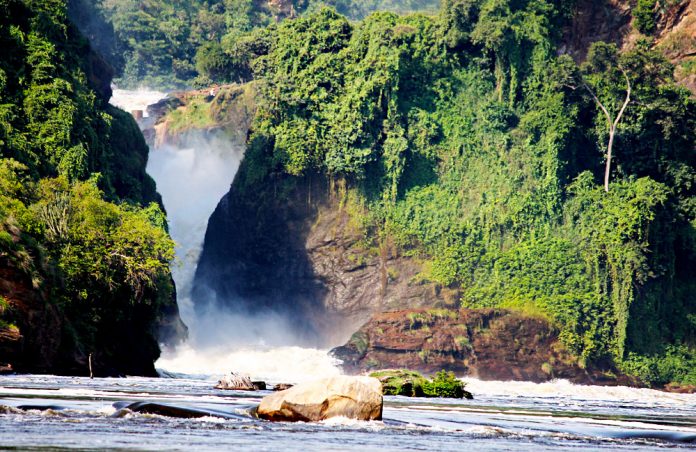
Bunyoro Kitara Kingdom has joined and groups within and outside Uganda to go against the planned construction of a hydro power dam at the spectacular Murchison Falls famous for tourist attraction.
Days ago state minister for tourism came out to say that government had approved a proposal for a feasibility study at the same site, which could pave way for the construction of the hydropower dam.
“Cabinet has now agreed to a feasibility study on the project and the study will give us a way forward,” he said.
“We need to conserve our natural environment but also we need electricity because if we don’t produce more power, people may end up cutting trees for fuel and destroy the environment.”
But Bunyoro Kitara Kingdom’s Prime Minister, Mr. Andrew Byakutaga, said the institution and its subjects strongly condemn the move, saying that the kingdom will not allow government to establish a power dam on Murchison Falls.
Byakutaga said Murchison Falls is a strong heritage and tourist attraction site for Bunyoro Kitara kingdom, further stating that any development aimed at its destruction will not be tolerated. “We have already written to the Electricity Regulation Authority (ERA) warning them not to make any attempts to establish a power dam on Murchison Falls,” he said.
Early this year, the Electricity Regulatory Authority (ERA) published a notice in the local media saying it had received an application from Bonang Power and Energy (Pty) Limited for the construction of a power dam in Murchison Falls that occur in Kiryandongo and Nwoya districts.
The notice drew uproar from the public with conservationists, saying the project would deal a devastating blow to tourism. Now, Bunyoro Kitara Kingdom has thrown its weight behind those opposed to the project.
Civil society organisations (CSOs), tour companies as well as prominent individuals in the country have vehemently rejected government’s proposal to have a dam built at the Falls.
Just last week, about 20 CSOs concerned with saving the environment, led by Africa Institute for Energy Governance (AFIEGO) wrote to President Yoweri Museveni to declare no dam will be built at the Falls.
In a recently published study led by Centre for Agriculture and Bioscience International (CABI), researchers assessed, under lab conditions, the effect of the endoparasitoid wasp, Coccygidium luteum on the leaf rate consumption of its host – fall armyworm larvae.
Published in Insects, the paper found that the leaf consumption rate of parasitized fall armyworm larvae gradually declined compared to unparasitized larvae with an overall consumption reduction of 89 percent.
luteum parasitizes different Lepidoptera species in Africa. A survey carried out in Ghana in 2018 identified C. luteum as one of the major natural enemies of fall armyworm and was then also identified in Kenya and Tanzania as a common parasitoid. The wasp is widely distributed in Africa, having been recorded in 20 countries across the continent. However, there is limited knowledge of the efficacy of native natural enemies of fall armyworm and their potential use in integrated pest management (IPM).
Biological control is one of the best options for the sustainable management of fall armyworm, which has devasted crops across Africa since its confirmed arrival in West Africa in 2016. The invasive caterpillar attacks more than 100 species of plant including rice, sorghum and sugarcane but favours maize. When the pest first hit farmers, governments provided emergency chemical control. This is, however, unsustainable and carries a risk of insecticide resistance and adverse effects on environment which could be reduced by adopting IPM strategies.
IPM in Africa should be based on the judicious use of pesticides and lower risk methods, such as biopesticides, biological control and agronomic practices. In terms of biological control, according to the paper, there are major constraints in Africa such as limited knowledge on natural enemies adapting to the pest as well as the capacity of exotic ones to adapt under climatic conditions in Africa.
That in mind, the study assessed, under laboratory conditions, the effect of C. luteum on the leaf consumption rate of its host. Fifty first instar fall armyworm larvae were exposed for C. luteum to lay its eggs, then the maize leaf consumption rate of parasitized larvae was compared to 50 unparasitized larvae from the same cohort.
The wasps completed a generation, from egg to adult emergence, in 16.7 days. During this time, the leaf consumption rate of parasitized fall armyworm larvae slowly declined (compared to unparasitized larvae) and the overall consumption reduction by parasitized fall armyworm larvae was 89%.
“The results of this study show that this wasp, C. luteum, is able to reduce the leaf consumption rate of fall armyworm on maize,” said lead author on the study, Lakpo Koku Agboyi, CABI project scientist.
“Given that it is present in Western, Central, Eastern and Southern subregions of Africa, it could be considered as a potential parasitoid candidate for augmentative and conservation biocontrol strategies against fall armyworm,” he added.
Fall Armyworm
The next steps are to assess whether an efficient and cost-effective rearing technique can be developed, and to carry out an assessment of environmental factors and cultural practices affecting field populations and the fitness of the parasitoid.
The findings show that C. luteum could reduce damage caused by fall armyworm to maize farms, but prior to its use in biological control programmes, further studies are needed to assess potential parasitism rates in the field and develop a cost-effective mass production system.
Executives and Board members of business oriented organizations must have read the conclusions of the Court of Appeal in David ChandI Jamwa Vs. DPP Criminal Appeal No. 77 of 2011, upholding the decision of the High Court, with much perturbation. In convicting Jamwa of causing financial loss, court held that;
“we are in total agreement with the learned trial Judge that the sale of the said bonds before their maturity date occasioned financial loss to NSSF. “Even if there was justification for the sale and we have found none, the sale of bonds before maturity would still have constituted a loss to the shareholder.
Circumstances may require that a bond holder sells before maturity. That in itself does not take away his/her loss. Such may be justifiable or may make business sense depending on the circumstances of each case. Nonetheless it remains a loss
From this conclusion, it appears that the court is simply inserting itself into the role of the board of directors in all respects with regard to the way corporations should conduct business. I believe, courts should not be disposed to substitute their business judgment for that of the board of directors. Because to do that is to view business decisions with legal eyes, which in my view misses the point.
To state that even if there is justification to make a business decision in itself can constitute a crime, is wrong in law, because businesses, including NSSF which under S. 30 of the NSSF act is required to invest the money not presently required, exist for that, to make investments, turn from one opportunity to another. Otherwise, soldiers at war fronts will be charged of murder for shooting and killing the enemy on the battle field.
It is apparent that the conclusion treats as one and marksdown the distinction between an “investment decision” and an “administrative decision”. The two may intersect and indeed they do all the time, but embedded within investment decisions is the burden of “risk” and “opportunity Cost” . Business decisions are made consciously knowing that there is always going to be a possibility of loss, however carefully made…and sometimes at the time they are made, the maker knows that a loss is being incurred in the immediate future but will pay off along the way, either within the organization itself, or within the industry. Yet as well, the making of one choice means that an alternative is forgone. But the court decision manacles investors from taking risk, yet every decision they make is risky business.
Which begs the question, “does selling bonds, before their maturity date, as court observed, per se, even when they are sold at a price below that at their maturity date, amount to causing financial loss? In my view, that depends on the angle in which it is viewed. If construed as an “administrative decision” certainly it can be seen as a crime, to the extent that the money expected to be earned was not earned, (if taken on the face of it, without applying other factors). Yet the same if construed as a “business decision”, cannot be seen as a crime, because embedded in any business decision are two things, “Opportunity Cost/risk” and “Benefit/profit”
Consideration here being, if the sale is to channel the proceeds into another project, then the money foregone by reason of the sale, in this case the 2.7 Bn, become one of the opportunity costs for the project now invested in. Even where the project invested in with the proceeds of the sale, is lost by reason of failure of that project, still it would be wrong to charge Directors with causing financial loss, because, in any business venture, there is always the threat of “risk”.
Business decisions can be quite intriguing, especially when contemplated with the benefit of hindsight, they don’t make sense. When they are made, to the person involved in the decision making process, they might actually make serious business sense, as they are arrived at after consideration of various scientific investment evaluation tools and factors. Some times, even gut feelings.
When they work out, certainly the decision maker is considered a genius risk taker. When they fail, then their makers are considered reckless. Only problem is that evaluation of the decision only comes after the result of the decision made and anyone reviewing it does so, with the the benefit of hindsight as already observed. With hindsight, questions are asked, should it not have been done differently? But it should be noted, if reviewed in the short run, business decisions will most likely not make sense. Only time might actually vindicate the maker.
Take the example of Yahoo’s well known story. In 1998, yahoo refused to buy Google for United States Dollars one million. Realizing its mistake, in 2002, Yahoo tried to buy Google for US dollars three billion but Google held out for US Dollars five billion, which Yahoo refused. In 2008 Microsoft refused to be bought for US dollars forty billion. In 2016, Yahoo was bought for 4.6 by Verizon. Google meanwhile as at the time of
When you look back at Yahoo’s M&A opportunities above, the going price for Yahoo’s assets today could have been in the hundreds of billions of dollars. Yet the decision by yahoo cannot be said to have been knee jack reactions but arrived at after applying the tools necessary for investment decision making. It goes without saying, yahoo lost a lot of money.
Would it be right, then to charge the executives for causing financial loss? Financial loss under S.20 of the Anti-corruption Act Uganda and as defined in detail by Court includes “acts” or “omissions” implying that in failing to buy or sell, at those various times, then the Executives of Yahoo, had they been in Uganda, would be liable.
Court relied on the decision in the Ghanaian Case Republic Vs Abraham Ada and others, which in my view, beyond the definition of “Financial Loss” the same is distinguishable to charges arising out of investment decision making. That case related to proved embezzlement, abuse of office and neglect of duty. It did not relate to examining acts of business decisions.
Indeed this has been the basis of the business Judgment Rule, which is now accepted in various jurisprudence in various jurisdictions. Basically, the general idea of the business judgment rule is that when a board of directors has acted with reasonable care and in good faith, its decisions will be regarded as “business judgments,” and the directors will not be liable for damages even when a decision proves to be detrimental to the corporation
Indeed, the American Bar Association in its Corporate Director’s Guidebook, i.e. Committee on Corporate Laws, Section of Corporation, Banking and Business Law, American Bar Association, CorporateDirector’sGuidebook, 33 Bus. LAw. 1591, 1603-04 (1978), went at length to explain what the Business Judgment rule is, to wit;
Recognizing that, consistent with the business corporation’s profit orientation, business judgment inevitably involves risk evaluation and assumption, and recognizing that the office of corporate director, as such, does not require full-time commitment to the affairs of the enterprise, the corporate director frequently makes important decisions which may eventually prove to be erroneous. A director exercising his good faith judgment may be protected from liability to his corporation under the Business Judgment Rule. While not part of the statutory framework, this legal concept is well established in the case law of most jurisdictions. When viewing the decision of directors acting in the exercise of free and independent judgment, courts have been extremely reluctant to find that they acted negligently. Recognizing that business decisions may seem unrealistically simply [sic] when viewed with hindsight, and expressing reluctance to substitute their judgment for that of directors, courts have generally refrained from questioning the wisdom of board
decisions
It is for this reason that I feel, that except where there is proved fraud, an investment decision, whatever its results, whether money is lost or profits earned, there’s no crime. When an investment decision is made, there is the constant risk of loss and yet to buttress the taking of risk, is the age old adage, “the higher the risk, the higher the returns” Yet viewed as an administrative decision, any loss has legal ramifications under S. 20 of the Anti-Corruption Act…causing financial loss.
In the case of NSSF, one should consider, after the bonds were sold, what was earned as to what should have been earned if they had not been sold at the time they were sold? When the money was received where was it invested? In this case land was purchased. If we determine the net present value of the money that was forfeited at the time of sale vis-avis the current value of the land that was bought which is more? Without calculating the impact of all of these, you cannot with certainty say that selling the bonds as they were automatically caused financial loss.
David Chandi Jamwa.
Yet again in investment decision making, profit to be made on an investment may be after years of injection of resources, which is technically referred to as “pay back period”, the time it takes to recover or to earn a profit on the resources invested, meaning that it is inherently part of investment decision making to know that profit is not expected immediately.
The recent demand on government entities and bodies has been that they should perform their functions in a business like manner. This is more so for NSSF which must invest the savings to the benefit of savers. Given the instability of the economy one would ask how much risk, and all investments come with a risk, would they take when dealing with savers funds, after this decision?
“I feel strongly about that case because it was a genuine and legitimate transaction a manager is expected to make on quick notice,” Ms Ssali said.
She said managers in big organisations make financial decisions all the time and punishing Jamwa sends a wrong signal to them.
“As a Finance professional, I have never really understood his crime on this very transaction of liquidating a bond earlier than maturity. Bonds carry risks. This means they are also speculative in nature and also carry risk,” she said. “So, a manager can make a decision to exit early if they feel the opportunity cost on the remaining interest is not better than the next best alternative for that money.”
She said: “For example, if a one year lucrative fixed deposit opportunity is identified and is closing, I can choose to exit in anticipation for more income from a higher yielding fixed deposit. This is normally referred to as tactical trading. It’s therefore normal to make gains or losses in the course of trading.”
“This is the reason managers and officers liability insurance exists – to cover any losses incurred in the process of doing legitimate business as anticipated,” Ms Ssali said.
All factories in Uganda must allow the company hired by the Uganda Revenue Authority (URA) to install digital cameras/solution in the production lines so as to capture output units for proper revenue assessment.
President Yoweri Museveni on November 18, 2019 directed Finance Minister Matia Kasaija, ordering that all factories must allow access for SICPA, a company hired by URA to install the cameras without further delay.
Museveni in in the letter to Kasaija says the electronic method eliminates fraud and wonders why SOME factories are afraid of the digital system, which he says will eliminate fraud in compiling tax revenue.
Museveni also wants URA to discuss with SICPA to add new software to its system to monitor income tax, which is not covered by the current agreement, saying URA should waste money buying new equipment.
He also wants the Prime Minister and officials from ministries of Finance, Health, Agriculture, UNBS to discuss how SICPA can help them to digitally monitor quality, prices and the location of the respective items.
Uganda Manufacturers Association (UMA) in late October wrote to Museveni pleading with him to put on halt the installation of the digital tax stamp solution and allow them more time.
Barbara Mulwana, the Chairman of UMA stated then that while manufacturers were not opposed to the implementation of the Digital Tax Stamp Solution, its members would like an extension of the implementation date announced in a public notice issued by the Ministry of Finance and URA.
The Digital Tax Stamp Solution was announced to begin on November 1, 2019 and according to URA, it would increase the monitoring of tax compliance by players in the beverage, alcohol and cigarettes sectors. Manufacturers have a three-month transition period to invite URA to install equipment at their factories.
In their letter they wanted Museveni to announce publicly that the government would take care of all costs associated with the installation of digital stamps solution. Now that wish has been granted by Museveni as the taxpayer will meet that cost.
It is anticipated that implementation of the stamps on selected products will help eliminate substandard products in the local market, put in place traceability mechanism and enhance revenue collection.
URA has installed on the excisable goods, management systems in production lines at a number of factories that belong to members of UMA including Harris International, Mukwano and Coca-Cola to monitor usage of digital stamps.
The Digital stamp solution according to URA is the latest method to have a clear view of how much tax should be expected from what is being produced.
Uganda becomes the 4th country in the region to take on the solution after Rwanda, Kenya and Tanzania adopted digital tax stamps solution and reported success in increased tax collection and immense reduction of counterfeit goods on the market.
After a one-year-long work of platform construction and information upload, the new continental women’s platform was launched recently, during the Global Gender Summit in Kigali, Rwanda.
The platform is intended to connect 50 million African women in business across 38 African countries.
The portal (www.womenconnect.org) and mobile application (50MAWSP) come to solve the information issue that African women in business face when it comes to accessing available information on financial and non-financial services.
In a joint media address that followed the launch of the platform, the Tripartite EAC-COMESA-ECOWAS told journalists that sub-Saharan Africa hosts close to 13 million formal and informal, small and medium-sized enterprises with one or more women owners, but only 16-20 percent of the women entrepreneurs are able to access long-term financing from formal financial institutions to scale up their businesses.
The platform hosts information on where to access capital, how to run a business, access training resources, get mentorship, access markets and many more relevant categories of information.
“This information is expected to help women create business opportunities and thus empower them economically”, press conference panel said.
This initiative is funded by the African Development Bank (AfDB) and implemented by the Common Market for Eastern and Southern Africa (COMESA), the East African Community (EAC) and the Economic Community of West African States (ECOWAS).
The audience appreciated the initiative but expressed concerns about who was the target group of the platform since it is technology-based and when many women in Africa don’t have access to smartphones.
“I don’t think we need to have everything in place to dream big in Africa,” Vanessa Moungar, Director of Gender, Women and Civil Society Department in the African Development Bank said. I know many projects that are running well in Africa from which the World can learn from, she added.
Hon. Christophe Bazivamo, the EAC Deputy Secretary General in charge of the Productive and Social Sectors, disclosed that the implementing partners were executing many other projects in parallel.
“This platform is one project among many others. As we work towards women empowerment, we are also working in energy, infrastructure, industry, health, and many other sectors to ensure the effectiveness of our interventions,” said Hon. Bazivamo.
The 50 Million African Women Speak platform is now up and running; it initially uses English, French and Arabic languages.
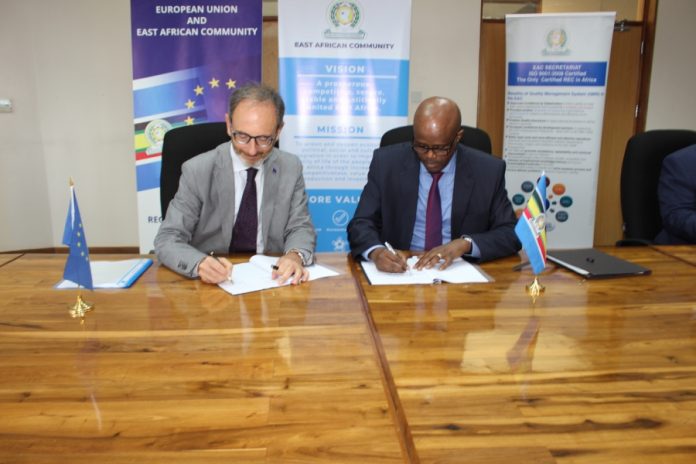
The EU Ambassador to Tanzania and the East African Community, Manfredo Fanti, and the EAC Secretary-General, Libérat Mfumukeko, have launched a new 10 million Euros joint programme to address regional and cross border security threats in the region.
The programme is a regional response to the various and growing security threats across the EAC region. It will work both on enhancing the technical capacities and building trust between the law enforcement agencies in the EAC Partner States. Without mutual trust, data and information will not be shared. The shared aim is to intercept those engaged in transnational organised crime.
This 45-month programme will be implemented by the EAC Secretariat and the International Criminal Police Organization (Interpol). It will complement several other initiatives to provide peace and security to the people of the EAC.
“Cooperation in this area can work only if there is mutual trust among law enforcement agencies and this is what the programme aims at,” said Fanti.
In his remarks, Mfumukeko hailed the long standing partnership between the EAC and the EU in the peace and security sector which he said was a key enabler to the integration process in East Africa.
“The current phase of the EDF11 has set aside 85 million Euros for a variety of interventions supportive to the various integration initiatives, among them peace and security. The EAC is also a beneficiary of the 528 million Euros through a regional enveloped that also covers IGAD, COMESA, IOC and SADC,” said Mfumukeko.
“Since 2007, the EU has extended support to the EAC through various initiatives including the APSA support project (about Euro 10 million cumulative to date) whose 4th phase is still under negotiation, the Conflict Prevention, Management and Resolution Project whose implementation ended in 2012 (4.8 million Euros) and the Eastern and Southern Africa-Indian Ocean (ESA-IO) Maritime Security Project whose implementation ended on 14th October, 2019 (11.6 million Euros),” said the Secretary General.
“The project being launched today will seek to reduce opportunities for transnational and cross border threats to the integration process through support to policy development and implementation, enhanced political accountability, structured and institutional information exchange mechanisms, consolidation and extension of ballistic examination capacity, and extension of I/24-7 connectivity to as many One Stop Border Posts as possible,” he said.
The Secretary General said the efficient implementation of the proposed interventions will enable the law enforcement agencies to, at a regional level, implement information sharing mechanisms that will facilitate rapid and timely response to threats and enhance security as greater gains are made in the implementation of the EAC Customs Unions and Common Market protocols.
This project will also assist the EAC in the implementation of the recently adopted Peace and Security Protocol and feed into the broader African commitment of “silencing the guns in Africa by 2020.”
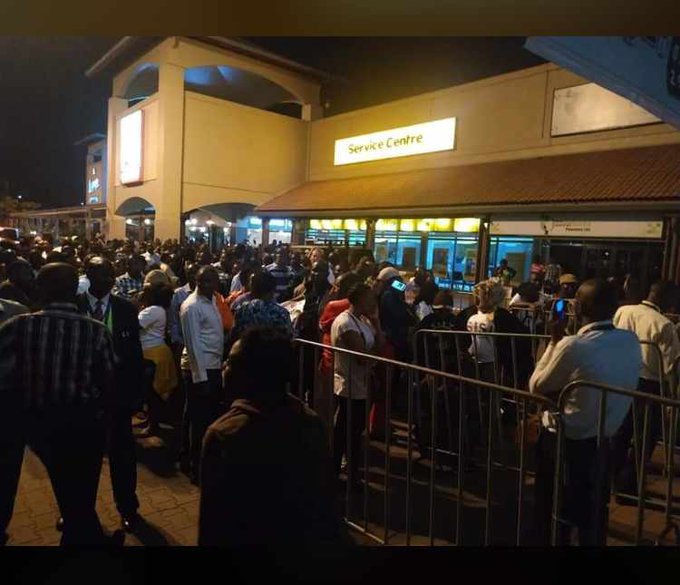
As the world marked Black Friday, a significant amount of shoppers thronged at various shopping points including in Kampala where hundreds of buyers started to assemble outside Shoprite and Game Lugogo and a few other related shopping outlets to buy items at 50 per cent discount.
The term Black Friday first began in the US, where it follows Thanksgiving Day celebrated on the last Thursday of November. The day after Thanksgiving has been regarded as the beginning of America’s Christmas shopping season since 1952, although the term ‘Black Friday’ did not become widely used until more recent decades.
There was misguidance that the day was chosen to remember slave traders would sell black slaves for a discount to assist plantation owners when they needed extra help to prepare for winter.
As early as 10 pm, hundreds of shoppers were patiently waiting outside Lugogo Mall, Nalya and Ben Kiwanuka for a chance to grab themselves products from Game and Shoprite at a discounted price as part of the highly anticipated worldwide campaign.
It has been difficult for someone to maneuver through after acquiring all the desired goods since the supermarket was overcrowded. There has been too much congestion and one could hardly get to the counter to be seen off to his or her home. Getting a Parking space has been a hustle during the past 10 hours at Shoprite and game store.
The shopping campaign has mostly been dominated by retailers who were seen during the early hours of shopping, parking merchandise on Lorries, and pickups as others filled car boots. According information obtained the shopping places. Traders hired people to help them get all required products for their customers.
Shoprite has operated in Uganda since 2000 when it launched its first store in Uganda, It started with a high-end store in downtown Kampala on Ben Kiwanuka Street, before opening two others in Lugogo and Naalya. Currently, it has five branches in the country employing over 300 employees.
For Jumia online shopping , products have been offered between one per cent to 60 per cent discounts depending of the product.
About twenty civil society organisations (CSOs) keen on environmental matters in Uganda have appealed to President Yoweri Museveni to declare that no dam will be built at Murchison Falls or any other place in Murchison Falls National Park which is a great tourist attraction.
“Your Excellency, you should address the country and commit that your government will never build a dam at Murchison Falls and or allow any other harmful activities in the Murchison Falls landscape,” they said in an open letter to the president, adding that only his word can be trusted by Ugandans.
This follows recent revelation that government okayed South African energy firm Bonang Power and Energy to carry out a feasibility study in the contested spot to see if a hydropower dam can be built there.
The CSOs in their letter want Museveni’s government to cancel the contract for a feasibility study as well, thus if it has been reached.
“In view of the fact that ERA had already invited the public to comment on Bonang’s application for a feasibility study for the proposed dam, we call on you and your government to cancel any undertakings with Bonang Power and Energy to avoid future legal liabilities that may be used as an excuse by government to change positions to allow a dam to be built at the Murchison Falls.”
The activists instead urge government to invest the resources that would have been spent on the dam into clean renewable energy “especially off grid solar that can meet the needs of poor and vulnerable groups such as women, youth, rural communities and others.”
In September 2019, the Minister for Tourism, Ephraim Kamuntu, indicated that cabinet had agreed to instruct the Electricity Regulatory Authority (ERA) to stop the feasibility processes by Bonang Power and Energy that preluded construction of a dam at Murchison Falls. This followed a call by ERA in June 2019 to interested stakeholders to submit comments on an application by Bonang Power and Energy to undertake feasibility studies for construction of a dam at Murchison Falls.
There was a huge public outcry against the planned feasibility studies. This prompted Kamuntu to make the aforementioned cabinet pronouncement. However, the minister did not provide information as to whether the instructions to ERA to stop the feasibility processes were a government commitment or a mere statement that can be changed any time. As a result, Ugandans and all those who love nature continue to live in fear of the plans to develop a dam at the Murchison and Uhuru Falls.
The economic value of Murchison Falls landscape is a God-given gift to Uganda and should be protected, they say.
The 2017 study conducted by NEMA with support from UNDP on the economic value of the Murchison Falls conservation area and Budongo forest clearly indicates that the economic value of the above ecosystems is over USD 60 (Shs114 billion).
The environmental activists say that the biodiversity values are benefits in perpetuity and are enjoyed by the majority equitably. This is unlike the benefits that will be enjoyed from the proposed dam and or oil developments.
“As you are well aware Your Excellency, todate, only over 20% of Ugandans have access to electricity despite huge investments being made in the sector. To make matters worse, over 90% of Ugandans still depend on biomass to meet their cooking energy needs because electricity is unaffordable.”
The Murchison Falls remain one of the most iconic tourist attractions and it is the reason why the Murchison Falls landscape has been attracting some of the highest numbers of tourists in the country. This means that the falls contributed to the above tourism earnings. No serious country committed to equitable development would destroy such a vital tourism asset in exchange for electricity, they say.
Some of the CSOs that have petitioned Museveni are; Oil Refinery Residents Association (ORRA),
Citizens Concern Africa (CICOA), Action Coalition on Climate Change (ACCC), Africa Institute for Energy Governance (AFIEGO, South Western Institute for Policy and Advocacy (SOWIPA) and Action Coalition on Climate Change (ACCC).