Stanbic Bank
Stanbic Bank
25.9 C
Kampala
Stanbic Bank
Stanbic Bank
Home Blog Page 1138

Iron bar hit men kill another Kira Municipality resident

Steven Ssemugonde


Just hours after President Yoweri Museveni informed the nation that he had instructed the Deputy Inspector General of Police, Maj.Gen. Sabiiti Muzeeyi to come up with a comprehensive plan on how to curb the increasing city gangs that have terrorized Kampala, Wakiso and Mukono, another young man was killed last night in Bulindo in Kira Municipality.

Steven Ssemugonde estimated to be aged 27 years an instructor with one of the driving schools founded by his father was hit by iron bar hit men at his gate in a place called Kapeera in Bulindo.

Kira, Kasangati, Najjera, Kyanja, Kungu, Nansana are among the areas thugs have invaded and giving residents sleepless nights.

“I have given two days to Commander Sabiiti of the Police to come out with a plan to combat these gangs. The IGP is away in Peru for a meeting. I will look at that plan, comment on it and it will, then, be communicated to all of you,” he says in his brief message posted on social media

“It is easy to defeat these gangs. Their crimes will only add to the credit of the NRM because we are going to defeat them. Yet, the People have already seen the bankruptcy and the criminality of these groups and those who back them,” The president said.

Contrary to his orders there is no sign on ground to assure the public that the situation will change soon for the better. Bulindo isn’t far from the home of Assistant Inspector of Police (AIGP) Grace Akullo who also heads Criminal Investigations Directorate (CID).


Stories Continues after ad

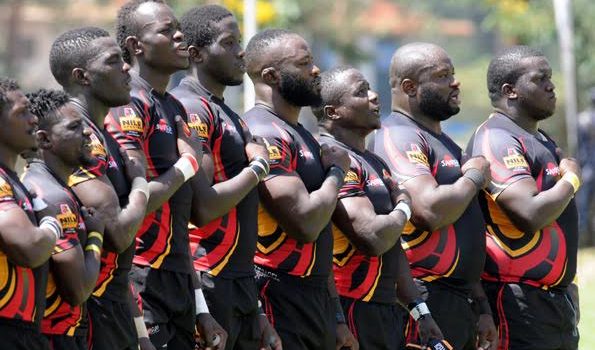
Uganda drawn in pool A for 2019 safari 7s

Rugby Cranes

Uganda have been drawn in Pool A of the 2019 Safari sevens tournament
alongside HSBC core side South Africa, Kenya Morans and Burundi.

The defending champions Samurai have been drawn in Pool B alongside
South Africa’s Western Province, Russian Narvskaya Zastava and
invitational side Red Wailers.

Pool C has Shujaa, South Africa’s Blue Bulls, Russia academy and Zambia.

Kenya Cup champions KCB RFC are in Pool D, and they will face off with
HSBC core side Spain, Zimbabwe and Seventise RFC.

The competition begins on Friday with Uganda taking on Morans, and
ends on Sunday. It is expected to be fierce with teams bidding to
snatch the crown from Samurai.

The Safari Sevens is an annual rugby sevens tournament held in
Nairobi, Kenya. The competition is open to international
representative sides, professional and amateur clubs, invitational
teams, universities and school teams.

The 22nd Edition of the annual tournament will take place from October
18-20 at the RFUEA Grounds.

The Safari Sevens will be used as preparations for the Africa Sevens
which will act as the 2020 Olympic Qualifiers and will be played in
November in South Africa.

Pools

Pool A: Uganda, Burundi, Kenya Morans, South Africa

Pool B: Samurai, Red Wailers, Narvskaya Zastava, Western Province

Pool C: Russia Academy, Zambia, Blue Bulls, Shujaa

Pool D: KCB, Spain, Zimbabwe, Seventise

Stories Continues after ad

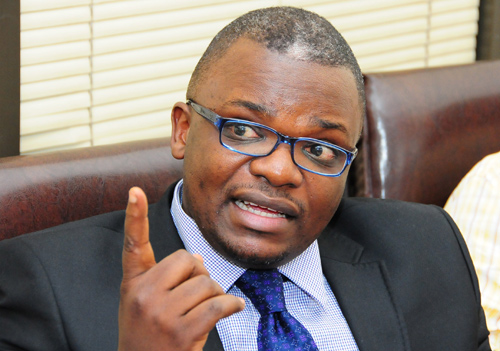
Magogo plea bargain with FIFA is invalid

Counsel Fred Muwema


It is coming to five years since I took leave from football matters except for the occasional relapses brought back by the Uganda Cranes exploits on the continent.

Recently however, my indifference was rudely awakened by the FIFA announcement that it had suspended Moses Magogo, the FUFA President, from all football activities for two months and that he was also fined 10,000 Swiss Francs. Magogo’s crime according to FIFA which happens to be the Investigator, Potential witness, Prosecutor and Judge in this case, is that he illegally sold World Cup tickets meant for Ugandans during the 2014 edition of the football spectacle which was held in Brazil.

I wonder why FIFA did not notify Ugandans about the ticket allocation before the World Cup event. Maybe, just maybe, the prodding eyes of the Ugandan beneficiaries would have ensured that these tickets or most of them were put to proper use.

I have been driven to comment on Magogo’s suspension by FIFA because of the urge to share what I have come to know about the laws governing football over the last 18 years. This urge far outweighed my need to remain silent. I will therefore, proceed to weigh in, by interrogating the propriety of Magogo’s suspension, firstly in the context of the FIFA statutes or laws which were applied to the facts of the case and secondly but to a small extent, in the context of the Sovereign laws of Uganda, to which Magogo is subject as a citizen.

I take issue with the Adjudicatory chamber of the Independent Ethics Committee of FIFA which entered a plea bargain by mutual consent and handed Magogo a paltry fine of 10,000 Swiss Francs and a two-month suspension. This sanction, for the kind of offence Magogo confessed to have committed, is not supported by the FIFA Code of Ethics (2019 Edition). I must hasten to add that the chambers mandate to act in this case was governed by this code in the main. The FIFA Disciplinary Code does not appear to come into specific play as it relates to infringements and sanctions on or around the field of play.

Whereas Article 67(1) of the FIFA Code of Ethics (supra) allows the Adjudicatory chamber to entertain and accept plea bargains from accused persons, Article 67(6) of the same code doesn’t permit the said chamber to enter into a plea agreement with Accused persons for sanctions related to bribery and corruption. The said Article 67(6) states that;
“No plea agreement shall be allowed concerning sanctions related to infringements of bribery and corruption, misappropriation and misuse of funds and manipulation of football matches or competitions” (emphasis supplied).

Article 27(1) of the FIFA Code of Ethics (supra) defines corruption to include among others, the offering, receiving, requesting or soliciting of any personal or undue pecuniary (financial) advantage or any other improper advantage to or from anyone within or outside FIFA.

By its own account of the facts, FIFA acknowledges that Magogo engaged in a corrupt act of the type defined by Article 27(1) when he diverted and illegally sold the tickets meant for Ugandans. It is clear on the face of it that he unlawfully gained a financial or improper advantage in perpetuating a transnational crime which is expressly forbidden and punished by the FIFA code and national laws world over. It was therefore irregular and fundamentally wrong for the Adjudication chamber to entertain a plea bargain from a person who was not eligible to enter it. In fact such a plea bargain and the underlying fine and suspension are not only null and void and liable to be revoked but they also put the bonafides and competence of the chamber in question. Moreover, this surreptitious decision by the chamber tends to take FIFA far away from its much-promised and publicized fight against corruption in football.

The Honorable thing for FIFA to do is to reopen the case and proceed with it to full trial with a public hearing of the complainants. It is against the established principles of a fair hearing for FIFA to conduct proceeding in secrecy and even hide the charges like it has done with Magogo. Under Article 42(2) FIFA Code of Ethics the Ethics Committee can rectify any obvious errors in its decision at any time. This means that the Adjudicatory chamber should not find any difficulty in revisiting its decision.

If the case is re-opened Magogo, should additionally be charged under Article 25 of the FIFA Code of Ethics for abuse of his position as President of FUFA in the sale of the tickets in issue. On conviction, this charge would carry a minimum fine of 10,000 Swiss Francs and a stiffer ban of at least 2 years from all local and international football activities. This, in my view, is a punishment which would be deterrent enough to punish the vice and dissuade the reoccurrence of such misconduct by present or future officials of FUFA.

However, if FIFA chooses to connive in breaching its own laws, then it will be open for Magogo to be charged with corruption, illicit enrichment and embezzlement under the Anti-Corruption Act 2009 of Uganda. FIFA officials should know that they can also be charged for conspiracy if it is shown that they actively aided and abetted the commission of the crime. Under S. 5 Penal Code Act Cap 120, Ugandan courts have jurisdiction to try offences committed partly within and outside Uganda by a Ugandan or non-Ugandan. In the recent past, the Swiss, French and American Courts have swung into action to apprehend and prosecute FIFA officials who have engaged in acts of corruption and financial impropriety.

I need to stop here and resume my leave from football matters in Uganda. But I counsel that FIFA cannot run away from its own shadow, it must, therefore, act in true and faithful alignment with itself. FIFA must lead the fight against corruption in football from the front, it has no place in the back seat.

By Fred Muwema
Managing Partner
M/s Muwema & Co. Advocates
15th October 2019

Stories Continues after ad

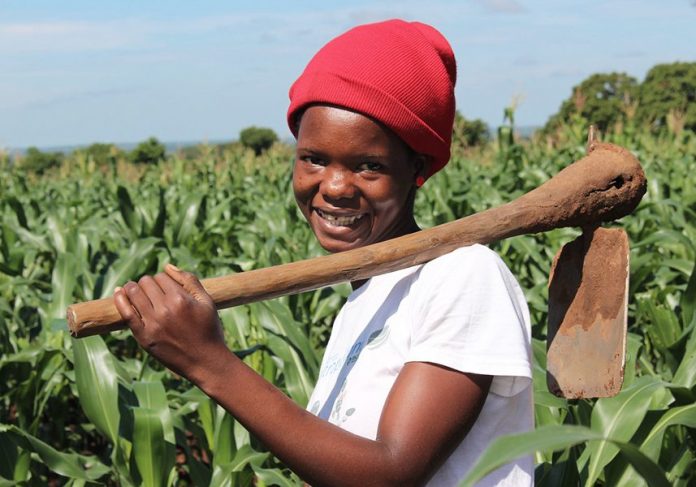
The Economic Cost of Devaluing “Women’s Work”

Woman on farm

By Kristalina GeorgievaCristian AlonsoEra Dabla, and Kalpana Kochhar


As much as half of the world’s work is unpaid.  And most of it is done by women.

This imbalance not only robs women of economic opportunities. It is also costly to society in the form of lower productivity and forgone economic growth. It follows that a fairer allocation of unpaid work would not only benefit women, but would also lead to more efficient work forces and stronger economies.

For these reasons, reducing gender imbalances in unpaid work is part of the United Nations Sustainable Development Goals.

Examples of unpaid work include cooking, cleaning, fetching food or water, and caring for children and the elderly.  These tasks are not counted as part of economic activity because they are difficult to measure based on values in the marketplace. Yet their economic value is substantial, with estimates ranging from 10 to 60 percent of GDP.

In our new study, we find that unpaid work declines as economic development increases particularly because there is less time spent on domestic chores. Social institutions and values can constrain the redistribution of unpaid work by preventing men from sharing the burden at home.

Unpaid work declines as economic development increases.

Overworked and underpaid

It’s no secret that women disproportionately shoulder the burden of unpaid work. Less well understood is just how many more unpaid hours women put in than men on a given day. Women do 4.4 hours of unpaid work on average around the world and men only 1.7 hours.

There are large differences across countries.

In Norway, the gap is small, with women doing 3.7 hours of unpaid work, while men contribute 3. On the other extreme, in Egypt, women do 5.4 hours per day of unpaid work and men only 35 minutes. In the US, women do 3.8 hours of unpaid work and men do 2.4 hours.

By not fully engaging women, the economy is misallocating resources, having women do low-productivity tasks at home instead of taking advantage of their full potential in the marketplace. It also misses exploiting the complementarity between women and men in the workplace. The result is lower productivity and economic growth. This gender gap in unpaid work is not just unfair. It is clearly inefficient.

Certainly, some unpaid work is done entirely by choice and the value to society of raising children for societies cannot be disputed. But more than 80 percent of unpaid work hours are devoted to domestic chores aside from child and elder care.

Too often women end up shouldering those domestic chores because of constraints imposed by cultural norms, lack of public services and infrastructure, or absence of family-friendly policies.

Women may also choose to stay at home or work only part-time if the wage in the market is too low and does not represent equal pay for equal work.

Engines of liberation

Policies can help reduce and redistribute unpaid work.  In developing economies, measures to improve water supply, sanitation, electricity, and transportation are critical to free women from low-productivity tasks.

UNICEF estimates that women spend 200 million hours per day worldwide simply fetching water. In India, women spend more than an hour every day collecting firewood. Better access to electricity and water and less expensive appliances helped boost female labor force participation in Mexico and Brazil. Expanding internet access to the entire population can help women take advantage of the gig economy and flexible work arrangements.

Governments need to ensure access to education and health care for women. Without proper human capital, women’s possibilities in the labor market are very limited. According to UNESCO, 130 million school-age girls are not in school. It is not only a matter of providing the services, but also guaranteeing their use.

Many families in Pakistan choose not to send girls to school because of security concerns. Enshrining women’s rights in law could help to reshape social institutions and values that prevent access to education and healthcare.

Efficient and flexible labor markets help redistribute unpaid work. Active labor market policies, like those in Switzerland, can facilitate job matching. We find that flexible work arrangements are associated with less female unpaid work and make for a better work-life balance.

All in the family

Family-friendly policies also help. Many Nordic countries invest heavily in early childhood education and care, which allows for high enrollment and fosters women’s ability to return to work after giving birth.

Greater parity in maternal and parental leave policies can raise female labor force participation by smoothing women’s return to work and engaging fathers in care activities early on. Iceland’s parental leave policy is a good example: it sets the length of leave at nine months and earmarks three for each parent.

Reducing and redistributing unpaid work is an economic imperative. Governments must take decisive actions, and the private sector must join in to seize on the large potential gains.

Stories Continues after ad

Google launches Pixel 4 smartphones with motion sensor gesture controls

Smart phones


Google has unveiled its new Pixel 4 smartphone, offering an improved Google Assistant, the new Motion Sense system for gesture control, an upgraded camera and a new Recorder app that also transcribes speech. The Pixel 4 will ship globally from 24 October.

The standard 5.7-inch Pixel 4 is priced from USD 799, and the larger Pixel 4 XL with 6.3-inch display costs from USD 899. Google said it will offer increased distribution, with the Pixel phones available with all US operators and major MVNOs.

One of the main innovations of the Pixel 4 is the Motion Sense feature. This uses the company’s Soli sensor, based on radar technology, to detect motions around the phone and enable gesture controls. For example, when the sensors detects the user reaching for the phone, the face unlock is launched. The screen is then locked when the user is no longer nearby. ‘Quick Gestures’ available using the sensor include skip songs, snooze alarms, dismiss times or silence the phone ringer with a wave of the hand.

Recorder app with text transcription

Also new is the Recorder app, to record meetings, lectures or music to listen to later. The app builds on Google’s expansion in speech recognition with the ability to create live subtitles from the recorded speech and search for words or sounds in the recording. The transcription is available initially only with English.

As with all Pixel phones, the new devices are designed to integrate closely with Google services, and especially the Google Assistant. The Pixel 4 is “here to help”, according to Google, with an even faster Assistant thanks to improvements in speech processing. It also processes more requests on-device, rather than sending data to the cloud. In addition, the redesign makes the Assistant smaller on the home screen, to help with multi-tasking in other apps.

For US users, Google added the Personal Safety app. Similar to the EU’s eCall system in cars, the app can automatically call 911 if it detects the user was in a car accident.

The Pixel phones run Android 10, the Qualcomm Snapdragon 855 processor and Google’s own Pixel Neural Core and Titan M security module for increased on-device data processing and privacy. The 90Hz Oled display offers FHD+ resolution on the basic Pixel and QHD+ on the Pixel XL.

New telephoto lens, live HDR

The upgraded camera comes with a new second telephoto lens, in addition to the main camera. Google said new camera features include the improved Night Sight mode for taking pictures of the sky at night, which will also come to older Pixel phones, greater brightness controls to fine-time shadows and Live HDR+ in the viewfinder, to get an idea of what pictures will look like after HDR processing.

The phones come with 6 GB RAM and a choice of 64 or 128 GB storage, wireless and 18W fast charging, and batteries of 2,800 and 3,700 mAh respectively. Three colours are available: white, black and a limited edition orange.

Pixel Buds next year

In addition to the new phones, Google updated the Pixel Buds wireless headphones. Designed to block out background noise and adjust to the surrounding sound level, the Bluetooth buds have a low profile, button appearance in the ear. Google said they offer up to five hours listening on a single charge and up to 24 hours with the updated wireless charging case. The new Pixel Buds are priced at USD 179, but will not be available until next year, starting first in the US.

Affordable Pixelbook Go

While Google has dropped out of the tablet market, it continues to make computers and introduced a more affordable version of its Pixelbook laptop, running the Chrome OS. The 13.3-inch Pixelbook Go is priced from USD 649 and brings the power of the original Pixelbook in a lighter, slimmer profile. Designed for mobility and powered by an Intel chip, the device weighs less than 2 pounds and promises up up to 12 hours battery life.

The Pixelbook Go is available to pre-order in the US and Canada, and orders will start in the UK in January.


Stories Continues after ad
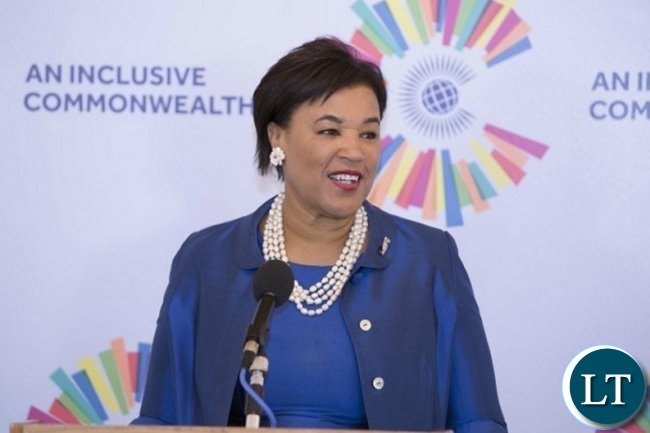
The world mustn’t sleep-walk into another debt crisis

Patricia Scotland


By Patricia Scotland


Trade wars, protectionism, and nationalist rhetoric are combining to create the possibility of a nightmare debt crisis that could be worse than any previously experienced. Global borrowing is now at the highest levels since the 1950s – and history suggests we should take this as a warning that a debt crisis could be looming. Were one to materialise, it could inflict greater dislocation on international financial systems and national economic stability than ever previously witnessed.

This would be particularly tragic in view of the extraordinary global commitment to delivering the Sustainable Development Goals, and as so many nations seem finally to be in earnest about tackling the causes and impact of the climate crisis. The impact of a parallel crisis in global debt would derail this effort, and could make much-needed international cooperation on poverty and progress impossible. Governments would be consumed by the need to stabilise local economies devastated by unmanageable debt. Yet such a scenario can be averted.

Haunting memories of the economic chaos, poverty and suffering caused by previous debt crises are the reason that the finance ministers of Commonwealth are working together to prevent the needless recurrence of an avoidable crisis. The breadth and inclusiveness of the Commonwealth means that when our member countries meet, many perspectives are brought to the table. These viewpoints can be shared to decisive effect when Commonwealth countries work together to ensure the voices and views of all are taken into account at forums such as the G20 and other international and regional gatherings.

It is no longer feasible for policies on debt, trade and other economic matters to be considered in isolation from the increasingly extensive impacts of climate change, which are becoming more frequent and more stark. Small island states tend to be the most vulnerable to extreme weather and natural disasters, and also to have the least resilience or resources with which to recover from the damage to their infrastructures and economies.

With interest rates at historically low levels, borrowing becomes an attractive proposition yet heightens the concomitant risk of debt ballooning to levels which are unsustainable over the longer term. This situation raises the possibility that countries which have ‘borrowed their way out of trouble’ following a setback will eventually face very severe debt distress. Preventing such eventualities is a global challenge which requires collective and coordinated responses.

The Commonwealth is particularly and perhaps uniquely well-placed to ensure that perspectives and needs of developing nations are fully considered in multilateral discussions on policy for tackling future debt crises. This is the purpose of our Commonwealth Finance Ministers Meeting which is taking place in Washington DC alongside the annual meetings of the World Bank and International Monetary Fund.

The ministers of our 53 diverse and widely distributed yet closely connected nations will this year examine proposals designed to improve debt transparency. They will consider ways in which debt contracts can be specially amended to provide relief during disasters. Such initiatives will be supported by collating the perspectives of ministers from developing countries so that their Commonwealth counterparts from countries with advanced economies can carry them forward for the attention of the G20.

The way to a stable and sustainable economic future is for developing and developed countries to work together inclusively on shaping the global debt rules which affect them all. Our Commonwealth approach is to focus on the roles of creditor and indebted countries.

In a country where fiscal regulation is weak, debt may be accumulated in ways that are not transparent, and very seriously to the detriment of its citizens. Those who provide credit in such circumstances are also culpable, and they too must be scrutinised and made to bear responsibility – particularly as those who suffer the most from unsustainable debt and carry the greatest burden at times of crisis tend to be the poor and marginalised – those least able to cope.

Among topics and actions being considered at our 2019 Commonwealth Finance Ministers meeting are:

  • Debt Relief – with agreement to be sought for debt contracts with vulnerable countries to include provision for relief if severe natural disaster strikes.
  • Transparency in debt through innovation – encouragement to use the Commonwealth Meridian debt management system which helps to improve the accuracy with which government debt is recorded.
  • Dialogue on debt – relaunch of the Commonwealth debt management forum to encourage international dialogue on the consequences of over-indebtedness so that sounder debt policies are adopted in order to prevent crises.
  • Easier access to financing to reduce debt burdens – through mechanisms and facilities such as the Commonwealth Climate Finance Access Hub and Commonwealth Disaster Finance Portal which offer added capacity for developing countries to access to affordable debt financing.

By working together in such practical ways, and on programmes that draw together a broad and inclusive array of nations, crisis can be averted. It is essential for there to be honest and open collaboration between creditors and debtors in a spirit of trust and goodwill. This the Commonwealth can offer, building on the depth of our connection and the basis of equality on which our family of nations comes together.

Rather than sleep-walking towards yet another debt crisis, and the misery such nightmare reality would bring, the Commonwealth can open up pathways toward horizons of hope, with rich and poor walking in harmony towards a fairer, more secure, more sustainable and more prosperous future in which all can share.

The Writer is the Commonwealth Secretary-General


Stories Continues after ad
Over 18 million children to be immunized against measles-rubella and polio in Uganda in a mass immunization campaign

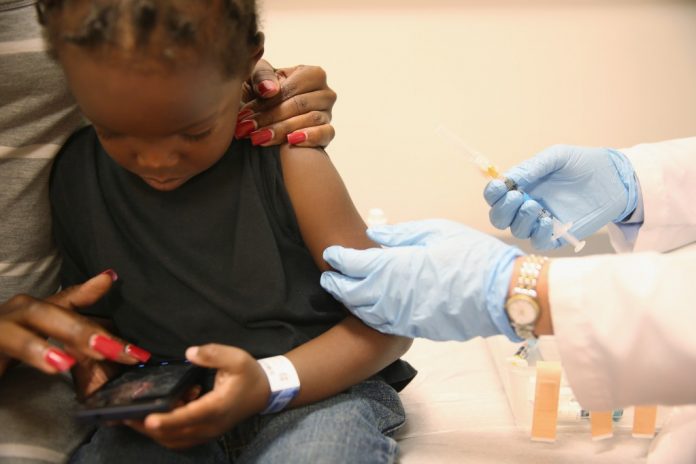
A child being immunized


Uganda is set to immunize over 18 million children against Measles and Rubella which is 43 per cent of the entire country’s population. Included in these are 8.2 million children aged below nine months, that is, 20.5 per cent of the population that will receive the Oral Polio Vaccine.

In the recent past, the country has experienced Measles and Rubella outbreaks in over 60 districts. At the same time, Polio remains a big threat given evidence of wild and vaccine-derived strains circulating in neighboring Democratic Republic of Congo and South Sudan.

Therefore, the 18 million dollar immunization campaign funded by the Government of Uganda, Global Alliance for Vaccines (GAVI), World Health Organization (WHO) and United Nations Children’s Fund (UNICEF) is intended to tackle such public health challenges.

The campaign will take place from Wednesday 16th October to Sunday 20th October, 2019. This immunization exercise that will be conducted in schools for the first three days and in the communities for the last two targets all children under 15 years of age whether previously immunized or not in order to interrupt circulation of these diseases. At the same time, the campaign will be the launching pad to introduce the Measles-Rubella vaccines into the routine immunization schedule of the country.

This campaign also provides an opportunity to intensify sensitization of communities on Measles, Rubella and Polio, surveillance as well as identify and investigate any unreported suspected cases of these diseases.

“This campaign does NOT replace the routine immunization schedule. Parents, caretakers and all concerned must ensure that all children receive and complete all the vaccines specified in our immunization schedule after the campaign,” said Dr Jane Ruth Aceng, the Minister of Health.

The Government of Uganda acknowledges the importance of immunization against various diseases in efforts to attain Sustainable Development Goal three, (SDG3) which underlines the need for good health and well-being. Good coverage has been noted on DPT3 which is an excellent indicator of performance increasing from 52 per cent in 2012 to 97 per cent in 2018.

“We appeal to all parents, caretakers and guardians, to take ALL your children below 15 years of age for immunization against Measles, Rubella and Polio during this mass immunization exercise. WHO approved the vaccines to be used and they are safe, free and effective,” said Dr YonasTegegn Woldermariam the WHO country representative.

During this campaign teams of health workers will move out in all villages and communities in the country with the objective of attaining more than 95 per cent immunization coverage that is needed to interrupt transmission of measles-rubella and polio in Uganda.


Stories Continues after ad

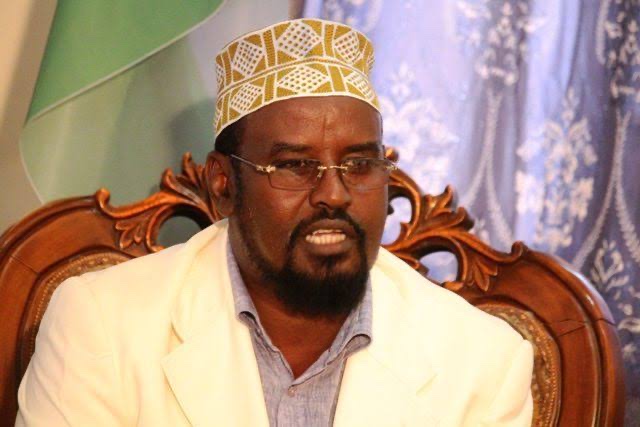
Why The 2019 Inauguration of Madobe as The President of Jubbaland Is A Watershed Moment For Somalia Politics

On February 08, 2017, Somalia delegates elected a Somali American to become the nation’s ninth president pre and post-war. The hope that came with the event was so potent that his inauguration on February 22 the same year was attended by over 1,200 delegates and presidents of two neighbouring countries who had hoped this was the moment the sleeping giant was waiting for. Just like every horror movie, the tell-tale signs of his short stint as prime-minister in 2010 did not tell the story that was a somali educated American dual citizen with less than desirable moral character to lead the nation from war.

The president, upon election and inauguration started to show his true colours, amassing power and auctioning Somali resources to the highest bidder regardless of the benefit to the community given our countries less than ideal negotiating power given the security instability challenges. The desire of the 195 delegates of the 330 that endorsed him and the people they represented, save a few that knew his true mission, was to defeat Al-shabaab and stabilize the country in order to leverage the stability for development. In my mind, and I hope for the one that represented me in voting for him, these tasks were to be undertaken in the specific and logical sequence; security, stability and then development.

Needless to say, the honourable president saw things differently. He had his personal objectives. In his way, stood regional leaders who had sacrificed all to fight alshabaab but the president wanted to consolidate power to Villa Somalia. Talk of absolute power corrupting absolutely. The president begun fighting leaders of semiautonomous regions of the country in view of spreading of his incompetence tentacles. While this happened, our people were bombed out of existence day in day out while the security forces were busy trying to subvert semiautonomous regions instead of protecting women and children going on with their daily lives from the egregious Al-shabaab.

Ahmed Mohamed Islam aka Madobe and the president of Juba used his clout in the region to overcome all these misguided nefarious overtures. The Somalia resources were almost entirely channelled into defeating Madobe, the little that wasn’t pocketed by the president and his cronies anyway. The 2019 Jubbaland elections was the culmination, the climax so to say of the battle between the people of Jubbaland protecting their semi-autonomy and livelihood and the Villa Somalia hegemony.

Villa Somalia poured its’ all to ensure that the Jubbaland elections were too chaotic for an acceptable outcome. Things happened; Bombs, splinter groups and contested nominations but the people of Jubba Kind of knew what was good for them at least in their own eyes. Madobe was elected president for another term. This was more a scathing indictment of Villa Somalia’s ability to influence anything outside of Mogadishu, a place they can’t keep secure for a week.

After the elections were over, the only weapon left in the hands of Farmaajo was to ensure the election of Ahmed Mohammed Islam was not legitimized by a successful inauguration studded with opinion leaders and leadership from the region and beyond. Villa Somalia issued a NOTAM; all flights headed to Kismayu to pass through Mogadishu so that they could limit the number of attendees to the inauguration. To make the point even clearer, they started arresting Jubbaland government officials and jailing them. The idea was no star-studded inauguration for the Jubbaland leader at any cost. Villa Somalia on 23 September banned former President Sheikh Sharif Sheikh Ahmed from travelling to Kismayo to attend Madobe’s inauguration.

The former president of Somalia Sheikh Sharif Sheikh Ahmed, Puntland president Said Abdullahi Deni, current and former leaders of Galmudug and South-West states, members of federal parliament, senators and other influential political leaders in the country and beyond attended president Madobe’s inauguration for a second four year term.

Is the attendance of the inauguration a sign of the growing acceptance and appreciation of the autonomous leadership of Jubbaland in Somalia and the region at large? Is the unequivocal endorsement of Madobe election by current and former leadership of other autonomous regions as well as the peoples’ representatives in the federal government a statement against Farmaajo’s tentacles of unabated corruption? Is Villa Somalia’s inability to dumpen the election and inauguration of the Jubbaland people a sign of Somali people’s power triumph over the evil dominion of a corrupt and self-serving federal government?

Mohammed Ise Khayre

The writer is a Somali national and an anticorruption activist

Find him on twitter @Ise_Khayre

Stories Continues after ad

Angry Museveni pledges to crush notorious city gangs, likens them to pigs

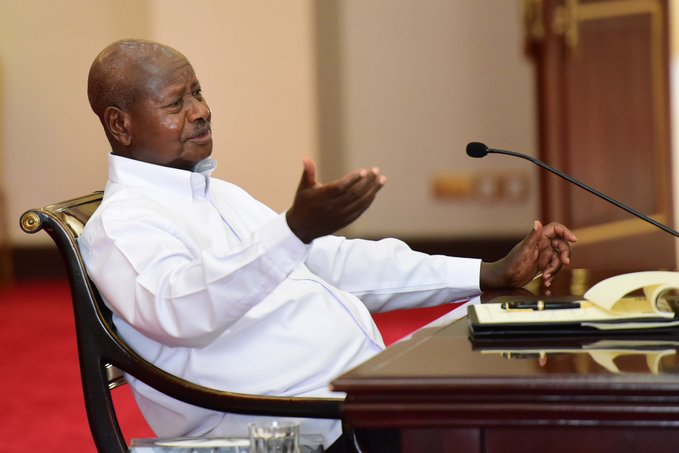
President Museveni


President Yoweri Museveni has in a short message pledged to wipe out gangs who have terrorised residents in and around Kampala, as they rob properties such as cars and money.

Museveni said Tuesday his government would easily defeat the gangsters who are believed to be using machetes, guns and other tools as they invade people’s homes in the night.

“These are gangs we shall easily defeat. That is what we did with the Kiddawalime gang in Masaka, the gang of Bukomero, the gang of Entebbe etc.,” he says as he likens the gangs to pigs.

The president says he has given Deputy IGP Muzeeyi Sabiiti to come up with a plan of combating the gangs who seem to be on rampage even as government has installed CCTV cameras at key spots in the city and surrounding suburbs.

“I have given two days to Commander Sabiiti of the Police to come out with a plan to combat these gangs. The IGP is away in Peru for a meeting. I will look at that plan, comment on it and it will, then, be communicated to all of you,” he says in his brief message posted on social media

“It is easy to defeat these gangs. Their crimes will only add to the credit of the NRM because we are going to defeat them. Yet, the People have already seen the bankruptcy and the criminality of these groups and those who back them,” he says.

Recent police reports indicate that the gangs have made life uneasy for the residents of Kiira, Kasangati, Bwebajja, Wakiso, Lungujja and Kajjansi.

Below is his message:

Fellow Ugandans and, especially, the Bazzukulu.

Greetings to all of you. I have been moving to Addis Ababa, Juba, Jinja etc. Today, I am busy with Cabinet. In a few days, I will get time to respond to your earlier responses. However, for today, I will only comment on the pigs that are attacking People with pangas and mitayimbwa (steel- bars) and robbing them.

These are gangs we shall easily defeat. That is what we did with the Kiddawalime gang in Masaka, the gang of Bukomero, the gang of Entebbe etc.

I have given 2 days to Commander Sabiiti of the Police to come out with a plan to combat these gangs. The IGP is away in Peru for a meeting. I will look at that plan, comment on it and it will, then, be communicated to all of you.

It is easy to defeat these gangs. Their crimes will only add to the credit of the NRM because we are going to defeat them. Yet, the People have already seen the bankruptcy and the criminality of these groups and those who back them.

Stories Continues after ad

She Cranes depart for 2019 African Netball Championship in South Africa

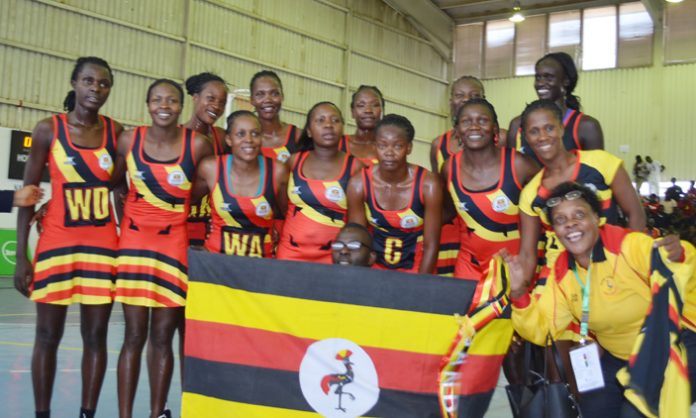
She Cranes


The Uganda netball team, She Cranes have left for Cape Town, South Africa for the upcoming 2019 African Netball Championship.

Uganda will open up their title defense campaign against Zimbabwe on Friday before facing Tanzania and Kenya on Saturday and Sunday respectively.

Team captain Peace Proscovia misses out on the travelling squad due to injury.

This will be Rashid Mubiru’s first competition in charge since his appointment as the new head coach replacing Vincent Kiwanuka last month. He will be assisted by Robert Kisitu.

The annual tournament that will bring together the best eight countries on the continent will take place from October 16th to 23rd.

Uganda will join host South Africa, Botswana, Kenya, Malawi, Namibia, Zambia and Zimbabwe to fight for the championship.

The Cranes are the defending champions having won in 2018 in Zambia.

Players;

Jesca Achan,Privas Kayey,Irene Eyaru,Irene Mirembe ©,Mary Nuba Cholock,Shaffie Nalwanja,Nampungu Joan, Stella Nanfuka,Stella Oyella, Martha Soigi, Hindu Namutebi.

Officials:

Susan Nowel Ongom Anek (UNF president)

Annet Nabayego Kisomose (General Secretary of UNF)

Yusuf Kamulegeya (Treasurer UNF)

Jocelyn Ucanda (Team manager)

Rashid Mubiru (head coach)

Ataro Paul Stephen Ayella (Primary care 1)

Priscillah Ondoga (primary care 2).

Cecilia Anyakoit (NCS Member)

Samuel Kabuye Mpoza (Media)

Beatrice Zawadi (Assistant coach)

Stories Continues after ad