Stanbic Bank
Stanbic Bank
25.3 C
Kampala
Stanbic Bank
Stanbic Bank
Home Blog Page 1139

AU slashes Pan African Parliament budget by $4 million

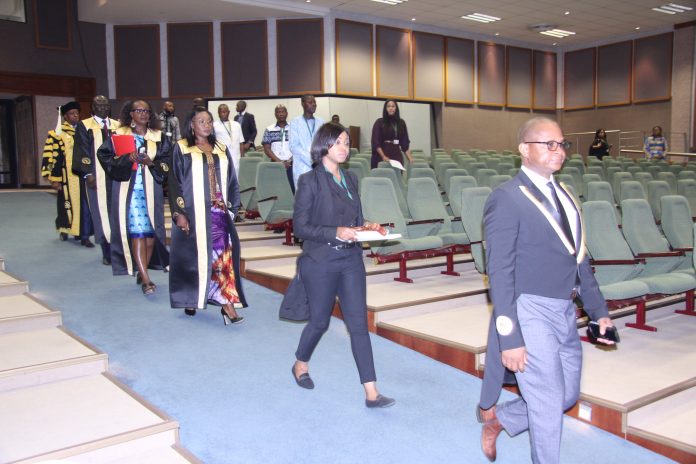
The Speaker's procession into the debating hall


The African Union (AU) has slashed the Pan African Parliament budget for the 2020 financial year by US $4 million.

Although the PAP had requested and passed a budget of US$20,798,521 during its May 2019 plenary sitting in South Africa, US $16,408,177 was approved by the Executive Council of the African Union.

The Executive Council, composed of Foreign Ministers, coordinates and takes decisions on policies in areas of common interest to Member States and is answerable to the Assembly of Heads of State and Government.

The implication of the budget cuts is that the work at the continental Parliament will be negatively impacted as the available funds will no longer appropriately facilitate the activities that the continental Parliament undertakes to fulfill its mandate.

The cuts will affect staff costs, missions, communications, procurement, stationery, bank charges, capital expenditure and the programme budget.

The programme budget envelopes parliamentary sessions, statutory and non-statutory meetings, conference for Speakers, women and clerks, ratification of AU legal instruments, climate change, public hearing the women conference, Bureau and MPs allowances among others.

In the parliamentary system, most of the work for Parliament is generated by portfolio and thematic committees. In the case of the PAP, the missions generate business for the committees, which in turn generate business to be tabled and debated in the plenary. There are two statutory committee meetings (March and August) and two plenary meetings (May and October).

The PAP President, Roger Nkodo Dang, faulted the AU for the cuts. “Without the work of committees, the money will not be used. It is the AU to blame because they are the ones that reduce our budget if it is not spent. If MPs do not work, we shall close this Parliament,” Hon. Nkodo told MPs at the opening of the session on Monday, 7 October 2019.

“The budget was passed and subsequently presented to the AU Permanent Representatives Committee (PRC) Sub Committee on Budgetary Affairs for consideration before presenting to the Executive Council for approval in compliance with the African Union Financial Rules and Regulations Article 11 (3),” the Deputy Chairperson of the Committee on Monetary and Financial Affairs, James Teat Gony (South Sudan) told members in his report on the 2020 budget last week.

Uganda’s representative James Kakooza argued that despite the challenges the PAP is going to face with the budget cuts, the PAP also needs to improve on its financial and management practice as seen from various reports on the institution.

However, all hope is not lost as the PRC Sub Committee on budgetary affairs allows for AU organs and departments to request for supplementary budgets based on compliance with submission of periodic performance reports as well as acceptable budget execution rates.

With this possibility of addressing the financing gaps, a top level delegation from the PAP is scheduled to travel to Addis Ababa in Ethiopia in November to meet the PRC and hammer out a deal that stay the budget.

“Since they invited us, I am hopeful that the decision will be reversed,” Gony said.

A decision was made by the AU Assembly of the Heads of State and Government that the overall budget of the African Union be decreased by US $32 million.

A committee of 15 Finance Ministers (F15) is responsible for oversight of the AU budget and Reserve Fund and have developed a set of ‘Golden Rules’, establishing clear financial management and accountability principles.

The AU organs and departments are expected to include more activities in their programme budget so as to shift the ratio of their operational budget to programme budget in order to achieve a 30 to 70 per cent ratio.

The PAP also hit another funding snag when its proposed European Commission partner funded programme budget for 2020 of US $1 million for the new African Governance Architecture (AGA) was cut by nearly half to US $575,000 so as to remain within the overall budget ceiling provided as well as comply with the requirement to reduce dependence on external funding for programmes.


Stories Continues after ad

Teachers can transform lives with support

Christine Apiot


By Christine Apiot


Recently, we celebrated the UNESCO World teachers’ Day, I’m very happy with this year’s theme “Young Teachers: The future of Professions”. This is because in Uganda, we don’t have many young people in the profession as we would want and they aren’t always supported in a way that would make them the best teachers they could be.

This theme thus calls on the fact that we need to secure tomorrow’s teachers by having more young people join the teaching profession and harnessing the enthusiasm that new teachers have to improve learning outcomes. As we work on motivating young teachers to join the profession, supporting them properly will be critical. This is why a new campaign was launched and is ongoing called #TeachersTransformLives to celebrate teachers on World Teachers’ Day and advocate for bettersupport and training that will help them succeed in the classroom.

It is so well known that teaching is a noble profession and has been highly respected across generations.  It is and always was a very prestigious and respectful profession, that in Uganda if you are known as “Musomesa” you are held in high esteem. In our communities, most teachers were sort after to help in decision making and to hold positions of leadership.

Yet, despite the importance of the roles of teachers they don’t always get the support that their role demands. World over we have continuously had reports of teachers advocating for improved teacher’s welfare. There has also been a gap in terms of ongoing training and professional development. All these challenges are a deterrent to the young generation in joining this noble profession and to those thousands of teachers already in Ugandan classrooms.

Like all professions, teachers need ongoing mentorship, motivation, training and development. They need to feel that what they do matters and see the evidence of learning after all their hard work. They need materials and resources that will enable them to teach to the best of their ability; plus encouragement and feedback that will help them to grow.  Helping teachers deliver child centric lessons in an interactive way; narrating the positive and providing ongoing training and development all helps teachers teach and ultimately children learn.

As we mark this important Day of teachers, showing more support and mentorship to the teachers is what can motivate and encourage more millennials to join the profession and make those within, be successful in the classroom, improve outcomes and as a result to feel satisfied and love the work they are doing.

That is why the new campaign – #TeachersTransformLives – is shining a light on inspirational teachers whose teaching has been transformed through a tripartite programme of materials, support and development. An approach to teaching that is helping teachers transform young lives; by improving learning outcomes; excelling in challenging environments and developing the leaders of tomorrow.

The teachers highlighted in #TeachersTransformLives share their stories of how their teaching has changed and enabled them to turn their classrooms into springboards for success. Ibrahim Bashir from Bridge Academy in Yesu Amala is just one of the teachers highlighted in the campaign who has transformed the way he teaches and delights in sharing his success. 

Every teacher can succeed with the right support. That’s the main message of the new campaign designed to highlight the importance of training and empowering teachers across the world. If we want learning outcomes to improve we must focus on teachers.

The writer is Ugandan educationalist and Brookings Institute Fellow.


Stories Continues after ad

Six lessons for business leaders from military training

Martin Zwilling


By Martin Zwilling


You have to be extra tough mentally to start a new business venture. While thinking about it, I realized that it’s really not that different from the toughness required and trained into America’s elite military force of Navy SEALs, who are known to be cool under fire, able to sense danger before it’s too late, and never give up on achieving their objective.

I learned some good lessons along these lines from the classic book “The Way of the SEAL,” by Mark Divine. He spent many years with the SEALs, but has since started and built six multimillion-dollar business ventures. He now teaches these key principles to business leaders, focusing on the following lessons and strategies, which I recommend for every entrepreneur:

Lead from the front, so that others will want to work for you. To be an entrepreneur or a Navy SEAL, you must first have vision, focus, and the courage to step up to lead. That means visibly walking the talk and willing to clear a path for others. People want to follow leaders they can learn from, who demonstrate excellence and commitment in all they do.

Focus on one thing until victory is achieved. SEALs call this front-sight focus, or the ability to envision your goal to the point that you see it, believe it, and make it happen. Every entrepreneur needs this kind of focus to build a minimum viable product, target the right customer segment, differentiate from competitors, and drive business growth.

Think offense, all the time, to eradicate fear and indecisiveness. Indecision leads to doubt, then the two blend and become fear, which signals defense, resulting in being overrun in the business world, as well as the military world. Offense, for entrepreneurs, means leading with a new business model, new marketing, and new technology.

Never be thrown off-guard by chaotic conditions. Smash the box and think outside the box. In the world of the entrepreneur and the SEAL, chaos is the norm, not the exception. Plan for it mentally and physically, and you will see opportunities rather than problems in the chaos. Winning is finding opportunities, rather than fighting problems.

Access your intuition so you can make “hard right” decisions. Your intuition is really your knowledge and awareness of your business environment, which must be honed with practice and focus. This knowledge is required for you to turn quickly or pivot based on new input from the market, without loss of competitive position.

Achieve twenty times more than you think you can. Set your targets high. Nobody knows what they are truly capable of, with the right discipline, drive, and determination (three Ds). SEALs challenge themselves to find their 20x factor, and entrepreneurs should accept no less of a challenge. Leverage the resources of mentors, investors, and peers.

By teaching and practicing the principles behind these six lessons, Mark Divine was able to improve the pass rate of Navy SEAL candidates from less than 30% to over 80%. I see the same potential for improving the success rate of new entrepreneurs from the current 10-year survival rate closer to 30%, to a new high target of 80% in this new era.

He suggests that you start with a self-assessment against the “five mountains” to be climbed on the path to self-mastery and success, with my adaptation for entrepreneurs:

Physical: business as well as technical skills required for the domain you want to enter.

Mental: ability to persevere, make decisions, focus, and visualize success.

Emotional: resilience, open to relationships, keep negative emotions under control.

Intuitional: level of awareness, listen more than speak, strong self-esteem, insightful.

Spiritual: strong values, at peace, willing to make sacrifices, see the big picture.

I agree with Divine that if you desire serious change in your life, you can’t get there by focusing on what you don’t want. Becoming an entrepreneur is a great lifestyle, but it is a serious change from other career alternatives. If you decide to be an entrepreneur because you don’t want a boss, on don’t like regular business hours, you may be setting yourself up for failure.

Apply the lessons from the Navy SEALs and you too can be an elite warrior who leads and succeeds in the new global business paradigm. Are you up to the challenge?

The writer is a veteran startup mentor, executive, blogger, author, tech professional, professor, and investor. Published on Forbes, Entrepreneur, Inc, Huffington Post, among others.

Stories Continues after ad

Human rights and child protection for Somali security forces kicks off in Mogadishu

Deputy Special Representative of the Chairperson of the African Union Commission for Somalia Simon Mulongo


A five-day training programme on human rights and child protection for Somali security forces commenced in Mogadishu on Monday, October 13.

The training is organized by AMISOM with the support of the Romeo Dallaire Child Soldiers Initiatives (RDCSI) and is aimed at enhancing compliance with International Human Rights Law.

At the opening, the Deputy Special Representative of the Chairperson of the African Union Commission for Somalia Simon Mulongo called for concerted efforts to stem the recruitment of child soldiers, especially by militant groups.

Jihan Hassan, the Director-General of Somalia’s Ministry of Defence, reiterated the commitment of the Somali Government to stop recruitment of child soldiers.

Twenty-five personnel from the SNA and the Child Protection Unit of the Ministry of Defence are attending the course, with the view of turning them into focal persons on human rights and child protection at their places of work.


Stories Continues after ad

Strengthening Africa’s fragmented data landscape is key to meeting development targets, says new African Governance Report

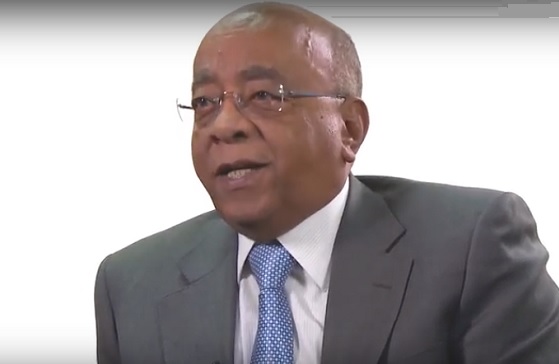
Mo Ibrahim

The African Governance Report, published today by the Mo Ibrahim Foundation, draws on data from the Ibrahim Index of African Governance (IIAG) and shares new insights on progress towards the African Union’s (AU) Agenda 2063 and the United Nations’ (UN) Sustainable Development Goals (SDGs). It points to where policy efforts can be focused to tackle current governance challenges, and highlights the urgency of addressing the ‘data gap’ in Africa to ensure progress can be assessed and shortfalls addressed.

This is a critical time as Africa prepares to enter the last decade of the 2030 SDG Agenda and is halfway through the First Ten-Year Implementation Plan of Agenda 2063.

Overall Governance scores in the IIAG, the most comprehensive dataset on African governance, point to a strong correlation with performance in the Africa SDG Index, underscoring the importance of good governance to sustainable development in Africa.

Reviewing the themes with the highest overlaps between both Agendas and the IIAG – Access to and Quality of Education, Health and NutritionWomen and Youth InclusionProsperity and Economic Opportunity, and Security, Justice and Strong Institutions – the report highlights priority areas to address.

Quality of education needs to be addressed, aligning education with market needs can also be advanced if governments and partners take a closer look at prioritising active engagement with the private sector, to assess the requirements of the job market.

In health, special attention should be paid to the availability, quality, affordability and capacity of health services, while also tackling food security.

For prosperity and economic opportunity, the report notes that governments and partners should look at diversifying economies, accelerating progress in infrastructure – specifically physical transport, electricity and ICT –increasing investment in the rural sector, and strengthening regional integration, to make efficient progress.

Important correlations between IIAG measures are outlined to help create a more conducive environment for achieving development targets. For example, access to electricity shows a strong correlation to performance in both health and education.

Crucially, a concerning picture of data challenges emerge across the continent. Almost half of the targets for Agenda 2063 are not directly quantifiable and so far, fewer than 20% have an indicator to measure progress. On average fewer than 40% of the indicators for the SDGs have sufficient data to track progress accurately on the continent. The report highlights that over half of the data source types on SDG indicators on Africa are estimation, modelling or global monitoring. In particular, only one third of data sources on SDG indicators on Africa are from direct country sources. The ability to monitor progress towards development targets in Africa is compromised.

Since the adoption of both Agendas, coverage and frequency of publicly available data for key data categories in Africa have declined. Critically, one of the areas that has seen, on average, large deterioration is population and vital statistics. Further, only eight African countries have a birth registration system that covers 90% or more of the population over the last ten years (2009-2018), and only three have a death registration system that covers 90% or more of the population. The paucity of such vital data is in striking contrast with population growth – Africa is expected to be home to 1.68 billion people by 2030.

Without accurate and complete vital statistics, it is impossible to implement effective solutions to any development challenge and to deliver for citizens. Since 2008, little average improvement in statistical capacity has been made, according to IIAG data. This issue is compounded by low levels of independence of national statistics offices.

The report calls for Sound Data for Governance in order to ensure inclusive development: the ‘missing SDG’.

Mo Ibrahim, Chair of the Mo Ibrahim Foundation, said: “We welcome continued efforts to improve governance, which is crucial to achieving the SDGs and Agenda 2063 goals. However, we are deeply worried by the inability to accurately monitor progress against these targets on the continent. Data is an essential foundation for effective policymaking and resource mobilisation. Without data, we drive blind – policies are misdirected and progress on the road to development is stunted. We must all act urgently to close the ‘data gap’, if indeed we aim to leave no one behind.”

Stories Continues after ad

Gov’t to do more on women football – Sekandi

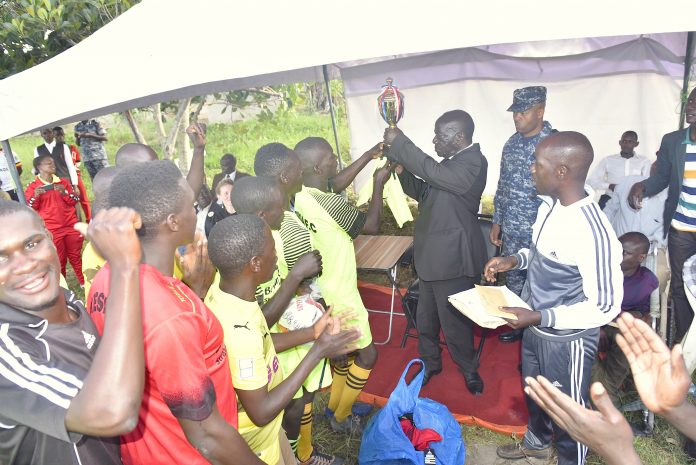
VP Ssekanding handing over the trophy to the winners


Vice President Edward Kiwanuka Ssekandi has called for more support to female footballers in response to the enthusiasm being showed by girl’s participation and talent in playing football just like male players.

Speaking at the end of the ‘Annual Edward Kiwanuka Ssekandi Youth Sports Tournament’ in Bukoto Central County in Masaka district, Ssekandi said that football is the most sought and watched sport which must not leave female youth behind.

He commended the Chief Executive Officer Xabo Group of Companies, Dr. David Alobo, for co-funding the sports gala that has brought together several youths from the area and united them in both social and economic activities.

He said that sports play a key role in keeping bodies healthy boosting the fight against the current trend of lifestyle diseases but also known source of income more than known white caller jobs and urged sports officials in the country to start girl footballing academies to tap the potential and talent of the young women.

The CEO Xasbo Group Dr. David Alobo said that he was happy with the participation of the youth under their umbrella organization Bukoto Central Youth Link and appreciated the Vice President efforts in bolstering the socio-economic well-being of the people of Bukoto and pledged more financial support to development initiatives around the country.

The day also featured male football and women football, netball, 10 kilometers  bicycle race and a 4.8 kilometers  water full jerrican race where winners in football received Shs500,000 a new set of jerseys, three footballs and medals, the net ballers received Shs400,000 and new kits, while the winner of the bicycle race received Shs300,000.

About 1,000 youth from Kyesiiga, Kabonera and Kyanamuka sub counties participated in the year-long sports gala whose finals were held at St. Pius Primary School Buliro in Kyesiiga sub county where the runner ups and the tournament referees and arbitrators led by chief referee Sserunjogi Moses also received cash prizes.

Stories Continues after ad

Mozambique’s gas projects enter implementation phase as FID is announced

Mozambique LNG project


With a second final investment decision (FID) in just two years, Mozambique has officially positioned itself as a key player in the global gas and LNG market for years to come. The latest FID on the US$20 billion Mozambique LNG project, makes it the largest sanction ever in sub-Saharan Africa oil and gas.

Described by President Nyusi as “one of the most important and transformational projects in the country’s history”, Mozambique LNG is set to be a game-changer for this East African nation of 31 million people.

The president added: “This is a historic day for the people of Mozambique. Today’s sanctioning of the Anadarko-led Area 1 Mozambique LNG project solidifies a path toward the creation of thousands of jobs for our people, significant economic growth for our nation, and the potential to be one of the world’s largest providers of cleaner energy for decades to come. It is truly one of the most important and transformational projects in our country’s history.”

Anadarko’s Chairman and CEO, Al Walker, said: “This is an exciting day for Mozambique and for our partnership, bringing us a step closer to making Mozambique’s first onshore LNG facility a reality. The Anadarko-led Area 1 Mozambique LNG project has come a long way from our first discovery to FID for the construction of the initial two-train development project. I want to say a collective ‘thank you’ to the world-class LNG team we have assembled at Anadarko, our co-venturers, long-term foundation customers, lenders, the people of the Cabo Delgado region, and the Government of Mozambique.

As the world increasingly seeks cleaner forms of energy, the Anadarko-led Area 1 Mozambique LNG project is ideally located to meet growing demand, particularly in expanding Asian and European markets. We look forward to safely executing the next phase of this project for the long-term benefit of Mozambique, its people, our partnership, and our customers.”

According to Wood Mac, from the early 2030s state revenue from Mozambique LNG alone will reach US$3 billion per annum, single-handedly doubling today’s revenue as calculated by the IMF and World Bank.

And this is not the only mega-LNG project on the drawing board. ExxonMobil’s Rovuma LNG project, which envisages a 15 million tons per annum (tpa) two-train facility taking gas from its offshore area 4 block, is also lined up to take FID.

Meanwhile, Italy’s ENI is already moving ahead with its 3.4 million tpa floating LNG facility, which will draw on 5 TCF of gas in waters more than 2,000 metres deep with first gas due in mid-2022.

“With strong LNG demand growth out of Asia, now is Mozambique’s time,” said Jon Lawrence, an analyst with Wood Mackenzie’s sub-Saharan Africa upstream team, as news broke of the Anadarko FID.

With FIDs signed, the projects are now moving from the planning into the implementation phase. Hundreds of contracts are expected to be tendered for the construction, infrastructure and services needed to build and develop the megaprojects.

More recently, on October 8th, Mozambique Rovuma Venture (MRV) Area 4 operator decided to move ahead with the midstream and upstream project activities of over US $500 million as initial investments. These investments include activities such as the construction of the pioneer camp, the development of resettlement activities, the construction of the airstrip and access roads, as well as the start of detailed LNG facility engineering project.

Stories Continues after ad

Joshua Cheptegei nominated for Male World Athlete of the Year 2019

Cheptegei


The IAAF has today announced the list of 11 nominees for Male World Athlete of the Year 2019 with Ugandan long distance runner Joshua Kiprui Cheptegei making the cut.

This year, Cheptegei won the world cross-country title in Aarhus, won the world 10,000m title in a world-leading 26:48.36 time and the Diamond League 500m title.

The athletes were selected by an international panel of athletics experts, comprising representatives from all six continental areas of the IAAF.

The nominations of 11 athletes reflects the remarkable range of exceptional performances that the sport has witnessed this year, at the IAAF World Athletics Championships in Doha, and in the Diamond League and in road and cross country events.

The IAAF’s Competition Performance Ranking show that the World Championships in Doha was the highest quality competition in the history of the event.

This week marks the opening of the voting process for the 2019 World Athletes of the Year ahead of the World Athletics Awards 2019 in Monaco on Saturday 23 November.

A three-way voting process will determine the finalists.

The IAAF Council and the IAAF Family will cast their votes by email, while fans can vote online via the IAAF’s social media platforms. Individual graphics for each nominee will be posted on Facebook, Twitter and Instagram this week; a ‘like’ on Facebook and Instagram or a retweet on Twitter will count as one vote.

The IAAF Council’s vote will count for 50% of the result, while the IAAF Family’s votes and the public votes will each count for 25% of the final result.

Voting for the Male World Athlete of the Year closes on 4 November. At the conclusion of the voting process, five men and five women finalists will be announced by the IAAF.

The male and female World Athletes of the Year will be announced live on stage at the World Athletics Awards 2019.

The female nominees will be announced tomorrow, Tuesday 15 October.

The eleven nominees for 2019 Male World Athlete of the Year are;

Joshua Cheptegei (UGA); Won world cross-country title in Aarhus, won world 10,000m title in a world-leading 26:48.36 and Diamond League 500m title

Donavan Brazier (USA); Won world 800m title in a championship record of 1:42.34, won Diamond League title and won four of his five outdoor 800m races

Christian Coleman (USA); Won world 100m title in a world-leading 9.76, won world 4x100m title in a world-leading 37.10, won four of his five races at 100m

Timothy Cheruyiot (KEN); Won world 1500m title, won Diamond League 1500m title and won 10 of his 11 outdoor races across all distances

Steven Gardiner (BAH); Won world 400m title in 43.48, undefeated all year over 400m and ran world-leading 32.26 indoors over 300m

Sam Kendricks (USA); Won world pole vault title, cleared a world-leading 6.06m to win the US title and won 12 of his 17 outdoor competitions, including the Diamond League final

Eliud Kipchoge (KEN); Won London Marathon in a course record of 2:02:37 and ran 1:59:40.2 for 42.195km in Vienna

Noah Lyles (USA); Won world 200m and 4x100m titles, ran a world-leading 19.50 in Lausanne to move to fourth on the world all-time list and won Diamond League titles at 100m and 200m

Daniel Stahl (SWE); Won the world discus title,  threw a world-leading 71.86m to move to fifth on the world all-time list and won 13 of his 16 competitions, including the Diamond League final

Christian Taylor (USA); Won the world triple jump title,  won Diamond League title and won 10 of his 14 competitions

Karsten Warholm (NOR); Won the world 400m hurdles title, undefeated indoors and outdoors at all distances, including at the Diamond League final and the European Indoor Championships and clocked world-leading 46.92, the second-fastest time in history.

Stories Continues after ad

Former Supreme Court judge Justice Tsekooko dead

Justice Tsekooko

Former Supreme Court judge, Justice Wilson Tsekooko has passed on at Norvik hospital.

According to a family member, he says the retired judge had been unwell but as of yesterday, doctors at the health facility had indicated to the family as his conditions were improving.

He served for over 15 years Supreme Court, Two years at Court of Appeal and five years  at High Court.

Tsekooko who served as judge at the highest court in the land for over 15 years, two years in Court of Appeal  and  five years in High Court.

“Retired Supreme Court Justice, George Wilson Nattubu Tsekooko, has just passed on at Norvik Hospital in Kampala, where he was admitted”. reads the statement on the Judiciary Twitter handle.

In 2001 and 2006, Justice Tsekooko was among the minority judges that allowed Besigye’s petition (annulled Museveni’s victory) and called for fresh elections.

He was President Milton Obote personal attorney in a defamation case the then presidential candidate Yoweri Museveni filed  against Obote.


Stories Continues after ad

A major step forward in reducing food loss and waste is critical to achieve the SDGs

Globally around 14 percent of the world’s food is lost after harvesting and before reaching the retail level. Maize plantation in Uganda

A new report launched today by the UN Food and Agriculture Organization (FAO) provides insights into how much food is lost – as well as where and why – at different stages of the food supply chain, calls for informed decisions for an effective reduction and offers new ways to measure progress.

This will not only help to achieve progress towards the important target of reducing food loss and waste, but could also contribute to a number of Sustainable Development Goals related to food security and environmental sustainability, the report states.

According to the State of Food and Agriculture 2019, globally around 14 percent of the world’s food is lost after harvesting and before reaching the retail level, including through on-farm activities, storage and transportation. However, the food losses vary considerably from one region to another within the same commodity groups and supply chain stages.

The report highlights the need, and offers a new methodology, to measure carefully losses at each stage in the food supply chain. Doing so will help to identify critical loss points across the supply chain. These are points where food losses have the highest magnitude, the greatest impact on food security, and the largest economic dimensions, as well as to identify the appropriate measures for their reduction.

It also points to the importance of reducing food waste, which occurs at the retail and consumption level and is linked to limited shelf life and consumer behaviour, such as   demanding food products that meet aesthetic standards, and limited incentive to avoid food waste.

“As we strive to make progress towards reducing food loss and waste, we can only be truly effective if our efforts are informed by a solid understanding of the problem,” said FAO Director-General Qu Dongyu in the foreword to the report. He questioned, “how we can allow food to be thrown away when more than 820 million people in the world continue to go hungry every day”.

Identifying critical loss points for targeted action

Evidence presented in the report shows a vast range in terms of loss and waste percentages within commodities, supply chain stages and regions, suggesting there is a considerable potential for reduction where percentages are higher.

Losses and waste are generally higher for fruits and vegetables than for cereals and pulses at all stages in the food supply chain, with the exception of on-farm losses and those during transportation in Eastern and South-Eastern Asia.

In lower-income countries, more fresh fruit and vegetable loss is attributed to poor infrastructure than in industrialized countries. In fact, many lower-income countries lose significant amounts of food during storage, often due to poor storage facilities, including refrigerated warehouses.

Despite the fact that that in most high-income countries adequate storage facilities, including refrigerated warehouses, are available throughout the supply chain, losses do occur during storage, generally because of a technical breakdown, poor management of temperature, humidity or overstocking.

The report also reveals the results from a number of case studies conducted by FAO for identifying critical loss points. Results indicate that harvesting is the most frequently identified critical loss point for all types of food. Inadequate storage facilities and poor handling practices were also named among the main causes of on-farm storage losses. For fruits, roots and tubers, packaging and transportation also appear to be critical.

Such findings are valuable in providing guidance when identifying potential interventions for food loss reduction.

Getting the incentives right

The report urges countries to step up efforts to tackle the root causes of food loss and waste at all stages and provides guidance on policy and interventions to reduce food loss and waste.

Reducing food loss and waste generally entails costs, and farmers, suppliers and consumers will only take necessary measures if their costs are outweighed by the benefits. Thus, changing incentives for various stakeholders in the supply chain will involve identifying options that either increase the net benefits or provide better information on the existing net benefits, the report states.

Even when stakeholders are aware of the benefits of reducing food loss and waste, they  may face constraints that prevent them from implementing actions. For example, without financial help private actors in developing countries, especially smallholders, may not be able to bear the high upfront cost associated with implementing such actions. Improving credit access could be an option even in the absence of detailed information on losses.

The report will also help governments to analyse constraints and trade-offs for more efficient interventions.  For example, they can raise awareness of the benefits of reducing food loss and waste among suppliers and consumers and influence their decision-making through various types of actions or policies.

However, the report stresses that the policy measures aimed at reducing food loss and waste should be coherent and involve effective monitoring and evaluation of interventions to assure accountability of existing actions and efforts.

Stories Continues after ad