Stanbic Bank
Stanbic Bank
25.3 C
Kampala
Stanbic Bank
Stanbic Bank
Home Blog Page 1140

South Sudan join Uganda, others in Group B of 2021 Afcon qualifiers

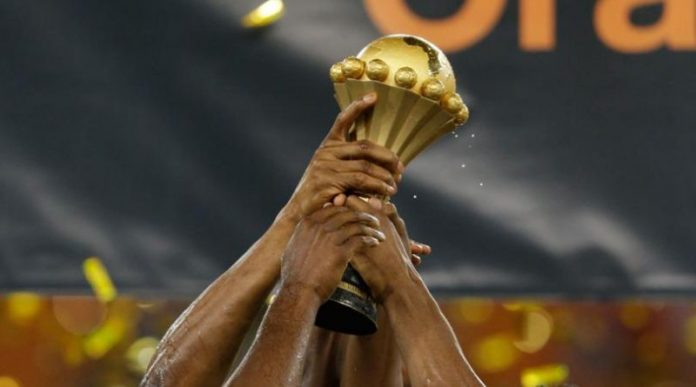
Afcon trophy


South Sudan has booked a slot in the group stages of the qualifiers for the Total African Cup of Nations (AFCON) Cameroon 2021 after seeing off Seychelles with a 3-1 aggregate win.

The victory confirmed South Sudan in Group B alongside Uganda, Burkina Faso and Malawi.

The First matches of the qualifiers will be played on 11 November 2019. Uganda will be a way at Burkina Faso while Malawi will be in South Sudan on the same day.

The final group stage games will be played between 9th and 17th November 2020.

Overall, there are 12 groups and the winners and runners-up from each group will qualify for the 2021 AFCON tournament.

Hosts Cameroon is guaranteed a place so only one other team qualify from their group.

Eritrea and Somalia did not enter.

Groups

A: Mali, Guinea, Namibia, Chad

B: Burkina Faso, Uganda, Malawi, South Sudan

C: Ghana, South Africa, Sudan, Sao Tome and Principe

D: Democratic Republic of Congo, Gabon, Angola, Gambia

E: Morocco, Mauritania, Central African Republic, Burundi

F: Cameroon, Cape Verde Islands, Rwanda, Mozambique

G: Egypt, Kenya, Togo, Comoros Islands

H: Algeria, Zambia, Zimbabwe, Botswana

I: Senegal, Congo, Guinea Bissau, Eswatini

J: Tunisia, Libya, Equatorial Guinea, Tanzania

K: Ivory Coast, Niger, Madagascar, Ethiopia

L: Nigeria, Benin, Sierra Leone, Lesotho


Stories Continues after ad

Korean pop star Sulli found dead in house

Late Korean pop star Sulli

The K-pop star Sulli has died aged 25. Police say the singer’s manager found her dead at her home near Seoul, South Korea.

They say they are investigating the cause of her death and are working on the ‎assumption that she may have taken her own life.‎

The star, who had more than five million followers on Instagram, was a former member of the band F(x) until she left in 2015 to focus on her acting career.

Some believe the artist, whose real name is Choi Jin-ri, suspended her K-pop work after struggling with the abuse she got online.

Sulli was good friends with K-pop star Jonghyun, who took his own life aged 27.

The artist paid tribute at his funeral in 2017.

Sulli was known for being controversial and outspoken.

She was involved in the so-called “no bra” scandal where she showed her nipples on a number of ‎occasions.

The first pictures appeared on her Instagram account in May 2016 and she faced a huge ‎amount of abuse on social media.

Last month her breasts were shown by accident during a live ‎Instagram stream – which again caused controversy in conservative South Korea.

Stories Continues after ad

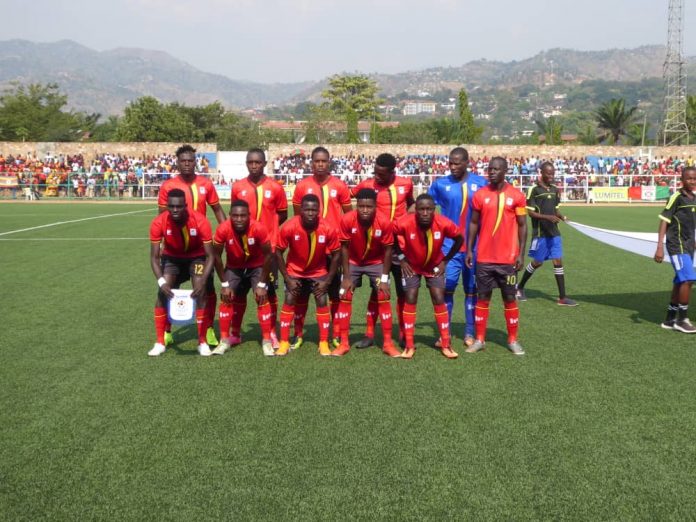
CHAN 2020 Qualifiers: Cranes start preps for return leg against Burundi

Cranes team


The Uganda Cranes team have started training for the return leg against Burundi in the CHAN 2020 qualifier that will be played on Friday, 18th October 2019 at the Star Times Stadium, Lugogo.

Vipers midfielder Abdul Karim Watambala is the new face on the team earning his first ever call-up on the national senior team.

He replaces the captain, KCCA’s Muzamiru Mutyaba who is ruled out due to injury.

Wakiso Giants’ Kirizestom Ntambi also comes in for Vipers’ Allan Kayiwa who travelled with the team for the Ethiopia friendly.

Cranes hold a 3-0 advantage from the first leg in Bujumbura. Viane Sekajugo, Muzamiru Mutyaba and Mustafa Kizza netted the goals.

Uganda Cranes are seeking for their fifth appearance at the 16-team tournament, having played at four CHAN champions in 2011 (Sudan), 2014 (South Africa), 2016 (Rwanda) and lately 2018 (Morocco).

The competing national teams in this championship must be composed of only players playing in their domestic league. That is, a Ugandan player is only eligible to play for the Uganda Cranes if he is playing for a Ugandan club.

Democratic Republic of Congo (DRC) have won it twice, holding it the most times while Morocco are the defending champions.

The competition will be hosted between January and February 2020 in Cameroon. It is held after every two years.

Summoned Team:

Goalkeepers: Charles Lukwago (KCCA), James Alitho (URA), Joel Mutakubwa (Kyetume)

Defenders: Paul Willa (Police), Ashraf Mandela (URA), Arafat Galiwango (Police), John Revita (KCCA), Mustapha Kizza (KCCA), Halid Lwaliwa (Vipers), Paul Mbowa (URA), Musitafa Mujuzi (Proline)

Midfielders: Nicholas Kasozi (KCCA), Said Kyeyune (URA), Yusuf Ssozi (Police), David Owori (SC Villa), Kirizestom Ntambi (Wakiso Giants), Allan Okello (KCCA), Shafiq Kagimu (URA), Vianne Ssekajjugo (Wakiso Giants), Karim Watambala (Vipers), Bright Anukani (Proline), Ibrahim Orit (Mbarara City)

Strikers: Fahad Bayo (Vipers), Dan Sserunkuma (Vipers), Mike Mutyaba (KCCA)

Stories Continues after ad

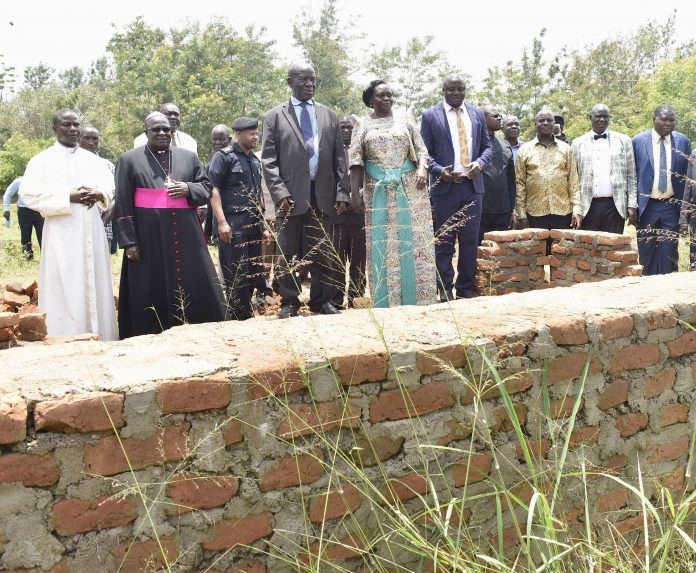
Places of worship should reflect God’s glory – Sekandi

Vice President Edward Kiwanuka Sekandi visits the ongoing construction work for the new church structure of St. Mary Magdalene Catholic Church, Musukire in Rubongi sub-county in Tororo accompanied by State Minister for Health General Duties Sarah Opendi on his left, and Tororo Diocesean Bishop, Henry Obbo, on his right looks on. 13th Oct 2019


Vice President Edward Kiwanuka Sekandi has called upon Ugandans to support the construction and improvement of places of worship befitting the glory of the God they worship.

Sekandi who was speaking at St. Mary Magdalene Catholic Sub parish of Musukire in Rubongi Sub-county, in Tororo, said that every humble contribution put together can do a lot in improving structures of worship including churches or mosques without waiting and relying on external support.

He said that it’s sad that people who believe in God as the Omnipotent and source of life whom they worship in unworthy structures but at the same time enjoy comfort of their state of the art homes. He called upon believers’ commitment to befitting structures for the worship of God.

Sekandi who contributed five million shillings towards the building of a new parish church of Musukire hailed the area leaders for their support for building on the foundation started by early missionaries and urged local leaders to inculcate in the youth the culture handwork and saving to improve their wellbeing.

Sekandi said that the strategic relationship between the church and the state should be maintained for the people of Uganda on mutual respect without compromising each other’s standards and beliefs.

The State Minister for Primary Healthcare and Tororo Woman Member of Parliament Sarah Opendi contributed three million shillings towards the construction and appreciated ongoing Government efforts to build a Vocational Training School in Tororo that will train and equip youth with skills.

The ceremony was also addressed by the State Minister for East Affairs Joel Maganda and Samia Bugwe North Member of Parliament,  Nathan Oboth Oboth who each contributed two million shillings to the construction of the new 700 seater Church estimated to cost Shs200 million.


Stories Continues after ad

Commonwealth Observer Group condemns killing in the run-up to Mozambique elections 

Musa Mwenye


The leader of the Commonwealth team observing elections in Mozambique has condemned the killing of a man who headed a local observer group.

Musa Mwenye, former Attorney General of Zambia and acting chair of the group, called for a thorough investigation into the death of Anastácio Matavele in Xai-Xai, capital of Gaza province in Mozambique.

He condemned all incident of violence and encouraged all stakeholders to demonstrate unwavering commitment to peaceful and credible elections.

Mr Mwenya was speaking on arrival in Mozambique’s capital, Maputo. He said: “We convey sincere condolences to Mr Matavele’s family and friends and urge a thorough investigation into this and any other incidents of violence.

“Our mandate is to observe and evaluate the pre-election environment, polling day as well as the post-election period. We will consider the various factors impinging on the credibility of the electoral process as a whole, and report on whether it has been conducted to the national, regional, Commonwealth and international standards to which Mozambique has committed itself.”

The five-member Commonwealth Group (COG) arrived in Maputo last Thursday.  It will receive briefings from election management officials, representatives of political parties, civil society groups, the police, members of the international community as well as citizens and internal observers, then deploy to selected provinces to observe the pre-election environment and the vote itself.

Shortly after the election, the Commonwealth Group will present its preliminary findings in Maputo.  Its final report will be submitted to the Commonwealth Secretary-General and made available to relevant stakeholders and the public.

General elections will be held in Mozambique on October 15, 2019. The President of Mozambique is elected using the two-round system.


Stories Continues after ad

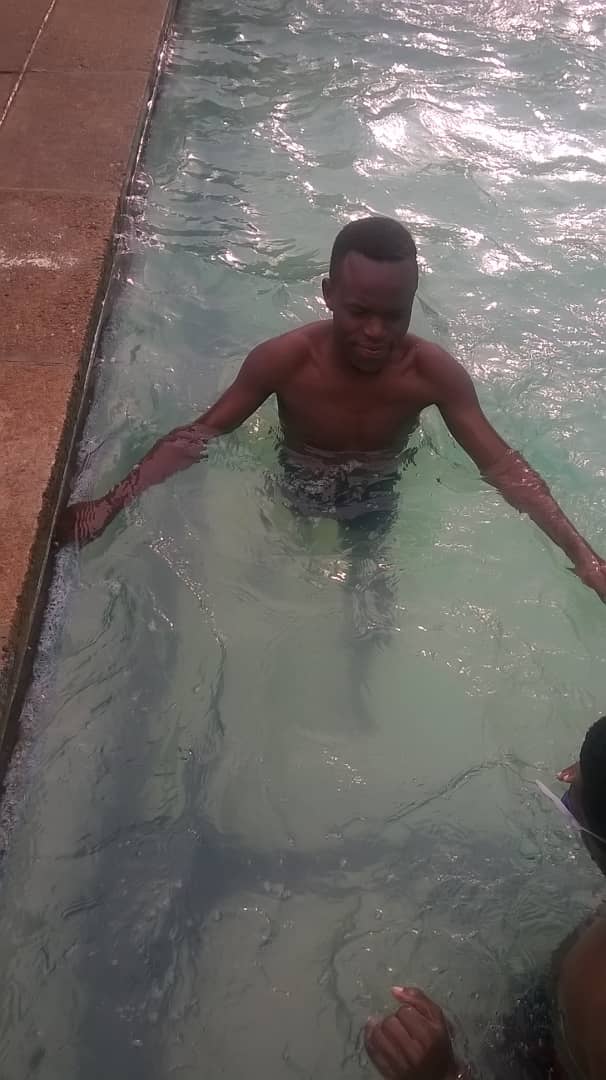
Makerere Student Drowns in Swimming Pool

A Makerere university student drowned in the swimming pool this Sunday evening

James Uwmpuhwe from Rwanda died late this evening at the pool near the guild canteen when he had difficulties while in water.
“James had no experience in swimming, but he jumped into the water” a friend said.
The friend added that they shouted when they did not see James return on top.
Vice Chancellor Prof. Nawangwe on his Facebook page said, “i have received with much shock news the death of James, a second year student of Arts in Arts who has drowned in the swimming pool this evening. “
He added, “ I send condolences to the family and the entire community. May his soul rest in peace. “
He was pulled out of water and rushed to wandegeya at Abii clinic.
The police said that James died immediately after they had reached Mulago hospital’s emergency unit where he had been rushed for rescue.
Stories Continues after ad

Kenya’s Eliud Kipchoge breaks two-hour marathon mark

Eliud Kipchoge


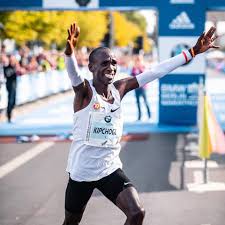
Eliud Kipchoge has become the first athlete to run a marathon in under two hours, beating the mark by 20 seconds.

The Kenyan, 34, covered the 26.2 miles (42.2km) in one hour 59 minutes 40 seconds in the Ineos 1:59 Challenge in Vienna, Austria on Saturday.

It will not be recognised as the official marathon world record because it was not in open competition and he used a team of rotating pacemakers.

“This shows no-one is limited,” said Kipchoge.

“Now I’ve done it, I am expecting more people to do it after me.”

The Olympic champion missed out by 25 seconds in a previous attempt at the Italian Grand Prix circuit at Monza in 2017.

Knowing he was about to make history on the home straight, the pacemakers dropped back to let Kipchoge sprint over the line alone, roared on by a large crowd in the Austrian capital.

The four-time London Marathon winner embraced his wife Grace, grabbed a Kenyan flag and was mobbed by his pacemakers, including many of the world’s best middle and long-distance runners.

Kipchoge, who compared the feat to being the first man on the moon in build-up to the event, said he had made history just as Britain’s Sir Roger Bannister did in running the first sub four-minute mile in 1954.

“I’m feeling good. After Roger Bannister made history, it took me another 65 years. I’ve tried but I’ve done it,” said the Kenyan.

“This shows the positivity of sport. I want to make it a clean and interesting sport. Together when we run, we can make it a beautiful world.”


Stories Continues after ad

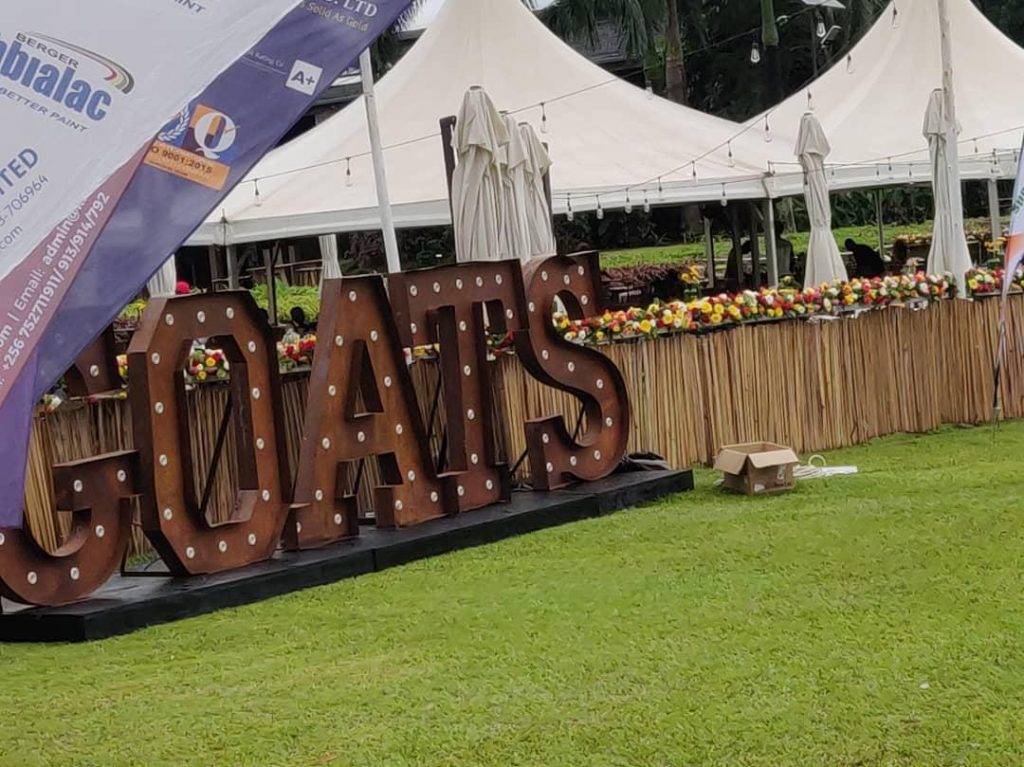
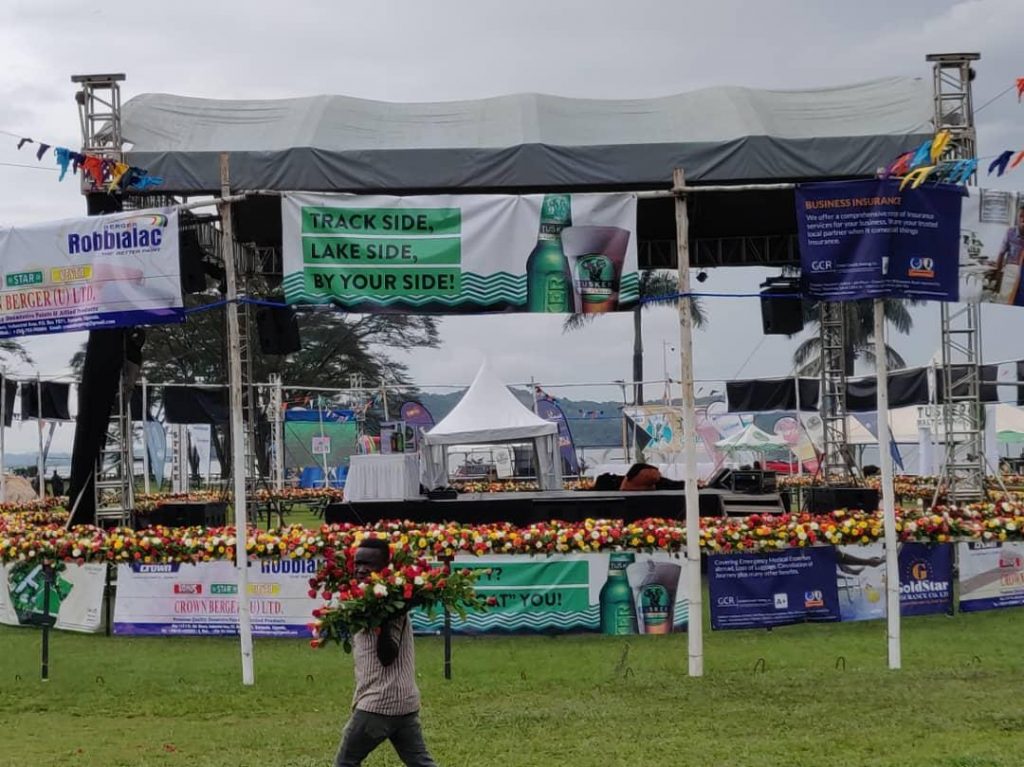
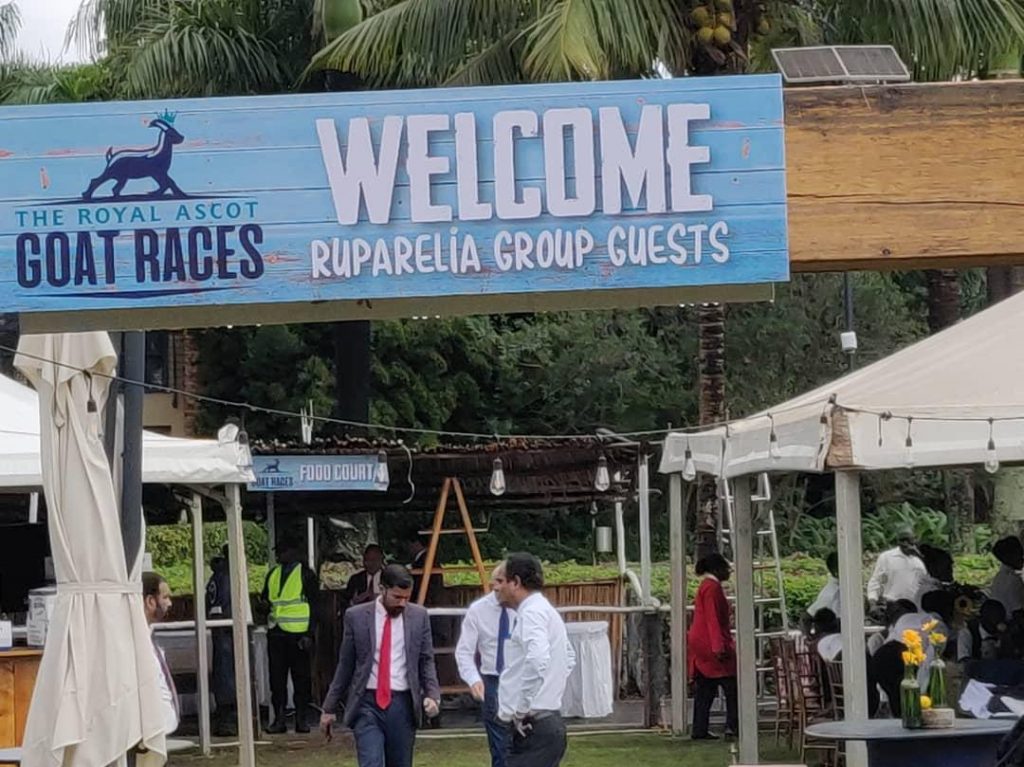
Pictorial: Beauty meets nature at 2019 Goat race Munyonyo

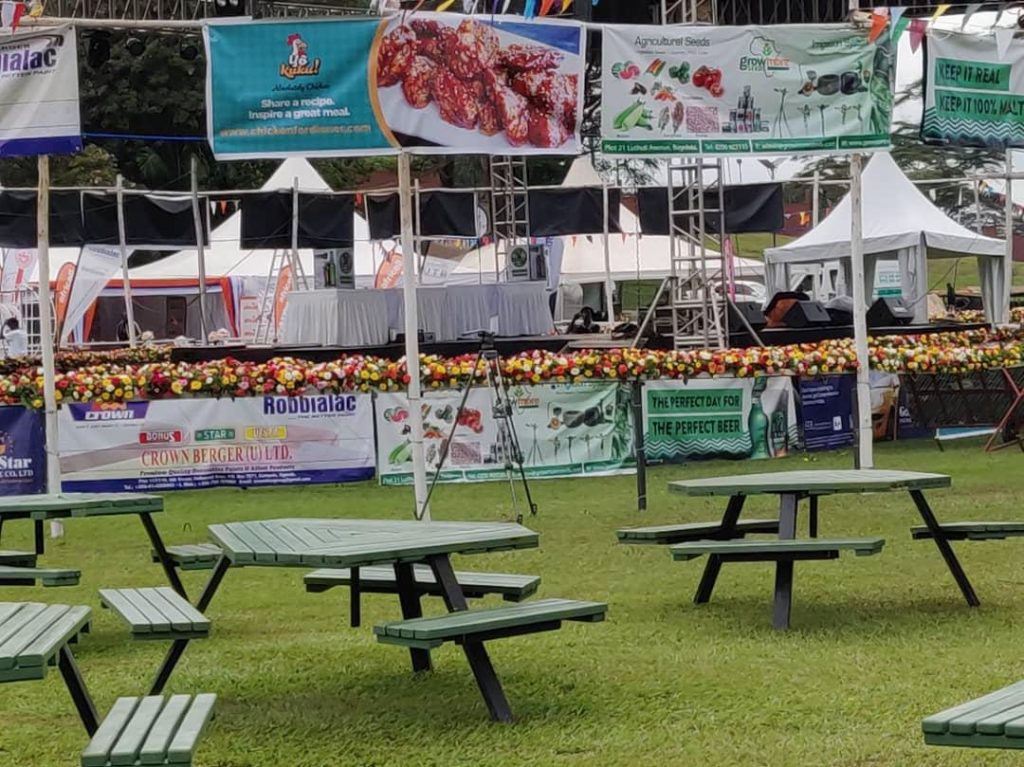
Despite the morning pour, nothing has stopped the goats race at Speke Resort Munyonyo.

An annual tradition, the goat races have grown to be more than just an entertainment event as proceeds go to charity; this year the money will go to building proper sanitary toilets for those living in impoverished communities within Kamwokya’s ghettos.

The main attraction will consist of eight course races that will feature various racers (goats) sponsored by different individuals and institutions.


Anyone can take part in the races and goats can be bought starting from Shs6 million upwards.
Stories Continues after ad

Global banks may grow more vulnerable to a dollar disruption

Bank for international settlements


By Claudio Raddatz and Adolfo Barajas


When a Mexican airline buys Brazilian airplanes, it’s likely to finance the purchase with a US dollar loan obtained from a non-US bank. That’s just one example of the dollar’s outsize role in international financial transactions between non-US counterparts.

What happens if non-US banks suddenly find themselves short of dollars? That was the case during the global financial crisis of 2007-2008, when US financial firms were reluctant to lend dollars to their foreign counterparts. To prevent the collapse of the global financial system, the Federal Reserve provided more than $500 billion in emergency funds to overseas central banks, which could then on-lend the money to their dollar-starved home-country banks.

As we explain in Chapter 5 of the latest Global Financial Stability Report, non-US banks continue to play a key role in dollar lending around the world. Indeed, their dollar assets rose to $12.4 trillion by mid-2018 from $9.7 trillion in 2012 and remain comparable to pre-crisis levels relative to their total assets.

Although the reforms introduced after the crisis have strengthened banking systems throughout the world, our analysis shows that non-US banks remain vulnerable to a dollar disruption that could transmit shocks to their home economies and to the countries that borrow from them. The first step to address the problem is to properly measure it; we have developed a set of indicators to help policymakers do that.

How do non-US banks get the dollars they need to finance assets such as loans to Mexican buyers of Brazilian airplanes? In contrast to US banks, they have limited access to a stable base of dollar deposits. So they must rely heavily on short-term and potentially more volatile sources of funding, such as commercial paper and loans from other banks. If those sources are insufficient, non-US banks turn to instruments known as foreign currency swaps, which are more expensive and can be unreliable in times of stress.

We used three measures to analyze non-US banks’ exposure to dollar funding and their vulnerability to a potential disruption. One measure shows that the gap between dollar denominated assets and liabilities has widened to about $1.4 trillion, or 13 percent of assets, from $1 trillion, or 10 percent of assets, in mid-2008. This so-called cross-currency funding gap reflects the amount of financing that must be filled by using instruments like foreign currency swaps, making banks more vulnerable.

Another measure we developed focuses on highly liquid dollar assets, which can be sold quickly in times of stress to make up for a sudden withdrawal of dollar funding. This measure shows that dollar liquidity has improved since the crisis but remains lower than the overall liquidity of the banks’ balance sheets.

A third measure reflects banks’ ability to fund their dollar assets over a long time horizon using stable sources. This gauge, which we call the US dollar stable funding ratio, has improved only moderately since 2008.

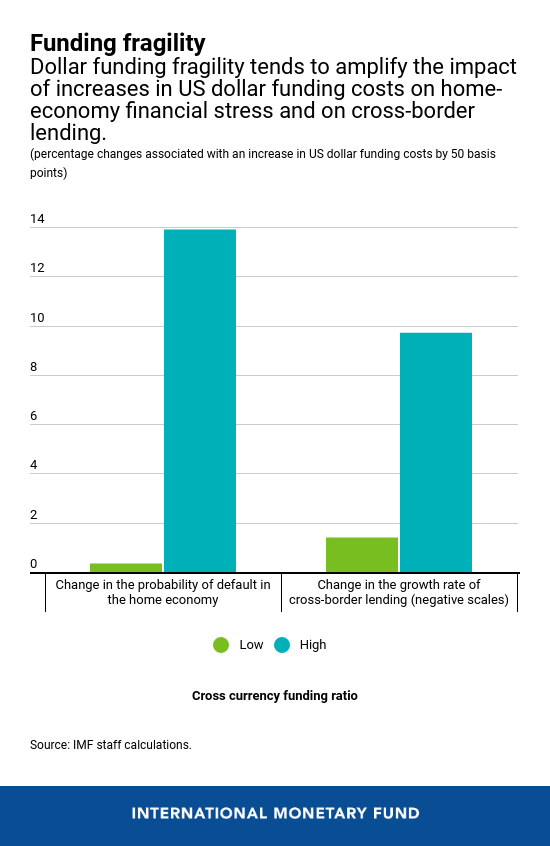
Graph to be fixed in text

As the crisis showed, an increase in dollar funding costs can reverberate across the global financial system. Our analysis finds that higher costs boost the odds of bank defaults in the home economies of non-US banks that rely on dollar funding. What is more, they increase stress in third countries that receive loans from non-US banks, with emerging-market borrowers being most vulnerable because they cannot easily find alternative sources of funding. We also find that US dollar funding fragility can act as an amplifier, as these negative effects are especially pronounced when any of the measures developed in the chapter points to heightened vulnerability.

On the positive side, our study showed that several factors, some directly related to policy, can act as mitigators, so policy makers have ways to protect their economies in case of a dollar disruption. Ensuring overall health of the banking system, with more profitable, better capitalized banks is one way to provide a cushion. Larger reserve holdings by central banks can also be used to fill the gap if dollar liquidity dries up. Finally, central bank swap arrangements that provide access to US dollars during periods of stress can play in important role, as they did during the crisis.

Stories Continues after ad

Global city leaders adopt ‘Nur-Sultan Declaration’ on smart cities at urban tourism summit

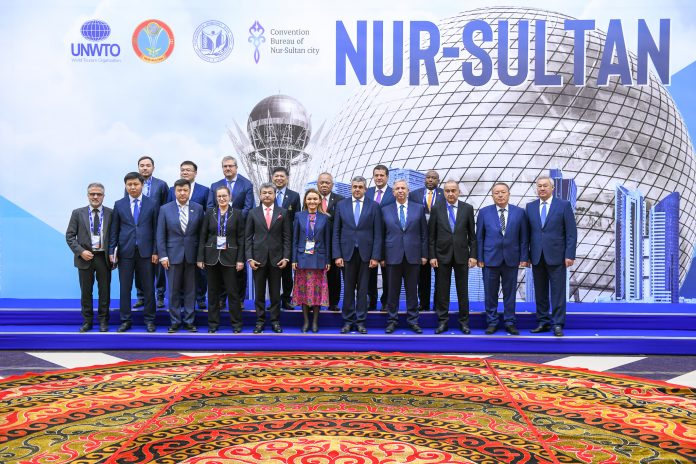
Some of the leaders at the summit


City leaders from around the world have met in the Kazakh capital of Nur-Sultan for the World Tourism Organization (UNWTO) Global Urban Tourism Summit. The Summit enjoyed the highest level of political support, with the President of Kazakhstan Kassym-Jomart Tokayev meeting with the Secretary-General of UNWTO Zurab Pololikashvili ahead of the official opening which was led by Prime Minister Askar Mamin and the Mayor of Nursultan Altay Kulginov

In line with the United Nations New Urban Agenda and the Sustainable Development Goals, the 8th edition of the UNWTO Global Urban Tourism Summit focused on the concept of “Smart Cities, Smart Destinations”. Representatives from more than 80 countries, including 10 mayors, deputy-mayors as well as ministers of tourism and representatives of the private sector, explored how developing smart city destinations can contribute to addressing complex urban tourism challenges faced today across the world.

Across two days, discussions focused on the ‘five pillars’ of smart destinations – innovation, technology, accessibility, sustainability and governance. Building on this, national and city representatives at the Summit officially adopted the Nur-Sultan Declaration on ‘Smart Cities, Smart Destinations’. The Declaration recognizes the growing popularity of cities as tourist destinations and their potential to drive socio-economic development and promote and preserve unique culture.

By adopting the Declaration, destinations also agree to work towards enhancing the contribution of tourism to Goal 11 of the UN Sustainable Development Agenda – to ‘make cities and human settlements inclusive, safe, resilient and sustainable’. The Declaration also aligns with UNWTO’s Global Convention on Tourism Ethics, the first-ever convention of its kind which was adopted at the recent UNWTO General Assembly in St Petersburg.

Opening the Summit UNWTO General-Secretary Mr Pololikashvili said: “Smart cities have enormous potential to make a positive impact not just on residents’ lives, but on tourists’ experiences too, and city leaders are best-placed to make decisions that make a difference. This Summit offered a unique opportunity to pool our knowledge to identify the challenges cities face as tourist numbers continue to rise around the world, and to explore solutions so that this growth can be properly managed and used to drive positive change for all.”

Against the backdrop of the summit, Mr Pololikashvili met with President Tokayev for high-level discussions on Kazakh tourism, which is emerging as one of the fastest-growing sectors in the Central Asian region. Further demonstrating Kazakhstan’s support of both the event and UNWTO’s wider mandate, Mr Pololikashvili additionally met with Prime Minister Askar Mamin, the Minister of Culture and Sports, Ms Aktoty Raimkulova, and the Minister of Healthcare, Mr Yelzhan Birtanov.


Stories Continues after ad