Stanbic Bank
Stanbic Bank
20.7 C
Kampala
Stanbic Bank
Stanbic Bank
Home Blog Page 1142

Munyonyo readies for Royal Ascot race

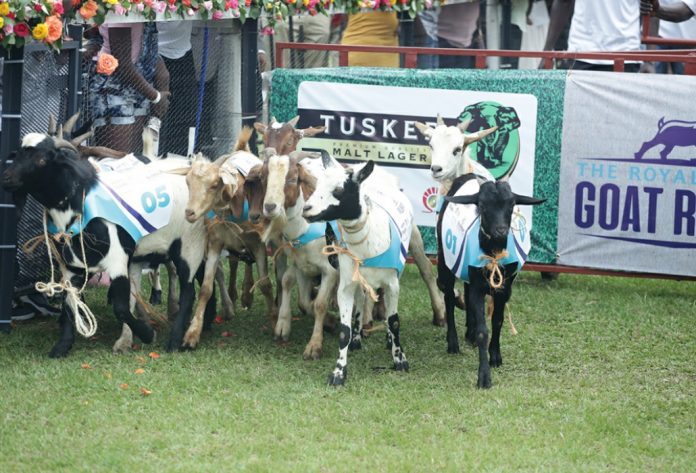
Some of the goats that took part in the races last year.

The long anticipated Royal Ascot goat races are finally upon us, taking place this weekend on the October 12,2019 at the Speke Commonwealth Resort Munyonyo where loads of fun packed activities are lined up for the day including a kids section that will also cater for the little ones.

An annual tradition, the goat races have grown to be more than just an entertainment event as proceeds go to charity; this year the money will go to building proper sanitary toilets for those living in impoverished communities within Kamwokya’s ghettos.

The main attraction will consist of eight course races that will feature various racers (goats) sponsored by different individuals and institutions. Anyone can take part in the races and goats can be bought starting from Shs6 million upwards.

The event that will kick off at 10am is set to attract thousands of revelers as many Ugandans look forward to the colorful spectacle that will take place by the lake side. “The Goat Races are more than just another event in Uganda, it’s a place where people can come and network and mix along with business, pleasure and have a fun humorous time with good food and drinks all day long.” Rajiv Ruparelia-Managing Director.

The event will further be highlighted by guest star performances as well as several displays of entertainment including a firework finale that will usher the guests into the night. For those looking for a family getaway this weekend then look no further; all roads will lead to Speke resort Munyonyo.

Tickets will be sold at only Shs50,000  although early birds can get one at Speke Resort Munyonyo, kabira Country Club for just Shs30,000.

Stories Continues after ad

Coffee producing countries still export the bulk of their produce, earning $20b in exports a year

José Sette


By José Sette


Women and men started drinking coffee many centuries ago and traces of “formal” cultivation and trading of coffee go back as far as the 15th Century. Nowadays, coffee is commercially produced in more than 50 countries and the world drinks over 3 billion cups a day – either alone or with family, friends or colleagues. Some drink it at home, others at work or in coffee shops. People even drink coffee in outer space.

Since 1990, coffee growers have increased production from 100 million to over 165 million 60kg bags today. Coffee producing countries still export the bulk of their produce, earning around US $20 billion in exports a year. The annual revenue of the coffee industry is estimated to exceed US $200 billion. Around 25 million farming households depend on coffee for their living.

At least 100 million families depend on coffee for their living. A substantial number of jobs and economic opportunities are created along the global coffee value chain. These range from input providers to farmers, traders, processors, roasters, distributors, marketers, packaging suppliers, baristas and even those who deal with the disposal and re-use or recycling of coffee waste.

Coffee is a growth market. Globally, the number of consumers continues to rise and consumption is steadily growing at a healthy annual rate of 2.2 per cent.

In spite of the positive market trends, significant differences exist among actors in the coffee value chain in terms of risks, income, access to resources and vulnerability to price volatility and climate change.

The drop in coffee prices by 30 per cent over the last two years has had negative repercussions for the lives of many coffee farmers. How can we ensure equitable prosperity for all coffee stakeholders, and especially for millions of coffee farmers? They represent the weakest link in the value chain and often struggle to cover basic production costs at current price levels, especially taking into account increases in cost of inputs and logistics.

All those involved in the coffee sector agree on the need to take corrective actions in order to ensure greater prosperity for coffee farmers and their families, so that the growth in the sector is equitableand sustainable in the future.

This Report seeks to tackle these complex issues. It has been produced using rigorous, factual, informed and independent analysis.

This first Coffee Development Report (CDR) marks the launch of a new series of flagship reports, which represent a significant upgrade in the ICO’s function as a global forum for discussion of coffee policies. The flagship reports will strengthen the Organization’s role as the major and neutral source of coffee data and analytics and set the agenda in the global debate on issues related to the development of the coffee sector. In this perspective, the CDR responds to the ICO’s mandate to be a leading source of information on the coffee sector in order to enhance market transparency, as set out in the International Coffee Agreement 2007 and also reiterated in the current Five-year Action Plan 2016-2020.

This first edition of the CDR is based on the analysis of ICO data and information from external sources and seeks to offer a framework to capture the complex nature of the coffee market. It builds on and complements other ICO studies that also shed light on the strong relations between the development of a sustainable and inclusive coffee sector and its economic viability. The Report draws on the outcomes of the structured sector-wide dialogue launched by the ICO in 2018-19, in which 80 experts and 2000 participants were involved in five consultative events organized by the ICO in Nairobi, at the United Nations in New York City, in Rome at the EXCO Development Expo and at the European Commission in Brussels.

By placing economic sustainability at the centre of attention, this year’s CDR responds to the concerns of ICO members, as set out in Resolution 465 on Coffee Price Levels.

By virtue of a rigorous quantitative analysis, the relationship between coffee farming and socioeconomic indicators such as poverty and food security is examined. The solutions identified seek to address low price levels and price volatility in order to meet the long-term sustainability goals set out in the United Nations Sustainable Development Agenda. At the heart of the UN Agenda is the concept that “No one should be left behind”, and surely the vision of the ICO is that this should not happen to coffee farmers, workers and their families and to all coffee stakeholders.

This effort, I hope, will inform the political debate and help mobilize the support of governments, financial institutions and international organizations in order to help the world coffee sector to grow sustainably, while reducing barriers to trade, fostering social, economic and environmental sustainability and generating prosperity for all those involved in the coffee value chain.

It is a great pleasure for me to present this Coffee Development Report 2019, which adds a new dimension to the analysis of the development of the world coffee sector. The Report reaffirms the commitment of the ICO in supporting its members and all coffee stakeholders to achieve inclusive and sustainable development and to meet all 17 Sustainable Development Goals. A key message of the Report is that the sustainable and inclusive development of coffee sector requires major shifts, through enhanced sector-level cooperation based on shared values and responsibilities and an alignment of actions, funding and schemes through pre-competitive action, public-private partnerships and investments.

Finally, I extend my personal compliments to the entire ICO team, including our international experts and external contributors, who accepted the challenge of initiating and blazing a new trail for the Organization by producing this timely Report that should inspire all parties interested in promoting the sustainable development of the whole coffee sector.

The writer is the Executive Director, International Coffee Organisation (ICO).


Stories Continues after ad

SafeBoda, AkelloBanker awarded for upholding standards and transforming lives in Uganda

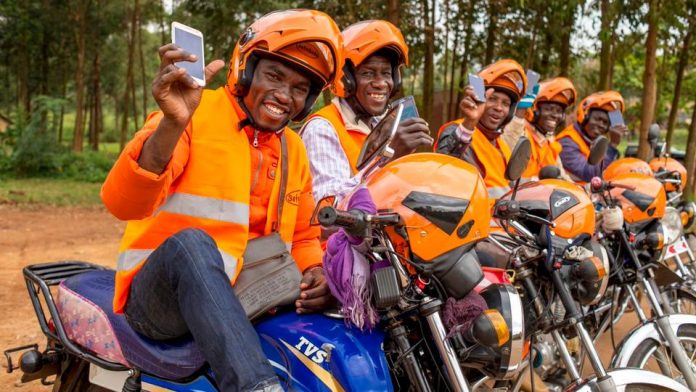
Safe boda riders


Airtel has recognized and awarded three mobile Application innovators for upholding standards and transforming lives of Ugandans with information and communication technology (ICT).

The innovations include Matibabu, a platform that collects, organizes and visualizes data to better understand and identify malaria trends and how to diagnose it.

Akellobanker, a mobile and cloud based digital finance platform used by farmers and small-scale traders to access instant credit from anywhere using their mobile phones and SafeBoda, a community of entrepreneurs and boda cyclists working together to improve professional standards across the urban transportation industry in Africa and each received Shs5 million.

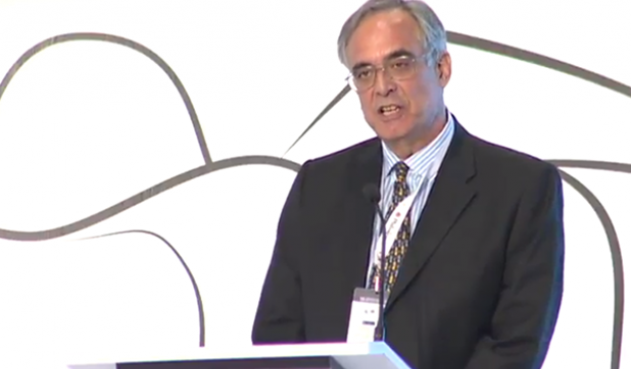
According to Mr. V. G. Somasekhar the Airtel Uganda Managing Director, Airtel is committed to the development of Uganda by giving SMEs, large corporations and individuals the necessary tools to innovate, employ and empower themselves and the communities in which they exist.

“This year, we are happy to recognize and award different entities that have excelled in the ICT sector. At Airtel Uganda, we have always spearheaded the notion of development through ICT and this is why we have made significant investment in our network to ensure countrywide 4G, affordable internet connectivity and an all-inclusive Airtel money platform,” he said at Bugolobi.

In his remarks, the Commissioner Telecoms Mr. Charles Awuk applauded Airtel Uganda for always exhibiting patriotism and leading technological advancement in the country.

‘‘Allow me to congratulate all the award recipients here today. I applaud you for championing the cause of ICT as an enabling factor for development. With ICT, there is almost nothing that cannot be accomplished. From simple communication to satellite maps, digital currencies and health solutions, ICT is already playing a key role in the prosperity of countries across the world,” he commented.

He also applauded Airtel for their commitment to the implementation of the broadband policy as well as the 4G connection in national parks, which are a great source of revenue to Uganda.

Stories Continues after ad

Sheikh Muzaata apologises to Eddy Kenzo, it was a slip of tongue

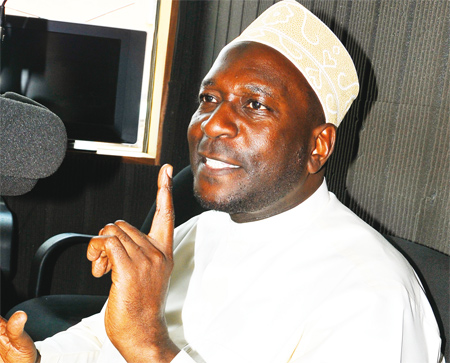
Controversial Muslim cleric Sheikh Nuhu Muzaata.


The public relations officer of Kibuli Muslim Sect, Sheikh Nuhu Muzaata Batte, has apologized to Idris Musuza aka Eddie Kenzo for insulting him as his ex-fiance, Rema Namakula introduced her new catch on Wednesday.

On taking up the microphone, Muzaata, started humiliating and hurling demeaning words to the Bet award winner and going against his mother who died long time ago as Kenzo’s daughters, Maya Musuza and Amal Musuza stared at him.

Kenzo later responded by applauding him for insults, “Thank you Sheikh Nuhu Muzaata that confronting and humiliating message but my mother died 20 years back that is why you are seeing me in this category. I wish she was alive I would have not been like this.”

In an open letter, Muzaata apologized saying he did not mean to attack you as a person neither did my message target someone. It was generic. “I kindly and humbly apologize to the public for the word I used that Wasa nyoko’ literally meaning ‘Marry your Mother’. It was a slip of the tongue.” He said.

“You spent years investing in a future with Namakula Rema that you chose and that you loved deeply. You gave pieces of yourself to someone that no one else on this earth has ever or probably will ever know. You can’t have those back now. She took your secrets and your love and she left. I’m sorry. If I could take it away, I would obviously, but all the sympathy in the world will not change her decision.” Reads in part of apology letter

Muzaata said there is a major difference between being lonely and being alone and kenzo is going to feel both, possibly at the same time. “Do not allow yourself to fall into this feeling so much that you forget how truly together you are. You are not alone. You are not single. You are not lost in a world that makes absolutely no sense. At the end of every single day, you are surrounded by an army of people who believe in you and who have faith in your strength and perseverance. Remember that.” He urged him.

“Your daughters Maya Musuza and Amal Musuza are going to be keeping a close eye on you – like they have always done. Keep it in mind that they are learning from you. Let them see what a strong and capable Man looks like. Give them something to be proud of. Let them see how well and easily you can stand on your own two feet and move forward with your life. And on days when you can’t be strong. When the grief and pain are too much to bear, let them see what it looks like to be human. Let her know that there is no such thing as perfection and that it is more than ok to grieve.”


Stories Continues after ad

FUBA launches 2019 FIBA 3X3 Africa Cup

3x3 fiba launch


The Federation of Uganda Basketball Associations (FUBA) has launched the 3×3 Africa cup basketball tournament due to take place in Kampala starting on the 7th November to 10th November 2019.

The four day continental showpiece will attract nations like Burundi, Kenya, Djibouti, Madagascar, Nigeria, Cape Verde, Togo, Niger, Benin, Botswana, Egypt, Mauritius, Mali and the hosts Uganda that will be tussling out for the continental honors.

Each nation is expected to be represented by four teams, U18 (Men and Women) and the senior category (Men and Women). The four day competition promises nothing short of exciting 3×3 basketball at the highest level.

“I believe this is an exciting opportunity for us a country to take lead in the 3X3 development. In the end further elevate our National federation ranking. It is also a unique opportunity to show case to our basketball fans what 3X3 is and its potential”, Hamza Nyambogo the 3X3 National Coordinator said.

“We are very positive that we will have a successful tournament in Kampala and looking forward to hosting all the teams. We thank you for your continued coverage and support for the game of basketball and looking forward to your continued coverage during the buildup and the tournament” he added

Uganda was selected to host the tournament for the next three years because of its good ratings and commitment for the game, taking part in a lot of 3X3 events, and also been competing well on both the continent and internationally.

In the 3×3 basketball, each team consists of three players and one substitute. Each team must have three players on the court when the game begins and it is played on half-court.

3×3 is an opportunity for new players, organisers and countries to go from the streets to the World Stage. The stars of the game play in a professional tour and some of the most prestigious multi-sports events. On June 9, 2017, 3×3 was added to the Olympics Program for 2020.

Stories Continues after ad

Uganda’s plans to re-introduce anti-home cause global concern, Joe Biden alarmed

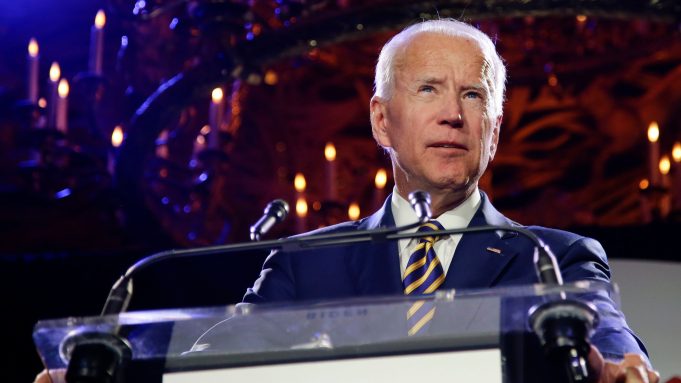
US Democratic Presidential hopeful Joe Biden


Uganda Tourism may face a new call for a boycott. The government of Uganda has announced plans to reintroduce the bill, dubbed by the locals ‘Kill the gays’ law. This may create a serious new challenge for the Uganda Travel and Tourism industry.

When a similar bill was introduced calls for boycotting travel and tourism to the East African Country became louder. In March 2014 at a CNN event at the ITB Trade Show in Berlin, the then CEO of the Uganda Tourism Board Stephen Asiimwe was under fire after eTN reported on a call to boycott travel to Uganda.

Richard Quest of CNN told Assimwe at that event Uganda was the last country he would consider visiting as a gay man.

Mr. Asiimwe discussed the issue candidly with eTN publisher Juergen  Steinmetz and Richard Quest and said. The result of this very frank discussion was the official statement by the Uganda Tourism Board to guarantee the safety of gay tourists to their country and to go even a step further and welcome gay travelers to enjoy the beauty of their tourism destination,” said the eTN publisher.

According to Mr. Asiimwe, “no gay visitor to our country will be harassed or not welcome for the only reason that he or she may be gay. Cultural policies are important in Uganda. We ask visitors to respect them. They include touching in public for example.”

Five years later the Uganda legislation is again paving the way for the execution of homosexual people. This legislation is expected to be re-introduced ‘within weeks’, according to government officials. Five years ago the bill was thrown out by the constitutional court on a technicality.

Currently, Ugandans face life imprisonment if convicted of having sex with another person of the same gender.

Ethics and Integrity Minister Simon Lokodo said the bill is being reintroduced because of allegedly “massive recruitment of gay people” and current laws are too limited in scope.

“We want it made clear that anyone who is even involved in promotion and recruitment has to be criminalized,” he said. “Those that do grave acts will be given the death sentence.”

The minister said he’s confident the measure will get the backing of the two-thirds of parliamentary members required to pass a bill.

Several countries cut their financial support and aid to Uganda when the ‘Kill the gays’ bill was first brought forward in 2014, but Lokodo said the country is prepared to stand up to a fresh backlash over the legislation, adding “we don’t like blackmail.”

Today presidential US Democratic candidate and former US Vice President Joe Biden told CNN viewers if he was elected president, he would open a US State Department section to sanction countries for violating human rights for LGBT people anywhere in the world.

In March, Brunei introduced an amendment to its Islamic penal code that included stoning gay people to death but suspended the measure following an international outcry.


Stories Continues after ad

Reform WTO and resist protectionism, say Commonwealth trade ministers

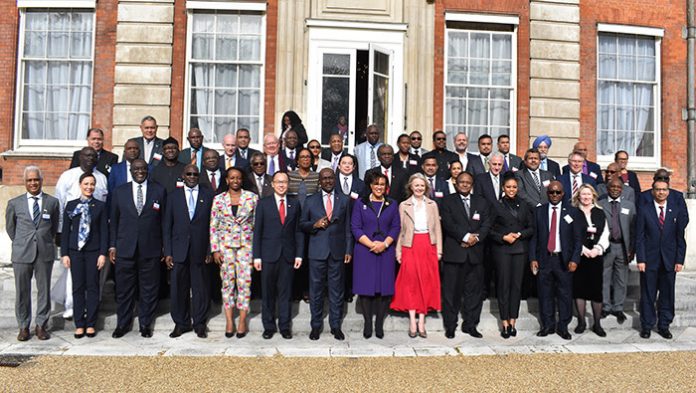
A section of Commonwealth trade ministers in London


Trade ministers from across the Commonwealth yesterday made a commitment to resist all forms of protectionism, and to work urgently together towards reforming the World Trade Organisation (WTO), which sets the global rules for international trade.

Following a meeting in London, ministers from the 53 Commonwealth member countries declared their collective support for free trade in a transparent, inclusive, fair and open multilateral trading system, with the WTO as its core institution.

They agreed that any WTO reform should take into account the views of all members, underlining the special circumstances of the developing and the least developed countries, as well as small and vulnerable economies, including Small Island Developing States (SIDS).

Ministers also endorsed an action plan designed to boost trade among their countries to at least $2 trillion by 2030, through the Commonwealth Connectivity Agenda. Intra-Commonwealth trade is projected to reach $700 billion by next year.

Commonwealth Secretary-General Patricia Scotland said:

“The multilateral trading system is the only way for our countries, as diverse as they are, to trade in a predictable, stable, transparent and fair environment. While the global trading system may be far from perfect, it is the surest pathway towards eradicating poverty.

“Building on this, the Commonwealth Connectivity Agenda will help businesses, including micro, small and medium sized enterprises, to plug into global trade networks and benefit from world trade. In this way, intra-Commonwealth trade offers immense opportunities to contribute to reducing poverty and achieving sustainable development.”

The Chair of the meeting, UK Secretary of State for International Trade and President of the Board of Trade Liz Truss said:

“The UK along with its Commonwealth partners has today clearly set out its commitment to fight against protectionism. We must work together to promote free trade and reform the multilateral system to make sure it works for every nation, small or large.

“Trade has the power to drive growth, jobs and opportunities – it is an essential tool in the fight against extreme poverty and insecurity.

“By sharing experience across the diverse Commonwealth community, we can help to break down existing barriers to trade which currently prevent businesses in all our countries from trading successfully.”

Ministers called for an end to the impasse regarding the WTO’s Appellate Body – a key panel of judges, whose rulings help resolve the trade disputes.

They highlighted the need to update WTO rules to address new challenges and opportunities, including e-commerce. They pledged support for a global agreement that would prohibit certain forms of fisheries subsidies that contribute to overcapacity and overfishing, and eliminate subsidies that contribute to illegal, unreported and unregulated fishing by the end of 2019.

In their communiqué issued from the meeting, ministers also welcomed progress made under the Commonwealth Connectivity Agenda, including the work of active country-led ‘clusters’ focused on five areas: digital, physical, regulatory, supply side and business-to-business connectivity.

The outcomes of the meeting will inform leaders’ discussions at the forthcoming Commonwealth Heads of Government Meeting in Kigali, Rwanda in June 2020.


Stories Continues after ad

Fiscal policies to curb climate change

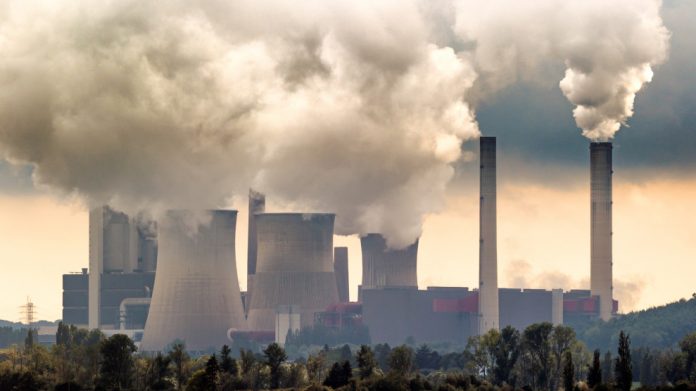
Brown coal power plant emission.


By Vitor GasparPaolo MauroIan Parry, and Catherine Pattillo


Global warming has become a clear and present threat. Actions and commitments to date have fallen short. The longer we wait, the greater the loss of life and damage to the world economy. Finance ministers must play a central role to champion and implement fiscal policies to curb climate change. To do so, they should reshape the tax system and fiscal policies to discourage carbon emissions from coal and other polluting fossil fuels.

The Fiscal Monitor helps policymakers choose what to do and how to do it, right now, globally and at home.

A better future is possible. Governments will need to increase the price of carbon emissions to give people and firms incentives to reduce energy use and shift to clean energy sources. Carbon taxes are the most powerful and efficient tools, but only if they are implemented in a fair and growth-friendly way.

To make carbon taxes politically feasible and economically efficient, governments need to choose how to use the new revenue.  Options include cutting other kinds of taxes, supporting vulnerable households and communities, increasing investment in green energy, or simply returning the money to people as a dividend.   

The price to pay

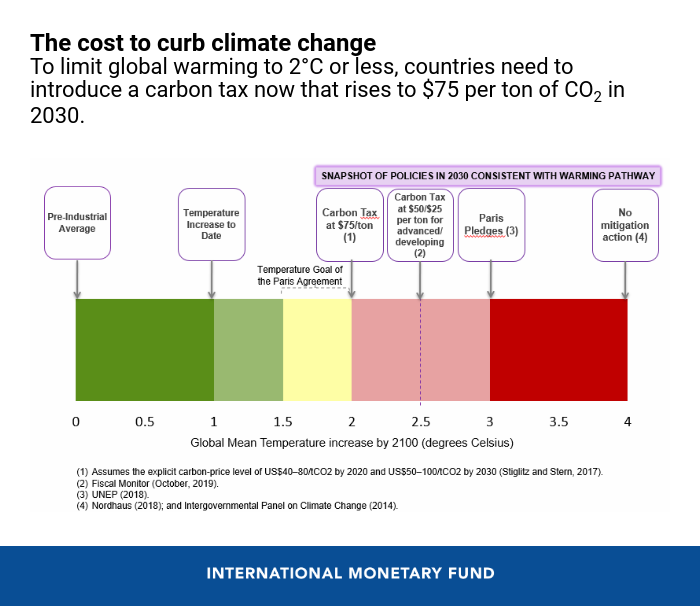
To limit global warming to 2°C or less—the level deemed safe by science—large emitting countries need to take ambitious action. For example, they should introduce a carbon tax set to rise quickly to $75 a ton in 2030.

This would mean household electric bills would go up by 43 percent cumulatively over the next decade on average—more in countries that still rely heavily on coal in electricity generation, less elsewhere. Gasoline would cost 14 percent more on average.

But the revenues from the tax, between ½ and 4½ percent of GDP (depending on the country), could be used to cut other taxes, such as income or payroll taxes that harm incentives for work and investment.

Governments could also use the money to support disproportionately affected workers and communities, for example coal-mining areas, or pay an equal dividend to the entire population. Alternatively, governments could compensate only the poorest 40 percent of households—an approach that would leave three quarters of the revenues for additional investment in green energy, innovation or to fund the Sustainable Development Goals.

Taxpayer money would also help save more than 700,000 people a year in advanced and emerging market economies who currently die from local air pollution. And the money would help contain future global warming, as agreed by the international community.

It can be done

About 50 countries have a carbon pricing scheme in some form. But the global average carbon price is currently only $2 a ton, far below what the planet needs. The challenge is for more countries to adopt one and for them to raise the price.

Sweden has set a good example. Its carbon tax is $127 per ton and has reduced emissions 25 percent since 1995, while the economy has expanded 75 percent since then.
Acting individually, countries may be reluctant to pledge to charge more for carbon if, for example, they are worried about the impact of higher energy costs on the competitiveness of their industries.

Governments could address these problems with agreement on a carbon price floor for countries with high levels of emissions. This can be done equitably with a stricter price floor requirement for advanced economies.

For example, a carbon price floor of $50 and $25 a ton in 2030 for advanced and developing G20 countries respectively would reduce emissions 100 percent more than countries’ current commitments in the 2015 Paris Agreement on Climate Change. Countries that want to use different policies, like regulations to reduce emission rates or curb coal use, could join the price floor agreement if they calculate the carbon price equivalent of their policies.

Polluters pay

Feebates are another option at policymakers’ disposal. As the name implies, in a feebate system governments charge a fee on polluters and give a rebate for energy efficient and environmentally-friendly practices. Feebates encourage people to reduce emissions by choosing hybrid vehicles over gas guzzlers or using renewable energy like solar or wind over coal.

Policies need to go beyond raising the price of emissions from power generation or domestic transportation. It is also necessary to introduce pricing schemes for other greenhouse gases, for example, from forestry, agriculture, extractive industries, cement production, and international transportation.

And governments need to adopt measures to support clean technology investment. These include power grid upgrades to accommodate renewable energy, research and development, and incentives to overcome barriers to new technologies, such as the time it will take companies to efficiently produce clean energy.

The world is looking for ways to foster investment and growth that create jobs. What better way to do it than investing in clean energy to both slow and adapt to climate change. The transition to clean energy may seem daunting, but policymakers can act to change the current course of climate change. As Nelson Mandela once said, “It always seems impossible until it is done.”

Stories Continues after ad

AfDB president Akinwumi Adesina receives Emeka Anyaoku lifetime achievement award

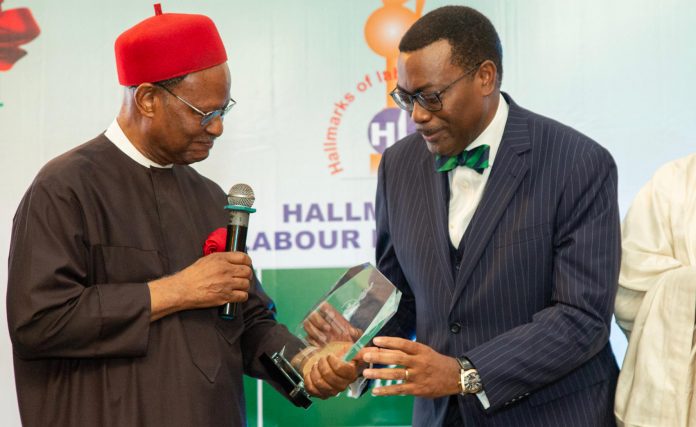
Lifetime Achievement Award to the African Development Bank President Akinwumi Adesina


Former Commonwealth Secretary-General Emeka Anyaoku has presented a Lifetime Achievement Award to the African Development Bank President Akinwumi Adesina, describing him and the Bank’s work as “ legendary, unprecedented and worthy of emulation.”

The Hallmarks of Labour Foundation presented the Outstanding International Icon Award to Adesina at a ceremony held in Lagos on October 6th.

The Hallmarks of Labour Foundation is a non-profit that recognizes Africans who have achieved success through hard work, honesty, integrity, and justice in every field of human endeavour. Previous beneficiaries of the award include Nobel Laureate, Wole Soyinka.

Thanking the foundation for the recognition, Adesina said that the African Development Bank had helped 181 million people directly through its investments in the past four years

“There is still much to do. We have gone some way, climbing the steep mountainside of Africa’s development, yet there’s still a long way to go until we reach the mountaintop,” he told the gathering of top government officials, industry leaders, and diplomats.

The Bank has connected 16 million people to electricity and provided 70 million people with improved agricultural technologies to achieve food security. The African Development Bank also gave 9 million people access to finance from private sector companies, provided 55 million people access to improved transport, and 31 million people with water and sanitation.

Adesina congratulated his fellow awardees and urged them to be relentless in their efforts to build humanity.

“Recognition is never the expectation or endgame when you are passionate about your work. But when one’s modest contributions and efforts are found worthy of honor, it is both a surprise and a delight,” he noted.


Stories Continues after ad
Ugandans living in South Africa will apply for and receive  IDs and passports without coming to Uganda


Ugandans living and working in South Africa will now be able to apply for and receive national IDs and passports from the country, Ugandan envoys have said.

Originally Ugandans have had to travel back home to apply for and receive the documents, as obtaining the newly introduced East African passport requires one to have a National ID, only issued in Uganda.

“In collaboration with the National Identification and Registration Authority, we brought ID registration services nearer to you. However, we are dismayed by some of you who are bent on de-campaigning this noble cause,” said Barbara Nekesa, Uganda’s High Commissioner to South Africa.

Nekesa was speaking on the occasion to mark Uganda’s 57th independence anniversary held at the Uganda High Commission in Pretoria, South Africa.

The event was attended by Uganda’s representatives to the Pan African Parliament, Morris Ogenga Latigo and Felix Okot Ogong and Parliamentary Commissioner, Francis Mwijukye and over 100 Ugandans living and working in South Africa.

Nekesa said Uganda was only one of the few countries that issue passports at selected missions, with citizens of other countries having to return home to secure the document.

“As a Mission, we elected to ignore them, for it is them who will suffer the consequences of not having legal ID. There are many other areas where we can work together to solve whatever problems we may have,” Nekesa said adding that “Those who have approached us can testify that we are always available to render service to whoever walks into the Mission irrespective of colour, faith, tribe, political affiliation.

Officials said that NIRA, the agency charged with issuance of the IDs, had agreed that Ugandans in South Africa would fill the required forms through the embassy, which information would be transferred to Kampala for printing of IDs.

The officials said they had also resolved the issue of the requirement for LC1 and DISO signatures, as association chairpersons and embassy officials would help confirm one’s citizenship.

Mr. Joshua Kivuna, the Minister Counselor, said Mission staff had been trained on how to capture data for issuance of IDs, which would be issued in Kampala upon transferring of the captured information. The officials would collect the IDs and pass them on to the applicants from the Mission in South Africa.

He however said that several Ugandans were against registration as they claimed providing their data exposed them to arrest by government.

Kivuna also said that although NIRA had promised that the first batch of IDs would be issued in three months, this had not happened yet.

“There has been a delay in the transfer of data. The IDs will come; we pray for some patience, and hope they will be delivered soon,” he said.

Ms. Irene Jogole, who was posted to the Mission this month as the Immigration Attaché, said she was starting with assessing how to re-start processing and issuing passports to Ugandans in the country following the recall of the old passports for the new East African ones. She also said that the Mission will be in position to issue visas to persons holding South African passports wishing to travel to Uganda.

Stories Continues after ad