Stanbic Bank
Stanbic Bank
19.1 C
Kampala
Stanbic Bank
Stanbic Bank
Home Blog Page 1144

EAC Youth Ambassadors to sensitize border communities

Youth ambassadors with officials

The East African Community (EAC) Youth Ambassadors will undertake a multi-stakeholder outreach programme targeting the border districts/communities at Horohoro (Tanzania) and Lunga Lunga (Kenya).The sensitization programme will take place from October 9-10, 2019.

The major goal of the programme is to sensitize the youth within the border communities, local leaders and actors as well as border agencies on issues hindering regular cross border movements and threats linked to irregular movements such as smuggling or trafficking.

The two-day sensitization programme aims at establishing partnerships with relevant actors at the local level to maximise on the mitigation possibilities to simultaneously increase access to opportunities presented in the EAC Common Market for young people through better management and secured cross border movements.

The sensitization program will, among other things, seek to achieve the following:

Understand the limiting factors for border management officials in curbing migrant smuggling and trafficking challenges at the borders;

Build joint stakeholder approaches towards legal cross border trade and sharing of best practices in transfer of border management technologies;

Sensitize border communities (including vulnerable groups such as young people) and border agencies on threats and other risks related to cross border smuggling and trafficking

Share and exchange information about opportunities available in the EAC for young East Africans to legally benefit from the region and vice versa. This aims to reduce negative effects of migration of young people to access available livelihood opportunities, and;

Increase collaboration between border stakeholder, actors and EAC Secretariat on border management

The sensitization programme will be attended by Representatives of Border Security and law enforcement agencies; Members of the immigration border control; representative of the Ministry of EAC Affairs from each Partner State; the District Youth leadership; the current EAC Youth Ambassadors, Alumni, youth Representatives and; the border communities with emphasis given to youth.

The EAC Youth Ambassadors are an initiative of the Nyerere Centre for Peace and Research with the mandate of increasing EAC sensitization among young people in the EAC. This mandate extends to being active influencers of EAC programmes and policy frameworks to address the emerging day-to-day realities of young people within the community. The EAC youth ambassadors work with former and serving ambassadors to achieve their mandate from time to time.

Stories Continues after ad

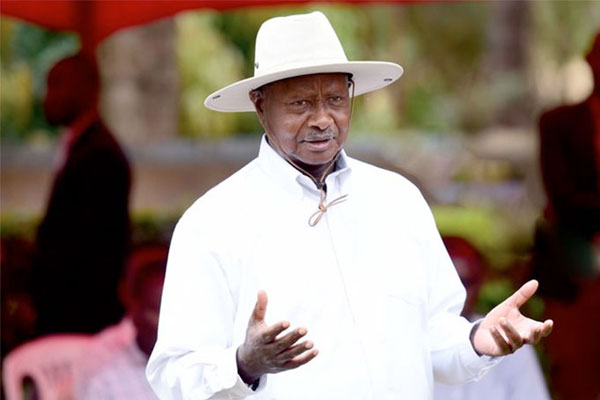
Museveni assures manufacturers on cutting cost of production

President Museveni


President Yoweri Museveni has assured manufacturers in Uganda that his government is committed to solving all major cost pushers to ensure that business operators are able to benefit from their business operations.

Museveni was speaking at the on-going 27th Uganda International Trade Fair at Uganda Manufacturers Association (UMA) Show Grounds in Lugogo, Kampala where manufacturers and exhibitors are showcasing their numerous industrial merchandise.

“Business is about profits. When you make profits business grows and in order to make profits you need to minimise costs,” he said.
He enumerated the four major cost pushers as being high cost of transport, electricity, money and labour adding that all the efforts by Government to address these challenges are under way.

“The economy of Uganda has been growing in spite of these bottlenecks. Even now, we have not solved them wholly, but the economy is doing well because of peace and liberalization,” he observed.

This year’s International Trade Fair, whose theme is ‘Promoting Job Creation through Industrialization, has attracted the participation of over 27 countries. The one-week long event started on 2nd and is slated to end on October 10, 2019.

Museveni informed the manufacturers and exhibitors that the Government of Uganda is continuing to build infrastructure, such as roads, among others as it also promotes partnering with the neighbouring countries of Kenya and Tanzania to build modern railway line as well as expanding electricity generation in order to reduce the cost of doing business in the country.

Regarding the issue of the cost of money (high interest rates), President Museveni explained to the manufacturers that the government capitalize government banks namely the Uganda Development Bank and Post Bank so that they give loans to borrowers at no more than 12% per annum.

Trade, Industry and Cooperatives Minister, Amelia Kyambadde, highly commended the Uganda Manufacturers Association for organising successful trade fairs in the country for the last 27 years. She noted that the Fair has enabled domestic and international companies to show case their products on top of helping to increase sales through networking. She revealed that the manufacturing sector alone contributes 35% of the total tax revenue collected in Uganda.

On her part, Uganda Manufacturers’ Association boss, Ms. Barbara Mulwana thanked the President for the ardent support to the manufacturing sector in Uganda. She reported that the association is committed to partnering with government to re-tool Ugandans, especially the youth, in skills’ imparting methods to help the young meet international job demands worldwide.


Stories Continues after ad

90 survive as Ethiopian Airlines aircraft makes emergency landing

Ethiopian-plane


An Ethiopian Airlines jet made an emergency landing in Dakar with one of its engines on fire, but all 90 passengers and crew were unharmed, airport and airline officials said.

The Boeing 767 aircraft had just taken off from Dakar airport en route to Addis Ababa when the pilot asked to return and make an emergency landing, Tidiane Tamba, a spokesperson for the Senegal airport said.

Ethiopian Airlines confirmed one of its jets had suffered a “mechanical problem” and had safely returned to its point of departure, without giving more details on the cause.

The airline said all those onboard were safe.

The Dakar incident came after an Ethiopian Airlines Boeing 737 MAX crashed in March shortly after taking off from Addis Ababa, killing all 157 people onboard.


Stories Continues after ad

Mbale’s BCU Radio hits air waves

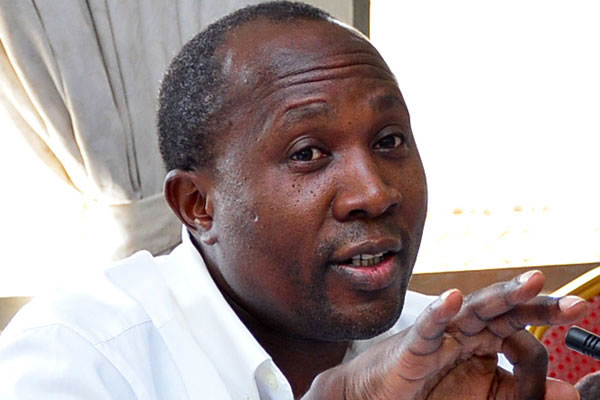
Nandala Mafabi, FDC's presidential choice for the 2026 general elections, hails from Bugisu-Eastern Region.


By Our Reporter

Bugisu Cooperative Union (BCU) radio started hitting live on Air. B.C.U had a successful launch earlier on today. B.C.U will broadcast live on frequency 100.6 from Sironko for Uganda’s 57th independence.

BCU FM has officially started programming after playing music and testing machines for about a year.

The newest radio is under the management of coffee farmers group by MP Nathan Nandala Mafabi, who happens to be BCU Chairman.

It has recruited a number of experienced presenters among which include John K Wasikye and Richard Welishe aka Ragga Chief who both formerly worked with Step FM and Big FM.

Other presenters at BCU FM are former Elgon FM sports presenter SK Godfrey Kakungulu, former Step TV news anchor Imam Saudi Masalu, former IUIU FM presenter Manana Vinikhet and former Open Gate FM English news anchor Namonyo Emma.


Stories Continues after ad

Pan African Parliament condemns xenophobic attacks in South Africa

Prof. Ogenga Latigo chats with PAP First Vice President, Stephen Masele at the opening of the 3rd Ordinary Session of the Parliament


MIDRAND SOUTH AFRICA: The President of the Pan African Parliament, Roger Nkodo, has condemned the recent xenophobic attacks in which persons were killed and property destroyed in South Africa.

Nkodo, who was speaking at the start of the 3rd Ordinary Session of the 5th Parliament, said no one should take the life of another and commended the South African government for coming in to stop further killings and destruction.

“The present session is held in a particular context marked by the unfortunate events of black man’s hatred against other Africans. The African Parliament, by my voice, strongly condemns the heinous acts perpetrated by the enemies of peace,” said Nkodo.

The 3rd Session of the 5th Parliament taking place in Midrand, South Africa, commenced on Monday October, 7 and runs until October 19, 2019. The Session is being held a little over a month after the latest wave of violence and killings targeting foreigners in the country.

When the attacks last happened, the Leader of Uganda’s delegation to PAP, Jaquiline Amongin, presented a statement to Parliament condemning the attacks and appealing to the South African government to take measures to end the violence.

Uganda’s delegation also includes: Prof. Morris Ogenga Latigo, Felix Okot Ogong, Anifa Kawooya (NRM, Sembabule district) and James Kakooza (Ind., Kabula).

President Nkodo said the Pan African Parliament should play a role in finding a lasting solution to the violence as well as poverty on the continent. He commended efforts in various countries aimed at finding peaceful resolution of conflict.

The Speaker of the National Assembly of the Democratic Republic of Congo, Jeanine Mabunda, said African leaders have the obligation to offer opportunities to the youth to prevent them from dying at sea while trying to reach Europe.

The Japanese Ambassador to the African Union, H.E. Fumio Shimizu, pledged his country’s continued strengthening of relations with Africa, which will, among others be through entrepreneurship, enterprise, investment and innovation. He also said that Japan would continue to provide technical assistance and empowerment of youth and women as well as support in combating climate change.


Stories Continues after ad

The unrealized oil promise of the Democratic Republic of Congo in the era of “Billions At Play”

NJ Ayuk


By NJ Ayuk


It is no secret that the DRC’s mining industry is of vital importance in answering the country’s and the world’s mineral needs. Today, copper, cobalt and other byproducts represent the backbone of the DRC’s economic structure at about 85% of its exports. That has been the case for many years, through several regimes, with little change. Besides metals, diamonds and oil represent the remaining of all that the DRC sends abroad, the vast majority of its outbound trade balance being composed of raw unprocessed goods.

Standing in the 12th position amongst African oil producers, the DRC’s petroleum industry is miniscule at best, producing an average of 25 thousand barrels of crude oil per day off its coastal ageing fields. But that seems rather odd. While there is not much talk about this particular fact, when we think of it, it is somewhat perplexing that the DRC, which is bordered by so many oil producers and has territorial waters in the prolific Gulf of Guinea, has never really developed an oil industry or even seemed to be interested in developing one, despite its prospective reserves. With a population of around 80 million people, of which around 75%, most statistics indicate, live in extreme poverty, the DRC is today amongst the five poorest countries in the world.

One would expect that the country’s leaders would strongly push for the exploration of the country’s natural resources to produce wealth and provide for better living conditions for its citizens. Yet, the DRC’s oil and gas reserves remain largely unexplored, while most studies estimate that there could be around 20 billion barrels of undiscovered oil in the country’s basins, both onshore and offshore. That is a tremendous amount of oil which, if confirmed, would place the DRC as the second biggest petroleum holder in Sub-Saharan Africa, behind only Nigeria, and far outdoing Angola’s reserves of 9 billion barrels of oil.

This is not the Africa we want, and this is not the DRC that we want.

First of all, keeping certain communities in poverty to retain power is a complete mistake. Power stability comes from generalized improvement of life conditions. If the country is wealthier and is capable of improving the lives of those that live in it, the more stable it will be and the more capable it will become of sustaining and giving continuity to that development.

Further, as I have extensively defended over the years, the sanctity of contracts is of paramount importance to attract investment and partnerships into any country. What company would want to invest in a country where a contract can be signed and then cancelled a few months later without further explanation or justification? And it is not just a matter of reputation, but of direct financial burden, lest not forget that just in March this year, an international court ordered the Democratic Republic of Congo to pay South African DIG Oil Ltd USD$617 million for failing to honour two oil contracts. That is 1.6% of the country’s 2017 GDP. How can any leader possibly justify such a loss to its economy. Not to, again, mention the enormous economic potential that could come from actually letting those contracts take shape and allow companies to explore the country’s oil regions.

Stability depends on investment, cooperation and development. To attract investment, conditions need to be created for the business environment to be enabling for industry development. Disrespecting contracts does not achieve that. Nor does keeping people from producing wealth.

Just in May, French super-major Total abandoned its exploration license in the DRC. Bloomberg’s article on the matter was titled “Congo’s Lone Oil Giant Quits Search, Partner Says”. That’s right, it was the last major oil and gas company to abandon the DRC’s oil plays. Others had been there over the years, Shell and Texaco for instance. About 10 years ago, Tullow Oil and partners tried to acquire a license for exploration, signed a contract, paid the bonuses, and saw the contract then cancelled and the same block then sold to yet another company just a few months later. Nothing has been done in the acreage since.

This is the absolute opposite of what must be done.

Oil and gas production can bring enormous wealth to the country and its people, not to mention the ability the country’s gas reserves could have to produce electricity to power homes and industry.

Since January 2019, the DRC is led by a new government. It now has the opportunity to change the status quo of the DRC within the global oil industry and to promote investment. The country’s oil and gas laws are fairly well developed and the potential for discoveries is huge; the problem is reputation. If the country’s leaders can reassure international investors that their contracts will be respected and if investments can be facilitated and transactions made transparent, there is little limit to how quickly the country’s industry could grow and how much its people could benefit. Better living conditions across the country would ease ethnic and social tensions and provide the basis for a level of socio-economic development that the country has never seen before.

If the dependency on the volatile prices of mineral commodities continues, as well as the uneven distribution of wealth, and if the generalized situation of extreme poverty is sustained amongst the population, instability, rather than stability, will be the end result.

Further, the DRC has the opportunity to seek the help and support of international institutions and partners in developing its oil industry, such as the World Bank, the IMF or the Norwegian government, which have vast experience in helping other African oil producers. They can also seek closer proximity with the US, where most of the major companies with the capability, technology and capital to help develop their industry reside.

The US government also has an interest in promoting these developments in the DRC, as maintaining stability in the sub-continent and the Central African region is of particular strategic importance for US interests.

It is astonishing to me that the leaders in Kinshasa are not willing to look from their windows just across the Congo river to Brazzaville and want to emulate the steps taken by their neighbour, the Republic of Congo, currently the third biggest oil producer in Sub-Saharan Africa.

Finally, good signs are coming from the current administration. In April, at the latest Africa Petroleum Producers Association’s Conference in Malabo, Equatorial Guinea, the DRC’s oil minister announced the country would put 38 blocks on offer for bidding and negotiation, located in three different basins. This is an important step in order to call out investor attention to the country, and I applaud the initiative. Hopefully the regime change, the country’s adherence to the EITI, and the new block offer will help bring investment, but more will have to be done to reassure investors that entering this market will be a profitable and safe bet, and that their interests and rights are protected by the law.

I hope to see these developments happening soon and to be a witness to the fulfillment of the DRC’s oil industry’s full potential.

NJ Ayuk is the CEO of Centurion Law Group, a pan-African law Conglomerate and the current Executive Chairman of the African Energy Chamber, the voice of the African Oil and Gas industry. He is the author of the upcoming book “Billions at Play: The Future of African Energy and Doing Deals”

Stories Continues after ad

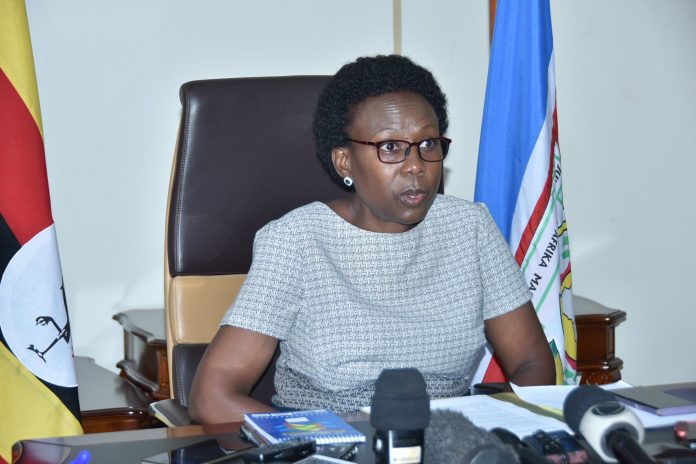
Supervisors oriented on upcoming national vaccination campaign against Measles and Polio diseases

Minister of Health Dr Jane Ruth Aceng


Uganda will conduct an age-wide national Measles-Rubella vaccination campaign (MR Campaign) from October 16-20, 2019 targeting children older than nine months to under 15 years of age. At the same time, a booster dose of oral polio vaccine will be given to all children younger than five years of age.

The Ministry of Health (MoH), with support from the Global Alliance for Vaccines and Immunizations (GAVI), the World Health Organization (WHO), and the United Nations Children’s Fund (UNICEF) trained 150 national level supervisors who will supervise and build the capacity of district health workers in the country to implement the MR and Polio campaign.

“Your role is to guide the health workers down at the district level to ensure that no mistakes are made during this exercise,” said Dr Jane Ruth Aceng while opening the training.  “This exercise is very important because we are countering the current measles outbreak as well as ensuring that we achieve 100 per cent coverage target,” she added.

Dr Aceng implored the health workers to participate actively in the district planning exercises as well as help other colleagues in the districts address any challenges that may arise during the campaign.

During the past three years, (2016-2018), Uganda did not conduct any immunization campaign thus leading to an accumulation of many unimmunized children, who are currently at risk of suffering from Measles-Rubella disease. Indeed, a number of districts have recorded measles outbreaks which is a clear indication that many missed the vaccination in the routine schedule.

In order to protect the population, the target-coverage for the upcoming campaign is 100 per cent.

“Remember, this has not happened for the last three years, which has compromised the immunity of the people, leading to the current Measles outbreak,” said Dr Aceng.

After the MR campaign, the Measles-Rubella vaccine will officially be introduced into the national routine immunization schedule. According to the 2018 WHO-UNICEF best estimates, the national coverage is below 90 per cent.

Specifically, the estimates show that measles immunization coverage stands at 86% which is far below the desired target of 95 per cent that can interrupt transmission of the disease. The low coverage is due to several challenges including poor mobilization, inadequate awareness, low funding, lack of vaccines and lack of knowledge about Measles-Rubella disease in the community.

However, for this campaign, awareness creation and mobilization are in high gear spearheaded by the Ministry of Health with support from WHO. Community engagement activities are going on working with the district and religious leaders, the media, schools and cultural leaders among others.

Stories Continues after ad
FUFA dismisses Proline’s appeal

Proline team


The FUFA Appeals Committee has dismissed Proline’s appeal in docking the club points and fining them for failure to honour their Uganda Premier League match fixture against SC Villa Jogoo.

Proline were been docked six points and six goals by the FUFA Competitions Disciplinary Panel after forfeiting their match day three fixture against SC Villa at StarTimes stadium but had appealed to the Fufa Appeals committee.

The committee said in a statement, “The FUFA Appeals Committee has ruled that; Proline FC’s appeal against the decision issued on 11/09/2019 by the FUFA Competitions Disciplinary Panel (CDP) is dismissed.

“The decision of Competitions Disciplinary Panel Ordering that Proline FC loses the match against SC Villa Jogoo by forfeiture, be docked 6 points & 6 goals from those accumulated or to be accumulated and a fine of UGX 5M be confirmed.”

Proline had earlier written to FUFA confirming that they were not honouring the fixture because two of their players in Mustafa Mujuzi and Bright Anukani were on National team duty and that according to FIFA rules on International break, all domestic leagues must take a break.

However the Fufa rules say the minimum is three players and other league games were played that day.

If the club consider Fufa’s ruling as unfair judgment, they will have to appeal to FIFA and then to the Court of Arbitration for Sport, the world’s highest sports court.

Proline became the second club to be docked points this season after Police didn’t show up for their game against Onduparaka on match day one when they were out of the country for military games without notifying the Uganda Premier League committee.

They sit bottom of the 16-table log with zero points after five games played.

Stories Continues after ad

Judicial officers to get salaries by 10th of every month – PS Bigirimana

Mr. Pius Bigirimana

The Permanent Secretary in the Ministry of Justice and Constitutional Affairs, Pius Bigirimana has disclosed that effective October, Judicial staff will receive their salaries on their accounts by the 10th of every month.

Bigirimana said during Judiciary’s Weekly Health Run at the Kampala High Court Grounds. Like other civil servants, judicial officers have been receiving their salaries towards the end of the month, however the ministry moves to amend the practice for all staff to access their monthly pays at the first quarter of the month.

“Effective this month, everyone should be able to receive their monthly salaries by the 10th of every month. Judicial Officers will also receive their enhanced salaries, together with arrears of the months of July to September 2019,” said Mr Bigirimana.

He said for Judicial Officers, their salaries will come enhanced and the ministry will also pay their arrears right from the month of July 2019.

The PS/SJ also announced the completion of the first Bathroom for the females at the headquarters. “I am happy to announce that the first of the six bathrooms we promised is fully functional with hot water in the showers”, said Mr Bigirimana, adding that the remaining five bathrooms will be installed in the shortest time.

According to the salary structure that was released by the Ministry of Public Service, after salary enhancement, judicial officers under courts of judicature for the current financial year, a High Court judge earns a monthly salary of Shs17.55 million up from Shs9 million.

A Court of Appeal/ Constitutional Court Justice earns a monthly salary of Shs17.9m up from Shs9.3m and  Supreme Court justice is now earning Shs18.3m up from Shs9.6m.

The Chief Justice now earns a monthly salary of Shs20, 670,000 million up from Shs20 million. His deputy earns Shs19.5 million up from Shs18 million.

The Principal Judge, earn Shs18.7 million up from Shs17 million and the Chief Registrar earns Shs13.2 million from Shs5.7 million.

Stories Continues after ad

Digital SDR to enhance payment systems

Bejoy Das Gupta


By Bejoy Das Gupta and Miles Au Yeung 


Cross-border payments are growing rapidly, propelled by services trade, demand from foreign investment flows and workers’ remittances, but remain costly, slow and opaque. Processes are complicated by the presence of multiple parties, regulatory approaches and capital requirements, as well as differences in technical and operational standards, legacy systems and infrastructure. Concentrated market structures and information asymmetries exacerbate costs.

Businesses and individuals are looking for faster, more convenient, transparent and inexpensive cross-border payment methods. While there have been innovations, they are often limited to the front-end user experience. The back-end clearing and settlement payment networks still go through the traditional value chain optimised for high-value, low-volume transactions involving banks.

There is a burgeoning need for technologies to improve back-end processes, lower compliance costs and transform payment means. Models involve bilateral connection between domestic e-money services, extending an e-money system to multiple countries, and creating a peer-to-peer payment network accessible in multiple countries.

One way to facilitate cross-border payments would be the use of a digital composite asset of stable value based on the special drawing right, the International Monetary Fund’s composite currency unit. The development of this ‘eSDR’ has its genesis in a 2017 speech by Christine Lagarde, the IMF managing director and soon-to-be European Central Bank president, in which she said: ‘The Fund will also have to be open to change, from bringing new parties to the table, to considering a role for a digital version of the SDR.’

The value of the eSDR is based on the SDR basket of currencies. It exists in the form of digital tokens and represents a claim on the freely usable currencies of transacting parties and can be exchanged for these currencies. The eSDR possesses banknotes’ characteristics: it bears a monetary value; is protected by multiple security features; is uniquely identifiable and traceable; its supply is controlled by the participating authorities; its value are backed by the issuing authorities; and it is interoperable across payments systems.

Central banks could make use of the eSDR by issuing what would in effect be a universal central bank digital currency for cross-border transactions. As the value of the digital token would be determined by the IMF SDR’s currency composition and weights, it would be a stable instrument with no additional volatility, trading or investment activity, nor danger of manipulation.

To illustrate, Southeast Asian central banks, which already hold SDRs in their reserves, could issue eSDRs for regional cross-border payments. Foreign exchange costs could be reduced through direct settlement between central banks, as payments would move from currency A to eSDRs to currency B. Transactions would be instantaneous, peer-to-peer, round-the-clock, with enhanced transparency and data-sharing. Problem posed by multiple intermediaries would be eliminated. All providers could use the central bank-backed digital tokens.

Over time, more central banks could join, and a multilateral institution, such as the IMF, take over management of the eSDR. Alternatively, the technology could be applied in different regions, with another currency basket as the reference point. However, private sector-issued eSDRs may hold more promise for faster implementation of a global solution for cheaper, quicker and more transparent cross-border payments.

An eSDR-based payment network would enable financial service providers to offer efficient, transparent and inexpensive cross-border payment services even for low-value and high-volume use cases. Settlement times and costs should fall substantially, and improved compliance should enhance financial integrity.

The inefficiencies of cross-border transactions must be addressed. The use of digital composite tokens should create a product that is a trusted and stable store of value as well as effective medium of exchange. In its ideal form, the eSDR will greatly benefit both private sector financial businesses and the authorities that supervise them.

Bejoy Das Gupta is Chief Economist and Miles Au Yeung is Chief Markets Officer at eCurrency. This article is based on a whitepaper covering cross-border payments and the eCurrency eSDRTM.


Stories Continues after ad