Stanbic Bank
Stanbic Bank
19.1 C
Kampala
Stanbic Bank
Stanbic Bank
Home Blog Page 1149

Cabinet agrees to pay Basajjabala Shs85b over city abattior

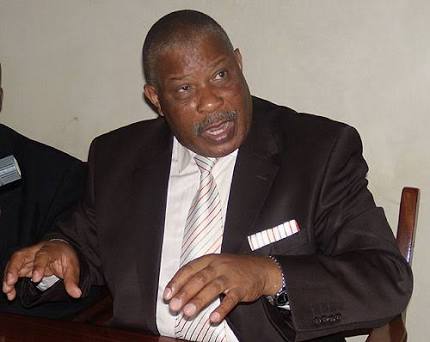
Mr. Basajjabalaba

Cabinet chaired by President Museveni has agreed to pay Shs80 billion to city businessman Hassan Basajjabala over his interests in the abattior.

Eagle Online has learnt that the move by cabinet was endorsed after report of parliament recommendation the payment.

According to cabinet sources, Mr Basajjabala could wait a bit longer as it has been established that President Yoweri Museveni informed his cabinet and Ministry of Finance officials to halt the payment as they verify the whether the treasury has enough money before they consider paying Basajjabala.

“You Muhakanizi (Kieth) do you have  enough money before you release this money to this rich man? wait because we need to be certain that other needs of government are catered for. We don’t want to have shortfalls” Mr. Museveni is quoted to have told the meeting before he asked his handlers to get him Mr Basajjabala on phone.

Bassajjabala acquired city abattior from the then Kampala Capital City council after he emerged as the best bidder to manage the market and subsequently sold it to him.

Last year, MPs on the Presidential Affairs Committee recommended that government through KCCA should compensate Mr Basajjabalaba Shs85 billion for failure to assure him of vacant possession of the facility.
The first instalment of the compensation will be paid to Mr Basajjabalaba in the 2019/2020 financial year budget.

How management row started

On March 1, 2000, Kampala City Council (KCC), the predecessor of KCCA, gave a one-year contract to Basajjabalaba Hides and Skins Company Ltd (BHS) owned by Basajjabalaba to manage the abattoir.
According to the contract, Mr Basajjabalaba was supposed to be remitting a monthly fee of only Shs20 million to KCC. On June 4, 2001, KCC offered a 49-year lease to BHS at a fee of Shs600 million.

Mr Basajjabalaba was supposed to be remitting a ground rent of Shs2.7 million annually, payable by two equal half yearly instalments in advance on the first day of January, and the first day of July in every year.
Mr Basajjabalaba, documents show, was also supposed to redevelop Kampala’s biggest slaughter house into a modern structure, and manage the entire facility on behalf of KCC.
However, KCC later realised that he had sub-leased the same facility to Travellers Coaches Ltd of Mr Daniel Kwatampora Katarihwa in 2008 without their consent.

Mr Kwantampora allegedly increased fares at the facility, something the butchers protested and asked the city authority to kick him out.
When KCC was rebranded into KCCA in 2011, butchers seized the opportunity and petitioned Lord Mayor Erias Lukwago over the controversial giveaway of the slaughterhouse to Mr Kwantampora.

Mr Lukwago, who had pledged to weed out all manipulative forces from the city’s public working spaces during his campaigns, intervened in the wrangle and halted Mr Kwantampora’ s operations in the facility hence court battles ensued.
Although Mr Basajjabalaba repossessed the facility back from Mr Kwantampora in 2011, traders under their umbrella body of City Abattoir Traders Development Association (Catda) rejected him.


Stories Continues after ad
2019 oil demand forecasts cut as economies slowed

The global forecast for oil production in 2019 has been repeatedly revised downward over the last year and a half amid weakening demand for oil. Growth in demand  is now around 1%, or 1 million barrels per day – the weakest growth rate since 2012, according to the October 2019 Commodity Markets Outlook.

Oil prices are projected to average $60/bbl in 2019 and are forecast to weaken to $58/bbl in 2020, $7/bbl lower than the previous forecast. The downward revision reflects the weaker outlook for global growth and therefore for oil demand. Oil consumption growth is expected to increase slightly next year at a level usually associated with global downturns. If economic growth deteriorates further, oil demand could be substantially weaker, says the report.

Stories Continues after ad
‘When journalists are targeted, societies as a whole, pay a price’: UN chief

Ugandan journalist being beaten by soldier not long ago


“When journalists are targeted, societies as a whole pay a price”, added the UN chief. “Without the ability to protect journalists, our ability to remain informed and contribute to decision-making, is severely hampered”.

Killings and attacks on the rise

A new study from the UN Educational, Scientific and Cultural Organization, UNESCO, underscores the risks that journalists face, showing that almost 90 per cent of those found responsible for the deaths of more than 1,100 of them, between 2006 and 2018, have not been convicted.

The report, “Intensified Attacks, New Defences”, also notes that killings of journalists have risen by some 18 per cent in the past five years (2014-2018), compared to the previous five-year period.

The deadliest countries for journalists, according to the statistics, are Arab States, where almost a third of the killings took place. The Latin American and Caribbean region (26 per cent), and Asian and Pacific States (24 per cent) are the next most dangerous.

Journalists are ofen murdered for their reporting on politics, crime and corruption, and this is reflected in the study, which reveals that, in the past two years (2017-2018), more than half of journalist fatalities were in non-conflict zones.

In his statement, the Secretary-General noted the rise in the scale and number of attacks on journalists and media workers, as well as incidents that make their work much harder, including “threats of prosecution, arrest, imprisonment, denial of journalistic access and failures to investigate and prosecute crimes against them”.

A high-profile example is the murder of Maltese journalist Daphne Caruana Galizia in 2017. The case is being followed by independent UN human rights expert Agnès Callamard, among others, who has suggested that too little has been done by the Maltese authorities to investigate the killing.

On Friday, as Haiti continued to face a protracted, violent crisis that has led to the deaths of some 42 people, and 86 injured, UN human rights chief Michelle Bachelet called on all of those involved in the violence to refrain from targeting journalists, and respect the freedom of the media to do its job: at least one journalist is among those killed, and nine other reporters have been injured, according to Ms. Bachelet’s Office (OHCHR).

Keep Truth Alive

This year UNESCO has launched the #KeepTruthAlive social media campaign, which draws attention to the dangers faced by journalists close to their homes, highlighting the fact that 93% of those killed work locally, and featuring an interactive map created for the campaign, which provides a vivid demonstration of the scale and breadth of the dangers faced by journalists worldwide.

The Day is being commemorated with a flagship event in Mexico City next week on 7 November – an international seminar entitled “Strengthening regional cooperation to end impunity for crimes and attacks against journalists in Latin America” – and events are also taking place in 15 other countries, including an exhibition of press cartoons, under the headline: “Draw so as not to write them off”, at UN HQ in New York, which honours the memories of French journalists Ghislaine Dupont and Claude Verlon, murdered in Mali on 2 November 2013.

This article is from the UN website


Stories Continues after ad

UN envoy on children and armed conflict commends AMISOM on child protection efforts

Virginia Gamba, the Special Representative of the Secretary-General for Children and Armed Conflict, poses a a group photo with Simon Mulongo, the Deputy Special Representative of the Chairperson of the African Union Commission (DSRCC) for Somalia and other senior officials from AMISOM at the AMISOM Mission Headquarters in Mogadishu, Somalia on 28 October 2019. UN Photo / Omar Abdisalan


The UN Secretary-General’s Special Representative for Children and Armed Conflict, Virginia Gamba, has commended AMISOM for ensuring the protection of children in conflict.

On Wednesday, Ms. Gamba concluded a three-day working visit to Somalia to assess efforts to protect children from conflict-related violations.

As part of the visit, she held discussions with child protection focal persons in the AMISOM military, police, and civilian components, including the Deputy Head of AMISOM, Simon Mulongo.

During the meeting, Mulongo, who is the Deputy Special Representative of the Chairperson of the African Union Commission for Somalia (DSRCC), briefed her on AMISOM’s programmes and activities.

“We train our troops on child protection at pre-deployment, induction and in-mission levels, to remind  them of their obligations. We monitor compliance, and troops in violation are held accountable. We also mentor, advise and support the Somali security forces,” the Deputy SRCC said.

Ms. Gamba noted that some of AMISOM’s child protection approaches could be adopted as best practices for the protection of other children in conflict situations.

“If you don’t mind, we would like to explore your expertise and see how it could work for some of our other operations,” said Ms. Gamba.

An AMISOM Human Rights expert, Ms. Ulrike Kahbila Mbuton, briefed the UN top official on AMISOM’s efforts to uphold the rights and welfare of children in the mission’s area of operations.

“AMISOM has been carrying out child protection activities both within the mission, and other activities in support of the Federal Government of Somalia and the member states. AMISOM holds vocational training programmes for disengaged child fighters to support their reintegration into society, she Kahbila.

She also revealed that AMISOM has instituted standard operating procedures on handling child detainees and internally displaced people’s camps and established a toll-free line to report incidents of violence against children.


Stories Continues after ad

AMISOM hails Uganda police officers for professionalism

Police contingent in Somalia


The Deputy Special Representative of the Chairperson of the African Union Commission for Somalia, Simon Mulongo, has lauded the professionalism of Ugandan police officers serving under the African Union Mission in Somalia (AMISOM).

Mulongo, on Wednesday, met the Director of Peace Support Operations in the Uganda Police Force, AIGP Grace Turyagumanawe, who was on a visit to assess the status of equipment and welfare of personnel.

He noted that the Uganda police contingent, which includes Formed Police personnel and Individual Police Officers, continue to be instrumental in AMISOM’s gains against terrorism.

“We are satisfied with Uganda Police’s contribution to peacebuilding, especially their contribution to maintain law and order and enhancing the capabilities of the Somali Police,” Mulongo told Turyagumanawe.

During the visit, Turyagumanawe inspected the condition of the contingent-owned equipment at the Jazeera Forward Operating Base outside Mogadishu.

Under the Somalia Transition Plan, AMISOM Police ensure that the Somali Police Force is adequately capacitated in preparation to assume full responsibility of maintaining law and order in the country when AMISOM leaves in 2021.

The UN Security Council authorised AMISOM to deploy up to 1,040 police personnel under the police component, which includes Individual Police Officers and five Formed Police Units (FPUs).

The Formed Police Unit (FPU) personnel provide operational support such as VIP escort and protection, while the Individual Police Officers (IPOs) train, mentor, and advise the Somali Police officers.

Uganda is one of AMISOM Police contributing countries. The other countries include Ghana, Kenya, Nigeria, Sierra Leone, and Zambia.

Additionally, Nigeria, Sierra Leone, and Uganda have deployed FPU contingents. Recently, Ghana agreed to deploy an FPU contingent under AMISOM.

Turyagumanawe also revealed that plans are underway for Uganda to deploy more police personnel to serve under the AMISOM Formed Police Unit.

“Preparations are underway to ensure that we deploy a second formed unit as was agreed on recently. We are working on acquiring the necessary equipment,” added Turygumanawe.

Turyagumanawe led a delegation that included the Police Deputy Director of Fleet Management, Eng. Franklin Kugonza, Police Accountant, Richard Katongole, and Staff Officer for Peace Support Operations, Herbert Wondo.


Stories Continues after ad

EAC and USAID launch new programme for Conservation and Management of region’s natural capital

Christophe Bazivamo


The East African Community (EAC) in collaboration with the US Agency for International Development Kenya/East Africa (USAID/KEA) have launched a new programme for the conservation and sustainable use of East Africa’s natural capital.

The Conservation and Management of the Region’s Natural Capital Programme is an initiative that seeks to improve the collaborative management and conservation of trans-boundary natural resources, reduce wildlife poaching and trafficking, and increase the perceived value of living wildlife.

The three-year project, which runs from June 2019 to June 2022 and has a budget component of approximately US $2.3 million from USAID/KEA, was launched in Nairobi, Kenya.

The EAC Secretariat will lead the programme implementation process with technical and analytical support from the International Union for Conservation of Nature and Environment Incentives. This will be done through a new working approach requiring the active involvement of host communities of natural protected biodiversity species areas.

In East Africa, biodiversity-rich areas are critical to the region’s nature-based tourism industry, which contributes 7.5-10 percent of East Africa’s gross domestic product. At the local level, rural communities across the region depend on wildlife and wildlife habitats for their livelihoods. Iconic wildlife, and the landscapes on which it roams, has significant value.

Also in response to rapid economic development and population growth, East Africa’s infrastructure is expanding. This expansion is putting pressure on East Africa’s “natural capital” — resources that are essential for socio-economic growth and development of East African countries and people. The new Conservation and Management of Natural Capital Programme will help strengthen the EAC’s capacity to protect this vital resource.

Speaking at the launch, Christophe Bazivamo, the EAC Deputy Secretary General in charge of Productive and Social Sectors, said that the programme was crucial as it would, among other things, enhance collaborative management and conservation of transboundary natural resources in the region, increase perceived value of wildlife and reduce wildlife poaching and trafficking.

“This sustained support will go a long way to strengthen national and regional efforts in conservation and management of East Africa’s rich biodiversity and natural resources,” said Bazivamo.

Representing USAID KEA at the event was Ms. Aurelia Micko, the Director of the Environment Office.

Under the EAC Treaty, in particular Chapters 19 and 20, EAC Partner States agree amongst other things, to take concerted measures to foster co-operation in the joint and efficient management and sustainable utilization of natural resources within the community for their mutual benefit. Partner States also recognize that conserving natural capital across boundaries requires strong collaboration and harmonization of national and regional plans and policies to support transboundary management.

In this line, EAC and USAID designed a three years Programme on Improving Collaborative Conservation and Management of Transboundary Natural Resources in EAC.


Stories Continues after ad

Bowing to Foreign pressure: UPDF arrests military commander who okayed brutality of Makerere students

Soldier confronts students

Following pressure and condemnation from the United States of America and the European Union (EU), Delegation in Uganda, the Uganda people’s Defence forces (UPDF), has arrested the military police commander who commanded the solders as they unleashed terror on striking Makerere University students.

According to army spokesperson Brig. Richard Karemire, the military officer identified as Capt. Ronald Lubeera is currently detained at Makindye Military Barracks.

“A board of inquiry led by Lt. Col. Richard Ochen Okum has been set up to establish details of what happened and findings will guide the next course of action,” he said.

The strike that commenced on Tuesday last week was sparked off by the unpopular 15 percent cumulative tuition policy. They were spearheaded by Mollie Siperia, the Guild Representative Councilor for School of psychology and one Frank Bwambale who were later nabbed and suspended by the university vice chancellor Prof. Barnabas Nawangwe.

Unconfirmed reports indicate that Siperia who was brutally assaulted is currently hospitalized at unknown medical facility in Kampala.

On Tuesday, the university suspended more nine students and warned several others for reportedly indulging in strikes.

Last week, Police other security organs broke into students halls of residence such as Mary Stuart and others in the latest reign of terror at the university where even disabled students were battered by the police and the army officers.

Reports indicate that Students’ Guild President, Julius Kateregga, was kidnapped by unknown people moments after he had just left NBS TV where he was discussing issues affecting the university alongside, Dr Muhammad Kiggundu, Manager Communications and international relations of the university. The kidnapping reports were confirmed by his deputy Judith Nalukwago and his where about has not been established.

The EU on Friday wrote: “We support the analysis of the events made by the Uganda Human Rights Commission and call upon all parties particularly the Uganda Police Force and Uganda People’s Defence Forces to refrain from acts of violence and to respect freedom of assembly and expression. Any possible misconduct by their members should be investigated and acted upon.”

The EU at the same time has condemned the military and the police for torturing and arresting some journalists who were covering the demonstration at Makerere. Some are nursing injuries in hospitals. As a result the journalists have boycotted covering police events and related activities.

Stories Continues after ad

New study calls for Integrated Pest Management techniques to fight fall armyworm

Fall Armyworm in Maize

Centre for Agriculture and Bioscience International (CABI) scientists are recommending the use of more environmentally sustainable biological controls, as part of an Integrated Pest Management (IPM) strategy, to fight the fall armyworm (FAW) instead of favouring more harmful pesticides.

In a new paper published in the International Journal of Pest Management, Dr Justice Tambo led a team of researchers who suggest that policy should be geared towards educating farmers about the pest and appropriate control practices that do not over rely on synthetic products.

Tambo, who used survey data from 123 farm households in Ghana and 342 in Zambia that had experienced a FAW attack on their maize plots during the 2016/2017 cropping season, said farmers need to be advised on the rational use of pesticides – where they need to be used as part of IPM – including their impacts on human health and the environment.

However, ultimately, Dr Tambo and the scientists, recommend that other control options using biological agents should be explored to fight the pest which is threatening the food security of more than 200 million people worldwide.

Tambo said, “Our study showed that 51 percent of households sampled in Ghana and 49 percent in Zambia, respectively, used pesticides to control fall armyworm. However, chemical pesticides are costly and their effectiveness and impact on human health and the environment requires further research.

“Furthermore, while 39 percent and 42 percent of households, respectively, received information on FAW from neighbours and extension officers, we recommend that policy efforts should focus on widespread communication campaigns and training programmes with a stronger focus on biological controls.”

Dr Tambo added that more farmers also need to be educated and advised on other IPM techniques to managed FAW including constant weeding to remove alternative host plants; rotation and intercropping of maize with non-host plants; and uprooting and burning of infected plants to destroy larvae and pupae.

“In order to convince farmers that IPM strategies which lean more towards more sustainable biological controls are a viable option, we must demonstrate that the cost is less than the value of the yield saved,” he said.

Last year CABI scientist Dr Melanie Bateman published a paper in the Journal of Applied Entomology, ‘Assessment of potential biopesticide options for managing fall armyworm (Spodoptera frugiperda) in Africa’ – the first major study of 50 potential biological controls that could be used to fight FAW.

Current CABI research on a variety of safe non-toxic FAW management techniques are ongoing. These include the possibility of the parasitoid Telenomus remus – which was recently confirmed in Africa – could be employed to fight FAW.

Dr Marc Kenis, who is leading the research on Telenomus remus, said, “In Latin America, field releases of Telenomus remus in maize can result in 80-100 percent parasitism, providing full control of fall armyworm.

“The main challenge for a wider utilisation is to provide a product that is financially affordable for African farmers. Mass production on its natural hosts is costly but rearing systems on factitious hosts can be developed.”

Stories Continues after ad

Access to justice for all is not yet a reality – but there are ways forward

Patricia Scotland

By Patricia Scotland

Access to justice for everyone in all communities is an important right and requirement for building fair and peaceful societies – yet this objective has been achieved in few if any nations, and the consequences are damaging for social, economic and political progress and stability.

Studies indicate that of the 1.4 billion people who for whatever reason in the past two years felt the need for recourse to law, less than half have had their justice needs met. Barriers such as cost, complexity and corruption cause people either not to seek redress, or to be defeated by the process.

The 53 countries of the Commonwealth are committed to taking action to right this wrong. Each member country is committed through our Commonwealth Charter to: ‘an independent, effective and competent legal system’ which ‘is integral to upholding the rule of law, engendering public confidence and dispensing justice’.

That is the basis on which discussions on innovative and united action towards access to justice and related priorities will take place over coming days at the Commonwealth Law Ministers Meeting which convenes in Sri Lanka, 5-7 November 2019.

While many are fortunate to have a system that can be relied upon to give a fair hearing and resolution, for millions of people around the world, this is sadly not the case. Problems with access to justice can seriously affect people’s lives through physical and stress-related ill health, loss of income and damage to relationships. Vulnerable groups in many jurisdictions tend to be those that justice systems ought to do most to protect.

Our priority has to be to answer the needs of all people, and particularly those such as the poor and unemployed, victims of domestic violence, refugees and disabled or first nation people, whose experience far too often is to feel marginalised or ill-served by judicial processes.

Poverty affects access to justice in many ways, and discriminatory laws perpetuate and exacerbate disadvantage. Income, gender, sexuality and location can all be factors in people being denied equitable access to justice. Sometimes several of these factors combine severely to the detriment of victims or offenders from already vulnerable groups.

Indigenous women, for example, particularly those who have faced addiction, poverty or domestic violence, are often already marginalised, and then suffer the further blow of being unsupported in their search for justice, diminishing yet further the prospects for themselves, their families, and the communities in which they live.

Even where equal and progressive laws exist, swingeing cuts to legal aid, or lack of legal aid altogether, can impair access to justice, particularly for the most vulnerable. Lack of access to justice then leads to further injustice – with people denied their rights or a voice, unable to fight discrimination and prevented from holding public bodies to account.

The result is that progress towards sustainable development at national, community or personal levels is limited, and opportunities for inclusive growth and prosperity are lost. At worst, injustice can be the root of conflict and violence – even though people are generally not seeking revenge and retribution, but recompense and restoration. Systems should ensure these avenues to resolution are available because, without them, anger and resentment can fester.

Innovation and technology open up new horizons and possibilities. Digital resources such as e-courts, video advocacy and interactive information services are helping to improve inclusivity. Yet even with such innovative approaches and mechanisms, those same vulnerable groups may continue to experience obstacles to affordable and equitable access.

So we need to be aware that the promising solutions technology offers can also prolong existing problems or present new ones. This means that just as lawbreakers find ever more sophisticated ways of using technology for crime, lawmakers must leverage what technology can do to keep ahead or abreast of such threats.

Our related systems of governance and administration, and the widespread use in our jurisdictions of the Common Law, make the Commonwealth ideally placed as a community to think, plan and act together towards fairer and more inclusive access to justice with improved outcomes.

Working together in mutual support, and by learning and gaining encouragement from one another, our member countries are able to accelerate progress towards creating and delivering fair and effective national laws. They are helped in this by Commonwealth toolkits that guide on matters such as policy-making and legislative drafting.

The beneficial impact of this cooperation is enhanced through the expert technical assistance provided to member countries by the Commonwealth Secretariat. Examples of this include the legal issues associated with tackling violence against women and girls, gender discrimination, corruption and climate change.

By combining to work towards all our people having proper access to genuine justice, and by sharing good practice to strengthen the foundations on which the rule of law are built, the Commonwealth shines as a beacon for multilateral cooperation, and opens up pathways towards more peaceful and prosperous societies, and a fairer and more secure future for all.

Stories Continues after ad

Quarter of world pig population could be wiped out this year alone, expert warns

Pigs

The president of the World Organization for Animal Health has warned that a quarter of the world’s pigs are expected to die from African swine fever this year, compounding fears of possible food shortages and soaring pork prices.

Dr. Mark Schipp said it is “the biggest threat to any commercial livestock of our generation.”

In its current form, African swine fever is virtually 100 percent fatal to pig herds, but poses no immediate threat to humans (barring any unforeseen mutations).

China, which has half the world’s pigs, has been the hardest hit, and authorities have destroyed about 1.2 million pigs there since August 2018, with the price of pork almost doubling since the nationwide outbreak began. US pork sales to China have doubled, despite the now somewhat-cooled trade war, while European pork prices have reached six-year highs.

Rabobank estimates that this year alone, China could lose between 20 and 70 percent of its swine herd or roughly 350 million pigs.

China is not alone, however, as some 50 countries have witnessed outbreaks of African swine fever including Poland, Russia, South Korea and the Philippines. The multiple outbreaks have created knock-on effect on the prices of other sources of protein as well as feed prices, in addition to downstream products made using pork materials, such as the blood-thinner heparin.

While progress has been made in developing a vaccine, it has been slow, given that the virus itself is large and has a complex structure, though scientists announced last week that they had finally unravelled it.

Meanwhile, reports of Chinese swine farmers breeding polar bear-sized pigs that evolve up to 500 kilograms (around 1,100 pounds) are growing, as the situation goes from bad to worse and the industry attempts to counteract the devastation wreaked by the currently incurable virus.

Stories Continues after ad