Stanbic Bank
Stanbic Bank
17.3 C
Kampala
Stanbic Bank
Stanbic Bank
Home Blog Page 1151

Bebe Cool in fear as assailants threaten to kill his mother

Singer Moses Ssali aka Bebe cool is in fear after unknown man in Ireland reportedly sent him messages threatening to go for his mother’s life.

According to Bebe cool, the threatening messages are alluded to his political affiliation of the ruling party Nation Resistance Movement (NRM) and supporting President Yoweri Museveni who has been in power for 34 years.

Bebe Cool’s mother according to Kojja Omugezi a person threatening to kill her, is reportedly in the USA and they have established where she stays and they are about to finish her off.

“No body knew that your lovely mum who’s over 70 years can be out in snow doing petty jobs for survival when you who’s supposed to help her retire peacefully you are busy running after Lumpens who are abusing and killing mothers on daily basis,” Kojja omugezi wrote on Facebook.

Adding “We know for sure that you dumped your mum in US where she’s illegally to have peace because she was becoming a burden to you. Shame upon children like you who treat their parents like you.” He wrote

According to WhatsApp conversations between Bebe Cool and Kojja Omugenzi, the assailant said he would have killed Bebe Cool but his bosses are so kind and patient.

“Just wait, you will regret why you crossed and started supporting Museveni. Something you and your family will never forget, open your eyes widely we are following you,” he said in WhatsApp messages published by Bebe Cool.

In his response, Bebe Cool said threatening him won’t work, my mother is over 70 and she has seen it all. You causing harm to her won’t make me support your ideas. Uganda’s opposition supporters think they will threaten their way to leadership, wish you luck. He said he will catch the assailant before he executes his plans.

Stories Continues after ad

FUFA names new Uganda Cranes head coach

New Cranes coach, Johnathan McKinstry being unveiled.


Northern Irish UEFA Pro licensed football manager Johnathan McKinstry has been appointed the new Uganda Cranes head coach on a three year contract.

McKinstry has coached in several countries; Northern Ireland, England, USA, Ghana, Sierra Leone, Rwanda and Lithuania. His early career was focused on elite youth development through roles with Newcastle United, New York Red Bulls, the Right to Dream Academy and the Craig Bellamy Foundation.

“We selected a coach who fits in our vision of being the no. 1 footballing nation in Africa on and off the pitch” FUFA CEO Edgar Watson said during a special press conference on Monday morning.

In December 2017 McKinstry was shortlisted by the Ugandan FA for their national team manager position before Desabre was appointed.

The 34-year-old Irishman’s first match in charge will be the 2020 CHAN qualifier against Burundi in the second leg at the StarTimes stadium in October.

He has so far managed 72 games, winning 30, drawn 12 and lost 30 in his managerial career. He has been the Head Coach of Bangladesh Football Premier League team Saif SC.

Police FC head coach Abdallah Mubiru together with Onduparaka’s Livingstone Mbabazi have been in charge of the national team since Desabre’s departure.

Stories Continues after ad

Global coffee agency agrees to set up taskforce with private sector to act on price levels, volatility and sustainability

Uganda coffee


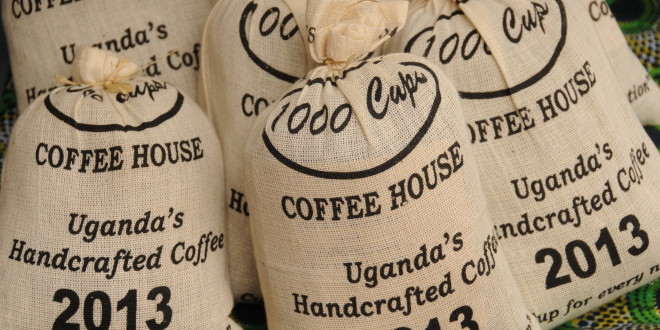
Amid the backdrop of sustained low coffee prices, Members of the International Coffee Organization (ICO), welcomed the efforts of the ICO and all the private sector companies and organizations that have signed the London Declaration and decided to set up a taskforce together with the private sector to draw up a roadmap and explore further actions on price levels and volatility as well as long-term sustainability.

Bringing together more than 40 countries in London from 23-27 September 2019, the International Coffee Council, chaired by Ms Stefanie Küng, Switzerland, considered the London Declaration, which was signed by leading roasters, traders and retailers and supported by key sector and development organizations and NGOs following the first CEO and Global Leaders Forum held in London on 23 September 2019.

The Declaration sets out commitments by private sector enterprises to work with governments, development partners and civil society and each other, with the objective of implementing practical and time-bound actions to address the current coffee crisis that concerns the world’s coffee farming community, in a spirit of shared responsibility, thereby contributing to the 2030 Agenda for Sustainable Development of the United Nations.

In pursuance of the Sustainable Development Goals, Members of the International Coffee Council confirmed their commitment to work together with the signatories of the London Declaration and other stakeholders to jointly define detailed and concrete actions. Council also requested the ICO to set up a taskforce with ICO Members as well as representatives of the private sector and supporting organizations to draw up a roadmap and recommend further actions on price levels and volatility as well as long-term sustainability, with the outcome of the taskforce to be considered at the 2nd CEO and Global Leaders Forum during the fifth World Coffee Conference in Bengaluru, India in September 2020.

ICO Executive Director, Mr José Sette, said: “The Declaration is the result of a complex consensus-building exercise to implement Resolution 465 and successfully carry out a Structured Sector-wide Dialogue, mobilizing coffee stakeholders in the coffee value chain and the international roasting industry. Using the convening power of the ICO, we will continue our efforts to mobilize stronger political support and resources from multilateral mechanisms, international organizations and the private sector in order to address the short- and long-term sustainability of the coffee sector.”

In other business during the week-long session, the Council held the 9th Consultative Forum on Coffee Sector Finance, which gathered experts to explore the potential of innovative price risk management solutions for smallholder farmers and the identification of structural, technological and institutional barriers to their widespread adoption.

Paul Anliker, Minister of Agriculture of El Salvador, Dr Le Quoc Doanh, Vice-Minister of Agriculture and Rural Development of Viet Nam, and Mr Deepak Khanal, of the National Tea and Coffee Development Board of Nepal made statements on national policy developments. Presentations were also made on cooperation activities between the ICO and the Global Coffee Platform, the African Fine Coffees Association, the Sustainable Coffee Challenge and the International Women’s Coffee Alliance.

In addition, ICO Members also conducted important discussions on the future of the International Coffee Agreement, the current version of which is set to expire in 2021. The ICO also introduced its first Flagship Report: the 2019 Coffee Development Report, which contains an in-depth and independent assessment of key trends in the coffee sector, the links between low prices and development issues and fifty possible actions to address the economic challenges faced by the world coffee sector and to foster its long-term sustainability. The full Report will be released on October 1st – International Coffee Day.

Stories Continues after ad

Uganda’s Solomon Serwanjja wins BBC World News Komla Dumor award

Solomon Serwanja


Ugandan investigative reporter and news anchor Solomon Serwanjja has won the 2019 BBC World News Komla Dumor Award.

Serwanjja is a presenter at Uganda’s NBS TV, where he hosts one of the channel’s prime-time shows.

He has also produced award-winning reports, including one for BBC’s Africa Eye programme about the illegal sale of prescription drugs.

The award was created to honour Komla Dumor, a presenter for BBC World News, who died suddenly aged 41 in 2014.

Serwanjja is the fifth winner of the award, following in the footsteps of Waihiga Mwaura, Amina Yuguda, Didi Akinyelure and fellow Ugandan Nancy Kacungira.

As part of the prize, he will spend three months at the BBC in London and travel back to the continent to report on a story there.

He is a well-known journalist and his passion for investigative journalism highlighted his desire to make positive change in his native Uganda.

“Komla brought so much to the African narrative – his perspective was a breath of fresh air, as he believed Africa was rising and that the world needed to see the continent from a different angle,” said Serwanjja.

“His reports always struck a chord with me, and I feel the same passion for our continent that he demonstrated. I want to continue his legacy by telling stories that cast a spotlight not only on the critical challenges we face in Africa, but also the progress and successes that have been made.”

Serwanjja impressed judges with not only with his eloquence and passion for telling African stories, but also with his commitment and bravery in uncovering what’s in the public interest.

Jamie Angus, director of BBC World Service Group, said: “To recognise and empower some of Africa’s leading talent in journalism, in honour of Komla, is really important to us.

“Komla’s reporting made a huge impact with audiences all over the world, and we’re excited to have Solomon at the BBC, to harness Komla’s commitment to telling African stories.”


Stories Continues after ad

Trade: Côte d’Ivoire and Kenya named rising stars of global trade

Containers at Mombasa Port


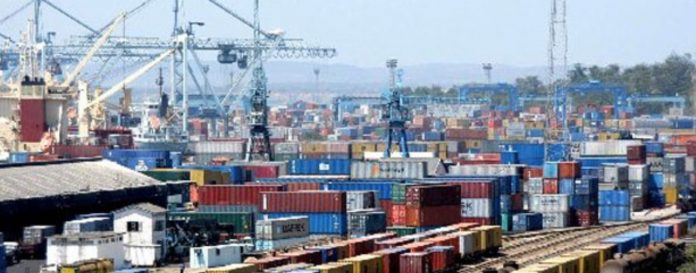
Côte d’Ivoire is the market that has most rapidly improved its trade growth potential over the past decade, according to new research from Standard Chartered The Trade20 index, which identifies the 20 rising stars of trade, places African markets Côte d’Ivoire in the top spot, and Kenya at number three.

The Trade20 index determines each market’s trade growth potential by analysing changes within the last decade across a wide range of variables, grouped into three equally-weighted pillars: economic dynamism, trade readiness and export diversity.

The study examines 66 markets around the world. It finds that while existing trade powers like China and India continue to rapidly improve their trade potential, African economies are making particularly strong progress from a relatively low starting point.

Kenya is consolidating its position as the trading hub of East Africa, while Côte d’Ivoire is cementing its position as a West African trading hub. Ghana also performs well in the index, placing just outside the top 10.

The key findings of the Trade20 index for African markets are:

Côte d’Ivoire and Kenya have significantly improved their trade readiness, demonstrating that investments in infrastructure and business environment improvements are paying off

Côte d’Ivoire and Ghana also fare well for economic dynamism, with Côte d’Ivoire enjoying robust GDP and export growth, and Ghana seeing an influx of FDI

Saif Malik, Regional Co-Head, Global Banking, AME, Standard Chartered, said: “Home to some of the world’s fastest-growing economies, Africa has the potential to become a much bigger player on the global trade stage. Already connected with the trading powers in Asia, particularly China, through the Belt & Road Initiative, and with the launch of the African Continental Free Trade Area, we see numerous growth opportunities for trade and investment in the years ahead.

Additionally, the growing young, digitally-savvy population and an increasing female workforce will aid in the continent’s economic transformation.”

Trade20 examines 12 metrics across 66 global markets – the major global economies plus the major economies in each region – to reveal the 20 economies that are most rapidly improving their potential for trade growth.

While most traditional trade indices are based on a market’s present performance, the Trade20 index captures changes over time to reveal the markets that have seen the most improvement within the last decade. This enables us to identify the economies where recent positive developments may point to an acceleration in trade growth potential.

Trade20 index and methodology
Trade20 examines 12 metrics across 66 global markets – the major global economies plus the major economies in each region – to reveal the 20 that are most rapidly improving their potential for trade to grow.

These markets are identified by measuring changes in 12 metrics under three pillars: economic dynamism (foreign direct investment, export and GDP growth), trade readiness (infrastructure, e-commerce, and ease of doing business) and export diversity (the range of exports).

While most traditional trade indices are based on a market’s present performance, our index captures changes over time to reveal the markets that have seen the most improvement during the last decade. This enables us to identify the economies where recent positive developments may point to an acceleration in trade growth potential. Higher exports are strongly correlated with higher imports, of both capital and consumer goods, offering opportunities for companies worldwide. A high ranking also suggests a market that is improving as a possible outsourcing location.

It is important to note that some markets are progressing fast from a low starting point, while others are moving quickly from an already-high starting point. The study does not look at the trade growth potential of each market in absolute terms, but at its individual potential for trade growth relative to its size. In absolute terms, large economies will, of course, offer greater potential and opportunity overall than smaller ones.

Trade20: The Rising Stars of Global Trade is based on in-depth research commissioned by Standard Chartered, designed by Standard Chartered, Man Bites Dog and Oxford Analytica.

Stories Continues after ad

Museveni commends faith-based organisation for efforts to eradicate household poverty in Uganda

President Museveni

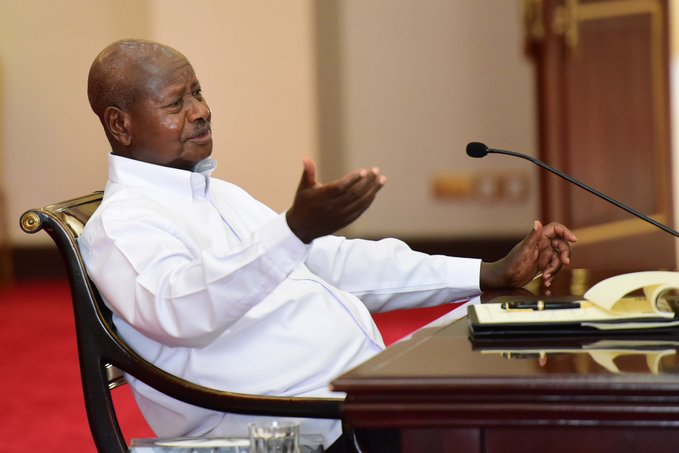
President Yoweri Museveni has commended faith-based groups in the country for joining government in efforts and campaign to sensitise communities in wealth creation to eradicate household poverty in Uganda.

“I am glad that more Christians are waking up to understand how to eradicate poverty at household level. What you gain should be from your sweat. It is a Biblical obligation. I am happy I have Pastors, like Jackson Senyonga, on my disciples in the nationwide campaign for wealth creation. Like the Biblical story of the seeds’ sower on different types of soil, Pastor Senyonga is one of the soils that were sown and flourished in my campaign message on wealth creation. I encourage him to continue the campaign,” he said.

The President was today addressing a congregation at Makerere-Kavule Christain Life Church, during which he officiated at the inaugural ceremony of Pastors Jackson and Eva Senyonga commissioning of regional and district coordinators to initiate them in the national campaign of church involvement to eradicate poverty.

The Christian Life Church campaign launch kicked off with Shs.140 million that was distributed by the church to regional coordinators, with each of them receiving Shs.10 million cash to start the mobilisation against poverty with the help of Church mobilizers in districts in the country.

Mr. Museveni challenged a fully parked church gathering of over 16,000 to be totally inspired and appreciate Uganda’s unique agricultural endowment and conducive climate of two or more production seasons in a year and resolve to fight poverty without necessarily applying irrigation.

“I thank Pastor Senyonga as one of the leaders in the Born Again Churches in Uganda for correctly recognizing that a Pastor must be an example in the fight against poverty in his own home before embarking on evangelization of the gospel. I totally support the project.”

Regarding the issue of criminality, the President said that criminals, wherever they may be hiding, will be defeated adding that government is modernising anti-crime infrastructure. He noted that the infrastructure so far established has produced positive results with the help of CCTV cameras as evidenced in the case of recent kidnappings and killings.

“All we need is for everyone to be vigilant to provide the necessary information on crime incidences to the Police,” he said.

Pastor Jackson Senyonga revealed that the launch of the anti-poverty campaign was a culmination of the 6-month research by his church that a big population in the country still lives in abject poverty and needed sensitization and financial empowerment.

“What the church is doing now is 10 per cent of the President’s contribution but silence is not an option,”, he observed.

He announced that the next phase in fighting against poverty would be tailored to ensure that factory establishments, big of small, would be the way to go especially in agro-processing.

Stories Continues after ad

Business around Africa in brief

Zambia’s telecoms regulator has cancelled Vodafone’s local licence for its lack financial and technical capacity, it said. The move comes after Afrimax, an African telecoms provider hired by Vodafone to offer 4G data services, released a statement in July saying its shareholders had failed to recapitalise it.
Spreading like wild fire

Kenyan mobile money transactions jumped 47% this quarter, with $20.3 billion transferred via Kenyan mobile money services in the three months to the end of June. Safaricom’s market share slipped to 63.5% during the period from 65.4% last year, while India’s Bharti Airtel was up 24.6% from 21.4%.
Brave new world
South Sudan has launched mobile money services in the country in an attempt to shore up an economy ravaged by five-years of civil war. The move hopes to reach unbanked villagers in rural areas, but high rates of illiteracy, a scarcity of ID cards to register and poor network connection all need to be overcome first.
 

Scaling up
Kenya is building two utility scale solar plants to supply green energy to around 300,000 homes. Co-funded by the European Investment Bank, the project will cost $147 million and generate a combined capacity of 80MW.
Megahub
Nigerian innovation centre and seed-fund CcHub has acquired Nairobi based innovation space iHub to create mega African incubator. The two hubs will keep their names, and deepen their pool of investors with access to pipeline in Nigeria, Kenya  and Rwanda.
Border brawl
Nigeria and Benin are locked in a trade dispute just two months after signing the African Continental Free Trade Area Agreement (AfCFTA). Nigeria has shuttered the border with its smaller West African neighbour to curb the smuggling of rice and other products.


Stories Continues after ad

Traffic diversion along Namugongo-Seeta Road as NWSC lays water pipeline

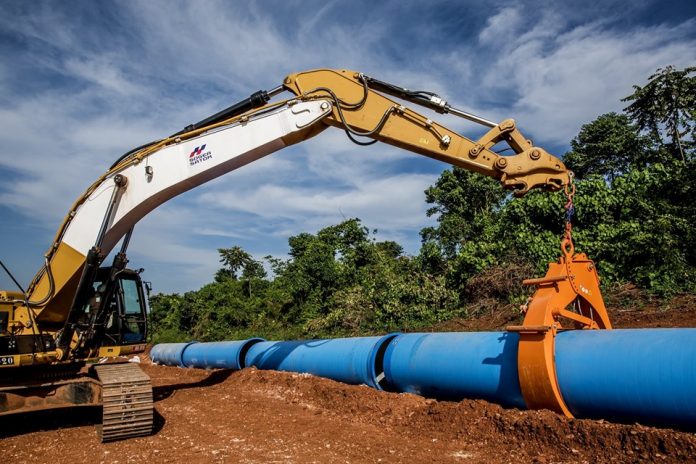
National Water and Sewerage Corporation (NWSC), on behalf of government, is currently constructing The Katosi-Kampala Drinking Water Transmission Mains to supply drinking water to the increasing population of the Greater Kampala Metropolitan Area.

The new plant when completed will add over 160million litres of water per day to Kampala service area and cater for the growing demands for clean water in Kampala Metropolitan upto the year 2040.

NWSC has contracted Sogea Satom to implement the project which involves excavation and laying of water pipes across Namugongo-Seeta Road at Kanisa Ya Kristo, from Saturday 28th to Sunday 29th September 2019.

On Saturday and Sunday, some sections of Namugongo-Seeta Road are to be closed to traffic which will be diverted to alternative routes.

The excavation works shall be done in three phases to allow proper traffic management and minimize traffic disruptions.

“Normal time of work shall be at night. It will take two nights to install the pipes and backfill the road to make it passable. Permanent reinstatement of the road pavement shall be completed within nine (9) working days after the works,” NWSC says.

During the actual excavation works across the road, traffic coming in from Ssonde shall be diverted to Bbutto Road while that from Seeta shall be diverted to Jinja Road.

Traffic coming from Kyaliwajjala shall be diverted to Kireka-Namugongo Road and Ssemambo Road, adjacent to Namugongo Catholic Martyrs Shrine.

Drivers are encouraged to follow the road signs and cooperate with the traffic police and traffic wardens.

Stories Continues after ad

UNGA 2019: Hands off our girls! African first ladies take campaign against rape, early child marriage, to UN General Assembly

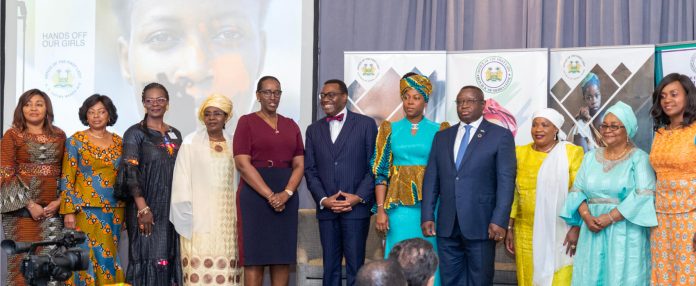
Africa’s first ladies, led by Sierra Leone Fatima Maada Bio brought their campaign to ban early child marriage and sexual violence against women and girls before a global stage in a passionate appeal for the world to support their “Hands Off Our Girls! Campaign.

In a no-holds barred conversation organized on the sidelines of the UN General Assembly Wednesday, Bio flanked by her husband President Julius Bio, spoke to “lift the lid of silence” taboo and stigma surrounding rape and early marriage in Sierra Leone and other parts of the continent.

The high-level meeting was organised to rally support for the end of early marriage and rape in Africa, a movement which the Bios have spearheaded.

This year’s General Assembly has been dominated by delivery of the sustainable development goals, of which number 5 is Gender Equality.

In brief opening remarks, African Development Bank President Akinwumi Adesina spoke out forcefully against all forms of early marriage and said the economic empowerment of women is a critical tool to end the vicious cycle of marginalization and gender imbalance.

“That’s why the Bank is raising $3 billion to support women,” Adesina said, referring to the Bank’s Affirmative Finance Action for Women In Africa (AFAWA) initiative.

“Early marriage is not only a human rights abuse it is an economic issue,” Rachel Yates, Executive Director of Girls Not Brides, said.
Sharing intimate personal details, Maada Bio, recounted her personal story of running away from an arranged marriage to an older man in her early teens. Aided by an older sister, she took a flight out of her native Sierra Leone to the United Kingdom – without her father’s knowledge or permission. “I come from a family where girls are married at 12 years,” she said.

Three months later from the safety of the UK, her resolve was set.

“From that moment I vowed that I would not see a child being abused,” she said.

President Bio, responding to a question on how deeply set cultural mindsets could be changed, said it would take patience and persistence. “We have to leave some aspects of culture behind. We have to establish institutions and cascade our campaigns down across the entire country.

Sierra Leone has one of the highest incidences of rape and sexual assault on the continent. In February, President Bio declared a state of emergency due to the high incidences of rape.

Other prominent first ladies at the event included Jeanette Kagame of Rwanda, Clar Weah of Liberia, Antoinette Sassou Nguesso of the Democratic Republic of Congo, the first lady of Zimbabwe, Auxilla Mnangagwa, and Ermine Erdogan, first lady of Turkey.

Speaking passionately in support of her “Sierra Leonean sister,” Weah said it was time to collectively say no to abuse. “We renew our commitment to create a safe world for our girls in Africa. We entreat all presidents and heads of states to join us,” she said.

Ermine Erdogan, an ardent advocate against child marriage in Turkey and who made a special appearance to support the event, said the key to the empowerment of women was education.

“There is no excuse for early marriage. The place for a school-going child is school,” she said.

Other voices in support of the first ladies included Djereje Wordofa, UNFA Deputy Executive Director who said protection of girls and women and preventing abuse must become a national  priority.

Dr Tedros Adhanom Ghebreyesus, Director General of the World Health Organisation said it was a subject he dreaded but had to talk about. “Child marriage reinforces poverty…It is totally unacceptable. We must speak out against political, religious and social practices,” he said.

Since his election to office in 2018, President Bio has strongly advocated against early marriage and has tightened legal and policy frameworks for sexual offenders and rapists. The campaign is gaining traction and has been endorsed across the continent with the support of the African First Ladies.

The High-Level meeting follows a First Ladies Meeting on Combatting Child Marriage and Promoting Education of Girls in West Africa, which took place in Niamey in Niger on the Margins of the Extraordinary Session of the Assembly of Heads of State of the African Union.

“Every time I get the opportunity, I say the fight against early marriage is not a political statement, it is a personal one. We need help,” Maada Bio said.

Stories Continues after ad

International Tourism Investment Forum: Will you be joining us before WTM London?

By Dr. Taleb Rifai

Travel and tourism has become a major force of globalization, developing and accelerating at a phenomenon pace over the past decades. With improved connectivity, and major innovations in telecommunications and the web, the rate of growth of this sector has been accelerating at record height to stand out as one of the main economic pillars for destinations across the world.

The International Tourism and Investment Conference (ITIC) 2019 is meant to trigger a new thought process in tourism development in the wake of new technological innovation which is now being driven by block chain and artificial intelligence amidst changing geo-political forces.

Whilst world tourism is characterized by large inflows of visitors to Europe, America and Asia and Pacific, the potentials for tourism development in Africa are simply enormous. In focusing on the such developing regions, it is particularly important to highlight the contributions of island destinations in world tourism, as these are very attractive and are becoming the focus of the new generation of world travellers., yet they are particularly more vulnerable.

Likewise, the role of tourism towards more job and wealth creation signals a need for greater women participation and youth involvement in this dynamic industry. Empowering women and our youth to embark on a new and challenging mission for tourism should entail bigger investment and creativity for greater returns and value addition.

ITIC 2019 that will be held in November 2019 in London aims at addressing some of the key issues impacting on travel and tourism with a focus on investment potentials in new destinations, women entrepreneurship, youth empowerment and innovation. A wide cross-section of the business community is expected to participate in this important conference, which will also coincide with the World Travel Market. It will be an ideal platform to meet with key decision-makers, tourism developers, high net worth individuals and hotel promoters in search of new opportunities, as well as consultants and sector specialists from different parts of the world.

The travel and tourism industry has a bright future ahead. The shape and dimension of this industry depends on our vision and actions so it could generate higher returns on investment whilst opening a gateway to new business opportunities for those who dare.

It is therefore a great honor for me to invite you to attend ITIC 2019 ,to held immediately before WTM in London ,so we may all benefit from our collective experience under one roof and thus trigger a new thought leadership for a new economic vision for tourism. Let us join hands together to propel tourism to greater heights for economic wellbeing, social advancement, and innovation.

Beyond its economic importance to societies, our sector is yet fulfilling another noble mission. Tourism is a process of cultural exchange . It is a sector that deals primarily with human beings in search of experience, wellness and prosperity in a spirit of harmonious interactions with peoples of different origins, cultures and lifestyles.

Defining new pathways and investing in tourism is bound to create a new momentum that should help Governments, the business community and host nations at large to reap the benefits of tourism in a responsible, equitable and sustainable manner. It is just a matter of vision peppered with a good dose of audacity. Let us therefore follow our common dreams and see you all soon at ITIC 2019.

The writer is the Chairman ITIC Advisory Board and Former Secretary-General, UNWTO

Stories Continues after ad