Stanbic Bank
Stanbic Bank
22.5 C
Kampala
Stanbic Bank
Stanbic Bank
Home Blog Page 1152

Report calls for joint marketing of EAC as investment destination and eradication of NTBs

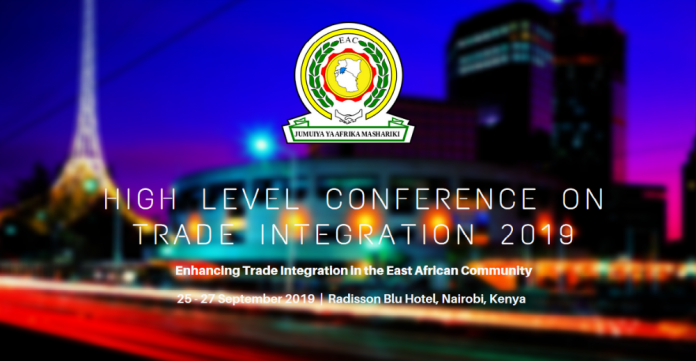
A report of the recently concluded high level conference on trade integration notes that there is a downward trend on the profile of the East African Community (EAC) as an attractive investment destination.

The report calls for the EAC Partner States to market EAC jointly, further consolidate free trade by eliminating individual State exemption lists, liberalize and allow free movement of trade and services, eradicate non-tariff barriers (NTBs), fully harmonize the Common External Tariff (CET) and domestic taxes and make business immune from politics.

To enhance competitiveness, the reports say EAC needs to reduce the cost of production, and stop relying on duty exemption arrangements like AGOA. Cost of production can be lowered by managing labour, energy, logistics and cost of inputs, like raw material. “Partner states should play complementary roles in ensuring that the region does not continue being the market of finished goods from other regions, but also a producer of goods for export,” it says.

However, delegates at the conference noted that there has been remarkable progress made on the EAC regional integration pillars namely the Customs Union, the Common Market, the Monetary Union and the Political Federation. Among them, the Customs Union is regarded as most successful notably with the implementation of common legal instruments and trade facilitation programmes across the region including the Single Customs Territory, One Stop Border Posts, Authorized Economic Operator Programme and the Customs Business systems interconnectivity.

The conference that was held in Nairobi, Kenya from September 25-27, 2019 was held to commemorate 20 years of the EAC and 15 years of the East African Customs Union. The overarching goal of the conference was to have an open, honest and critical self-examination as a region, with regard to what has been achieved, what has worked and what needs to be done to move the regional integration forward as well as improving the EAC trade policy and other instruments.

“The outputs of the conference are key to making EAC an attractive investment bloc, boost industrialization, infrastructure development as well as embracing emerging technologies for economic development. The future of the EAC can only be assured if there is continued support by all Partner States, both at policy formulation and implementation levels,” says the report.

Conference Recommendations:

  1. Promotion of intra-regional/continental trade should remain the core objective of integration. In light of this the EAC Common External Tariff should be reviewed to enhance internal trading environment and promote value chains for regional industrial development.
  2. Develop a comprehensive strategy that takes into account an appropriate technology, that ensures availability of skilled manpower and financial infrastructure for affordable financing, harmonize tax policies and ensure that EAC rules of origin are supportive to the development of value chains in the region, enhance collaboration between applied research, academia and private sector while enhancing the competitiveness of industries in the region. development partners to shift focus from humanitarian issues to supporting concrete means of industrialization such as market-based interventions that are private- sector friendly.
  3. The East African region to adopt emerging Fourth Industrial Revolution technologies such as robotics, Blockchain and Artificial Intelligence (AI Harmonize laws and tax regulations, strengthen EAC dispute handling mechanisms, enforce self-regulation by private sector and governments support SMEs;
  4. Enhance data analysis aimed at identifying consumer trends, conduct intensive change management to create awareness on the available technologies and platforms that have been developed to facilitate trade in the region, develop measures to curb cyber-crime which impede the benefits of digitization.
  5. Operationalize the Trade Remedies Committee as a regional mechanism for dispute resolution;
  6. Women and youth agendas at all levels of decision making be addressed as separate sectors to develop strategies that will address their concerns;
  7. Regional Trade Agreements should be respected and implemented by Members in order to access benefits.
  8. Implement existing Agreements on airspace with the intention of achieving open skies to increase free movement of people across East Africa and the African Continent;
  9. Key determinants of Negotiating new agreements should focus on value chains, export diversification and addressing supply chain. In addition EAC should undertake comprehensive assessments of future impact on domestic economies, including industrial and tax implications, resulting from implementation of new agreements
  10. Strengthen the existing mechanism to enhance infrastructure efficiency and invest in other modes of transport such as railways, water and develop regulatory framework to facilitate Public/Private Partnerships;
  11. EAC to explore sustainable mechanisms to enable the EACJ to effectively implement its mandate;
  12. The EAC should re-visit EAC integration process to establish what is working and what is not working; Additionally, there is need for improved and more strategic engagement between the public and private sectors to enable the private sector to contribute effectively to the integration process;
  13. It is imperative for Private Sector to drive the EAC Integration process and reinforce advocacy in order to address critical challenges in the business environment.
Stories Continues after ad

Minimising scandals: BoU transfers staff in major shake up

Bank of Uganda

Bank of Uganda (BoU) has transferred  several staff at its currency centres around the the country a as  a measure to minimise risks and strengthen internal controls in the currency operations that were recently hit by scandals as some staff stole old notes that were meant to be destroyed.

BoU has 9 branches and currency centres, that store, process and monitor the supply of currency to the government and private financial institutions in the surrounding cities, towns, and villages.
The branches also ensure that new banknotes are circulated in all the geographical regions of the country.

Explaining the new transfers, Ms Angela Kasirye Katete, the deputy director, corporate affairs, who is currently acting as the director of communications, confirmed what she called “normal transfers” but did not disclose the names of the affected people since some officials rejected the transfer.

Currency department, according to Bank of Uganda website, is responsible for the designing and ordering of banknotes and coins to meet the country’s demand; this is one of the main functions of the department.
The staff transfers, however, came after BoU issued new rules regarding access of cash rooms at currency centres whose unspecified cash was reportedly stolen at its Mbale centre.
The guidelines were issued early this month after they suspended some staff at the centre following allegations that some of them were arrested by security operatives while trying to sneak out old notes.

Ms Katete explained then that there were allegations of pilferage involving cancelled stock at Mbale Regional Branch and that the Bank was conducting internal investigations to ascertain the veracity of the allegations.
“BoU instituted internal investigations into the currency operations at Mbale Regional Branch and these are in advanced stages. When completed the Bank will take the necessary steps accordingly,” she said.

Under the new guidelines, note examiners acquire permission to access another currency branch other than the one they work for.
Currency centres have also been ordered to review daily CCTV records and to ban food and drinks in counting rooms, among other guidelines.


Stories Continues after ad

WHO and partners launch emergency vaccination campaign to help contain world’s largest measles outbreak

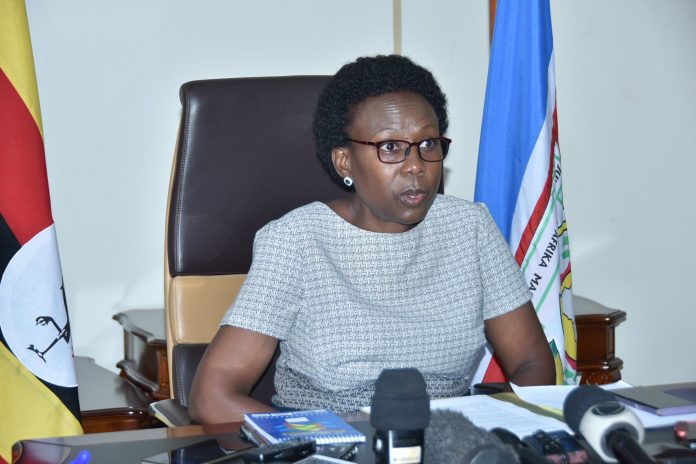
Minister of Health Dr Jane Ruth Aceng

With the world’s largest and fastest-moving measles epidemic continuing to expand throughout the Democratic Republic of the Congo (DRC), the Government with the World Health Organization (WHO) and partners today initiated a third emergency campaign of vaccinations in 24 health zones, targeting nearly 825 000 children aged 6 to 59 months.

Life-saving vaccines and supplies for the campaign have been provided by WHO, Médecins Sans Frontières, UNICEF and the DRC Government, with US$2.5 million funding from the United Nations Humanitarian Pooled Fund.

As of 17 September, a total of 183 837 suspected measles cases had been reported in 192 of the 519 health zones nationwide, including 3 667 deaths which exceed the number of deaths due to Ebola. Nearly all the deaths have been children.

Every one of the country’s 26 provinces has reported cases of measles and is battling to control this outbreak, which the Ministry of Health declared on 10 June.

“The DRC is experiencing a dire situation because too many children were missed by routine immunization,” said Dr Deo Nshimirimana, WHO Representative to the DRC. “The country now has large clusters of children who need to be vaccinated – WHO and partners are working with the Health Ministry to move as quickly as possible to reach them.”

In the DRC, routine measles immunization coverage was only 57 per cent in 2018.

This nine-day campaign, the third supported by WHO this year, will bring the total number of children aged 6–59 months reached through emergency vaccination campaigns to more than 4.1 million in at least 121 of the 192 affected health zones.

The 24 health zones targeted in this emergency campaign are located in six provinces: Equateur, Mongala, Kwilu, Kwango, Mai-Ndombe and Kasaï Oriental.

In addition to this WHO-supported campaign, other partners are also working with the Government to organize mass vaccination campaigns by 1 October. UNICEF is procuring and distributing vaccines, and keeping them safe through cold chain logistics, in six health zones of Kasai Oriental Province. Première Urgence Internationale will support a campaign in five health zones in Kasai Central Province. Médecins Sans Frontières is assisting with a campaign in five health zones in five provinces of Haut-Uélé, Ituri, North Kivu, Tanganyika and Kwilu, while Médecins d’Afrique is targeting one health zone in South Kivu Province.

Vaccines previously secured for supplemental campaigns planned long ago are now being fast-tracked for 22–26 October 2019, November 2019 and January 2020.

In addition to the US$2.5 million from the United Nations Humanitarian Pooled Fund for the emergency campaign, the Ministry of Health has provided US$843 000 to purchase vaccines to cover urgent needs in health zones affected by the ongoing outbreak. WHO has also mobilized nearly US$500 000 from the Contingency Fund for Emergencies.

WHO has established a measles response advocacy committee to mobilize partners and donors in a joint effort to control the outbreak.

Stories Continues after ad

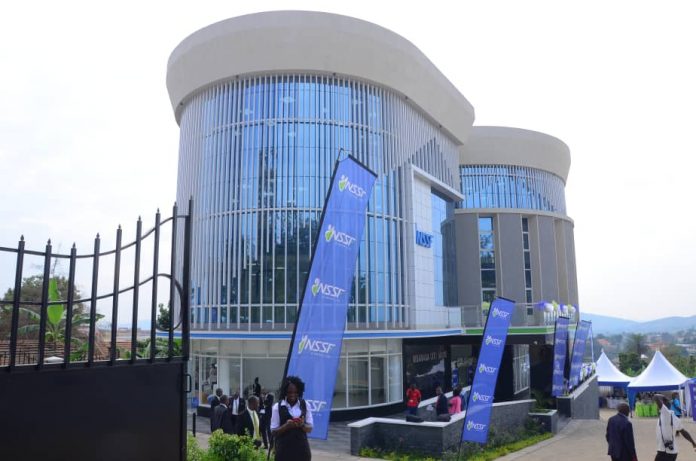
NSSF declares 11 per cent interest rate for 2018/19

Finance minister, Matia Kasaijja has declared 11 percent interest to be paid to those who save monthly with the National Social Security Fund  for the year 2018/19.

The declaration of the latest interest was made during NSSF 7th Annual Members’ Meeting at Kampala Serena Conference Centre.

This new interest rate will be calculated and credited on the balance outstanding on the members’ accounts as at 1st July 2018, in accordance with provisions of the NSSF Act.

The 11 per cent is a drop from last year’s 15 per cent  however the minister said the rate declared is higher than 6.7 per cent 10 year average rate of inflation and annual inflation of 3.4 per cent recorded last Financial Year.

“This rate I am announcing today is higher than the 6.7 per cent 10-year inflation rate which means that your money still holds much value” said the Minister

“The Fund size has grown by 13 per cent and contributions from workers increased by 17 per cent from Shs 1.049 Trillion to Shs 1.208 Trillion. This is quite impressive. We shall do everything we need to do to help the fund grow,” Kasaijja said.

Kasaija said the Uganda Economy has recovered from the shocks of 2016/17, growing at over six per cent last financial year. “This year we even project a better economic growth,” he said

The amount of money paid in benefits to qualifying members, according to the fund, increased by 25 percent from Shs 360 billion in 2017/2018 to Shs 450 billion in 2018/2019 and the average benefits turn-around-time 2018/19 remained flat at 8 days.

“The Fund has paid you a real return, eliminating the risk of erosion of the value of your saving as a result of inflation, and growing the savings in real terms. I would like to applaud Board and Management for ensuring that members’ savings are preserved.” He echoed

NSSF Board Chairman, Patrick Kaberenge, welcomed the move to amend the NSSF Act cap 222 With the decision to preserve NSSF as the mandatory scheme for workers in the private sector.

He said Customer satisfaction slightly dipped by one per cent from 85 per cent in 2017/2018 to 84 per cent in 2018/2019. The key factor affecting the rating is limited product offering which we hope to address through the proposed amendment to the NSSF act.

Stories Continues after ad

Tourism And Jobs; A Better Future For All

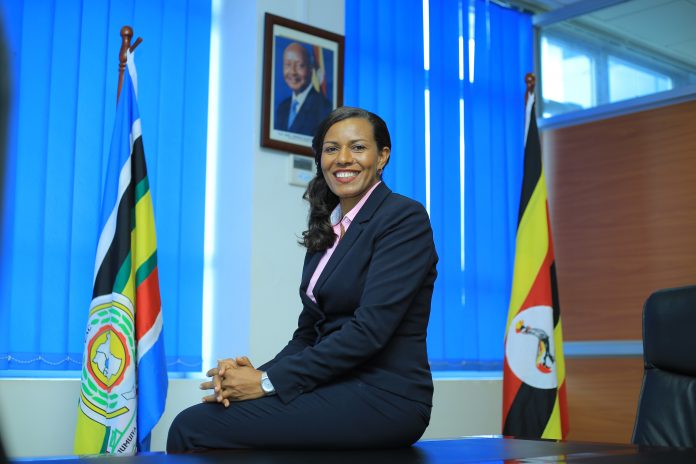
BY LILLY AJAROVA

Today, Uganda joins the rest of the world to mark World Tourism Day 2019 at the PECE Stadium in Gulu. This year’s celebrations are organized under the theme: Tourism and Jobs, a better future for all. Celebrated every 27 September around the world, the purpose of World Tourism Day is to foster awareness among the international community on the importance of tourism and its social, cultural, political and economic value.

The day seeks to address global challenges outlined in the United Nations Millennium Development Goals (MDGs) and highlight the contribution the tourism sector can make in reaching these goals.

As a nation, this year’s theme particularly speaks to an important section of the new development Agenda for Uganda which is job creation.

According to the just-released Annual Tourism Sector Performance Report (FY2018/19), international visitor arrivals increased by 7.4% from 1,402,409 in 2017 to 1,505,669 in 2018. This is well above global and Africa’s tourism growth rates, which in 2018 stood at 3.9% and 5.6%, respectively, according to the World Travel & Tourism Council (WTTC).

This subsequently led to a 10.3% growth in forex earnings, from US$ 1.45 billion in 2017 to US$1.6 billion in 2018. The sector also accounted for 7.7 percent of the national GDP.

The improved performance is attributed to increased stakeholder marketing efforts (both domestic and abroad), increased participation and understanding of tourism and its role in the economy, increased investments in the sector as well as a stable political environment and improved conservation efforts.

This growth has had a direct impact on the lives and livelihoods of Ugandans and Ugandan households, through especially the creation of jobs. Sector employment grew by 10.3% from 605,500 jobs in 2017 to 667,600 jobs in 2018, much faster than overall economic growth, which stood at 5% in 2018. Of specific significance is the fact that 77% of the sector jobs go to the youth (18 – 30yrs) and 58% of sector employees are women.

In the same line, the World Bank is financing the construction of a new Hotel and Tourism Training Institute in Jinja which will help in improving the skillset of persons employed in the sector. Most crucially, the private sector should join hands with government so as to ensure that the training here meets their needs.


Currently, Uganda Tourism Board is prioritizing tourism product development, diversification and investment as one of the ways to increase jobs in the sector and give our tourism offering a competitive edge.

We currently have two bankable products for investment along the equator and another on marine tourism. We believe that once these products are taken on, we shall have hundreds of jobs opening up in the sector and the boost to the economy will be evident.

Furthermore, during FY 2018/19, the sector identified and initiated the development of coffee, agriculture and homestays as viable tourism products. The highly inclusive nature of these products will support the economic transformation of regional communities across Uganda through job creation and income generation amongst the youth and the elderly.

As UTB, we undertook a countrywide retraining, registration and certification of all tour guides. The underlying aim of this exercise is to equip the guides with basic definitions, concepts of tourism, why it is important to provide professional tourism experiences, contribution to socio economic development at local and national level, value chain nodes, typologies, relevant laws and policies, government and private actors and institutions.

We are happy that private sector actors have also undertaken similar trainings with the guides.

As travelers begin to show interest in lesser traveled parts of the country, there will also be an increase in job requirements in rural areas. We are positive about Uganda’s prospects.

The author is the Chief Executive Officer of Uganda Tourism Board.

Stories Continues after ad

To solve its power distribution problems, Africa needs to modernise and decentralise its grid

By Anastasia WALSH

Electrification is an on-going and foundational investment, and a necessary one to realize all modern-day development objectives. Despite bullish policies, the fact remains that over 640 million Africans lack access to electricity. The effect of this is apparent. It impedes economic growth; it inhibits the advancements of self-reliant local communities, and it threatens national security. African governments are beginning to rethink their electrification plans. Grid modernisation, specifically the deployment of microgrids in rural areas, provides a promising strategy.

The centralized utility model is not adequately serving africa’s needs

Attempting to replicate the centralized utility models implemented in the U.S. and Europe has not succeeded in improving energy access across the continent. Despite this, it seems many governments and utilities wrongly maintain the position that the expansion of the traditional grid infrastructure is the solution. In areas where communities have access to the central grid, they still have to supplement the intermittency of the power with diesel generators. On the flip side, the utilities are financially strained because they are unable to collect revenues from their customers. The low rate of revenue collection is due to the unsustainable tariffs the providers impose on customers as a result of the political pressure exerted on them. This results in the utilities being unable to finance upgrades in infrastructure, further exacerbating the issues.

Those who favor the expansion of the central grid as the most effective means of increasing rates of electrification face the challenge of reconciling two contradicting positions. The first position is that increasing access requires lowering tariffs. The second position is that lowering tariffs will intensify the financial stress utilities are currently under. Neither of these positions is sustainable. The incorporation of microgrids into a hybrid system of electrification is the best solution.

Grid modernisation and microgrids

Microgrids are small-scale power grids that run on a combination of solar, wind, or biomass or fossil fuels to provide reliable power. They operate either independently from the main grid or can be synched to it at the same voltage to shift the energy and respond to peaks and troughs in supply and demand. This ensures there is no interruption in power supply, allowing communities to be more energy independent by cutting costs and providing reliable energy access.

Productive use of energy (PUE) is key

The off-grid solar lighting market is thriving thanks to the falling prices of renewable energy equipment. The solar lighting market has been further bolstered by widespread deployment of pay-as-you-go (PAYGO) payment systems that utilize mobile-money technology. These solar devices provide sufficient generation for low consumption needs like household lighting, charging cell phones, and the use of small household appliances. Despite its attractiveness to householders, off-grid solar lighting is currently not scalable. The deployment of microgrids will be necessary to provide the adequate output required to power commercial businesses, hospitals, schools. Demand for electricity from small industry and business, which is classified as the productive use of energy will determine the success of microgrids; without this demand, the deployment of microgrids will not be financially viable. Ensuring the Productive Use of Energy enhances the economic and social development impacts of microgrids and rural electrification in the wider context.

Leading The Way: Kenya and Nigeria

Africa is forecast to be the world’s fastest-growing market for microgrids at a Compound Annual Growth Rate of 27%, representing 1,145MW by 2027. Within the continent, Kenya and Nigeria are at the forefront of the grid modernisation revolution.

With strong renewable energy and microgrid policies, Kenya has doubled its energy access rates since 2014. To reach its goal of 100% electrification by 2030, Kenya should implement a hybrid-decentralized system. This entails a combination of traditional utility distribution and the deployment of an extensive network of microgrids. The prevalent use of mobile money in the region, if harnessed correctly will provide the best means of collecting payment of energy bills. Nigeria similarly has ambitions to drastically increase their generating capacity by 2030 with 30% of that planned to be from renewable sources. Microgrids are expected to provide 5.3GW of this increased generation capacity.

Nation-specific policies

To improve energy access, African nations should consider incorporating the following into their policies: First, targeting rural populations for distributed energy via microgrids; then implementing low-cost and low-barrier permitting and licensing rules with standardized quality control and operating requirements; and finally ensuring that electrification strategies are financially viable.

Decentralized/ hybrid solutions such as microgrids are the most cost-effective solution. The PAYGO business model provides an efficient means for project developed to collect revenues from their investments. Despite the tendency to paint all sub-Saharan countries with the same brush, as it relates to electrification rates, this is especially inappropriate. When it comes to implementing electrification and grid modernisation strategies, policymakers should consider their countries unique geography, natural resources, climate, population density, and power demand patterns.

The writer is a legal consultant that focuses on African energy access matters. She is passionate about driving policy changes to ensure electrification rates across continent increase. She believes that investment in power is the foundational bedrock of development and that a hybrid mix of energy solutions is critical to realising Africa’s potential.

Stories Continues after ad

Chief justice awarded IATL international trial lawyer of the year award

The International Academy of Trial Lawyers (IATL) has awarded the Chief Justice, Bart M. Katureebe, the IATL International Trial Lawyer of the Year Award.

The award was presented to him by Elizabeth Onyango and Linda Bore from the International Law Institute in his chambers at the Judiciary Headquarters in Kampala.

The Chief Justice joins the company of past award recipients such as former President of Ireland Mary Robinson, Tanzanian Chief Justice Mohamed Chande Othman as well as former South African Deputy Chief Justice Dikgang Moseneke among others.

The Chief Justice lauded IATL for the award.

The Academy is a group of elite trial lawyers representing both sides of the Bar: prosecutors and defense lawyers in criminal cases, and plaintiffs’ and defense counsel in civil litigation. While the majority of the Fellows come from the US, the Academy includes lawyers from more than 30 countries.

Fellowship is by invitation only, and trial lawyers are invited to become Fellows only after an extremely careful vetting process.

Stories Continues after ad

Uganda orders for last two Bombardier CRJ900 commercial aircraft

A330-800-Uganda-Airlines jet

Uganda Airlines has made its final commitment for the delivery of the third and fourth Bombardier CRJ900 commercial aircraft, five months after the delivery of two aircraft.

The $56 million agreement was signed yesterday in Mirabel, Canada and witnessed by the Permanent secretary for ministry of works and transport Bageya Waiswa, Eng. Bagenda Ephraim from Uganda Airlines and MP Kafeero Ssekitoleko Robert and Allan Craig for Bombardier.

The two planes will be delivered on 7th October 2019 at Entebbe international airport. The four will be making regional commercial flights in South Sudan, Rwanda, Kenya, South Africa, Zimbabwe, Burundi, and Somalia among other African countries

In July this year, President Yoweri Museveni received the first two of the four Bombardier CRJ900 regional Aircrafts which were ordered by Uganda National Airlines Company in July 2018.

On august 27th, Uganda Airlines made its maiden flight to Jomo Kenyatta international airport (JKIA) in Nairobi, Kenya, a month after being granted Air Operator Certificate (AOC) from Uganda civil aviation authority (UCAA). The company however commenced its commercial flights on the 28th august 2019.

The current flights include; Nairobi, Juba twice daily, Mogadishu three times daily, Dar-es-Salaam and Kilimanjaro once a day, Bujumbura and Mombasa thrice a week with two monthly promotional fares of Nairobi Return US$ 278, Juba Return US$ 225, Mogadishu Return US$ 590, Dar Return US$ 286, Bujumbura Return US$ 292, Mombasa Return US$ 325, Kilimanjaro Return USD 311 inclusive of taxes. But the passengers can pay in Ugandan currency as well.

Established in May 1976, Uganda Airlines, started operations in 1977 and was liquidated in May 2001 after efforts to privatize the company failed due to massive debts it had incurred.

Its revival now means Uganda Airlines will have to compete with Africa’s best such as Ethiopian Airways, Kenya Airways, RwandAir and others on the continent, not forgetting International ones such as Emirates Airways, Qatar Airways and Turkish Airways among others that land at Entebbe.

Stories Continues after ad

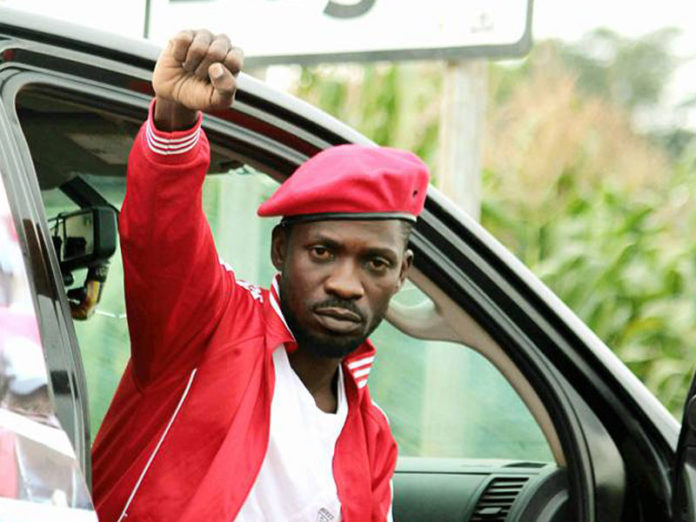
Bobi Wine condemns high levels of election malpractices in Hoima, says this is desperate regime

Bobi Wine

The patron of people power, a political pressure group who doubles as the Kyadondo east MP, Robert Kyagulanyi, has spoken about their defeat in the just concluded bye election in Hoima, saying the exercise was marred by violence and gross violation of electoral laws.

The hotly contested bye-election was between national resistance movement’s (NRM) candidate Busingye Harriet and forum for democratic change’s (FDC) flag bearer Nyakato Asinansi. Close to 3:30am Hoima district returning officer, Matsiko Douglas, declared Busingye as the newly elected woman MP of Hoima garnering 33301 votes as Nyakato polled 28789 votes.

“I want to join my fellow leaders and other Ugandans in condemning high levels of election malpractices that were displayed in this election. Security forces have for past few days been deployed in Hoima, not to keep law and order but to help Museveni and his regime rig this election.”

He said many of Nyakato’s supporters and agents were arrested, brutalized and held in detention centres outside Hoima. “On the day of voting, many were brutally chased away from polling stations. The tally center was raided.” He said

According viral videos on social media, Nyakato’s supporters on the ground spent the day in running battles with vehicles which had pre-ticked ballots in favor of the NRM candidate. “Available information shows that they took advantage of the vastness of the district to stuff ballots early morning in remote areas, and were caught later in the day. Several people recorded these things on video, which is why Museveni and his regime are moving to ban cameras from polling stations come 2021.” He said.

He said Nyakato’s team has Declaration Forms bear different results from those which were declared by the district returning officer, Mr Matsiko. He vowed to support her in every way if she seeks to challenge these violations.

“Let me also make it clear that these gross violations only make us stronger! They give us more reason to fight on. They prove to us that our cause is a right cause! Therefore we are not fazed- we are only challenged to work even harder. Therefore, the most important thing is to pick lessons. These lessons are indeed invaluable as we prepare for the final onslaught come 2021.” He said

“The good news is that dictators throughout history have done such things in an even smarter way than Museveni- but ultimately they fell and were dropped in the dustbin of history. The most important thing for us is to be smarter and more organized than the dictatorship. I am persuaded beyond doubt that we shall soon overcome.” He noted

According to electoral observer’s report which include, CCEDU, the Election Day was largely well administered. The report indicates that the September 26th 2019 Hoima District Woman MP by-election was conducted in compliance with the legal framework of the Republic of Uganda and in line with international obligations.

Stories Continues after ad

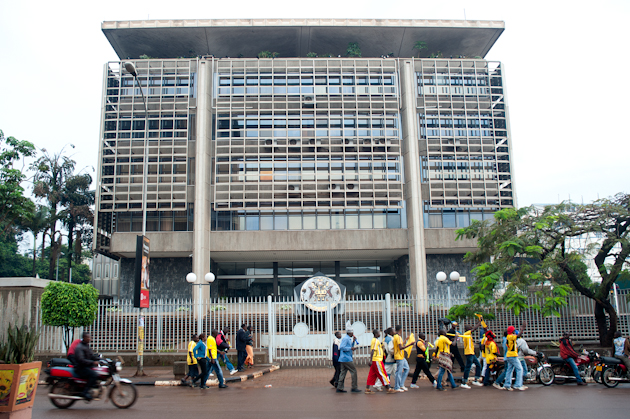
Stanbic Bank Uganda PMI dips 1.2 percent in August

According to the latest update, the Stanbic Bank Uganda Purchasing Managers’ Index (PMI) dropped by about 1.2 percent to 57.5 in August 2019 from 58.2 in July. The reading pointed to 31st straight month of expansion in the private sector, as both output and new orders continued to increase and employment grew further.

Also, firms increased their purchasing activity. Reflecting this, stocks of purchases also increased, extending the current period of accumulation to five months. In terms of prices, overall input costs rose, mainly due to increases in staff costs, electricity, fuel and water. Accordingly, companies raised their output prices. Lastly, the business sentiment remained positive in line with improving client demand and business expansion plans.

PMI is based on data compiled from monthly replies to questionnaires sent to purchasing executives in approximately 400 private sector companies, which have been carefully selected to accurately represent the true structure of the Ugandan economy, including agriculture, construction, industry, services and wholesale & retail.

The panel is stratified by GDP and company workforce size. Survey responses reflect the change, if any, in the current month compared to the previous month based on data collected mid-month. A reading above 50 indicates an overall increase in that variable, below 50 an overall decrease.

PMI is a composite index based on five of the individual sub-components with the following weights: New Orders – 0.3, Output – 0.25, Employment – 0.2, Suppliers’ Delivery Times – 0.15, Stock of Items Purchased – 0.1, with the Suppliers’ Delivery Times sub-component inverted so that it moves in a comparable direction. Uganda Composite PMI – actual data, historical chart and calendar of releases was last updated on September of 2019.

Stories Continues after ad