Stanbic Bank
Stanbic Bank
27.8 C
Kampala
Stanbic Bank
Stanbic Bank
Home Blog Page 1155

UEFA approves third European cub competition

A third European club competition is set to start in 2021 and will be known as the UEFA Europa Conference League, UEFA confirmed after an Executive Committee meeting in the Slovenian capital Ljubljana.

The competition will add as a third tier to the UEFA Champions League and the UEFA Europa League, designed to offer more clubs in more countries a chance to participate in European football.

This means that the Europa League is set to cut down the number of teams involved from 64 to 32 each year, and this new tournament offers teams the opportunity to still play European football.

The format of the tournament will see 32 teams enter the Group Stages into eight groups of four. The top two teams will then progress through to the round of 16, quarter-final, semi-final and then the final.

Europa Conference League matches will take place on a Thursday, just like the Europa League.

The winners of the Europa Conference League will earn a guaranteed spot in the Europa League the next season, just as the winners of the Europa League do for Champions League competition.

The winners of the Carabao Cup in 2020/21, or the side who finishes 6th or 7th in the Premier League, will be the Premier League’s sole representative in the inaugural competition.

The venues for the next three Champions League finals were also revealed. The 2021 UEFA Champions League final will be played in Saint Petersburg, with Munich being awarded the 2022 showpiece and the 2023 final being given to Wembley.

The 2021 European Super Cup will be held in Belfast, with Sevilla’s Ramon Sanchez Pizjuan hosting that year’s Europa League final.

It was also confirmed that video assistant referees (VAR) will be used in the Europa League from the beginning of the knockout stages in February.

Stories Continues after ad

Trade minister commends URA for improving face of tax administration in Uganda

The Minister of Trade Industry and Cooperatives Uganda, Amelia Kyambadde, has commended Uganda Revenue Authority (URA) for the good job towards improving the face of tax administration in Uganda.

The minister said Wednesday while officially opening Tax Payers’ Appreciation Month (August 27-September 27, 2019) at Kololo Independence under the theme ‘Every Taxpayer Counts’ recognizing every taxpayer irrespective of status, who have made a contribution to the development of Uganda.

 “I appreciate URA for this gesture of rewarding and appreciating taxpayers. It drives a sense of gratitude in the public. I congratulate all the top 1000 complaint small and medium enterprises (SME) taxpayers that are being recognized this month by the tax body. It brings great joy to see the growth and contribution that SMEs are making to Uganda’s economy,” she said.

Kyambadde said SMEs have a number of challenges and a number of them don’t live to see their third anniversary and promised to help them in a number of ways including access to affordable finance.

SMEs are essential drivers of economic and social wellbeing in our society. They represent 90 per cent of Uganda’s private sector, account for at least 45 per cent of Uganda’s labour force and contribute 20 per cent of Uganda’s gross domestic product.

In her remarks, the Commissioner General of URA, Doris Akol, said Every September, they celebrate and recognize taxpayers who consistently make an effort to grow their businesses year on year to honor their civic obligation to the revenue basket in a way that is commensurate to this growth.

“Our focus this year is the Small and Medium Enterprises (SMEs), for the exceptional yet underappreciated role they play in advancing Uganda’s economic growth.” She noted

SMEs face barriers in accessing strategic resources such as skills, information and access to finance. The bottlenecks have an effect on the ability of the SMEs to blossom and make an even more significant contribution to the revenue basket.

“It is against this background that as URA we are doing our part in improving the business environment for SMEs because we recognize their potential that it is critical to the domestic resource mobilization agenda of Uganda.”

She said SMEs are even more important for their contribution to employment, economic growth, innovations and the diversity of competition they bring to the markets. SMEs guarantee inclusiveness and sustainable economic growth.

Stories Continues after ad

DPP Mike Chibita elected to global  executive committee 

DPP Justice Mike Chibita

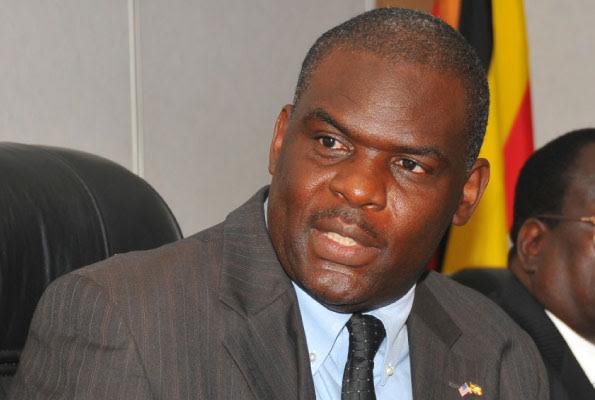
The Director of Public Prosecutions Uganda, Justice Mike J Chibita has been elected to the Executive Committee of the International Association of Prosecutors (IAP) at its 24th General Meeting held on in Buenos Aires, Argentina.

The International Association of Prosecutors is an organization that brings together prosecutors from all over the world, boasting of a diverse membership from over 177 countries and representation from all the continents of the world. It sets standards for professional and ethical conduct of prosecutors, facilitates cooperation especially in cross border matters and promotes the observance of human rights in the conduct of prosecution work.

It is a global platform where prosecutors receive training and mentoring, share experiences and knowledge in all areas of prosecution and has special platforms on cybercrime, Money Laundering, Asset Recovery and Corruption, Trafficking in Persons and War crimes and related offenses.

Justice Mike Chibita graduated from Makerere University, Uganda with a Bachelor of Laws in 1989 and completed the Bar Course in 1990. He holds a Master of Laws from the University of Iowa in International and Comparative Law. He was appointed to the Bench as a Judge of the High Court in 2010 and became the Director of Public Prosecutions in 2015. As DPP, he is at the helm of the greatest percentage of Public Prosecutions in Uganda and responsible for the strategic and policy direction of the ODPP.

As a member of the Executive Committee, the DPP will have the opportunity to make a valuable contribution towards the management and administration of the IAP.

ODPP Uganda is proud of this achievement, which is a recognition of Uganda’s commitment to building a responsive, efficient and effective prosecution se

Stories Continues after ad

Global coffee roasters, traders and retailers sign historic declaration on the economic sustainability of coffee

Uganda coffee


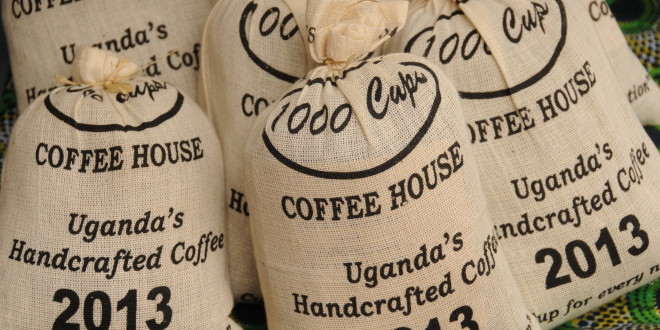
Leading coffee roasters and traders days ago signed an historic declaration on the economic sustainability of the world coffee sector, following the first edition of the CEO and Global Leaders Forum organized by the International Coffee Organization (ICO) in response to Resolution 465 on Coffee Price Levels adopted by the International Coffee Council in September 2018.

Sitting as a special session of the ICO’s Private Sector Consultative Board, the Forum marked the sixth consultative event in the structured sector-wide dialogue led by the ICO – the main intergovernmental organization for coffee – to address the coffee price crisis and long-term sustainability of the coffee sector.

That was the first time that major private sector actors across the coffee value chain have come together to agree to jointly implement solutions in a spirit of shared responsibility, thereby contributing to the 2030 Agenda for Sustainable Development of the United Nations.

To date the following private sector representatives have signed a Declaration of Intent to commit to concrete shared and individual time-bound actions, illycaffè, Jacobs Douwe Egberts (JDE), Lavazza, Mercon, Nestlé, Neumann Kaffee Gruppe, Olam, Starbucks, Sucafina, Tchibo and Volcafe. The Declaration is also supported by the Latin American and Caribbean Network of Fair Trade Producers (CLAC), Fairtrade International, Global Coffee Platform, Hanns R. Neumann Stiftung, IDH the Sustainable Trade Initiative, National Coffee Association of USA, Oikocredit, Rainforest Alliance, Rusteacoffee, Specialty Coffee Association and the Sustainable Coffee Challenge.

Referred to as the London Declaration, all signatories and supporting organisations commit to taking action focusing on four themes: promoting competitive and sustainable production; fostering responsible and equitable growth; promoting responsible consumption; and promoting public-private dialogue regarding policy development. Also set out is a further commitment to take immediate action before the next meeting of the CEO and Global Leaders Forum towards implementing the actions set forth in the Declaration, to establish market and supply chain information systems, to actively participate in national dialogues and to promote the allocation of resources.

In addition to calling on all coffee sector stakeholders, development partners and governments of all countries to take individual actions, the signatories specifically request the International Coffee Council to endorse this Declaration and to instruct the ICO to continue its efforts to mobilize stronger political support and resources from multilateral mechanisms, international organizations and the private sector to address the short- and long-term sustainability of the coffee sector. The London Declaration will now be considered at the 125th Session of the International Coffee Council meeting later this week.

Stories Continues after ad

Construction of Kampala-Jinja Expressway: Museveni, MPs clash over sources of funding

President Museveni


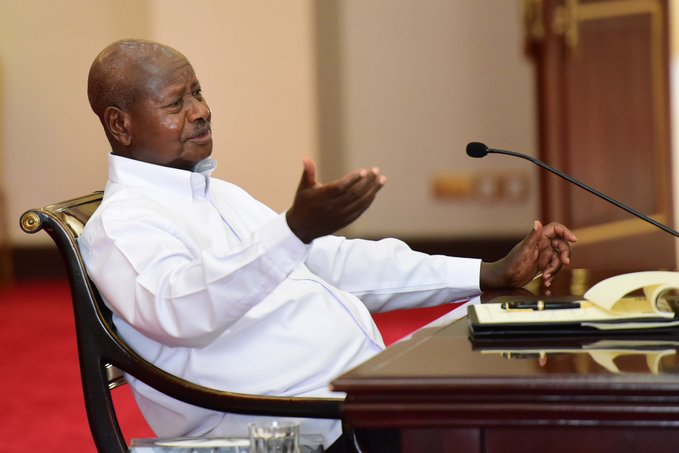
President Yoweri Museveni insists no money will be borrowed externally to fund the construction of the already delayed Kampala-Jinja Expressway, stating that there is a Chinese firm that wants to sink in the project its own money and recover it later via road tolls.

“In my earlier letter, I have expressly ruled out external borrowing except for the railway, electricity, controlling the cost of money…, the oil roads, the tourism roads, some aspects of education, some aspects of health and irrigation,” Museveni’s letter of September 18, 2019 to the Minister of Works and Transport, reads in part.

Museveni says he met delegates of a Chinese company by the names of China Railway No.17 and that they are ready to build the road using their own money. “Why then, should we borrow for this road?” He said.

Museveni in his letter invited China Railway No.17 to make their presentations and proposals.

However, MPs from the eastern region have rejected a plan by government to fund the construction of Kampala -Jinja expressway through a Public Private Partnership (PPP). They want government to borrow the funds from the African Development Bank (AfDB) as earlier planned, saying PPP arrangement has many disadvantages compared to borrowing.

The 85-kilometre road was planned to be constructed using funding from a loan from the African AfDB. The expressway is located along Uganda’s Northern Corridor, a strategic route within the region linking Uganda, Rwanda, Burundi, Democratic Republic of Congo (DRC) and South Sudan with Kenya’s Mombasa maritime port.

Raising on a matter of national importance during last Thursday’s sitting, James Waluswaka (Bunyole West County) tasked government to explain the changes and the delayed commencement of works on the road.

“Why are they targeting eastern Uganda where indicators show that we have the worst poverty levels in the country? Is it a deliberate effort to leave the easterners stunted?” said Waluswaka.

Barnabas Tinkasimire (NRM, Buyaga County West) questioned the change and yet signing of the contract with ADB was in the final stages.  “Why are you abandoning ADB and resorting to another source of funding. How has government abandoned an already finished contract to start afresh,” said Tinkasimire.

Jacob Marksons Oboth (Ind. West Budama County South) said that PPP is not a guaranteed source of funding. “If you want construction of an 85-kilometer road to fail, take it to PPP. PPP is still a struggling source of funding,” Oboth said, adding that the current traffic jam was interfering conjugal rights of people staying along that road as they have to wake up early to beat traffic jam.

Jack Wamanga- Wamai termed the change of plans as ‘unfair, saying that whilst roads in other parts of the country are financed using loans, the ones in the Eastern Uganda are not.
“I think we should mobilize the people hailing from the side of the Nile to come and tell Government that this road must be constructed. We must force government to get this loan and work on this road,” Wamanga Wamai said.

Efforts by the Minister of State for Planning, David Bahati to justify the decision to fund the road construction through PPP met resistance from Speaker of Parliament, Rebecca Kadaga and several legislators. “Government is prioritizing construction of the road through the Public Private Partnership,” said Bahati.

Kadaga warned government against the use of PPP, saying that it is a risky investment.
“On this one, I will take off my gloves. You cannot experiment PPP on the east. Everywhere else in the country we have got loans, when it comes to the east, you want PPP. It is unacceptable, we don’t want it,” Kadaga said.


Stories Continues after ad

We need entrepreneurs who think like revolutionaries

Martin Zwilling


By Martin Zwilling

The realm of an entrepreneur is all about change, but in my experience as a mentor to business founders, I hear too much about incremental change, and not enough about revolutionary change. Adding a couple of new features to Facebook, and calling it something new, may seem less risky, but creating a whole new industry, such as smartphones, has far more potential.

Of course, many would argue that more fundamental innovations, or paradigm shifts, take a long time and cost more money, but from my perspective, these are what really move our society forward. We need more people who are willing to follow the mantra of business leader David McCourt in his new book, “Total Rethink: Why Entrepreneurs Should Act Like Revolutionaries.”

David is an award-winning entrepreneur, and often described as an early revolutionary in the telecom industry, based on early innovation in fiber networks, cable TV systems, and international communications. I was impressed with his many insights into what makes a world-class revolutionary entrepreneur, including the following:

Never be afraid to think big – or to think young. Whenever you have a great idea, ask yourself why it couldn’t be made 10 times bigger, or even 100 times. Talk to everyone and think young. Too many people leave it to the younger generation to find answers to the problems of the future. Don’t be hamstrung by your biases or your past experiences.

Today every small business can look big, via a modern website, visibility on social media, and taking an active role in popular causes. Uber and Airbnb are examples of startups that started the sharing movement, but quickly grew to challenge large conglomerates.

The best are insatiably curious about everything. Some of the innovations with the biggest business opportunities, including the Internet of Things (IoT), are coming from technical advances in one industry applied to another. Great entrepreneurs cross industry boundaries to find synergies, and are constantly in learn mode on several fronts.

Elon Musk, for example, not only runs Tesla and SpaceX, but has several seemingly unrelated other initiatives, including OpenAI, Neuralink, and The Boring Company. Sir Richard Branson has initiated over 200 companies, from airlines to music labels.

Utilize the power shift from top-down to bottom-up. The top-down, centralized way we have been running the world for the last couple of centuries is no longer a viable model to follow. The shift is being caused by a combination of technology, social media, and the way people now absorb information, particularly the younger generations.

When Uber met with opposition to their new model for transport, the company was able to harness the power of crowdsourcing and social media and use it to support a cause. The changes are happening because every individual can now make their voice heard.

The power of diversity no longer requires immigration. With today’s world-wide instant communication and the internet, every new business is global by default, and distributed team members are spread across international boundaries without waiting for immigration. The diversity of ideas, cultures, and motivations is a powerful change agent.

For example, Alibaba Group in China was able to become the world’s largest e-commerce company, serving millions of B2B customers around the world, by capitalizing on diverse cultural needs and strengths, both inside and outside the company.

Achieving the impossible is within reach. Impossible has never been a fact, it’s an opinion and a mindset. These days, all of us have seen so many amazing changes, through new technologies, dramatic social change, and a better understanding of the universe, that we believe the impossible will be available just by persistent effort.

A generation ago, who would have believed that we would soon have self-driving cars, robots with artificial intelligence, or people queueing up for a trip to Mars? As entrepreneurs adopt this new mindset, they are becoming fearless and more powerful.

Entrepreneurs thinking like revolutionaries, with the mindset outlined here, are the ones that will really reshape our future, and garner the biggest opportunities at the same time. The rest may see some short-term success, but face the greater risk of being trampled into extinction before their time. Which category do you want to be a part of?

The writer is a veteran startup mentor, executive, blogger, author, tech professional, professor, and investor. Published on Forbes, Entrepreneur, Inc., Huffington Post, among others.

Stories Continues after ad

Africa Risk-Reward Index 2019 reveals the trends shaping a new investment landscape

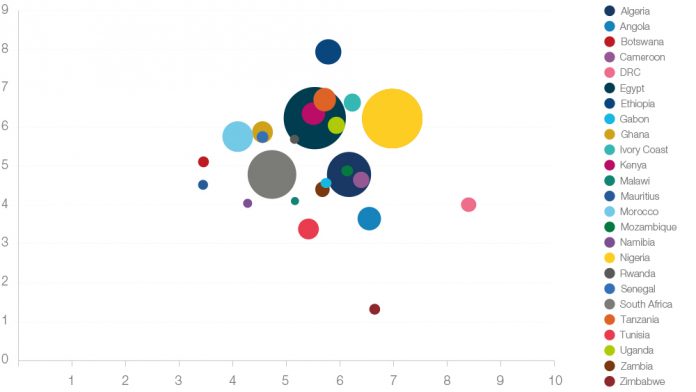
The fourth edition of the Africa Risk-Reward Index from specialist global risk consultancy Control Risks and independent global advisory firm Oxford Economics has been released today. The report offers a comprehensive and up-to-date view of the highly-dynamic business investment landscape in Africa. The respected index tracks the evolution of the investment landscape in major African markets, and this year’s edition marks several important and intriguing trends that impact investment strategy across the continent.

The benchmark research recognises that elections in African markets can often fuel tensions and raise investment concerns. However, it also demonstrates how elections increasingly serve to stabilise Africa’s evolving political landscape. It is crucial to identify how elections can end prolonged uncertainty, provide legitimacy, and empower existing or new African leaders with the mandates required to push forward with reform or counter-reform agendas.

“Do not get carried away by enthusiastic reform promises by assuming that reform-minded ‘strong-man’ leaders can push their way through free of any constraints,” Barnaby Fletcher, Associate Director Analyst at Control Risks, warns. “The real political lesson of recent years is to not underestimate the strength of counter-reform efforts by existing political structures, as well as the complexity of the undertaking,” he explains.

African investment has traditionally been dominated by its big economies but the long-awaited emergence of intercontinental trade blocs is shifting the balance of power. The paper explores the huge potential significance of introduction of the African Continental Free Trade Area (AfCFTA) in late May, while raising some concerns about its implementation. It also analyses the significant progress made by regional blocs such as the strengthening East African Community (EAC).

“The current edition of the index shows a slight increase in reward scores for some of the continent’s largest economies, including Nigeria, Angola, and Egypt, as the economic recoveries in these giants gain traction. However, the highest reward potential remains centred in the East Africa region, with expanding services and infrastructure development boosting demand and improving business environments,” says Jacques Nel, Chief Economist Southern & East Africa of Oxford Economics.

The comprehensive paper also tackles common misinterpretations of the external influences affecting African economies. Africa is no longer an even battlefield for US and Chinese players as commonly thought. Current US-Africa totals USD 39bn, while China-Africa represents more than USD 200bn, and EU-Africa trade is now over USD 300bn according to data revealed in the paper. The research also notes a surge of interest in Africa from smaller geopolitical players such as Russia, the Gulf states, Turkey, and India.

“The standard narrative of US-China rivalry in Africa had always looked like an over-simplification, but is certainly outdated now. China’s engagement with Africa is undergoing a fundamental shift, the US is playing catch-up, and a host of other countries are seeking to expand their influence in an increasingly multipolar landscape,” explains Barnaby Fletcher, Associate Director at Control Risks. “Geopolitical objectives are being supported by a flood of development finance, creating both opportunity and competition for private-sector players.”

Africa remains a desirable investment destination with a young and increasingly urban demographic, a wealth of natural resources, and a proven ability to leapfrog technologies in areas such as telecommunications or finance. The growing competition for investment across the continent is helping to promote reform, which in turn encourages greater investment. In Africa, diversification increasingly equals success and economies can no longer rely on merely holding the most mineral resources.

“Especially at a time of a trade war, which threatens to further depress Chinese demand for commodities and global demand for oil and gas, dependence on raw commodities exports is a serious weakness for an economy. It is for this reason that governments are competing to attract investment capital and firms in order to grow their manufacturing and services sectors, to supply goods and services to the many millions of Africans moving to the continent’s cities,” says François Conradie, Head of Africa Research at Oxford Economics.

For the less experienced investor in Africa, the index offers a comparative snapshot of market opportunities and risks across the continent – offering critical information for market entry strategies. For the more seasoned Africa investor, the index provides a grounded, longer-term outlook of key trends shaping the investment landscape in major African economies. The Africa Risk-Reward Index goes beyond the headline-grabbing news and noise surrounding the topic to provide an informed view on investment into Africa.

Stories Continues after ad

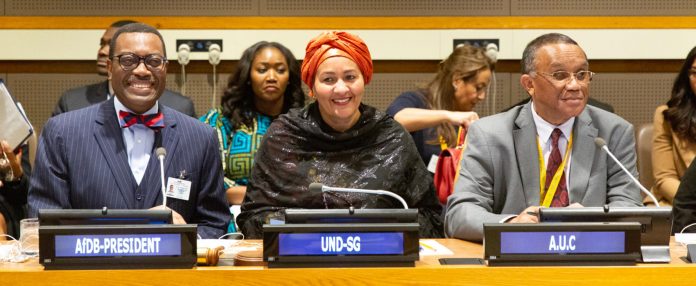
UN, African Development Bank High-Level Meeting calls for speed and action on SDGs

With an estimated 390 million people living in extreme poverty, hunger and food insecurity, Africa is in a race against time to deliver on its regional and global development goals.

On the sidelines of the UN General Assembly on Sunday, African heads of states and governments met to emphasize urgent collective action and the need for greater collaboration between the United Nations and the African Development Bank to fast-track Africa’s development.

The meeting, convened by the African Development and the United Nations, is “the first of its kind” between the two institutions taking place at the UN Headquarters, UN Deputy Secretary General Amina Mohammed said.

Underscoring the strong convergence between the continent’s 2030 Agenda for Sustainable Development, the United Nation’s Sustainable Development Goals and the African Development Bank’s High 5s, Mohammed said it was time to join forces to deliver.

“We are entering into the decade of action to deliver the SDG’s…The investment requirements are vast,” Mohammed said. “The role of the African Development Bank is crucial…to help de-risk investments and attract investment flows……..Africa’s premier institution needs much more support” she added.

The leaders called for additional resources to drive the urgent task of Africa’s development.

Speaking at the meeting, the President of the African Development Bank, Akinwumi Adesina said, “The clock is ticking, the seconds are passing very fast, yet we still have time left on the clock. We can still close the gap. I am fully convinced that with a change of pace, driven by a greater sense of urgency, and global collective responsibility, Africa can still achieve the SDGs”.

The two-hour meeting, moderated by the African Development Bank, was attended by seven African presidents – from Chad, Democratic Republic of Congo, Ghana, Guinea, Ethiopia and Lesotho, in addition to  representatives of some 30 governments.

The leaders spoke of what had worked in their countries – including mainstreaming development goals into national plans, scaling up initiatives, and the implications of harmonizing policies and strategic entry points for the implementation of development goals at national, regional and global levels.

Ambitious development initiatives undertaken by the Bank with regional collaboration are already showing success, such as Desert to Power, which aims to provide access to electricity for 250 million people across the 11 countries of the Sahel, 90 million of them through off-grid systems.

Vera Songwe, Executive Secretary of the United Nations Economic Commission for Africa called the SDGs Africa’s “highest challenge.”

Stemming the tide of illicit financial flows, public debt and tax evasion would be urgent measures to be taken by leaders if they meant to stay on track, she said.

Areas for potential collaboration include climate change in Africa, gender mainstreaming, promoting private sector investment, measures to utilize risk insurance to mitigate impact of natural disasters in Africa and appropriate security arrangements to support the Bank’s operations in fragile states in on the continent.

The African Continental Free Trade Area, which came into force this year and creates the world’s largest free trade zone, will be another major area for collaboration under the partnership.

An assessment by the United Nations Development Program has clearly shown that achieving the Bank’s High 5s will allow Africa to achieve about 90 percent of the SDGs.  “So, the faster we deliver on the High 5s, the faster we will reach our goal and desired destination,” Adesina said.

Attachments area

Stories Continues after ad

NRM mourns mysterious death of RCC Deborah Nabukenya

The National resistance movement (NRM) is mourning the mysterious death of Kawempe Deputy Resident City Commissioner (Deborah Nabukenya, who passed on last evening at Mengo Hospital where she had been admitted.

Nabukenya’s death was first confirmed by the Minister of Information, Technology and Communications (ICT) and National Guidance Frank Tumwebaze. Nabukenya was appointed deputy RCC by President Yoweri Museveni in June last year.

“It’s not so long ago when we last saw each other at Mulago hospital where we had gone to check on Baker. Receiving news of your demise last evening deeply shocks and saddens me. I pray the Lord strengths your family and friends through this trying time. RIP Ms Deborah Nabukenya.” Wrote the secretary general of NRM Justine Kasule Lumumba.

“I have just received sad news of the untimely death of Kawempe Division Deputy Resident City Commissioner, Ms. Deborah Nabukenya. On behalf of all leaders in Kawempe Division, I convey my heartfelt condolences to the bereaved family, the people of Kawempe,” mayor of Kawempe Dr. Emmanuel Serunjoji, said in his condolence message.

Stories Continues after ad

COSAFA 2019: Uganda U-17 women qualify for semifinals

Uganda U17 women team


Uganda, which is a guest nation at this year’s 2019 COSAFA Women’s Under-17 Championship, sealed a place in the semifinals after an emphatic 20-0 victory over Comoros in the final game of Group A match on Tuesday afternoon.

The result meant that both Uganda and Zambia finished on seven points in Group A, but Uganda will head the pool due to a better goal-difference after the head-to-head fixture between the sides finished 1-1 on the opening day.

Uganda Captain Juliet Nalukenge netted seven goals in the win to take her tally in the competition to 14 and the top of the scorers’ charts. She scored six against the hosts Mauritius in a 11-0 victory and in the one-all draw with Zambia.

Uganda led 14-0 at the break as they ran riot in the opening half, with Margret Kunihira scoring five goals in the match, and Shakira Nyinagahirwa and Fauzia Najjemba (four goals) also managing to net hat-tricks in what was an emphatic display.

Ayub Khalifa’s team will now wait for Wednesday’s final round of Group B fixtures to find out who they will play in the semifinals.

The same for Zambia, who dispatched host nation Mauritius with a 8-0 victory as Florence Kasonde bagged a hat-trick. Tisilile Lungu, Maweta Chilenga, Comfort Selemani (two) and Cindy Banda were also on target.

The semifinals are scheduled for the 27th of September and will be held at the François Xavier Stadium.

South Africa will secure top spot of group B if they get a point in their final Group B clash against Madagascar at the St. François Xavier Stadium on Wednesday.

The Malagasy would then need to hope that the Seychelles beat Botswana, which seem unlikely given how the tournament has gone for the latter so far. That match is at the Anjalay Stadium at the same time.

If both Botswana and Madagascar win, that would leave them on six points along with South Africa, and create a mini-league between the teams of matches played between them to determine which two teams finish top.

Stories Continues after ad