Stanbic Bank
Stanbic Bank
23.9 C
Kampala
Stanbic Bank
Stanbic Bank
Home Blog Page 1157

Dfcu’s demand of Shs47b from BoU turns two sides into foes over loss of Crane Bank leasehold properties

BoU officials implicated in the report on closure of commercial banks.


Sebalu & Lule Advocates are culpable for misadvising Dfcu bank on this issue


On January 25, 2017, the Bank of Uganda (BoU) in a hurry transferred assets of defunct Crane Bank Limited (CBL) to Dfcu bank at Shs200 billion. Before the sale, BoU had on October 20, 2016 closed CBL ostensibly for being undercapitalised.

The closure and sale of CBL prompted parliament to launch an investigation into BoU over the sale of seven defunct commercial banks, the process that exposed the weakness of BoU officials in handling official duties. MPs after the probe proposed sweeping changes at the central bank as a result.

That aside, the transaction between BoU and Dfcu is now business gone bad on many fronts but the recent one that is likely to cause the two sides to clash is the demand by Dfcu bank that BoU, the regulator of the banking industry, pays Shs47 billion to them after it came clear that they could not take over 48 freehold properties of Meera Investments Limited that had been leased to CBL at the time of the takeover.

It is interesting that both sides, despite having highly-paid internal and external legal consultants, could not see that the attachment of Meera Investment properties to the sale of CBL could be challenged in courts of law. Sebalu & Lule Advocates are culpable for misadvising Dfcu bank on this issue.

However, other legal minds in the country say the lawyers; especially the external consultants involved in that transaction knew it was problematic but were interested in reaping more money from Dfcu bank and BoU as both were excited about the juicy transaction. Unfortunately, Dfcu and BoU executives, who seemed to be friends, could not anticipate that the transaction could at one bring them into confrontation.

The reality now is that Dfcu bank needs Shs47 billion from BoU which seems to be out of cash, even though it is important to note   that the money BoU controls is taxpayers’ money. The taxpayers’ already lost Shs478 billion allegedly injected in CBL under receivership, even though BoU failed to account for all the money.

As taxpayers’ were made losses, on the other hand, Dfcu bank  posted Shs114 billion as net profit for the first half of 2017 up from Shs23 billion in the same period in the previous year. That profit was partly as a result of the acquisition of assets of CBL.

As Dfcu bank demands for Shs47 billion from BoU, it is only fair that the lender provides accurate figures of the net profit earned from acquiring assets and liabilities of CBL. Otherwise analysts believe it is unfair for BoU to pay that money, more especially that Dfcu did not pay any interest on Shs200 billion that was being paid in installments.

Dfcu’s Crane Bank take-over made it to become the second largest commercial bank in the country, with an asset base of Shs3.37 trillion, just behind the market leader Stanbic Bank that boasted of Shs3.73 trillion in assets then. It also at the same time saw an increase in the branch network from 45 to 66 branches countrywide.

“We believe that the acquisition which placed Dfcu bank amongst the top three banks in the market in terms of total assets puts the group firmly on the path to transforming from a niche bank to a universal bank,” the notice reads in part, “Overall we expect the transaction to result in enhanced value to our shareholders through superior financial performance,” Dfcu bank said in a financial statement released on August 15, 2017.

However, the latest development means Dfcu bank’s asset value has gone down given that they have given up on those wrongly acquired from CBL /Meera Investments Limited.

Surprisingly Dfcu bank is demanding Shs47 billion after losing the properties in question yet the bank had valued the same properties at Shs10 billion. Questions of transparency arise when the taxation regime comes in to take away what it belongs to the taxman. Meanwhile, the members of the public wait to see whether BoU will pay Dfcthe money.


Stories Continues after ad

Airtel not the biggest taxpayer, says URA

URA Commissioner General, Rose Akol.


Uganda Revenue Authority (URA), has dismissed all claims that Airtel Uganda is the country’s largest tax payer of the financial year 2018/19.

Last month during tax payer’s appreciation week, URA awarded Airtel Uganda with Excel Award for their compliance in remitting taxes to revenue body.

According to Herbert Ssempogo, an employee in URA’s communication department, their contribution to the tax body did not contribute nor play part in the processes through which a company can be given Excel award.

“How much a taxpayer contributes to revenue is not a criteria in determining who wins the award because the contenders come from a diverse background and operate at varying levels,” he said

He said winners are selected based on their record over the preceding three year period. Among others considerations, the judges’ panel looks at the level of voluntary compliance in areas such as filing of monthly and annual returns by the taxpayer.

He declined to offer revenue rankings saying the policy bars him from disclosing them and they remain confidential unless when court orders.

This website has established that MTN Uganda remitted Shs682 billion and Airtel paid Shs555 billion taxes in the financial year 2018/19. This however, implies that MTN is the giant in terms of paying revenue not Airtel as the media houses peddle stories.

According to the rankings, Vivo Energy paid Shs399.9 billion, Nile Breweries Shs394.8 billion, Bank of Uganda Shs290 billion and Uganda Breweries Limited Shs308 billion.

According to media reports, Airtel Uganda Chief Executive Officer Mr. VG Somasekhar has for the past couple of weeks basked in the media limelight equating the Excel Award to recognition for making the largest tax contribution in the country.

In a January 2019 interview with NTV, Somasekhar revealed that the company had paid corporate tax in Uganda for the first time in 2018 after it posted its first profit in the eight years since it acquired Warid Telecom  in 2013. He attributed the turn of fortunes to having wiped out the losses associated with the acquisition of Warid Telecom, which it bought in 2013, primarily to expand its subscriber base.


Stories Continues after ad

Anzisha Prize and the Mastercard Foundation Announce 21-year old Yannick Kimanuka, a young Congolese Entrepreneur as $25,000 prize winner

Grand Prize Winner - Yannick Kimanuka


JOHANNESBURG, South Africa, It was a night of celebration as the Anzisha Prize in partnership with the African Leadership Academy (ALA) and Mastercard Foundation awarded $25 000 to 21-year-old Yannick Kimanuka from the Democratic Republic of Congo and crowned her the winner of the 2019 Anzisha Prize.

The KIM’s School Complex, founded by Yannick in 2018, is a nursery and primary school which aims to improve how children perform academically in her community.

“I am so happy. I cannot believe this. Thank you to the Anzisha team and my fellow finalists. Tonight, I am not only filled with joy but I am filled with hope for the future of this continent. My fellow entrepreneurs have fuelled my passions and desires for a better continent,” said Yannick Kimanuka during her acceptance speech at the 2019 Anzisha Prize Forum held in Johannesburg.

Osvaldo Rey Mokouma, a 19-year-old from the Republic of Congo will receive $15,000 as he was announced as the first runner which was an unexpected delight. “I want to tell young entrepreneurs that Africa needs us and that we must work hard to see the change we want and apply for the Anzisha Prize,” he said. The festivities also included the announcement of the second runner up Cecil Chikezie, a 22-year-old Kenyan entrepreneur who founded Eco Makaa, a company that connects local fuel briquette producers to a client base by recruiting the community’s small-scale briquette producers. As the second runner up, he will receive $12,500 in prize money. “It has been a life-changing experience and I am looking forward to realizing my dream of bettering the lives of my peers,” said Cecil Chikezie.

“Every year, we are overwhelmed by the incredible businesses that the top 20 finalists are running. This year was no different. We are proud of the winners and are encouraged by their efforts to create more opportunities for other young people on the continent,” said Koffi Assouan, Program Manager, Mastercard Foundation.

This year the Anzisha Prize Forum was a half day curated experience that included workshops on the Anzisha Scenario which gave stakeholders an opportunity to rethink their approach to youth entrepreneurship.

On the journey to crowning the winners, the 20 finalists were put through their paces participating in an 11-day boot camp at the ALA campus where they were coached by industry experts on how to run successful businesses. This boot camp aids in fostering collaborative synergies between the young entrepreneurs and will hopefully continue after their time together in Johannesburg. After returning home, each finalist will receive US$2,500 in prize money and join the prestigious Anzisha Fellowship. The Fellowship package consists of eight tailored opportunities to help fellows scale their businesses. This year, the Fellowship package will include a new consulting initiative and job shadowing projects that are aimed at providing unique opportunities for all fellows.

For the past nine years, the Anzisha Prize program has continued to champion Africa’s youngest entrepreneurs. This year was no different as the program managed to reach very young entrepreneurs in remote areas. During the due diligence trips, the Anzisha team had the unique opportunity to meet all top 20 finalists in their home countries and see their businesses first hand. After travelling to over 23 countries and reaching more candidates in remote areas, the Anzisha Prize program is invested in supporting very young entrepreneurs as the program will celebrate their decennial next year.

Applications for the next cycle of the Anzisha Prize will open on  February 15, 2020. If you’d like to nominate young entrepreneurs visit anzishaprize.org/nominate. Entrepreneurs’ nominations are welcome all year round.

To bask in the celebratory moments of the Anzisha Prize, register at anzisha.org/finalists to watch the CNBC Africa special on  October 28, 2019 on channel 410 on DStv.

Stories Continues after ad

UMI becomes first public education institution to be ISO 9001 certified

Former minister of Education G. Namirembe Bitamazire handing over certificate to UMI

The Uganda National Bureau of Standards (UNBS) has certified the Uganda Management Institute (UMI) for ISO 9001 Quality Management Systems.

This makes UMI the first public institution of higher learning in Uganda to be certified for ISO Quality Management Systems.

UNBS Deputy Executive Director in charge of Standards, Ms Patricia Bageine Ejalu, presented the ISO 9001 Quality Management Systems (QMS) Certificate to UMI during the institute’s 50th anniversary celebrations at Hotel Africana on Tuesday 22nd October 2019.

The Minister of State for Higher Education, John Chrysestom Muyingo, represented the Minister of Education and Sports, Janet Kataaha Museveni at the anniversary celebrations. In her letter, the first lady said that over the 50 years, UMI had evolved into a center of excellence from which other institutions of higher learning can learn.

A Management System is a company’s structure for managing its processes and activities that transform inputs of resources into a product or service which meets the company’s objectives while satisfying the customer’s quality requirements, complying with regulations, meeting environmental and public health objectives.

If a manufacturer’s quality management system meets the relevant standards, then consumers are assured of a quality product or service once the standard for the product or service has been agreed upon.

Stories Continues after ad

Sudd Petroleum Operating Company (SPOC) Prepares to Ramp Up Production in South Sudan’s Block 5A Concession

SPOC logo

South Sudan is preparing to restart production in various oil fields, including Block 5A operated by Sudd Petroleum Operating Company; A new discovery in the Dar Petroleum Operating Company-operated Adar field will drive investment into the country.

Juba will host the third edition of South Sudan Oil & Power (SSOP) 2019, and in partnership with the Ministry of Petroleum of South Sudan on October 29-30, 2019; South Sudan will launch its first ever bidding and licensing round 2020 at SSOP 2019.

Sudd Petroleum Oil Company (SPOC) has proactively started corporate social responsibility activities for local communities surrounding Block 5A in the Tharjath field, which it operates. The activities precede production resumption, which is expected to restart by the end of the year.

Work includes the provision of treated water supply, as well as the provision of medical supplies, which currently benefits an estimated 5,000 people in the area.

The South Sudanese government has been in talks with SPOC to re-open the block since 2016 by consulting with companies and deploying extra security at the Tharjath field. The Block – which had a 10% production cap enforced by Sudan – has the potential to produce up to 15,000 barrels per day (bpd), according to an agreement signed between Sudan and South Sudan in 2018.

Block 5A is located in the Muglad-Sudd Rift Basin on the same geological trend as the Greater Nile Oil Project in Sudan. It has production capacity of 80,000 bpd of high-quality Nile blend. Production in Block 5A began in 2006 at 40,000 bpd and peaked at 54,000 bpd in 2009. By 2014, however, production was reduced significantly to 4,500 bpd, eventually ceasing entirely.

“SPOC community outreach activities will be further increased moving forward,” President of SPOC Eruwan Gerry says.

The potential resumption of Block 5A comes during a time of peace in the country, as H.E. the Minister of Petroleum Awow Daniel Chuang strives to create a conducive environment for investors.

To further attract investment into the country’s energy sector, Juba will host the third edition of South Sudan Oil & Power 2019, produced by Africa Oil & Power and in partnership and with the endorsement of the Ministry of Petroleum of South Sudan on October 29-30, 2019 at the Crown Hotel.

South Sudan’s petroleum ministry will launch the country’s first oil and gas bidding round 2020 at the event, as well as a comprehensive environmental audit, which will be done through an international tender – in line with the country’s goal of promoting transparency.

“As we work towards replenishing our [oil] reserves, we want to invite investors to participate in the bidding and licensing round 2020. We [also] intend to announce the tendering round for a comprehensive environmental audit – the first of its kind in South Sudan,” H.E. Minister Awow Daniel Chuang stated, adding that South Sudan is focused on addressing environmental challenges – a major concern of its citizens.

“We are going to have a comprehensive environmental audit, which needs to be done through an international tender – in line with our policy of promoting transparency,” he said.

The country, meanwhile, made a new oil discovery at the Adar oilfield in Block 3 in August, containing more than 37 million barrels of recoverable oil.

The discovery was made by the Dar Petroleum Operating Company consortium, which is led by China National Petroleum Corporation – a major investor in South Sudan’s oil sector.

“The new discovery in the Adar oil field is going to be a game changer because this is the first discovery that we have made since independence, giving hope to investors interested in South Sudan’s energy sector. There is still more oil to be discovered,” the Minister said.

The Minister also said he believes that the discovery will increase the appetite of international oil investors to enter the country’s oil and gas space.

“Whether they can see discoveries today, big or small, it will gear up oil exploration and encourage more investment,” he said, adding that the country – which currently transports oil to the Red Sea through Khartoum in Sudan – is also looking for new export opportunities.

“We welcome all international oil players to come to South Sudan and join SSOP 2019 in Juba. The business environment is very conducive as we continue to implement the peace agreement, because peace is going to add a lot of energy to the economic sector of South Sudan. We want to use this forum to teach investors about the business opportunities in oil and gas in South Sudan.”

Stories Continues after ad

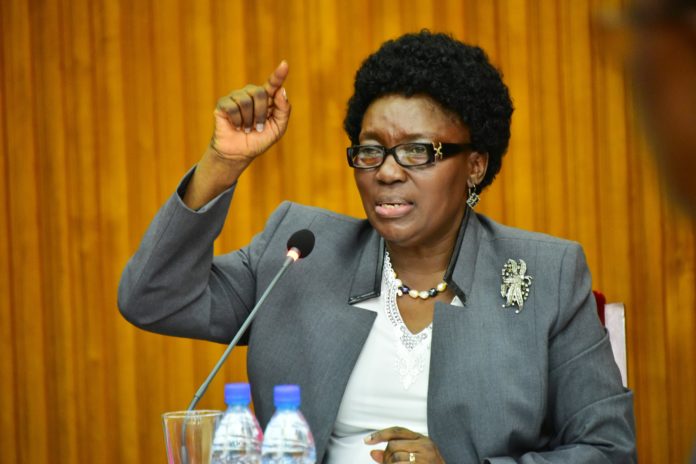
LoP Betty Aol Ocan storms Wandegeya Police Station over detention of Makerere students

Betty Aol Ocan

The Leader of Opposition in Parliament (LoP), Betty Aol Ocan was minutes ago at Wandegeya Police Station to check on over 40 Makerere University students have been detained at the security facility since yesterday following a demonstration over the 15 percent tuition increment.

“I’m at Wandegeya Police Station establishing the status quo in regard to the Students Demonstration at Makerere University,” she said.

“It’s sad that over 40 students have been held in detention since last evening over peaceful demonstrations against the cumulative 15% tuition increment.”

Aol said the Students’ Guild President, Julius Kateregga expressed to her concerns over the brutality with which the demonstration is being handled by the security forces.

“The military has gone ahead to raid students’ accommodation facilities late into the night,” she said.

The Lop has blasted the university’s Vice Chancellor Prof. Barnabas Nawangwe for exhibiting dictatorial tendencies while running the institution that is considered an epitome of freedom aspirations in Uganda’s education.

“The iron hand with which the Management of Prof. Barnabas Nawangwe is handling the matter is worrying for an academic institution of the magnitude of Makerere University,” she said.

Commenting on the reports that one of the female students who headed the demonstrations was beaten by unknown people, Aol said: The Guild President has also briefed me on the brutality against the young female student leader, Siperia Mollie Saasirabo.”

Mollie is among several other students who were suspended by the Vice-Chancellor for leading a peaceful demonstration against the cumulative 15% tuition increment.

She is said to have been attacked and severely beaten by unknown people last night while she was returning to her place from a Television interview on her suspension.

Stories Continues after ad

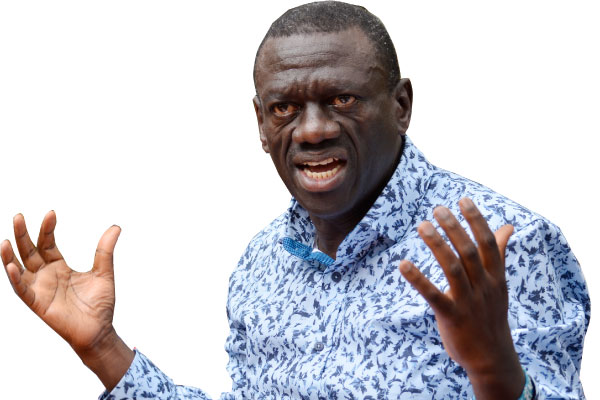
Uganda on blink of becoming failed state – Besigye

Dr. Kiiza Besigye, the former FDC president

The former presidential candidate, Rtd. Col. Dr. Kizza Besigye, has said Uganda is currently on the brink of becoming a failed state, having one of the worst human rights records in the world.

According to 2019 human rights watch report, security forces of police, Uganda people’s Defence forces (UPDF) have been key in the gross violation of human rights. Giving specific examples of the battering of Associated Press journalist James Akena, brutal arrests of MPs during the expunging of presidential age limit, lack of accountability for torture, the reports indicate that Uganda has a long way to go in the observation of human rights.

Speaking on Thursday at Forum for Democratic Change (FDC) offices along Katonga road in Kampala, Besigye said Rule of law, Constitutionalism, Social Justice and respect for human dignity, have ceased to be treasured values by the current government.

“The Junta that usurped the people’s sovereign authority has jettisoned and abrogated the Constitution with reckless abandon consequent whereof pushing the country onto the cliff.”

“The state structure is without doubt in shambles, with a rubber stamp parliament, a defanged Judiciary, dysfunctional executive and a personalized state security apparatus. This dire state of affairs has inevitably occasioned a governance crisis characterised by despotism, impunity, intransigence, authoritarianism, oppression, repression, greed, exploitation and exclusion,” he said

Besigye alleged that the current NRM regime has institutionalised a reign of terror, committing crimes against humanity, subjecting the citizens to inhuman and degrading treatment, gross abuse of rights and freedoms, massacres, murders, kidnaps, illegal arrests and detentions, torture.

In the same vain, the nation is grappling with an escalating spate of mysterious killings, with no accountability or serious measures to address the same, the hefty budgetary allocations to security notwithstanding.

He said that the state security organs’ primary focus is regime protection and as a result, the majority of Ugandans have been abandoned in the wilderness. According to the Police Crime Reports, on average, 21 people are reported killed every day.

Records show that the over 6,000 armed LDUs who were deployed in Kampala, Wakiso and Mukono are posing a very serious security threat, for they arrest, torture, rob and sometimes, have been accused of murdering people. Crimes attributed to these militias and Paramilitary outfits, are on the rise across the country.

Stories Continues after ad

UNBS impounds trucks with uncertified products

UNBS sign post used to apprehend culprits

Uganda National Bureau of Standards (UNBS) has impounded several trucks distributing uncertified products on the local market.

The truckers were supplying the said goods contrary to the UNBS Use of Distinctive Mark Regulation, 2018. The regulation requires that all products covered by compulsory standards must be certified by UNBS and issued with its Distinctive Mark before they are allowed on the market.

The trucks impounded belong to the following companies; Dembe Trading Co. Ltd truck registration number UAE 213B, Imperial Paints truck registration number UBF 186C, Life care products Ltd truck registration number UBE 750T, GP Lubricants truck registration number UBE 946R and Sipro Energy Tea truck registration number UAE 502C

UNBS also impounded trucks transporting products whose certification permits had expired and these are; Rose Foam truck registration number UAZ 740U, Jonisa Investment Truck registration number UAZ 791X and Maganjo grain millers truck registration number UAX 243S.

A Personal truck registration number UAF 608C was also found carrying imported Diapers that had no Certificate of Conformity.

The owners of the impounded vehicles will be required to take necessary measures to comply with the relevant regulations before their vehicles can be released.

UNBS calls upon manufacturers to ensure that products comply with the requirements of the standards set by UNBS.

The Uganda National Bureau of Standards (UNBS) is a statutory body responsible for enforcing standards in protection of public health and safety and the environment against dangerous and sub-standard products.

Stories Continues after ad

Egypt, Ethiopia leaders discuss Nile dam in Russia in bid to cool tensions

Russian President Vladimir Putin (3R) meets with Ethiopia's Prime Minister Abiy Ahmed (4L) on the sidelines of the 2019 Russia-Africa Summit in Sochi on October 23, 2019. (Photo by Mikhail METZEL / SPUTNIK / AFP)

The leaders of Ethiopia and Egypt on Thursday met on the sidelines of Russia’s Africa summit to discuss a disputed Nile dam that has seen tensions between the two countries rise in the past months.

According to a source, Egyptian President Abdel Fattah al-Sisi delivered a message to Ethiopia’s Prime Minister Abiy Ahmed about the soon-to-be-finished dam on the Blue Nile.

The meeting lasted around 45 minutes and took place “in a positive atmosphere,” the source added, without providing details.

Egypt fears that the building of the dam, a US$4 billion dam will reduce the flow of the Nile, on which it depends for 90 percent of its water supply.

Discussions between the two countries and with Sudan, through which the river also passes, have been blocked for nine years.

Russia, which is hosting a two-day Africa Summit in its Black Sea resort of Sochi in an attempt to revive its Soviet-era influence on the continent, has said it is ready to play a role in resolving the conflict.

Stories Continues after ad

African scientists gather for 15th Grand Challenges Annual Meeting in Addis Ababa

Addis Ababa

The 15th Grand Challenges Annual Meeting will take place on October 27– 30, 2019 in Addis Ababa, Ethiopia, jointly hosted by the African Union, Ethiopia’s Ministry of Health, the African Academy of Sciences, Grand Challenges Canada, the United States Agency for International Development, Wellcome and the Bill & Melinda Gates Foundation.

As the world rallies to reach the Sustainable Development Goals (SDGs) by 2030, this year’s Grand Challenges will bring together African and global partners to celebrate innovations from the last decade and galvanize Africa’s scientific and political communities for the next.

The three-day event will be joined by government officials and leaders in science including Amir Aman, Minister of Health for Ethiopia and Jennifer Blanke, African Development Bank-Agriculture, Human and Social Development. Researchers, innovators and global partners will share their work, learn about cutting-edge advances, build collaborations and discuss areas of mutual interest in plenary sessions, spotlight conversations, scientific tracks, keynote remarks, roundtables, as well as formal and informal side meetings.

The sessions will place an emphasis on the importance of scientific collaborations in improving lives and creating sustainable economic growth and provide an opportunity to put science and innovation at the top of domestic agendas and secure the political and financial commitments needed to give everyone a chance at a healthy, productive life.

The Grand Challenges family of initiatives seeks to engage innovators from around the world to solve science, technology and innovation, health and developmental challenges. Grand Challenges initiatives are united by their focus on fostering innovation, directing research to where it will have the most impact, and serving those most in need.

Stories Continues after ad