Facebook Twitter
  • Home
  • Politics
  • Business
  • Investigation
  • Opinion
  • Magazine
  • Education
  • Health
  • Regional
  • Games & Sports
Search
Stanbic Bank
Stanbic Bank

Eagle Online

Eagle Online

25.7 C
Kampala
Facebook
Instagram
Linkedin
Twitter
Stanbic Bank

Eagle Online

  • Home
  • Latest
    • Politics
    • World
    • Africa
    • Regional
  • Opinions
    • Our Take
  • Money
  • Games & Sports
  • Arts
    • Gossip
    • Health
    • Travel
    • Entertainment
  • Magazine
Stanbic Bank
  • Home
  • Latest
    • Politics
    • World
    • Africa
    • Regional
  • Opinions
    • Our Take
  • Money
  • Games & Sports
  • Arts
    • Gossip
    • Health
    • Travel
    • Entertainment
  • Magazine
Home Blog Page 1162

REVEALED: Dfcu Bank in search of new Chairman to replace Jimmy Mugerwa

By
Our Reporter
-
October 17, 2019
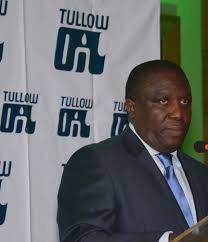
Mr. Jimmy Mugerwa, the board chairman of Dfcu bank who is accused by some shareholders for the bank's poor management.

After the departure of Jimmy D. Mugerwa to Tullow Oil plc in London only in August, emerging reports indicate that Dfcu Bank is on the clandestine hunt for a new person to replace him as Chairman of the board of directors.

“We are looking for Mugerwa’s replacement and anytime we shall announce that person,” a top executive at the bank said on condition of anonymity for he is not authorised to speak to the press on such sensitive matters.

He added that the bank is looking for the person with integrity who can help it redeem its image that was tarnished after it was established it controversially acquired its rival Crane Bank Limited (CBL) in January 2017.

The new Chairman, if appointed will work hand -in-hand with the new Chief Executive Officer Mathias Katamba who only joined the bank in January 2019 after the resignation of Juma Kisaame whose reign at the helm of that institution would later create controversy due to bad business deals he signed as CEO of the bank.

The source further said the new Chairman will be tasked to normalize work relations between top managers of the bank who he says are antagonistic to each. It should be remembered that before Katamba was brought in from Housing Finance Bank, it was rumoured the then Chief of Business and Executive Director of Dfcu Bank William Sekabembe would take over from Kisaame.

The appointment of Katamba, according to insiders did go well with Sekabembe especially that he declined to take up the role of Managing Director at KCB Uganda in anticipation that he would succeed Kisaame. “He felt unappreciated by the board after Katamba was appointed,” a source said.

Now among others, the new Chairman being hunted will have to work hard to ensure that top managers at the bank work together to take it to higher levels.

Meanwhile, Mugerwa, the first Ugandan General Manager for oil company Tullow Oil Uganda was recalled to Tullow Oil PLC in London in a move analysts said was a result of the bad press Mugerwa had been attracting as Dfcu bank’s board chairman. This, according to insiders, had been tarnishing Tullow Oil’s international image.

Mugerwa got the job because of his experience as a top manager at Shell and his expertise in government relations, which Tullow needed badly.
Mugerwa who previously worked in Shell’s East Africa business where he was General Manager of Sales & Operations and served as Shell Kenya Country Chairman, a position he has held since October 2009, has however had a rough corporate ride both at Tullow and Dfcu.

Mugerwa was appointed Tullow Oil General Manager when the partners within the Lake Albert Graben were about to embark on a major oil development which would see Uganda enter the league of oil producing nations.

However, Mugerwa’s stewardship at Tullow Oil Uganda had not achieved much, with the farm down facing challenges as US $900 million oil block sale in Albertine Graben remains to be concluded due to tax disagreement between government and Tullow Oil as well as Total and CNOOC.

As chairman Dfcu bank, Mugerwa helped the bank to acquire Crane Bank Limited, which became controversial, leading to the resignation Kisaame after receiving assets of CBL at only Shs200 billion, paid in installments, without interest on top.

The investigation by the Auditor General and the probe by Uganda Parliament on the seven banks closed by the Bank of Uganda (BoU), unmasked Dfcu bank as a player in fraudulent transactions that led to the purchase of assets of Crane Bank Limited and Global Trust Bank Uganda in January 2017 and 2014 respectively.

The bad press that followed Dfcu and BoU left Mugerwa and other top bank managers open to professional criticism over their judgement and decisions taken.

Mugerwa also watched as Sebalu $ Lule Advocates misadvised the bank to transfer freehold land titles CBL/ Meera Investments Limited into its names after acquiring the former rival. Dfcu Bank is currently searching for other rental spaces in a bid to move some of its branch operations from the contested properties.

Stories Continues after ad

Nairobi to host two-day forum to increase the impact of banking and microfinance in EA

By
Our Reporter
-
October 17, 2019


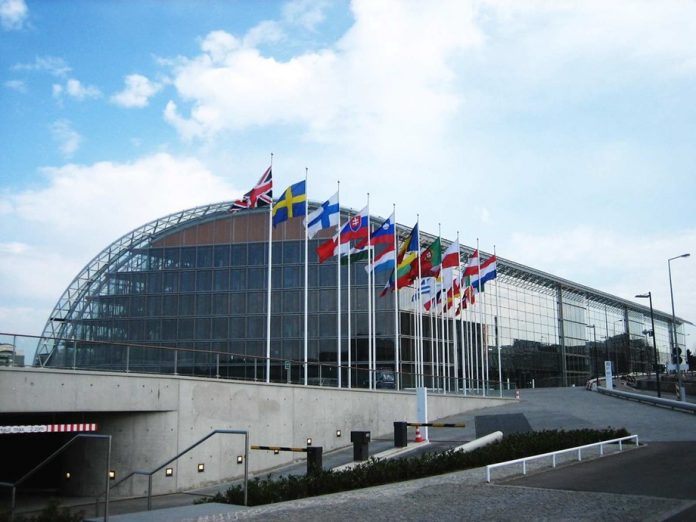
Nairobi will this week host the EIB Eastern Africa SME and Microfinance Banking Forum.  The event, being held for the second time in the Kenyan capital, seeks to improve the economic and social impact of private sector financing supported by the lending arm of the European Union in East Africa (EA).

“Ensuring access to finance and increasing the impact of business investment is key for Kenya’s future. The European Investment Bank has proven technical and financial experience supporting successful private sector businesses in Africa. The EIB Eastern Africa SME and Microfinance Banking Forum is a unique opportunity for Kenyan finance and microfinance professionals and business leaders to share best-practice and contribute to economic and social development across East Africa. This week’s meeting builds on the strong track record of close cooperation between the EIB, the European Union and the Kenyan finance and business community; providing financing to help business growth and improve skills that expand the impact of responsible banking.” said Sheila M’Mbijjewe, Deputy Governor of the Central Bank of Kenya.

“Enabling a thriving private sector is essential to create jobs, unlock economic opportunities and improve social development. In recent years cooperation between African and European partners here in East Africa has enabled the European Investment Bank, the EU Bank, and EU supported technical assistance to strengthen the impact of tailor-made lending programmes. The two days of discussions this week will share lessons learnt from successful financing for businesses across the region and banking best practice.” said Ambassador Simon Mordue, Head of the European Union Delegation in Nairobi.

Sharing experience from EUR 1 billion private sector support in East Africa

Over the last decade the European Investment Bank has provided more than EUR 1 billion in East Africa for private sector investment across East Africa.

“Thousands of companies across East Africa have benefited from the close cooperation between African and European partners and the skills of more than 9,000 business finance professionals strengthened through dedicated training programmes. The European Investment Bank looks forward to intense discussions in Nairobi this week with microfinance and banking partners from four countries in the region to ensure even stronger impact of future private sector investment in the years ahead.” said Catherine Collin, Head of the European Investment Bank Regional Representation in East Africa.

The two-day EIB Eastern Africa SME and Microfinance Banking Forum, hosted by the European Investment Bank in partnership with the Trade and Development Bank and AFC Consultants, will enable international finance experts to share experience and best practice with leading regional banks and microfinance institutions.

Increasing access to finance by refugees and supporting vulnerable smallholders

During the EIB Eastern Africa SME and Microfinance Banking Forum regional banking experts will learn from recent innovative financing partnerships and discuss how successful schemes could be replicated.

This will include examining how refugee communities across Uganda are benefiting from banking services for the first time following  a successful training to ensure increased access to finance  refugee communities, organised  in cooperation with Centenary Bank and UNHCR.

Experience gained from the EIB’s first dedicated support for long-term agriculture investment in Kenya,  working with Equity Bank across the country will also be shared. The scheme launched earlier this year is helping agriculture companies to modernise and harness the full economic, employment and export potential of agriculture. The programme is enabling local currency financing for farmers and access to seven year loans.

Sharing local understanding and international best banking practice

This week’s event will bring together more than 110 regional banking, microfinance and business leaders, international finance experts and foreign Ambassadors to share experience and best practice. Local businesses will also get direct feedback to improve business plans and enhance their growth strategies.

The EIB supported 60 projects across Africa in 2018 with €3.3 billion in investment. €1.6 billion went to private companies in sectors such as telecommunication, energy and agriculture.

The EIB is the long-term lending institution of the European Union owned by its Member States. It makes long-term finance available for sound investment in order to contribute towards EU policy goals.


Stories Continues after ad

Calling ‘enemy’ fire ‘friendly forces’: Villa Somalia new modus operandi

By
Guest Writer
-
October 17, 2019
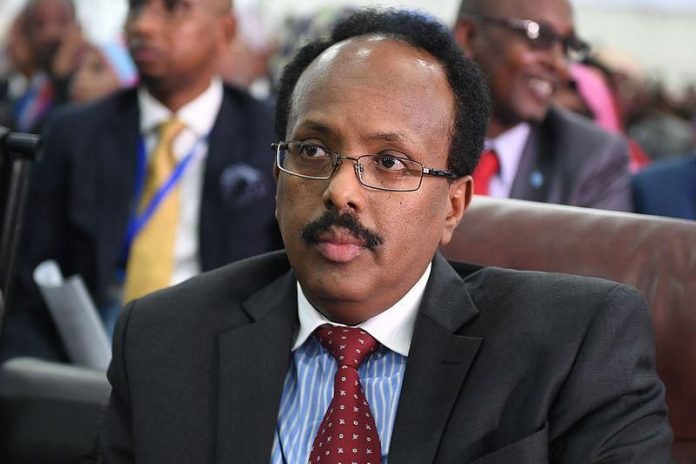
Somalia President Abdullahi Mohamed Farmajo

Eight months into the reign of president Farmaajo, on October 14, 2017, two trucks laden with bombs exploded in Muqdishu killing over 500 people. This attack was the single deadliest act of terrorism in Somalia and Africa at large. It also represented the third deadliest terrorist bombing attack and the seventh-deadliest act of terrorism in modern history, surpassed only by the 1990 massacre of Sri Lankan Police officers in Sri Lanka, the 2008 Christmas massacres in the Democratic Republic of the Congo, 2007 Yazidi communities bombings, the 2014 Camp Speicher massacre in Iraq, and the September 11 attacks in the United States. The lead up to the commemoration of the anniversary of this heinous act of terror is always a sacred time for most Somalis due to the significance of the attack.

The lead up to the second anniversary of the attack was anything but comparable to the previous one. Coming on the backdrop of a bitter contest between the federal government and the leadership of the semiautonomous Jubbaland, where villa Somalia’s overtures seemed to lose to the determination and commitment of the people of Jubbaland to remain independent of the Muqdishu corruption, there were bound to be some reckoning. The last straw in the contest was the federal government trying to block the validation of the election by blocking attendees to the inauguration of Madobe, they fell short on this one too as several local and regional leaders found their way to the highly successful ceremony.

Upon the peaceful conclusion of the Jubbaland election, the head of UNSOS Lisa Filipetto made plans to visit both Kismayu and Dhobley and meet Madobe, from the UN compound in Muqdishu. NISA, the Somalia intelligence agency headed by ‘former’ Al-Shabaab amniyaat Fahad Yassin came to learn this at a time Villa Somalia would do anything to stop another Madobe photo op with an influential individual. Having become aware of the procedures at the UN compound, NISA was well cognisant that the quickest way to halt the plans was to have the threat level against the Director and his team elevated.

NISA advised the president that the simplest way to stop the planned visit and the eventual photo op was to have the threat level elevated in the UN compound. Aware of the repercussions of using the Somali National military soldiers in an attack necessary to their desired outcome, they decided to call on their buddies across the battle lines or so we have always thought these lines did and do still exist. The line between the Farmaajo government and the Al-shabaab has eroded overtime and the confluence of their interests have never seemed more aligned. This attack and several others that have served the crooked interests of the current president are all proof of this unholy alliance.

The complicity of the current Somalia president seated in Muqdishu in the attack on the UN compound in the capital has been proven in all but a video of Farmaajo and the Al-Shabaab leadership toasting to a successful attack. All intelligence reports have suggested, with evidence that the attack was carried out on the direction of, on the behalf of and for the selfish interests of the president and his cronies.

The president having tasked his relatives, friends and associates in the terror group responsible for the deaths of thousands of innocent Somali women and children; bombed out of their precious souls in their day to day living in restaurants, market places, streets and homes, stayed easy awaiting the execution of his malevolent plan.

On October 13, 2019, being the eve of the 2nd anniversary of the deadliest terrorist attack on Somali soil, the terrorist group responsible for that attack shelled the UN facility with mortars, the people funding and directing the peace initiative beside many other humanitarian efforts, at the behest of the president of the same people.

The president was elected and sworn into office to protect the people of Somalia from Al-Shabaab and lead them to prosperity but he and his evil clique betrayed them by working with a terror organization hell bent on not only destroying the fragile fabric of the state of Somalia and curtailing efforts to bring back peace and prosperity but also taking hundreds of lives in the process.

If the federal government of Somalia can connive with the Al-shabaab terror group to shell a UN installation with mortars in order to stop a UN official from visiting a duly elected regional leader without any regard to the probability of loss of life or the repercussions to the people for who’s welfare he is responsible for should the UN fold up and leave the country to its own means, what else is he capable of?

The betrayal, the evil acts and the duplicity of Farmaajo and his evil circle at Villa Somalia cannot and should not continue unabated. The people of Somalia and the organizations championing the peace process in the country must learn that the current Somali government is carrying water for concern groups or individuals with interests contra to the wellbeing of the state and the people of Somalia.

Mohammed Ise Khayre

The writer is a Somali national and an anti-corruption activist

Find him on twitter @Ise_Khayre

Stories Continues after ad

Express head coach fined Shs500,000 for time wasting

By
Our Reporter
-
October 17, 2019
George Ssemwogerere


Express Football Club head coach George Ssemwogerere has been fined Shs500,000 fine for time wasting during their Uganda Premier league game against Police in Wankulukuku, on October 4th, 2019.

It was being reported that Ssemwogerere ordered the ball boys to hide the match balls from the pitch especially in the second half when Express took the lead.

In a letter signed to Express FC from UPL, the former Cranes captain was warned against repeating any similar actions in future.

“It was reported in the referee’s match report that during SUPL match #49 Express FC Vs Police FC played on Friday 4th, October, 2019 at Betway Muteesa II Stadium Wankulukuku, the head coach George Ssimwogerere ordered the ball boys to hide balls in the 58th minute which led to delayed restart to the game,” the letter reads.

“Mr George Ssimwogerere is warned against repeating the same actions and fined UGX 500,000 (Five hundred Uganda shillings only) to be paid by 23rd, October, 2019. Failure, the said fine shall lead to suspension from the technical bench.

“Express FC is encouraged to prevail over its club officials.”

Express side won the game 5-3 against Police.

The Red Eagles are currently 11th on the log with 10 points from their first 9 games with their next game hosting Busoga United FC on the 29th October.

Stories Continues after ad

Uganda ready to host African population conference-Says minister Bahati

By
Geoffery Serugo
-
October 17, 2019
State Minister for Finance in charge of General Duties David Bahati


Uganda is set to host the eighth African Population Conference where delegates will share and disseminate information on key population, health and development issues facing the African continent.

The Conference to be held from November 18-22, 2019 provides an opportunity for networking and knowledge sharing between researchers, policy makers, programme managers, public health experts, international development partners, and other key stakeholders in the population and development field.  This also means that any policies and programmes formulated are evidence-based.

The conference to be held at Imperial Resort Beach Hotel, Entebbe will focus on the theme, “Harnessing Africa’s Population Dynamics for Sustainable Development:  25 Years after Cairo and Beyond.”

According to state minister of finance, David Bahati, “Hosting the forthcoming conference will be another opportunity to share with the rest of the world, the Pearl of Africa’s hospitality, beautiful environment, great weather and wonderful facilities that will certainly make the Conference a success.”

He added: “The theme is also relevant to Uganda which is one of the youngest nations in the world.  It is important to note that Uganda’s population is predominantly young (over 70 per cent are under the age of 30 years). This young population is a potential asset for national development through harnessing the Demographic Dividend which is also important for achieving Vision 2040 and the National Development Plan.”

The minister said  Uganda will not only share the pathways towards attaining the Demographic Dividend in cognizance of the Country’s Vision 2040 as well as the Sustainable Development Goals, but will learn from countries that have advanced in domesticating the 2017 African Union Roadmap of Harnessing the Demographic Dividend.”

The conference is held every four years and seven conferences have so far been successfully organized by the Union of African Population Studies (UAPS) Secretariat and respective African countries.

Africa, in general, is a very young continent. About 40 percent of the population is below 15 years of age, and an additional 30 percent fall between 15-24 years. This demographic profile presents a unique opportunity to achieve massive socio-economic transformation through harnessing the Demographic Dividend (DD). The Demographic Dividend is the economic benefit that arises following a significant increase in the ratio of the working-age population relative to dependents (children and the elderly), in the workforce.

Africa at a glance

.            The current population of Africa is 1.3 billion in 2019, based on the latest United Nations

estimates.

·        Africa’s population is equivalent to 16.7 per cent of world population.

·        The total land mass (area) is 29 million Km2 (or 11 million sq. miles)

·        43 per cent of the population is urban

·        The median age in Africa is 19.4 years.

Africa’s demographic dynamics are shaping its present and future development agenda. Perhaps the greatest and most fundamental challenge is to address the economic and social development issues of a continent that will be home to 1.5 billion people in the next ten (10) years (UNECA 2016) and is expected to reach 2.5 billion by 2050.


Stories Continues after ad

African Parliament honours Robert Mugabe

By
Our Reporter
-
October 17, 2019
Late Zimbabwean President Robert Mugabe

Pan African Parliament (PAP) MPs have honoured President Robert Gabriel Mugabe, referring to him as a fervent Pan-Africanist who defended his country and Africa on the world stage.

The motion to honour the late former President of Zimbabwe was moved by  Jaynet Kabila (DR Congo) and seconded by  Haidara Aïchata (Mali, PAP 2nd Vice President) with support from Hon. Jacqueline Amongin (Uganda) during the plenary sitting on Wednesday, October 16, 2019 in South Africa.

Speaker after speaker were all praises for Mugabe, who ruled Zimbabwe for 38 years. He died in a Singapore hospital on September 6, 2019 aged 95.

Hon. Yeremia Chihana said Malawi is what it is today because of the selfless indulgence of Mugabe. “The fight against the Federation of Rhodesia and Nyasaland was properly facilitated and anchored by Robert Mugabe to support Late Dr. Kamuzu Banda in the fight for freedom.”

Referring to Mugabe as a true hero, Uganda’s representative James Kakooza said “Not only did Mugabe involve himself with Zimbabwe affairs, he also went an extra mile. After the Scramble of Africa, he came to the centre stage for various African countries helping them fight for their freedoms.” Kakooza called on today’s leaders to follow in Mugabe’s footsteps to ensure that Africa is united.

The 3rd Vice President of PAP, Chief Fortune Charumbira, a representative of Zimbabwe, revealed that Mugabe was a principled man who left his lucrative lecturing job in Ghana to come and liberate his motherland and paying for it with a 10-year jail term.

Charumbira used the occasion to ask for Members support for removal of sanctions slapped on Zimbabwe during the Mugabe presidency.

Hon. Sidia Sama Jatta (The Gambia) said that in freeing the black person from the oppression of the white person, the late Mugabe actually succeeded in freeing the whites.

“We all know, as Africans, that we have never had a Pan-Africanist of the calibre of Robert Mugabe; he is the best Pan-Africanist we have ever had in Africa. He led his people to independence and taught his people to be very courageous. He empowered his people; the youths, the women and the men equally,” Hon. Beatrice Kones (Kenya) said.

The MPs unanimously agreed to rename the Presidential Lounge in the chamber at the Pan African Parliament, Robert Mugabe Room, in honour of Zimbabwe’s first post-independence leader.

Stories Continues after ad

AC Milan suffer record 146 million euro losses – reports

By
Agencies
-
October 17, 2019
AC Milan team


Troubled former Italian footballing giants AC Milan have suffered record losses, according to reports in Italy on Wednesday.

Gazzetta Dello Sport claimed that in the year to June 30, 2019, losses rose by 16 percent to 146 million ($162 million) euros compared to 126 million euros for the same period the previous year.

Gazzetta said the figures were far worse than the predicted loss of 90 million euros.

US hedge fund Elliott took over the debt-ridden seven-time European champions from Chinese businessman Li Yonghong in July 2018.

The club’s absence from European football has had an impact on merchandising and sponsors, with income from sponsors slipping by 6.7 million euros and ticket sales down by 1.2 million euros.

However, revenues from TV rights rose from 109.3 million to 113.8 million.

Milan finished fifth in Serie A last season but surrendered their Europa League berth after breaching UEFA’s financial fair play rules.

Revenues from the sale of players in particular dropped from 42 million euros to 25.5 million euros.

To keep the club afloat, Elliott have injected 325 million euros in total up until this September, Sky Sport Italia reported.

On the pitch the 18-time Serie A champions are also in turmoil with Marco Giampaolo sacked as coach after just seven games and Stefano Pioli coming in as the club’s eighth coach in five years.

Milan won their last Serie A title in 2011, and have not played in the Champions League since the 2013-2014 season.

The club are 13th place in Serie A, following a run of four defeats in seven games.

Italian media mogul and former prime minister Silvio Berlusconi, who oversaw Milan’s glory years during his 31-year ownership, sold the club to Li in 2017 with Elliot assuming control after the Chinese businessman defaulted on a loan payment.

AC Milan are currently working with city rivals Inter Milan on a new 1.2 billion euro ($1.34 billion) stadium project to rebuilt the San Siro and the area surrounding stadium to the west of the city.

Stories Continues after ad

Commercial bank rates come down to 20% in 2019-BoU report

By
George Mangula
-
October 17, 2019
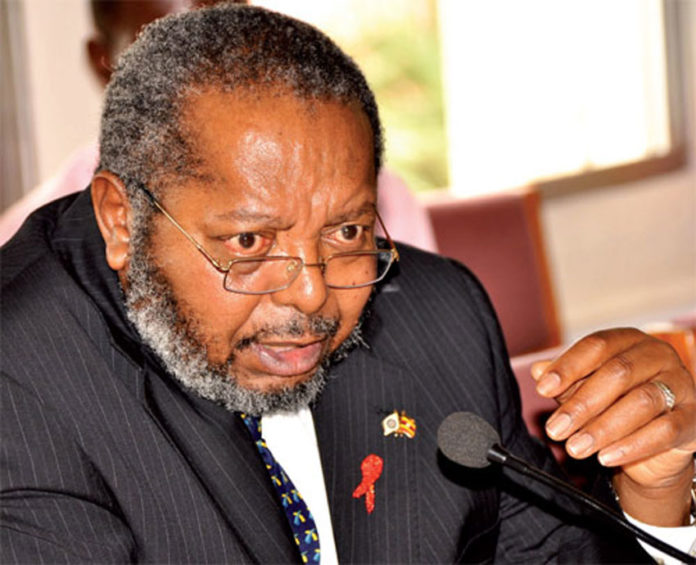
Late Emmanuel Tumusiime-Mutebile


In the financial year (FY) 2018/19, the shilling denominated lending rates declined to an average of 20 per cent, relative to 20.3 per cent in FY 2017/18 and 22.6 per cent in FY 2016/17, according to the Bank of Uganda (BoU).

However BoU in its 2019 Annual Report notes that as at June 2019, shilling denominated lending rates were higher at 19 per cent relative to 17.7 per cent as at end-June 2018. The rise in lending rates is partly attributed to the increase in the CBR to 10 per cent in October 2018, from 9 per cent.

BoU attributes the drop in lending rates partly to the accommodative monetary policy stance it has established since April 2016, where the CBR stood at 16 percent and by June 2018, it had declined to 9 percent.

Declining NPLs

According to the report, the ratio of Non-Performing Loans (NPLs) to total gross loans declined to 3.8 per cent as of March 2019, from 5.3 per cent in December 2018 and 4.4 per cent in June 2018. “Lending rates are expected to decline further as banks leverage on technology to increase operating efficiency,” the report says.

It says some of the measures undertaken by Government to reduce structural rigidities such as the passing by Parliament of the Immovable Property Bill will give borrowers alternate collateral to land and property, in the end also contributing to the decline in lending rates.

Time deposit rate

The time deposit rates gradually increased during FY 2018/19 opening at 9.2 per cent and closing the year at 10 per cent, an average of 10.1 per cent, which is much higher than 8.9 per cent in FY 2017/18.

However, the report says the spread between lending and time deposit rates narrowed, to the range of 9-11 per cent in FY 2018/19 compared to 8-13 per cent in FY 2017/18. Overall, the spread fell to 9.8 per cent in FY 2018/19, down from 11.5 percent in FY 2017/18. “The narrower spreads augurs well with financial sector efficiency and if sustained would enhance the financial sector’s contribution to economic growth through higher savings and investment,” it says.

Average lending rate on foreign currency declines

The weighted average lending rate on foreign currency denominated loans averaged 7.5 percent in FY 2018/19, from 7.7 per cent the previous year, and the foreign currency spread averaged 4.3 per cent, from 5.0 per cent in the previous year, says the report.

Agriculture attracts higher interest rates

In terms of sectoral interest rates, Agriculture, Building, Mortgages, Construction and Real Estate, Personal and Household Loans attracted the larger average market lending rates.

Private Sector Credit strengthens by 12.7 per cent as banks give loans of Shs1, 890.8 billion

Growth in Private Sector Credit (PSC) continued to strengthen in FY 2018/19, consolidating gains realized in the previous year supported by an accommodative monetary policy, improvement in asset quality and continued improvement in economic activity, the report says.

“PSC grew on average by 12.7 percent in FY 2018/19, which is higher than 11.5 percent in the previous year. In May 2019, PSC reached an unprecedented rate of 15.3 percent since October 2016 when PSC started recovering at 1.9 percent. Similarly, the annual PSC growth, net of valuation changes on account of exchange rate movements, averaged 12.5 percent in FY 2018/19, compared to 10.8 percent in FY 2017/18,” says the report.

Credit went to all sectors

Sector-wise, the report says robust credit growth was observed in all the sectors . “Credit to agriculture sector, though robust, was slower, at an average of 15 percent during FY2018/19 relative to 23 percent in FY2017/18,” it says.

The report adds that lending to the services sector (with a share of 1 percent of total lending) has recovered. Annual credit growth for the services sector, having been negative from July 2016, has recovered since March 2019. This reflects improved risk aversion towards this sector, which if sustained, could boost business activity of Small and Medium Enterprises (SMEs), lending support to private investment and consumption and in turn boost growth.

Credit extension

On a net basis (new loans disbursement less recoveries) loans by commercial banks improved over the financial year. Net extensions in FY 2018/19 increased to UGX 1,890.8 billion, from Shs1,106.3 billion in FY 2017/18, and from Shs714.6 billion in FY 2016/17.

The continued recovery in credit extension was in partly due to less risk aversion by banks towards some sectors as asset quality improved, continued recovery in economic activity that stimulated demand and an accommodative monetary policy that kept the cost of lending relatively stable, the report says.


Treasury bill and bond holdings

The report shows a total of Shs10,385.47 billion was issued of which Shs6,959.41 billion was in Treasury bills and Shs3, 426.06 billion was in Treasury bonds during the year. Government securities redemption in the period amounted to Shs7, 985.02 billion, out of which Shs6,675.54 billion was Treasury Bills and Shs1, 309.48 billion was Treasury Bonds. As at end-June 2019, the total stock at face value of Treasury bills and Treasury bonds was Shs 4,144.6 billion and Shs11,881.8 billion representing an increase of 7.4 percent and 22.6 percent respectively.

As at June 30, 2019, commercial banks held the largest portfolio of government securities at 41.32 per cent of the total stock, while pension and provident funds held 40.98 per cent and offshore investors held 5.59 per cent. Other financial institutions held 5.60 per cent and insurance companies and retail investors held 2.20 per cent and 1.70 per cent, respectively.

Stories Continues after ad

The World Economy: Synchronized Slowdown, Precarious Outlook

By
Guest Writer
-
October 17, 2019
Gita Gopinath

By Gita Gopinath


The global economy is in a synchronized slowdown and we are, once again, downgrading growth for 2019 to 3 percent, its slowest pace since the global financial crisis. Growth continues to be weakened by rising trade barriers and increasing geopolitical tensions. We estimate that the US-China trade tensions will cumulatively reduce the level of global GDP by 0.8 percent by 2020. Growth is also being weighed down by country-specific factors in several emerging market economies, and by structural forces, such as low productivity growth and aging demographics in advanced economies.

In the October World Economic Outlook, we are projecting a modest improvement in global growth to 3.4 percent in 2020, another downward revision of 0.2 percent from our April projections. However, unlike the synchronized slowdown, this recovery is not broad-based and remains precarious.

The weakness in growth is driven by a sharp deterioration in manufacturing activity and global trade, with higher tariffs and prolonged trade policy uncertainty damaging investment and demand for capital goods. In addition, the automobile industry is contracting owing also to a variety of factors, such as disruptions from new emission standards in the euro area and China that have had durable effects. Overall, trade volume growth in the first half of 2019 has fallen to 1 percent, the weakest level since 2012.

In contrast to extremely weak manufacturing and trade, the services sector continues to hold up almost across the globe. This has kept labor markets buoyant and wage growth and consumption spending healthy in advanced economies. There are, however, some initial signs of softening in the services sector in the United States and euro area.

Monetary policy has played a significant role in supporting growth. In the absence of inflationary pressures and facing weakening activity, major central banks have appropriately eased to reduce downside risks to growth and to prevent de-anchoring of inflation expectations. In our assessment, in the absence of such monetary stimulus, global growth would be lower by 0.5 percentage points in both 2019 and 2020.

Advanced economies continue to slow towards their lower long-term potential. Growth has been downgraded to 1.7 percent for 2019 (compared to 2.3 percent in 2018) and it is projected to stay at this level in 2020. Strong labor market conditions and policy stimulus are helping to offset the negative impact from weaker external demand for these economies.

Growth in emerging market and developing economies has also been revised down to 3.9 percent for 2019 (compared to 4.5 percent in 2018) owing in part to trade and domestic policy uncertainties, and to a structural slowdown in China.

The uptick in global growth for 2020 is driven by emerging market and developing economies that are projected to experience a growth rebound to 4.6 percent. About half of this rebound is driven by recoveries or shallower recessions in stressed emerging markets, such as Argentina, Iran, and Turkey, and the rest by recoveries in countries where growth slowed significantly in 2019 relative to 2018, such as Brazil, India, Mexico, Russia, and Saudi Arabia. There is, however, considerable uncertainty surrounding these recoveries, especially when major economies like the United States, Japan, and China are expected to slow further into 2020.

Escalating risks

In addition, there are several downside risks to growth. Heightened trade and geopolitical tensions, including Brexit-related risks, could further disrupt economic activity, and derail an already fragile recovery in emerging market economies and the euro area. This could lead to an abrupt shift in risk sentiment, financial disruptions, and a reversal in capital flows to emerging market economies. In advanced economies, low inflation could become entrenched and constrain monetary policy space further into the future, limiting its effectiveness.

Policies to reignite growth

To rejuvenate growth, policymakers must undo the trade barriers put in place with durable agreements, rein in geopolitical tensions, and reduce domestic policy uncertainty. Such actions can help boost confidence and reinvigorate investment, manufacturing, and trade. In this regard, we look forward to more details on the recent tentative deal reached between China and the United States. We welcome any steps to de-escalate tensions and to roll back recent trade measures, particularly if they can provide a path towards a comprehensive and lasting deal.

To fend off other risks to growth and to raise potential output, economic policy should support activity in a more balanced manner. Monetary policy cannot be the only game in town. It should be coupled with fiscal support where fiscal space is available, and policy is not already too expansionary. Countries like Germany and the Netherlands should take advantage of low borrowing rates to invest in social and infrastructure capital, even from a pure cost-benefit perspective. If growth were to deteriorate more severely, an internationally coordinated fiscal response, tailored to country circumstances, may be required.

While monetary easing has supported growth, it is essential that effective macroprudential regulation be deployed today to prevent mispricing of risk and excessive buildup of financial vulnerabilities.

For sustainable growth, it is important that countries undertake structural reforms to boost productivity, improve resilience, and lower inequality. Reforms in emerging market and developing economies are also more effective when good governance is already in place.

The global outlook remains precarious with a synchronized slowdown and uncertain recovery. At 3 percent growth, there is no room for policy mistakes and an urgent need for policymakers to support growth. The global trading system needs to be improved, not abandoned. Countries need to work together because multilateralism remains the only solution to tackling major issues, such as risks from climate change, cybersecurity risks, tax avoidance and tax evasion, and the opportunities and challenges of emerging financial technologies.

The writer is IMF Chief Economist

Stories Continues after ad

MTN tops URA tax payer list for 2018/19

By
Our Reporter
-
October 16, 2019
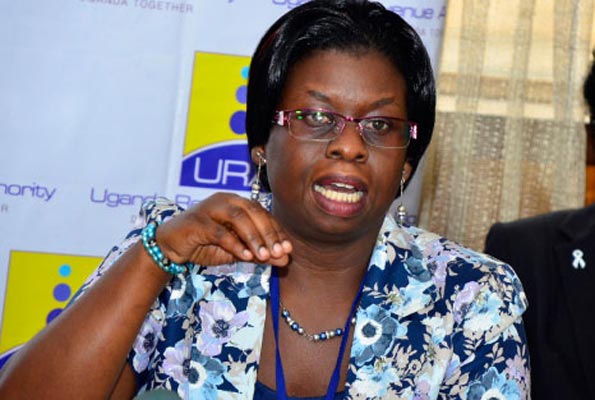
URA Commissioner General, Doris Akol

Africa’s telecommunication giant, MTN-Uganda has emerged as the biggest tax payers according to the latest ratings by the tax collector, Uganda Revenue Authority. Sources within URA can reveal.

The latest list of Uganda’s largest tax payers obtained from sources within has placed MTN Uganda on top with a whooping Shs682.4 billion for financial year 2018/2019. Airtel Uganda came second with Shs535.9 billion while fuel giants Vivo Energy came inthe third place with Shs398.9 billion.

In the fourth place is Nile Breweries Limited on fourth with She394.8 billion closely followed by Bank of Uganda in fifth position with Shs390.4 billion.

Nile Breweries competitor, Uganda Breweries Limited had Shs308.4 billion and Total Uganda Shs300.6 billion.

Also on the list are Umeme Limited, Tororo Cement, Kakira Sugar Limited and Bidco Uganda limited topping up the top 11 tax payers list.

Others include Crown Beverages, Nile Energy, Century Bottling company and Centenary Development Bank Limited. MTN has maintained its lead for several years.

Stories Continues after ad
1...1,1611,1621,163...2,401Page 1,162 of 2,401
Eagle Online

© Eagle Online. All rights reserved.

Facebook
Twitter

About Us

  • About us
    • Our Staff
    • History
  • Employment Opportunities
  • Contact Us
  • Privacy Policy
  • Eagle Online

Popular Category

  • News13838
  • Business3367
  • Games & Sports2368
  • Africa1080
  • Entertainment934
  • Health704

Editor Picks

BoU targets Shs990b from fresh Treasury bond auction offer

April 13, 2026

Stanbic Black Pirates win Nondescripts to book first-ever Enterprise Cup final spot

April 13, 2026