Stanbic Bank
Stanbic Bank
17.5 C
Kampala
Stanbic Bank
Stanbic Bank
Home Blog Page 1163

WHO calls for urgent action to reduce patient harm in healthcare


Millions of patients are harmed each year due to unsafe health care worldwide resulting in 2.6 million deaths annually in low-and middle-income countries alone.  Most of these deaths are avoidable.

The personal, social and economic impact of patient harm leads to losses of trillions of US dollars worldwide. The World Health Organization is focusing global attention on the issue of patient safety and launching a campaign in solidarity with patients.

“No one should be harmed while receiving health care. And yet globally, at least five patients die every minute because of unsafe care,” said Dr Tedros Adhanom Ghebreyesus, WHO Director-General. “We need a patient safety culture that promotes partnership with patients, encourages reporting and learning from errors, and creates a blame-free environment where health workers are empowered and trained to reduce errors.”

Four out of every ten patients are harmed during primary and ambulatory health care. The most detrimental errors are related to diagnosis, prescription and the use of medicines. Medication errors alone cost an estimated US $42 billion annually. Unsafe surgical care procedures cause complications in up to 25 per cent of patients resulting in 1 million deaths during or immediately after surgery annually.

Patient harm in health care is unacceptable. WHO is calling for urgent action by countries and partners around the world to reduce patient harm in health care. Patient safety and quality of care are essential for delivering effective health services and achieving universal health coverage.

Investment in improving patient safety can lead to significant financial savings. The cost of prevention is much lower than the cost of treatment due to harm. As an example, in the United States alone, focused safety improvements led to an estimated US $28 billion in savings in Medicare hospitals between 2010 and 2015.

Greater patient involvement is the key to safer care. Engaging patients can reduce the burden of harm by up to 15 per cent, saving billions of dollars each year.

On the very first World Patient Safety Day WHO is prioritizing patient safety as a global health priority and urging patients, healthcare workers, policy makers and health care industry to “Speak up for patient safety!”.

17 September was established as World Patient Safety Day by the 72nd World Health Assembly in May 2019.

Stories Continues after ad

US secretary of health tours public health emergency response sites

From left,US Ambassador to Uganda Deboral Malac, Jane Ruth Aceng and Alex Azar


The USA Secretary of Health and Human Services, Alex Azar  has met with the Ugandan Minister of Health Jane Aceng and toured key public health response centers.

During their meeting, Secretary Azar and Minister Aceng discussed the Ugandan government’s successful response to recent isolated cases of Ebola in the country, and ongoing efforts to control the spread of the Ebola outbreak.

After the DR Congo reported the Ebola outbreak, Uganda rapidly declared a state of emergency, allowing the country to proactively combat the spread of Ebola. Similarly aggressive public health efforts, with support from the U.S., have allowed Uganda to get on track to attain HIV epidemic control and increase preparedness for other infectious diseases.

Following their meeting, Minister Aceng hosted Secretary Azar and the delegation on a tour of the Uganda National Institute of Public Health, including the Public Health Emergency Operations Center (PHEOC) and the Field Epidemiology Training Program (FETP), a program supported by the Centers for Disease Control and Prevention (CDC). Both are instrumental resources in efforts to combat Ebola.

Further, the Ugandan Health Ministry has been a leader in advancing the Global Health Security Agenda thanks to the establishment of the PHEOC.

Secretary Azar and the delegation also visited the Uganda National Health Laboratory Service (UNHLS), where research into HIV, tuberculosis, and antimicrobial resistance is conducted.

Collaboration between UNHLS and CDC has contributed to key global health security efforts, especially in controlling infectious disease threats. During the visit, Secretary Azar spoke with Minister Aceng and UNHLS officials about how the U.S. government can continue to support research at the UNHLS.

While in Kampala, Secretary Azar also visited the International Organization for Migration (IOM) Refugee Transit Center. About 1.3 million refugees currently reside in Uganda, and due to the ongoing conflicts in the DR Congo, up to 250 people per day are crossing the Uganda-DRC border to seek refuge.

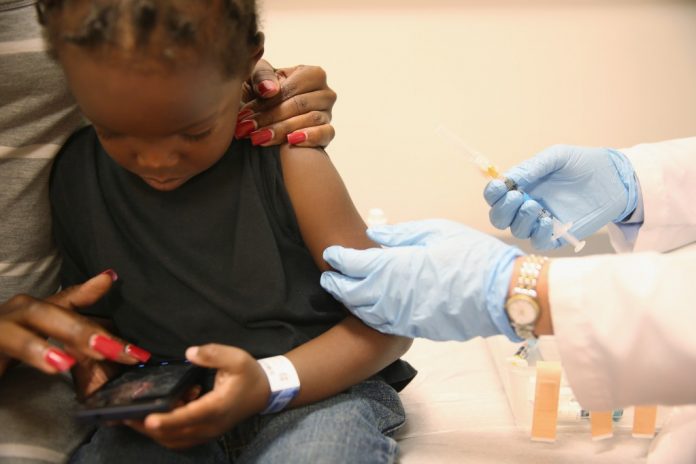
Through the IOM Migration Health Assessment Center, CDC and the State Department have instituted a refugee vaccination program to prevent epidemics like Ebola from spreading.


Stories Continues after ad

She Cranes squad for the African Netball Championship named

Uganda Netball Federation (UNF) has named a team of twenty two (22) players to start training for the upcoming 2019 African Netball Championship in South Africa.

The annual tournament that will bring together the best eight countries on the continent will take place from October 16th to 23rd.

Uganda will join host South Africa, Botswana, Kenya, Malawi, Namibia, Zambia and Zimbabwe to fight for the championship.

Mahayimina Namuwaya, Sylvia Nanyonga and Lilian Ajio who featured for the She Cranes at this year’s Netball World Cup, have been dropped from the team.

The UNF also appointed Rashid Mubiru as the new coach of the She Cranes replacing Vincent Kiwanuka who managed the team at the concluded 2019 Netball World Cup in Liverpool, England.

Mubiru will be assisted by Robert Kisitu. He returns after coaching the side in the 2015 Netball World Cup in Sydney, Australia.

His first competition will be to help guide the team ahead of the African Championship next month.

Uganda are placed sixth in the International Netball Rankings and will be seeking to retain the African crown.

The named Squad

Peace Proscovia (Sunshine Lightening), Mary Nuba Cholock (Loughborough Lightening), Irene Eyaru (KCCA), Shafie Nalwanja (KCCA), Fauzia Nakibuule (KCCA), Norah Lunkuse (KCCA), Stella Oyella (NIC), Rachael Nanyonga (NIC), Martha Soigi (NIC), Joan Nampugu (NIC), Betty Namukasa (NIC), Kaye Privas (NIC), Brenda Namubiru (NIC), Betty Kiiza (NIC), Meeme Ruth (NIC), Tausi Mumena (PRISON), Jesca Achan (PRISON), Stella Nanfuka (PRISON), Sebi Nusurah (POLICE), Enid Abalo (POLICE), Hindu Namutebi (POLICE), Desire Mirembe (UPDF)

Stories Continues after ad

NSSF to pay contributors lower interest rate for FY 2018/19 as income dwindles

NSSF Managing Director Richard Byarugaba

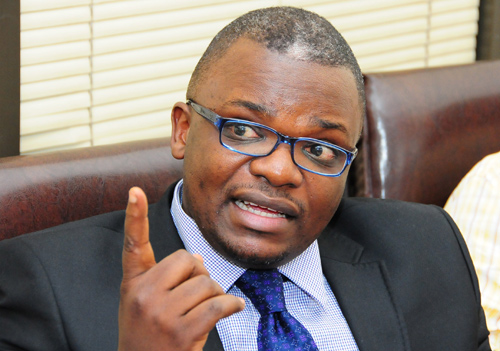
The National Social Security Fund (NSSF) will pay a lower interest rate to its members for the financial year 2018/19 on account of a drop in its total income compared to the previous year, the Managing Director Richard Byarugaba has said.

According to Byarugaba, while the Fund’s revenue which includes interest, dividend and rental income increased by over 20 percent to Shs 1.3 trillion, overall income reduced by over Shs 402.8 billion due to a decline in regional equity prices and currencies.

“Our members should therefore expect a reduction in the interest rate this year compared to last year,” he said Byarugaba said in Kampala during a media dialogue where the Fund’s interim financial performance for the year 2018/19 was announced.

“I am extremely confident that the minister will declare a rate that will achieve and even surpass this target. Our members should be confident in the health of the Fund. In the short, medium and long term, the Fund remains financially stable and growing,” he said.

Dr. Gabriel Ajedra, State Minister of Finance for General Duties at the 6th NSSF Annual Member’s Meeting held in Kampala declared a record 15 (equivalent to Shs1.1 trillion) percent interest to members after an impressive performance on key financial indicators for the financial year 2017/2018.

However, Byarugaba said the Fund will for financial year 2018/19 still pay a competitive return, at least 2 percentage points above the 10-year average rate of inflation.

Generally, he said, the fund registered good performance in spite of the challenging economic environment, mainly the stock market volatility and foreign exchange deficits.

”The Nairobi Stock Exchange lost 14 percent, the Uganda local share index shade 10 percent while Tanzania plummeted by over 21 percent. The share prices closed below prices registered at end of the previous financial year, which impacted the performance of our equity portfolio,” he said.

Byarugaba said there was general depreciation of the regional currencies against the Uganda Shilling in the financial year under review. Both the Kenya and Tanzania currencies depreciated by 6.1 percent against the Uganda Shilling. For instance, he said the Kenya currency depreciated, falling from UShs37.97 at the start of the financial year to close just below UShs36.

Meanwhile, the amount of money paid in benefits increased by 25 percent to Shs450 billion in 2018/19 from Shs360 billion in 2017/2018.

The Fund’s assets increased by 13.1 percent to Shs11.3 trillion as at June 2019 from Shs 9.98 trillion in 2017/18. The increase was driven by increased contributions and interest income.

Annual contributions collections, according to the official, increased to Shs1.208 trillion in 2018/19 from Shs 1.049 trillion realised in the previous year, a 15 percent growth. The growth in contributions was driven by growth in the economy which increased the new members.

On the other hand he said the average benefits turn-around-time 2018/19 remained flat at 8 days while the compliance level based on 1 month is now at 61 percent.

Customer satisfaction slightly dipped by 1 percent from 85 percent in 2017/2018 to 84 percent in 2018/2019. “Our members love and want the product but would like to utilize midterm benefits,” he said, adding that staff engagement increased from 84 percent in 2017/2018 to 88 percent in 2018/2019.

He said during the period, headline inflation was stable as commodity prices and food prices remained stable due to improved weather conditions and oil gluts.

 Uganda Inflation remained low at 3.4 percent and below the long-term target of 5 percent while the Uganda economy witnessed stable growth at 6.1 percent compared to 6.2 percent in the previous year. The growth, he said, was supported by an accommodative monetary policy stance, improvement in agriculture sector and growth in public infrastructure developments.

Stories Continues after ad

10 tips on managing an overwhelming business workload

By Martin Zwilling

One of the most common complaints I hear from entrepreneurs is that they are overwhelmed by the workload and stress of starting their company. Then there are the additional challenges of balancing the demands of family and friends. Having too much on your plate can turn your dream into a nightmare.

Some people will tell you to just get a bigger plate, meaning hire some help. But with the pressures of the economy, and limited access to outside funding, we all know this isn’t always possible or appropriate. I recommend the opposite, or getting things off your plate that shouldn’t be there in the first place.

In reality, many entrepreneurs are their own worst enemy, trying to do everything, working inefficiently, and imagining things that need doing which will never happen. Here are some tips on how to look at work, make some hard decisions, and keep your health and sanity:

Maintain a big picture perspective. It’s easy to be overwhelmed by day-to-day details, to the degree that they all seem like big items, driving up your imagined workload. Take a few minutes each day to reflect on your real goals, and eliminate items which don’t relate.

Set realistic deadlines. The more your workload grows, the greater is your temptation to set unrealistic deadlines for yourself. This results in poor quality work, which generates more work to fix previous efforts. Allow some buffer on every item.

Prioritize the work items. Relentlessly reprioritize your list and complete them in order, resisting the urge to skip over the tough ones. The longer that high-priority items stay on your list, the more stress you will feel, and consequences will add new items.

Keep a written to-do list. Most people can’t manage more than five items in their head, and when your list gets longer, it seems infinite. Write it down, but even then, keep it to the top ten priority items or less. Multiple pages of work items won’t get done anyway.

Block out time for priority work items. Don’t allow your day to be monopolized by distractions and the crisis of the moment. Close your door, or move to another location where you will not be interrupted so that you will complete the top item on your list today.

Count the completions. At the end of each day, check off, count, and celebrate your positives. A sense of progress is important here. Look positively at your progress as a glass half full, rather than half empty.

Take a break to recharge. Even a few minutes each hour to relax will re-energize you. Regular non-work breaks, like a trip to the gym, or time with family will be ultimately more productive than slugging it out all night on a given problem. Get a good night’s sleep.

Discuss the tough ones with a mentor. Don’t be afraid to discuss your challenges with a trusted friend, or business advisor. This will clarify the issue in your own mind, and let you see it from other angles. You need to stop and regroup when you hit a brick wall.

Stay in control of your emotions. Stress is a normal part of life. Don’t let it lead to anger and frustration, or loss of productivity. We can choose how we handle tough situations, and the best approach is always to stay calm and in control.

Eliminate phantom work items. These are items that you never intend to do, and probably don’t need, but you carry them on your list because of guilt or direction from someone else. You can’t complete an item that you don’t understand.

Wearing all the hats required to initiate a startup is tough in the best of situations. Then your business really starts to take off, and it gets even more challenging. As an entrepreneur, you need to seriously apply the discipline of these principles early and always to survive, and hopefully even enjoy the journey.


The writer is a veteran startup mentor, executive, blogger, author, tech professional, professor, and investor. Published on Forbes, Entrepreneur, Inc, Huffington Post, among others.

Stories Continues after ad

Capital markets look beyond EU: UK-European co-operation after Brexit

David Marsh

By David Marsh  

Relations between the UK and the rest of Europe in the economic and financial sphere go back a lot further than UK membership of the European Community in 1973 – and will extend far into the future after the British depart. One field for co-operation that is vital for both sides is in financial regulation across and beyond the European Union.

At a seminar on 18 September at the UK Foreign and Commonwealth Office dealing with the shifting regulatory landscape, Prof. Otmar Issing, a former board member for economics at the European Central Bank, previously at the Bundesbank, will spell out the expected European transition after UK departure. In the past he has warned that UK withdrawal would prompt an inward-looking EU approach and intensify protectionism – an impression that the new European Commission under President-elect Ursula von der Leyen is anxious to dispel.

Many Europeans believe a strong reason for the British exit lies in a wish to return to a ‘UK first’ strategy including through lighter regulation to safeguard London’s financial prowess. The view is decisively rejected in London. Since the 2008 crisis, UK policy-makers have said a stern-minded regulatory approach, not a ‘light touch’, is the key to maintaining confidence and investment. So both sides have much to prove.

There is joint interest in maintaining channels for cross-border trade and investment for sustainable and inclusive European growth. The UK wishes to understand, influence (if possible) and maintain robust links to the European capital markets union project aimed at improving access to growth finance for larger and smaller companies. This is a field where the City of London believes it has considerable expertise to apply post-Brexit.

Britain claims that joint action to improve capital market performance and mitigate risks will bolster stability and prosperity across Europe. In seeking to maintain two-way access across all sectors in Britain and the rest of Europe, UK regulators and market participants make the point that markets are global, not simply European. This is underlined by the dominance of international capital over trade flows and multiple initiatives linking European, Asian and North American stock exchanges and capital market participants. The (rejected) bid by the Hong Kong Stock Exchange for the London Stock Exchange emphasises the fungibility of international capital. So there is bound to be some tension between global and purely European considerations.

Despite President Donald Trump’s go-it-alone tendencies, regulators and their political masters around the world generally are committed to a multilateral approach guided by shared values and common challenges. This is crucial for realising ambitions such as reinforcing sustainable finance or providing sufficient funds for infrastructure.

All these issues are germane to the wider issue of post-Brexit links between the UK and the biggest EU economy, Germany. In a speech in Berlin on 12 September, studded with references to Beatles’ songs, at a conference commemorating the 100th anniversary of the British Chamber of Commerce in Germany, I put forward an audacious proposition. Just at the time when the Britons are leaving the EU, the British and Germans are becoming more like each other. ‘Or perhaps we are swapping characteristics in that confused and generalised way in which we speak about different countries’ national traits. These are psychological, psycho-social processes.’

OMFIF has described areas where the two countries can team up post-Brexit, in a report in March 2019 for the British embassy in Berlin. The report touches on banking and financial services, infrastructure and development finance, services, climate change and sustainability, cybersecurity, digitalisation and artificial intelligence, education and research, specialised manufacturing, pensions, savings and stock markets.

There is much that the UK and the rest of Europe can and will do together. The task will be, assuming departure takes place on or shortly after 31 October, to get on with it.

The writer is Chairman of Official Monetary Financial Institutions Forum (OMFIF).


Stories Continues after ad

Gates Foundation report spotlights new data on global inequality, calls to prioritize those being left behind

The Bill & Melinda Gates Foundation today launched its third annual Goalkeepers Data Report, which features new data showing that while progress on health and development continues unabated, global inequality remains a major barrier to achieving the U.N. Sustainable Development Goals (Global Goals).

Even in the worst-off parts of low- and low-middle-income countries, more than 99 percent of communities have seen an improvement in child mortality and schooling. Yet despite this progress, persistent gaps in opportunity mean that nearly half a billion people—about one in 15—still do not have access to basic health and education.

Gaps between countries, districts, and boys and girls prove that the world’s investments in development aren’t reaching everyone. Using new sub-national data, the report uncovers the vast inequalities within countries that are masked by averages.

Where you’re born is still the biggest predictor of your future, and no matter where you’re born, life is harder if you’re a girl. Despite gains in female educational attainment, opportunities for girls are limited by social norms, discriminatory laws and policies, and gender-based violence.

“As we write, billions of people are projected to miss the targets that we all agreed represent a decent life,” Bill and Melinda Gates write in the Goalkeepers Data Report, “Examining Inequality 2019,” which they co-authored. “We believe that seeing where the world is succeeding will inspire leaders to do more, and seeing where the world is falling short will focus their attention.”

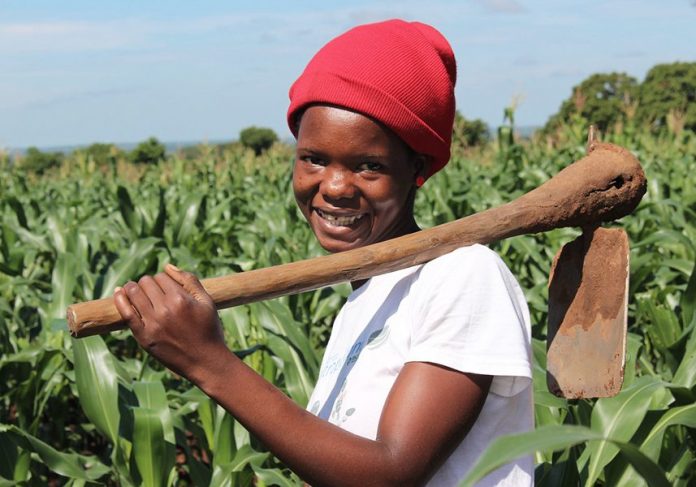
To address persistent inequality, Bill and Melinda Gates are calling for a new approach to development, targeting the poorest people in the countries and districts that need to make up the most ground. Governments should prioritize primary health care to deliver a health system that works for the poorest, digital governance to ensure that governments are responsive to their least-empowered citizens, and more support for farmers to help them adapt to climate change’s worst effects.

Bill and Melinda Gates will produce a Goalkeepers Data Report every year through 2030, timing it to the annual gathering of world leaders in New York City for the U.N. General Assembly. The report is designed to track progress in achieving the Global Goals, highlight examples of success, and inspire leaders around the world to accelerate their efforts. The goal is to identify both what’s working and where we’re falling short.

As in past years, in conjunction with the report, Bill and Melinda Gates will co-host the third annual Goalkeepers events in New York City during the U.N. General Assembly, convening global leaders to celebrate progress in global health and development and highlight the critical importance of closing the global inequality gap to achieve the Global Goals.

Stories Continues after ad

Former DR Congo dictator Mobutu Seseseko’s mansion is now home to wild animals

Former Congo dictator Mobutu Seseseko’s mansion is now home to rats, bats, snakes and birds.

The magnificent structure constructed on a large expanse of land equivalent to a minimal game park was built in his home village called Gbadolite at the cost £100 million.

It was considered the “epitome of decor and elegance” in Zaire and beyond. The super structure was decorated with Italian marble, Katangese high-karate gold plated doors and windows, Spanish floor tiles, automatic American air conditioning, Isreali state-of-the-art communication systems, king-size swimming pool, a private airport control tower, 3-4 inch bullet-proof glassware, 5 presidential suites, 6 Jacuzzis and surrounded by a mini game park full of all kinds of wildlife, including Indian tigers.

The structure, which at the time of Mobutu’s death was ranked one of the most magnificent private castles ever owned by a sitting Head of State, is now home to wild rats, tropical snakes, gecko lizards, mega snails, scorpions, birds and thousands of wild insects.

Stories Continues after ad

Spain win 2019 Basketball World Cup


Spain beat Argentina 95-75 to win the 2019 FIBA Basketball World Cup in Beijing Wukesong Arena, their first title in 13 years.

Argentina were down big in the opening quarter. Gasol’s good defensive work on Scola, plus Ricky Rubio’s relentlessness as a threat to score and pass to a team full of players ready to put points on the board, opened up a 14-2 run in the first quarter.

Argentina stormed back with 11 straight points, but Spain then re-established their lead after going on a 17-1 run. In the third quarter, the Spaniards kept the pressure on and even though Argentina fought hard, there was no coming back against this focused squad.

Facundo Campazza had some exciting plays early but never managed to break loose in the scoring column, and Scola never got going in any way. The scoring fell to the likes of Gabriel Deck, who managed to break open for some fast break dunks, and Nicolas Laprovittola added 17.

However, Spain put six players into double figures, led by Rubio, who managed 20 points with 7 rebounds and 3 assists. It proved that he can still be a reliable point guard on an important team after largely being played out of the NBA conversation in recent years.

Ricky Rubio was named the MVP of the 2019 FIBA World Cup after leading Spain to gold. He was also among the five players named to the FIBA World Cup 2019 All-Star 5, joining Marc Gasol (Spain), Luis Scola (Argentina), Bogdan Bogdanovic (Serbia) and Evan Fournier (France).

Earlier, France took their second successive World Cup bronze medal with a 67-59 win over Australia.

United States and Serbia were the overwhelming gold medal favorites going into the tournament but were quarterfinal victims to France and Argentina respectively.

Seven teams – Argentina, Australia, France, Iran, Nigeria, Spain and the United States – qualified for the 2020 Olympics in Tokyo by finishing as the top (or second-best) teams in their regions at the World Cup.

As the host nation, Japan has also qualified. The other four entrants will be determined by qualifying tournaments early in the summer of 2020.

Stories Continues after ad

KIU rewards three innovative science students for inventing diagnostic apps

HURRAY! Graduates of KIU after receiving their degrees

Kampala International University (KIU) has rewarded three innovative science students and vowed to support their innovations for the benefit of the health sector.

The three were awarded during Research Dissemination and Innovation Conference (KRIC 2019) tagged, ‘Multi-Sectoral Collaboration towards the Prevention and Management of Non-Communicable Diseases’. The event which was held in her Western Campus in Ishaka-Bushenyi.

The overall winner was Higenyi Eria pursuing a bachelor’s degree in Pharmacy who invented ‘The street diagnosis machine’ that calculates Body Mass Index (BMI), takes blood pressure, oxygen circulation and heart rate. The machine advises on the course of action after diagnosis according to what he called ‘The Higenyi Constant’. He walked away with a token prize of Shs 1,000,000.

Kamyuka Solomon and Kigozi David invented a mobile app dubbed ‘Glucoheart’ that estimates blood glucose levels. The duo were awarded Shs750, 000.

LuLe Patrick offering medicine and Kyeyune pursuing his bachelors in pharmacy the two invented ‘Med system’ an online based system software and mobile app that helps fight Non communicable diseases. They were awarded Shs 500,000.

The Executive Director/Dean KIU Teaching Hospital (KIUTH), Professor Robinson Ssebuufu remarked that KIU as institution has given a great platform for innovative students to bring their projects to lime-light, as such they will be rewarded accordingly.

“Students are Innovators. KIU has given them a platform and an enabling environment. Those who are coming up should be inspired. Their ideas matter and we are rewarding them.”

According to Prof George Nasinyama, the Director Higher Degrees and Research KIU, the conference provided for promotion of innovations by turning them into products that can benefit the community through the dissemination of research knowledge and presentation of various innovations.

“The conference was a big success. This was unique in a way that it was organized by the students and the staff. For such a rare collaboration it’s rare to get that kind of success. It shows that KIU puts its students at the center. Whatever we do, we involve our students.” Said Prof Nasinyama.

 “Being the first of its kind, it was fantastic and well attended. We had the presence of the Ministry of ICT and Health and they’ve promised to support the University.” Said Dr. David Kalenzi, Director Post Graduate Studies and Research, KIU

The Kampala International University Research Dissemination and Innovation Conference (KRIC) is slated to become an annual event aimed at growing and strengthening a research and innovation culture among all students and staff at KIU Western Campus and other universities.

Stories Continues after ad