Stanbic Bank
Stanbic Bank
17.4 C
Kampala
Stanbic Bank
Stanbic Bank
Home Blog Page 1165

Mak Guild President: ‘Strikes will continue even tomorrow if Prof. Nawangwe fails to tell Museveni that we rejected tuition increment’

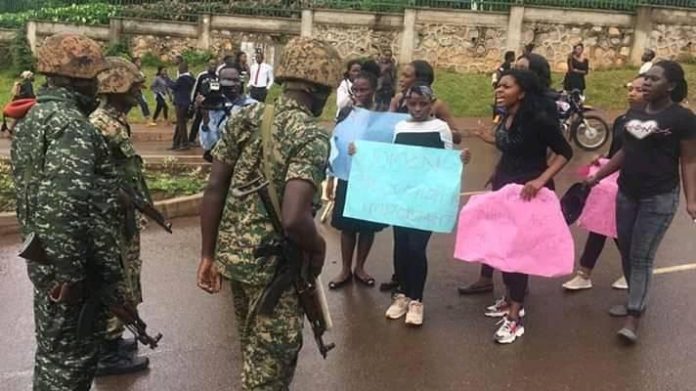
Soldiers confronting Makerere students who were holding a peaceful demonstration

The jailed Makerere University Students’ Guild President, Julius Kateregga, has commended students for staging a peacefully demonstration calling for halting of the cumulative 15 percent tuition increment.

It has also emerged that students are demanding for the immediate degazzeting of the Guild Electoral Reforms and improvement of the sanitation in the smelly halls of residence.

Kateregga and other students’ leaders are among the scores currently detained at Wandegeya Police Station as sporadic protests continue to take center stage at the university and various hostels outside the university such as JJ and Douglas villa in Makerere Kikoni.

Currently, police in engaging in running battles with students.

The protests that commenced on Tuesday, were spearheaded by Mollie Siperia, the Guild Representative Councilor for School of psychology and one Frank Bwambale who were later nabbed and suspended by the university vice chancellor Barnabas Nawangwe. Unconfirmed reports claim Siperia has been brutally assaulted by unknown people.

In statement released by the Guild President, he commended students for standing up even when they are faced with blackmail and intimidation of suspensions from Prof. Barnabas Nawangwe.

“If you dearly feel that the demand for affordable Education is a fundamental right for you or anyone that you know of: your friends, your neighbors, your family, both current and future generations then you have reason to rise up tomorrow,” he wrote.

“I’m informed that plain clothed security operatives continue to torment students in their rooms, and that some have been brutally tortured and admitted to medical facilities. From now on, stay calm, but be intelligent. Self-defence is no offence.”

He said Prof. Nawangwe clearly stated that it was President Yoweri Museveni who instructed him to exorbitantly hike tuition fees. Let him return to President Museveni and inform him that we reject the increment and demand its immediate halt. Why does it have to bother him and not the President when we demonstrate against the increment if he was only a messenger? Why doesn’t he leave way for the President to intervene in the matter?

“There shall be no negotiations with colleagues on suspension and some in detention,” he said.

Stories Continues after ad

Oil: CSOs ask French court to order Total to disclose environmental steps in Uganda

TOTAL

Six French and Ugandan campaign groups have asked a French court to order energy company Total to disclose how it is addressing the human and environmental impact of a Ugandan oil field, according to Friends of the Earth.

Despite the complaints by the group Total says it is working in Uganda in compliance with national and international standards.

Under French law, large French companies are required to publish annual plans that address any adverse impact of their activities, and those of subsidiaries and suppliers, on people and the environment.

In their legal application, the six campaign groups, which included Friends of the Earth, say Total had not met that obligation.

In a June 24 notification to Total, the campaign groups alleged Total intimidated and failed to properly compensate local land-owners affected by work on its Tilenga project in Uganda.

They also claimed Total had failed to develop adequate environmental safeguards to protect the surrounding national park through which the Nile River flows.

Crude reserves were discovered in Uganda more than 10 years ago but production has been repeatedly delayed by disagreements over taxes, while a lack of infrastructure such as a pipeline and a refining facility, has also limited work progress.

In a Sept 30 2019, statement, Total said there was no legal requirement for it to publish reports on each of its projects, adding it had put measures in place to mitigate impacts from its Tilenga project, and was working in consultation with local people who had to be re-located because of it.

Total plans to drill more than 400 oil wells with the objective of producing 200,000 barrels per day in the Lake Albert area, which marks part of the border between Uganda and Congo.

According to critics of Friends of the Earth, which was based on months of field research, Total’s oil project will have serious consequences for the environment, as well as for the almost six million people in the region who depend on agriculture and fishing for their livelihood.

The consequences could extend to the entire African Great Lakes region 

Friends of the Earth who conducted the survey in the Lake Albert area with her Ugandan partners (AFIEGO, CRED and NAPE), pointed out the general nature of the danger associated with the implementation of Total’s project. “Even the populations that will not be expropriated in the vicinity of the lake will be directly affected by the pollution generated by oil activity: pollution of the air, soil and water is inevitable in such projects,” said Juliette Renaud.

The investigation also points to the consequences of an oil spill in the Lake Albert area. For experts, such an event will be catastrophic for the entire African Great Lakes region. “Lake Albert is, of course, concerned, but also the Nile. Since we are on one of the source points of the Nile with a whole network of planned pipelines, which must pass under the Nile. Horizontal drilling opportunities are also planned under Lake Albert with high risks of water contamination,” explained Juliette Renaud.

As from the date of filing of the formal notice, Total S.A. had a maximum period of three months to comply with the requests of Friends of the Earth and its Ugandan partners.

The approach taken by these organisations is guaranteed by the new law on the “duty of vigilance of multinationals”, promulgated in March 2017 in France. This is the first time this law has been used to address the consequences of the activities of a subsidiary of a major French group abroad.

Stories Continues after ad

EU provides €40m to boost sustainable fisheries and aquaculture in Africa, the Caribbean and the Pacific

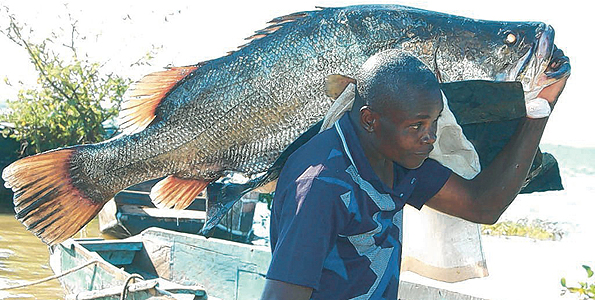
Man carrying Nile Perch fish

The EU, the African, Caribbean and Pacific Group of States (ACP) and the Food and Agriculture Organization of the United Nations (FAO) signed a €40 million, five-year programme (FISH4ACP) to boost the development of sustainable fisheries and aquaculture in Africa, the Caribbean and the Pacific.

FISH4ACP is an innovative EU-funded programme, devised with ACP and to be implemented by FAO. It will invest in value chains to stimulate inclusive growth, bolster food security and minimise impacts on the marine environment.

The signing took place in Oslo, at the Our Ocean 2019 conference. Representatives from governments, business, civil society and research institutions are attending this global event to promote action for a clean, healthy and productive ocean.

Welcoming the initiative, European Commissioner for Maritime Affairs and Fisheries, Karmenu Vella, said: “The focus on all three aspects of sustainability – the economic, the environmental and the social – sets this programme apart. It will enable us to strike a balance between production and protection, to contribute towards fair income distribution; to promote decent working conditions, sound fisheries management and social inclusiveness; and to champion sustainable aquaculture practices.”

FAO Director-General Qu Dongyu said: “We welcome this new, comprehensive value chain approach to the development of fisheries and aquaculture that takes into account all players, at all stages – from net to plate. This is an innovative approach that will boost economic returns and social equity, and reduce negative impacts on the marine environment.”

“Within the ACP countries, there is a sense of urgency to boost our fisheries and aquaculture sectors because they greatly contribute to economic growth, decent jobs and food and nutrition security. We are happy to have our partners on board and launch this much-needed initiative, which will unlock the potential of fisheries and aquaculture in ACP regions,” said ACP Secretary General Dr Patrick Gomes.

New markets and thriving fish stocks

FISH4ACP will work with 10 value chains in 10 different ACP countries, aiming to maximise their economic returns and social benefits, while minimising the detrimental effects on natural habitats and marine wildlife. It will pay special attention to small-scale fisheries because of their potential to deliver economic and social benefits, particularly for women.

In Africa, the programme will support both aquaculture and fisheries value chains. They include inland and marine fisheries, involving catfish, small pelagics, oyster, shrimp and tilapia value chains from Nigeria to Zimbabwe, and from Lake Tanganyika to São Tomé and Príncipe and the continent’s Atlantic shores.

In the Caribbean, FISH4ACP will concentrate on stocks of mahi-mahi and seabob shrimp in the Dominican Republic and Guyana respectively; in the Pacific, it will focus on tuna fisheries around the Marshall Islands, a sector with high potential on both European and American markets.

Key facts and figures

Capture fishery production in ACP countries nearly doubled from 4.6 million tonnes in 1990 to 8.5 million tonnes in 2016.

Aquaculture production in ACP countries jumped from 50000 tonnes in 1990 to 790000 in 2016, but still represents less than 1% of global production.

In 12 ACP Island States, fish exports accounted for more than half the value of all food merchandise exports in 2016.

The EU is a key market for ACP fish products. In 2016, exports to the EU accounted for 50%, 15% and 50% of exports from Africa, the Caribbean and the Pacific respectively.

Background

Fisheries and aquaculture in most of the 79 ACP countries have grown significantly over the last 20 years. However, to ensure sustainable development of aquatic resources for the benefit of communities that rely on them for their livelihoods and food security, many challenges, including market access, value addition, working conditions and the risk of over-exploitation, remain to be addressed.

Over the next five years, FISH4ACP will be yielding multiple environmental, economic and social benefits for the people and the fisheries resources in Africa, the Caribbean and the Pacific, contributing to the UN’s 2030 Agenda for Sustainable Development, and in particular Sustainable Development Goal 14 on conservation and sustainable use of the ocean, seas and marine resources.

FISH4ACP is set to kick off in early 2020 with value chain assessments aimed at pinpointing the main challenges in each of the value chains and helping them explore new markets, reduce waste and losses, improve fishers’ working conditions and manage fish stocks at sustainable levels.

Stories Continues after ad

AU Special Envoy Bineta Diop advocates for more women participation in Somali peace process

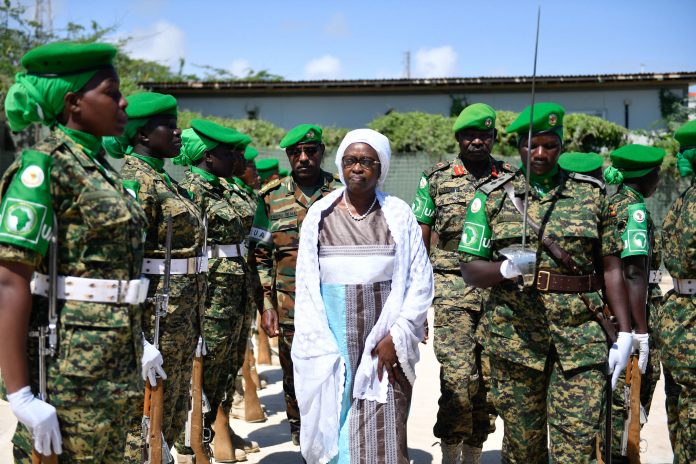
AU Special Envoy Bineta Diop advocates for wants more Somali women to participate in peace processes

The African Union Special Envoy on Women, Peace, and Security, Ms.Bineta Diop, wants women in Somalia to increasingly play an active role in ongoing efforts to restore peace and security in the country.

Diop on Wednesday completed a one-day visit to Somalia, with the Deputy Secretary-General of the United Nations, Ms. Amina Mohammed. The visit to Somalia was part of a broader, joint UN-AU solidarity mission to the Horn of Africa countries including Ethiopia, Sudan, Djibouti, and Eritrea. 

The two high ranking women also met the Prime Minister of Somalia, Hassan Ali Khaire, at his office in Mogadishu and held discussions on the upcoming landmark one-person, one-vote elections slated for 2020/2021, the constitutional review process, and the participation of women in politics.

The AU envoy also visited the AMISOM Force Headquarters, where she laid a wreath in honour of AMISOM troops and the Somali security forces who died in the pursuit of peace for Somalia.

AMISOM officials briefed the AU envoy on the contributions and progress of female peacekeepers. Ms. Diop, along with the Deputy Secretary-General of the UN, Amina Mohammed, also met with Somali women and female youth civic leaders.

Since the establishment of AMISOM in 2007, the number of women deployed under the mission has, over the years increased with several women taking up frontline and active roles in driving combat vehicles like the tankers and Armoured Personnel Carriers, and positioned in the Forward Operating Bases (FOBs).

Ms. Diop, whose role is to promote the protection and advancement of the rights of women and children affected by conflict in Africa, commended the female AMISOM troops for their active participation and contribution to restoring of peace and security in Somalia.

“I salute the women of AMISOM who, along with the men, are defeating terrorists. Thank you for defending the lives of Africans,” Diop noted.

The Special Representative of the Chairperson of the African Union Commission (SRCC) for Somalia, Ambassador Francisco Madeira, hailed Ms. Diop for championing the cause of women on the continent.

“We are happy to have you among us because of your clear vision and commitment  to championing policies on issues relating to women, peace and security, the protection of children, and women’s rights,” Madeira said.

Stories Continues after ad

Business leaders share insights on how companies can drive social impact while driving profit

Jane Mwangi, Managing Director of KCB Foundation

Executives of businesses operating in Rwanda will gather in Kigali on 31 October 2019 for an in-depth discussion about how they can lead their companies to solve social problems while driving profits.

Research has shown that businesses focusing on economic growth and social purpose can outperform competitors. The meeting, titled “Shared Value in Africa: join the conversation”, will enable business leaders to share insights on effective ways to drive the adoption of Shared Value, a business model that enables business to create economic value and value for society.

The event is co-hosted by the Shared Value Africa Initiative (SVAI), the Pan-African business network that is the regional partner of the global Shared Value Initiative. The Rwanda Convention Bureau (RCB) and the Private Sector Federation (PSF) are also co-hosting the event.

“Shared Value thinking – the ability to see the business opportunity in driving the creation of a better world through the achievement of the UN Sustainable Development Goals – is key to Africa becoming the economic powerhouse of the twenty-first century,” says SVAI CEO Tiekie Barnard. “Creating Shared Value is a choice that leadership make to increase their competitiveness, grow their organisations and use their strategies to address social issues.”

Delegates will learn from the successes of Water Access Rwanda and KCB Group, whose leaders have driven succeful Shared Value strategies. To close the event, a panel discussion will feature Christelle Kwizera, CEO of Water Access Rwanda; Jane Mwangi, Managing Director of KCB Foundation; John Bee, Regional Head of Regulatory and Scientific Affairs at Nestlé; and Tiekie Barnard, CEO of SVAI. The discussion will be chaired by Makeda Mahadeo, CNBC Africa Anchor.

The aim is for all delegates at the event to learn to identify business opportunities solving social and environmental problems. Shared Value, the particularly powerful business management strategy identified by Michael Porter and Mark Kramer of Harvard University, is assisting companies worldwide to follow this route.

Using this approach, a company starts by identifying a key social or environmental issue to focus on that is in line with their business operations, finding a possible solution and collaborating with partner, planning the relevant business activities involved, and modelling anticipated business and social benefits relative to projected costs.

“Rwanda has taught many countries in the rest of the world that it is possible to achieve one of the highest rates of economic growth globally, while also making significant improvement in social conditions of its people,” says Barnard. “Rwanda’s rate of economic growth has averaged 8% since 2001, according to the World Bank. In social terms, poverty rates have fallen while healthcare has improved. It is important to discuss how businesses can contribute to building on this success.”

Stories Continues after ad

World Bank Doing Business 2020 ranks Uganda 12th in Sub-Saharan Africa

World Bank's Doing Business Reforms

World Bank’s Doing Business Ranking 2020 puts Uganda in position 12 in Sub-Saharan Africa behind top performers Mauritius, Rwanda, Kenya, South Africa and Zambia respectively.

Uganda is ranked 116 globally way below its neighbors Rwanda and Kenya ranked 38 and 56 respectively. In East Africa Rwanda and Kenya are the best performers, followed by Uganda.

According to the latest study which measures the ease of doing business in countries, 115 economies implemented 294 business regulatory reforms across the 10 areas. “Reforms inspired by Doing Business have been implemented by economies in all regions,” it says.

Uganda has implemented the following reforms since Doing Business 2008, according to the World Bank Doing Business study 2020 that covers 190 economies, with New Zealand and Georgia being top performers.

The rankings were based on ten reforms carried out by each of the 190 countries such as’ Starting a BusinessDealing with Construction PermitsGetting ElectricityRegistering PropertyGetting CreditProtecting Minority InvestorsPaying TaxesTrading across BordersEnforcing Contracts and Resolving Insolvency. The reforms had Uganda come in positions 169, 113, 168, 135, 80, 88, 92, 121, 77 and 99 respectively.

Stories Continues after ad

Improvement for Cranes in the October 2019 Fifa rankings

Patrick Kaddu celebrates a goal

Uganda Cranes have moved up in the latest Fifa football rankings released today by one slot.

The Cranes now climb to 79th position in the world with a total of 1311 points and are placed at 16th in Africa, remaining the best in the Cecafa region.

The rise comes after Uganda Cranes beat Ethiopia 1-0 in an international friendly in Adis Ababa and also secured a place in the 2020 CHAN tournament after a 6-0 aggregate win over Burundi in the final round of the qualifiers.

Uganda’s 2021 Afcon qualifier opponents; Burkina Faso are in the 60th position, Malawi (124) and South Sudan at 162.

Neighbours Kenya dropped by one slot to 108, while Tanzania moved 2 places up to 133, Burundi is at 143 and Rwanda at 129.

The top five countries in Africa are; Senegal (20), Tunisia (29), Nigeria (35), Algeria (38) and Morocco (42).

Belgium (1st, unchanged) still lead the way from France (2nd, unchanged) and Brazil (3rd, unchanged), although top-ten rivals Uruguay (5th, up 1), Croatia (7th, up 1), Argentina (9th, up 1) have at least edged closer to the summit.

But the most significant rises are to be found down the Ranking, where the in-form quartet of Ukraine (22nd, up 3), Japan (28th, up 3), Turkey (32nd, up 4) and Russia (37th, up 5) are among the more notable climbers.

Jumps of ten or more places have also been made by a clutch of teams outside the top 50, namely Nicaragua (137th, up 11), South Sudan (162nd, up 11), Barbados (160th, up 10) and São Tomé and Príncipe (180th, up 10).

And there is fresh celebrate, too, for Kosovo (114th, up 5), who can again reflect with pride on their best Ranking position to date.

Nicaragua was the best mover, moving up by 11 ranks to 137, while Mauritius fell hardest, dropping by 12 places to 173.

The next FIFA/Coca-Cola World Ranking will be released on 28 November 2019.

Stories Continues after ad

Eight teams confirmed for Cecafa senior women’s challenge cup 2019

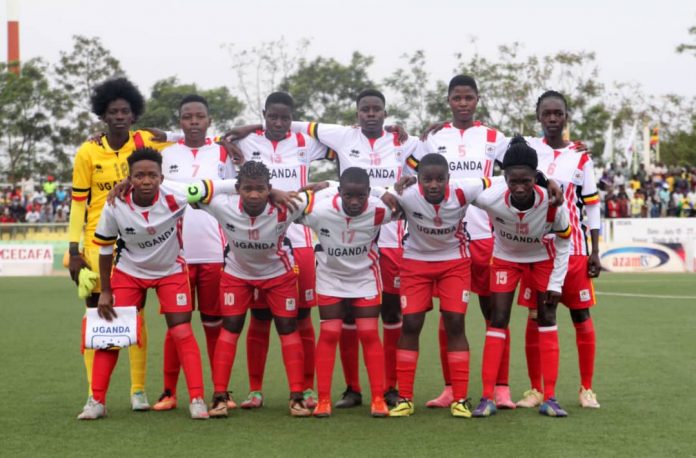
Crested Cranes team

The Council of East and Central African Football Associations (Cecafa) has announced that eight teams will take part in the 2019 Cecafa Senior Women’s Challenge Cup.

Tanzania is slated to host the regional tournament from November 14th to 23rd in the capital Dar es Salaam.

“We have received confirmation from eight countries and we are making all preparations to have a successful tournament,” Nicholas Musonye, the Cecafa Secretary General is quoted by the cecafa website.

Musonye said fixtures and related information about the event will be shared with all the participants before the end of this week.

“The Tanzania Football Federation and Cecafa have proceeded to make formal application to FIFA through CAF for funds to run the event,” said Musonye.

The eight countries that have confirmed participation include; Uganda, Burundi, Djibouti, Zanzibar, Kenya, Ethiopia, South Sudan and hosts Tanzania.

Tanzania are the defending champions having won it last year in Rwanda.

Stories Continues after ad

Police nets Kawempe robbers in Bujjuko

One of the Kawempe thugs, Allan Ggayi.

Police in Bujjuko yesterday intercepted thugs who had robbed people from Kawempe.

On receiving a call from Kawempe Lugoba police that the thugs after robbing in that area had taken Mityana Road, Officer in Charge (OC) Bujuuko responded with Local Defence Unit guards and intercepted the thugs as they were proceeding towards Nswanjere LCI heading to Jezza and they were intercepted.

The two thugs were intercepted in a motor vehicle reg no UBE 641A Toyota Alex. One thug took off and one was arrested.

The thug who was arrested was identified as Allan Ggayi a resident of Kyanja Gayaza and the one who took off is called Ssozi Tonny a resident of Entebbe road.

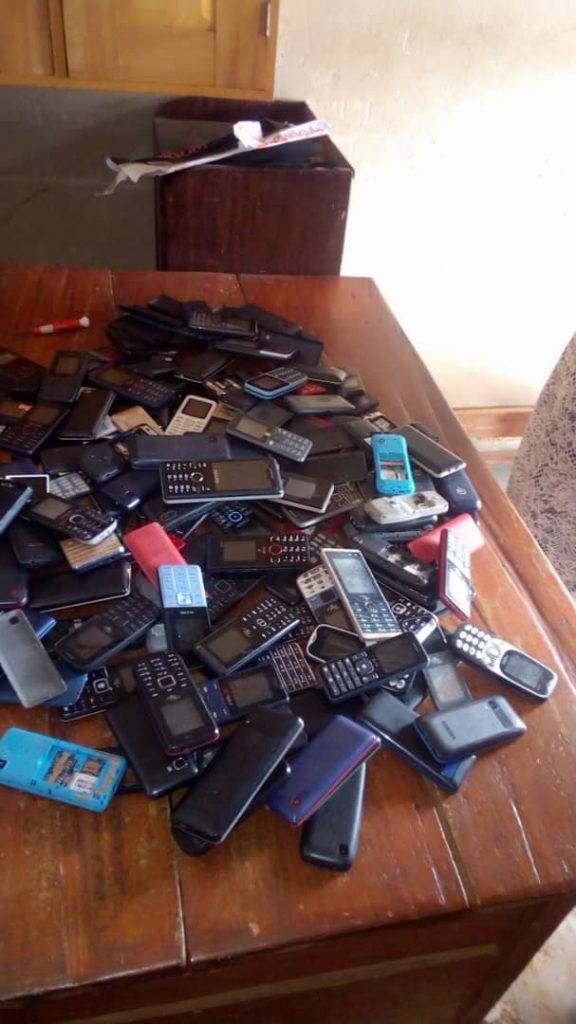
Mobile phones recovered from thugs.

“When the vehicle was searched we found over 160 mobile phones”. Patrick Onyango, the Kampala Metropolitan said  before adding “They were targeting mobile money agents by pretending that they are either withdrawing or depositing money and in that process they exchange their phones with the agent or steal the agent’s phone without the knowledge of the agent”.

Ggayi was transferred to Kawempe Police station and the likely charges are robbery and theft.”We are looking for Ssozi Tonny who is on the run. We appeal to members of the public whose phones were stolen in this manner to report to Kawempe Police station or to the Police they reported the cases”

Stories Continues after ad

Uganda to mark International Rural Women’s Day: Gov’t has made some achievements

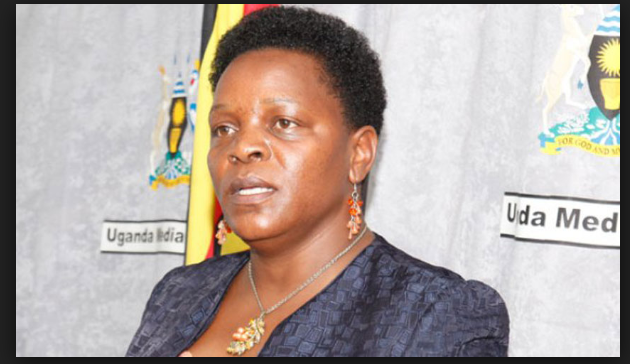
Mutuuzo Peace Regis

BY Hon. Mutuuzo Peace Regis

On Thursday October 24, 2019, Uganda joins the rest of the world to celebrate the International Rural Women’s Day. The Day was established by the United Nations General Assembly and is observed around the world on 15th October as a platform for the rural women to raise their voices, air out their challenges, share their achievements and for stakeholders to give greater recognition of rural women’s contribution to development of their communities.

Commemorating the Day provides us with the opportunity to remind State and non-State Actors and other stakeholders to develop Programmes that enhance women’s ability to increase production, access services and social protection, be economically empowered and increase their participation in development Programmes.

Some of the challenges faced by rural women and girls include; Gender based violence manifested through high levels of teenage pregnancies, child marriages, forced marriages, Female Genital Mutilation (FGM) among the Sabiny in Sebei region and the Pokots of Karamoja and trafficking in persons;

 Unfair distribution of productive resources including access to and control to land, access to agricultural inputs, water, transport, access to affordable credit and appropriate technologies that reduce their workload. With limited productive resources at their disposal, women and girls therefore struggle to fend for large families including orphans and vulnerable children.

Limited access to services and opportunities – low education levels and access to training, inadequate care and support, lack of legal support and poor health;

The heavier workload including unpaid care work continue to constrain women’s participation in decision-making and politics. Rural women make up over a quarter of the world population and 43% of women in the global agriculture labour force. They till the land to ensure food security for their communities. Seventy six percent (76%) of the extremely poor women live in rural areas.

Uganda’s economy is basically agricultural with over 70 per cent of persons engaged in agriculture, majority of whom are women. It is therefore important to ensure their access to sustainable infrastructure, services and social protection in order to contribute to a reduction in world hunger and poverty, as a critical strategy for the success of the new sustainable development agenda.

There is also need to value and celebrate the great contribution of rural women and girls to national development as well take deliberate interventions to empower rural women and girls if Uganda is to achieve its vision of a modern and prosperous country by 2040. In this regard, the NRM Government has prioritized the empowerment of rural women and girls as critical actors in the economic growth and sustainable development agenda of the country.

Ladies and Gentlemen, 2019 marks 11 years since International Rural Women`s Day was recognized. The National celebration will be held at Arapai, in Soroti District Local Government under theme: “Rural Women’s Economic Empowerment through Savings and Affordable Credit.”

Among the numerous interventions undertaken by Government to empower rural women to enable them contribute effectively to household wealth creation is the Uganda Women Entrepreneurship Programme (UWEP) which has been implemented in all Districts and Municipalities with the Ministry of Gender, Labour and Social Development as the lead implementation agency.

The design and vision of the programme was informed by the constraints that women face in attempting to establish businesses and these include among others; limited access to affordable credit, limited technical knowledge and skills for business development, limited access to markets as well as information regarding business opportunities. These constraints affect rural women at a much greater magnitude. To-date, UWEP has funded 10,502 women projects across the country, directly benefiting 131,390 women.

The Programme has specifically registered notable benefits including, but not limited to; (i) Increased access to affordable credit by women. In this regard, 131,390 women have accessed credit to initiate, manage and expand their enterprises. (ii) Financial inclusion of women. To date, 10,502 women groups have group bank accounts that were opened to access UWEP funds. (iii) Acquisition of assets. The women that have benefited from the Programme have been able to acquire assets such as domestic animals (59.7%), mattresses (54.5%), phones (51.9%), and beds (28.3%). In addition, the Programme has enabled women to acquire assets such as land (1.1%) and houses (0.8%). (iv) Women have reported increased incomes as evidenced by their ability to pay school fees, access to health services and improved nutrition. (v) 131,390 women have opportunities for direct selfemployment and over 587,755 dependents have benefit through multiplier effects at household and community levels. (vi) Enhanced knowledge and skills for women. 131,390 supported women have acquired skills in various disciplines such as, basic financial management, record keeping, entrepreneurship, group dynamics and marketing among others.

At a macro-level, the Programme is making a contribution towards enhancing import substitution and export promotion through financing of projects in grain milling, fruit drying and processing, shear butter processing, wine making, liquid soap making, agricultural feed production, metal fabrication, food processing, tie and dye, manufacturing of leather products such as shoes, and bags among others. Infrastructure development, particularly road infrastructure, is critical to empowering rural women.

Government has undertaken heavy investments in building trunk and rural roads to facilitate improved access to markets by women, trading opportunities, farm inputs and consumer goods all of which are critical ingredients for women and youth empowerment. The Beijing Platform for Action (BPfA) spells out actions governments should take to improve participation of women in the economy to “Promote and strengthen micro-enterprises, new small businesses, cooperative enterprises, expanded markets and other employment opportunities and, where appropriate, facilitate the transition from the informal to the formal sector, especially in rural areas”.

The questions of security around the market areas, connections to their homes, and the time of resuming the market operations and street lighting for the areas where the markets are located have been answered by the enforcement of security right from the grassroots level. Government has established security units right from village to national level to be able to effectively respond to any concerns arising in an area, and this has shown in the peace dividends enjoyed by Ugandans over the last three decades.

Uganda’s electricity sector has also registered growth in the available generation capacity from 359.5 MW since the liberalization of the electricity sector in 1999 to 601.1 MW in 2018. This growth is predominantly from renewable sources, which are most used by women and girls in rural areas. This growth eliminated load-shedding and doubled the access to electricity from 7% to 15%. In the education sector, significant improvements have been made in the accessibility and quality of girls’ education in Uganda. The female literacy rate increased from 45 percent in 1991 to 68 percent in 2014. Much of this progress was a result of the 1997 implementation of free, universal primary and secondary education. With one in every four girls aged 15-19 years have begun childbearing, keeping girls in school is one way of supporting them to delay pregnancy.

A World Bank study shows that an extra year of primary school education boosts girls’ future wages by 10% –20%, and an extra year of secondary school adds 15 – 25 per cent. This goes to underscore the importance of UPE, USE and Post Primary Education and Training. Giving women extra one and half (1.5) points for public university entrance (affirmative action) can’t be overemphasized.

I would like to assure the country that Government, development partners and community development organisations are sparing no effort in ensuring that the current shortfalls in accessibility and quality in education are bridged. Other Government Programmes to support women move out of poverty include the Social Assistance Grants for Empowerment (SAGE) Programme, the Community Based Rehabilitation (CBR) program, Operation Wealth Creation (OWC), the Youth Livelihood Programme (YLP), and the Community Driven Development (CDD) Programmes among others.

We believe that the celebrations in Soroti will amplify rural women`s voices and provide a platform for dialogue. As the Ministry of Gender, Labour and Social Development, we are concerned over the emerging human trafficking – young girls are “sold” at the human market at Arapai market, and on Thursday, which is a market day there, I intend to make an on-spot inspection of the market and also speak about the ills of such actions. The event will involve a marching process through Arapai town to the venue, an exhibition by rural women with enterprises and lots of entertainment. As I conclude, I wish to take this opportunity to invite you all to the Celebrations in Arapai-Soroti this Thursday. Our appreciate goes to UN Women, Soroti District Local Government and other organisations that have supported this day. I thank you.

For God and My Country

The writer is the Minister of State for Gender and Cultural Affairs

Stories Continues after ad