Stanbic Bank
Stanbic Bank
18.4 C
Kampala
Stanbic Bank
Stanbic Bank
Home Blog Page 1175

Uganda Cranes squad for international friendly with Kenya named

Allan-Okello


The interim Head coach of the Uganda Cranes Abdallah Mubiru has named a 25 man squad for the international friendly match with Kenya to be played on 8th September 2019 in Nairobi.

Mubiru has included in the squad some of the players who featured in the 2019 AFCON Finals in Egypt.

The local based players will train on Thursday morning at the StarTimes Stadium (9am) before flying out the same day later in the evening while the foreign based stars will connect from their clubs direct to Kenya.

FUFA is using the FIFA intentional break to prepare some of the players for the two legged 2020 CHAN Qualifiers against Burundi and the 2021 AFCON Campaign that starts in November when Uganda Cranes plays Burkina Faso and Malawi.

Kenya were knocked out of the 2020 African Nation’s Championship (Chan) qualifiers by Tanzania following a 4-1 penalty shoot-out win at Kasarani in Nairobi. Both matches in the first and the second legs ended in goalless draws.

Kenya were pooled in Group G alongside Egypt, Togo Comoros and open up their 2021 Afcon qualification campaign against the Pharaohs of Egypt on November 11th, 2019 in Cairo.

The Squad

Goalkeepers: Onyango Denis (Mamelodi Sundowns, South Africa), Lukwago Charles (KCCA FC), Odongkara Robert (Horoya AC, Guinea), Mutakubwa Joel (Kyetume FC)

Outfield players: Willa Paul (Vipers SC), Kizza Mustafa (KCCA FC), Ochaya Joseph (TP Mazembe, DR Congo), Awany Timothy ( FC Ashdod, Israel), Juuko Murushid (Wydad Casablanca, Morocco), Revita John (KCCA FC), Mujuzi Mustafa (Proline FC), Lwaliwa Halid (Vipers SC), Kasozi Nicholas ( KCCA FC), Lwanga Tadeo ( Tanta FC, Egypt), Lumala Abdu (Pyramids FC, Egypt), Kizito Luwagga ( (Shaktar Karagandy, Kazakhstan), Miya Faruku ( Konyaspor, Turkey), Kyambadde Allan ( El Gouna FC, Egypt), Kayiwa Allan ( Vipers SC), Aucho Khalid (El Miskir FC, Egypt), Okello Alan (KCCA FC), Mutyaba Muzamir ( KCCA FC), Okwi Emmanuel (Al Ittihad, Egypt), Kaddu Patrick (KCCA FC) and Bayo Fahad (Vipers SC).


Stories Continues after ad

Van Dijk, Ronaldo and Messi to contest for 2019 Footballer of the Year Award

The prize for FIFA the best awards


The final three-man shortlists for the 2019 FIFA ‘The Best’ football awards have been confirmed today.

Virgil Van Dijk has been joined by regulars Lionel Messi and Cristiano Ronaldo in the final three for Fifa’s Best Men’s Player award.

The Liverpool defender made the cut after his award-winning evening last week when he was named Uefa Champions League Player of the Year.

Van Dijk beat Messi and Ronaldo to the European gong – but will go up against them again for the Fifa gong.

Meanwhile, England’s Lucy Bronze joins US stars Alex Morgan and Megan Rapinoe in the running for Best Women’s Player.

The world football governing body will host their annual awards on 23rd September in Milan 2019.

This is the fourth edition of the Best Fifa Football Awards, set up after football’s world governing body ended its association with the Ballon d’Or.

A version of the Ballon d’Or has been awarded by France Football magazine since 1956, but was merged with Fifa’s World Footballer of the Year award from 2010 to 2015.

The governing body then introduced the Best Fifa Football Awards, with Portugal international Ronaldo the first recipient of its main prize in January 2017.

Voting for the player and coach categories is conducted by national team captains and managers, selected journalists and an online poll from fans. Each account for 25% of the total.

Real Madrid midfielder Luka Modric won the men’s prize for best player in 2018 – the first time in 11 years Cristiano Ronaldo or Lionel Messi failed to come out on top in a world footballer of the year award.

Final shortlists:

Best Men’s Player: Virgil van Dijk, Lionel Messi, Cristiano Ronaldo

Best Men’s Goalkeeper: Alisson Becker, Ederson, Marc-Andre ter Stegen

Best Men’s Coach: Pep Guardiola, Jurgen Klopp, Mauricio Pochettino

Puskas Award: Lionel Messi, Juan Fernando Quintero, Daniel Zsori

Fan Award: Silvia Grecco, Netherlands fans at the Women’s World Cup, Justo SanchezBest

Women’s Player: Lucy Bronze, Alex Morgan, Megan Rapinoe

Best Women’s Goalkeeper: Christiane Endler, Hedvig Lindahl, Sari van VeenendaalBest

Women’s Coach: Jill Ellis, Phil Neville, Sarina Wiegman

Stories Continues after ad

Frustrated, Tullow Oil now plans new strategy to conclude farm down

Frustrated Paul McDade


Frustrated Tullow Oil plans to put in place a new strategy where new members will be included on the first team that failed to deliver a farm down in its 33.33 per cent stake in the Lake Albert Project, a source who spoke on condition of anonymity told this website.

The official said that one of the reasons why former Tullow Oil Uganda Managing Director Jimmy Mugerwa was recalled to London, was because he failed to ensure that the farm down that the company so much needed happened. Mugerwa was early last month replaced by lawyer Mariam Nampeera Mbowa.

The official added that the first team that the company entrusted the job of negotiating failed to convince the government of Uganda on the taxes to be paid once Tullow Oil sold part of its stake to CNOOC and Total E& P, which have now pulled out of the deal.

“Tullow has been unable to secure a further extension of the sales purchase agreements “SPAs” with its Joint Venture Partners, despite previous extensions to the SPAs having been agreed by all parties. The termination of this transaction is a result of being unable to agree all aspects of the tax treatment of the transaction with the Government of Uganda which was a condition to completing the SPAs,” the company said days ago.

It said that while Tullow’s capital gains tax position had been agreed as per the Group’s disclosure in its 2018 Full Year Results, the Ugandan Revenue Authority and the Joint Venture Partners could not agree on the availability of tax relief for the consideration to be paid by Total and CNOOC as buyers.

Tullow Oil said it would now initiate a new sales process to reduce its 33.33 per cent operated stake in the Lake Albert project which has over 1.5 billion barrels of discovered recoverable resources and is expected to produce over 230,000 bopd at peak production.

The Joint Venture Partners had been targeting a Final Investment Decision for the Uganda development by the end of 2019, but the termination of this transaction is likely to lead to further delay.

Paul McDade, chief executive officer, said then that: “Tullow has worked tirelessly over the last two and a half years to complete this farm down which was structured to re-invest the proceeds in Uganda. Whilst this is a very attractive low-cost development project, we remain committed to reducing our operated equity stake. It is disappointing to report this news at a time when we are making so much progress elsewhere towards the growth of the Group with our recent oil discovery in Guyana and the first export of oil from Kenya.”

The Ministry days ago said that Tullow must pay Capital Gains tax before it can be allowed to sell part of its stake to Total and CNOOC Uganda.

The Ministry’s Permanent Secretary, Robert Kasande in a statement last  Thursday said the government’s position is that the assessed tax should be paid in line with the laws of Uganda and tax reliefs be treated in in accordance with laws of Uganda.

“Government’s position is that the assessed tax should be paid in line with the laws of Uganda and tax reliefs are treated in accordance with the laws of Uganda,” he said.

The issue of contention according to Kasande was that Tullow wanted to transfer its interest without payment of Capital Gains Tax arising from the sale to CNOOC and Total. Total and CNOOC were also supposed to meet certain taxes for the deal to conclude.


Stories Continues after ad

Support growth of Uganda Airlines-Kadaga

President Museveni and his wife Janet Museveni after having feel of new Uganda Airlines airplane
 

The Speaker of Parliament, Rebecca Kadaga has asked Ugandans in the diaspora not only to support the recently re-launched national airline but also to be its goodwill ambassadors.

Uganda Airlines started its commercial flights this week with the first destination to Jomo Kenyatta International Airport, Kenya after more than a decade of inactivity.

Kadaga who is attending the 31st Uganda North America Association (UNAA) Convention and Trade Expo in Chicago, Illinois, took that opportunity to call for support for the national carrier.

“Don’t join those patronizing our airline. We need to support and market it,” Kadaga said.

She added that the aviation sector is an example of the great investment opportunities that Ugandans in the diaspora can tap into.

“You realise that the government has done more of tax holidays; that is a good initiative, but more incentives like lowering taxes and encouraging partnerships with government, there will be mileage for Ugandans in the diaspora to invest back home,” she said.

Kadaga added that Government has greatly improved the road network, revamped the airline and passed laws that make Uganda one of the best investment destinations.

“Parliament passed the Investment Code Act, 2019 and the most important part in the law is the qualification for incentives. We saw it wise for any investor to directly employ a minimum of 60 per cent of Ugandan citizens and source for 70 per cent of raw materials locally,” the Speaker added.

Kadaga encouraged Ugandans in the diaspora to return home saying that the tourism sector has grown with more recreational activities for them to enjoy.

“Each day exciting activities come up. Like in Busoga, Ugandans participate in climbing the Kagulu Hills in Buyende every year; it would be more encouraging if the diaspora people put it on their programmes and join us in the activity,” she said.

Stories Continues after ad
Court releases woman jailed for allegedly infecting child with HIV/AIDS

Sylvia Komuhangi


The Gulu High Court Judge, Stephen Mubiru has quashed two years jail term that was handed to Sylvia Komuhangi for allegedly injecting a baby with HIV-infected blood.

On Thursday, On July 4, 2019, Kitgum Chief Magistrate, Hussein Nasur Ntalo, convicted Ms Komuhangi of offence of committing a negligent act likely to spread disease contrary to Section 171 of the Penal Code Act of the Republic of Uganda and sentenced her to two years in prison.

Through her layers led by Inaccurate Owomugisha of Uganda Network on Ethics, Law and HIV/AIDS (UGANET), Komuhangi appealed against lower courts’ ruling.

The judge quashed the conviction, saying that forensic tests showed that DNA traces found on the cloth that Komuhangi used to wrap the baby belonged to her but did not contain any blood.

“I could not find any connection between her piece of cloth and the blood said to have been injected into the baby because the swelling found on the baby could have been a mere rash,” he ruled.

“The conviction is quashed and the sentence is set aside, the appellant is set free unconditionally unless she is held on some other lawful reasons,” he said.

Prosecution averred that at about 9 P.M. on December 26, 2018, the 32-year-old secondary school teacher Komuhangi carried the alleged victim away from her babysitter to the bedroom and then returned later, with the baby crying. The mother, Eunice Lakot, examined her baby and found swellings in both armpits.

She took the baby to Kitgum hospital for diagnosis, where doctors reportedly confirmed that the swellings were caused by injections. Consequently, a medical professional tested Komuhangi for HIV, and she was found positive. The child was given Post-exposure Prophylaxis (PEP), an antiretroviral medication that prevents infection to anyone exposed to HIV during the first ninety-six hours. Subsequently, Komuhangi was arrested.

Narrating her ordeal, Komuhangi said she had traveled to Uganda’s northern region from the Kampala for a tour in late December 2018, and spent several nights at a friend’s house in Kitgum Town. After a visit to the Kidepo Valley National Park, she returned to Kitgum Town to find her friend’s home surrounded by local authorities.

“We were arrested there and then,” she narrates. “I spent two weeks in custody asking to be released on bond, but they could not even bond me out, saying I was a non-resident. When we went to court, I asked for bail, and they refused. They refused to give me bail until they convicted me.”

On Kumuhangi’s release, Lakot, the mother of the baby, shared that the most recent results showed that her baby is HIV negative. Lakot, nevertheless, said she was not happy with the High Court’s ruling, but the baby’s maternal grandmother, Rose Oryem, said they would not challenge court’s decision.

Komuhangi is not the first convict as a result of those laws. In 2014, a 64-year-old nurse in Kampala, Rosemary Namubiru, was accused of injecting a toddler with her HIV-positive blood in the process of administering treatment.

Owomugisha, who is the UGANET head of advocacy and strategic litigation, says cases that involve HIV are not subjected to sufficient rigor, with sentiments often carrying the day at the expense of proper investigation, prosecution, and objectivity in court.

“Most convictions are based on unfair, inaccurate and overblown facts,” she says. “The media usually joins to hype up stories [and] this sensationalism crowds out good judgment, resulting in a miscarriage of justice.”

Another of Komuhangi’s lawyers, Louis Odong, said the ruling sent a message to people who criminalize HIV victims not to engage in the practice while Owomugisha added that the court’s decisions had restored “dignity to Sylvia Komuhangi and many like her.”

“We commend the court decision for setting an example that if courts scratched below the surface news, they would realize HIV positive status alone does not equate to malicious intent,” she said.

The Executive Director of UGANET, Dora Kiconco Musinguzi, said the criminalisation of people living with HIV, not only undermines the HIV response by compromising public health and human rights but that there is also no evidence of benefit from those laws.

“As a community of HIV actors, we remind the nation that we cannot end AIDS, or reach epidemic control with HIV criminalization coupled with heightened HIV discrimination. Human rights and dignity need to be accorded to all. We need to stop stigma and end HIV criminalization,” she stated.

Kiconco said that in light of court’s decision, the community of people living with HIV and organisations that UGANET works with recommend that the Constitutional Court should fast track the hearing of Petition No. 24 of 2016, through which their issues were presented to the country’s second-highest judicial organ for interpretation.

Kiconco also called on Parliament to re-visit the HIV criminal laws with a view to law reform as “some of the laws are unfair, vague and will encourage trumped-up charges often.” She said the law had been diverted from its original intent to create an environment where HIV is criminalized and where complications arise for persons living with HIV.


Stories Continues after ad
UPDF holds cultural gala to promote peace

Traditional dancers perform during a cultural event organised by Ugandan contingent serving under the African Union Mission in Somalia (AMISOM), held in Mogadishu, Somalia on 31 August 2019. AMISOM Photo / Omar Abdisalan

AMISOM Sector One, which is under the command of Uganda People’s Defence Force (UPDF) held a gala marked by traditional dance performances and a cultural exhibition to display how peace and unity can prevail in culturally diverse communities.

Held under the theme ‘UPDF: a united force in cultural diversity,’ the gala aimed to celebrate Uganda’s cultural diversity by bringing together soldiers serving under AMISOM to showcase their cultures and the peaceful coexistence between the different communities.

The commander of the Ugandan AMISOM contingent, Brig. Michael Kabango said, “In the African culture, we get an excuse to celebrate, dance, sing, feast, eat. And here in Somalia, we have a very big excuse. For the first time in Africa’s history, we have seen a homegrown African mission make great strides in securing the continent’s peace.”

Away from the battlefield and with the military fatigues put away, the soldiers of all ranks and file displayed the rich array of dances from the various communities of Uganda.

Brig. Michael Kabango added, “We are celebrating the success, so far, of this mission. Secondly, the success would not have been possible, but for those who have sacrificed. So, we are celebrating the lives and sacrifices of our heroes and heroines who have gone through this mission.”

Addressing guests present, Uganda’s Ambassador to Somalia, Prof. Sam Turyamuhika highlighted the commitment of his country to AMISOM in order to ensure the success of the mission to bring peace and security to Somalia.

“You will agree with me that we have been entertained through a diversity of culture, mainly dances. So, these men and women you see here are not just good fighters. They are also good dancers,” added Prof. Turyamuhika.

Lt. Mary Sylvia Lamunu who was among the performers at the cultural gala said, “We are diverse as Ugandans. We are of different tribes, but we are one as UPDF. We follow the goals of the mission, which leads us to success.”

She added, “In our diversity, we are still standing as one in the name of peace”.

Besides the music and dance performances, there was an exhibition of cuisines, regalia and artefacts of the various indigenous communities of Uganda.

Stories Continues after ad

Sixth COMESA Annual Research Forum underway in Nairobi

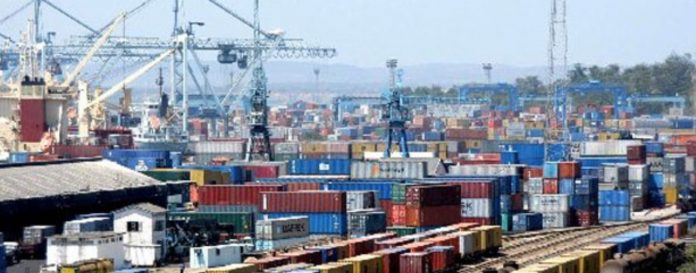
Containers ready for transit


The Sixth COMESA Annual Research Forum has begun in Nairobi, Kenya until September 6, organisers say. Policy think-tanks from COMESA Member States, researchers, public and private sector trade experts, innovators in science and technology and representatives of development partners will attend to discuss emerging topical issues in regional integration.

The theme for this year’s Forum is “Promoting Intra-COMESA Trade through Innovation” and it is motivated by the close link between innovation and trade. Thirteen research papers aligned to the theme and which have been competitively chosen, will be presented by the authors for discussion. Later, COMESA will publish the papers in its flagship publication: Key Issues in Regional Integration.

Among the papers earmarked for presentation include: The role of trade in innovation and socio-economic transformation in COMESA countries; Impact of Intellectual Property Rights on intra-COMESA Trade Flows; Technology Diffusion in COMESA member states: Role of Trade and Human Capital Movements; and Leveraging Innovation and Quality Standards to Increase Intra-regional trade: The Case of the Common Market for Eastern and Southern African Region.

At the forum, innovations that were nurtured through the COMESA Innovation Awards Programme will be showcased. Innovators from Member States have been invited present their innovations with focus on new products, new methods of production and new ways of improving technology.

The Innovation Award programme was launched in 2014 following a decision by the COMESA Heads of State to recognize and celebrate individuals and institutions that have used science, technology and innovation to further the regional integration agenda

Since 2014 COMESA has been organizing Annual Research Forums under a contemporary theme, informed by the COMESA Council of Ministers decisions, the Tripartite Free Trade Area or the Continental Free Trade Area negotiations and aspirations as well the global economic and trade dynamics.

The policy implications from the papers are presented to COMESA policy organs and form the basis for policy decision making.


Stories Continues after ad

The whistleblower that broke Anthony Katamba’s back at MTN


The fight between telecommunication giant MTN-Uganda and its former employee, Anthony Katamba is far from over as an internal  whistleblower wrote to the board exposing the underhand methods that eventually led to the sacking of Mr. Katamba.

According to the leaked document, Mr. Katamba is allegedly implicated in the torture of staff at his former workplace and erasing of sensitive data implicating some people in wrongdoing. Furthermore, he is accused of having erased useful data about criminals under the instructions of Mr. Nixon Agasirwe.

“There was a ruling of Criminal case 123 of 2012 at the High Court of Uganda by Justice Lawrence Gidudu on December 10, 2015.

In the ruling, the judge clearly implicated Anthony Katamba and his police friend, officer Mr. Nixon K. Agasirwe (who is currently in prison charged with abducting people who were later murdered) they tortured of Mr. Patrick Sentongo and this was done with the direct supervision of Mr. Katamba. I have attached a copy of the ruling”. The whistleblower writes.

According to a confession of one of the witnesses whom Justice Gidudu cross examined, he says he was arrested and driven to several police station before he was booked in at CPS room 87. The suspect says while in room 87, he met Mr. Agasirwe who handed him paper with set questions to answer if he was to gain his freedom.

“The following day February 17, 2013, the same four people picked me at 8.30 am; they took me to room 85. Nixon Agasirwe gave me a piece of paper, told me to kneel facing the white board. The paper had questions like how did I get the money from MTN and how it was shared. He assured me nobody would get me out unless he released me. I was hungry, scared and fragile. He said only my co-operation would cause me freedom”

He continues “At 5pm Mugisha and Katamba the company secretary of MTN came in. Nixon Agasirwe moved out saying I was co-operating. I told Katamba that I will make the statement but I need to see my lawyer, eat, bath and sleep. Katamba was annoyed. He called Nixon to say I was not co-operating. Nixon slapped me hard saying I had embarrassed him. I got up and told him I was ready to do what he wanted. Nixon told Katamba he would brief him. I was locked in a room”

In his ruling, Justice Gidudu said “The accused was harassed into submission and any purported confession resulting from those circumstances is not permissible and cannot be admitted in evidence. If this court permitted such a confession, it would put to risk all persons who deny offences in court because they would be re-arrested, tortured and forced to make a confession. I am protecting the judicial process from being invaded by the tyranny of persons who abuse their power off arrest such as the officers who participated in re-arresting A1” reads a certified copy of Justice Gidudu ruling.


Below id the whistleblower’s full letter


To all MTN Directors and Managers


I have been working for MTN-Uganda for a long time and am sad to see the way the company has been bashed in the last few weeks and I am really hurt because all that is being peddled is lies because I have been an insider for a long time and the current situation is all about ego and looting the company.

From the position I hold, I have access to all that is going on and I think it is time to highlight some of the issues because after I witnessed what my colleagues went through at the mercy of one man, we are all scared and the ruthlessness that was exhibited is inhuman and intolerable from somebody we all called a colleague, someone we ate with and laughed with.

This person is called Anthony Katamba, our GM for Legal and Corporate services. He bragged in the corridors some weeks ago that he was going to get four top executives in MTN-Uganda deported because they are playing with his power in the company and that he is the real CEO.

He has been very instrumental in all the corruption cases in the company from building the MTN Arena, to rentals to fleet management. Ask all suppliers, he demands a kickback before he approves your contract and this is done right in front of our eyes. He even gets payments from the legal firms that we give work. I have first-hand experience on this particular subject.

The real problem started with the enmity between Mr. Anthony Katamba and Richard Muwami, the fact is that Richard Muwami’s wife was Mr. Katamba’s girlfriend at University where the two clashed and Katamba has never forgiven Mr. Richard Muwami. This came to a head on when Mr. Richard Muwami was implicated in the Mobile Money theft with Mr. Sentongo.

It seems this was the best opportunity to payback Mr. Muwami and all the company problems have come up when this war started. Mr. Muwami has been fighting for his survival and he has been using underhand methods to hurt MTN because of the underhand methods Katamba has been using in order to get him locked away in prison.

The most frightening thing I have ever come across in the company was the fact that Mr. Katamba is a sadist and participated in torture of human beings.

There was a ruling of Criminal case 123 of 2012 at the High Court of Uganda by Justice Lawrence Gidudu on December 10, 2015.

In the ruling, the judge clearly implicated Anthony Katamba and his fried police officer Mr. Nixon K. Agasirwe (who is currently in prison charged with abducting people who were later murdered) torture of Mr. Patrick Sentongo and this was done with the direct supervision of Mr. Katamba. I have attached a copy of the ruling.

This shows you that you are harbouring a criminal and MTN needs to disassociate itself now from this sadistic criminal who has only been perusing his personal agenda in the company. He has with Nixon been compromising engineers in the company to erase call data records to protect criminal activities in the company.

He is a Rwandan and he was operating with the former Inspector General of Police as an agent for Rwanda. He is now trying to cover himself by turning into super grass for some security agency. How can MTN still hold a man who supervised human torture? How do you think we feel in the company? How do you think we feel in the company?

If MTN does nothing this case may destroy your reputation in the near future.

Once this ruling was done, Mr. Katamba instructed us to hide the ruling so that the board members, the chairman and the CEO never get to see it and we did until today I have been forced to expose him because of what he is doing to the company which caters for our family’s welfare


Stories Continues after ad

Commentary: Social Media and the Role of Election Management Bodies

Jotham Taremwa, EC Spokesperson

By Jotham Taremwa

Social media refers to the use of web-based mobile digital technologies to turn communication into highly interactive dialogue, and covers blogs and microblogs such as Twitter, content communities such as YouTube, social networking sites like Facebook and (cell-based) cross-platform instant messaging applications like WhatsApp Messenger.

During the past fifteen years, social media has changed every facet of communications; significant amount of information and communications work has migrated from conventional media platforms (print and electronic media) to digital social networks. Dynamic organisations and businesses have already tapped into the massive opportunities in digital media, and particularly, social media.

The Government of Uganda approved a Government Communication Strategy (2012) which guides ministries, departments and agencies (MDAs) on use social media to communicate government policies, programmes and activities. New (social) media is considered by Government as an effective platform in facilitating implementation of constitutional provisions relating to right of access to information.

To support the above, Uganda Communications Commission and sister regulatory authorities have formulated necessary (regulatory) framework to guide the use of new media, which helps service providers and users to curb potential excesses of digital technologies.

As a modern and progressive institution, the Electoral Commission has taken deliberate steps to integrate digital technologies in our organizational information and communication structure.

The Department of Public Relations and the Department of Information Technology have been particularly positioned to provide leadership in this integration, with satisfactory results.

The Commission has further provided for training of all field election officials with knowledge and skills to utilize social media in the course of their duties.

Electoral Commission Social Media Strategy

In 2015, the Electoral Commission adopted a social media strategy to guide the institution in utilizing new digital technologies and social media to reach increasing diverse audience, as outlined in the following indicators:

The official EC Twitter account @UgandaEC was activated and a hashtag #AskEC2016, became a channel for the voters to ask questions and raise concerns, a forum where queries about the electoral process could be addressed;

The Facebook page Electoral Commission Uganda was activated and gained followers who used the platform to raise inquiries and received responses. The Commission used the platform to post updates on the electoral process;

The Commission created a Whatsapp group (EC Media Center) for media personnel accredited to cover the 2016 General Elections. The platform facilitated timely updates on the electoral process, as well as prompt responses to press inquiries, and provision of necessary clarification and guidance;

The Commission hosts a functional website where information related to the electoral process (statistics, press releases and guidelines), administrative (jobs) and logistics matters (tenders), can be easily accessed by various stakeholders;

The National Voters’ Register was uploaded on the website to facilitate easy  access for voters who have access to the internet using either smartphone or a desk top. The benefits of this innovation include online checking of (individual) voter’s registration status; availability of the Register for verification by interested stakeholders (parties, etc); free access to the Register hence saving costs on the part of stakeholders; increased voter/stakeholder participation in the cleaning process; and, enhanced transparency in the electoral process.

During the 2016 General Elections, the Commission used SMS to inform voters about their voting status and their respective polling stations. This was achieved by broadcasting the voters’ voting details for voters who had indicated their telephone numbers during the National ID registration exercise. The SMS service also enabled registered voters confirm the details of their polling stations from a mobile phone by texting his/her voter Id number to code 8228 to get a confirmation message of their registration status;

 The Electoral Commission regional and district offices have been connected to the internet to enable use of web-based platforms for information and communication and stakeholder engagement;

This social media strategy was designed to particularly achieve the following:

Increase brand awareness among stakeholders, especially the youth and working middle class who often show little enthusiasm for electoral issues. Hence the Commission has adopted social media in order to reach this critical audience and interest them in participating in electoral activites;

Improve engagement with a wide range of stakeholders (political actors, the electorate, media, civil society, e.t.c), and a global audience that follows democracy, elections and governance issues in Uganda;

Engage audiences in real time and receive instant feedback on issues in the field during the electoral period. This enables the Commission to respond and manage issues and crisis;

Achieve sustainable, extensive publicity, sensitisation and stakeholder engagement at a fairly low cost. Social media is relatively inexpensive and accessible and enables cheap publishing and affordable access to information. This is critical as the Commission has  limited budget for communication and information dissemination;

Facilitate the conduct of peaceful campaigns by following candidates and supporters conduct, and correctly guiding on processes. The Commission is able to swiftly respond to complaints by candidates, agents and supporters;

Achieve an informed mass of stakeholders and a supportive electorate through promoting mass awareness on the electoral process;

Help in maintaining constitutional order in Uganda, through continuous stakeholder engagement before, during and after elections;

The role of the Election Management Body (EMB) in the social media matrix

Today, social media networks are a proven medium for enhancing and protecting brand reputation, improving customer service and managing crisis. These are positive aspects which EMBs critically need. In order to harness the power of social media, the Electoral Commission has observed and taken the following critical actions:

Hosting and maintaining updated, active and extensive online platforms, because this is where critical information, communication and regular stakeholder engagement has gone;

Being proactive in generating content and disseminating the same through the official social media accounts. It is a common practice for social media enthusiasts to cross-check facts against official accounts to verify the information before onward sharing. The EMB must be able to tell its story, and set the agenda for further discussion on the issue;

Training and equipping a dedicated communications team to manage the official social media platforms. This will ensure timely content generation, timely detection and interception of wrong information (fake news) and enable prompt dissemination of clarification where there is misunderstanding;

Partnering with relevant regulatory agencies (Media Council and Uganda Communications Commission) to develop regulations for responsible use of social media during elections. It is important to enhance awareness among media practitioners on their rights, roles and duties during the electoral process through an activity-specific code of conduct;

Challenges and Risks in the Use of Social Media by the Electoral Commission

While social media offers immense opportunities to EMBs to engage with their audiences and achieve wide range of benefits, the following limitations and risks need to be considered and managed:

Social networks are a proven medium for enhancing and protecting brand reputation, improving customer service and managing crisis. But they also have great potential for causing extensive damage and propagating falsehood (fake news), stirring controversy and igniting violence. EMBs, therefore, need to build capacity to mitigate the negative forces of social media.

New digital technologies have empowered the public to play an active role in the process of collecting, reporting, analyzing and disseminating news and information (also known as citizen journalism), with both positive and negative results. Social media has been used to disseminate wrong information about electoral processes, with the potential of sparking discontent and fuelling violence. In some cases, including Uganda (2016), governments have taken a decision to block access to social media. While such action helps to prevent escalation of tension and chaos, it has been criticised as violation of constitutional freedoms, mainly the right of access to information. Preventive actions by government and regulators have an effect on the final judgment of the overall conduct of the election.

Social media communication is characterized by anonymity, which compromises the authenticity of online communication and engagement. Social media is vulnerable to abuse and EMBs are often victims of pseudo accounts, which can mislead audiences, spark violence and damage institutional and national reputation;

Effective social media use requires extensive network coverage across Uganda; while pnone and internet usage has been on the rise since 2000, the entire country is not covered. According to the Uganda Communication Sector Performance Report (June 2018) mobile phone access in Uganda stands at 56.1% while internet penetration is at 47.7%. Despite its immense influence, social media has limited access and use, and may not provide the ultimate solution to our information and communication needs.

It is observed that social media users always refer to national radio and television broadcasters to confirm the accuracy of information received. Hence, radio, television and the newspaper, remain trusted sources for accurate information, and should not be sidelined during planning and budgeting process.

Conclusion

This workshop provides a useful platform to share valuable knowledge and skills that will contribute to the improvement of our election management function through proven practices in strategic planning and effective communication through the use of social media.

It is evident that in order to maintain and increase positive brand visibility, EMBs need to embrace the changing media environment, and adopt policies and systems that facilitate integration of new media in the communications function and overall operations system.

We need to build the capacity of election management bodies to exploit the immense, fast and extensive power of social media. The irreversible growth of social networks has created a training need for organisations, and funds have to be provided to train and equip officials in web-based communication in order (for institutions) to make the best out of social media.

The author is the Spokesperson of Electoral Commission. He is currently away in India attending the World’s Election Body.

By Jotham Taremwa

Stories Continues after ad

10 Keys to surviving from a startup to an enterprise

Martin Zwilling
 

By Martin Zwilling


Early-stage entrepreneurs rightly keep their focus on creating an innovative product or service. After celebrating success at that level, they often find themselves ill-prepared to move to the next stage, for scaling their business into a high-performing enterprise. That’s where I see too much entrepreneur burnout, growth plateaus, and founders being replaced, to their chagrin.

By definition, second-stage ventures generally have 10 to 99 employees and/or $750,000 to $50 million in revenue, and see that as just the beginning. Of course, not every entrepreneur wants to tackle this challenge. According to one study a while back, only 45% of founders plan to exit after stage one, and my guess is that less than half the remainder survive the next stage in their own company.

If you are one of the many entrepreneurs who aspire to get beyond the “art of the start,” there are some proven principles to follow. In his classic book, “Second Stage Entrepreneurship,” Daniel J. Weinfurter, talks about making the leap a couple of times himself, and the perspective he gained from many years of consulting with other companies who have done the same.

I like the ten steps he outlines, which I characterize here as follows:

Seek major capital infusion. Very few startups are cash-rich enough to self-finance aggressive second-stage growth. They need a large infusion from venture capitalists, private equity, bank loans, or mezzanine financing. Of course, that means a new level of risk, giving up some control, and a new business plan. There is no free lunch.

Install a real board of directors. Most entrepreneurs are mavericks, and their passion drove their new business. But to scale the business, they need the complementary expertise, experience, connections, oversight, and new capital connections of a formal board of directors. Recruiting, compensating, and engaging the board is a critical priority.

Focus on creativity more than smashing competitors. To achieve second-stage growth you need to stay at the top of your creative game, more than a focus on beating competitors. Growth is more than simply repackaging existing products, and adding bells and whistles or slick incentives. Keep delivering something new and fresh.

Hire more help than helpers. Smart staffing is a key step to ensure your success at the second stage. In addition to fresh products, you need people smarter than you for real help, with the right combination of skills, experience, and passion to foster and manage new growth. You don’t have the bandwidth to keep filling positions with more helpers.

Switch your attention from product development to sales. Second-stage growth usually requires a formal sales model, an experienced and disciplined sales team, and a well-defined process to meet your new goals and demands. These only come with the proper training, investment in tools, and focus on customer relationships.

Managing business growth is more than metrics. You can hire the best salespeople, have great products and define good metrics, but without decisive and innovative managers, the sales organization will not reach its full potential. Leaders are needed to coach each salesperson, keep the team on message, and spur new growth and goals.

Separate marketing from sales for further leverage. In the second stage, marketing and sales are highly specialized functions. Marketing shapes the concept, branding, packaging, pricing, and positioning. Sales builds relationships, translates needs, makes proposals, and closes the deal. The skills required are complementary, but not the same.

Optimize the total customer experience. Successful second-stage companies often create an entire organization devoted to one-on-one relationships with their customers, not just customer service for exceptions. Delivering a superlative experience is the only way to get truly loyal clients, repeat business, and expansion through social networks.

Build a winning culture and make it pervasive. In these rapidly changing times, in your own rapidly evolving company, culture will be the rudder that guides your path in a fashion that is consistent with your vision and values. Reinforce the values and operating principles with clear behaviors and guidelines to keep the culture healthy and thriving.

Separate management from leadership, and provide both. Leadership is the quality that inspires people to do their best every day. Management guides people in what needs to be done, by creating sustainable and repeatable systems, with education and guidance to make sure all efforts are productive. Neither is effective without the other.

Many startups are family businesses, and these don’t need to be grown into large enterprises. Yet the steps outlined here still have value in building a business that lets you enjoy the entrepreneur lifestyle, and lets you work “on the business” once in a while, rather than “in the business” 24 hours a day, 7 days a week.

On the other hand, if you aspire to be the next Bill Gates or Steve Jobs, these principles for aggressive growth to the enterprise level are absolutely required for survival. It really is a decision to grow and have fun, or die. Are you enjoying your entrepreneur lifestyle today?

The writer is a veteran startup mentor, executive, blogger, author, tech professional, professor, and investor. Published on Forbes, Entrepreneur, Inc, Huffington Post, etc.


Stories Continues after ad