Stanbic Bank
Stanbic Bank
18.1 C
Kampala
Stanbic Bank
Stanbic Bank
Home Blog Page 1180

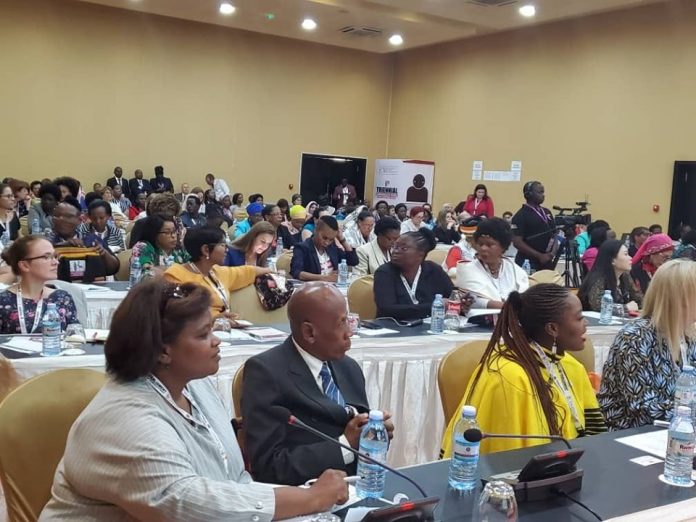
Schools find new exciting ways to make sure children learn

State Minister for Education Rosemary Sseninde


In districts with historically low learning outcomes, a Twaweza study has identified schools that are performing well despite having no extra access to resources or other privileges. These schools stand out as strong performers in difficult contexts. The schools and their strategies were identified through a rigorous research process called positive deviance.

These findings were released by Twaweza in a research brief titled, ‘How are some children learning when most are not? Positive deviance in Uganda’s primary schools’. The brief is based on a qualitative investigation of 17 schools in 10 selected districts. These observations were collected during one week per school in the second half of 2017 and early 2018. The resulting findings were validated in community sessions involving the study schools and others in the area.

The inquiry unearthed six critical school and teacher driven strategies to promote learning:

 Promoting community involvement in schools

Ensuring the wider community and parents are engaged in what is going on at school can help children to learn better by inspiring community members to take action directly to enhance learning as well as providing a supportive environment for the school. Schools can encourage the community to get involved through outreach activities and showing thy understand parents’ circumstances.

For example, in one school, storage boxes were introduced for P1 and P2 children to safely keep their scholastic items at school thereby reducing the financial burden on parents by preventing repeated loss and other damage.

Encouraging a culture of effort, openness and achievement in schools

All school actors have to focus on achievement, ensuring children learn. Teachers and learners are encouraged to exert effort, the head teacher and the management committee are transparent in managing school resources, the head teacher leads by example and everyone’s actions are driven by the desire to create a friendly environment that positively nurtures learning for all children.

For example, all head teachers in these successful schools taught classes, generally the candidate classes, even though they have many other school responsibilities. This leading by example encouraged greater effort from teachers as well.

Ensuring children achieve mastery in schools

In these schools that perform well, there is a strong effort placed on ensuring children really understand what they are being taught. The schools have introduced practices with this in mind and this increased effort and energy in turn inspires more creativity and hard work.

For example, in many of the schools studied, subject teachers move grades with their cohort of students. This means that teachers understand their pupils better, can support them more effectively and that they cannot blame anyone else for skills gaps.

Teacher support and motivation in schools

All key players in these school communities appreciate the need for teachers to be supported and motivated to perform. Most schools in the study offer teachers public praise or certificates as a way of recognising and rewarding achievement. The schools also had peer-led professional development sessions to enable teachers to learn from their more experienced peers.

For example in one school, the head teacher has performance contracts with all of the teachers to show what they need to achieve. And at the end of the year, the head teacher has a celebration for the teachers whose pupils perform well in the exams.

Engaging school bodies

Although every school in Uganda has a School Management Committee and a Parent Teacher Association, these can be inactive. These bodies can provide important support to the head teacher for the day to day running of the school and can ensure strong links between school and community. For example, in some of the schools, these bodies play a direct role in assessing the performance of teachers.

Teachers caring for and prioritising learner needs

At the subject level, there is lots of potential for creative strategies to promote learning. The effort and creativity of individual teachers can go a long way in helping children to learn. For example, in one school, the English teacher asks children to talk about the stories of films they have watched and encourages them to participate in debates in order to master the language.

Julius Atuhura, Regional Research Coordinator on What Works in Education at Twaweza, said “The schools in this study are beacons of hope for all of us interested in education. Against all odds, and with no additional resources or special circumstances, these 17 schools are making a real positive difference to children’s learning. Through the actions of committed individuals, children are learning more and better. Let us use the types of strategies unearthed by this research to amplify the voices and experiences of teachers, to influence policy and support more and more children to learn.”

Dr. Jane Egau, Commissioner, Teacher Instructor Education and Training (TIET) department, Ministry of Education and Sports (MoES) on behalf of the minister of state for Primary Education, Rosemary Seninde appreciated the findings of the report.

He quoted part of Minister Seninde’s speech as: “As policy makers, we are keen on solutions that are implementable therefore understanding in very precise terms about; which strategy or practice costs lowest … in delivering better learning in schools so that as government we encourage such strategy being promoted for adoption as we work to plan to implement the other strategies. Answering these questions is helps us to bridge the gap between research, policy and practice.”

Commenting Twaweza’s efforts the minister further said in a speech read for her that: “It is such efforts and readiness to seek workable solutions that advance the spirit of collaboration and partnership. I encourage all stakeholders to emulate initiatives that not only highlight problems or challenges, but also are a part of problem solving.”

Commenting on the findings of the report, Filbert Baguma, the General Secretary of Uganda National Teachers Union (UNATU) urged stakeholders in the education sector to be practical in delivering service.

“We know what has been going wrong but we need to move from lamentations to actions,” said Baguma.

Other officials at the launch of the report findings called for the recognition of teachers who perform better in their work.

“Our teachers need to be recognized for their work. We encourage the DEOs to write letters of appraisal to best performing teachers, as well as supporting their work. This works as motivation to them,” said, Moses Wambi, the Deputy Principal, Bishop Willis Core PTC.

“We need to create mentorship programs for teachers to help them lead schools better, ” added Dr. C.T. Mukasa Lusambu, the Commissioner Basic Education, MoES.

While Paul  Kiirya  Bidhampola, Head Teacher, Bigunho Primary School  said that the role of the school management committees and Parents Teachers Associations is to mobilise communities to support school activities.


Stories Continues after ad

Kenya welcomes Ugandan bird with water salute

Water Salute Kenya Airports welcome Uganda Airlines inaugural flight to JKIA.


Jomo Kenyatta International Airport officials have this afternoon treated Uganda Airlines aircraft to a water salute.

This was upon landing, a few minutes into 12 noon on a maiden flight from Entebbe International Airport.

The flight had on board top government officials and journalists.

Commercial flights start officially August 28, 2019.

Tuesday’s maiden flight to Nairobi was flagged off by the Prime Minister, Dr. Ruhakana Rugunda who said the country plans to play a critical role in the geopolitical and economic stability of East Africa as a region.

“Today, we stand here as witnesses to this historic moment were our national airline takes to the skies. I am glad some of us have had the honor to be associated with this great day. The country will always remember it. As a nation, we are strategically placed and with our airline, our neighbors will easily access our market and connect to their destinations,” he said before the plane took off to the skies from Entebbe International Airport.

“As we launch commercial flights, two of the four Bombardier aircraft were successfully delivered and approved to fly. The other two will be delivered next month as scheduled. The airbuses will be delivered later in 2020,” he said.

Uganda Airlines effective from tomorrow will make commercial flights to Nairobi, Juba twice daily, Mogadishu three times daily, Dar-es-Salaam and Kilimanjaro once a day, Bujumbura and Mombasa thrice a week.

The company will begin with two months promotional fares of Nairobi Return USD 278, Juba Return USD 225, Mogadishu Return US$ 590, Dar Return USD 286, Bujumbura Return USD 292, Mombasa Return USD 325, Kilimanjaro Return USD 311 inclusive of taxes.

In April, government received the first two of the four Bombardier CRJ900 regional Aircrafts that were ordered by Uganda National Airlines Company in July 2018.

The third jet will be delivered this month and the fourth plane is expected in September 2019. The commercialization of the airline will start on 28 august to various destinations in Kenya, Burundi, Democratic Republic of Congo (DRC), Ghana, Nigeria, Rwanda, Somalia, South Africa, Sudan, Tanzania, Zambia, Zimbabwe and Zanzibar.

Established in May 1976, Uganda Airlines, started operations in 1977 and was liquidated in May 2001 after efforts to privatize the company failed due to massive debts it had incurred.


ReplyForward
Stories Continues after ad

Sheik Amil Kinene walks free from illegal incarceration, Court acquitted him in 2017

Sheik Amil Kinene


The Court of Appeal has released, Sheik Amil Kinene, from illegal detention in Luzira upper prison, a place where he has spent two years on non-existent charges.

In 2017, the International Crimes Division of the High Court in Kampala, acquitted Sheik Amir Kinene, his brother Hakim Kinene Muswaswa, Abdulhamid Mubiru Sematimba, Hamza Kasirye, Twaha Ssekitto, Rashid Jjingo, Musa Issa Mubiru and George William Iga of charges related to the gruesome killing of Muslim clerics and terrorism.

The Tabliq sheikh was however not released upon acquittal as others gained their freedom. He has been held on fresh charges of aiding and abetting terrorism a charge that was consolidated into the terrorism of which he was acquitted in 2017. Court establishes that charges over which he’s been held are non-existent.

Yesterday court of Appeal judges led by Deputy Chief Justice, Alphonse Owiny-Dollo, Cheborion Barishaki and Elizabeth Musoke were surprised to hear the a person who was acquitted is still under detention.

They ordered directorate of public prosecution (DPP) and the officer in charge of Luzira upper prison to appear before court and explain why Amir Kinene is still incarcerated.

“Court acquits someone but you are still detaining him. The judgement was clear, why would you detain him,” the deputy chief justice asked


Stories Continues after ad

FUFA Super Cup: KCCA take on Proline in UPL curtain raiser

KCCA super cup

With only two days to the start of the 2019/20 StarTimes Uganda Premier League season, KCCA FC and Proline FC will battle for the 2019 FUFA Uganda Super Cup tomorrow.

The Uganda Super Cup is a match played before a new season, between the Uganda Premier League champions and Stanbic Uganda Cup champions of the previous season.

KCCA won the Uganda Premier League last season while Proline won the Stanbic Uganda Cup, beating Bright Stars 5-4 in penalty shootouts after a one-all draw in normal time.

KCCA are the Super Cup holders, having beaten Vipers 4-2 in penalties last year following a goalless draw. Goalkeeper Charles Lukwago was the hero of the day saving two spot kicks.

Earlier this week, KCCA lost the Pilsner Super 8 cup to Vipers in Wankulukuku and will be eager to get their hands on this trophy and add it to their cabinet before the season officially gets underway.

Proline are seeking to win the Super Cup for the first time ever while KCCA to win it for the third consecutive time.

The match acts as season curtain raiser for the upcoming 2019/20 Uganda Premier League campaign that gets underway on Thursday 29, 2019 with Kyetume hosting SC Villa at Namboole in a night game.

The Super Cup match will be played at StarTimes Stadium in Lugogo at 4pm.

Wednesday 28, August 2019

FUFA SUPER CUP

KCCA FC vs. Proline FC

StarTimes Stadium, Lugogo (4:00 pm)

Stories Continues after ad

World Bank, partners donate US$ 50m to WHO for fight against Ebola in DRC

BUTEMBO, CONGO - JULY 27: A healthcare member inoculates a man for Ebola suspicion to take precautions against the disease in Butembo, Democratic Republic of the Congo on July 27, 2019. (Photo by JC Wenga/Anadolu Agency via Getty Images)


The World Bank and the World Health Organization (WHO), along with the Congolese government and other key partners, are working in close partnership on the Ebola Crisis Response in the Democratic Republic of the Congo (DRC).

Central to this partnership is the assessment of the financing needs, and deployment of resources, with the goal to put an end to the current deadly outbreak. That is why World Bank alongside partners, has today announced US$50 million in funding to be released to WHO for its lifesaving operational work on the frontlines of the outbreak.

According to WHO the funding will close the financing gap for its emergency health response in DRC through to the end of September 2019, and is calling on other partners to mirror the generous support from World Bank in order to fund the response through to December.

The funding comprises US$30 million from the Pandemic Emergency Financing Facility (PEF) and US$20 million from the World Bank. The US$50 million in grant funding is part of the larger financial package of approximately US$300 million that the World Bank announced last month to support the fourth Strategic Response Plan for the DRC Ebola outbreak.

“WHO is very grateful for the World Bank’s support, which fills a critical gap in our immediate needs for Ebola response efforts in DRC, and will enable the heroic workers on the frontlines of this fight to continue their lifesaving work,” said Dr. Tedros Adhanom Ghebreyesus, Director-General, World Health Organization. “We keenly await further funding from other partners to sustain the response through to the end of the year.”

The DRC government, working in collaboration with the World Bank, WHO, and other key partners, has finalized the Fourth Strategic Response Plan (SRP4), which outlines the total resources needed for the DRC Ebola Crisis Response from July to December 2019. The financing announced today is part of the World Bank’s previously announced financial package of up to US$300 million and covers over half of SRP4’s needs, with the remainder requiring additional funding from other donors and partners.

“The World Bank is working closely with WHO, the Government of DRC, and all partners to do everything we can to put an end to the latest Ebola outbreak,” said Annette Dixon, Vice President, Human Development at the World Bank. “The partnership between our organizations and the Government is critical for responding to the emergency as well as rebuilding systems for delivery of basic services and to restoring the trust of communities.”

The Government of DRC requested US$30 million from the PEF Cash Window to be paid directly to WHO. The PEF Steering Body approved the request bringing the PEF’s total contribution to fighting Ebola in DRC to US$61.4 million. The PEF is a financing mechanism housed at the World Bank; its Steering Body is co-chaired by the World Bank and WHO, and comprises donor country members from Japan, Germany and Australia. The quick and flexible financing it provides saves lives, by enabling governments and international responders to concentrate on fighting Ebola—not fundraising.


Stories Continues after ad

Relief as Uganda Airlines makes maiden flight to Jomo Kenyatta international airport

President Museveni and his wife Janet Museveni after having feel of new Uganda Airlines airplane


Uganda Airlines has made its maiden flight to Jomo Kenyatta international airport (JKIA) in Nairobi, Kenya, a month after being granted Air Operator Certificate (AOC) from Uganda civil aviation authority (UCAA).

The maiden flight was flagged off by the Prime Minister, Dr. Ruhakana Rugunda who said the country plans to play a critical role in the geopolitical and economic stability of East Africa as a region.

“Today, we stand here as witnesses to this historic moment were our national airline takes to the skies. I am glad some of us have had the honor to be associated with this great day. The country will always remember it. As a nation, we are strategically placed and with our airline, our neighbors will easily access our market and connect to their destinations,” he said before the plane took off to the skies from Entebbe International Airport.

“As we launch commercial flights, two of the four Bombardier aircraft were successfully delivered and approved to fly. The other two will be delivered next month as scheduled. The airbuses will be delivered later in 2020,” he said.

Uganda Airlines effective from tomorrow will make commercial flights to Nairobi, Juba twice daily, Mogadishu three times daily, Dar-es-Salaam and Kilimanjaro once a day, Bujumbura and Mombasa thrice a week.

The company will begin with two months promotional fares of Nairobi Return US$ 278, Juba Return US$ 225, Mogadishu Return US$ 590, Dar Return US$ 286, Bujumbura Return US$ 292, Mombasa Return US$ 325, Kilimanjaro Return USD 311 inclusive of taxes. But the passengers can pay in Ugandan currency as well.

In April, government received the first two of the four Bombardier CRJ900 regional Aircrafts that were ordered by Uganda National Airlines Company in July 2018.

The third jet will be delivered this month and the fourth plane is expected in September 2019. The commercialization of the airline will start on 28 august to various destinations in Kenya, Burundi, Democratic Republic of Congo), Ghana, Nigeria, Rwanda, Somalia, South Africa, Sudan, Tanzania, Zambia, Zimbabwe and Zanzibar.

Established in May 1976, Uganda Airlines, started operations in 1977 and was liquidated in May 2001 after efforts to privatize the company failed due to massive debts it had incurred.

Its revival now means Uganda Airlines will have to compete with Africa’s best such as South Africa Airways, Ethiopian Airways, Kenya Airways, RwandAir and others on the continent, not forgetting International ones such as Emirates Airways, Qatar Airways and Turkish Airways among others that land at Entebbe International Airport.


Stories Continues after ad

Brazil rejects aid from G7 countries to fight wildfires in Amazon

Amazon-fire


Brazil on Monday rejected aid from G7 countries to fight wildfires in the Amazon, with a top official telling French President Emmanuel Macron to take care of “his home and his colonies.”

Nearly 80,000 forest fires have broken out in Brazil since the beginning of the year — just over half of them in the massive Amazon basin that regulates part of Earth’s carbon cycle and climate.

G7 countries made the $20 million aid offer to fight the blazes at the Biarritz summit hosted by Macron, who insisted they should be discussed as a top priority.

“We appreciate (the offer), but maybe those resources are more relevant to reforest Europe,” Onyx Lorenzoni, chief of staff to President Jair Bolsonaro, told the G1 news website.

“Macron cannot even avoid a foreseeable fire in a church that is a world heritage site,” he added, referring to the fire in April that devastated the Notre-Dame cathedral. “What does he intend to teach our country?”

The presidency later confirmed the comments to AFP.

Brazilian environment Minister Ricardo Salles had earlier told reporters they had welcomed the G7 funding to fight the fires that have swept across 950,000 hectares (2.3 million acres) and prompted the deployment of the army.

But after a meeting between Bolsonaro and his ministers, the Brazilian government changed course.

“Brazil is a democratic, free nation that never had colonialist and imperialist practices, as perhaps is the objective of the Frenchman Macron,” Lorenzoni said.

Although about 60 percent of the Amazon is in Brazil, the vast forest also spreads over parts of eight other countries or territories, including the French overseas territory of Guiana on the continent’s northeast coast.

Hundreds of new fires have flared up in the Brazilian part of the forest, data showed Monday, even as military aircraft dumped water over hard-hit areas.

Smoke choked Porto Velho city and forced the closure of the airport for nearly two hours as fires raged in the northwestern state of Rondonia where firefighting efforts are concentrated.

Bolsonaro — a climate-change skeptic — has faced criticism over his delayed response to the fires at home and thousands have taken to the streets in Brazil in recent days to denounce the destruction.

The blazes have also fueled a diplomatic spat between Bolsonaro and Macron, who have locked horns repeatedly over the past week.

The French president has threatened to block a huge new trade deal between the European Union and Latin America unless his Brazilian counterpart takes serious steps to protect the fast-shrinking forest from logging and mining.

Bolsonaro reacted by blasting Macron for having a “colonialist mentality,” and days later endorsed vicious personal comments about the French president’s wife posted online, driving their relationship to a new low.

In another sign of tension, Bolsonaro skipped a meeting last month with visiting French Foreign Minister Jean-Yves Le Drian, saying that he had instead gone to the hairdresser.


Stories Continues after ad

Monitoring global financial stability

Global financial crisis image
 

By Tobias Adrian, Dong He, Nellie Liang, and Fabio Natalucci


“It’s awful. Why did nobody see it coming?” asked Queen Elizabeth II in November 2008 during a visit to the London School of Economics, wondering why nobody had predicted the Global Financial Crisis. The bewilderment wasn’t unique to the British monarchy; across the world, many asked the same question.

Ten years on, it remains difficult to forecast financial instability. However, progress is afoot to improve the understanding of important links between the financial sector and the economy. We now understand better how financial vulnerabilities can amplify negative shocks and hurt output and employment.

Twice a year, the IMF comes out with its latest analysis of global financial stability risks in the Global Financial Stability Report, where it continues to initiate improvements in a framework for financial stability monitoring.

The current approach, described in a new IMF paper, involves a systematic assessment of financial vulnerabilities for financial firms and markets, and business, household and government borrowers, and a summary financial stability risk measure in terms of forecast GDP growth depending on financial conditions. The two-part approach enhances transparency and provides a path to better communication among financial regulators and central banks, and ultimately policymaking.

We now understand better how financial vulnerabilities can amplify negative shocks and hurt output and employment.

How it works

In the framework, cyclical financial stability risks go up as lenders and borrowers increase risk-taking in response to loose financial conditions. Greater collective risk-taking leads to a buildup of financial vulnerabilities, such as high borrowing or maturity mismatch of financial firms. Vulnerabilities will amplify shocks and lead to tighter financial conditions and reduce economic growth. This process is mutually reinforcing as vulnerable financial firms are forced to reduce their debt when asset prices fall, leading to further declines in asset prices and economic growth.

The first part of the current approach involves a “bottom-up” monitoring matrix of indicators, defined by types of vulnerabilities across types of lenders and borrowers in the financial system. Financial vulnerabilities include inflated asset valuations; greater leverage and funding mismatches of banks and other financial firms; and greater indebtedness among nonfinancial borrowers, including households, businesses, and governments.

The chart below shows this matrix in a graphic form, including snapshots of the degree of vulnerabilities for lenders and borrowers at different points in time. It illustrates the high vulnerabilities of banks and nonbank financial firms globally and the high indebtedness of households in many countries at the time of the crisis, and the substantially stronger positions now. Over time, this matrix may evolve as the monitoring framework should adapt to capture vulnerabilities that may emerge in new forms.


The second part of the approach is a “top-down” summary measure of financial stability risk—“Growth at Risk” or GaR—measured by downside risks to projected GDP growth depending on financial conditions. The key innovation of GaR is that the entire distribution of forecast GDP growth is linked to financial conditions, which capture the underlying price of risk in the economy.

In other words: When forecasting GDP growth, think in terms of probabilities. It is important to consider not only expected growth but risks to expected growth.

The chart below shows how the probability distribution of forecast global GDP growth shifts in reaction to financial conditions at three different points in time. Global financial conditions for the two quarters before the April 2019 GFSR were tighter than in 2018:Q3 and, as a result, the downside risks to forecast year-ahead GDP growth increased somewhat.


Stories Continues after ad

You will vomit my bank-Sudhir to BoU

Chairman of Ruparelia group of companies Sudhir Ruparelia and his son who is the Managing Director of Crane Management Services, Rajiv Ruparelia take questions from the press at Commercial Court.

City businessman Sudhir Repaleria, has vowed to file a suit against central bank calling for accountability for assets and amount of money that Crane bank had before it was put under receivership.

Sudhir said on Monday after the head of Commercial Court, Justice David Wangutusi, dismissed a multi- million case filed against him. BoU/Crane bank under receivership accused the property mogul of fleecing Crane Bank Limited of Shs397 billion.

Below is the interview

The Auditor General cannot account for Shs290 billion, somebody just stole in the name of Crane Bank, I don’t think there is something new, everybody knows the Cosase came up with exposure, really I want to thank all the lawyers who have participated, really did the tremendous job and they are straight forward lawyers unlike conflicted lawyers like Lule who have connived with these people and the rest is history. I am not going into details.

My lawyers have done a tremendous job, Bruce, I think this is historical; nobody else in the past has been able to take on the central bank. They have stolen several banks but they didn’t account to the stakeholders.

This is unfortunate scenario that you take somebody’s  assets, steal it, and profit from it and you don’t account for it and then sue me for US $100 million, the money they have stolen. This is ridiculous.

What is the next step of action after this achievement?

We are now going to put a counter case. You know Cosase found a lot of things, they didn’t account for the cash in the bank, they did value our property, and the money was just stolen.

That is my ground father, the old man of the clan (Andrew Mwenda) come; I think you know the details of this case than anybody else.

Mwenda: I as the old man of the Reparelia clan I feel extremely very happy, even the first year student of law would have seen this coming  because. What the central did with Crane Bank is unacceptable. Public must never accept public institutions to abuse power the way BoU did with Crane Bank.

They (Bank of Uganda) literally closed a healthy bank; they didn’t even sell its assets, but gave it free of charge to Dfcu bank. Not only that, they even lend Dfcu Money on interest free to buy Crane bank. I have never seen something like that.

Are you aware that BoU gave Dfcu Money to buy Crane bank and then paid interest on the money they gave Dfcu.

Sudhir: They (BoU) and lawyers connived and transferred bad book to Dfcu and they are the same lawyers who went to Dfcu and start collecting money from the bad book.

Andrew, are you surprised that BoU owns shares in Dfcu bank

The story of Crane Bank is so interesting.

Why court awarded Sudhir costs in Shs397b case against Bank of Uganda

On Monday Justice David Wangutusi as expected delivered his ruling in the case where Kampala businessman Sudhir Ruparelia had challenged the decision by the Bank of Uganda/Crane Bank In Receivership to sue him and Meera Investments Limited, seeking recovery of Shs397 billion allegedly fleeced from Crane Bank Limited by the latter two entities.

But in the counter suit Sudhir dismissed the case and argued that Crane Bank in Receivership had no powers to sue since it is not provided for in the law.

Justice Wangutusi agreed with Sudhir and his lawyers, awarding costs of the suit to Sudhir and Meera Investments. But that means it is the Ugandan taxpayer that is to bear the costs since BoU that first dragged Sudhir to court is a public entity that depends on government’s money purse.

In his ruling, Justice Wangutusi said that; As for costs, it is well established that unless sufficient reason is given to prevent the award of costs, the costs of any action/cause or other matter or issue shall follow the event unless Court shall for good reason order otherwise; He quoted Section 27 of the Civil Procedure Act Cap 71; Dauda vs Ahmed & Ors (1987) KLR 665.

“The issue of costs in this case raises a little difficultly. Having found herein above that the liability and assets of Crane Bank had passed over to Dfcu bank the question that arises is who is going to pay the costs.

Under such circumstances the party to bear the costs must be the one who brought the matter to court. At the time of filing the suit Bank of Uganda had taken over management. Counsel for the Plaintiff/ Respondent submitted that the proceedings were not commenced by the Bank of Uganda but by Crane Bank Limited in Liquidation,” he observed.

A perusal of the affidavit in reply to the Application throws light on who brought the suit to Court, he said, adding that the affidavit is deponed by Margaret K. Kasule who describes herself and occupation in paragraph 1 thus;

“I am an adult female Uganda of sound mind and the Legal Counsel of Bank of Uganda which is the statutory receiver of Crane Bank Ltd in Receivership and I swear this affidavit in that capacity.”

From the foregoing, the judge said, there was no doubt that the suit was filed by Bank of Uganda. Since section 96 of the Financial Institutions Act insulated Crane bank under Receivership from court proceedings, execution or other legal processes the person that should pay costs should be the person who instituted the suit and that is Bank of Uganda. This is so because Crane Bank in Receivership had no capacity to foot the costs and much so the Bank of Uganda that instituted the suit was aware of this incapacity.

He quoted a case of Kyaninga Royal Cottages Ltd vs Kyaninga Lodge Limited HCMA No. 551 of 2018 where court while considering a situation of a nonexistent company had this to say;

“In my view it is the Managing Director of the nonexistent company who instructed the advocates to file the suit. He must have been the one who paid the court fees. He was in my view the person who was behind the Plaint. It is he therefore who should pay the costs.”

In the instant case, he said, the deponent of the affidavit in reply has put it on oath that Bank of Uganda instructed the advocates. It must have been the one that paid the court fees and it was certainly the one behind the plaint. The Bank of Uganda should therefore be the one to pay the costs.

In conclusion, he said, the Plaintiff/ Respondent did not have jurisdiction to file HCCS No. 493 of 2017. It is also my finding that the property the Plaintiff/ Respondent was seeking when she filed the suit on 30th June 2017 had earlier been given away by the Receiver to Dfcu bank on the 24th of January 2017 four days into Receivership and five months before the filing of this suit thus leaving the Plaintiff/ Respondent with no property.

Furthermore, it’s my finding that the orders sought against the 2nd Applicant are barred in law rendering the Plaintiff/ Respondent with no cause of action against the 2nd Applicant.

For those reasons this application succeeds and the suit is dismissed. The Respondent shall bear the costs of the application and the suit, he said.


Stories Continues after ad

Why Justice Wangutusi agreed with Sudhir in Shs397 case against Bank of Uganda: Details in full ruling

Justice David Wangutusi
 

Justice David Wangutusi on Monday morning dismissed a case which Bank of Uganda (BoU)/ Crane Bank in Receivership filed against city tycoon Sudhir Ruparelia, accusing him and his Meera Investments Limited of allegedly fleecing Shs397Bn from Crane Bank before it was closed and sold it to Dfcu Bank in January 2017.

However, Sudhir dismissed BoU’s allegations and counter sued them, further stating that Crane Bank in Receivership had no obligation to sue him as it violates the law. Justice Wangutusi agreed with Sudhir and dismissed the case, ruling that (Crane Bank In Receivership) had no capacity to sue Sudhir and any other entity.

Below is Justice Wangutusi’s ruling verbatim;


THE REPUBLIC OF UGANDA

IN THE HIGH COURT OF UGANDA AT KAMPALA

(COMMERCIAL DIVISION)


MISCELLANEOUS APPLICATION NO. 320 OF 2019

(ARISING FROM CIVIL SUIT NO. 0493 OF 2017)


SUDHIR RUPARELIA

MEERA INVESTMENTS::::::::::::::::::::::::::::::::::::::::::::::::::APPLICANTS

VERSUS

CRANE BANK LIMITED [IN RECEIVERSHIP]::::::::::::::::RESPONDENTS


BEFORE: THE HON.  JUSTICE DAVID WANGUTUSI

R U L I N G:

The Applicants Sudhir Ruparelia and Meera Investments filed this Application against Crane Bank Limited (In Receivership) seeking orders that;

The Respondent has no locus standi to commence actions against the Applicants under Civil Suit No. 493 of 2017;

The Plaint in Civil Suit No. 493 of 2017 does not disclose a cause of action against the Applicant;

The orders sought  against the 2nd Applicant in Civil Suit No. 493 of 2017 are barred in law;

Civil Suit No. 493 of 2017 be dismissed with costs and;

Costs of the Application be provided for.

The background to these claims as discerned from the pleadings is that the 1st Applicant founded the Respondent in 1995 and was a Director and the Vice Chairman of the Board of Directors since its foundation. On 20th October 2016 the Bank of Uganda took over management of the Respondent in accordance with  sections 87(3) and 88(1) (a) and (b) of the Financial Institutions Act 2004. On 20th January 2017 Bank of Uganda placed the Respondent under Receivership according to section 94 of the Financial Institutions Act.

On 30th June 2017 the Respondent filed Civil Suit No. 493 of 2017 against the Applicants alleging that 1st Applicant participated in illegal shareholding in the Respondent bank. She contended that at the time of Bank of Uganda’s intervention, the 1st Applicant beneficially owned and controlled 100% of the Respondent’s issued shares which contravened sections 18 and until October 2016 contravened section 24 of the Financial Institutions Act.

The Respondent also alleges that the 1st Applicant is the beneficial owner of and controls a further 47.33% of the Respondent’s issued shares (99,398,250 shares) registered in the name of White Sapphire Limited a company nominally owned by Rasikal Chhotalal Kantaria herein called “Kantaria.” Furthermore, that the 1st Applicant is the beneficial owner of a further 4% of the Plaintiff’s issued shares (8,400,000 shares) registered in the name of Jitendra Sanghai herein called “Sanghai.”

It is the Respondent’s contention that the 1st Applicant also owns and controls a further 19.83% of the Respondent’s issued shares (41,648,294 shares) registered in the names of his immediate family namely; his wife and three adult children. That White Sapphire limited together with its nominal owner “Kantaria” and “Sanghani”  as well as the 1st Applicant’s family members  have at all times acted in the affairs of the Respondent as the 1st Applicant’s nominees. As a result, the 1st Applicant fraudulently concealed his beneficial ownership of the Respondent by using “Kantaria” and White Sapphire Limited. Furthermore, that Kantaria’s dividends and Sanghani’s dividends had actually been paid to the 1st Applicant.

According to the Respondent the 1st Applicant wrongfully extracted a sum of USD 92,830,172.00 from the Respondent; internal accounts which were not mapped onto her profit and loss statement or balance sheet. That this system of management therefore enabled the extraction of US$ 80,000,000 from the Respondent purportedly for the payment of persons, companies and entities for the 1st Applicant’s benefit.

The Respondent also alleges that a sum of US$ 9.27 million was extracted through Technology Associates who had not supplied any services or supplies nor executed a valid contract with the Respondent. The Respondent further contends that fraudulent cash transactions were made through Infinity Investments Limited a company owned and controlled by the 1st Applicant. That in March 2017 after the Respondent had been placed in Receivership, National Social Security Fund carried out a compliance audit for the period January 2007 to December 2016 and established that the Respondent owed UGX. 52,083,953,995.00/= being arrears of standard contributions, special contributions, interest and penalty accruing for the period audited.

Because the 1st Applicant failed to comply with his fiduciary duty to the Respondent, the transactions of the Respondent was tainted with illegalities and fraud. She therefore filed the head suit against the Applicants seeking payment of US$ 80,000,000, US$ 9,270,172.00, US $ 3,560,000.00, US $ 990,000.00, UGX. 52,083,953,995.00 as compensation for breach of fiduciary duty. She also seeks orders for an account of the Respondent as constructive trustee of money received in knowledge of breach of trust, an account for the money extracted from the Respondent and all transactions in respect of those extractions.

On the part of the 2nd Applicant, the Respondent alleges that being an associate of the 1st Applicant and part of a network of companies owned and controlled by the 1st Applicant known as “Ruparelia Group”, the 2nd Applicant dishonestly appropriated the Respondent’s valuable freehold and mailo land at no consideration. For this reason, the Respondent seeks a delivery up of the freehold certificates of title to 48 properties comprising the Respondent’s countrywide branch network as well as duly executed transfer deeds in respect of each of them. The Respondent also seeks payment of USD 990,000.00 from the 2nd Applicant, interest on the money claimed, general damages and costs of the suit from both Applicants.

At the hearing of this Application, Counsel for the Applicants submitted that the suit should be struck out because the Respondent   has no locus to bring this suit. He submitted that the Financial Institutions Act provides ways in which the Bank of Uganda may take over and resolve the financial institution that is in distress. He cited section 89 of the Financial Institutions Act, contending that from 20th October 2016 to 20th October 2017 the Respondent could institute a suit under sections 89(1),(2) (e) and (9) of the Act, however from the 20th of January 2017 when the Respondent was placed under Receivership, the power to sue was lost.

According to the Applicants the Financial Institutions Act creates the right to sue under statutory management and liquidation. That receivership is only for a limited period, a limited mandate or extent of twelve months and the statute does not create any rights for a Receiver to sue.

In reply Counsel for the Respondent submitted that the suit is commenced by Crane Bank in Liquidation. That liquidation does not take away its corporate personality. Furthermore, that it is a corporate body capable of suing and being sued. That because receivership is a management situation, there is no legal change as to capacity of a company to sue or be sued. He stated;

“In this case, this suit is intended to fill up the coffers in receivership so that the creditors may be paid. They refer to the right to sue being vested in the Board of Directors. The right to sue is not vested in the Board of Directors; it is vested in the Company. It is only who may take action if a company in Receivership is going to sue that should be addressed. In this case, it is a Receiver who may do so because the board has been suspended.

The right to sue again vested in the Statutory Manager or Liquidator are not the same as those vested in the company itself which are given under the Companies Act by its corporate status.”

While the Respondent conceded that any matters concerning financial institutions are governed by the Financial Institutions Act in accordance with section 133 of the Act and that the it takes precedence over any enactment and in case of conflict, the same would prevail, he contended that the Financial Institutions Act did not exclude the corporate personality of the Respondent conferred by the Companies Act.

The Respondent further contended that section 96 of the Financial Institutions Act bars proceedings, execution proceedings or other legal proceedings from being commenced against a financial institution placed under receivership but does not prohibit the Respondent from commencing legal action. That if the law was to prevent the Respondent from suing, it would have specifically stated so.

Locus standi implies the legal capacity of a person which enables him or her to invoke the jurisdiction of the court in order to be granted a remedy; Fakrudin Vallibhai Kapasi, Fazlehusein Kapasi vs Kampala District Land Board and Alliance Holdings Ltd Civil Suit No. 570 of 2015.

On  20th January 2017 Bank of Uganda must have concluded that Crane Bank Limited would not be able to meet the demands of its depositors or pay its obligations in the normal course of business, or that it had incurred or was likely to incur further losses that would deplete all or most of its capital. It also found that Crane Bank was undercapitalized. For those reasons, Bank of Uganda proceeded to place her under Receivership under section 94(1) and (2) of the Financial Institutions Act.

What relationship did Bank of Uganda action bring forth? Section 94(3) of the Financial Institutions Act provides;

“If a financial institution is placed under receivership, the Central Bank shall become the receiver of the closed financial institution.”

The foregoing means that when Bank of Uganda placed Crane Bank under receivership, it became the receiver.  It means that Bank of Uganda would, if it thought that a merger of Crane Bank with another financial institution would be the best option to marshal the greater amount of Crane Bank estates, or protect depositors’ interests, minimize losses and ensure stability of the financial sector, would proceed to arrange such merger.

On the other hand, as a Receiver, it was now in a position to arrange for the purchase of assets and assumption of liabilities by other financial institutions. It could in the alternative arrange its sell or liquidate its assets.  As provided under section 95 of the Financial Institutions Act, it had   twelve months within which it could perform the functions I have referred to above.

It is important to add, that on being placed under receivership, Crane Bank achieved insulation against legal proceedings. Section 96 of the Financial Institutions Act provides;

“96. Where a financial institution is placed under receivership-

no steps may be taken by any person to enforce any security over the property of the financial institution;

no other proceedings and no execution or other legal process may be commenced or continued against the financial institution or its property.”


The foregoing clearly prohibited any person to sue the Respondent. This was conceded to by both parties. The Respondent’s advocate submitted that while the Respondent could not be sued, she had the right to sue under her corporate status since section 133 of the Financial Institutions Act did not exclude the corporate status of the Respondent. The section provides;

“For the purposes of any matter concerning financial institutions, this Act shall take precedence over any enactment and in the case of conflict, this Act shall prevail.”

The Act in this case provided for instances where Central Bank could go to court. It is therefore within the Financial Institutions Act that the solution to the question whether a Receiver of a financial institution can sue, is to be found.

The Financial Institutions Act gives three instances when parties in management of a financial institution can go to court. The first instance is under section 89(2)(e) where the Central Bank can “ initiate, defend and conduct in its name any action or proceedings to which the financial institution may be a party. This right arises at the stage of statutory management.

The second instance where court can be sought for redress is provided under section 91, where a person may with leave of Court or with the prior written consent of the Central bank commence to continue with any legal proceeding against a financial institution while it is under management of Central Bank.

This power to go to Court against the Receiver stops on the appointment of the Receiver as provided for in section 96 of the Financial Institutions Act which bars proceedings against financial institution under receivership.

The third instance is when the Financial Institution moves to liquidation stage. Section 100(1)(a) provides;

“The liquidator may, with the approval of the Central Bank –

bring or defend any action or other legal proceedings in the name and on behalf of the financial institution..”

These three instances clearly indicate that the framers of this Act were alive to the need of litigation. They provided for litigation during the statutory management stage and during liquidation. They skipped litigation during receivership.

The reasons for doing so are easy to find. One of them is the time span of receivership. The twelve months provided is too short to finish a case. A suit in Uganda begins with filing allowing 21-35 days to effect service of summons. Fourteen days may elapse before it is fixed for mediation. How long the parties are given before commencement of mediation varies from Mediator to Mediator. Suffice to say that a month may go by before the 1st mediation sitting takes place. The Judicature (Mediation) Rules 2013 provide in Rule 7 that mediation be concluded in sixty to seventy days.

If the matter does not settle, a month may go by for exchanging the Joint Scheduling memoranda, compiling and filing the Trial bundles, followed by witness statements, Hearing date may then be fixed for two to three months ahead. By the time hearing starts, six to nine months will have gone by. Receivership which runs for only twelve months will close on the parties before completion of the case. Imagine the costs that would further deplete the financial institution which the Receiver is instead trying to strengthen financially.

Secondly under Receivership, the role of the Receiver would be either to arrange a merger, with another financial institution, or arrange the purchase of assets and assumption of all or some of the liabilities by other financial institutions or arrange to sell the financial institution or liquidate the assets.

The foregoing would not normally require court in any case, for the Receiver to do it properly diversions of Court should be avoided.

These in my view were considerations that must have been taken into account by the framers of the Act. But having insulated the Respondent against suits they would not have enabled it to sue because suits expect responses and counterclaims. In my view where suits against the Respondent were not allowed, there would be no legal basis to allow her sue.

The Financial Institutions Act provided situations where redress could be sought through Court. In Part IX and XI of the Act which deals with Corrective actions and Liquidation leaving out Part X dealing with Receivership on purpose. Then in section 133 they advise those involved in financial institutions to give precedence to the Financial Institutions Act.

In my view if it had wanted the Receiver who had only 12 months on stage to sue, it would have expressly provided for it. It is not that the Act does not provide for instances of going to Court, having provided for others and left out the Receiver speak loud and clear of the intention of the legislature.

It is not upon Court now to imagine and say “the legislature forgot this we should insert it for them.”

It is then clear that when the Receiver filed this suit, it was not clothed with   authority. It had no power to do so and Court cannot impute an intention foreign to the legislature. This situation is well described in Smart Protus Magara and 138 Others vs Financial Intelligence Authority HCMA No. 215 of 2018 in these words;

“Court cannot legislate under the guise of interpretation against the will expressed in the enactment itself. It is not open to the Court to usurp the functions of the legislature. Nor is it open to the court to place unnatural interpretation on the language used by the legislature and impute to it an intention which cannot be inferred from the language used by it by basing itself on ideas derived from other laws.”

The end result is that once Crane Bank was put under Statutory Management, its Board of Directors was suspended. If there was to be any suit, it would be brought by the Central Bank as the Statutory manager under section 89(2)(e) or by the Liquidator with approval of the Central Bank under section 100(1)(a) of the Financial Institutions Act.

These two were empowered to initiate and defend court action by the Financial Institution Act which interestingly left out the Receiver. The Legislature did not want any court action against the Receiver. So Counsel’s submission that their right to sue was reserved by its company status cannot be sustained.

It follows that the Respondent under Receivership lacked locus standi. Without locus standi its attempt at filing a suit was null abi nitio.

In this I am buttressed by Gordon Sentiba & Others vs Inspectorate of Government SCCA No. 6 of 2008 in which the Supreme Court held that the authority to sue came from statute and where no provision to sue was provided for , the  courts would not  fill in the gaps by recognizing a nonexistent right.

In Commissioner General Uganda Revenue Authority vs Meera Investments Limited SCCA No. 22 of 2007 Justice Kanyeihamba JSC had this to say;

“In my view, he or she who is empowered to sue is also made liable by necessary implication to be sued.”

In the same case Justice Tsekooko JSC wrote;

“In these circumstances I cannot find any legal basis in support of the view that the Commissioner General who can sue and maintain a suit in his/her official name cannot be sued in the same name in any competent court.”

By this the Learned Justices meant that where the Respondent was insulated against suits, he could not sue.

That notwithstanding even if the Respondent could sue, by the 30th June 2017 when they filed the suit they were not in a position to do so. They had ceased to own property and their liabilities and assets had all been exhausted. That they were no more and had no locus standi to sue is discerned from a publication by the Governor Bank of Uganda which I find appropriate to reproduce here. Informing the people of Uganda and the world at large, the Governor wrote;

“NOTICE TO THE PUBLIC

DFCU BANK LIMITED TAKES OVER CRANE BANK LIMITED

It would be recalled that on the 20th October 2016, Bank of Uganda took over the management of Crane Bank Limited (“Crane Bank”) and issued a Notice to the Public setting out the reasons for the takeover.

Since then, Crane Bank has been conducting banking business but under the management and control of Bank of Uganda.

Subsequent to the takeover, Bank of Uganda as required by law, appointed an independent external auditor to take an inventory of the assets and liabilities of Crane Bank which exercise confirmed that Crane Bank‘s liabilities, as at the 20th October 2016, being the date of takeover, grossly exceeded its assets and that it was insolvent, which insolvency has continued to date.

Bank of Uganda, on the 24th January 2017, progressed Crane Bank from statutory management to Receivership with Bank of Uganda as Receiver. In exercise of its powers as Receiver, under section 95(1)(b) of the FIA, Bank of Uganda has now transferred the liabilities (including the deposits)of Crane Bank to DFCU Bank Limited (“DFCU Bank”) and in consideration of that transfer of liabilities has conveyed to DFCU Bank, Crane Bank assets.

All customers and depositors of Crane Bank shall now have their accounts operated by DFCU Bank through its wide branch network, which will now include some of which were formerly branches of Crane Bank Ltd.

Bank of Uganda  congratulates DFCU Bank upon this significant milestone that will certainly make the bank’s footprint wider.

Bank of Uganda reassures the public that it will continue to protect depositors’ interests and maintain the stability of the financial sector.”

This public notice made it clear that the Receiver had done an evaluation of the Respondent and arranged for the purchase of its assets and assumption of its liabilities by another financial institution. In his notice he specifically stated that the liabilities of the Respondent had been transferred to DFCU Bank Ltd and that because DFCU Bank had taken over the liabilities, it would by way of consideration be paid by conveying to it the Respondent’s assets.

In doing this the Central Bank had not only fulfilled section 95(1)(b) of the Financial Institutions Act but had in a way also sold the Respondent albeit that the payment was by in kind by way of exchange of liabilities for assets.

Interestingly, the Central Bank sold and did away with the Respondent on the 24th 2017 four days after it had been placed under Receivership. In my view after conveying all these assets to DFCU Bank together with the liabilities including deposits the Respondent was left high and dry with no proprietary interest in any of the assets that had originally belonged to it.

In my view, the Receivership was exhausted with that transfer and conveyance. The Respondent therefore had no locus standi to file any suit claiming any property because it had ceased to exist. Nonetheless, the Recivership would have in any case expired by now within 12 months from 24th January 2017.

The sum total is that the Respondent at the time it filed this suit was not in existence its lifetime having been terminated when it was surrendered to DFCU Bank whose consideration was the DFCU assumption of the Respondent’s liabilities which assumption was paid by conveying her assets to DFCU Bank.

As to whether there was a cause of action, the finding herein above resolves it. I say so because if it had no assets to claim, and more so if it was already nonexistent, having lost everything when the Receiver conveyed all her assets to DFCU, there was nothing to sue for.

In that regard therefore, there was no cause of action.

Having found so above, I would have left it at that but I find it necessary to make a finding on whether the orders sought against the 2nd Applicant in HCCS No. 493 of 2017 are barred by law. The relevant claim for consideration is found in paragraph 6.1 which reads as follows;

“Delivery up of the Freehold Certificates of Title to 48 properties comprising the Plaintiff’s countrywide branch network, together with duly executed transfer deeds in respect of each of them in favour of the Plaintiff, or its nominee, which properties, were purchased and/or developed using the Plaintiff’s monies and were fraudulently transferred, under the 1st Defendant’s direction and/or with his knowledge and in breach of his fiduciary duty as a director of the Plaintiff, from the names of the 2nd Defendant and then purportedly leased back to the Plaintiff.”

The prayer against the 2nd Applicant is for delivery up of freehold certificates of title to 48 properties comprising the Plaintiff’s country wide branch network together with duly executed transfer deeds in respect of each of them in favour of the Plaintiff or its nominee. The Applicants’ contend that it would be illegal to transfer freehold titles to the Respondent because she is a noncitizen.

The relevant provisions regarding land ownership is clearly provided by Article 237 of the Constitution of the Republic of Uganda. It provides;

“237. Land ownership

(1)Land in Uganda belongs to the citizens of Uganda and shall vest in them in accordance with the land tenure systems provided in the Constitution.”

Article 237(2) (c) provides for acquisition of land by noncitizens in these words;

“(c) Noncitizens may acquire leases in land in accordance with the laws prescribed by Parliament, and the laws so prescribed shall define a noncitizen for the purposes of this paragraph.”

Section 40(4) of the Land Act provides;

“Subject to the other provisions of this section, a noncitizen shall not acquire or hold mailo or freehold land.”

A noncitizen is defined under section 40 (7) of the Land Act Cap 227 in the following words;

“(7) For the purposes of this section, “non citizen” means-

(a)a person who is not a citizen of Uganda as defined by the  Constitution and the Uganda Citizenship Act;

(b)in the case of a corporate body, a corporate body in which the controlling interests lies with noncitizens;

(c)in the case of bodies where shares are not applicable, where the body’s decision making lies with noncitizens;

(d)a company in which the shares are held in trust for noncitizens;

(e) a company incorporated in Uganda whose articles of association do not contain a provision restricting transfer or issue of shares to noncitizens.”

The law on ownership of land by noncitizens is crystal clear. Noncitizens cannot own land under Freehold or Mailo. For a company to hold land under the tenure herein described it must prove its citizenship. It is clear from the evidence on record that the majority of the shares were owned by White Sapphire, a company incorporated in Mauritius. That it owned the majority shares was a matter well known by the Central Bank because 47.33% of the shareholding was transferred to White Sapphire with the approval of the Bank of Uganda. This approval dated 24th September 2013 written to the Chairman Board of Directors Crane Bank Limited reads;

“We refer to your letter ref: CB: ADV: CO: SECY: 2013/, Dated March 01 on the above subject.

We hereby convey Bank of Uganda’s no objection to Crane Bank Ltd. to transfer Mr. Rasik Kantarai’s entire shareholding of 47.33% in the bank to M/s White Sapphire Ltd.”

That approval was given after Crane Bank had on the 1st of March 2013 communicated its intention in a letter that clearly laid out a list of shareholders of Crane Bank to Bank of Uganda. On that list was another Jitendra Sanghani who held 4% of the shares.

The two therefore hold over 51% of shares. It is not in dispute that White Sapphire was incorporated in Mauritius and therefore a Mauritian company. It is also not in dispute that Sanghani is a British national. It follows therefore that the majority shares are held by noncitizens. This is a position that the Plaintiff/Respondent recognizes and has made very clear in the plaint. In paragraph 8.3 for instance of the plaint the Respondent states that 4% of the shares registered are in the names of Jitendra Sanghani. Paragraph 27.6 states that the Plaintiff was classified as a noncitizen under section 40 of the Land Act and was therefore prohibited from owning freehold land in Uganda.

The majority shareholders being noncitizens renders the company likewise noncitizen.

Having found that the Respondent is a noncitizen for purposes of the Land Act and the Constitution, an attempt to confer freehold title upon it would be an illegality. An illegality because the holding of shares by noncitizens prevented them from owning land under the tenure that the Respondent’s/Plaintiff’s prayer in the plaint seeks.

In this I am fortified by the decision in Lakeside City Ltd vs Sam Engola & Others HCCS No. 251 of 2010 wherein the Learned Judge observed;

“The 2nd Defendant is composed of majority shareholding of noncitizens. The 3rd and 5th Defendants, their Articles of Association do not contain a clause to restrict the transfer of shares to noncitizens; and to that extent they qualify to be noncitizens. Accordingly, therefore, the transfers by the 2nd Defendant to the 3rd Defendant and by the 3rd Defendant to the 5th Defendant and their registration on the suit certificates of titles which are freehold are prohibited under Article 237 of the Constitution of the Republic of Uganda and section 40 of the Land Act as amended. Wherefore I answer the preliminary objection in the affirmative.”

Consequently any orders awarding delivery of Freehold title to the Plaintiff/ Respondent would be illegal and barred in law. The Respondent cannot hold freehold and any pleadings seeking court orders to that effect amount to no cause of action.

As for costs, it is well established that unless sufficient reason is given to prevent the award of costs, the costs of any action/cause or other matter or issue shall follow the event unless Court  shall for good reason order otherwise; Section 27 of the Civil Procedure Act Cap 71; Dauda vs Ahmed & Ors (1987) KLR 665.

The issue of costs in this case raises a little difficultly. Having found herein above that the liability and assets of Crane Bank had passed over to DFCU Bank the question that arises is who is going to pay the costs.

Under such circumstances the party to bear the costs must be the one who brought the matter to Court. At the time of filing the suit Bank of Uganda had taken over management. Counsel for the Plaintiff/ Respondent submitted that the proceedings were not commenced by the Bank of Uganda but by Crane Bank Limited in Liquidation.

A perusal of the affidavit in reply to the Application throws light on who brought the suit to Court. The affidavit is deponed by Margaret K. Kasule who describes herself and occupation in paragraph 1 thus;

“I am an adult female Uganda of sound mind and the Legal Counsel of Bank of Uganda which is the statutory receiver of Crane Bank Ltd in Receivership and I swear this affidavit in that capacity.”

From the foregoing there is no doubt that the suit was filed by Bank of Uganda. Since section 96 of the Financial Institutions Act insulated Crane Bank under Receivership from court proceedings, execution or other legal processes the person that should pay costs should be the person who instituted the suit and that is Bank of Uganda. This is so because Crane Bank in Receivership had no capacity to foot the costs and much so the Bank of Uganda that instituted the suit was aware of this incapacity.

In Kyaninga Royal Cottages Ltd vs Kyaninga Lodge Limited HCMA No. 551 of 2018 this court while considering a situation of a nonexistent company had this to say;

“In my view it is the Managing Director of the nonexistent company who instructed the advocates to file the suit. He must have been the one who paid the court fees. He was in my view the person who was behind the Plaint. It is he therefore who should pay the costs.”

In the instant case the deponent of the affidavit in reply has put it on oath that Bank of Uganda instructed the advocates. It must have been the one that paid the court fees and it was certainly the one behind the plaint. The Bank of Uganda should therefore be the one to pay the costs.

In conclusion, the Plaintiff/ Respondent did not have jurisdiction to file HCCS No. 493 of 2017. It is also my finding that the property the Plaintiff/ Respondent was seeking when she filed the suit on 30th June 2017 had earlier been given away by the Receiver to DFCU Bank on the 24th of January 2017 four days into Receivership and five months before the filing of this suit thus leaving the Plaintiff/ Respondent with no property.

Furthermore, its my finding that the orders sought against the 2nd Applicant are barred in law rendering the Plaintiff/ Respondent with no cause of action against the 2nd Applicant.

For those reasons this application succeeds and the suit is dismissed. The Respondent shall bear the costs of the application and the suit.

Dated at Kampala this 26th day of August 2019


HON. JUSTICE DAVID WANGUTUSI

JUDGE

Stories Continues after ad