Stanbic Bank
Stanbic Bank
18.8 C
Kampala
Stanbic Bank
Stanbic Bank
Home Blog Page 1200

How does cloud add value to traditional telco service portfolios?

Social media apps


Increasing competition from over-the-top (OTT) providers, and the fact that customers expect high-quality, attractively priced services, cause telecoms to search for new revenue streams. In order to generate revenues from new sources, communication service providers (CSPs) have to create true added value for their customers. Low-priced packages of voice, text and data have already become the basic minimum and the expected norm in the market. In order to remain competitive, telcos have to expand their product portfolios. To do this, they are turning to cloud services.

Cloud technology has been growing in importance for quite some time now. With clear advantages in terms of business efficiencies, cost-benefits, scalability and easier access, cloud-based offers are also becoming more popular in the telecommunications industry.

Cloud-based offers are more than just a new revenue stream for telecom companies as resellers. They are an opportunity to offer true added value to private and business clients. Cloud services provided by the telecom industry enable their customers (in the B2B and B2C segments) to use cellphones for several non-voice purposes such as retrieving information, e-commerce, backup and invoicing. Micro, small and medium-sized enterprises often struggle with repetitive daily processes which can be easily and cheaply improved with cloud services.

Using the cloud saves the high initial expenses of building systems and purchasing infrastructure. Undoubtedly, telecoms’ strengths such as their huge network infrastructure, proximity to customers, and service competence create a competitive advantage for CSPs as cloud service providers. However, the risks and challenges related to adding this kind of offer to their portfolios might seem too high for some telecoms.

Introducing a completely new kind of service requires a change in attitude and strategic thinking, as well as openness to cooperation, often with recent competitors. It is also crucial to prepare appropriately for the move; finding a trustworthy partner and assessing available resources for investment are two important parts of the process. Adopting the white-label model is an increasingly popular strategy that can help telcos expand their offer to include cloud solutions.

White-labeling – the ideal business model for telco cloud services

White-label branding, also known commonly as white-labeling, is a marketing and manufacturing practice in which a product or service is produced by one company and then rebranded by another to make it appear that it is their own. Often, though, more than just the appearance changes. Over the last decade, the nature of white-label partnerships has transformed.

The scope has extended, and companies now offer many more options and functions as a part of the white-labeling process, an evolution caused mainly by more demanding customer requirements. Nowadays, services offered in the white-labeling model are also frequently modified to meet certain specific needs of the reseller, and are integrated with their existing systems.

In such a way, a client receives a crafted product ready to be sold. White labeling is an excellent option for a telecom provider seeking to enter a new market segment quickly and easily with its “own” branded products or services. It helps to create a competitive advantage and differentiate from competitors, leading to increased customer loyalty thanks to an innovative portfolio offer that truly provides added value.

White-labeling solutions work exceptionally well for cloud services, which can be tailored rapidly and easily. Crucially, this approach allows telcos to avoid numerous pitfalls associated with building a cloud solution from scratch, so they can side-step issues such as extended time to market, wasted resources and missed changes. Manufacturers are aware of that, and offer a broad range of cloud solutions in white-label format, including hosting, storage, invoicing, and more.

Succeed in cloud services with modern it tools

With a professional cloud management system, telecoms can eliminate many challenges associated with introducing and integrating cloud services branded as their own. These can then be offered and sold from the cloud, using a convenient online portal. Based on the automated processes underneath, telecoms can start selling services to their clients in no time. When offering software tools for their business customers in the white-label model, telecoms will usually rebrand the graphic user interfaces of both the cloud webshop and each offered IT system, in line with the corporate identity of their own brand or that of their client.

It is advisable to find an IT provider that you see as a trusted partner in the process, one that will be able to offer a more individual approach to white-labeling. Such an approach includes full rebranding, separate instances, integration with existing IT systems, full automation of sales processes, maintenance, training, testing and monitoring of service performance parameters, among other things. No matter which approach to white-labeling you choose, your business partner should be flexible enough to be able to accommodate any approach to the project.


Stories Continues after ad

Museveni, Kenyatta to launch major cross border programme in Moroto district

President of Kenya Uhuru Kenyatta with President of Uganda Yoweri Museveni while recently at Port of Mombasa


President Yoweri Museveni and his Kenyan counterpart Uhuru Kenyatta will on September 12, 2019 launch the joint cross border integrated programme for sustainable and socio-economic transformation aimed at helping herdsmen in Karamoja and Turkana to address issues that affect them and reduce resource-based conflict, thus improving the livelihoods of both communities on each side of the border.

The Minister for Karamoja Affairs, Eng. John Byabagambi, yesterday said in Kampala that governments of Uganda and Kenya are set to sign a memorandum of understating (MOU) in support of the programme that will be launched on September 12, 2019 in Moroto district by the two Heads of State.

The programme covers the districts in the Karamoja cluster in Uganda and Turkana and West Pokot in Kenya. The bordering regions have been affected by increasing increasingly frequent drought, underdevelopment and isolation.

The MOU is social economic opportunities on both the Ugandan and Kenyan side of the border; for instance, better cooperation, close coordination and peaceful coexistence as well as bridging isolation gaps to improve their livelihoods and conditions.

“The purpose of the Kenya-Uganda cross-border programme is to enhance Karamoja cluster to reduce resource based conflicts; cattle rustling, spillover effects of conflict and improve the livelihood of the communities of the Karamoja Cluster through cross border trade,” minister Byabagambi said.

The minister said, at a technical level, there will be a Joint Technical Steering Committee who shall provide overall technical programming. It will comprise technical line ministry officials, regional, zonal and county teams and will co-opt representatives of UN, IGAD and development partners.

According to MOU, each country will put in place a lean Programme Management Unit (PMU) consisting of the Programme Coordinator as head supported by Technical sector coordinators. A lean PMU is envisaged because the programme will use existing government structures.

Eng. Byabagambi has urged all cabinet Ministers, Members of Parliament from Karamoja, Karamoja leaders that include, Resident District Commissioners (RDCs), District Chairpersons, Security teams and the communities, especially along the border districts with Turkana and West Pokot are to take part in the signing ceremony.

Commenting on the project, Ali Abdi, Acting UN Resident Coordinator and IOM Chief of Mission, on behalf of the UN System in Uganda said that the joint programme is part of the global commitment to put people and planet first.

“The joint programme enables us to respond to national visions of the two countries, the East African Vision 2030 and the aspirations of the African Union 2063,” he said, adding that that was the second phase of a community informed joint programme which began with the signing of a MoU between Kenya and Ethiopia.

Abdi said the UN team in Uganda already invited their counterparts in Kenya to agree on division of labour. He said the UN organisations in Uganda that have agreed to participate in the programme are; Food and Agricultural Organisation, International Organisation for Migration, UNAIDS, UN Capital Development Fund, UNDP, UNWOMEN and World Food Programme.

“The United Nations Secretary General Mr. Antonio Guterres, supports this initiative and welcomes it as a good example of promoting the attainment of the 2030 Agenda and SDGs, particularly SDG 16-Peace, justice and strong institutions and SDG 17-Partnsership for the Goals,” he said.

The implementation of the programme will involve the participation of the elders, community leaders, private sector, local governments and central governments.


Stories Continues after ad

Africa’s CEOs continue to look for growth opportunities amid economic and socio-political uncertainties – PwC report

African CEOs


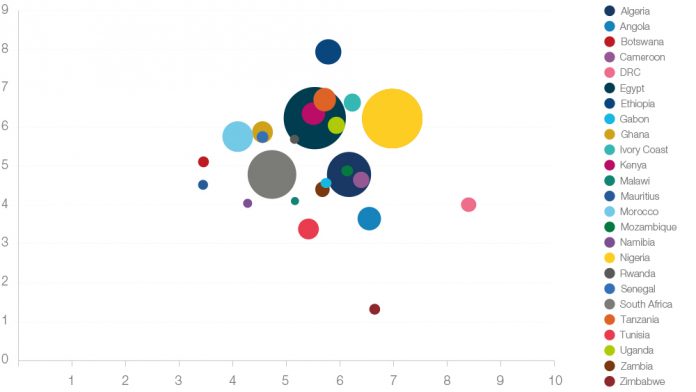
African business leaders are less optimistic about the strength of the global economy and their organisations’ ability to grow revenues in both the short and medium term than they were a year ago. 25 per cent of African CEOs believe that the global economy will decline over the next 12 months.

These are some of the key findings from the 7th edition of PwC’s Africa Business Agenda 2019 report, launched at the biannual World Economic Forum on Africa in Cape Town today.

The unease about global economic growth is also dampening CEOs’ confidence about their own companies’ outlook in the short term, with 27 per cent of CEOs stating they are ‘very confident’ in their own companies’ prospects for revenue growth over the next 12 months. Furthermore, only 39 per cent  are ‘very confident’ about their organisations’ growth prospects over the next three years.

Commenting on the survey findings, Dion Shango, CEO for PwC Africa, says: “As they look forward to the year ahead, African CEOs are less confident about the prospects for the global economy than they were a year ago. The same is true when they consider the prospects for their own organisation’s growth.

“In Africa, economic and policy uncertainty, among other issues, have cast some doubt upon business leaders’ hopes for immediate and future growth. Although there is a drop in optimism, African business leaders do see some opportunities on the continent – but overall, they are playing it safe.”

The Agenda compiles results from a survey of 83 CEOs across 19 African countries. The results are benchmarked against the findings of PwC’s 22nd Annual Global CEO survey of more than 1 300 CEOs, conducted during the 4th quarter of 2018. The Agenda provides an in-depth analysis and insights into how businesses are adapting to meet the challenges of operating in Africa.

Notwithstanding the current economic climate and other challenges, there is notable optimism among business leaders about the potential to unlock more growth on the continent. While the US, China and the UK continue to be the most dominant traditional markets for growth opportunities, it is notable that 20 per cent of African CEOs ‘don’t know’ where else to look for growth and 5 per cent say there is ‘no other country’ they would look to. The report suggests this may reflect the current economic and political climate.

Main risks to doing business in Africa

Ongoing economic, social and political uncertainty is a perennial worry for CEOs globally, not least for those in Africa. Concerns over policy uncertainty, skills shortage, over-regulation and exchange rate volatility lead the long list of risks causing anxiety for CEOs in all regions.

What stands out in these findings is that a consistently higher proportion of African CEOs say they are ‘extremely concerned’ about these issues compared to their global peers. While this is troubling both for businesses and the countries in which they operate, it is noteworthy that the proportion of CEOs who are concerned has in many cases declined since our previous survey. For instance, 39 per cent of African CEOs were concerned about social instability in 2019 (Global: 18 per cent) – this was a significant improvement on the previous year’s results (50 per cent), suggesting that in many countries conditions are ‘less bad’ than they were before.

Africa’s CEOs’ are mostly concerned about sociopolitical and economic threats, with 41 per cent ‘extremely concerned’ about uncertain economic growth (Global 24 per cent), unemployment (Africa 33 per cent; Global 13 per cent); populism (Africa 33  per cent; Global 28 per cent), exchange rate volatility (Africa 42 per cent; Global 26 per cent) and inadequate basic infrastructure (Africa 35 per cent; Global 17 per cent).

Of business threats, 43 per cent of African CEOs (compared to 35 per cent globally) said they were ‘extremely concerned’ about over regulation, 35 per cent (compared to 30 per cent globally) cited cyber threats, and 45 per cent (compared to 34 per cent globally) were ‘extremely concerned’ about the availability of key skills.

Trade conflicts and trade arrangements

It is notable that trade conflicts and protectionism do not make the top ten list of concerns in Africa. In fact, there are a few countries in Africa that stand to benefit from trade tensions elsewhere. While some of these issues present barriers to business and trade, there are also fresh prospects for revenue growth because of new trade arrangements. As the rest of the world is embroiled in trade conflicts, African countries are looking at opening their markets to trade. The African Continental Free Trade Agreement (AfCTA) is at the centre of this activity. The agreement establishes the Continent Free Trade Area – the largest in the world in terms of participating countries since the formation of the World Trade Organisation in 1992.

In general, African countries don’t trade much with each other. Currently, trade in Africa forms less than 3 per cent of global trade. The low trade figure is due to several issues, namely poor infrastructure on the continent, high tariff rates on imports, bureaucracy and red tape, and problems at border posts.

“To boost economic growth on the continent, it is vital that African countries improve trading with each other and invest in infrastructure to drive trade,” Shango comments.

Plans for growth and expansion

A large proportion of African CEOs (93 per cent) are ‘somewhat confident or ‘very confident’ about their organisation’s prospects for revenue growth over the next three years – higher than the global average of 85 per cent. Faced with uncertainty around current markets, CEOs are turning inward to drive revenue growth.

African CEOs identified operational efficiencies (Africa 80%; Global 77 per cent), organic growth (Africa 76 per cent; Global 71 per cent) and the launch of a new product and service (Africa 58 per cent; Global 62 per cent) as their primary drivers of revenue growth.

Only 36 per cent of African CEOs (Global 37 per cent) said they would look enter a new market in pursuit of revenue growth.

Technological advances and data

The forces of globalisation and technology are transforming the workplace. A high percentage of African CEOs (83%) ranked technological advances among the top three trends to have transformed the workplace most in the past five years.

Despite massive investments in technology, CEOs identified a vast gap between the data they need to inform decision-making and the adequacy of the data they receive. African CEOs say the primary reasons for this is due to data siloing and a lack of sharing of information (Africa 59 per cent; Global 51 per cent), as well as poor data reliability (Africa 57 per cent; Global 50 per cent).

Most CEOs in Africa are taking a wait-and-see approach to the use of artificial intelligence (AI) in the workplace – currently 35 per cent (Global 23 per cent) of CEOS have no plans in place to pursue AI initiatives right now, but 46 per cent (global 35 per cent) have plans to launch AI projects in the next three years. African business leaders are looking to governments to assist with the management of AI. Most CEOs (Africa 76  per cent; Global 65 per cent) believe that governments should incentivise organisations to retrain workers whose jobs are automated by AI.

Shango concludes: “As social, political and economic events shift the boardroom, African CEOs need to step forward to make a meaningful contribution and rebuild confidence for the long term. Business has an essential role to play in building and fostering trust in society and CEOs should embrace the responsibilities and trust this brings.”


Stories Continues after ad

Public Service Ministry secures Shs150b for teachers’ pay rise

Public Service Minister Wilson Mukasa Muruli

Teachers in Uganda are to have salary increment beginning next month after the Ministry of Public Service secured Shs150 billion to fulfill an earlier government promise.

Public Service Minister, Wilson Muruli Mukasa, said that his ministry was scheduled to meet with the members of the Uganda National Teachers Association (UNATU) and other unions over the development on Friday, September 6, 2019.

“The meeting with the teachers and UNATU is to deliberate on ways to effect the salary enhancement which the unions have been demanding. UNATU has threatened industrial action claiming that government had failed to keep their side of the bargain,” said Minister Muruli.

The Minister was appearing before the House Committee on Education and Sports to consider challenges facing salary discrepancies amongst the teachers.

Muruli Mukasa said that an inter-ministerial committee had recommended a 12 per cent budget cut across all ministries, departments and agencies to raise funds for salary enhancements in the education sector.

“Parliament appropriated Shs45 billion for education increment in the Financial Year 2019/2020. With the budget cuts we have managed to get Shs105 billion making the total of Shs150 billion to sort the discrepancies of salaries across the board,” Muruli said.

Commissioner for Human Resource in the Ministry of Education and Sports, Jane Mwesiga, informed the committee that the biggest problem the ministry was facing was the imbalance in the teacher, student ratio, and that some teachers were forging appointment, deployment and transfer letters.

“The teachers have genuine papers, but when they are transferred to upcountry schools they forge the letters and take themselves to schools in the nearby districts like Mpigi and Mbarara and that is the reason why some schools are over populated by teachers and others have none,” Mwesiga said.

Stories Continues after ad

BoU issues warning as staff share old notes in Luwero

Bank of Uganda


Details have emerged that a group Bank of Uganda staff across the eight currency centers have been sharing old notes worth billions of shillings in the selected rural districts of Uganda including Luwero and others.

The group that includes senior managers of the central bank have been doing this practice for years without the knowledge of the governor Emmanuel Tumusiime-Mutebile.

Following the currency saga BoU has issued a directive to internally which has leaked. However, that directive confirms the currency manipulation that has been taking place of the notes and the stealing of old currency to certain individuals. The sources further told Eagle Online that what is strange is that these group of people involved in the were reportedly recommended by a senior person in the central bank and were evenly distributed across the eight centre and therefore, it isn’t surprising that they are the ones participating in the currency stealing.

According to the procedures, before disposing off collected old notes, BoU staff are supposed to punch holes in the notes so that they don’t return to circulation, but the staff have over the years taken out the notes without punching holes in the notes, well knowing it is illegal.

Bank of Uganda has eight currency centers in Jinja, Mbale, Masaka, Mbarara, Kabale, Fort Portal, Gulu and Arua.

Analysts say it is the reason why the country still has so many old shilling notes in circulation. “The affected BoU staff connive with their friends to circulate these notes,” an analyst said, adding that many BoU staff involved in this crime have benefited from it, with many setting up businesses in real estate, hotels and merchandise trade.

Days ago, this website was the first to report that three staff of BoU Mbale Currency Centre were arrested as they reportedly smuggled out old notes in sacks. According to security sources, the three are part of the racket in BoU that smuggle out money which is supposed to be destroyed.

Click on the link below to read full BoU warning letter.

[Untitled]

A combined team of security operatives from police, intelligence and military stormed the currency centre after a tip off from an internal staff why it had become norm for money which is supposed to be destroyed was being ferried outside the bank and shared amongst top staff.

To address the challenge of stealing the old notes, the acting director in the BoU currency department, Bazinzi Natamba, has issued a warning to note examiners and other staff. Among the new measures Natamba has introduced is that no note examiner should access a counting /machine room of another currency centre without authorization.

In yesterday’s internal MEMO, Natamba further warned that no staff other than note examiners should participate in the counting machine room activities such as sorting, punching and strapping of stocks.

“Always ensure that the daily CCTV recordings are reviewed. Immediately stop staff from carrying into the counting rooms any items such as tea, water, eats, juices, among others, for personal use. Urgently remove waste baskets/boxes in the counting rooms,” he said.

In June, State House, police and other agencies were investigating BoU over the extra Shs90 billion that was printed separately and shipped into the country without the knowledge of the governor Tumusiime- Mutebile.
It later on turned out that it is indeed Mutebile himself who had petitioned Lt. Col. Edith Nakalema to investigate the scandal of extra printing of money. Col. Nakalema is the head of State House Anti-Corruption Unit.

The director of Currency department at Bank of Uganda, Charles Malinga was arrested and arraigned before Anti-Corruption Court in Kololo over the extra printing of money before his appearance, Francis Kakeeto, a branch manager at Mbale and Fred Wanyama were charged with abuse of office and in alternative corruption which they have both denied before magistrate Herbert Asiimwe.

The huge money is said to have been transferred to Masaka on June 14, 2019, the time when investigators started probing BoU and other officials over the anomaly in the consignment of the 20 pallets packed with Uganda Shillings notes that were delivered at Entebbe International Airport by BoU chartered plane on April 26, even though, extra five pallets were on board and their whereabouts is unknown.


Stories Continues after ad

Godfrey Walusimbi moves to Albanian club 

Godfrey Walusimbi


Uganda Cranes left back Godfrey Walusimbi has completed a move to Albania side KF Vllaznia on a one year deal after almost six months without a club.

The club confirmed the signing on their website;

“As promised by members of the technical staff, KF Vllaznia has made it a reality to hire another player. It is left-handed defender Wallusimbi Godfrey,” the club says in a statement.

The player has signed a one-year contract and is expected to arrive in Shkodra within this week, as soon as he is granted an entry visa to Albania.

“The 30-year-old has a long and successful career and for 10 years is part of the Uganda national team with which he has played 93 matches and scored 3 goals. With his experience, Godfrey is expected to be an important element for the Brothers team in the defense.”

Walusimbi has been a free agent since terminating his contract with PSL giants Kaizer Chiefs in January.

The former SC Villa and Vipers (Bunamwaya) defender was part of the Cranes team that featured at the 2017 and 2019 Africa Cup of Nations.

He is the most capped players on the current Cranes team with over 100 caps. He has featured for SC Villa, Vipers and Gor Mahia.

Stories Continues after ad

Scores held after looting and anti-foreigner protests in South Africa

Looters take items from an alleged foreign-owned shop during a riot in the Johannesburg


Police have arrested scores of people in South Africa‘s commercial capital, Johannesburg, after protesters looted what appeared to be foreign-owned shops and set fire to cars and buildings.

At least 70 people were arrested, the police said in a statement on Monday,in the second outbreak of urban rioting in a week.

Hundreds of people marched in Johannesburg’s Central Business District (CBD) earlier in the day, demanding foreigners leave, according to local news agency News 24.

They targeted “shops they believed to be owned by foreign nationals”, the news website reported.

Police fired rubber bullets at looters as burned cars were stranded on the roads.

“Police are condemning all acts of violence directed at the businesses and the looting of shops described as those of foreign nationals by criminal opportunists,” the office of the provincial commissioner said in a statement on Facebook.

Police also said they were investigating a death in Hillbrow, a residential neighbourhood in central Johannesburg, where a “member of the public” was allegedly shot by a group.

“At this stage [we] are still interviewing several people to establish the motive,” it said.

Pedestrians pass burnt-out cars on the side of a street on the outskirts of Johannesburg on Monday, September 2, 2019 [The Associated Press]

Officials dismissed reports that the ongoing attacks were xenophobic.

“Xenophobia is just an excuse that is being used by people to commit criminal acts,” Police Minister Bheki Cele told reporters on Monday afternoon. “It is not xenophobia, but pure criminality.”

In a statement on Monday, the South African Human Rights Commission said it was “deeply concerned by violence, looting, arson and vandalism plaguing much of Johannesburg.”

Meanwhile, Nigeria‘s Foreign Minister Geoffrey Onyeama reacted strongly to the scenes of violence on Monday.

“Received sickening and depressing news of continued burning and looting of Nigerian shops and premises in #SouthAfrica by mindless criminals with ineffective police protection,” he said on Twitter. “Enough is enough. We will take definitive measures.”

In 2015, Nigeria had recalled its ambassador to South Africa following a spate of attacks against immigrants.

South Africa is a major destination for economic migrants from other parts of the continent, including the Southern Africa region, with many moving from neighbouring Lesotho, Mozambique and Zimbabwe in search of work.

The unrest started on Sunday when an old building in the CBD caught fire and collapsed, killing at least three people. It then spread to two eastern suburbs and to the executive capital, Pretoria, where local media reported shops burning in Marabastad – a central business area largely populated by economic migrants.

Last week, hundreds of protesters in Pretoria set fire to buildings, looted mostly foreign-owned businesses and clashed with police, who fired rubber bullets at the crowds. The chaos broke out after local taxi drivers clashed with alleged drug dealers in the area, according to the Sowetan newspaper.

On Monday, a pamphlet circulating on social media, seen by The Associated Press news agency, encouraged South Africans to chase foreigners out of their communities.

The pamphlet, attributed to a group called the Sisonke Peoples Forum, accused foreigners living in South Africa of selling drugs and stealing jobs, both common refrains during the regular flare-ups of violence against foreigners in the greater Johannesburg area in recent years.

The main opposition Democratic Alliance party said: “These incidents are due to a failing economy in which more than 10 million South Africans cannot find work.”

Both the ruling African National Congress and the Democratic Alliance have been accusedof stoking xenophobia.

The violence comes amid a wave of protests in the transport industry linked to anti-foreigner sentiment.

Zambia‘s government on Monday called on Zambian truck drivers to avoid travelling to South Africa and those already in the country to park their vehicles “until the security situation improves”.

Truck drivers in the southeastern province of KwaZulu-Natal (KZN) started a nationwide strike on Sunday to protest against the employment of foreign drivers. KZN police said 11 trucks blocked the road to Richards Bay Harbour, one of the deepest natural harbours in Africa.

They told AFP news agency that at least four vehicles had been torched.

At least 20 people had been arrested “in connection with incidents related to protests within the trucking industry”, KZN police said.

Lieutenant-General Khombinkosi Jula, police chief for KZN province, said they had intensified patrols along major routes.

Sipho Zungu, chairman of the All Truck Drivers Foundation, told AFP his group had had “nothing to do with the strike”, but stressed that it was fighting for the employment of South African drivers.

“People of South Africa are hungry, they are sitting at home.. while companies in South Africa are employing foreigners … [because] its cheap labour. We are hungry and angry,” Zungu said.

The South African Transport and Allied Workers Union (SATAWU), which has over 200,000 members, also distanced itself from the violence.

South Africa’s Road Freight Association told local media in June that more than 200 people have been killed in attacks on foreign truck drivers since March 2018.


Stories Continues after ad

Bemanya elected president of Wipo Advisory Committee

The Registrar General of Uganda Registration Services Bureau (URSB) Bemanya Twebaze has been elected President of the World Intellectual Property Organization (WIPO) Advisory Committee on Enforcement at its 14th session WIPO Advisory Committee on Enforcement (ACE) in Geneva, Switzerland on September 2 2019.

Bemanya will be assisted by Elizabeth Jones of the UK IPO Copyright and Enforcement Directorate and Ray Meloni, Director of Distinctive Signs of the National Institute for the Defense of Copyright and Intellectual Property of Peru.

Bemanya formerly served as the President of Paris Union Assembly of WIPO.

This election is a major milestone for Uganda and has come at a time when Uganda has enhanced protection and enforcement of intellectual property rights.

In his acceptance speech after the election, Bemanya noted that is a great milestone. He added: “Enforcement is a key aspect in promoting innovation and creativity in member states and thus the need to balance enforcement of intellectual property with members’ development priorities.”

He expressed appreciation to the Director General of WIPO Francis Gurry for the technical assistance extended to member states in building respect for intellectual property.

The URSB enforcement unit has since its creation in 2016 seized infringing goods and saved business owners of losses of approximately Shs 20 billion  (5.4 Million Dollars).

What is Advisory Committee on Enforcement?

The Advisory Committee on Enforcement (ACE) was established by the 2002 WIPO General Assemblies with the mandate to provide technical assistance and carry out coordination in the field of IP enforcement.

The role of the Advisory Committee on Enforcement (ACE) includes: Coordinating with public and private organizations to combat counterfeiting and piracy with a view to ensuring a balanced and transparent approach to building respect for IP, carrying out public education including information, education and communication materials customized for youth, students, and the public and technical assistance such as legislative drafting and dispute resolution mechanisms.

It also helps in undertaking national and regional training programs for all relevant stakeholders including IP offices, enforcement agencies such as customs, prosecutors and the Judiciary  and exchange of information and experiences on enforcement issues

What is World Intellectual Property Organization (WIPO)

WIPO is a UN organization established in 1967 to encourage creative activities and to promote protection of Intellectual Property throughout the world. WIPO’s current membership is 192 states Uganda has been a member of WIPO since 1973.

Stories Continues after ad

Recently appointed AIGPs assume offices

The recently appointed Assistant Inspector Generals of Police (AIGP) have assumed their offices.

In July, President and Commander in Chief Yoweri Museveni appointed four new Assistant Inspector Generals of Police, from Uganda People’s Defence Forces (UPDF).

The four adds to the list of UPDF officers like Gen kale Kayihura who headed the police for more than 10 years, Gen Katumba Wamala who also worked as the inspector general of police (IGP), Deputy IGP Maj. Gen Sabiiti Muzeyi, among other officers.

The handover ceremony was presided over by the Deputy IGP Maj. Gen Sabiiti Muzeyi at Police headquarters Naguru who welcomed the officers and urged them to feel at home and also commended the outgoing officers for the job well done for the time they have served in the Directorates.

 The army officers include; AIGP Brigadier Jack Bakasumba, the Chief of Joint Staff (CJS), AIGP Brigadier Godfrey Golooba, the Director Human Resource Development and Training. He replaces AIGP Haruna Isabirye, who is heading to New York as the police attaché to the Ugandan Mission.

AIGP Colonel Jese Kamunanwire, the Director Human Resource Administration, replaces AIGP Moses Balimwoyo, who now moves as Director Interpol and International Relations.  He also replaces SCP Oyo Nyeko Benson, who was Acting Director and now heads to the AFRIPOL Headquarters in Algiers as the Police Liaison Officer.

Finally AIGP Col Chris Serunjoji Damulira, the Director Crime Intelligence who replaces SCP Chombe Amur who is transferred as Deputy Director Interpol and International Relations.

Stories Continues after ad

ENGIE acquires Mobisol to become market leader in off-grid solar installation in Africa

ENGIE has expanded its decentralized energy offering in Africa through the acquisition of Mobisol, a pioneer of off-grid solar solutions. Founded in 2011, the company employs over 500 people as well as approximately 1,200 contractors. Mobisol has operations in Tanzania, Rwanda, and Kenya and has installed more than 150,000 solar home systems, providing clean and reliable energy to over 750,000 people in Sub-Saharan Africa.

With the acquisition of Mobisol, ENGIE will be offering solar home systems in 3 additional countries, complementing the six countries where it is already present with its solar home system company Fenix International. Mobisol’s focus on productive use products, combined with Fenix’s inclusive home solar power systems, will enable ENGIE to offer an unparalleled range of affordable energy products as well as extending its customer base from rural to urban areas. The closing of the acquisition of Mobisol will happen once all approvals of the relevant regulatory bodies are received.

ENGIE already has significant activities in off-grid electrification in Africa. With its subsidiary Fenix International, it provides access to energy and financial services via its solar home systems to over 500,000 customers, improving the quality of life for over 2.5 million people in Uganda, Zambia, Nigeria, Benin, Cote d’Ivoire and Mozambique. Additionally, with ENGIE PowerCorner, it supplies affordable electricity to rural populations through smart mini-grids powered by solar energy and battery storage. PowerCorner offers 24/7 energy services to households, local businesses and public services in villages across Tanzania and Zambia. All of these services are enabled by digital financial solutions such as mobile money and Pay As You Go technologies.

Isabelle Kocher, ENGIE CEO declared: “With the acquisition of Mobisol, ENGIE expands its access to a market of millions who are not connected to the grid and establishes itself as the market leader on the continent. Not only do we change people’s lives with clean energy but we trigger economic activities for households and entrepreneurs who generate additional income once they are connected. With ENGIE Power Corner, Fenix, and now Mobisol, we will pave the way for a new generation of affordable energy services, in line with our strategy focused on the acceleration of the zero-carbon transition.”

Universal electrification is the 7th of the United Nations Sustainable Development Goals that the global community has committed to achieve by 2030. Currently more than 600 million people have no access to electricity in Africa and by 2030 the continent is expected to be home to 80 percent of the world’s off-grid population, according to the International Energy Agency.

Stories Continues after ad