Stanbic Bank
Stanbic Bank
20.4 C
Kampala
Stanbic Bank
Stanbic Bank
Home Blog Page 1214

Eight indications of an entrepreneur sought by investors

Martin Zwilling


By Martin Zwilling


An entrepreneur is literally “one who creates a new business.” The best new businesses are ones that have never been done before, so mastering creativity and recognizing creativity are key skills and mindsets. But how does one recognize and nurture creativity in a person or team?

In researching this question, I reviewed a classic book by Bryan Mattimore, “Idea Stormers: How to Lead and Inspire Creative Breakthroughs,” which details eight attributes of the most creative people, which seem to match the mindsets of some of the best entrepreneurs I know. Investors like me look for these in the people they fund, and you should be looking for them in yourself:

Forever curious. Endless curiosity is the number one indication of the creative mindset. It allows entrepreneurs to challenge what is already “known” to extrapolate that to an original idea. Curiosity infuses you with the determination needed to figure out or learn how to turn an original or innovative idea into a reality.

Always open to new things. Thinking this way can be viewed as quieting the opinions of the judgmental mind long enough to allow the creative mind the time and space it needs to generate interesting insights, associations, and connections. This opens creative possibilities, rather than categorizing new things into self-limited dead-ends.

Embrace ambiguity. This is the capacity to entertain contradictory or incomplete information without discomfort and anxiety. To the creative mindset, contradictions are an invitation to more focused creative thought, to resolve the paradox, and derive a new un-ambiguous potentially great idea.

Finding and transferring principles. There are two parts to this mindset. First is the mental habit or discipline of continually identifying the creative principles inherent in an idea in a given context. The second part is adapting the principle to another context to create a new idea. It’s the ability to work from the specific to the general.

Searching for integrity. This is the desire to discover, and the belief that there exists, an insight or connection that will unite seemingly disparate elements into a single integrated whole. When it happens, it’s exciting and magical, and it feels absolutely, positively, and completely right. Integrity doesn’t need to explain itself.

Knowing you can solve the problem. This is the confidence that you can tackle the difficult, even seemingly impossible challenges, with inevitable dead-ends, to make a creative breakthrough. As with a success mentality, knowingness is the persistence to make creativity a self-fulfilling prophecy.

Able to visualize other worlds. This is the most imaginative mindset, with the ability to visualize whole new worlds and everything in them. It’s the province of game designers and creators of new social media platforms. It’s imagining original themes, people with new roles, and things with unique designs.

Think the opposite. Some of the most creative entrepreneurs (and teenagers) always seem jump to opposite end of the spectrum from conventional wisdom. But many times, to think differently and creatively, you have to think illogically. Logic and common sense have a habit of leading us to the same conclusions.

Of course, it normally takes more than the right mindset to master the creative mind. Smart entrepreneurs leverage their startup creativity with techniques like involving everyone early and often, ideation, and attending to the details. Professional facilitation also helps. Most often, it’s a long hard road from a good idea to successful innovation.

The most creative entrepreneurs create more value and wealth, not only in physical products and services, but also in their intangible assets such as their brand, reputation, network and intellectual property. Of course, they are always looking to free up time and money for their next big idea. That’s really the best indication of a true entrepreneur.

The writer is a veteran startup mentor, executive, blogger, author, tech professional, professor, and investor. Published on Forbes, Entrepreneur, Inc, Huffington Post, among others.


Stories Continues after ad

With first oil target set for 2027, Somalia is keen to showcase its untapped potential to the world

Offshore oil rig

Following the signing of a new Petroleum Law and Revenue Sharing Agreement in May of this year, as well as the unveiling of its first ever offshore licensing round (15 blocks covering 75,000 sq. km), the Horn of Africa nation is keen to show the world that it is open for business.

The law breathes new life into a dormant Somali oil and gas sector – several concessions were awarded to the majors in the late 1980s, but Civil War erupting in the country led to a force majeure declaration. Since the government collapse in 1993, insecurity and lack of infrastructure have largely rendered the region a no-go for western companies, leaving local warlords and militias to claw out territories.

Almost 30 years later, Somalia is ready to shake-off past woes and attract global participation. This effort is being spearheaded by Minister of Petroleum and Mineral Resources, Abdirashid Mohamed Ahmed, who recently commented, “this year is a landmark in the development of Somalia’s natural resources…the Ministry has worked successfully with the federal member states to create an equitable and transparent framework to develop natural resources for the greater good of Somalia”.

As part of its efforts, Somalia is expected to honour most legacy contracts. An agreement has already been reached with Shell and ExxonMobil to settle rental fee payments for offshore blocks (part of a dormant joint venture). However, it does not seem that either company is rushing back into the country, with Shell stating that “the payment does not affect force majeure status, which remains in place”.

Despite this, Mr Ahmed has reason to hope that investment will begin to flow into Somalia. Seismic surveys conducted by British companies Soma Oil & Gas and Spectrum Geo suggest the country has promising offshore oil reserves of up to 100 billion barrels. What’s more, recent oil finds in Uganda and huge gas discoveries offshore Tanzania and Mozambique mean that oil companies have flocked to East Africa in recent years – Somalia could well become a beneficiary of this trend.

Stories Continues after ad

Spat of murders is sign of acute failure of gov’t to protect Ugandans – FDC

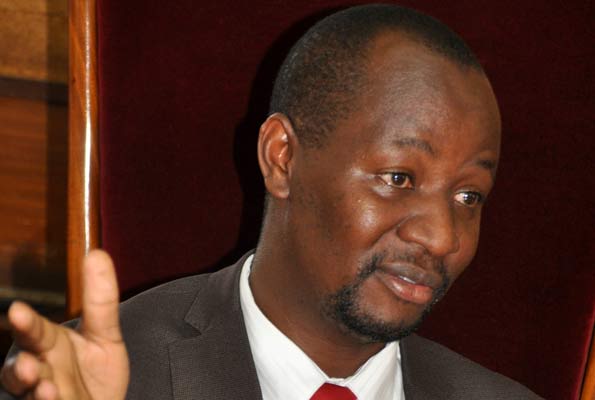
Mr Ssemuju Nganda


The Forum for Democratic Change (FDC), party leaders have expressed concern over the continuous kidnaps and killing of people Uganda. They said the vicious and malicious signal government’s acute failure to invest in intelligence services.

The country has witnessed a number of murders and subsequent killings of people with the recent scenario of Joshua Nteyireho Ruhegyera and Tumukunde Merina, who were gunned down along Entebbe Express way and the gruesome murder of Non- government organisation (NGO) employee, Maria Nagirinya and her driver Ronald Kitayimbwa.

According to party Spokesperson who doubles and the legislator of Kira Municipality, Ibrahim Semujju Nganda, said that President Museveni has no excuses of not adequately funding intelligence agencies in the country saying that budgets for security agencies have gone up since June 2017 when Museveni delivered his state of the national address that addresse that among others addressed crime.

He added: “Since then (June 2017) the budgets of Police, Defence and ISO have dramatically gone up. The Ministry of Defence budget has increased from Shs 2 trillion of 2018/19 to Shs 6.9 trillion in the 2019/20 budget. The Police budget has increased from Shs666 billion to Shs 2 trillion. External Security Budget has increased from Shs 43 billion to Shs134 billion and that of ISO is now at Shs 87 billion.” Mr. Semujju said adding that the above figures include a classified component of Shs 2.5 trillion.

“Cameras have been bought and installed, local defence personnel have been recruited, trained and deployed. How comes the murders and kidnaps are not relenting?” He said.

The party fears that this wave of insecurity might be perpetrated by elements within the security community to justify consumption of trillion of taxpayer’s money that has been allocated to this sector.

“Remember what happened during the Joseph Kony rebellion in northern Uganda. Executing that war become a business of many senior UPDF officers. Mr. Musweveni is almost distributing a billion shilling per day? Where does he get all this money?” He said.

He encouraged the families to take Mr. Museveni and his government to court for failing to protect their dear ones as the Constitution commands.

The statement on Thursday last week of Internal Affairs Minister Gen. Abu Bakar Jeje Odongo offered no solution. He blamed the murders on politics and insinuated that NRM competitors could be behind them. He also rationalized loss of life saying there is no society free of crime. However, government has in past successfully used images from CCTV cameras to prosecute criminals captured by the cameras.

“Any functional government would have relieved people like Gen. Jeje Odongo and Gen. Elly Tumwine of their duties long ago. These should join Gen. Kale Kayihura and Lt. Gen. Henry Tumukunde who was last year sucked and replaced by Martin Ochola.”


Stories Continues after ad

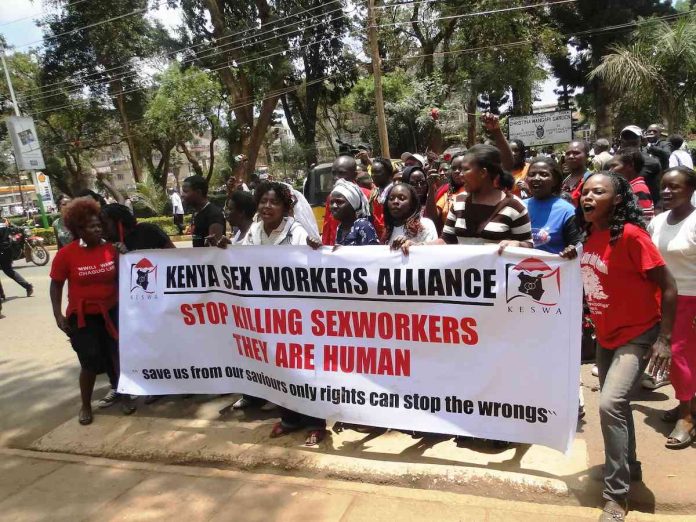
Prostitutes demonstrate demanding free lubricants and condoms

Prostitutes in demo


Commercial sex workers in Kenya’s Machakos county have issued a one-month ultimatum to governor Alfred Mutua to provide them with basic necessities for their operations.

Speaking during a street demonstration on Friday, the group asked Mutua’s county administration to allocate money for the purchase of lubricants and condoms for their use.

“We are here as sex workers, demand to know what exactly is Mutua planning to do for this key population within this county to ensure sex workers get free lubricants and condoms. Sex work is work because it pays our bills and feeds our children,” one told journalists.

They further claimed it is because of their services that Kenya is able to receive overwhelming tourists yearly who often seek to quench their thirst.

“Many tourists visit Kenya because of us. We want our rights respected and be provided with security to go about our businesses before October 1. A woman can do anything if she lacks money. If we stop prostitution today, there is a child who will not be able to attend classes,” he added.

Commercial sex is forbidden in Kenya, however National AIDS and STIs Control Programme puts the number of sex workers close to 300,000 and one in every three is infected with HIV.

In the silence of the dawn, it is believed a number of female prostitutes return home with average of KSh 5,000 depending on area of operation.

This despite several arrests and harassment in the hands of police officers some of whom reportedly demand for sex as a token before victim is freed.

“Every woman who knowingly lives wholly or in part on the earnings of prostitution, or who is proved to have, for the purpose of gain, exercised control, direction or influence over the movements of a prostitute in such a manner as to show that she is aiding, abetting or compelling her prostitution with any person, or generally, is guilty of a felony,” the Penal Code states.


Stories Continues after ad

Football racism: The case for a small coin in a big empty jar

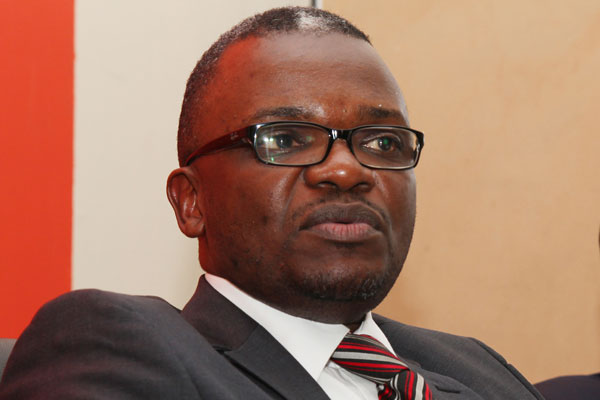
Mr Muwema


BY Fred Muwema,

Managing Partner, Muwema& Co. Advocates


Fighting racism in football is like fighting pickpockets in a Church, Mosque or other place of worship. You can not come down very hard on them and fill the atmosphere of the Church or stadium with tear gas or bullets, the way the South African Security dealt with the Xenophobic attackers who wreaked havoc in that country last week. You would be accused of committing crimes against humanity if you confronted miscreants who have again taken to firing racist slurs against professional footballers of African descent like Raheem Sterling, Kurt Zouma, Tammy Abrahams, Marcus Rashford, Romelu Lukaku and Paul Pogba among others.

Never mind that all those lads are married to white women or have white girlfriends. These guys are actually European citizens or African Europeans if you wish. But that European passport or marriage does not shield them from getting insults from their in-laws or fellow citizens. This leaves me wondering whether the affluent Europeans are abandoning the European experiment on liberal values of freedom and tolerance.

That aside, the fact of the matter is that it is very difficult to control the behaviour of private individuals in matters of morality even with the strongest laws in place. Whereas traditional racism appears to be waning with increased globalization, it still exists. The incidents of racists chants at football matches in Europe represents the open type of racism which keeps the company of other discriminatory practices like nativism, xenophobia, otherness, segregation, hierarchical ranking and supremacism.

Having said that, all modern variants of racism are morally abysmal and scientifically bankrupt. We all know that the assumed heritable biological traits of superiority which drove racism upon the belief that Europeans enjoyed superiority over other races were crushed by science after 1945. However, to this day, some racist’s thoughts linger in the minds of a minority whose thoughts should not be given a platform to thrive.

Unfortunately, what we have seen of late is that there is more sensationalist reporting of this vice in football which is greatly inflating the egos of the racists. In the process, the media has profited from the increased viewership as they feed on this sensationalism. The foreign media which routinely amplifies sparks tinted with racism at football matches and packages them into hysterical headline reports must understand that a small coin in a big empty jar can make a lot of noise when you shake it. Every time you shake the jar, you increase the noise, not the value of the coin. However, in the case of football racism, every time the media shakes the jar, it increases both the noise and value of the racism. Racists in football cannot succeed without flattering publicity but paradoxically, the media all too often provides them this publicity for free and increases the presence of the vice.

One example which I believe was blown out of proportion by the media, was the reported monkey chants against Romelu Lukaku when he stood up to take a penalty at Cagliari in Italy for his Inter Milan side. I don’t think that incident which was a replay of the common nuisance we have come to expect in Italy over the years, merited the screaming headlines and viral publicity that it got. When looked at seriously, you will realise that the handful of Cagliari fans who mocked Lukaku, disparaging as their act was, did not succeed in projecting racial superiority. In fact for all their troubles, those fans did not improve their stature since they still went back home to the Italian average salary of €2,700 per month. This is very inferior to Lukaku’s wages standing at a whopping €250,000 per week. By the way, that Lukaku wage excludes bonuses and money from image rights and endorsements. I am sure that those Cagliari fans wouldn’t mind being teased with monkey noises if they could earn €2,700 per week in wages.

So was Lukaku really bothered by the empty racist’s mockery at Cagliari? I don’t think so. I want to think that he just laughed it off with a superb penalty kick against Cagliari FC, passed by the cash machine and proceeded to eat life as they say, while the jokers agonized in their beds. Unfortunately, the media when it sensationalized the incident, chose not to see the high nuisance value in the Cagliari fans theatrics which were cast in a parody of sorts. One should be forgiven if they got the impression that all hell broke loose at the match. I think the media is exceeding its respectable limits when reporting racism in football.

The managers of the European Elite football leagues must not waiver in their affirmative action and campaigns to fight racism in football. They are doing a splendid job which can certainly use some more vigour and creativity. That said, all people of goodwill must support their efforts.

The affected players who find themselves at the receiving end of racists slurs must fight back by doing what they do best – play football. This is what the legendary Nigerian football icon Jay Jay Okocha did in the face of mounting racist abuse in Germany. He dribbled and dribbled and scored against his tormentor’s teams until the racist noises and chants faded in the distance. We should know better than to allow small coins in a big empty jar to make a lot of noise for us. On a lighter note, some Manchester United players who I will not name for fear of being branded a racist should get their act together quickly this season before I yell some animal noises at them through my television.

Stories Continues after ad

Suicide the second leading cause of death among youth, one person dies every 40 seconds-WHO

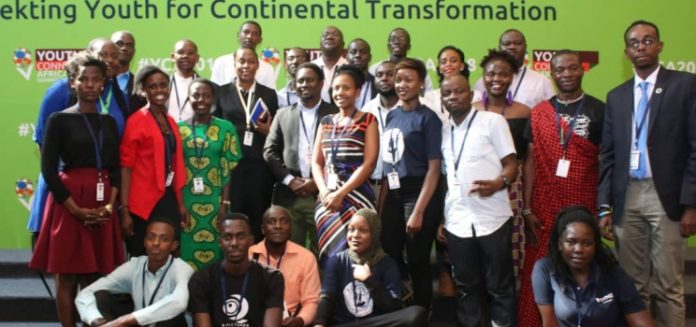
Youth a past event.

The number of countries with national suicide prevention strategies has increased in the five years since the publication of WHO’s first global report on suicide, said the World Health Organization in the lead-up to World Suicide Prevention Day on 10 September. But the total number of countries with strategies, at just 38, is still far too few and governments need to commit to establishing them.

Despite progress, one person still dies every 40 seconds from suicide,” said WHO Director-General, Dr Tedros Adhanom Ghebreyesus. “Every death is a tragedy for family, friends and colleagues. Yet suicides are preventable. We call on all countries to incorporate proven suicide prevention strategies into national health and education programmes in a sustainable way.”

The global age-standardized suicide rate for 2016 was 10.5 per 100 000. Rates varied widely, however, between countries, from 5 suicide deaths per 100 000, to more than 30 per 100 000. While 79 per cent of the world’s suicides occurred in low- and middle-income countries, high-income countries had the highest rate, at 11.5 per 100 000. Nearly three times as many men as women die by suicide in high-income countries, in contrast to low- and middle-income countries, where the rate is more equal.

Suicide was the second leading cause of death among young people aged 15-29 years, after road injury. Among teenagers aged 15-19 years, suicide was the second leading cause of death among girls and the third leading cause of death in boys

The most common methods of suicide are hanging, pesticide self-poisoning, and firearms. Key interventions that have shown success in reducing suicides are restricting access to means; educating the media on responsible reporting of suicide; implementing programmes among young people to build life skills that enable them to cope with life stresses; and early identification, management and follow-up of people at risk of suicide.

The intervention that has the most imminent potential to bring down the number of suicides is restricting access to pesticides that are used for self-poisoning. The high toxicity of many pesticides means that such suicide attempts often lead to death, particularly in situations where there is no antidote or where there are no medical facilities nearby.

As indicated in the WHO publication released today, preventing suicide: a resource for pesticide registrars and regulators, there is now a growing body of international evidence indicating that regulations to prohibit the use of highly hazardous pesticides can lead to reductions in national suicide rates.

The best-studied country is Sri Lanka, where a series of bans led to a 70 per cent fall in suicides and an estimated 93 000 lives saved between 1995 and 2015. In the Republic of Korea – where the herbicide paraquat accounted for the majority of pesticide suicide deaths in the 2000s – a ban on paraquat in 2011-2012 was followed by a halving of suicide deaths from pesticide poisoning between 2011 and 2013.


Stories Continues after ad

Kikuube district in fight against illegal tobacco trade

Speaker of Parliament, Rebecca Kadaga planting a tree at Kigaaya Archdeaconry.


Residents of the newly created Kikuube district have asked Parliament to intervene and offer support in the fight against illegal tobacco trade that has been associated with insecurity.

The Mayor of Kikuube Town Council, Moses Mugisha said that tobacco companies that were banned by government have continued to trade in tobacco.

“There are traders who were banned from purchasing tobacco but have persisted. The worst thing is that they have delayed paying farmers and we are worried because our children are about to report to school,” Mugisha said.

Mugisha made these remarks at a fundraising for Kigaaya Archdeaconry. The event was attended by the Speaker of Parliament, Rebecca Kadaga.

Earlier this year, the Ministry of Trade, Industry and Cooperatives banned three companies from trading in tobacco within the region after failing to meet the tobacco buying regulations. The said companies were accused of causing confusion and posing a security threat.

Kadaga said that she had received several petitions from the MPs representing Kikuube District about the illegal tobacco trade and promised that Parliament would act on them as stipulated in the rules of procedure.

“This issue has been brought to Parliament many times; we have told the Minister of Trade to supervise and ensure that the banned companies do not continue in the trade, ” Kadaga said.Mayor Mugisha also called for increased insecurity in the region characterised by theft of cattle and household items. This, he said is associated with the rampant drug abuse by youth that goes unchecked. “

Kadaga pledged to engage the Inspector General of Police to beef up security in the district.

Stories Continues after ad

Police holding three over murder of NGO staff Maria Nagirinya

Late Maria Nagirinya

Police are holding three prime suspects implicated in kidnap and subsequent murder of Non-Governmental Organisation (NGO) staff, Community Integrated Development Initiatives (CIDI), Maria Nagirinya and Ronald  said to be her driver.

Nagirinya was kidnapped by two men who reportedly trailed her as she returned home. According to her family members, assailants accessed her vehicle registration number UBA 570V, Spacio, moments after her young sister had just opened her the gate.

The deceased are alleged to have been killed from the car before dumping their bodies at Nakitutulu village, Nama sub-county in Mukono district.

Speaking at the headquarters, police spokesperson, Fred Enanga, the suspects were arrested by Security operatives from both Police and Chieftaincy of Military Intelligence (CMI) and they are currently held at CMI facility in Kireka.

Without delving into details, Enanga revealed that the suspects include man in red jacket captured on CCTV driving Nagirinya’s vehicle and another one who reportedly transported the abductors to Nagirinya home.

The search and arrest is based on the footage was captured by various cameras along the Kinawataka road that connects to the Kampala-Jinja Highway and the suburbs of Kireka and more are expected to picked.

Stories Continues after ad

Rage in Kenya after MPs fight in church


The hashtag #ShameOnTheChurches is trending in Kenya after a Sunday service at a Catholic Church descended into chaos when two MPs started fighting.

They had both addressed the congregation in the town of Kiharu, in central Murang’a county when the argument broke out.

People on Twitter have been sharing footage of the punch-up.

It is not uncommon for politicians to use church services to push their political agendas – as many of their constituents attend church on Sundays.

Much of the politics in the East African nation is currently dominated by who will run in the 2022 elections – and the ruling Jubilee party has divided into factions over the heated issue.

The MPs involved in the fracas were both from the Jubilee party, but from opposing factions.

The fight started when Kiharu constituency MP Ndindi Nyoro refused to hand back the microphone to Maina Kamanda, a politician from the capital, Nairobi, who was overseeing the political segment of the service.

“I can’t allow people from Nairobi to come and take over my constituency as if they know this area. I am an elected leader,” Mr Nyoro, is quoted by Kenya’s Daily Nation newspaper as saying.

Scuffles broke out and the county’s police chief Josephat Kinyua had to intervene to separate them.

Mr Nyoro’s supporters then rushed to his side to stop his possible arrest and the church became disorderly – and fighting continued outside the church.

Following the mayhem, the Catholic Church in central Kenya, where the issue of whether Deputy President William Ruto should run to be the next president is most contentious, has now banned politicians from speaking during its services.


Stories Continues after ad

Museveni officiates at graduation of over 8000 skilled girls

Museveni addressing public


President Yoweri Museveni has advised girls that have been skilled in a variety of trades to use the vocational skills that they have acquired from their training to meet the needs of people, which in turn, will make them wealthy and prosperous.

The President was speaking at the graduation ceremony of 8480 female graduands who have benefitted from the Presidential Initiative on Skilling the Girl Child of the July- December 2018 intake who successful completed their training and obtained skills in bakery, hair dressing, knitting, tailoring and shoemaking. They were drawn from the areas of Kigowa, Mutundwe, Luzira, Wandegeya, Nakulabye and Katanga in Kampala District.

Despite the heavy rains that started early in the morning up to later in the afternoon, the colorful ceremony was punctuated by singing, dancing and all sorts of celebrations from the jubilant graduands and their families who thanked President Museveni for skilling them.

Musevebi, who earlier toured different exhibition stalls, said that Africans must stop taking jobs and money abroad because they have the capability to work here and became rich.

“Africans go and look for jobs outside yet we have the best weather and resources. People in dry places like Dubai are manufacturing things and making money. This is a sample. We are going to continue supporting such programmes such that we don’t take our jobs and money abroad,” he said.

He also noted that the youth must endeavor to train and acquire new skills like making cement blocks, oil from sim sim seeds and pavers from stones, among other new skills.

He reiterated his plan of forming Savings and Credit Cooperative Organizations (SACCOs) of the same skill-set in various districts in the country to enable them become prosperous.

“We will be doing this in various districts but for big districts like Kampala, we will treat the Divisions as districts. The same will also apply to big districts like Wakiso,’ he explained.

In her brief remarks, the Minister for Kampala City Authority, Hon. Betty Kamya, thanked President Museveni for reaching out to the needs of wananchi and for reducing the burden on parents who have to pay tuition for students.

The in charge of the Presidential Initiative on Skilling the Girl Child, Mrs. Lucy Nakyobe Mbonye, who is the State House Comptroller, advised the graduands to apply the skills learnt and make money as it was the objective of the project. She added that it would be a waste of money if they did not work.


Stories Continues after ad